
Reviewed · SEOUL FOOD TOURS
Seoul Food: Banchan, Bibimbap, and Beyond
Seoul’s food story is about borrowing ideas and making them Korean. This five-hour walk connects backstreet meals and family-run food spots with Dongdaemun, Jongno, Gyeongbokgung Palace, and Bukchon Hanok Village. Guide Eunice adds the history behind each dish, so you learn why Korean food looks and tastes the way it does.
I like two things here. First, the food is not treated as a string of samples. You may sit down for hearty chicken noodle soup, Korean beef, or steak tartare, then pause at a market, record store, or tent bar. Second, the private format gives your group room to ask questions and adjust the pace.
The main drawback is the price: $195 per person is a serious spend for a walking food tour, and private transportation is not included. You also need enough appetite for a long food-focused afternoon.
Key points to know before booking
- Eunice is the central strength: She explains Korean food through history, culture, and the stories of the people who prepare it.
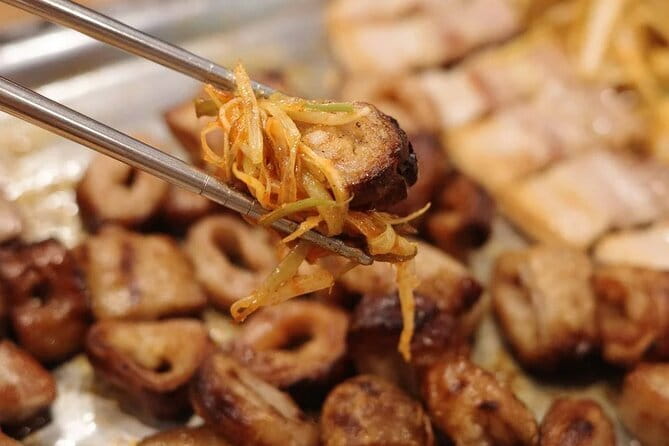
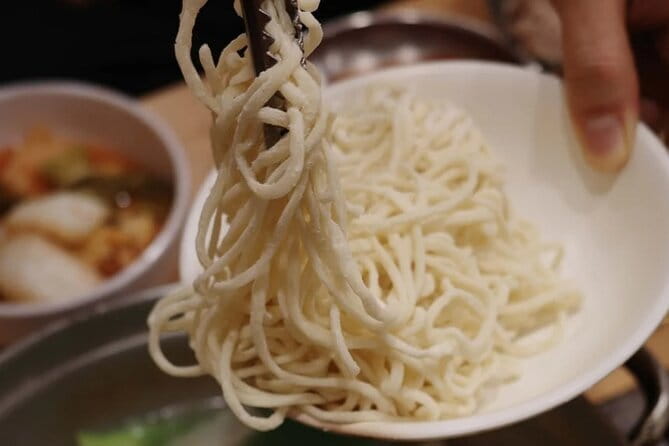
- The food goes beyond familiar staples: Expect banchan, bibimbap-related flavors, hearty noodles, Korean beef, snacks, drinks, and possibly steak tartare with a special sauce.
- Dongdaemun and Jongno provide the setting: You move from old city gates and royal landmarks to lanes, markets, and local eating places.
- It is a private activity: Only your group participates, which makes conversation and pacing easier.
- The afternoon runs about five hours: The 1:00 pm start leaves time for food, walking, cultural stops, and a later drink.
- Bring comfortable walking shoes: Transportation between points is not supplied, and the experience works best as a walking route.
Seoul food is best understood through its stories
I like food tours that explain more than what is on the plate. This one uses Seoul as a lesson in cultural exchange. Chinese, Japanese, and Western influences appear in Korean cooking, but the focus is on how Korea reshaped those ideas instead of simply copying them.
That theme gives the route a useful thread. You are not only trying different tastes. You are looking at how war, trade, family traditions, city life, and national pride have shaped what people eat.
Eunice appears to be particularly good at making those connections. She talks about the history behind Korean culture and cuisine, while keeping the mood relaxed and witty. If you enjoy asking questions, a private group gives you a good chance to steer parts of the conversation toward foods or customs you want to understand better.
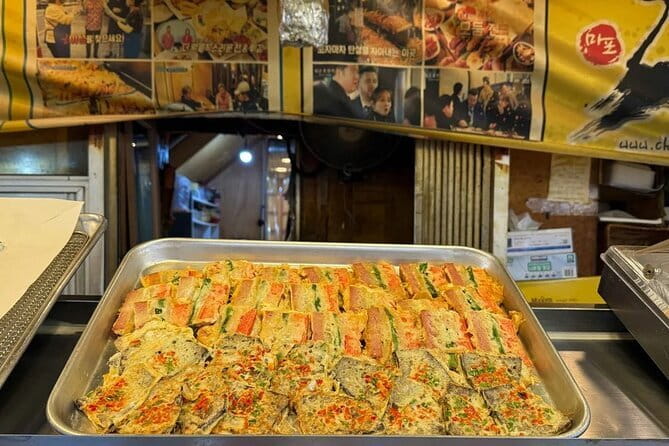
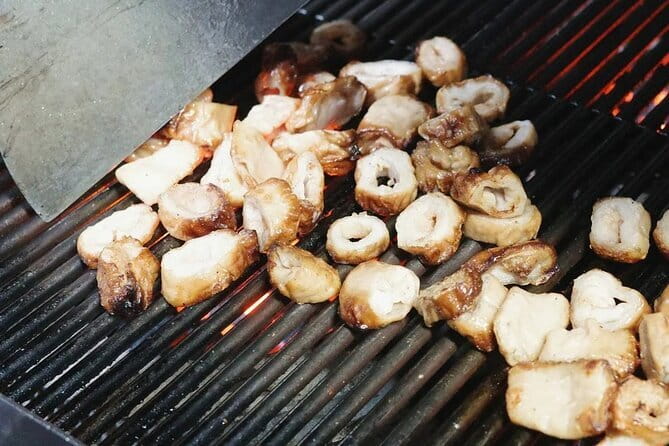
The food itself is varied. You may eat at traditional sit-down restaurants for chicken noodle soup and Korean beef served in several forms. You may also try snacks and market food, with steak tartare and a distinctive sauce among the memorable possibilities. The exact dishes can change, but the overall aim is clear: show you everyday Korean cooking rather than limit the meal to famous restaurant specialties.
More Korean cooking classes in Seoul:
- Local Home Korean Cooking Class & Market Adventure in Seoul
★ 5.0 · 1,024 reviews - Master Korean traditional cooking with a Kimchi chef
★ 5.0 · 385 reviews - Seoul: Korean Cooking Class at a Local Home and Market Tour
★ 5.0 · 348 reviews
Starting at Dongdaemun Gate
The tour begins at 1:00 pm outside JW Marriott Dongdaemun Square Seoul, at 279 Cheonggyecheon-ro. The meeting point is close to public transportation, which helps if you are coming from another part of Seoul.
The first listed stop is Dongdaemun Gate, also called Heunginjimun. Built in the late fourteenth century, it was one of Seoul’s major entrances and part of the city’s defensive system. It gives you a quick sense of the old city before the route moves into modern Seoul.
I like this opening because it puts the food in context. Seoul can feel relentlessly modern, but the gate reminds you that the city grew from a walled royal capital. The contrast is especially useful before visiting markets and contemporary neighborhoods.
Allow for some standing and walking here. The gate itself is free to visit, and the stop is about an hour in the stated schedule, though the food and walking portions are what make the entire experience last roughly five hours.
From Dongdaemun Design Plaza to city life
Dongdaemun Design Plaza, known as DDP, changes the mood completely. Designed by Zaha Hadid, the building is famous for its sweeping futuristic form, broad open spaces, exhibitions, fashion events, and cultural programs.
You get about 30 minutes here. That is enough for photographs and a look at the architecture, but not enough for a full exhibition visit if one happens to be running. Think of DDP as a visual pause rather than a separate museum tour.
This stop matters because it shows Seoul’s habit of reinvention. The route has moved from a medieval city gate to one of the city’s most recognizable modern buildings in a short distance. That same mix of old and new returns throughout the day, especially in the food.
Walking beside Cheonggyecheon Stream
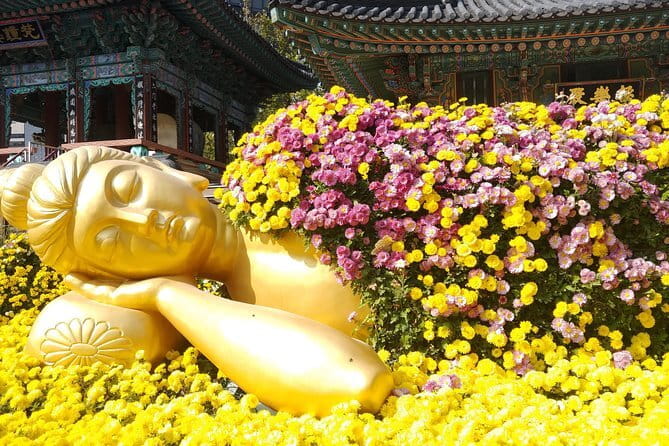
Cheonggyecheon Stream provides a calmer stretch between the built-up parts of the route. The waterway runs through both Dongdaemun and Jongno, with a walking path that offers a break from traffic and crowded streets.
The scheduled stop is about an hour. You may find this is one of the best times to slow down, ask Eunice questions, and let the previous meal settle before the next one. The stream is also especially appealing later in the day, when lights reflect on the water.
This part of the route is not a food stop, so its value is in rhythm. A good food walk needs pauses. Without them, dishes blur together and you lose the chance to notice the city around you.
More food tours in Seoul:
- Seoul Street Food Market Tour
★ 5.0 · 1,226 reviews - Seoul: Night Market Food Tour with Local Guide
★ 4.9 · 943 reviews - Downtown Seoul Guided Food & Market Tour with 8+ Local Tastings
★ 5.0 · 580 reviews - Small-Group Night Food Tour in Seoul with Korean BBQ
★ 5.0 · 304 reviews
Gyeongbokgung brings royal Seoul into the picture
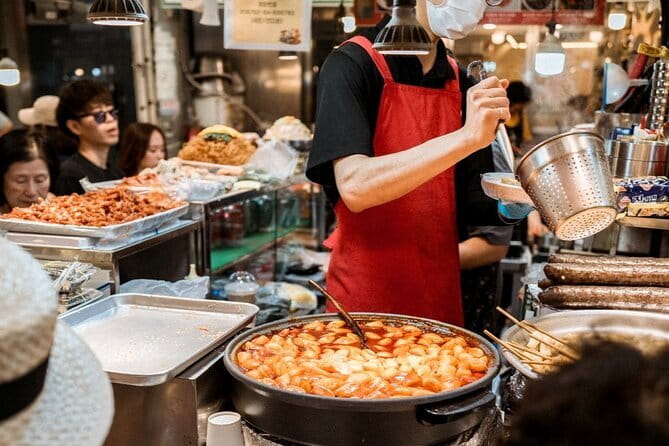
Gyeongbokgung Palace is one of Seoul’s essential historic sights. It was the main royal palace of the Joseon Dynasty, with formal buildings, gardens, and broad spaces that contrast sharply with the narrow lanes and casual restaurants elsewhere on the route.
The planned visit lasts about an hour, and admission is listed as free for this experience. You should see this as a cultural visit woven into the food tour, not as a full palace tour with every building explained in detail.
The palace helps explain why Jongno remains such an important part of Seoul. It also gives Eunice a strong setting for discussing royal food traditions, social customs, and the way Korean identity has changed over time. The information provided does not promise a palace admission package or a costumed ceremony, so book this for the setting and context rather than for a formal palace performance.
Bukchon Hanok Village and the old residential lanes
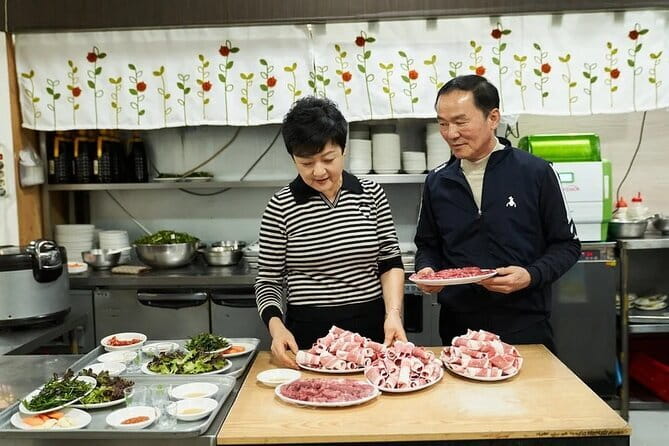
Bukchon Hanok Village is a collection of traditional Korean houses in the heart of Seoul. Its narrow alleys and hillside views offer a glimpse of older residential Seoul, with tiled roofs and carefully preserved homes.
The stop is scheduled for about 30 minutes. That is enough to walk through a small portion and take in the atmosphere, but it is not a lengthy neighborhood exploration. Bukchon is also a living residential area, so you should keep your voice down and avoid treating private doorways as photo props.
The village is a fitting final landmark because it brings the route back to daily life. Palaces show official history, while Bukchon offers a more personal view of how traditional architecture fits into the modern city.
The food stops are the real heart of the afternoon
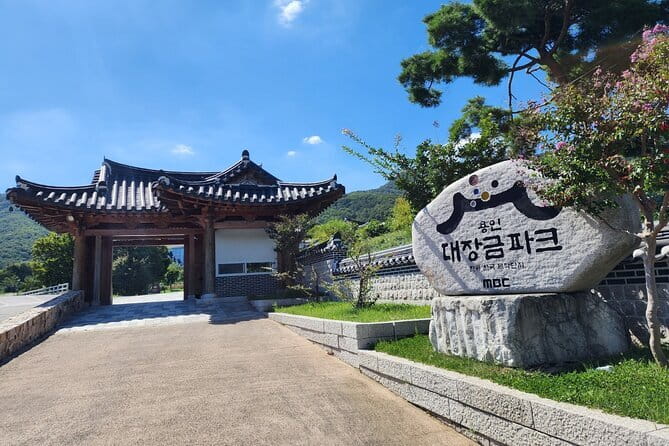
The title points toward banchan and bibimbap, but the food range goes beyond those familiar names. Banchan, the small side dishes served with a Korean meal, teaches you to think of a meal as a collection of textures and flavors rather than one large main course.
Bibimbap is another useful starting point because it shows how rice, vegetables, meat, sauce, and texture work together. The experience is not presented as a cooking class, so you are there to eat and understand, not to prepare the dishes yourself.
The more unusual parts of the menu may be what you remember. Steak tartare with a special sauce has been a highlight, and the food can include chicken noodle soup, Korean beef, traditional snacks, alcoholic drinks, and food from local markets. A tent bar may also be part of the evening finish.
That variety is valuable for first-time visitors who know Korean barbecue and kimchi but want a broader picture. It is also useful if you already like Korean food, since the backstreet settings and older family-run places can show you dishes that do not always appear on standard restaurant menus.
The tour includes dinner, snacks, bottled water, and alcoholic beverages. Because exact dishes can change, I would not book it expecting a fixed tasting menu. Book it for a guided introduction to Korean food culture with several substantial eating stops.
A private tour changes the pace
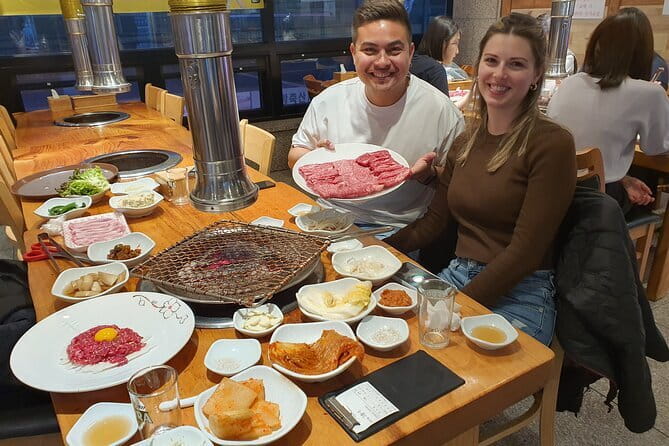
Only your group participates, which is a major part of the value. You do not have to spend five hours waiting for a large group to regroup, and you can ask questions without worrying about holding up strangers.
The private setup may also work well for a family. One account describes the tour working for two adults and an 11-year-old child, with enough food and cultural explanation to keep different ages involved. Still, this is a substantial eating day, so families should consider whether everyone is comfortable with unfamiliar dishes and a long walking schedule.
It can also be a strong first-day activity for a solo visitor. Eunice’s role is not limited to pointing out restaurants. She introduces the people who cook the food and explains something about their stories, giving you a personal entry into Seoul.
There is one practical limit: no private transportation is included. The tour is built around walking and public areas, so comfortable shoes matter. The stated stops add up to several hours, and meals, transfers, and conversation fill out the full five-hour duration.
Is $195 a fair price?
At $195 per person, this is not a cheap way to grab lunch. You are paying for a private guide, dinner, snacks, alcoholic drinks, bottled water, several food stops, and a half-day route through major Seoul landmarks.
The price makes more sense if you would otherwise book separate sightseeing and food activities. You get Dongdaemun, DDP, Cheonggyecheon, Gyeongbokgung, and Bukchon in one afternoon, along with a guided introduction to Korean cuisine. You also avoid having to choose unfamiliar restaurants on your own.
The value is weaker if you mainly want a large number of small tastings or a bargain street-food crawl. Private tours cost more, and this route includes cultural stops that take time away from eating. You may also prefer a cheaper group tour if you are comfortable navigating Seoul and researching food on your own.
For a couple, family, or small group that wants one guide for the whole afternoon, the price can be justified. The strongest value comes from the interpretation: Eunice connects dishes, places, and history in a way that is harder to get from a restaurant visit alone.
Who should book this Seoul food walk?
I would recommend it to you if you want food and culture in equal measure. It suits first-time visitors who need a clear introduction to Seoul, as well as experienced food lovers who want less obvious family-run places and backstreet meals.
It is particularly good for:
- Couples who want a private introduction to Seoul
- Solo visitors looking for an easy first-day orientation
- Families with older children who enjoy trying new food
- People who want history explained alongside meals
- Visitors who prefer a relaxed route over a formal cooking class
You may want something else if you need a tightly fixed menu, dislike walking, or want only street food. The experience includes substantial meals and major landmarks, so it is broader than a simple market crawl.
The tour has a five-star rating from 16 ratings and a 100 percent recommendation rate. More important than the numbers, the repeated strengths are clear: Eunice’s warmth, her explanations of food and culture, the small private setting, and the chance to eat in places you might not choose alone.
Practical details that matter
You receive booking confirmation at the time of purchase, and the experience uses a mobile ticket. The tour starts at 1:00 pm and returns to the same meeting point at JW Marriott Dongdaemun Square Seoul.
Most people can participate, and the meeting point is near public transportation. No private vehicle is supplied, so plan to walk between stops and allow enough time to reach the hotel before the start.
Alcoholic drinks are included, but the food details are not fixed in the information provided. If you have dietary restrictions, contact the provider before booking rather than assuming the menu can be changed.
Cancellation is free up to 24 hours before the start time. A cancellation made less than 24 hours ahead is not refunded, and the activity may be canceled if its minimum number is not met. In that case, you are offered another date or experience, or a full refund.
Should you book Seoul Food: Banchan, Bibimbap, and Beyond?
Book it if you want Seoul explained through both its plates and its streets. The combination of Eunice’s storytelling, private pacing, local food stops, and major Jongno and Dongdaemun sights gives you a useful first look at the city.
Skip it if $195 feels too high for a walking meal, or if you want a simple, fixed tasting menu. For everyone else, this is a thoughtful choice for turning Korean food from a list of dishes into a better understanding of the city that created them.
FAQ
Where does the tour start?
The tour starts at JW Marriott Dongdaemun Square Seoul, 279 Cheonggyecheon-ro, Jongno District, Seoul, South Korea.
What time does the tour begin?
The tour begins at 1:00 pm.
How long does the experience last?
The experience lasts approximately five hours.
Where does the tour finish?
The activity ends back at the starting meeting point.
Is transportation included?
No. Private transportation is not included. The route uses walking between city sights and food stops.
Is this a private tour?
Yes. Only your group participates in the activity.
What is included in the price?
The price includes a licensed guide, alcoholic beverages, bottled water, dinner, and snacks.
Are the listed sightseeing stops free?
Admission is listed as free for Dongdaemun Gate, Dongdaemun Design Plaza, Cheonggyecheon Stream, Gyeongbokgung Palace, and Bukchon Hanok Village.
What is the cancellation policy?
You can cancel up to 24 hours before the start time for a full refund. Cancellations made less than 24 hours before the start time are not refunded.
Just added around Seoul
- Your Personal Seoul Photographer!★ 4.1 · 15 reviews
- From Seoul: Hwacheon Ice Fishing and Lighting Festival Tour★ 4.5 · 4 reviews
- You’re Invited to Our Home in Seoul: The Only Cooking Class!★ 5.0 · 8 reviews
- Seoul: Gangneung BTS K-Pop & K-Drama Filming Locations Tour★ 4.6 · 14 reviews
- Unique Native Experience : Han River Picnic, Board game, BBQ★ 5.0 · 3 reviews
- Yun Korean Cooking Class in Seoul★ 5.0 · 6 reviews
- 2-Hour Private Kayaking and Paddleboarding Experience in Hanriver★ 5.0 · 3 reviews
- Day Trip to Yongin Daejanggeum and Korean Folk Village from Seoul★ 4.0 · 9 reviews
Seoul Food Tours, compared.
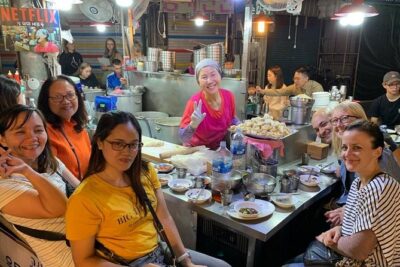
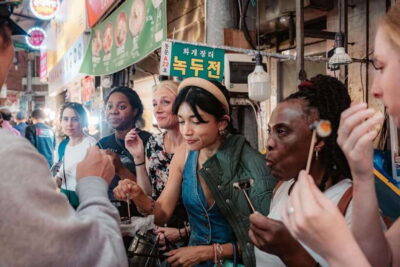
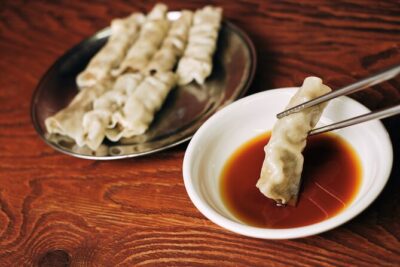
Downtown Seoul Guided Food & Market Tour with 8+ Local Tastings
Read our review →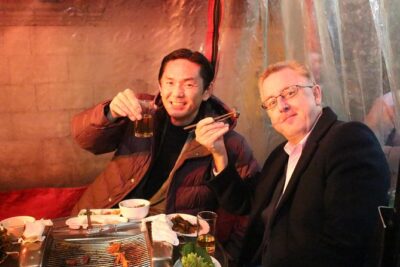
Small-Group Night Food Tour in Seoul with Korean BBQ
Read our review →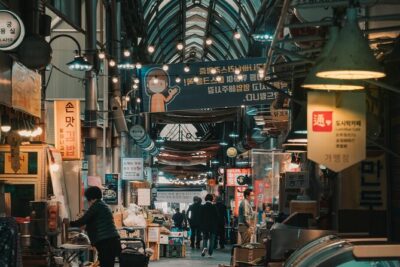
Seoul Night Palace & Market Food Tour with Vehicle
Read our review →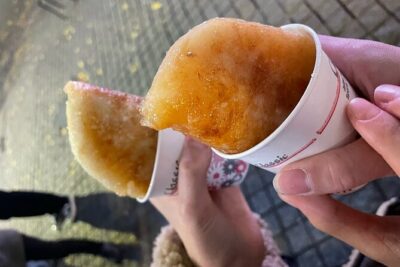
Seoul Fun Food Tour: 12 different food tastings
Read our review →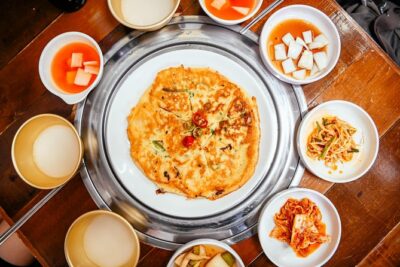
The Award-Winning PRIVATE Food Tour of Seoul: The 10 Tastings
Read our review →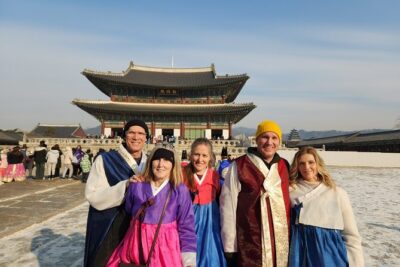
Full Day- Essential Seoul City Tour & Gourmet Tour(including Lunch and Dinner)
Read our review →Browse the lists this tour appears in