
Reviewed · SEOUL FOOD TOURS
Savoring Authentic Korean Liquor and Cuisine
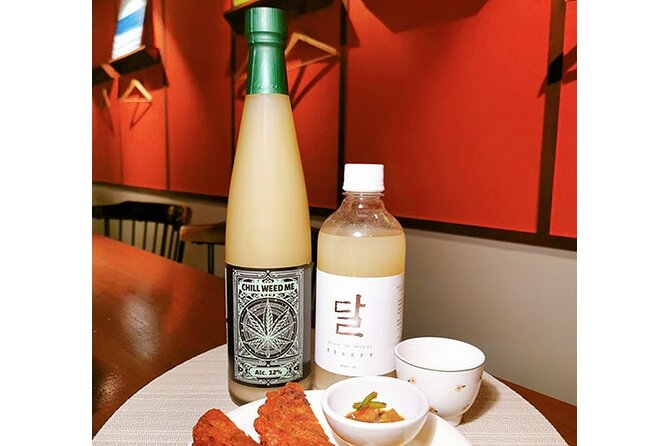
Korean drinking culture is much bigger than the familiar green bottle of soju. At LodgeMagok in Seoul, Chef Hyesun introduces you to three traditional liquor styles, including small-batch drinks from local breweries that are rarely found in regular shops or restaurants. The tasting comes with anju, the savory food meant to accompany a drink.
I like two things right away. First, the experience explains what is in the glass: Korean rice, mineral water from a mountain, and naturally fermented yeast. Second, the food is part of the lesson, not an afterthought. Vegetable pancake, meat pancake, and kimchi bibim noodles give you a practical way to notice how different drinks work with Korean flavors.
The main consideration is location. LodgeMagok is in Magok-dong, away from Seoul’s best-known sightseeing districts, and the full experience lasts about 90 minutes. At $59 per person, it makes the most sense for curious drinkers who want a focused cultural tasting, not for anyone seeking a long dinner or a broad nightlife tour.
Key points to know before booking
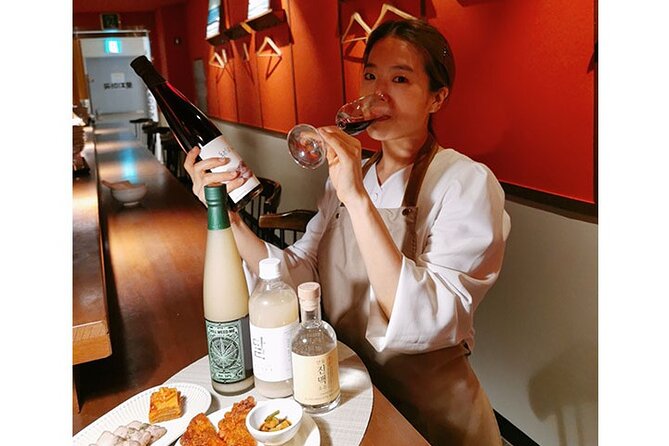
- Chef Hyesun leads the tasting: She is the owner-chef of a restaurant specializing in traditional Korean liquor and has traveled widely.
- Three styles are included: You taste takju, cheongju, and distilled liquor, giving you a useful introduction to Korea’s main traditional categories.
- Anju changes with availability: Expect Korean drinking foods such as vegetable pancake, meat pancake, and kimchi bibim noodles, though the exact dishes can vary.
- The group is limited to six people: The small cap should allow room for questions and conversation.
- The meeting point is LodgeMagok: The address is 171 Jungang-ro, Magok-dong, Gangseo-gu, Seoul, in Naru Station Private Tower II, room 207.
- Alcohol is for adults 18 and older: You must be at least 18 to receive alcoholic drinks.
Why Korean traditional liquor is worth your time
Many visitors arrive in Korea knowing only mass-produced soju. That is understandable. The familiar green bottle is easy to find, inexpensive, and closely linked with Korean meals. But it represents only one part of the country’s drinking culture.
This tasting focuses on traditional liquor made in small breweries around Korea. The experience points to more than 1,400 small traditional liquor producers, each working with local methods and different fermentation choices. That number matters because Korean liquor is not one fixed flavor. It can vary in body, sweetness, aroma, clarity, and strength.
The basic ingredients are simple: Korean rice, mountain mineral water, and naturally fermented yeast. The result can be surprisingly varied. One drink may be cloudy and soft, another clear and refined, while a distilled style may have a stronger finish. You are not simply sampling three random bottles. You are comparing three approaches to fermentation and distillation.
I also like the way the tasting makes room for food. Korean anju is not just a snack ordered after the drink. It is food designed to be eaten with alcohol, often salty, savory, spicy, or rich enough to keep the palate interested. That pairing helps you understand why Korean drinking is usually a shared table ritual rather than a quick drink by itself.
More pub crawls and makgeolli tastings in Seoul:
- Seoul: Pub Crawl
★ 4.7 · 903 reviews - The Seoul Pub Crawl Official
★ 5.0 · 838 reviews - Drinking and Eating through the Alleys of Seoul
★ 5.0 · 364 reviews
Meeting Chef Hyesun at LodgeMagok
The activity begins at LodgeMagok, Chef Hyesun’s venue in Magok-dong. The exact meeting address is Naru Station Private Tower II, room 207, 171 Jungang-ro, Gangseo-gu, Seoul. Since the experience is in a private building rather than a famous tourist landmark, you should allow time to find the correct entrance and room.
Magok is served by public transportation, which is useful, but the address still deserves attention. Save it in your phone before leaving your hotel. After booking, you are asked to send a confirmation message through WhatsApp to +82 10 2661 7832. That message is used to double-check the schedule and discuss food allergies or other details.
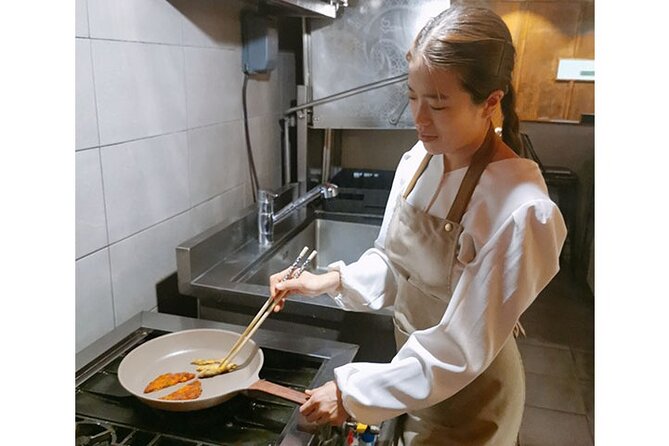
Chef Hyesun is both the host and owner-chef. Her background as a world traveler adds a conversational side to the experience. You are encouraged to share travel stories and talk about food and drinks, so this is not a silent tasting at a counter.
The maximum group size is six. That is a real advantage for a subject like traditional liquor, where questions about taste, fermentation, and food pairing can easily get lost in a large group. A small group also makes the setting more suitable for a relaxed exchange with the chef.
The first taste: takju and Korea’s cloudy rice drinks
The tasting includes takju, one of the main traditional categories. Takju is generally associated with cloudy, unfiltered rice liquor, and it gives you a useful first look at how fermentation can create a drink with texture as well as flavor.
The point here is not to rush through a shot. You are given information about Korean traditional liquor and samples from different local breweries. Pay attention to how the drink feels in your mouth, how sweet or tart it seems, and how its texture changes when eaten with anju.
The small-brewery focus is especially useful. A factory-made drink gives you a standard product, but locally made liquor can show more variation from one producer to another. The tasting is designed to let you notice those differences in body and flavor rather than treating all Korean rice liquor as the same.
If you usually drink dry wine, sake, or familiar commercial soju, keep an open mind. Traditional Korean liquor may have flavors and textures you do not expect. The experience makes a clear case for trying the drink as its makers intended, alongside Korean food.
Cheongju and the clear side of Korean fermentation
The next category is cheongju, a clear traditional rice liquor. Its place in the tasting helps show how the same broad family of ingredients can lead to a cleaner, more polished style.
This portion should appeal to you if cloudy rice drinks seem unfamiliar. A clear liquor can make it easier to focus on aroma and finish. Pairing it with anju also gives you a chance to compare how a lighter or clearer drink responds to savory pancakes and noodles.
The tasting is not presented as a technical class with a long list of production terms. Instead, Chef Hyesun explains the background in a practical way while you taste. That balance is important. You receive enough context to understand the drinks, but the focus remains on what is in front of you.
Because the exact brands and local breweries are selected by Hyesun, the lineup is a little different from a standard restaurant menu. The drinks are described as special selections that are difficult to find in ordinary stores or restaurants. That makes the session more useful for a visitor who wants access to Korean liquor beyond the usual supermarket options.
More food tours in Seoul:
- Seoul Street Food Market Tour
★ 5.0 · 1,226 reviews - Seoul: Night Market Food Tour with Local Guide
★ 4.9 · 943 reviews - Downtown Seoul Guided Food & Market Tour with 8+ Local Tastings
★ 5.0 · 580 reviews - Small-Group Night Food Tour in Seoul with Korean BBQ
★ 5.0 · 304 reviews
Distilled liquor and the familiar word soju
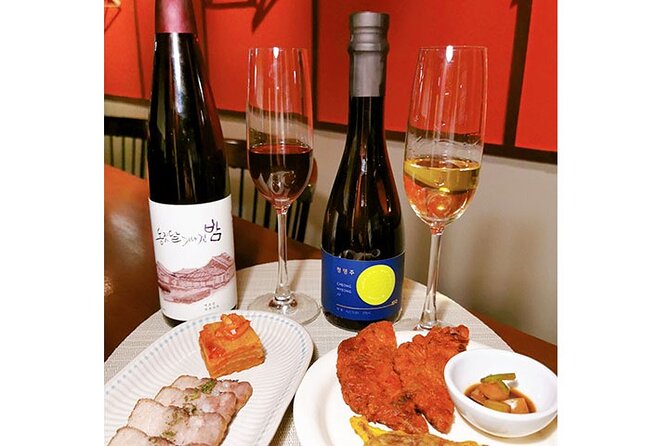
The third style is distilled liquor. This is where the experience can correct a common assumption: traditional Korean soju is not necessarily the mass-market spirit sold in green bottles.
The distilled sample gives you a chance to compare a stronger style with takju and cheongju. You can look for differences in aroma, weight, and finish, then see how the anju changes your impression of each drink.
That comparison is the heart of the 90-minute session. You are not only asking which drink tastes best. You are learning which style suits your palate and which food helps it make sense. One drink may work better with a savory pancake, while another may cut through the spice or texture of noodles.
The word soju covers more ground than many visitors realize. This tasting separates traditional methods from the factory-made version most commonly served in casual Korean restaurants. If you have already tried ordinary soju, this is a chance to see what else the category can offer.
Anju: vegetable pancake, meat pancake, and kimchi noodles
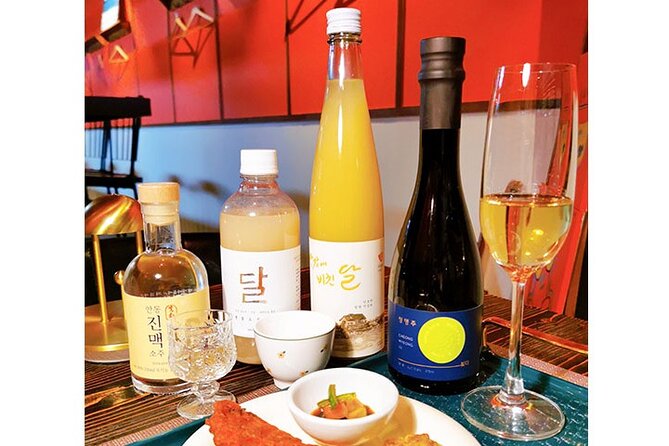
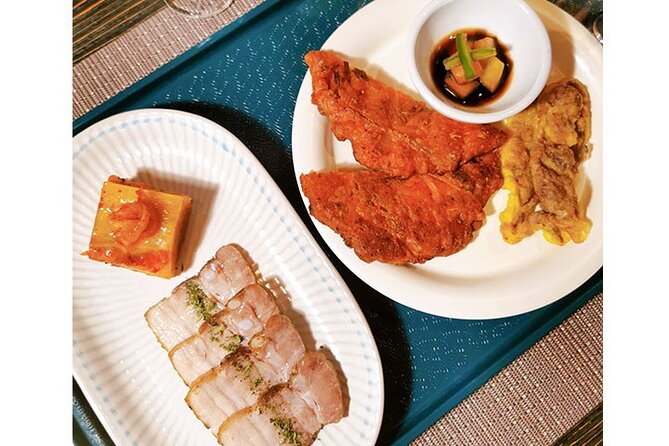
Food is served alongside the liquor, with examples such as vegetable pancake, meat pancake, and kimchi bibim noodles. The exact selection can change with ingredient supply and demand, so you should not book expecting one fixed menu.
That flexibility is normal for a chef-led food experience. It also means the menu may reflect what is available rather than relying on a rigid tourist set. The important part is that you receive Korean dishes chosen to accompany drinking.
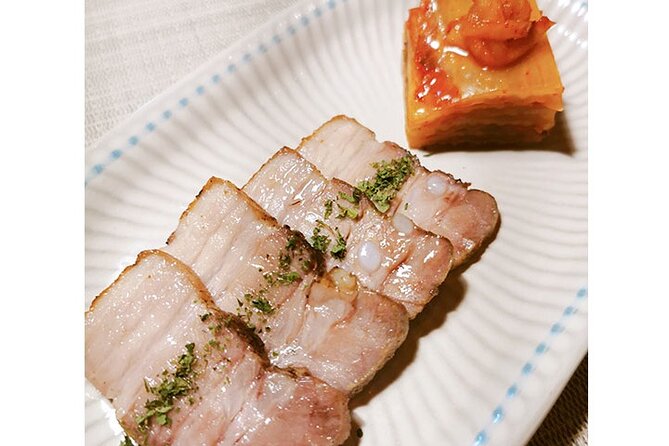
Vegetable pancake gives you a savory, crisp option. Meat pancake brings a fuller flavor and more weight. Kimchi bibim noodles add spice and seasoning, which can make a drink taste sweeter, sharper, or less intense by comparison.
The food also gives the tasting a better rhythm. Ninety minutes is enough time to sample three styles without turning the experience into a drawn-out meal. You can taste, eat, compare, and ask questions instead of swallowing each sample and moving on.
If you have food allergies, send the details to Chef Hyesun through WhatsApp after booking. The information specifically asks for allergy and schedule checks, but you should still communicate clearly before arriving.
What the $59 price gets you
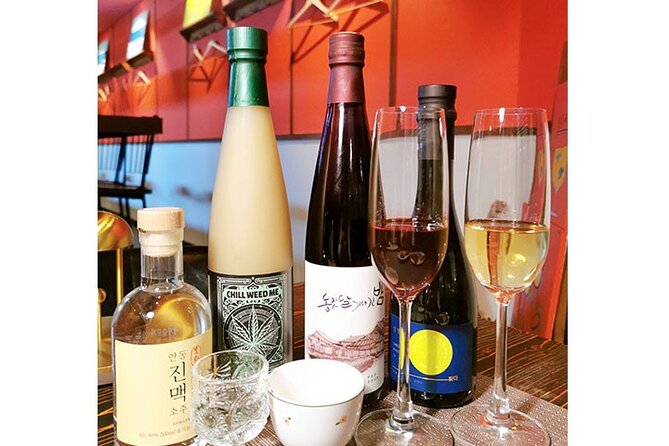
At $59 per person, this is not the cheapest way to drink in Seoul. You can buy ordinary soju for very little, and many bars offer casual drinks without a guide or a planned tasting. The value here comes from access, explanation, and comparison.
You receive three types of traditional liquor, food pairings, and Chef Hyesun’s guidance in a group capped at six. The lineup also includes selections from local breweries that you may not find on a normal restaurant menu. For someone who wants to understand Korean alcohol rather than simply consume it, that package is reasonably focused.
The price is less compelling if you want a full dinner, a long evening, or a tour that moves through several Seoul neighborhoods. This activity stays at one location and lasts about an hour and a half. Think of it as a compact food-and-drink lesson that can fit before or after another plan.
I would compare it with the cost of a good guided tasting in any major city. You are paying for a specialist host, unusual products, and food that has a purpose. That is a better deal for a drink enthusiast than for a casual visitor who only wants to try standard soju once.
Practical details that affect your visit
The activity starts and ends at LodgeMagok. There is no separate sightseeing route, hotel pickup, or transfer listed, so plan your own way to Magok-dong. Public transportation is nearby, but the private tower address means you should check the building details before setting out.
The session is mobile-ticket friendly, and confirmation is provided at booking. After the booking is automatically confirmed, contact Chef Hyesun through WhatsApp to verify the schedule and share allergy information.
Alcohol is served only to people aged 18 and older. Service animals are allowed, and the venue is near public transportation. The group limit of six is helpful if you prefer a personal setting, though the small size also means availability may be limited on popular dates.
Cancellation is free up to 24 hours before the local start time. Canceling or changing the booking less than 24 hours before the experience does not qualify for a refund, so check your Seoul schedule before committing.
Who will enjoy this Korean liquor tasting?
I would recommend it to you if you enjoy food with a story behind it, like trying regional drinks, or want an alternative to the usual Seoul nightlife routine. It is also a good fit if you have tried commercial soju and want to understand traditional Korean liquor on its own terms.
The experience suits solo visitors, couples, and small groups who enjoy conversation. The maximum of six people keeps it from feeling like a large commercial tasting, and Chef Hyesun’s role as both chef and host gives the session a personal focus.
It may not suit you if you do not drink alcohol, need a full meal, or want a broad city tour. The food is part of the pairing, but the activity is still centered on alcohol. The exact dishes are also not fixed, so anyone with strict menu expectations should ask about ingredients in advance.
Should you book Savoring Authentic Korean Liquor and Cuisine?
Book it if you want to taste traditional Korean liquor beyond factory-made soju and value expert guidance over a busy nightlife setting. The strongest reasons are the three-category lineup, hard-to-find local selections, thoughtful anju, and small group size.
Skip it if Magok-dong is inconvenient, you want a long dinner, or you are looking for a general introduction to Seoul rather than a focused tasting. For the right audience, $59 buys more than drinks: it gives you a clear way to understand how Korean rice, water, yeast, fermentation, distillation, and food come together at the table.
FAQ
Where does the Korean liquor tasting take place?
It takes place at LodgeMagok in Seoul, at Naru Station Private Tower II, room 207, 171 Jungang-ro, Magok-dong, Gangseo-gu.
How long does the experience last?
The tasting lasts approximately 1 hour and 30 minutes.
Which traditional Korean liquors are included?
You taste three categories: takju, cheongju, and distilled liquor.
What food is served with the drinks?
Anju may include vegetable pancake, meat pancake, and kimchi bibim noodles. The dishes can vary depending on ingredient availability.
How old must I be to receive alcohol?
Alcoholic beverages are available only to people aged 18 and older.
What is the cancellation policy?
You can cancel up to 24 hours before the local start time for a full refund. Cancellations or changes made less than 24 hours before the start time are not refunded or accepted.
Just added around Seoul
- Your Personal Seoul Photographer!★ 4.1 · 15 reviews
- From Seoul: Hwacheon Ice Fishing and Lighting Festival Tour★ 4.5 · 4 reviews
- You’re Invited to Our Home in Seoul: The Only Cooking Class!★ 5.0 · 8 reviews
- Seoul: Gangneung BTS K-Pop & K-Drama Filming Locations Tour★ 4.6 · 14 reviews
- Unique Native Experience : Han River Picnic, Board game, BBQ★ 5.0 · 3 reviews
- 2-Hour Private Kayaking and Paddleboarding Experience in Hanriver★ 5.0 · 3 reviews
- Yun Korean Cooking Class in Seoul★ 5.0 · 6 reviews
- Day Trip to Yongin Daejanggeum and Korean Folk Village from Seoul★ 4.0 · 9 reviews
Seoul Food Tours, compared.
Downtown Seoul Guided Food & Market Tour with 8+ Local Tastings
Read our review →
Small-Group Night Food Tour in Seoul with Korean BBQ
Read our review →
Seoul Night Palace & Market Food Tour with Vehicle
Read our review →
Seoul Fun Food Tour: 12 different food tastings
Read our review →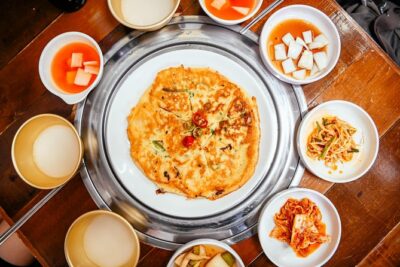
The Award-Winning PRIVATE Food Tour of Seoul: The 10 Tastings
Read our review →
Full Day- Essential Seoul City Tour & Gourmet Tour(including Lunch and Dinner)
Read our review →Browse the lists this tour appears in