
Reviewed · INCHEON AIRPORT AND PORT TRANSFERS
Incheon Port History Tour by 19th Century Electric Car, KTourTOP10
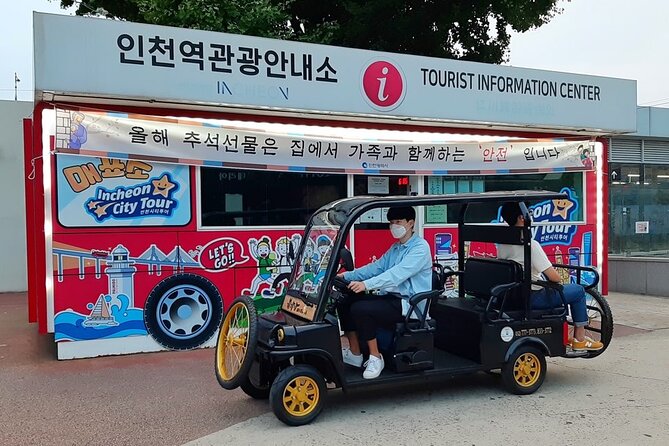
Incheon’s old port is best understood from a moving seat, and this 50-minute electric-car ride gives you a quick look at the streets where Chinese, Japanese, and Western communities once formed around Korea’s first modern port. I like the unusual vehicle and the compact route, which covers a lot without asking you to climb every hill and stairway.
I also like the $45 group price for up to three people, especially for a family or small party. The main drawback is that the tour can feel short and the commentary is not always delivered in English by the driver. One guide, Soonie, was praised for patiently explaining the area and adjusting the departure time, but that level of personal guiding may not be guaranteed every time.
Key points to know before booking
- A 50-minute electric-car route covers Incheon’s Open Port Street without requiring a long walking tour.
- The $45 fee covers a group of up to three, making it better value for a small party than for one person alone.
- The route links Chinatown, old foreign settlements, murals, and Jemulpo Club, giving you a useful introduction to old Incheon.
- The Jjajangmyeon Museum adds a food connection, explaining why Incheon is tied so closely to Korea’s black-bean noodle dish.
- Commentary may be prerecorded or limited in English, so confirm language arrangements before setting your plans around the ride.
- The tour ends where it begins, at 266 Jemullyang-ro in Jung-gu.
Why this electric car works well in old Incheon
Incheon’s port district is a compact area, but it contains several layers of Korean, Chinese, Japanese, and Western history. The streets can be hilly, and some sights are connected by stairs. An electric car lets you see more of the district in less time while keeping the outing easy for most people.
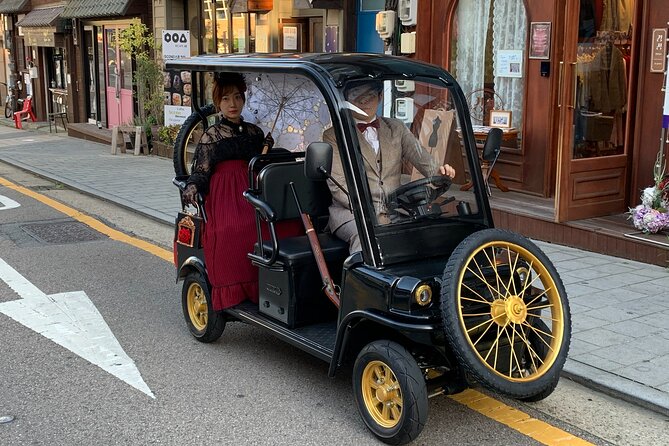
The vehicle is styled after a 19th-century car, though it is electric rather than antique. That gives the ride a playful period feel without the noise and fumes of a regular vehicle. It also fits the setting: you are touring an old port district shaped by steamships, foreign merchants, missionaries, immigrants, and colonial-era institutions.
I would think of this as an introduction rather than a full history lesson. You get a broad picture of the neighborhood and its landmarks, then you can decide where to return on foot. If you have only an hour before a flight or another appointment, this is a sensible way to get your bearings.
The listed price is $45 per group of up to three, not $45 per person. For three people, that works out to $15 each, which is reasonable for a private-feeling short ride. For one person, the price feels less generous, since the entire outing lasts less than an hour and does not include food, museum admission, or snacks.
The maximum group size is 20, though the vehicle format and group arrangements may vary. The smaller the actual group, the easier it is to ask questions and follow the guide’s explanations. Several departure times are offered, which helps if you are fitting Incheon into a layover or a tight sightseeing day.
More Incheon airport and port transfers in Incheon:
- Private Airport Transfer: Incheon Airport to Seoul City (1-5 pax)
★ 5.0 · 92 reviews - Private Layover Tour from Incheon Airport to Seoul
★ 5.0 · 78 reviews - Seoul Layover Private Tour from Incheon Airport
★ 5.0 · 65 reviews
Starting at Incheon Art Platform
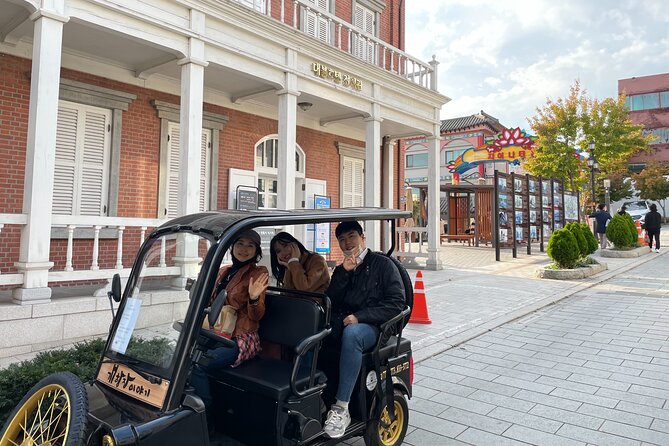
The meeting point is at 266 Jemullyang-ro, Jung-gu, Incheon, near Incheon Art Platform. This red-brick complex occupies former buildings connected with the old open port. Today, it is used for exhibitions and performances involving art, music, literature, and film.
That contrast is useful. You begin with a place where old commercial buildings have been given a new cultural purpose, then move into streets where the port’s past remains visible in architecture, food, religion, and public art. The red brick also gives the first part of the tour a clear visual identity.
You should arrive ready to board rather than expecting a long orientation session. The ride is short, so a late start can cut into the sightseeing time. A past booking problem involved a family waiting about 45 minutes without seeing the tour begin or receiving a reply to messages. I would confirm the departure before setting out, particularly if you are using the ride during a long layover.
Seeing the old foreign settlement near Cheongiljogyeji Stairway
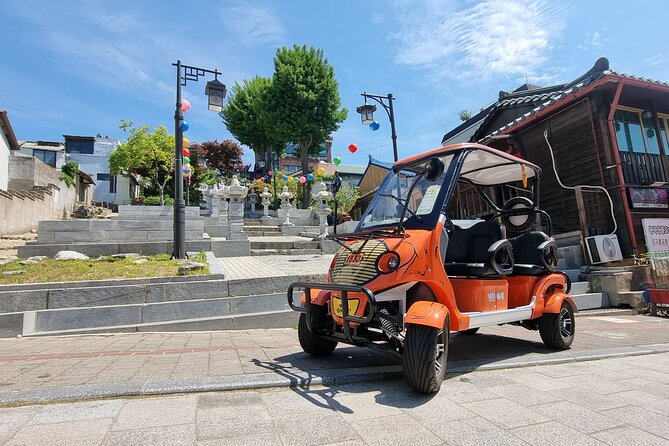
One of the more interesting parts of the route is the stairway area connected with old foreign settlements. The buildings around the steps are associated with Chinese and Japanese communities, and the term jogye refers to a designated area for foreign residents or trade.
This is where Incheon’s port story becomes more than a collection of themed streets. The opening of the port in 1883 brought new commercial links and foreign communities into the city. The district developed around those contacts, and the stairway area still helps you see how separate communities occupied nearby spaces.
The steps also connect toward Jayu Park, with views toward the Incheon Sea. The ride may point out the connection rather than give you time to walk up and explore it. If you want photographs from the park or a closer look at the stairs, plan a return visit after the tour.
The route is useful for orientation, but you should not expect an extended stop at every sight. Some landmarks may be pointed out from the vehicle. That is efficient, but it also means you may want a map or a little extra time afterward to revisit the places that catch your eye.
Chinatown, Haean Catholic Church, and the story of migration
Incheon’s Chinatown is one of the central sights on this ride. Its presence reflects the Chinese community that developed around the port, and the district remains closely linked to Chinese food, religious sites, and immigrant history.
Haean Catholic Church adds another layer. It was created in the 1960s for devoted Catholics among the overseas Chinese community. It is not simply a church to photograph from the car. It shows how a community that had crossed borders built religious and social institutions in its new home.
This is one reason I prefer the route to a simple Chinatown food stop. You see how migration shaped the district’s daily life, not just its restaurants and decorative streets. Still, the exact amount of explanation depends on the guide. Some departures use prerecorded commentary, while a live guide may add much more context.
English support is the main practical question here. One driver was pleasant but did not speak English, leaving the rider dependent on prerecorded information and unable to ask follow-up questions. Another guide, Soonie, was described as patient and willing to explain the old port in detail. If English discussion matters to you, contact the operator before booking and confirm what language the commentary will use.
More history and heritage tours in Incheon:
- Seoul: Evening Dark History, Folklore & Ghost Story Walking Tour
★ 5.0 · 593 reviews - Hanbok Photoshoot and History Tour at Gyeongbokgung Palace
★ 5.0 · 276 reviews - From Seoul: Dae Jang Geum Park Historic K-Drama Set Tour
★ 4.9 · 143 reviews - Seoul: City Highlights and Historical Experience No Shopping
★ 5.0 · 74 reviews
The Jjajangmyeon Museum and Incheon’s most famous dish

The Jjajangmyeon Museum occupies the former site of Gonghwachun, identified as the first original restaurant associated with jjajangmyeon. The museum displays objects connected with the dish and the restaurant, offering a food-based way to understand the Chinese influence on Incheon.
Jjajangmyeon is now a familiar Korean comfort food, but its connection with Incheon makes it especially suitable for this port tour. The dish reflects how immigrant cooking changed in a new setting and became part of everyday Korean food culture.
The museum is a highlight for anyone interested in food, migration, or local history. It is also a reminder to keep your expectations in check: the tour itself does not include a meal or snack, and the museum visit may be brief. If you want to eat jjajangmyeon in Chinatown, treat that as a separate plan before or after the ride.
For me, this stop gives the route a human scale. Ports are often explained through ships, treaties, and trade. A noodle dish shows how those larger forces reached ordinary kitchens and dining tables.
Euiseon-dang and the immigrant experience
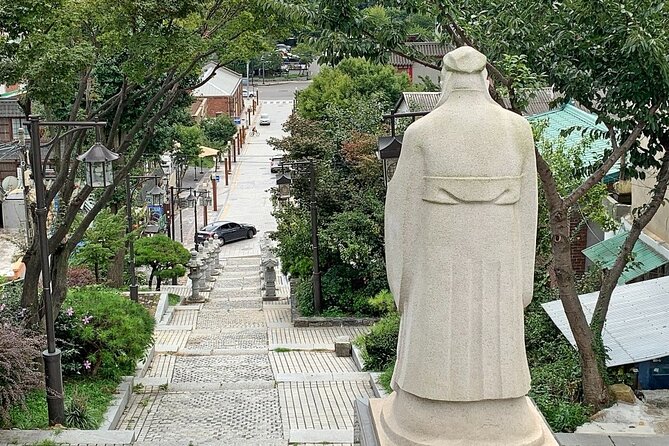
Inside Chinatown, Euiseon-dang is a Chinese-style shrine built by immigrants who had left their homeland. It was intended to offer comfort during the loneliness and hardship of life away from home.
This stop gives the tour a quieter mood. The colorful streets and food associations can make Chinatown feel light and playful, but Euiseon-dang points to the uncertainty behind migration. People came to the port seeking work and opportunity, yet they also needed familiar religious and cultural spaces.
You may find this more meaningful if you listen for the social story rather than treating it as another photo stop. The short vehicle format means the explanation may be quick. If the shrine interests you, note its location and return on foot when you have time to look more carefully.
Songwol-dong Fairy Tale Village and the changing port district
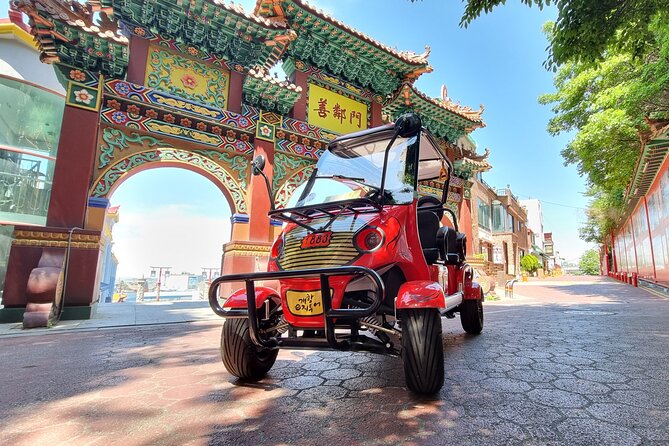
Songwol-dong was once home to foreigners after Incheon Port opened in 1883. Over time, younger residents moved away and the area became associated with an older population. It was later remade as Donghwa Village, also known as Fairy Tale Village, with colorful storybook-style decorations and streets.
The result is cheerful and highly photographable. It is also somewhat artificial. One past rider called the fairy-tale street wonderful, while another found some of the main sights cheesy but still enjoyed the outing. That is the right way to approach it: enjoy the playful design, but do not mistake it for untouched old Incheon.
This contrast is actually useful. The tour shows both the working port’s older neighborhoods and the modern effort to bring visitors back through murals and themed streets. You get a quick lesson in how a declining district can be repackaged for new uses.
If your taste runs toward architecture and original buildings, you may prefer the open-port blocks and Jemulpo Club. If you like bright murals and lighthearted photo stops, Songwol-dong may be your favorite part.
Chohanji and Three Kingdoms mural streets
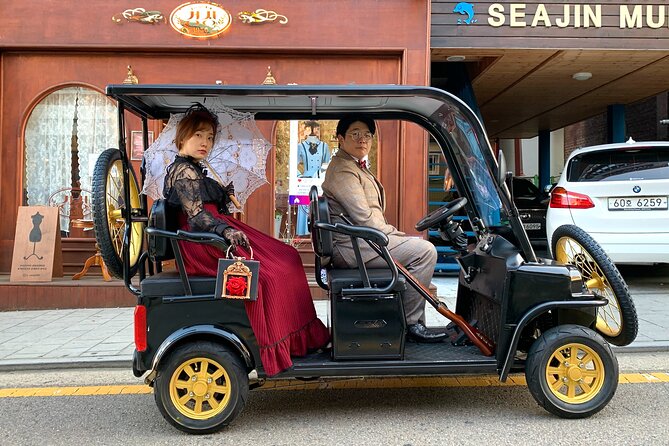
The Chohanji Mural Street and Three Kingdoms Mural Street use large painted scenes to tell stories from well-known Chinese historical novels. These murals connect Chinatown’s public art with Chinese literature and cultural memory.
The murals are easy to enjoy from a slow-moving vehicle, though the route may not give you enough time to study every panel. You can expect the guide to point out the streets and explain their theme, but not necessarily offer a full account of every character and episode.
This is a good example of the tour’s overall style. It gives you a quick visual introduction to several parts of old Incheon. It does not replace a museum visit, a detailed walking tour, or independent reading. I would use it as a first pass, then choose one or two areas for a slower return.
Finishing at the Jemulpo Club
The route ends with Jemulpo Club, a building connected with foreign residents in Incheon. The club included a social room, billiard room, reading room, and an outdoor tennis court. It later saw changes during the Japanese colonial period in 1914.
This building helps explain how foreign residents organized their social lives around the port. It also shows that the open-port district was not only a place of warehouses and trade. It had clubs, churches, homes, restaurants, and leisure spaces for different communities.
The stated stop includes about five minutes with free admission. That is enough for a quick look, but not a long museum visit. The tour then returns to the original meeting point, keeping the logistics simple.
Jemulpo Club is a strong final stop because it pulls together several themes from the route: foreign residence, colonial change, social class, and the port’s international character. You will understand it better if you have already noticed the Chinese and Japanese buildings earlier in the ride.
Timing, guide quality, and what the ride feels like
The experience lasts about 50 minutes, although some people expected a longer outing because of the price. The duration is clearly stated, so I would treat it as a compact sightseeing loop rather than a full afternoon tour.
The guide can make a major difference. A warm, enthusiastic guide can turn quick drive-by views into a coherent story. Soonie received particular praise for accommodating a last-minute request to move to a later time and for patiently explaining old Incheon. At other times, the driver may be friendly but unable to speak English, with prerecorded commentary filling the gap.
That inconsistency does not make the tour a poor choice, but it does affect who should book it. If you need detailed English interpretation, ask before confirming. If you mainly want a comfortable overview with visual stops, the prerecorded narration and short route may be enough.
The ride is suitable for most people, and service animals are allowed. It is near public transportation, and the activity ends back at the meeting point. The mobile ticket is convenient, but I would keep the confirmation accessible on your phone and allow extra time to find the exact starting point.
The tour requires good weather. If poor weather cancels it, you are offered another date or a full refund. It also requires a minimum number of participants, so a cancellation is possible if that number is not met. Free cancellation is available up to 24 hours before the start time, but changes or cancellations inside that window are not accepted.
Who should book this Incheon port tour?
I would recommend it to first-time visitors to Incheon, families, couples, and people with limited time. It is also useful during a long layover, provided you leave enough room for delays and confirm that the departure is running.
The tour suits you if you prefer a short overview to a long walk. It also works well if you want to see several themed districts without planning every turn yourself.
I would be more cautious if you want a detailed English-language lecture, extended time inside museums, or a serious architectural tour. The route moves quickly, some sights are viewed from the car, and the commentary quality can vary. You may get more from it by treating the ride as a preview, then returning to Chinatown, the murals, or the open-port buildings on foot.
Should you book the electric-car tour?
Book this tour if you want an easy, unusual introduction to Incheon’s old port and can accept a quick pace. The electric car, compact route, Chinatown connection, Jjajangmyeon Museum, and Jemulpo Club give you a useful mix of food, migration, religion, public art, and port history.
The price is fair for a group of two or three, but less attractive for a solo rider. Before you commit, confirm the meeting time and ask about English commentary. If the tour is operating as planned and you value convenience over depth, it is a pleasant way to spend 50 minutes. If you want detailed interpretation, plan a follow-up walk rather than expecting this short ride to cover everything.
FAQ
How long does the Incheon Port History Tour last?
The tour lasts approximately 50 minutes.
What is the price of the tour?
The price is $45 per group of up to three people.
Where does the tour begin?
It begins at 266 Jemullyang-ro, Jung-gu, Incheon, South Korea.
Where does the tour end?
The activity ends back at the meeting point.
What is included in the price?
The price includes the 50-minute old-style electric-car tour and the tour guide fee.
Are meals or snacks included?
No. Meals and snacks are not included.
What sights are included on the route?
The route includes Incheon Art Platform, the Cheongiljogyeji Stairway area, Haean Catholic Church, the Jjajangmyeon Museum, Euiseon-dang, Songwol-dong Fairy Tale Village, Chohanji and Three Kingdoms Mural Street, and Jemulpo Club.
Can I cancel for a full refund?
Yes. You can cancel at least 24 hours before the local start time for a full refund. Cancellations or changes made less than 24 hours before the start are not accepted, and poor weather or failure to meet the minimum number of participants may also lead to a rescheduled tour or full refund.
Just added around Incheon
- 24/7 Private Airport Transfer: Incheon/Gimpo ↔ Seoul (Up To 10)★ 5.0 · 3 reviews
- Private DMZSPYTOUR from Incheon Airport★ 5.0 · 14 reviews
- Private Airport Transfer: Incheon Airport to Seoul City 1-12 pax★ 5.0 · 15 reviews
- Layover & Stopover in Seoul/private Tour★ 4.5 · 20 reviews
- Private Airport Transfer from/to Incheon Airport to/from Seoul★ 5.0 · 13 reviews
- Layover Tour from Incheon Airport to Seoul with a Tour Specialist★ 5.0 · 5 reviews
- Incheon Port Transfer to Seoul (NCL/CELEBRITY) or Vice Versa★ 5.0 · 11 reviews
- Incheon Airport Pickup Service to Seoul-Same price up to 7people★ 4.5 · 15 reviews
Incheon Airport and Port Transfers, compared.

Private Airport Transfer : Incheon to/from Seoul (up to 7 pax)
Read our review →
Private Airport Transfer * Incheon Airport <-> Seoul (1-5 people)
Read our review →
Private Airport Transfer: Incheon Airport to Seoul City (1-5 pax)
Read our review →
Private Layover Tour from Incheon Airport to Seoul
Read our review →
Seoul Layover Private Tour from Incheon Airport
Read our review →
(P/Transfer) Incheon Airport ↔ Seoul (Up to 5 Pax)
Read our review →
Private Airport Transfer: Seoul City to Incheon Airport (1-5 pax)
Read our review →
Browse the lists this tour appears in