
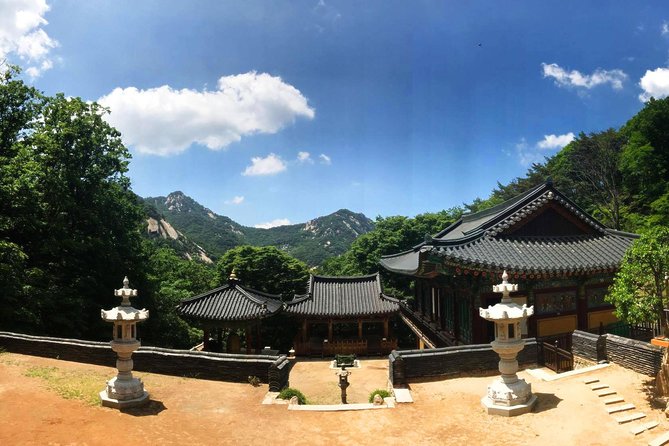
Reviewed · SEOUL TEMPLE TOURS
Seoul Mountain Hike: Temples, Folklore & Traditional Meal
Bukhan Mountain gives you a quick escape from Seoul, but this is not simply a walk in the woods. The trail carries you from a steep mountain path to Buddhist temples, shamanic caves, and old Korean folktales about ghosts, goblins, and mountain spirits.
I like the small maximum group of six, which leaves room for questions and trail adjustments. I also like the finish: a proper meal and drinks at a local restaurant, included in the price. The main caution is the physical effort. Expect four to five hours of hiking, including one long, steep climb near the start.
The guide makes this outing more than exercise. Shawn has been praised for telling the stories in a lively way and for knowing the trail well. Still, you need moderate fitness, suitable clothing, and a willingness to hike in changing weather.
Key points to know before you book
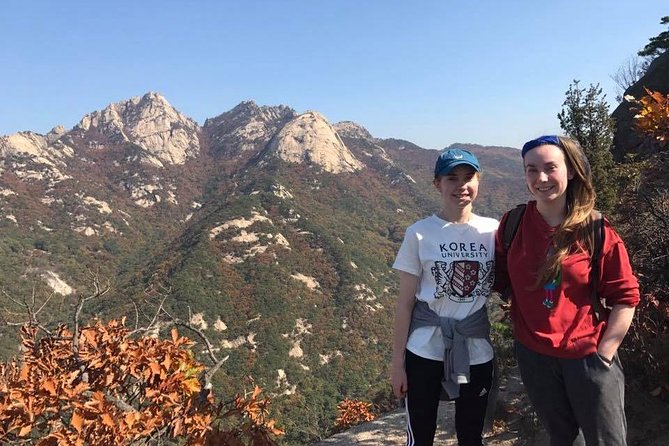
- A steep opening climb: The hike begins with a demanding ascent, though you need no ropes, harness, or special climbing equipment.
- A tiny group: The maximum is six people, a useful size for a flexible pace and direct contact with the guide.
- Folklore with the scenery: Expect stories about ghosts, goblins, shamans, religion, and Korea’s mountain traditions.
- A temple and cave stop: The route reaches Buddhist temples and shamanic sites in rugged mountain corners.
- Food is part of the experience: Lunch, drinks, and alcoholic beverages are included at a Korean mountain restaurant.
- A full half-day commitment: The activity starts at 1:30 pm and lasts about six hours, ending back at the meeting point.
Why Bukhan Mountain feels far from Seoul
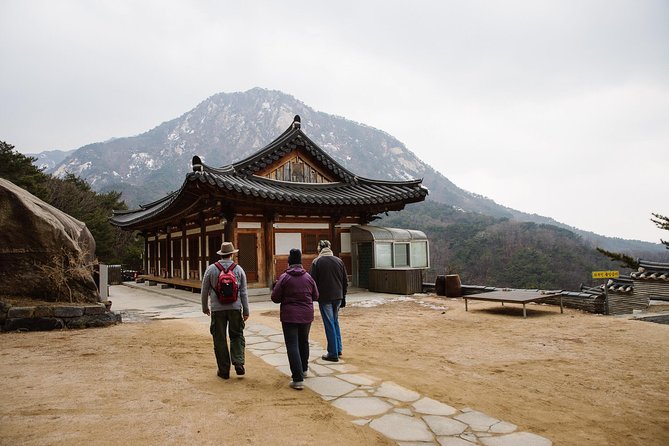
Seoul is close by throughout this outing, yet the forested valley quickly changes the mood. You meet at Gupabal Subway Station, gate 1, then take a short bus ride to the trailhead. The bus fare is included, and the guide leads a stretching session before the hike begins.
That simple transfer matters. You do not spend half the day arranging a distant excursion, but you still reach a natural setting with mountain paths, temple sites, and wide views. For a first visit to Seoul, it is a practical way to combine exercise and culture without losing a full day to transport.
Bukhan Mountain is not treated here as a backdrop for photographs alone. The guide connects the physical setting to stories about Korean mountain heritage. That makes the woods, rock formations, caves, and temples feel more meaningful as you walk through them.
The meeting point is at 19 Jingwan-dong in Eunpyeong District, with the subway station and gate 1 serving as the practical rendezvous point. Hotel pickup and drop-off are not included, so allow time to reach Gupabal before the 1:30 pm start.
More hikes and mountain trips in Seoul:
- Seoul: Guided City Wall Sunset Hike with Korean Dinner
★ 4.9 · 227 reviews - Private Hiking tour to Bukhansan Peak(Baegundae: 836.5m) with Mountain Expert
★ 5.0 · 113 reviews - Fortress Night Hike & Snack at a Local Market
★ 5.0 · 112 reviews
The opening climb tests your legs
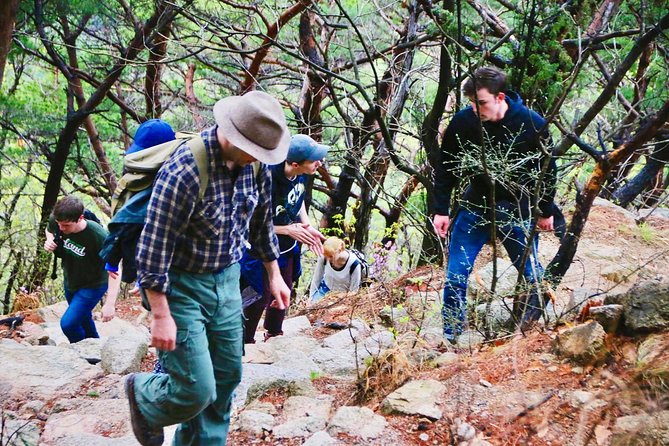
The first major feature of the route is also its hardest. You begin with one long, steep ascent. It requires steady effort, particularly if you are not used to mountain walking, but there is no technical climbing involved.
You do not need ropes, harnesses, or specialist equipment. The trail is described as medium-grade, and the guide can adjust it for different ability levels. That flexibility helps, but it does not turn the walk into an easy stroll. You should still have moderate physical fitness and be comfortable hiking for several hours.
I would treat the first climb as a useful test. If you manage it at a controlled pace, the rest of the day should feel more manageable. Speak up early if you need a slower rhythm or a pause. With only six people, the guide has a better chance of making sensible adjustments than on a large bus tour.
Wear proper walking shoes with a firm sole. The experience operates in all weather conditions, and the weather policy also says that poor conditions may lead to a new date or a full refund. In practice, that means you should dress for the forecast and be prepared for a damp or cooler mountain path.
Forested valleys and wide views
After the steep opening section, the route goes up an afforested valley. The trees provide a change from Seoul’s streets and towers, while the rising path keeps the outing active rather than passive.
The route also crosses a path with spectacular views. The exact view will depend on weather and visibility, but this is one of the strongest reasons to choose the hike. You get a physical sense of Seoul’s mountain setting instead of seeing the city only from a road, observation deck, or crowded landmark.
I like the contrast built into the day. The valley gives you shade and a sense of enclosure. The higher path opens the scene and rewards the climb. You are asked to work for the view, but the route does not require mountaineering skills.
The guide’s stories add another layer as you walk. Shawn has been singled out for combining trail knowledge with tales that hold attention. If he leads your outing, expect the hike to include plenty of explanation about local legends, heritage sites, and supernatural figures.
Folklore about ghosts, goblins, and shamans
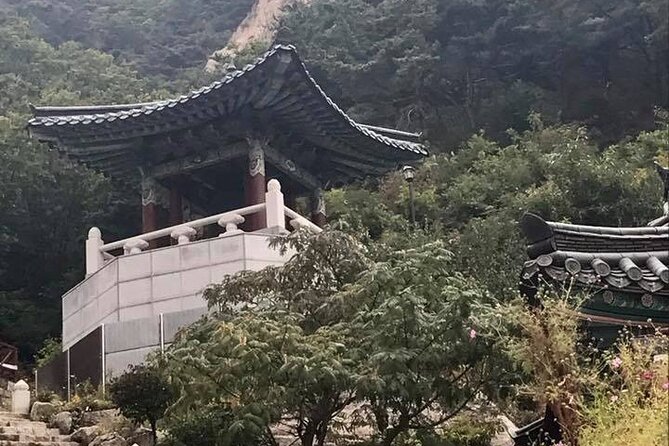
The folklore is the feature that separates this hike from a standard nature walk. Along the way, the guide discusses mountain ghosts, goblins, shamans, religion, and older stories connected with Korea’s rugged peaks.
These subjects fit the setting. Caves, forest paths, isolated religious sites, and unusual rock formations naturally invite stories. The guide uses those places to explain how mountains have held spiritual importance in Korean culture.
You should book this part of the experience for the storytelling, not just for a list of facts. The best moments are likely to come when the explanation is tied to where you are standing. A tale about a cave has more force when the cave is directly ahead, and a discussion of shamanic practice feels less abstract near a mountain site connected with it.
The approach also suits people who like a little mystery in their sightseeing. This is not presented as a formal religious study, and you should not expect a long academic lecture. Instead, the guide brings together folklore, history, religion, and the surrounding trail in an accessible way.
More temple visits in Seoul:
- Seoul: Mt Seorak + Naksansa Temple or Nami Island Group Tour
★ 4.7 · 422 reviews - Best Things to Do – Half Day Seoul Trip (Seoul Palace & Temple)
★ 5.0 · 190 reviews - Mount Seorak and Naksansa Temple One Day Tour from Seoul
★ 4.5 · 167 reviews - Day Tour of Suwon Hwaseong Fortress Starfield Waujeongsa Temple
★ 5.0 · 61 reviews
Buddhist temples in rugged mountain corners
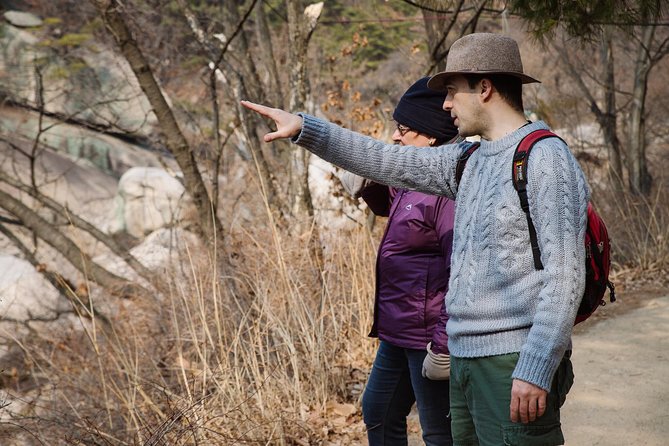
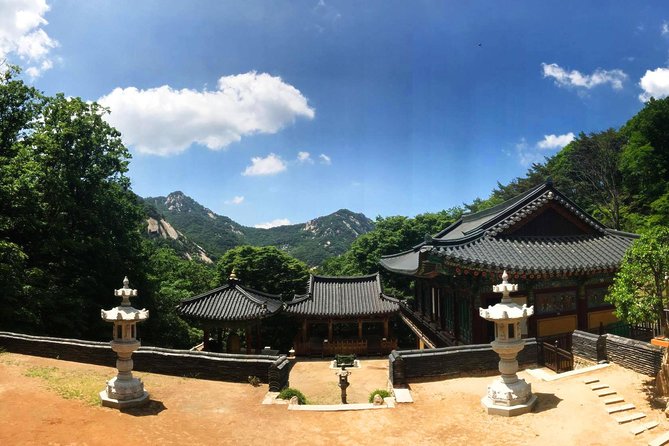
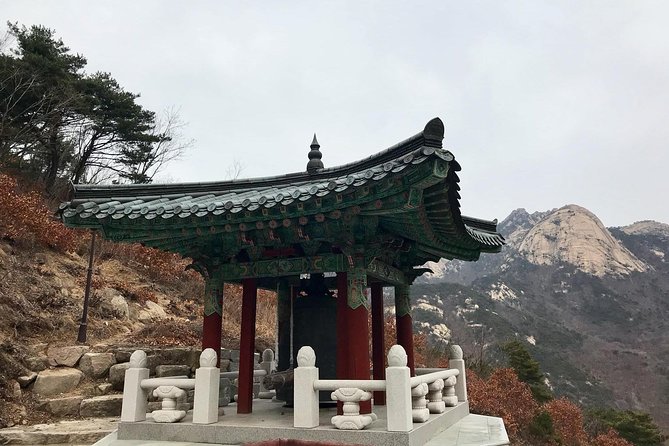
The route descends toward Buddhist temples set in rocky mountain recesses. These stops offer a quieter cultural change after the effort of the climb and the open views above.
A temple visit can be easy to overlook on a busy city itinerary. Here, the setting is part of the appeal. The religious sites are reached on foot, surrounded by the mountain rather than separated from it by traffic and modern buildings.
The experience also includes shamanic caves, according to the route description. Together, the temples and caves show different strands of Korea’s spiritual life. You are not simply checking off a monument. You are seeing how religious and folk traditions have occupied mountain spaces.
The stop may appeal most to anyone interested in Korean folklore or religion. If you mainly want a fast hike with no cultural pauses, the storytelling and site visits may feel like interruptions. For me, they are what give the outing its character.
A Korean mountain meal closes the walk
The hike finishes at a local restaurant serving people who come to the mountains. Lunch, drinks, and alcoholic beverages are included, so the final meal is part of the planned experience rather than an optional extra.
This is a smart ending to a physically active afternoon. You finish the trail, sit down, and eat in the same broad mountain culture that shaped the route. The meal gives you a chance to recover while talking with the guide and the rest of the group.
The information provided does not specify the exact dishes or drink choices. If you have dietary requirements, advise the provider when booking. That matters because the restaurant meal is included and may be arranged in advance.
I would also keep expectations practical. This is a mountain restaurant catering to hikers, not a fine-dining reservation. The value is in the setting, the shared meal, and the way the food completes the walk. Alcoholic beverages are included, but you should pace yourself after a demanding hike.
What the six-hour schedule really means
The activity lasts about six hours, with roughly four to five hours spent hiking. The 1:30 pm start means the outing occupies most of the afternoon and reaches into the evening portion of the day.
You should not plan a tight evening appointment immediately afterward. The hike can be adjusted to different skill levels, but mountain walking has a less exact rhythm than a museum visit. The bus transfer, stretching, trail stops, temple visits, stories, and meal all take time.
The small group is a major practical advantage. A maximum of six people makes it easier to hear the guide and ask questions. It also gives the guide more room to respond to different fitness levels. The trade-off is that the outing depends more on the pace and makeup of a very small group.
At $141.75 per person, this is not a bargain-priced city walk. The price includes a professional guide, bus fare to the trailhead, lunch, drinks, and alcoholic beverages. You are paying for a private-feeling group size, several hours of guided hiking, cultural interpretation, and a meal rather than just transportation to a trail.
I think the cost makes the most sense if you would otherwise need to arrange the mountain route, transport, and meal yourself. If you are an experienced hiker who only wants a marked trail, you may find it expensive. If you want context, company, folklore, and a simpler way to reach Bukhan Mountain, the package offers stronger value.
The experience is booked on average 26 days ahead, so I would not leave it until the final day of a Seoul stay. Free cancellation is available until 24 hours before the start time. Changes or cancellations inside that window are not accepted for a refund, and cut-off times use Seoul local time.
Who should choose this Bukhan Mountain outing
I would recommend it to you if you enjoy moderate hiking and want more than a standard sightseeing route. It suits people who are curious about Korean folklore, Buddhist sites, shamanic traditions, and the way mountain settings shape local stories.
It also works well for solo visitors or couples who prefer a small group. The maximum of six keeps the outing personal without requiring you to organize a private guide.
This is less suitable if you dislike steep climbs, have limited mobility, or want a relaxed walk with little exertion. The opening ascent is clearly the main physical hurdle, and the hike lasts several hours.
The minimum age is 18. You should also be ready to dress appropriately for the weather, since the activity operates in all weather conditions and may be canceled if conditions are poor. Contact the guide by phone or WhatsApp at +82 10-5595-6099 if you need to clarify arrangements.
Should you book it?
Book this hike if your ideal Seoul day includes mountain views, unusual stories, and a local meal rather than another central-city attraction. The combination is hard to duplicate with a simple self-guided walk.
I would choose it for the small group, Shawn’s engaging storytelling when he is leading, the temple and shamanic sites, and the fact that lunch and drinks are already included. I would skip it if you are not comfortable with a steep ascent or if your schedule cannot spare six hours.
For the right person, this is a strong half-day introduction to Bukhan Mountain: active, cultural, slightly eerie, and close enough to Seoul to fit a busy itinerary.
FAQ
Where does the Bukhan Mountain hike begin?
Meet the guide at Gupabal Subway Station, gate 1. The listed meeting address is 19 Jingwan-dong, Eunpyeong District, Seoul, South Korea.
What time does the experience start?
The activity starts at 1:30 pm and lasts approximately six hours.
How long will I spend hiking?
The hike itself generally takes four to five hours. It is rated as medium-grade and includes one long, steep ascent near the beginning.
Is special climbing equipment required?
No. You do not need ropes or harnesses. You should have a moderate level of physical fitness and wear suitable clothing and footwear.
Are food and drinks included?
Yes. Lunch, drinks, and alcoholic beverages are included. Tell the provider about dietary requirements when you book.
What happens if the weather is poor?
The activity operates in all weather conditions, so you should dress appropriately. If it is canceled because of poor weather, you will be offered another date or a full refund.
Just added around Seoul
- Your Personal Seoul Photographer!★ 4.1 · 15 reviews
- From Seoul: Hwacheon Ice Fishing and Lighting Festival Tour★ 4.5 · 4 reviews
- You’re Invited to Our Home in Seoul: The Only Cooking Class!★ 5.0 · 8 reviews
- Seoul: Gangneung BTS K-Pop & K-Drama Filming Locations Tour★ 4.6 · 14 reviews
- Unique Native Experience : Han River Picnic, Board game, BBQ★ 5.0 · 3 reviews
- 2-Hour Private Kayaking and Paddleboarding Experience in Hanriver★ 5.0 · 3 reviews
- Yun Korean Cooking Class in Seoul★ 5.0 · 6 reviews
- Day Trip to Yongin Daejanggeum and Korean Folk Village from Seoul★ 4.0 · 9 reviews
Seoul Temple Tours, compared.
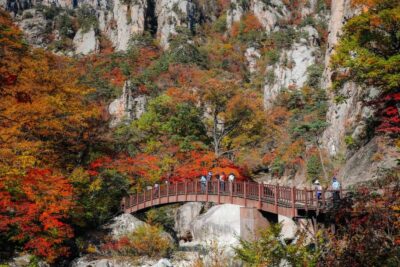
Mt Seorak + Naksansa Temple or Nami Island Group Tour
Read our review →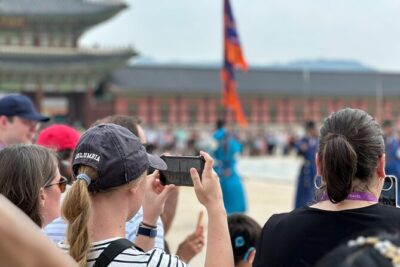
Best Things to Do – Half Day Seoul Trip (Seoul Palace & Temple)
Read our review →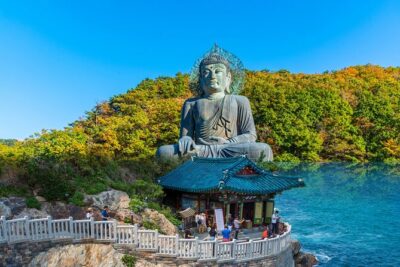
Mount Seorak and Naksansa Temple One Day Tour from Seoul
Read our review →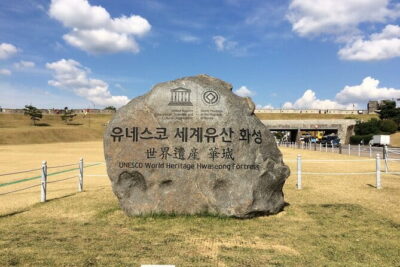
Day Tour of Suwon Hwaseong Fortress Starfield Waujeongsa Temple
Read our review →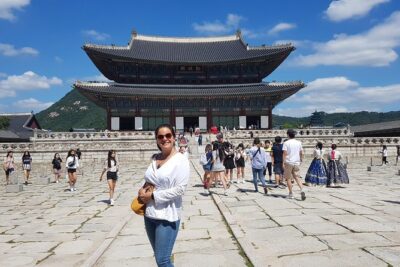
Half day Morning Seoul City Tour(Temple & Gyeongbok Palace)
Read our review →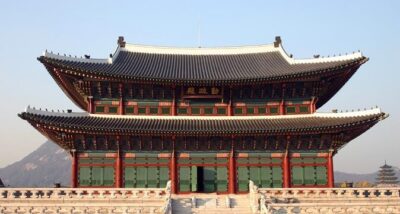
Korean Palace and Temple Tour in Seoul: Gyeongbokgung Palace and Jogyesa Temple
Read our review →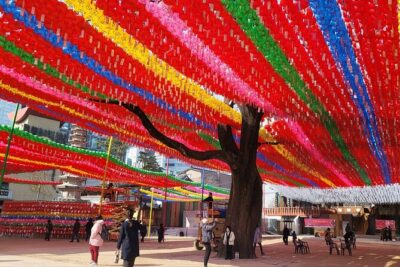
Private Seoul City Tour Palace, village, temple, market
Read our review →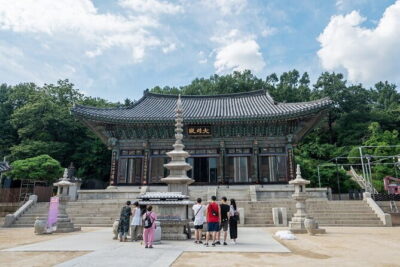
Browse the lists this tour appears in