
Reviewed · POCHEON AND HERB ISLAND DAY TRIPS FROM SEOUL
Ganghwa Island – Full day private tour
Ganghwa Island gives you something Seoul cannot: a close look at rural Korea and its borderland past in one full day. You will visit a battlefield, a mountain temple, a traditional market, and observation points facing North Korea, all without giving up the comfort of a private vehicle.
I like the flexible private format, especially for a long day with seven stops. I also like the mix of places: Gwangseongbo Fortress and Jeondeungsa Temple explain Korea’s past, while the market and countryside show how the island feels today. The main drawback is the price, $220 per person, and lunch is not included.
Key points about the Ganghwa Island day trip
- North Korea is only about 2 kilometers away at the Ganghwa Peace Observatory, where binoculars let you study the opposite shore.
- Your private guide and vehicle make the island easier to cover than public transport, with hotel pickup and drop-off from Seoul.
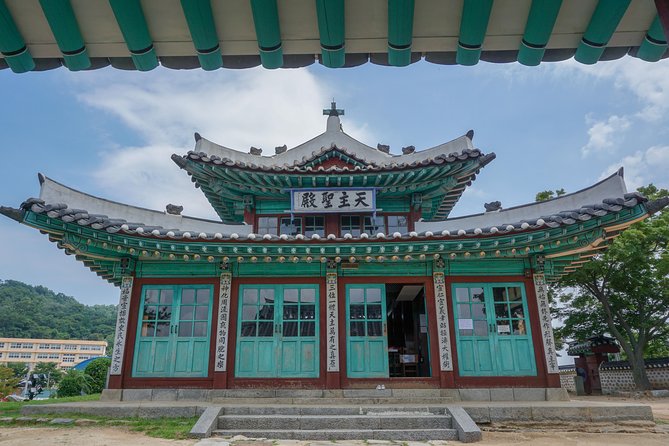
- Gwangseongbo Fortress and Jeondeungsa Temple connect the island to clashes with American and French forces in the 19th century.
- Ganghwa Pungmul Market adds a useful everyday stop, with local products and a chance to see what the island produces.
- The Ganghwa Seaside Resort is optional, with a luge ride available at an extra cost.
- The day begins at 8:30 a.m. and lasts about eight hours, so plan for a full outing rather than a quick escape.
Why Ganghwa Island makes a worthwhile day away from Seoul
Ganghwa Island sits close to Seoul but feels far removed from the capital’s busy streets. The trip is not simply a collection of scenic stops. It shows why this island mattered to the Joseon dynasty, why foreign powers fought here, and how its position near North Korea still shapes the visit today.
The private arrangement matters. You are not trying to piece together buses, taxis, and admission fees across several parts of the island. A driver-guide handles the route while you concentrate on the views and the stories. Hotel pickup and drop-off are included for hotels in Seoul, and transport is by air-conditioned minivan.
At $220 per person, this is not a budget excursion. The value improves if you want a private experience, need Seoul hotel pickup, or prefer a guide who can explain the military and religious sites in clear context. A minimum of two people is required, and group discounts may be available, so the cost makes more sense for a small group than for one person traveling alone.
The day runs for about eight hours. That gives you time to see the main sights without racing through the island, but it also means you should expect a full day on the road. Lunch is not included, so leave room in your budget and schedule for a meal.
More Pocheon and Herb Island trips from Seoul:
- Seoul: Pocheon Art Valley, Garden and Fruit Picking Day Tour
★ 4.5 · 56 reviews - Pocheon Art Valley, Garden & Fruit Picking Day Tour from Seoul
★ 5.0 · 27 reviews - From Seoul: Pocheon, Sanjung Lake and Bidulginang Fall Trip
★ 4.4 · 17 reviews
Gwangseongbo Fortress and the island’s military past
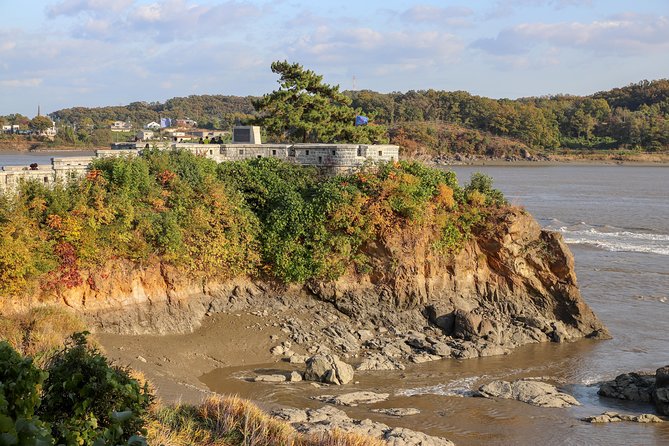
The first major stop is Gwangseongbo Fortress, a former battlefield connected especially with the 1871 conflict involving the United States. You receive an admission ticket, and the planned visit lasts about 30 minutes.
This is where the island’s strategic role begins to make sense. Ganghwa was an important approach to Seoul during the Joseon dynasty, so its defenses were not placed here by accident. Your guide can connect the walls and surrounding ground to the larger question of how Korea tried to protect its capital and control access from the sea.
Thirty minutes is enough for an introduction and a walk through the site, but it is not a long archaeological visit. If you like extended time for photographs or quiet exploration, you may find this stop brisk. The benefit of having a guide is that the remains become easier to understand than they would be as isolated stone walls.
This is also one of the places where a guide with a Western audience in mind can help. The tour’s guides have been praised for explaining major events in a way that gives useful context to people who may not know Korean history. Mr. Lee is one guide associated with this experience, though a particular guide is not guaranteed.
Jeondeungsa Temple inside Samrangseong Fortress
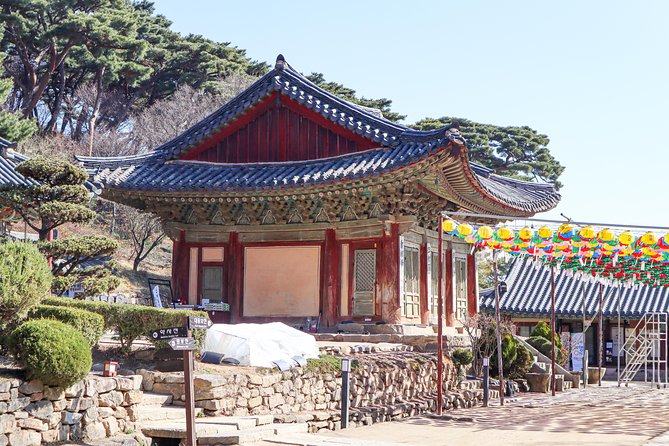
Jeondeungsa Temple brings a different mood. It sits within Samrangseong Fortress and is connected to the 1866 conflict with France. The planned visit lasts about 40 minutes, and admission is included.
I like this pairing with Gwangseongbo. The fortress shows the island as a defensive outpost, while the temple shows its religious and cultural life. You can look at Buddhist buildings, walk through a mountain setting, and gain a clearer sense of how Korean Buddhism fits into the country’s past.
The visit is not only about architecture. It also gives you a pause from military history and driving. The temple is in the mountains, so expect some walking and uneven ground. The tour calls for a moderate level of physical fitness, which is a fair warning for anyone who finds slopes or extended standing difficult.
Forty minutes gives you a focused look rather than a slow temple visit. You may want to ask your guide about the site’s role within Samrangseong Fortress and how the temple survived as the area around it became a battlefield. The guide is an important part of this stop because the buildings alone do not explain the layers of history.
The optional Ganghwa Seaside Resort and luge ride
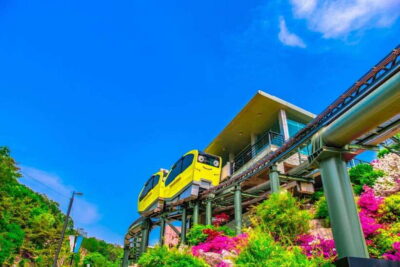
The Ganghwa Seaside Resort is scheduled for about 50 minutes, but this stop is optional. A luge ride down the hill is available if you want a more playful break from fortresses, temples, and border history. The ride costs extra and is not included in the tour price.
This choice helps the tour fit different interests. If you want a quieter cultural day, you can treat the resort as a short stop or skip the luge. If you are traveling with family or simply want an activity with a bit more motion, the luge adds variety.
Do not assume the luge is part of the $220 price. Admission is not included, and the available information does not give the separate cost. Ask about the current fee before committing. Since the stop is optional, it is also worth telling your guide early if you want to spend the time elsewhere.
More full-day trips in Seoul:
- Full Day Tour In The Soop BTS Ver in PyeongChang Filming Location
★ 5.0 · 1,709 reviews - Seoul City Private Full-Day Tour Including Lunch
★ 5.0 · 469 reviews - Full-day Customizable Private Seoul Highlight Tour
★ 5.0 · 301 reviews - Full-Day Tour in Mt. Seorak & Nami (+Rail Bike Option)
★ 5.0 · 186 reviews
Ganghwa Pungmul Market and everyday island life
The visit to Ganghwa Pungmul Market lasts about 30 minutes and has no separate admission fee. This is one of the most useful stops for seeing the island as a living community rather than only as a historic site.
You can look at local products and get a sense of what Ganghwa offers beyond its fortresses and temples. The market also creates a natural opening to ask your guide about rural life, agriculture, and the island’s specialties. The experience has been praised for showing a side of South Korea outside the city, including agricultural life and local food.
Thirty minutes is enough to browse, but not enough for an unhurried meal and a long shopping session. If something catches your eye, keep track of time. You will also need to arrange lunch separately, though food and coffee can be worked into the day with the guide.
One particularly useful tip is to ask your guide about the best local products before buying. A private guide can explain what the island is known for and help you make the most of a short market visit.
Peace Observatory and the view toward North Korea
The Ganghwa Peace Observatory is the emotional center of the tour. From here, binoculars let you look toward North Korea, which is described as only about 2 kilometers away from the island. Admission is included, and the planned visit lasts about 40 minutes.
This is not a visit to North Korea, of course. You remain in South Korea, looking across the water toward a country that is physically close but politically distant. The binoculars give you a chance to see the opposite shore and observe signs of life there, while the guide explains the setting.
The experience depends heavily on weather and visibility. The tour promises the viewing equipment and the location, but it cannot guarantee a perfectly clear view. Even on a clear day, this is better understood as a border observation stop than a dramatic sightseeing platform.
Take the moment seriously but keep your expectations realistic. You may see a distant shoreline and evidence of human activity rather than a close-up portrait of North Korean life. The importance comes from the distance, the tension, and the fact that you are viewing across one of the world’s most closely watched borders.
This stop is a strong reason to choose the private tour over a general city excursion. Your guide can answer questions as they arise, and the small-group setting gives you more room to linger at the binoculars.
Yeonmijeong Pavilion and another North Korean view
Yeonmijeong Pavilion provides a second viewpoint, with a 30-minute stop and no separate admission fee. You can see parts of Ganghwa Island and get another look toward North Korea.
The pavilion works well after the Peace Observatory because it gives you a broader sense of the island’s position. The observatory is designed for border viewing, while Yeonmijeong adds a scenic pause and a chance to understand the surrounding geography.
Do not expect the two viewpoints to feel completely different. Both face the same wider border region, so travelers who are mainly interested in historic buildings may find the second look less essential. I would keep it, though, because the short stop adds breathing room and does not require another ticket.
Bring patience for the weather. Views across the water are naturally dependent on conditions, and the tour cannot control haze or visibility. Your guide can help point out what you are seeing, which makes this more useful than simply arriving, taking a photograph, and leaving.
Ganghwa Anglican Cathedral and the island’s international links
The final listed stop is Ganghwa Anglican Cathedral, visited for about 30 minutes at no extra admission cost. The cathedral reflects Ganghwa’s role as an entry point toward Seoul and the arrival of Westerners in Korea.
This is a good closing stop because it widens the story again. The day has already shown you Korean defenses against foreign forces and a Buddhist temple rooted in local tradition. The Anglican cathedral adds another layer, showing how outside religious and cultural influences reached the island.
The stop is brief, but it gives the tour more balance. You are not left with the impression that Ganghwa is only a military outpost or a place to look at North Korea. It is also a place where Korea met the wider world.
What the private format adds to the day
The private group setup is the strongest practical feature. Only your group participates, and the vehicle is reserved for you. That means you can ask questions freely, hear the guide clearly, and adjust the pace within the limits of the eight-hour schedule.
The driver also serves as your guide. That is convenient because you do not need to change vehicles or manage separate transfers. Bottled water is included, and the air-conditioned minivan is useful after walking outdoors or during the drive from Seoul.
Guide quality will shape the experience. Mr. Lee and Miae are names associated with particularly strong guide experiences, with Miae described as personable and helpful with food and coffee suggestions. You cannot assume either person will lead your booking, so treat those names as examples rather than a promise.
The tour suits you best if you want history explained in plain language. It is less ideal if you prefer a slow, self-directed day with long meals, extended shopping, or hours at one site. Seven stops create variety, but they also mean the schedule keeps moving.
Price, timing, and who gets the best value
The $220 per-person price includes Seoul hotel pickup and drop-off, air-conditioned transport, a driver-guide, bottled water, and the listed admission fees. Gwangseongbo Fortress, Jeondeungsa Temple, the Peace Observatory, and the other included sights are covered where specified.
Lunch is not included. The luge at Ganghwa Seaside Resort is also extra, so budget for both if you want them. The tour requires at least two people, and group discounts may improve the price for a larger private party.
I see the cost as reasonable for a small group that values convenience and personal attention, but expensive for someone mainly seeking a cheap countryside ride. Public transportation and independent visits might cost less, though they would require more planning and could make seven stops difficult in one day.
The start time is 8:30 a.m. Since the outing lasts roughly eight hours, wear comfortable shoes and be ready for walking at the fortress, temple, pavilion, and cathedral. A moderate fitness level is recommended.
Free cancellation is available if you cancel at least 24 hours before the start time. Changes or cancellations inside that period are not accepted for a refund.
Should you book the Ganghwa Island tour?
Book this tour if you want a private, well-organized day from Seoul that combines Korean history, rural life, Buddhist culture, and a close view toward North Korea. It is especially useful for a first visit to Korea when you want a guide to connect events that might otherwise feel scattered.
The tour is a good fit for couples, families, and small groups who value hotel pickup and a private vehicle. It is also a strong choice if the Peace Observatory is your main goal and you want more than a quick border stop.
Skip it if $220 per person feels too high, if you dislike a full eight-hour schedule, or if you want to spend most of the day at one temple, market, or scenic viewpoint. For everyone else, Ganghwa offers a meaningful change of pace from Seoul, with enough variety to make the long day worthwhile.
FAQ
How long is the Ganghwa Island private tour?
The experience lasts approximately eight hours, beginning at 8:30 a.m.
Is hotel pickup included?
Yes. Hotel pickup and drop-off are included for hotels located in Seoul.
Is this a private tour?
Yes. Only your group participates, and the tour uses a private air-conditioned minivan.
Is lunch included in the price?
No. Lunch is not included and must be paid for separately.
Can I ride the luge at Ganghwa Seaside Resort?
Yes, a luge ride is available at the optional Ganghwa Seaside Resort stop. The ride is not included in the tour price.
How close is North Korea to Ganghwa Island?
North Korea is described as approximately 2 kilometers away from the island. At the Peace Observatory, you can use binoculars to look toward North Korea.
Just added around Seoul
- Your Personal Seoul Photographer!★ 4.1 · 15 reviews
- From Seoul: Hwacheon Ice Fishing and Lighting Festival Tour★ 4.5 · 4 reviews
- You’re Invited to Our Home in Seoul: The Only Cooking Class!★ 5.0 · 8 reviews
- Seoul: Gangneung BTS K-Pop & K-Drama Filming Locations Tour★ 4.6 · 14 reviews
- Unique Native Experience : Han River Picnic, Board game, BBQ★ 5.0 · 3 reviews
- 2-Hour Private Kayaking and Paddleboarding Experience in Hanriver★ 5.0 · 3 reviews
- Yun Korean Cooking Class in Seoul★ 5.0 · 6 reviews
- Vivaldi Park Winter Ski Resort with Nami Island Tour from Seoul★ 4.5 · 7 reviews
Pocheon and Herb Island Day Trips from Seoul, compared.
Pocheon Art Valley, Garden and Fruit Picking Day Tour
Read our review →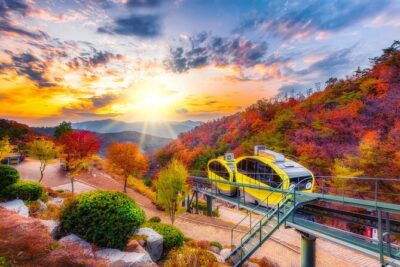
Pocheon Art Valley, Garden & Fruit Picking Day Tour from Seoul
Read our review →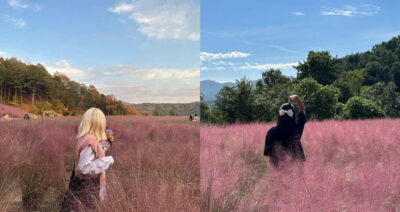
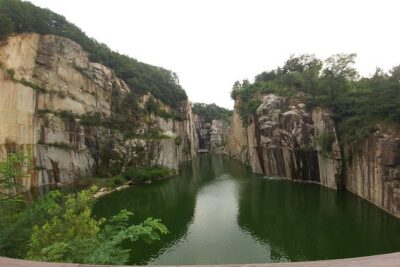
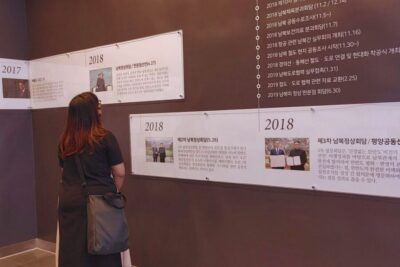
Ganghwa Island UNESCO World Heritage Private Tour
Read our review →
Herb Island and Sanjung Lake and Bidulginang Water Falls
Read our review →Browse the lists this tour appears in