
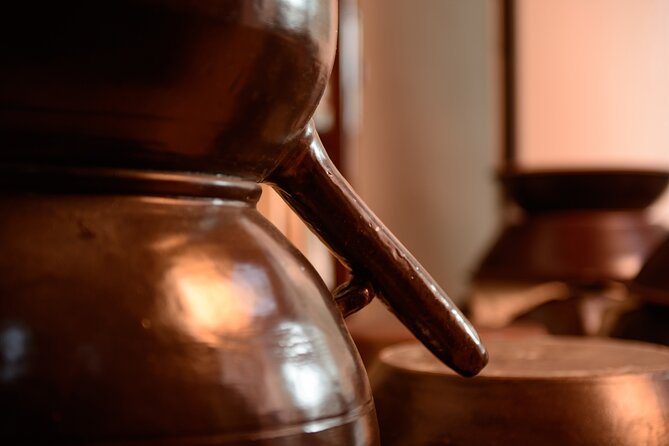
Reviewed · SEOUL PUB CRAWLS AND MAKGEOLLI TASTINGS
Soju Tasting at Distillery – story of 3 pigs
Traditional Korean soju is not the mild green bottle most visitors find in Seoul convenience stores. At Samhae Soju, you taste premium spirits at 45% alcohol or higher, learn how rice becomes alcohol, and hear the story of a Joseon-era recipe kept alive by master distillers.
I like the chance to enter a distillery not normally open to the public, and I like the relaxed, social teaching style of host Sam Lee. The main caution is simple: seven strong pours in 90 minutes can catch up with you, so eat first and pace yourself.
Key points at a glance
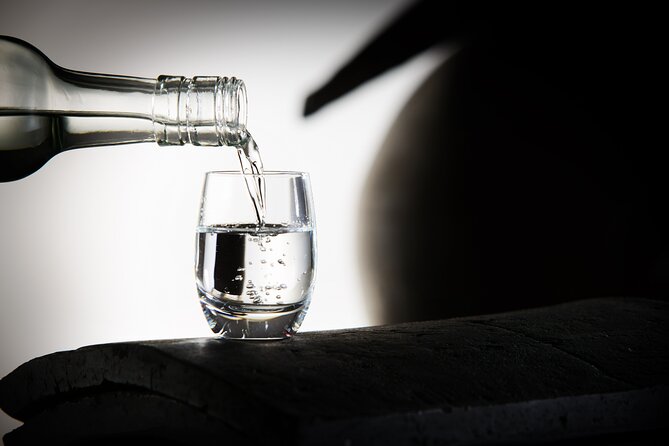
- Seven or more Korean drinks: Taste several kinds of soju, plus examples of takju and cheongju.
- A working distillery: See fermentation and production in a place not generally open to the public.
- Premium strength: Some soju reaches 45% alcohol or more, far above standard green-bottle soju.
- Joseon-era roots: Learn about Samhae soju, once favored by the noble class.
- Small-group setting: The activity is designed for a small group, with booking information listing a maximum of 10 people.
- Useful Seoul advice: Sam Lee also shares Korean drinking customs, restaurant suggestions, and ideas for the rest of your trip.
Why this is not ordinary green-bottle soju
The first useful lesson here is that Korean alcohol has several branches. Takju is unfiltered rice wine. Cheongju is clear, filtered rice wine. Soju is distilled spirit.
The familiar green bottle sold all over Seoul is usually a mass-produced, diluted drink with added sweetener. It is inexpensive, easy to drink, and closely tied to everyday Korean meals. But it does not show you the full range of what soju can be.
At Samhae Soju, you get the traditional version. The tasting focuses on small-batch spirits made by a master distiller, with powerful aromas, more grain character, and much greater strength. You may still enjoy the green bottle, but you will understand why it is only one small part of the story.
I appreciate this kind of comparison because it gives the tasting a clear purpose. You are not simply being handed a row of glasses. You are learning why two drinks called soju can taste and feel so different.
More pub crawls and makgeolli tastings in Seoul:
- Seoul: Pub Crawl
★ 4.7 · 903 reviews - The Seoul Pub Crawl Official
★ 5.0 · 838 reviews - Drinking and Eating through the Alleys of Seoul
★ 5.0 · 364 reviews
Inside Samhae Soju in Mapo
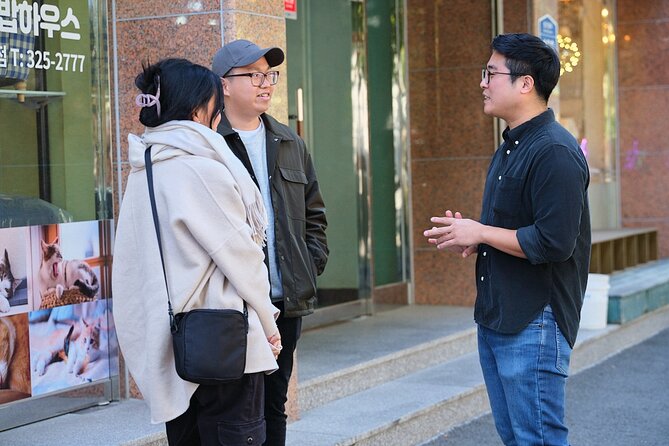
The meeting point is Samhae Soju, at World Cup buk-ro 109, basement level 1, in Seoul’s Mapo-gu district. The location is near public transportation, which helps, but you should allow time to find the exact entrance and arrive ready to begin at the stated meeting point.
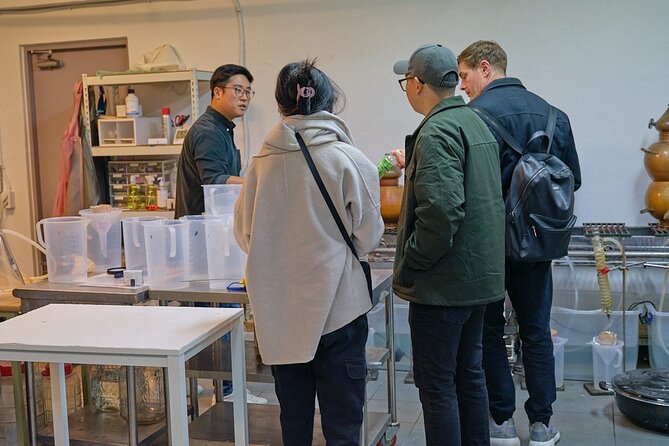
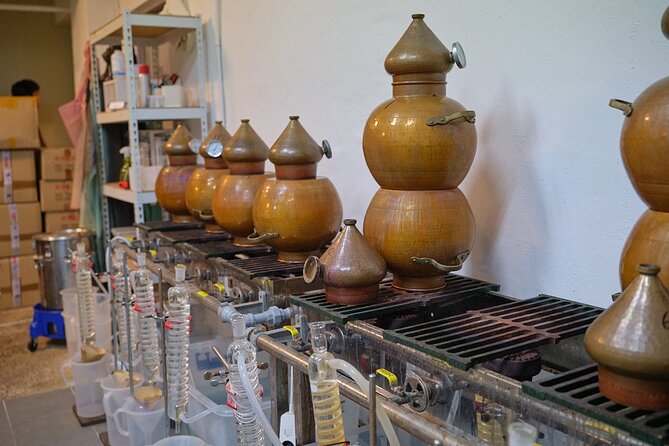
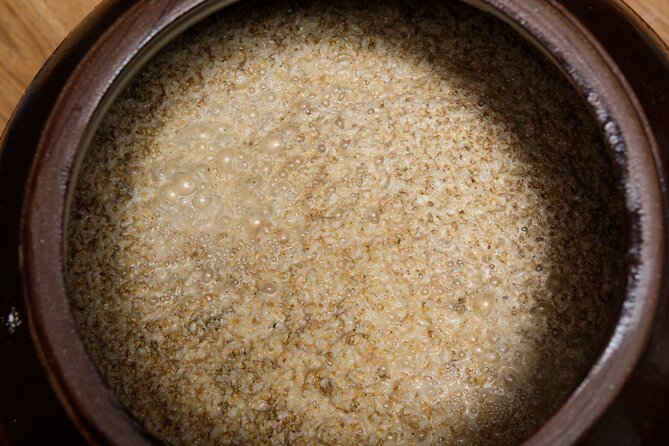
The experience takes place inside the distillery. That matters. You are not sitting in a polished cocktail bar with a few bottles lined up for decoration. You get a look at the setting where Korean alcohol is made, including fermentation in progress according to the experience details.
The space is likely to feel practical rather than grand. That is part of the appeal. The point is to see a working producer and understand the stages behind the drink. If you prefer sleek interiors, formal service, and a carefully staged tasting room, this may feel basic. If you want something closer to a local production visit, it fits well.
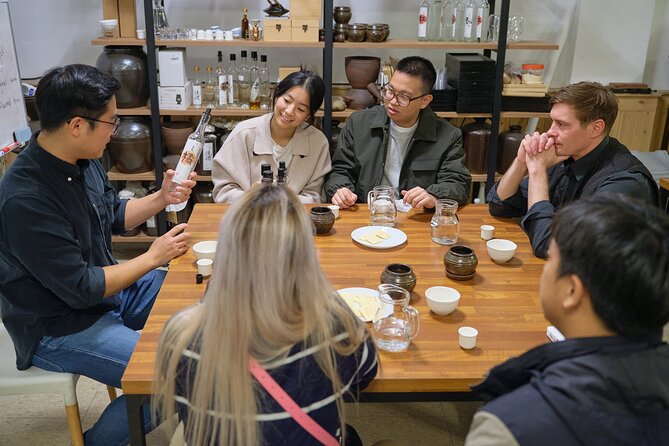
The group is kept small. Booking information gives a maximum of 10 people, while the description also refers to groups of up to 12. Either way, this is not a large coach tour. A small group gives you room to ask questions and makes it easier for Sam to explain each drink.
Sam Lee’s relaxed way of teaching
Sam Lee is the host, and his role is central to the experience. He explains the history and production of soju in clear, friendly language, with plenty of conversation along the way. The tone is informal, closer to sharing drinks with a well-informed local than attending a formal lecture.
That style works especially well for beginners. You do not need to know the difference between fermentation and distillation before arriving. Sam explains the process, answers questions carefully, and adds practical information about Korean manners and drinking customs.
He also offers suggestions for restaurants and places to visit in Seoul. These tips are not the main product, but they can be useful if you are still shaping your itinerary. You may leave with ideas for what to eat alongside soju, which is often more helpful than another generic list of city attractions.
The social side can change depending on the group. Most of the activity depends on conversation among the people present. A friendly group will make the tasting feel warm and easy. A quieter group may produce a more guide-led session. One solo participant had a less satisfying social experience because other participants did not include them much, so solo visitors should know that the group dynamic matters.
The story of Samhae soju and the three pigs
Samhae soju was associated with the noble class during the Joseon dynasty, which lasted from 1392 to 1894. The recipe used a large amount of rice, making the spirit costly and difficult to produce during times of famine.
That rice-heavy method eventually forced production to stop during shortages. The drink survived through careful preservation of the family recipe. Current master Hyeonjong Kim learned the method from master Taeksang Kim and practiced it for more than 10 years.
Master Taeksang Kim died in 2021, making the continuation of the recipe especially meaningful. The tasting gives you a chance to connect a modern Seoul distillery with an older Korean drinking tradition, rather than treating soju as just another high-proof spirit.
The name connected with this experience, 3 Pig Soju, adds a memorable thread to the story. You will hear about the distillery and its background as you taste. The tale gives the bottles a sense of place and purpose, although the real focus remains the method, the ingredients, and the flavors in your glass.
More food tours in Seoul:
- Seoul Street Food Market Tour
★ 5.0 · 1,226 reviews - Seoul: Night Market Food Tour with Local Guide
★ 4.9 · 943 reviews - Downtown Seoul Guided Food & Market Tour with 8+ Local Tastings
★ 5.0 · 580 reviews - Small-Group Night Food Tour in Seoul with Korean BBQ
★ 5.0 · 304 reviews
What happens during the 90-minute tasting
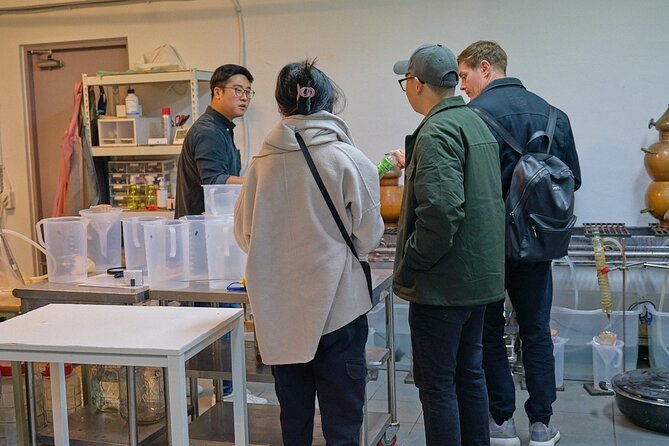
The experience lasts about one hour and 30 minutes. The exact order can depend on the host and the group, but you should expect three main parts: an introduction to Korean alcohol, an explanation of the production process, and a series of tastings.
The opening section places soju within Korean drinking culture. You learn about takju, cheongju, and soju, and why these categories are different. This makes the later tasting easier to follow. Instead of wondering why one drink is cloudy and another is clear, you understand what happened during production.
Next comes the distillery visit and production explanation. You may see fermentation in progress and learn how takju and cheongju relate to soju before distillation. This is a valuable part of the experience because it shows that soju is not an isolated product. It comes from a broader rice-wine process.
Then the tasting begins in earnest. At least seven Korean alcoholic drinks are included, with several soju varieties and special aromas. You may taste differences in strength, sweetness, texture, and scent. Some pours are much stronger than standard commercial soju, so the progression can become increasingly serious even when the atmosphere stays light.
The session can feel short once conversation gets going. One useful criticism is that 90 minutes may not feel long enough for the tasting, history, production explanation, and group discussion. You get a lot in a compact period, but do not expect a slow, half-day distillery visit.
Expect strong pours, not casual sips
The most important practical point is alcohol strength. The premium soju served here is listed at 45% alcohol or above, equivalent to 90 proof or more. That is close to the strength of many standard spirits, not the gentle profile of a typical green bottle.
You may feel pleasantly tipsy by the final tasting. That is not necessarily a problem, but it does affect how much information you remember and how safely you get back to your accommodation. Eat before the session, drink slowly, and do not plan another demanding activity afterward.
The tasting includes at least seven drinks, and several may be flavored or scented with special additions. The variety keeps the session interesting, but it also makes pacing important. You do not need to finish every pour quickly just to keep up with the group.
This is best approached as a serious alcohol tasting with a friendly mood, not as a quick pre-dinner drink. If you rarely drink spirits, you can still enjoy the history and production lesson, but the alcohol may be the limiting factor.
How the flavors compare with everyday soju
The traditional spirits should taste different from the inexpensive soju sold in supermarkets and restaurants. The industrial bottles are designed for broad appeal, low cost, and easy pairing with food. Traditional versions can feel stronger, fuller, and more expressive.
You may notice that the drinks vary widely from one sample to the next. Some may have a cleaner grain character, while others may show more aroma or a fuller finish. The point is not to identify a single winning bottle. It is to see how rice, fermentation, distillation, and added aromas shape the final drink.
For spirit drinkers, this is the strongest reason to book. You get a chance to try Korean alcohol with the intensity and structure of a premium distilled spirit. For people who only know sweet or mild soju, the difference can be surprising.
I would not book this expecting a wine-style tasting with detailed printed notes or a formal scoring system. The emphasis is on explanation, conversation, and direct comparison. You learn by listening and tasting rather than by studying a technical sheet.
Is $43.83 good value?
At $43.83 per person, the price is not bargain-level for a 90-minute activity. You are paying more than you would for several bottles of ordinary soju in Seoul. The value comes from the access, the number of samples, the high-proof spirits, and Sam Lee’s explanation of Korean alcohol and culture.
If you bought drinks on your own, you could spend less, but you would not get access to this distillery or the guided comparison. You would also miss the story of the Samhae recipe and the chance to see how fermentation connects to takju, cheongju, and soju.
For a visitor who already plans to spend an evening drinking in Seoul, this can be a worthwhile use of part of that budget. You are combining education and tasting in one compact stop. The small group also gives the session a more personal feel than a large commercial tour.
The value is weaker if you do not drink alcohol, dislike high-proof spirits, or want a long production tour. In those cases, much of the cost is tied to something you may not enjoy. The activity is best for curious drinkers who want context, not simply the cheapest way to try soju.
Who will enjoy this most?
I would recommend it most strongly to:
- People who drink spirits and want to compare Korean styles
- Visitors curious about Korean food and drinking customs
- Couples and friends looking for a relaxed evening activity
- Solo visitors who are comfortable joining a small group
- Anyone tired of seeing soju reduced to the green bottle stereotype
- Guests who enjoy asking questions and talking with a local host
It is also a good fit if you want an activity with a strong connection to Seoul rather than another general sightseeing stop. The subject is specific, local, and tied to Korean history.
Families with children would not be a natural match because the core activity is alcohol tasting. People who need a completely alcohol-free outing should choose something else. The same goes for anyone who finds group conversation tiring or prefers a quiet, self-guided tasting.
Practical advice before you go
Eat something beforehand. This is the clearest preparation tip because the tasting includes at least seven drinks and some are 45% alcohol or stronger.
Use public transportation and keep your return plans simple. The meeting point is near public transportation, but the activity ends back at Samhae Soju, so you will need to make your own way onward after the tasting.
Bring questions. Sam Lee’s conversational approach works best when you take part. Ask about the difference between the types of Korean alcohol, the family recipe, fermentation, or drinking customs.
Plan for a small group, but remember that the mood depends partly on who joins. Most of the session is social, so solo visitors may have a better time if they are comfortable starting conversations themselves.
The experience is mobile-ticket based, and confirmation is provided at booking. The booking terms are strict: it is non-refundable and cannot be changed for any reason. The stated exception is poor weather, in which case the activity may be moved to another date or refunded.
Should you book this soju tasting?
Book it if you want to understand what traditional Korean soju can be, rather than simply knock back a cheap green bottle. You will visit a real distillery, taste at least seven drinks, hear the story of a Joseon-era style, and learn from Sam Lee in a friendly small-group setting.
Skip it if you want a long, slow tour, dislike strong spirits, or are looking for a low-cost drinking stop. The 90-minute format is compact, and the alcohol comes quickly.
For most curious drinkers, the combination of access, history, production, and tasting makes the $43.83 price reasonable. Eat first, pace yourself, and leave room for conversation. That is how this experience works best.
FAQ
Where does the soju tasting take place?
It takes place at Samhae Soju in Seoul’s Mapo-gu district, at World Cup buk-ro 109, basement level 1.
How long does the experience last?
The tasting lasts approximately one hour and 30 minutes.
How many drinks are included?
You will taste at least seven different types of Korean alcohol. The selection includes several soju varieties and may also include takju and cheongju.
How strong is the soju?
The premium soju included in the tasting is 45% alcohol or higher, which is 90 proof or above.
Who leads the experience?
Sam Lee hosts the activity. He explains soju production, Korean alcohol, history, drinking customs, and related cultural details.
How large is the group?
The booking information lists a maximum of 10 travelers. The activity description also refers to groups of up to 12 people.
Can I cancel for a refund?
The experience is non-refundable and cannot be changed for any reason. If poor weather causes the activity to be canceled, you will be offered another date or a full refund.
Just added around Seoul
- Your Personal Seoul Photographer!★ 4.1 · 15 reviews
- From Seoul: Hwacheon Ice Fishing and Lighting Festival Tour★ 4.5 · 4 reviews
- You’re Invited to Our Home in Seoul: The Only Cooking Class!★ 5.0 · 8 reviews
- Seoul: Gangneung BTS K-Pop & K-Drama Filming Locations Tour★ 4.6 · 14 reviews
- Unique Native Experience : Han River Picnic, Board game, BBQ★ 5.0 · 3 reviews
- 2-Hour Private Kayaking and Paddleboarding Experience in Hanriver★ 5.0 · 3 reviews
- Yun Korean Cooking Class in Seoul★ 5.0 · 6 reviews
- Day Trip to Yongin Daejanggeum and Korean Folk Village from Seoul★ 4.0 · 9 reviews
Seoul Pub Crawls and Makgeolli Tastings, compared.

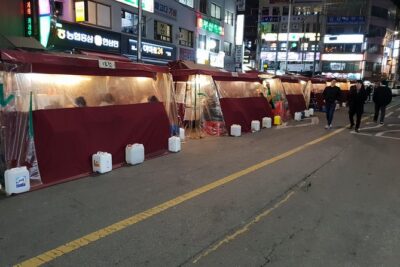
Drinking and Eating through the Alleys of Seoul
Read our review →
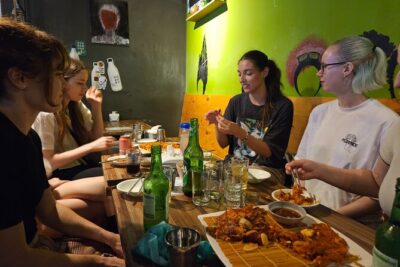
Korean Drinking Games Night (non-drinkers are also welcome)
Read our review →
Korean Drinking Games Night (non-drinkers welcome)
Read our review →
Itaewon Premium Pub Crawl with VIP Bottle Service
Read our review →Browse the lists this tour appears in