
Reviewed · SEOUL TRADITIONAL MARKET TOURS
Market Food Tour & Evening E-bike Ride in Seoul
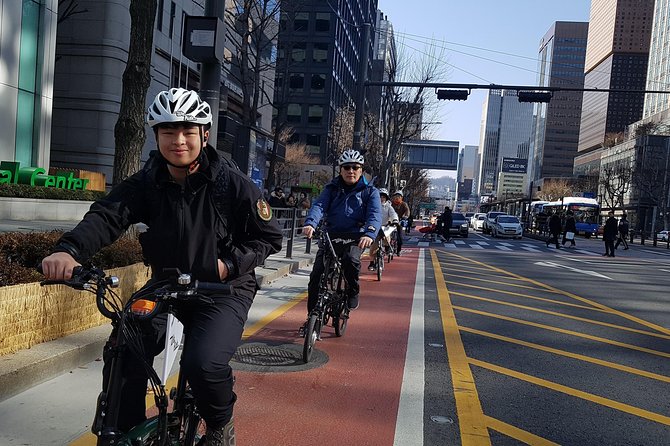
Seoul comes into focus quickly on this three-hour ride. You pedal beside Cheonggyecheon Stream, pass palace gates and traditional homes, stop for street food at Gwangjang Market, then climb Bukchon’s hills without grinding your way up. As daylight fades, the route shifts to the Blue House area and Seoul’s glowing financial district.
I like the 90% bike-lane route, which makes this one of the more comfortable ways to cover central Seoul. I also like the mix of major sights and less obvious stops, especially Sewoon Arcade and the quieter parts of Bukchon. The main catch is physical: you need moderate fitness, confidence on a bicycle, and enough energy for hills, traffic awareness, and an evening ride.
- Gwangjang Market tasting: Try signature street food and leave time for market shopping.
- Electric help in Bukchon: The e-bike matters on the uphill sections and opens up quieter viewpoints.
- Palaces and modern Seoul together: See Gyeongbokgung, Changdeokgung, Gwanghwamun Square, and the financial district in one compact route.
- Sewoon Arcade stop: Visit a 1970s architectural landmark that has changed with modern Seoul.
- Small-group format: The maximum group size is 15, with guides such as Vincent or Vince leading the ride.
- Cooler evening timing: Less work traffic, softer light, and city views after sunset make the schedule practical.
Why This Evening Ride Works So Well in Seoul
Seoul is too large to understand on foot in a short visit. The subway is fast, but underground travel hides the connections between neighborhoods. A bicycle gives you that missing link. You see the stream, palace walls, market streets, old homes, and office towers as parts of one city rather than isolated stops.
This tour is especially useful early in your stay. It gives you a broad look at central Seoul, with enough history to help you decide where to return later. The route also covers places that can be awkward to combine independently in one evening, including both royal palaces, two versions of Bukchon, Ikseon-dong, Sewoon Arcade, and Gwangjang Market.
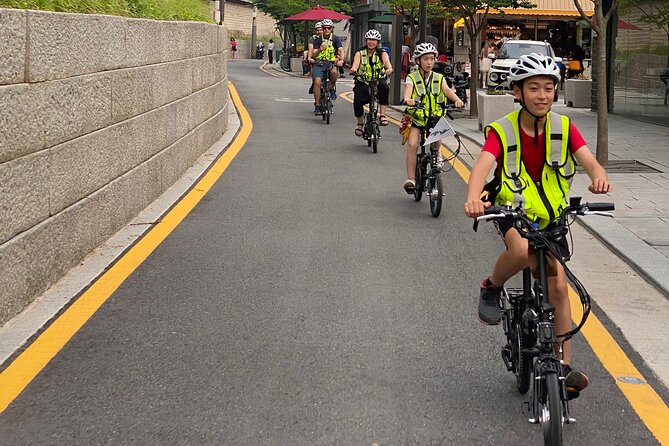
The electric bike changes the experience. Bukchon is hilly, and some of the best views are beyond the easiest flat streets. The motor does the hard work, but you still need to steer, brake, and ride responsibly. This is not a passive sightseeing vehicle. You are on a real bicycle in a real city.
Starting Beside Cheonggyecheon Stream
The meeting point is the Korea Tourism Organization at 40 Cheonggyecheon-ro in Jung District. Plan to arrive about 20 minutes before the start for bicycle and helmet fitting. The guides arrive 30 minutes before departure, so arriving early gives you time to get comfortable rather than rushing through safety instructions.
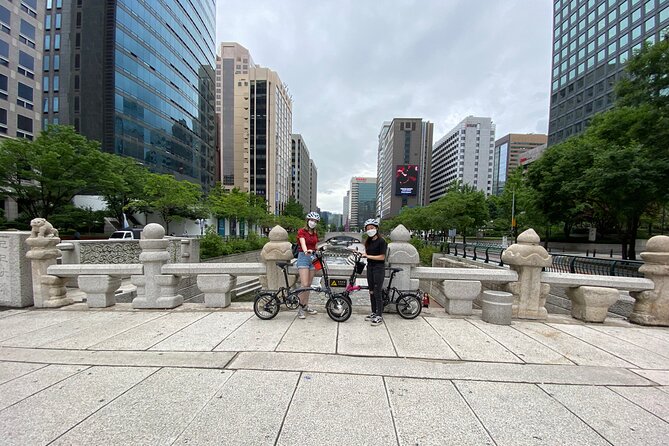
The first stop is Cheonggyecheon Stream, once a main waterway through Seoul. The stream is a calm opening to a busy city, and the guide uses it to explain how Seoul changed over time. You have about 10 minutes here, enough for a look and a few photographs rather than a long walk along the water.
This early stop also helps you settle into the bike. Pay attention to how the e-bike responds when you start and stop. A little practice here is useful before the route moves through more crowded areas.
More traditional market tours in Seoul:
- Seoul: Gyeongbok Palace, Bukchon Village, and Gwangjang Tour
★ 4.9 · 2,321 reviews - Seoul Street Food Market Tour
★ 5.0 · 1,226 reviews - DMZ Tour Seoul to North Korea’s 3rd Tunnel & Majang Lake Crossing
★ 5.0 · 1,185 reviews
Palace Gates and Seoul’s Joseon Past
The route continues to Gyeongbokgung Palace, where you see the main gate and reconstructed entrance plaza. The stop lasts about 10 minutes and focuses on context rather than a full palace visit. You will not tour every courtyard, but you will get a clear sense of the palace’s place in Seoul’s history.
Gwanghwamun Square adds another layer. From here, you can see modern Seoul set against the old royal center. The guide points out the palace gate and explains how the area connects present-day Seoul with the Joseon-era capital.
Changdeokgung Palace provides a useful comparison. Seeing the two palaces on the same ride helps you understand that they are not simply duplicate photo stops. The guide explains differences between the sites, though the visit is brief, about 10 minutes.
The practical point is this: the tour is designed for orientation, not a detailed palace admission experience. If you want to explore palace interiors, gardens, or museum rooms at length, plan a separate visit. If you want the gates, setting, and essential background without spending your whole evening inside one complex, the short stops work well.
Two Sides of Bukchon Hanok Village
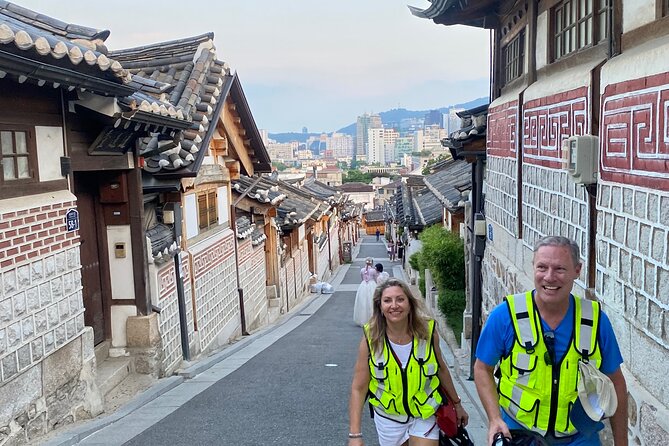
Bukchon Hanok Village is one of the ride’s strongest sections. Its traditional homes, narrow lanes, and hillside views make it one of Seoul’s most recognizable neighborhoods. The tour first spends about 15 minutes riding through the area and finding quieter photo spots.
Later, you return for a longer 30-minute look at both the famous and less visited parts of Bukchon. This second visit is important. Many visitors see only the crowded streets near the best-known viewpoints. An e-bike lets you reach higher sections and approach the neighborhood from a different direction.
The route may also give you a view toward N Seoul Tower from the upper part of Bukchon. That contrast is classic Seoul: tiled hanok roofs in the foreground, a modern skyline beyond them.
The e-bike earns its keep here. The hills are the part of the tour most likely to separate a casual rider from someone who is not comfortable cycling. You do not need to be an athlete, but you should have moderate fitness and be ready for slopes and descents. The guide’s pace and road positioning matter, which is one reason a maximum group of 15 is helpful.
Remember that Bukchon is a lived-in neighborhood, not an open-air stage set. Keep your voice down, follow the guide’s instructions, and take photographs without blocking homes or lanes. The quieter sections are valuable precisely because they feel less like a checklist stop.
Ikseon-dong and the Old City’s New Energy
Ikseon-dong Hanok Street brings a different mood. Traditional Korean houses line streets now used for cafés, restaurants, and date spots. You have about 15 minutes here, enough to see the architecture and get a sense of why the area is popular.
The appeal is the mix of old building forms and newer urban life. You are not looking at a preserved neighborhood frozen in time. You are seeing historic houses used in a modern way, with Seoul’s residents turning an older district into a social meeting place.
This stop is short, so do not expect a long café break or a full meal. Its value is visual and atmospheric. It also prepares you for Sewoon Arcade, where the city’s older structures have taken on new uses.
More food tours in Seoul:
- Seoul: Night Market Food Tour with Local Guide
★ 4.9 · 943 reviews - Downtown Seoul Guided Food & Market Tour with 8+ Local Tastings
★ 5.0 · 580 reviews - Small-Group Night Food Tour in Seoul with Korean BBQ
★ 5.0 · 304 reviews - Seoul Night Palace & Market Food Tour with Vehicle
★ 5.0 · 275 reviews
Sewoon Arcade, a 1970s Time Capsule
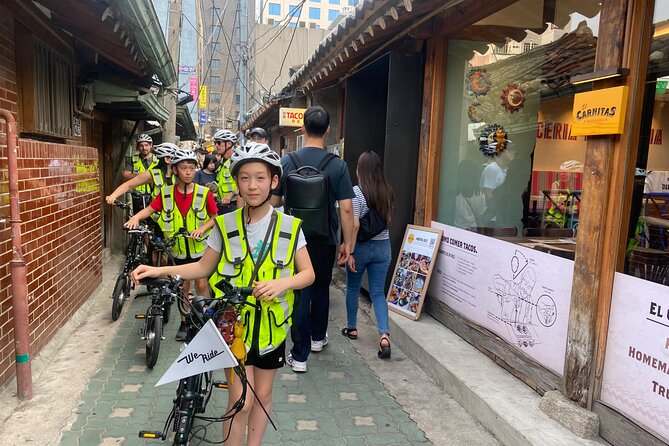
Sewoon Arcade, also called Makercity Sewoon, is one of the most unusual stops on the route. The plaza was once considered a major architectural achievement in 1970s Korea. Today, it reflects the way Seoul keeps adapting old urban spaces rather than simply replacing them.
You spend about 10 minutes here. Admission is not included, and the stop is more about seeing the building and hearing how it has changed than touring a large attraction. That short time is enough for photographs and an explanation of its role in modern Seoul.
I like this stop because it breaks up the palace-and-hanok pattern. You get a look at a different Seoul, one shaped by electronics, workshops, dense commercial buildings, and redevelopment. It also gives the ride a stronger sense of time. The tour is not only about royal Korea and pretty traditional houses. It shows how the city moved into the modern age.
Gwangjang Market and the Food Break
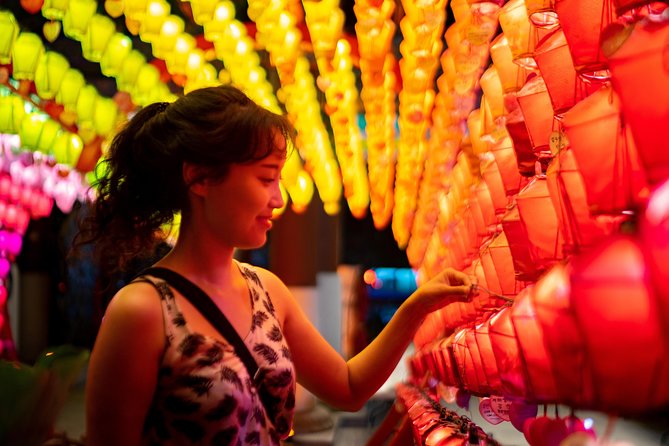
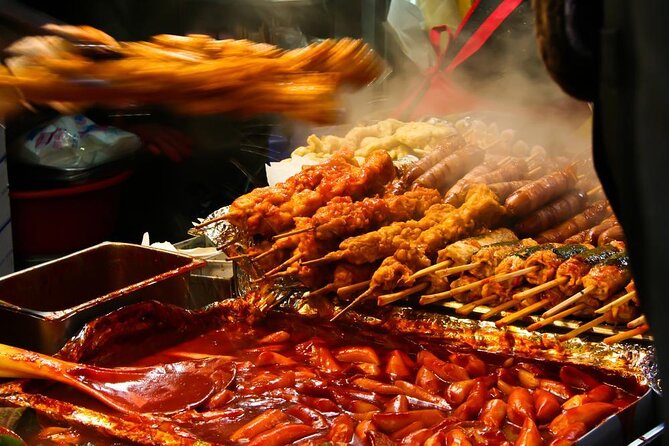
Gwangjang Market is the tour’s most hands-on stop. This is one of Seoul’s best-known food markets, and the guide takes you toward signature dishes and less obvious places to try. You have about 20 minutes for tasting and market shopping.
Twenty minutes is enough for a focused introduction, but it is not a leisurely market meal. You may need to choose quickly, especially if the market is crowded. Listen closely to the guide’s suggestions and keep your expectations realistic: this is a sampling stop, not an evening-long food crawl.
The food adds something a palace tour cannot. You get to see how Seoul eats, not only how it presents its past. The market also gives you a chance to ask the guide about ingredients, ordering, and local specialties while standing in the middle of the action.
If you have dietary restrictions, contact the operator before booking. The information provided does not specify dietary substitutions or a set tasting menu. The price also does not state that food is included, and the market stop is listed separately from the free sightseeing stops, so clarify what you will pay for food and admission.
Blue House Area and Seoul After Dark
The route continues toward the presidential Blue House as evening arrives. This timing is one of the tour’s real advantages. The light changes, the temperature usually feels more comfortable than in the daytime, and Seoul begins to look different as offices and streets brighten.
The final city-lights ride through the financial district gives you a modern finish. Instead of ending in a historic quarter, the tour returns you to Seoul’s present-day identity: tall buildings, lit streets, and the energy of a major business center.
One review of the experience particularly praised the night views from Namsan and the downhill riding there. The supplied route details do not list Namsan as a formal stop, so you should confirm the exact evening path with the operator if that view is important to you. In any case, be prepared for the possibility of descents and pay close attention to the guide on any downhill section.
What $150 Buys You
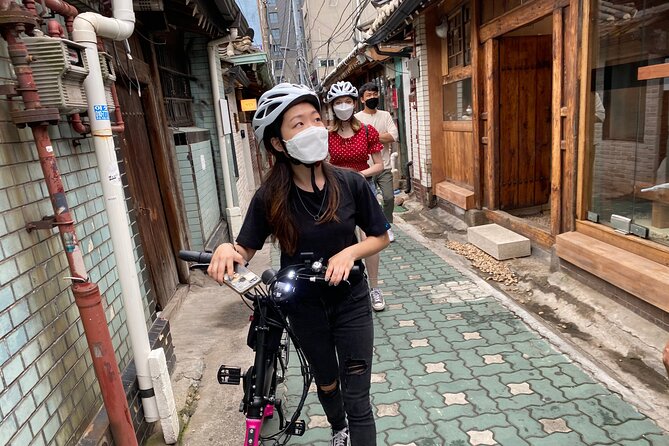
At $150 per person, this is not a cheap way to get from one attraction to another. The value comes from the combination of equipment, route planning, guide service, food-market access, and the ability to cover several neighborhoods in three hours.
You are paying for a bicycle and helmet, an electric motor for the hills, a guide, and a carefully linked route. The course is about 90% bike lane, which is a meaningful detail in a large city. You also save the time and effort of working out how to connect Gwangjang Market, Bukchon, the palaces, Ikseon-dong, and the stream on your own.
The price makes more sense for a first or second day in Seoul, when you want orientation and quick exposure to many areas. It is less attractive if you already know central Seoul well, dislike group activities, or want to spend a long time inside one palace or market.
The maximum group size is 15. That is not a private tour, but it is small enough for a guide to manage a shared route. The experience has received a 4.9 rating from 28 reviews, with 100% recommending it, and the strongest praise focuses on the broad itinerary, the easy hill riding, the food stop, and the off-the-main-route corners.
Who Should Book This Ride
I would choose this tour if you:
- Want a fast orientation to central Seoul.
- Enjoy active sightseeing more than sitting on a bus.
- Feel comfortable riding a bicycle in an urban setting.
- Want both major sights and less obvious neighborhoods.
- Like trying street food with a guide nearby.
- Prefer evening temperatures and city lights to midday heat.
It is also a good fit if you have already planned to visit the major tourist areas but want a different way to connect them. One rider used it on the first day to understand areas already on the trip plan, while also discovering places that had not been on the original schedule.
I would think twice if you have limited cycling experience, dislike hills, or want a slow food tour. The e-bike reduces effort, but it does not remove the need for balance, braking, and attention. The operator does not recommend it for children younger than 15 because of safety concerns, although you can contact them to ask about a specific young rider.
Arrive early for fitting, wear clothing you can move in, and leave room in your evening schedule for the ride back to the meeting point. The activity ends where it begins, at the Korea Tourism Organization.
My Call on the Market and E-bike Tour
Book this if you want to see a lot of Seoul in a short time and you enjoy being part of the city rather than looking at it through a vehicle window. The mix of Gwangjang Market food, Bukchon hills, palace gates, Sewoon Arcade, and evening skyline views is unusually varied.
Skip it if your priority is a deep palace visit, a long market meal, or a completely relaxed pace. For active first-time visitors, though, the protected route and electric assistance make this a strong use of three hours. I would place it near the start of a Seoul trip, when its broad view can help you decide where to spend the rest of your time.
FAQ
How long is the Seoul market food and e-bike tour?
The experience lasts approximately three hours.
Where does the tour start and finish?
It starts at the Korea Tourism Organization, 40 Cheonggyecheon-ro, Jung District, Seoul. It ends back at the same meeting point.
How early should I arrive?
Arrive about 20 minutes before the scheduled start for bicycle and helmet fitting. Guides are present 30 minutes before the tour time.
Is food included in the tour price?
The information provided does not confirm that food is included. Gwangjang Market food and shopping are listed as additional expenses, so confirm the food arrangements with the operator before booking.
How much of the route uses bike lanes?
About 90% of the course uses bike lanes, making it the operator’s most protected course.
Is the tour suitable for children?
The tour is not recommended for children younger than 15 because of safety concerns. You can contact the operator to ask if a particular young rider may participate.
What happens if bad weather cancels the tour?
If poor weather causes cancellation, you will be offered a different date or a full refund. You can cancel for a full refund up to 24 hours before the experience starts.
More bike and e-bike rides in Seoul
- Seoul E-bike Tour
★ 5.0 · 536 reviews - Afternoon E-bike tour and “Happy Hour” food and drinks
★ 5.0 · 46 reviews - ENKO Electric Bike Ride on The Han River Bike Path in Seoul
★ 5.0 · 18 reviews - Seoul: Afternoon Ebike tour and “Happy Hour” food and drinks
★ 4.8 · 18 reviews
Just added around Seoul
- Your Personal Seoul Photographer!★ 4.1 · 15 reviews
- From Seoul: Hwacheon Ice Fishing and Lighting Festival Tour★ 4.5 · 4 reviews
- You’re Invited to Our Home in Seoul: The Only Cooking Class!★ 5.0 · 8 reviews
- Seoul: Gangneung BTS K-Pop & K-Drama Filming Locations Tour★ 4.6 · 14 reviews
- Unique Native Experience : Han River Picnic, Board game, BBQ★ 5.0 · 3 reviews
- 2-Hour Private Kayaking and Paddleboarding Experience in Hanriver★ 5.0 · 3 reviews
- Yun Korean Cooking Class in Seoul★ 5.0 · 6 reviews
- Day Trip to Yongin Daejanggeum and Korean Folk Village from Seoul★ 4.0 · 9 reviews
Seoul Traditional Market Tours, compared.
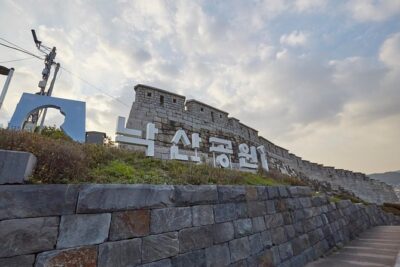
Gyeongbok Palace, Bukchon Village, and Gwangjang Tour
Read our review →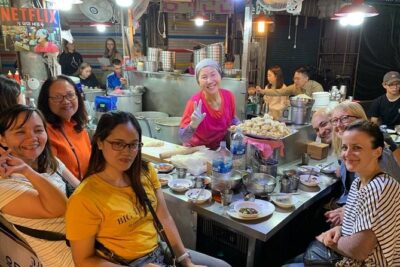
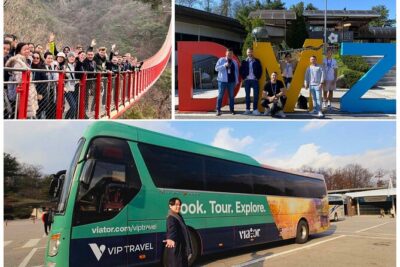
DMZ Tour Seoul to North Korea’s 3rd Tunnel & Majang Lake Crossing
Read our review →Gyeongbok Palace, Bukchon Village, and Gwangjang Tour
Read our review →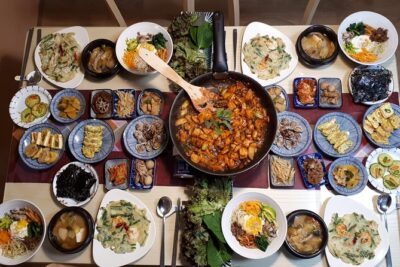
Local Home Korean Cooking Class & Market Adventure in Seoul
Read our review →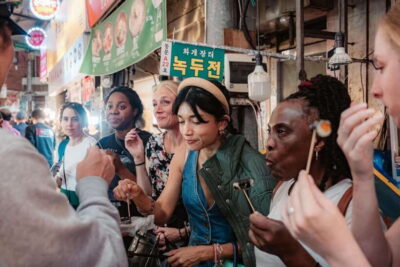
Downtown Seoul Guided Food & Market Tour with 8+ Local Tastings
Read our review →
Korean Cooking Class at a Local Home and Market Tour
Read our review →Browse the lists this tour appears in