
Reviewed · GYEONGBOKGUNG PALACE TOURS
Seoul: Gyeongbok Palace, Bukchon Village, and Gwangjang Tour
Gyeongbokgung Palace is the star here, but the real strength is how quickly this tour connects old Seoul with everyday Seoul. You’ll watch the royal guard ceremony, walk through Bukchon’s traditional lanes, and finish where locals eat and shop at Gwangjang Market. I especially like the clear historical storytelling and the chance to see the city from Bugak Pavilion, not just from street level.
I also like the practical finish at Gwangjang Market, where you can try bindaetteok and mayak gimbap on your own. Guides such as Sophie, Sunny, Grace, Chloe, and Shin are repeatedly praised for keeping the pace friendly and explaining Korean customs in plain English. The main drawback is that this is a busy sightseeing circuit, so Bukchon and the palace receive a taste rather than a slow, detailed visit.
Key points at a glance
- Royal ceremony included: Time your visit for the colorful guard-changing ceremony at Gyeongbokgung Palace.
- Strong first-day route: Palace, hanok homes, mountain views, shopping, and street food fit neatly into one outing.
- A useful viewpoint stop: Bugak Palgakjeong gives you broad views across Seoul from the Bugak Skyway.
- Market finale: The tour ends at Gwangjang Market, with food and shopping left open for you to explore.
- Several route choices: Select a half-day, Tuesday, full-day, or pickup option, depending on your schedule.
- Good value at $32: Entry, transport, and an English-speaking guide are included, but food and personal purchases are extra.
Why this tour works for a first look at Seoul
Seoul can feel hard to read at first. The city mixes palace courtyards, quiet wooden homes, high-rise districts, mountain roads, temples, markets, and modern shopping streets. This tour gives you a useful framework without asking you to solve the public transport system on your first morning.
At $32 per person, the value comes from the combination of entry fees, air-conditioned transport, and a live English-speaking guide. You are not paying for a long meal or a luxury vehicle. You are paying for a tightly arranged route that covers several parts of the city that would take more planning to link on your own.
The half-day version lasts roughly four hours, though the exact duration depends on the option you book. The full-day route can run up to nine hours and adds the War Memorial of Korea, Jogye Temple, and Tapgol Park before finishing near Myeongdong Cathedral.
I would choose the shorter version if you have a packed Seoul schedule or want an easy introduction. The full-day route makes more sense if this is your main sightseeing day and you want a broader view of Korea’s royal, religious, military, and modern past.
More Gyeongbokgung tours in Seoul:
- Best Seoul City Tour (Gyeongbokgung Palace,Insadong,Namsan Tower)
★ 5.0 · 1,647 reviews - Seoul City Sightseeing Tour Including Gyeongbokgung Palace, N Seoul Tower, and Namsangol Hanok Village
★ 5.0 · 1,423 reviews - Seoul: Gyeongbok Palace, Bukchon Village, and Gwangjang Tour
★ 5.0 · 1,044 reviews
Gyeongbokgung Palace and the royal guard ceremony
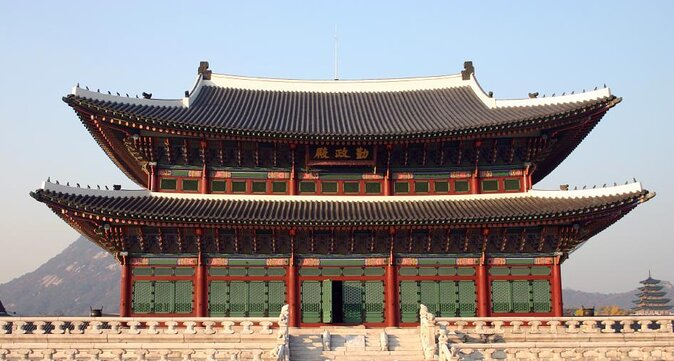
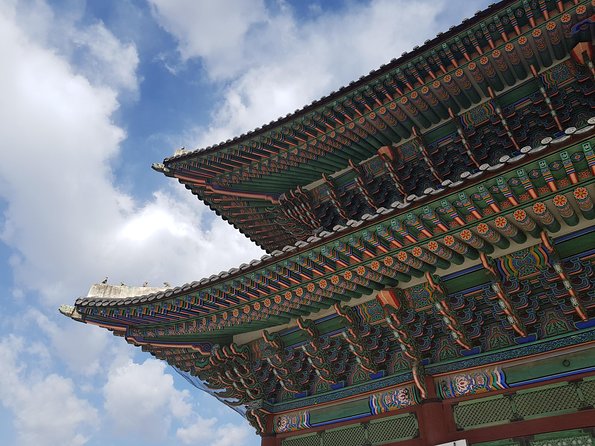
The tour begins at Gyeongbokgung, the largest and often considered the most beautiful of Seoul’s five major Joseon palaces. Your guide gives you a narrated walk through the palace grounds, explaining the buildings and the role the complex played in royal government and court life.
The guided hour is valuable because palace roofs and courtyards can otherwise blur together. A good guide helps you notice the formal layout, the painted details, and the difference between public ceremonial areas and more private royal spaces.
The royal guard-changing ceremony is one of the most photogenic moments of the day. Bright uniforms, traditional weapons, flags, and formal movements make this more than a quick photo stop. It also gives you a visible connection to Korea’s royal past, even though the presentation is a modern recreation.
Your timing matters. The ceremony is part of the planned route, but you should follow the meeting instructions carefully. Joining at Gyeongbokgung after the tour has already begun is not permitted, and you cannot expect to catch up with the group once it is underway.
The palace grounds involve walking and outdoor exposure. Wear comfortable shoes and bring protection from sun, rain, or cold. The tour operates in all weather, and one winter visitor appreciated receiving hand warmers from guide Sophie, but you should still dress for the conditions yourself.
Bukchon Hanok Village and the limits of a photo stop
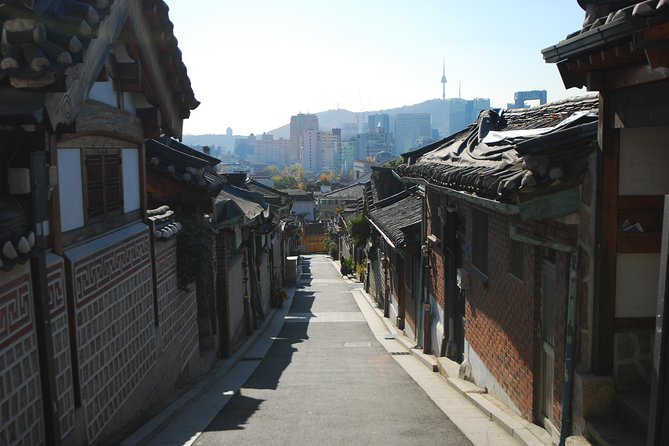
Bukchon Hanok Village means northern village, a fitting name for this historic neighborhood north of the old palace district. Its narrow lanes are lined with hanok, traditional Korean houses with tiled roofs, wooden details, and enclosed courtyards.
Today, many of these homes serve as cultural centers, guesthouses, and restaurants. That mix gives Bukchon its appeal, but it also means this is a living neighborhood rather than a museum built only for sightseeing. Keep voices low, avoid blocking doorways, and remember that some attractive buildings are private homes.
You receive about 30 minutes with a guide here. That is enough for an introduction and photographs, but not enough to explore every lane or browse the area at leisure. The hills and stone streets also make this one of the more demanding walking sections.
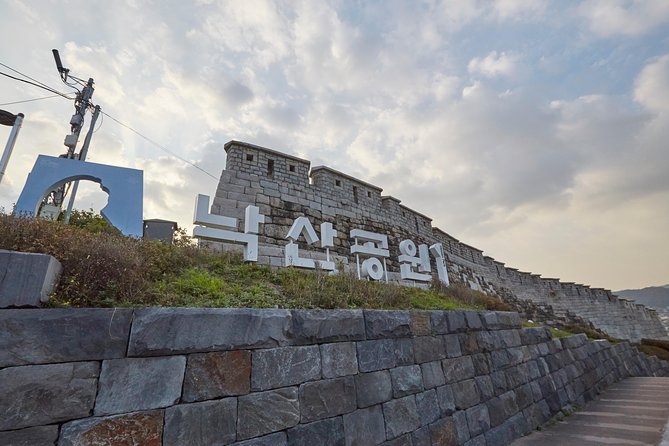
If Bukchon Hanok Village is closed, the route changes to Namsangol Hanok Village. That replacement still offers traditional architecture and cultural context, but it is a different setting, so do not book this tour expecting one fixed photo viewpoint in every circumstance.
Several guides make an effort to take photos for solo visitors and families. Chloe and Sunny are especially noted for helping people get pictures at each stop. That small service matters when you are traveling alone and do not want every photograph to be a selfie.
Bugak Skyway and the view from Bugak Pavilion
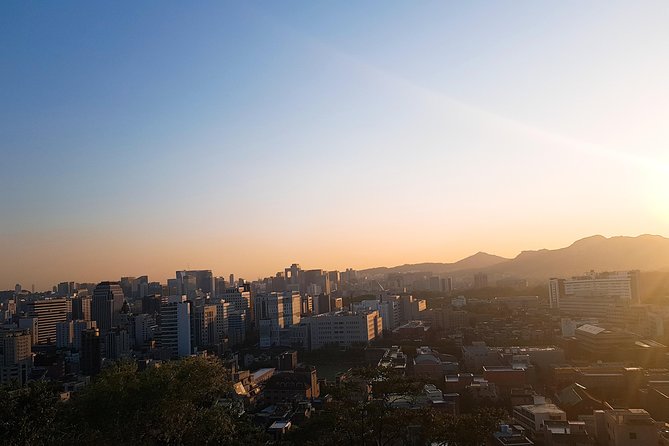
After Bukchon, the route heads up the Bugak Skyway toward Bugak Palgakjeong, also called Bugak Pavilion. The drive changes the mood of the day. Instead of looking up at palace walls or squeezing through narrow lanes, you get a wider view over Seoul.
The pavilion stop itself is short, about 10 minutes, with roughly another 30 minutes set aside for the guided Bugak Skyway portion. This is a viewpoint stop, not a mountain hike. You will have time to absorb the view and take photographs, but not to wander far along the slopes.
I like this part because it gives scale to Seoul. After seeing a historic district close up, you can look across the city and understand how the old neighborhoods fit within the much larger urban spread. Weather makes a real difference here, so cloudy or rainy conditions may limit the view.
The transport is by air-conditioned minivan or coach. That matters on this route because the skyway connects stops that are not as convenient to link on foot. It also gives you a break between walking sections, though the vehicle can feel like a limitation if you prefer to spend more time at each place.
More Bukchon and hanok village tours in Seoul:
- Seoul: Gyeongbok Palace and Bukchon Hanok Walking Tour
★ 4.8 · 157 reviews - Best Walking Tour to Gyeongbok Palace Bukchon Hanok Village
★ 5.0 · 138 reviews - Experience Korean Cooking in Modern Hanok Kitchen
★ 5.0 · 118 reviews - Royal Seoul Cooking Class in a 100-Year-Old Hanok
★ 5.0 · 81 reviews
Korean Ginseng Museum and the shopping stop
The Korean Ginseng Museum, identified as Cheongha Korea Ginseng, is a 30-minute shopping stop. You learn about Korean ginseng and see a range of ginseng products, with the presentation focusing on its long use in East Asian medicine and its reputation for adaptogenic properties.
This is the most commercial part of the outing. You may find it interesting if you want to understand why ginseng is such a prominent Korean product, but you should treat the shopping portion as optional in spirit. The tour includes the stop, not a requirement to buy something.
The guide can help explain what you are seeing, which is useful if you are unfamiliar with ginseng products. Still, personal purchases are not included in the $32 price. If your main interests are palaces, neighborhoods, and food, this stop may feel less rewarding than the other sections.
Gwangjang Market, where the tour turns practical
The short tour ends at Gwangjang Market, Seoul’s first market. This is a good place to finish because the structure of the guided portion gives way to personal choice. You can eat, browse, shop, or simply watch market life for a while before continuing your day.
The market is known for food rather than major international brands. Try bindaetteok, a savory mung bean pancake, or mayak gimbap, small seaweed rice rolls with a famously addictive name. Food and drinks are not included, so bring money for whatever you order.
You can also find a broad selection of inexpensive goods, though the tour description makes clear that these are not brand-name products. That is part of the point. Gwangjang is best approached as a place for local-style snacks, simple shopping, and atmosphere rather than polished retail.
The standard route drops you at the market, so you are free to continue exploring after the guide leaves. This is useful if you want lunch without being rushed. It also means hotel drop-off is not included, so plan your onward journey by subway, taxi, or on foot.
What changes on Tuesday and on the full-day route
The regular shared route visits Gyeongbokgung Palace, Bukchon, Bugak Skyway, Bugak Pavilion, the ginseng museum, and Gwangjang Market. The Tuesday option uses a different lineup: N Seoul Tower, Bukchon, Deoksugung Palace, the ginseng museum, and Gwangjang Market.
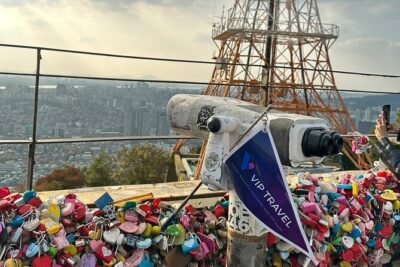
The N Seoul Tower visit does not include the observatory. You can see the tower and its setting, but the paid viewing platform is outside the package. Deoksugung Palace replaces Gyeongbokgung, and the royal guard ceremony is included there on the Tuesday route.
The full-day version keeps the main sights and adds the War Memorial of Korea, especially the third-floor United Nations Memorial Cemetery, then Jogye Temple and Tapgol Park. It ends near Myeongdong Cathedral rather than simply stopping at Gwangjang Market.
This longer version is a better choice if you want context beyond royal architecture. The War Memorial adds modern military history, Jogye Temple introduces Korean Buddhist tradition, and Tapgol Park gives another view of central Seoul. The tradeoff is simple: more places, less free time at any one stop, and a longer day on your feet.
Lunch on the full-day route is at your own expense. That gives you control over what and when you eat, but you should budget separately and expect the day to continue after the meal.
Guides, transport, and the pace of the day
The guides named in the recent booking feedback include Sophie, Sunny, Grace, Chloe, Shin, Henry, Winnie, and Sophie. The strongest pattern is not one particular guide but a consistent style: clear explanations, warm interaction, humor, and attention to the group.
Several guides use a microphone or tablet to show photographs and make explanations easier to follow. Sophie is praised for connecting historical details with Korean dramas and K-pop, while Chloe is described as especially good at keeping mixed-age groups involved. Sunny is often singled out for being attentive and willing to take photos.
The group format means you should expect a shared schedule rather than a private guide who changes plans around your interests. A private group option is available if that flexibility matters to you. For most people, the shared option keeps the price low and works well for a first visit.
Pickup is available only with selected options or private tours. Central Seoul areas listed for pickup include Gangnam, Myeongdong, Gwanghwamun, Itaewon, and Dongdaemun, with pickup times between 7:20 AM and 8:40 AM. Check your confirmation carefully, because the meeting point changes with the option booked.
The transport has received a 95 percent perfect score for its quality. Expect an air-conditioned minivan or coach, not a sightseeing bus with an open view. The vehicle is mainly there to save time between districts and viewpoints.
Who should book this Seoul tour
I would recommend this tour to first-time visitors, short-stay visitors, solo travelers who want help with photos and navigation, and families who prefer a guide to explain what they are seeing. It is also a strong choice if you want history without spending an entire day inside museums.
You should be comfortable walking on uneven or sloping streets. The tour is not suitable for wheelchair users, and comfortable shoes are essential. You may also want a hat, rain protection, and warm layers because several stops are outside.
This is less suitable for someone who wants a slow palace study, long shopping time, or a food-focused tour. The ginseng museum is a shopping stop, not a full cultural museum visit, and Gwangjang Market gives you time to eat only after the guided route ends.
Free cancellation is available up to 24 hours before departure, and you can reserve now and pay later. Alcohol and drugs are not allowed, and food, drinks, hanbok rental, insurance, personal expenses, and hotel drop-off are excluded.
Should you book it?
Book this tour if you want to see a lot of Seoul in four to nine hours and prefer an English-speaking guide to handle the route. At $32, the palace entry, transport, viewpoint, market finish, and cultural explanation make it strong value.
Choose the half-day route for a quick orientation. Pick the full-day option if you want the War Memorial, temple, and central Seoul additions. Check the Tuesday route carefully, since it swaps in N Seoul Tower and Deoksugung Palace.
I would not choose it for a quiet, unhurried day. But for a first taste of Seoul, especially with limited time, this is a sensible and well-priced introduction that leaves you at Gwangjang Market with the rest of the day still in your hands.
FAQ
How much does the Seoul tour cost?
The tour costs $32 per person. Personal expenses, food, drinks, and any shopping purchases are extra.
How long does the tour last?
The available options run from about four to nine hours. The half-day routes are shorter, while the full-day itinerary can last up to nine hours.
What language is the tour conducted in?
The live tour guide language is English.
Is hotel pickup included?
Hotel pickup is included only with selected options or private tours. Pickup may be available from central Seoul areas such as Gangnam, Myeongdong, Gwanghwamun, Itaewon, and Dongdaemun.
Is hotel drop-off included?
No. Hotel drop-off is not included. The route ends at one of the stated drop-off points, such as Gwangjang Market or Myeongdong Cathedral, depending on the option.
Does the tour include Gyeongbokgung Palace entry?
Yes. Entrance fees are included for the selected itinerary.
Can I watch the royal guard-changing ceremony?
Yes, the regular route includes the ceremony at Gyeongbokgung Palace. The Tuesday itinerary includes a ceremony at Deoksugung Palace instead.
Is food included?
No. Food and drinks are not included. At Gwangjang Market, you can buy local dishes such as bindaetteok and mayak gimbap at your own expense.
Is N Seoul Tower’s observatory included on the Tuesday route?
No. The Tuesday route visits N Seoul Tower, but the observatory entry is not included.
Is the tour suitable for wheelchair users?
No. The tour is not suitable for wheelchair users. Comfortable walking shoes are recommended for all participants.
More palace tours in Seoul
- Small-Group Royal Palace and Seoul City Tour (hotel pick-up)
★ 5.0 · 1,474 reviews - Seoul Highlights: Gyeongbok Palace, Insadong & N Seoul Tower
★ 4.7 · 726 reviews - Seoul: Hanbok Rental with Gyeongbokgung Palace Entry
★ 4.6 · 611 reviews - Seoul City Half Day Tour-Gyeongbok Palace Guard Changing Ceremony
★ 4.5 · 357 reviews
More traditional market tours in Seoul
- Seoul Street Food Market Tour
★ 5.0 · 1,226 reviews - DMZ Tour Seoul to North Korea’s 3rd Tunnel & Majang Lake Crossing
★ 5.0 · 1,185 reviews - Local Home Korean Cooking Class & Market Adventure in Seoul
★ 5.0 · 1,024 reviews - Seoul: Night Market Food Tour with Local Guide
★ 4.9 · 943 reviews
Just added around Seoul
- Your Personal Seoul Photographer!★ 4.1 · 15 reviews
- From Seoul: Hwacheon Ice Fishing and Lighting Festival Tour★ 4.5 · 4 reviews
- You’re Invited to Our Home in Seoul: The Only Cooking Class!★ 5.0 · 8 reviews
- Seoul: Gangneung BTS K-Pop & K-Drama Filming Locations Tour★ 4.6 · 14 reviews
- Unique Native Experience : Han River Picnic, Board game, BBQ★ 5.0 · 3 reviews
- 2-Hour Private Kayaking and Paddleboarding Experience in Hanriver★ 5.0 · 3 reviews
- Yun Korean Cooking Class in Seoul★ 5.0 · 6 reviews
- Day Trip to Yongin Daejanggeum and Korean Folk Village from Seoul★ 4.0 · 9 reviews
Gyeongbokgung Palace Tours, compared.
Best Seoul City Tour (Gyeongbokgung Palace,Insadong,Namsan Tower)
Read our review →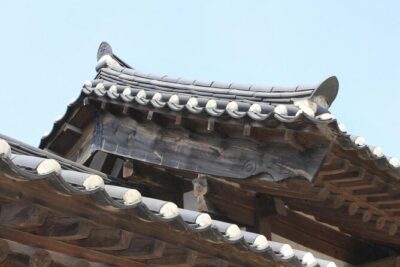
Seoul City Sightseeing Tour Including Gyeongbokgung Palace, N Seoul Tower, and Namsangol Hanok Village
Read our review →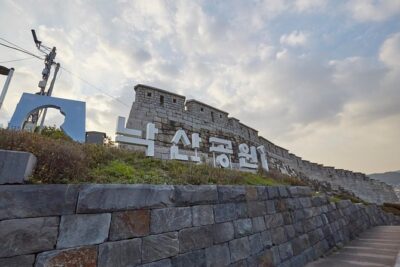
Gyeongbok Palace, Bukchon Village, and Gwangjang Tour
Read our review →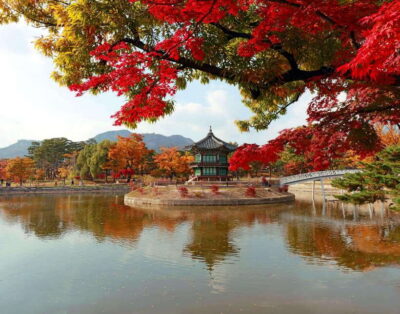
Seoul Highlights: Gyeongbok Palace, Insadong & N Seoul Tower
Read our review →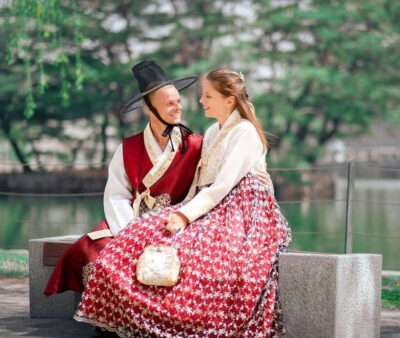
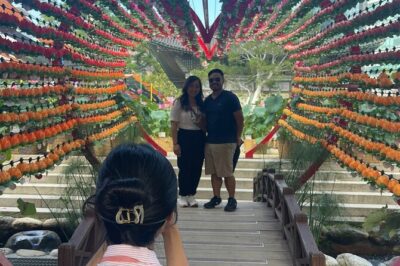
Seoul City Half Day Tour-Gyeongbok Palace Guard Changing Ceremony
Read our review →
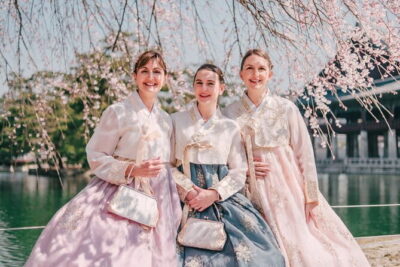
Hanbok Photoshoot and History Tour at Gyeongbokgung Palace
Read our review →Browse the lists this tour appears in