
Reviewed · SEOUL TRADITIONAL MARKET TOURS
Seoul: Fearless Foodie Gwangjang Market Food Adventure
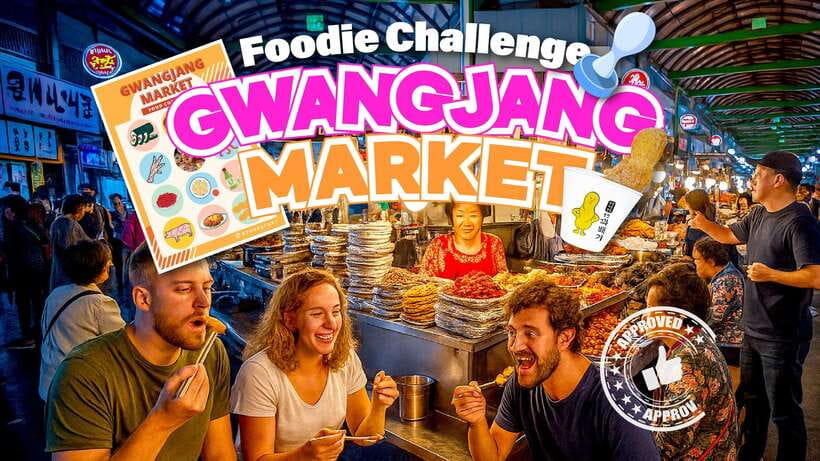
The fun here is not simply eating your way through Gwangjang Market. You get a stamp for each dish you finish, turning a market meal into a small Korean food test. You may try around 10 to 12 dishes, including foods that can be spicy, unfamiliar, or difficult to order on your own.
I like the small portions, since you can sample widely without committing to a full plate of every dish. I also like the personal touch from guides such as Gina, Helena, and Cecilia, who have helped guests understand the food, share market stories, and take photos. The main drawback is clear: vegans and vegetarians should not book, and anyone cautious about spice or meat-heavy dishes may find the challenge demanding.
Key points at a glance
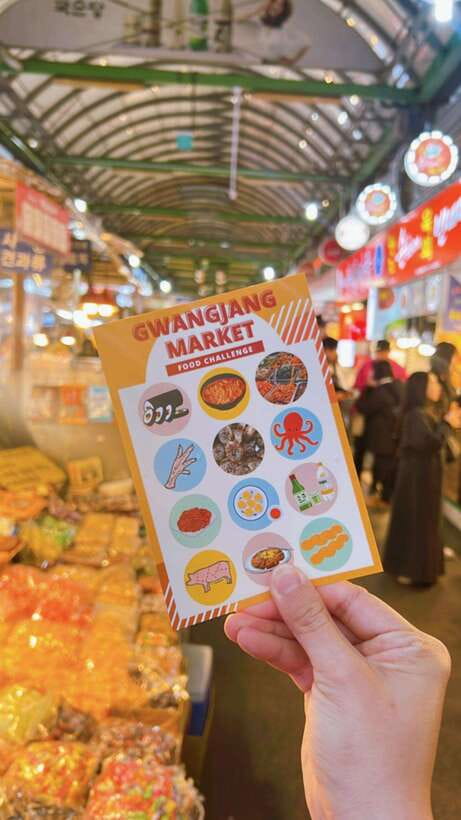
- A stamp-based food challenge: Finish each dish and collect a stamp before moving to the next one.
- Around 10 to 12 tastings: The format gives you variety without requiring a full serving of every food.
- A real Gwangjang Market setting: The tour takes place inside one of Seoul’s best-known food markets rather than in a restaurant classroom.
- Small English-speaking group: The group is limited to 10 people, making it easier to ask questions and keep up with the guide.
- Traditional souvenir at the finish: Complete the food challenge and receive a small Korean keepsake.
- Not designed for plant-based diets: Dishes may contain meat, poultry, eggs, dairy, and alcohol.
Starting at Jongno 5-ga Station Exit 8
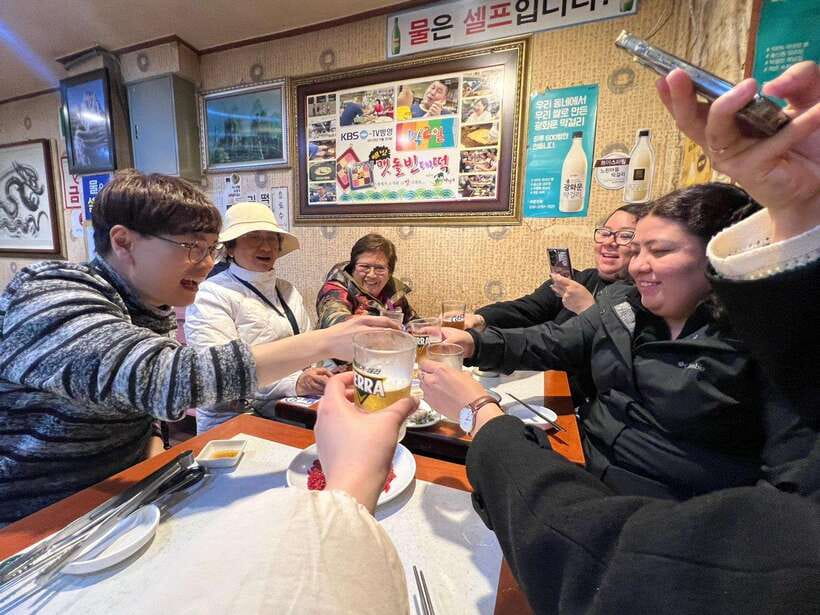
Your meeting point is Jongno 5-ga Station Exit 8, a practical place to begin because the market visit follows directly from there. Be ready to meet your guide at the station rather than wandering into the market alone and trying to find the group among the food stalls.
The tour lasts two hours, so the pace matters. You will not have unlimited time to study every stall or stop for a long meal. Instead, the guide keeps the group moving from one tasting to the next, helping you understand what is being served and when to collect your stamp.
The group size is capped at 10 people. That is small enough for a guide to keep an eye on everyone during the food challenge and explain dishes without shouting over a large crowd. It also gives you a better chance to ask about ingredients, spice, or Korean food customs.
English is the listed tour language. Guides who have led this experience include Gina, Helena, and Cecilia. Gina, in particular, has been praised for her cheerful manner, useful tips, photos, and ability to point out less obvious places to eat within the market.
More traditional market tours in Seoul:
- Seoul: Gyeongbok Palace, Bukchon Village, and Gwangjang Tour
★ 4.9 · 2,321 reviews - Seoul Street Food Market Tour
★ 5.0 · 1,226 reviews - DMZ Tour Seoul to North Korea’s 3rd Tunnel & Majang Lake Crossing
★ 5.0 · 1,185 reviews
How the Gwangjang Market challenge works
The rules are simple. You receive a food challenge list, try the first dish, and receive a stamp if you eat it successfully. Then you move to the next dish and continue until your list is complete.
That structure changes the mood from a standard guided tasting. You are not just waiting for a guide to hand you food. You have a small goal to work toward, and the stamp card gives the two hours a clear rhythm.
The food is served as a series of tastings rather than large restaurant portions. That is one of the best reasons to consider this tour. Korean market food can be hard to sample independently because ordering several full servings quickly becomes expensive, wasteful, or simply too much food. Small portions let you try more.
The challenge also gives nervous first-time eaters a useful push. You might hesitate when a dish looks unfamiliar, but the stamp system encourages you to take a bite and keep going. The point is not to pretend every flavor will be your favorite. It is to try a broad selection with a guide nearby to explain what you are eating.
The foods you may encounter
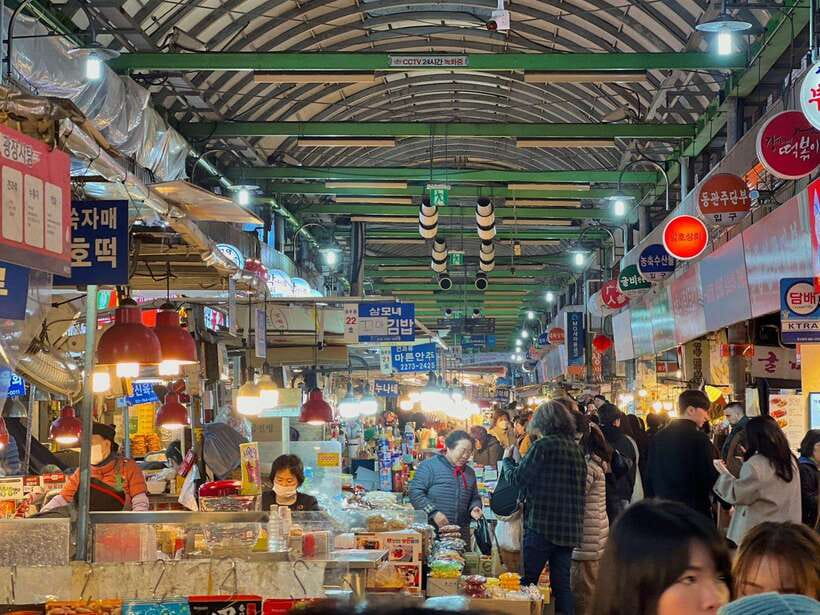
The exact food sequence is not specified, so you should expect variety rather than a fixed menu you can plan around. The tour describes a mix of authentic Korean dishes and beverages, with both alcoholic and non-alcoholic options.
Some foods may contain meat, poultry, eggs, or dairy. This is why the experience is not suitable for vegans or vegetarians. If you have allergies or other food limits, report them when you reserve. The operator can then know about your needs, though the supplied information does not promise that every restriction can be accommodated.
Spice is part of the challenge. Some dishes can be very hot, and the experience directly warns you to prepare for spicy food. If you enjoy heat, this adds an extra layer of fun. If you do not, ask the guide about each dish before eating it and take the challenge at your own pace.
Among the foods praised by past participants were sundae and mungbean pancake. Korean sundae is a sausage-style dish that may be unfamiliar to many first-time visitors. Mungbean pancake offers a different experience, with a crisp texture and savory flavor. These examples show the range you can expect: not just sweet snacks or safe introductions, but foods with distinct textures and strong Korean character.
Why the market setting matters
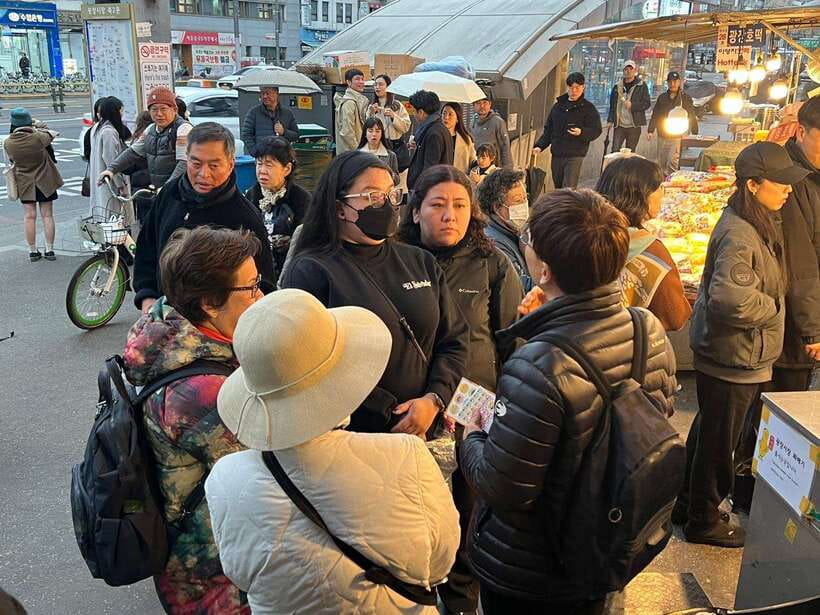
A food tour in Gwangjang Market gives you more than a list of dishes. You see food prepared and served in a working market environment, with stalls offering their own specialties and customers eating close to the action.
The experience is also a useful way to get your bearings in Korean food culture. A guide can explain what you are tasting, how it fits into everyday eating, and what makes one market dish different from another. One guide has been praised for sharing stories about the market, food, and local culture, which adds context to what might otherwise be a quick bite at a counter.
I would not book this expecting a quiet, polished restaurant meal. The appeal is the market itself: quick tastings, direct contact with food sellers, and a steady change of flavors. If you like orderly dining and want plenty of time at each course, the two-hour challenge may feel rushed. If you want an active introduction to Korean street food, the format works well.
More food tours in Seoul:
- Seoul: Night Market Food Tour with Local Guide
★ 4.9 · 943 reviews - Downtown Seoul Guided Food & Market Tour with 8+ Local Tastings
★ 5.0 · 580 reviews - Small-Group Night Food Tour in Seoul with Korean BBQ
★ 5.0 · 304 reviews - Seoul Night Palace & Market Food Tour with Vehicle
★ 5.0 · 275 reviews
The value of $81 per person
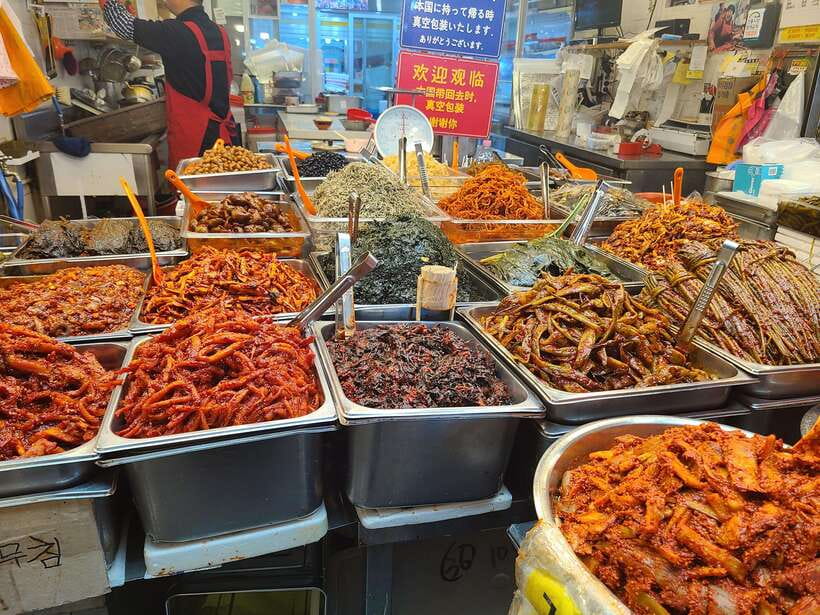
At $81 per person, this is not a cheap way to grab dinner in Seoul. You are paying for more than the food itself, though. The fee includes an English-speaking guide and around 10 to 12 market tastings, plus the organization of the stamp challenge and the final souvenir.
The value improves if you would otherwise struggle to choose dishes or communicate at market stalls. Ordering small portions of a dozen foods on your own may be difficult, especially if you do not know the names, ingredients, or portion sizes. Here, the guide handles the flow and gives you a planned way to taste broadly.
The price is less attractive if you already know Gwangjang Market well, speak Korean, or prefer to choose your own food without a set challenge. You may be able to spend less by buying one or two dishes independently. The tour makes the most sense when guidance, variety, and confidence are worth paying for.
The souvenir is a nice finish, but it should not be the reason you book. Its value is symbolic: it marks the completion of the challenge rather than adding major financial value to the package.
What the guides add
The guide can make or break a short food tour. With only two hours, you need someone who can keep the group together, explain unfamiliar dishes quickly, and help the experience feel like more than a chain of samples.
Gina has been singled out for her fun personality, helpful tips, market recommendations, photos, and ability to lead the group to lesser-known stalls. Helena and Cecilia have also led the tour. Since the specific guide is not guaranteed in the booking details, consider these names examples of the guide team rather than a promise that one particular person will be present.
A good guide is especially useful when a dish has a strong smell, unusual texture, or noticeable heat. You can ask questions before trying it instead of guessing. The guide may also help you understand how the food is normally eaten, though the exact explanations will depend on the person leading your group.
A good fit for adventurous eaters

This experience suits you if you want to taste Korean foods that go beyond familiar barbecue, noodles, or fried chicken. The stamp card is ideal for people who enjoy a playful goal and do not mind trying something outside their usual diet.
It is also a good pick for solo visitors and couples who want a ready-made food plan. A small group can be more comfortable than approaching an unfamiliar stall alone, particularly when you want to ask questions in English.
Families and mixed groups should think about the spice and ingredient warnings. If one person cannot eat meat, eggs, dairy, or poultry, the group may not be able to enjoy the full challenge together. This is not a flexible vegetarian tasting with a few substitutions listed in advance.
You should also arrive ready to eat. Ten to 12 tastings in two hours can add up, even if each portion is small. The practical approach is to avoid a large meal immediately before meeting the guide. Still, do not assume every dish will be tiny or that every person will react to the food in the same way.
Booking details that matter
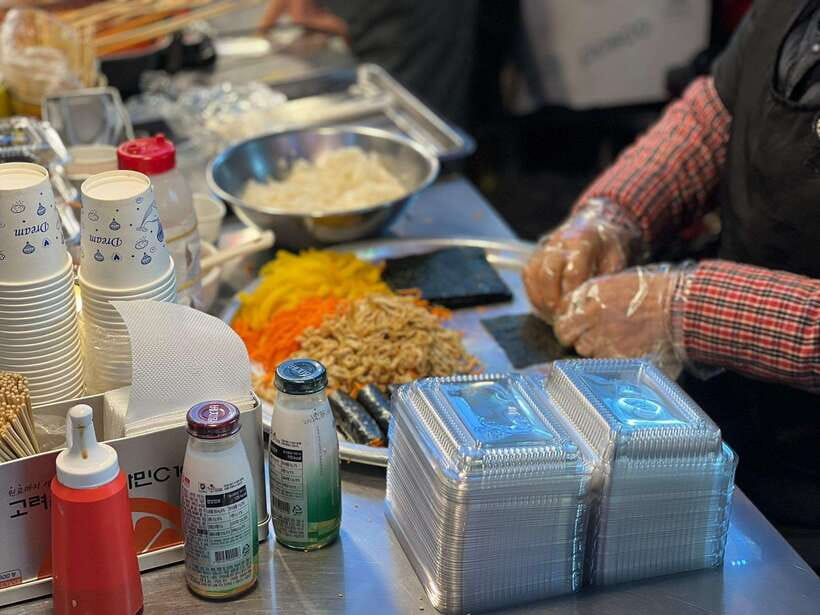
The tour includes free cancellation up to 24 hours before departure for a full refund. You can also reserve now and pay later, which helps if your Seoul schedule is still changing.
Insurance and personal expenses are not included. The food covered by the tour is included, but you should not expect extra purchases at the market to be part of the price.
Check the available starting times when you book. The supplied details confirm the two-hour duration but do not give one fixed departure time. Meeting at Jongno 5-ga Station Exit 8 is important, so allow enough time to find the correct station exit before the start.
Should you book the Gwangjang Market food challenge?
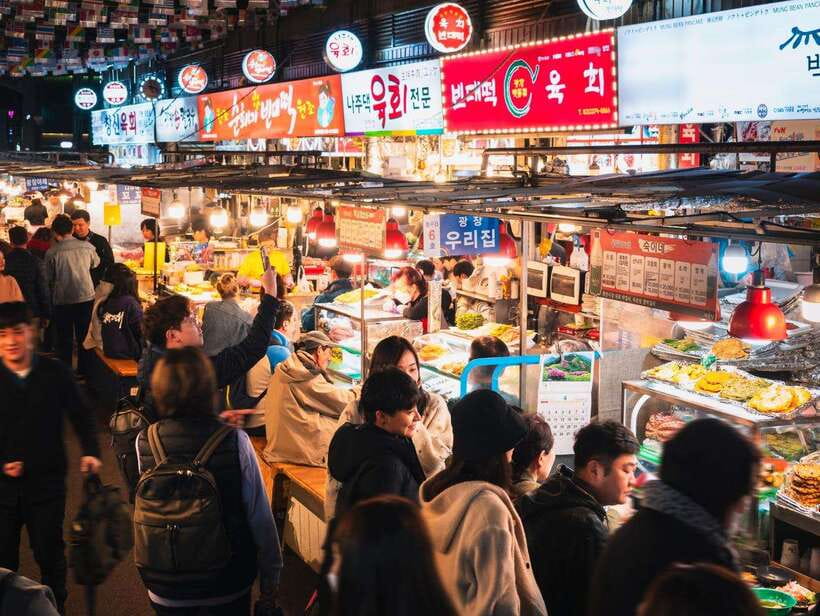
Book it if you want a guided introduction to Korean market food, enjoy trying unfamiliar dishes, and like the idea of turning dinner into a friendly challenge. The combination of small portions, 10 to 12 tastings, an English-speaking guide, and a stamp reward gives you a clear way to sample widely in a short visit.
Skip it if you are vegan or vegetarian, have strict food restrictions that may be difficult to manage, or prefer choosing your own dishes at your own pace. Spice can also be a real issue.
For curious omnivores, especially first-time visitors to Seoul, the $81 price can be reasonable because it bundles the food, the guide, the market orientation, and the social fun of the stamp card. Just arrive hungry, keep an open mind, and treat the souvenir as the finish line rather than the prize that justifies the meal.
FAQ
Where does the tour meet?
Meet your English-speaking guide at Jongno 5-ga Station Exit 8.
How long does the experience last?
The tour lasts two hours.
Where does the food tasting take place?
The tasting takes place at Gwangjang Market in Seoul.
How many dishes are included?
The tour includes around 10 to 12 Korean market foods.
What is the food challenge?
You receive a challenge list and collect a stamp for each dish you successfully eat. After collecting all the stamps, you receive a small traditional Korean souvenir.
Is the tour conducted in English?
Yes. The tour includes a live English-speaking guide.
Is the group private?
No. It is a small-group tour limited to 10 participants.
Is the experience suitable for vegetarians or vegans?
No. The tour is not suitable for vegetarians or vegans. Some dishes may contain meat, poultry, eggs, and dairy.
Can the tour include alcoholic drinks?
The food and drink selection may include both alcoholic and non-alcoholic options. Tell the operator about dietary limits or allergies when reserving.
Just added around Seoul
- Your Personal Seoul Photographer!★ 4.1 · 15 reviews
- From Seoul: Hwacheon Ice Fishing and Lighting Festival Tour★ 4.5 · 4 reviews
- You’re Invited to Our Home in Seoul: The Only Cooking Class!★ 5.0 · 8 reviews
- Seoul: Gangneung BTS K-Pop & K-Drama Filming Locations Tour★ 4.6 · 14 reviews
- Unique Native Experience : Han River Picnic, Board game, BBQ★ 5.0 · 3 reviews
- 2-Hour Private Kayaking and Paddleboarding Experience in Hanriver★ 5.0 · 3 reviews
- Yun Korean Cooking Class in Seoul★ 5.0 · 6 reviews
- Day Trip to Yongin Daejanggeum and Korean Folk Village from Seoul★ 4.0 · 9 reviews
Seoul Traditional Market Tours, compared.

Gyeongbok Palace, Bukchon Village, and Gwangjang Tour
Read our review →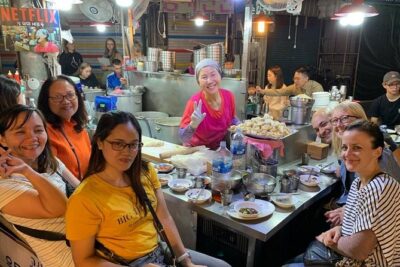

DMZ Tour Seoul to North Korea’s 3rd Tunnel & Majang Lake Crossing
Read our review →Gyeongbok Palace, Bukchon Village, and Gwangjang Tour
Read our review →
Local Home Korean Cooking Class & Market Adventure in Seoul
Read our review →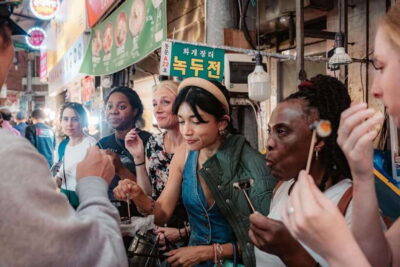
Downtown Seoul Guided Food & Market Tour with 8+ Local Tastings
Read our review →
Korean Cooking Class at a Local Home and Market Tour
Read our review →Browse the lists this tour appears in