
Reviewed · MUSEUMS
Seoul: War Memorial of Korea Private Guided Museum Tour
The Korean War still shapes daily life on the Korean Peninsula, yet the conflict can be hard to understand from a quick museum visit. This private two-hour tour gives you a clear route through the War Memorial of Korea, with context on how the war began, why it became international, and how ordinary Koreans suffered.
I like the small group size, limited to five people, and I like the guide’s effort to explain both Korean perspectives rather than simply repeat the museum labels. Guides such as Kichan Lee have also been praised for answering follow-up questions carefully and presenting difficult subjects in plain English.
The main drawback is time. The museum is large, and two hours can feel tight if you want to stop at every display or discuss each event at length. You get a focused introduction, not a full day at the museum.
Key points to know before booking
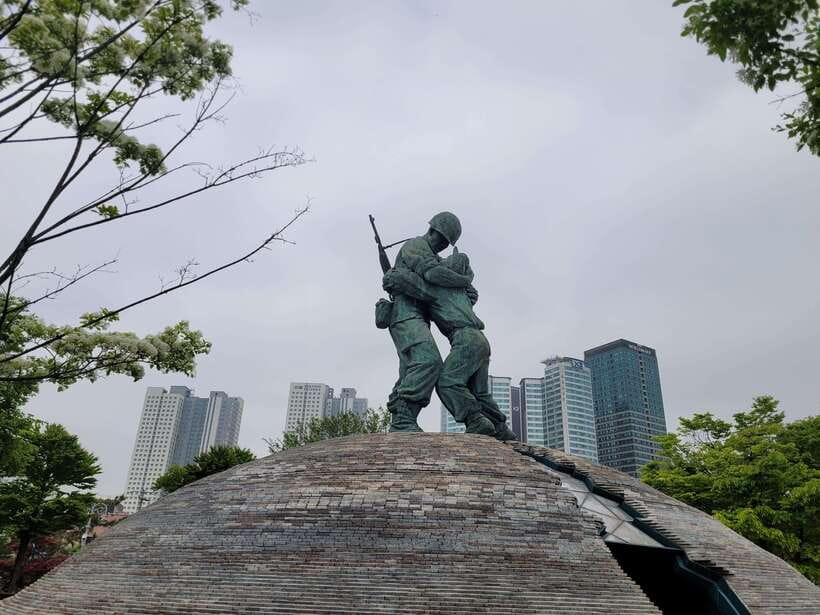
- Meet beneath the Statue of Brothers: The meeting point is in the south-west corner of the outdoor exhibit area, close to Exit 12 of Samgakji Station.
- Rooms I to III are the heart of the tour: The guide focuses on the museum’s Korean War galleries and explains the conflict as both a civil war and an international war.
- A private group means real conversation: Only one group of up to five people joins each tour, so you can ask questions as you go.
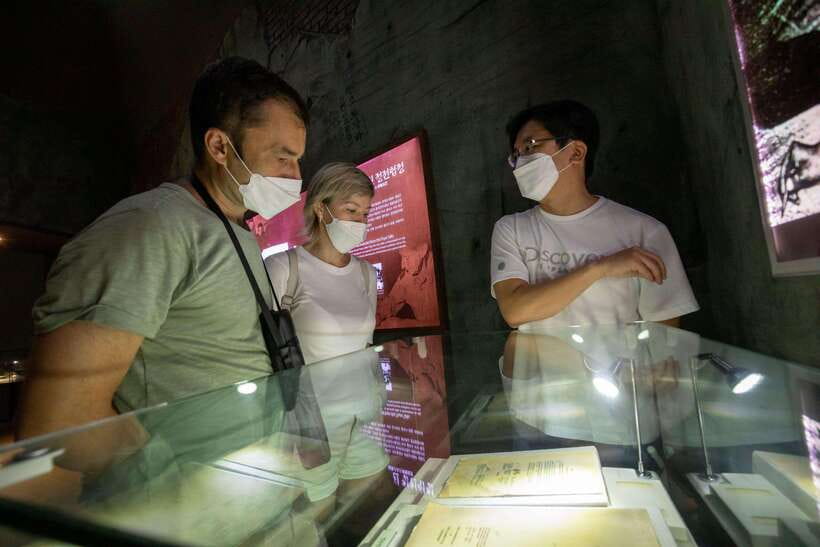
- Expect added material: The guide provides pictures and copies of documents to show information and viewpoints not fully covered by the displays.
- Useful before a DMZ visit: This tour gives you the political and human background needed to make better sense of the Demilitarized Zone.
- Allow for a brisk pace: The tour is wheelchair accessible, but the museum’s size and the two-hour limit mean you may not linger everywhere.
Why the Korean War matters to your Seoul visit
It is easy to treat the Korean War as a closed chapter, especially when you are busy with palaces, markets, cafés, and modern Seoul. That is a mistake. The war explains much about the division between North and South Korea, the continuing role of the military, and the sensitivities you will encounter on a DMZ excursion.
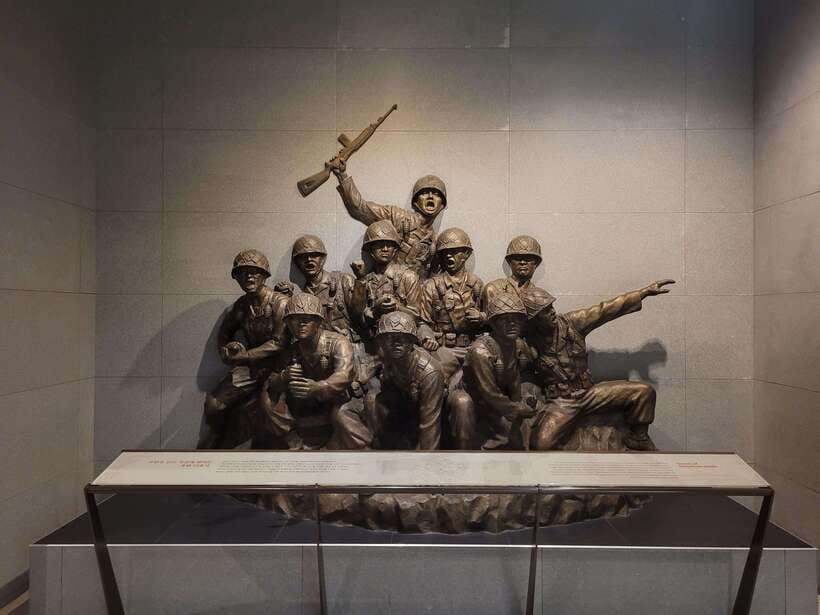
The War Memorial of Korea presents the conflict in a formal national setting, with military equipment, battle accounts, maps, and displays about the forces involved. The museum is useful, but the exhibits cannot stop to answer your questions or explain what has been left out.
That is where this tour earns its place. Your guide adds political and social context, then helps you compare the museum’s presentation with other accounts of the war. The emphasis is not only on military movements. You also hear about the people caught between competing governments, foreign powers, and shifting front lines.
I especially value that approach for first-time visitors. Without background, names, dates, and battles can blur together. With a guide, the main story becomes easier to follow, and you can ask why a particular event mattered rather than simply trying to remember it.
More war history and memorial tours in Seoul:
- Painters Show in Gwanghwamun Theater (nearby Seodaemun station)
★ 5.0 · 104 reviews - DMZ Tour + The War Memorial of Korea Museum
★ 5.0 · 28 reviews - Seoul Morning Tour: Seoul Tower, Namsan Hanok Village, The War Memorial of Korea
★ 4.5 · 22 reviews
Meeting at the Statue of Brothers
The tour begins beneath the Statue of Brothers, at the south-west corner of the War Memorial’s exterior exhibit area. This is not an obscure side street or a hard-to-find office. The statue is an obvious landmark, and the meeting point is near Exit 12 of Samgakji Station, served by Subway Lines 4 and 6.
Your guide waits with a sign reading Korean War Memorial Guided Tour by Gangwon Peace Tours. Give yourself enough time to leave the station and reach the statue. The meeting point is outside, so it is better to arrive prepared for Seoul’s weather rather than assume you will wait indoors.
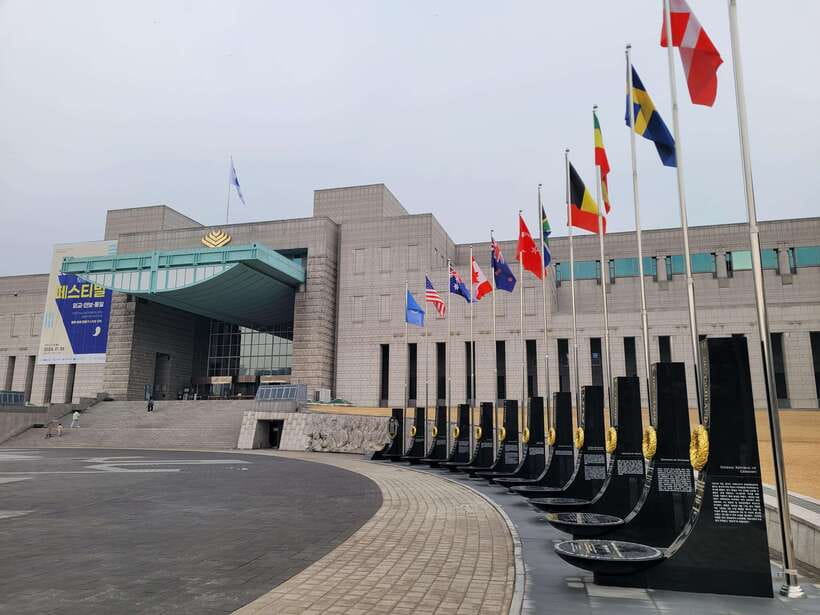
Starting outdoors also gives the guide a useful chance to orient you. The War Memorial is more than a single gallery. Its outdoor exhibits and large building can make the first few minutes confusing, particularly if you arrive independently and are trying to locate the correct entrance.
The itinerary then moves into the War Memorial of Korea for a two-hour walking tour. The tour finishes at the museum, so you can continue looking around afterward if you want more time with the exhibits.
The War Rooms I to III: a focused route through the conflict
The central part of the experience takes place in Korean War Rooms I, II, and III. These galleries form the main historical route, and your guide uses them to explain the origins, course, and consequences of the war.
You can expect the tour to cover the Korean War as a civil conflict between Koreans and as an international war involving outside powers. That distinction is important. If you see only the international angle, the Korean experience can disappear behind military alliances and battlefield strategy. If you see only the domestic angle, you miss why the conflict became part of a much wider Cold War struggle.
The guide helps connect the sections so the museum feels less like a collection of separate cases. You might begin with the political division of the peninsula, then move through the outbreak of fighting, foreign involvement, and the continuing effects on Korean society. The exact balance depends on your questions and the pace of your group.
The museum’s presentation is naturally formal. A guide with experience in Korean history, politics, peace studies, or DMZ tours can add a different layer by pointing out what the displays show clearly and what they do not explain at length.
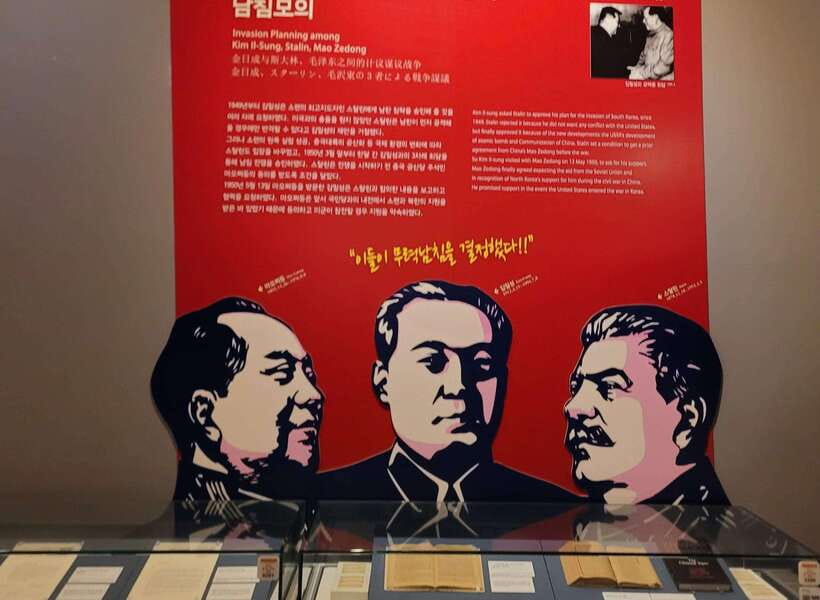
This is also where the tour’s stated aim of revealing less visible stories becomes useful. You are not promised a sensational version of the war. Instead, the guide uses documents, images, and discussion to show that a national memorial has a point of view. That does not make the museum unhelpful. It gives you a reason to read its displays carefully.
A balanced explanation, not a one-sided military tour
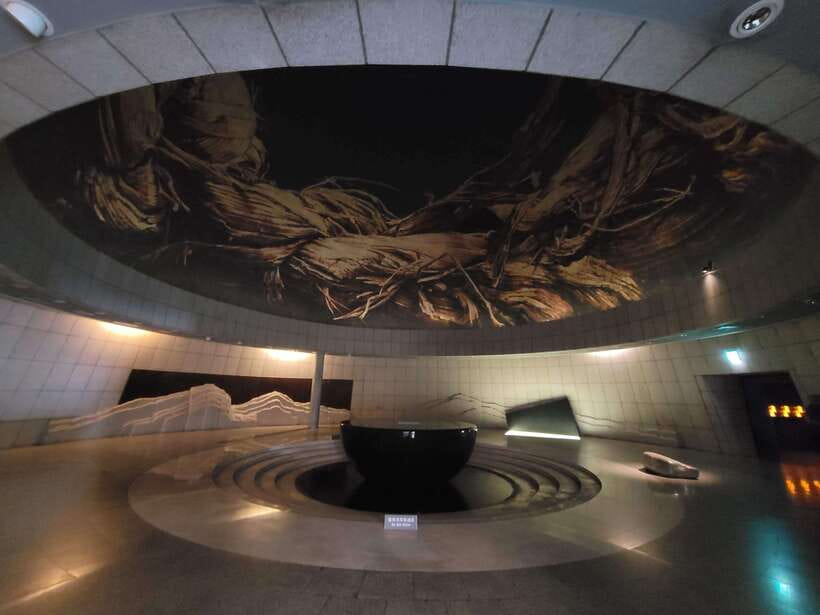
The most praised feature of the experience is the guide’s balance. Visitors have singled out the way guides explain facts from both sides of Korea and discuss the social cost of the conflict, rather than presenting only the official military narrative.
That balance matters because the subject is politically sensitive. A guide who rushes through slogans or treats the war as a simple story of heroes and villains will leave you with a narrow understanding. Here, the goal is to show the competing claims, the human damage, and the choices that shaped the peninsula.
You can expect your guide to discuss the war in a measured way and answer questions directly. Guides have been described as very comfortable with follow-up questions, which is useful in a museum where one answer often leads to another question.
The best part for me is the attention to the social side of the war. Military maps tell you where troops moved. They do not, by themselves, explain what division meant for families, communities, and a society forced to rebuild. The guide’s background in peace movements and peace studies supports that wider view.
Keep in mind that balanced does not mean bland. You will still encounter painful and politically charged material. The guide’s job is to help you understand it without forcing you into a single emotional response.
More museums and galleries in Seoul:
- Color Pool Museum
★ 4.0 · 22 reviews - SEOUL: Gugak – Korean Traditional Music Museum&Concert Tour
★ 4.7 · 17 reviews - Gyeongju UNESCO Sites Tour by KTX train; The Museum Without walls
★ 4.5 · 11 reviews - Time Travel in Seoul: Gyeongbokgung Palace, Folk Museum & Bukchon
★ 5.0 · 6 reviews
Extra documents and images make the displays easier to read
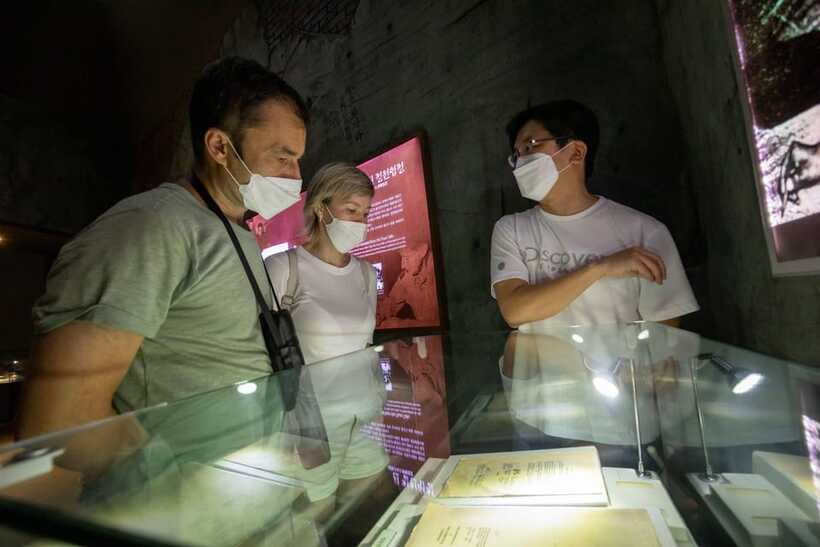
During the walking tour, the guide provides complementary pictures and copies of documents. These materials are a practical help, not just souvenirs.
Museum labels often give you a date, a name, or a short description. A document or image selected by the guide can show how that information fits into the larger story. It can also raise questions about whose voice is present and whose voice is missing.
This added material is one reason I would choose the guided tour over simply wandering through the building. You are not paying only for someone to point at objects. You are paying for selection, explanation, and a chance to test your understanding as you go.
The two-hour format means the guide must make choices. You will not receive every detail about every exhibit. Instead, the route focuses on the Korean War galleries and the themes most useful for understanding modern Korea.
If you enjoy military history and want to inspect every weapon, uniform, map, and document, plan to return after the tour. The guided visit can give you the framework first. Your independent time afterward will then be more rewarding because you will know what you are looking at.
How the two-hour pace feels
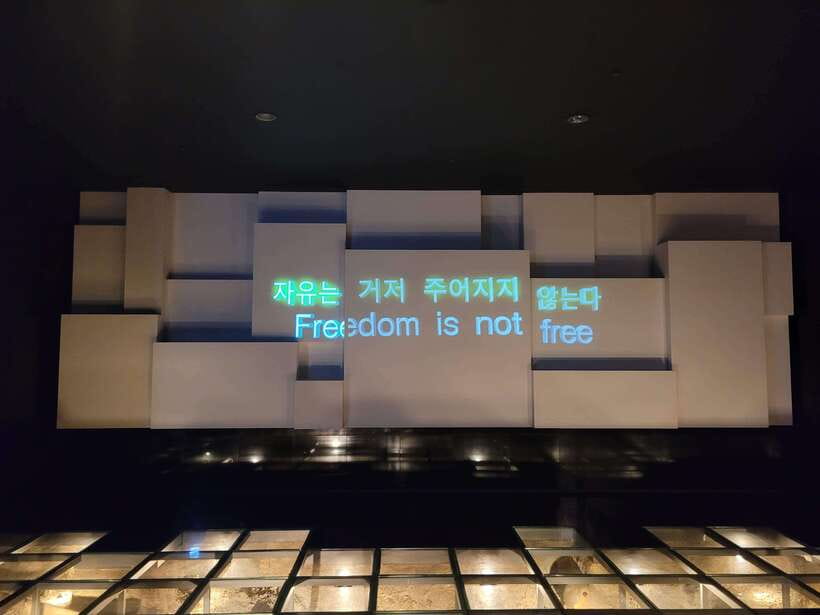
Two hours is long enough for a serious introduction but short enough to fit into a busy Seoul schedule. It works well before another afternoon activity, provided you do not expect to cover the entire museum in detail.
The walking pace is generally structured and purposeful. One visitor described the route as smooth and well organized, which matches the needs of a large memorial. You move through the key rooms rather than wandering without direction.
The tradeoff is clear. The subject is vast, and a two-hour visit can feel rushed when you want to stop and discuss a particular section. If you are deeply interested in the Korean War, you may wish the tour continued for another hour.
You can handle that limitation in two ways. First, tell your guide at the start what interests you most. Second, keep time afterward for your own look around the museum. The tour ends at the War Memorial, so you do not need to hurry away when the guided portion finishes.
The experience is also wheelchair accessible. Still, because the tour is a walking visit through a large museum, ask about your specific needs when booking if you require a slower pace or extra stopping time.
What you pay for at $100 per group
The price is $100 for a private group of up to five people. That is a different value calculation from a per-person group tour.
For one person, the price may feel high. For five people, it works out to $20 each, and you receive a private English-speaking guide rather than joining a large party. Two couples or a small family can share the cost and still have room to ask questions.
The real value is the guide’s subject knowledge and the private format. The War Memorial can be visited without paying for this tour, so you should book only if you want interpretation and discussion. If you are content to read displays at your own pace, the extra cost may not suit you.
I think the price makes the most sense for people with limited time in Seoul, anyone preparing for a DMZ tour, and visitors who want a careful introduction to the Korean War. It is also useful for a small group with different levels of background, since questions can be adjusted to the people standing in front of the guide.
Food and drinks are not included. That is not a major concern for a two-hour museum visit, but plan a café or meal separately if you are building a full half-day around it.
Who will get the most from this experience
This tour suits you if you want history explained in clear English and prefer conversation over a self-guided audio route. It is especially helpful if the Korean War is new to you or if you know the broad outline but want to understand its effect on Korean society.
It also fits visitors planning to visit the DMZ. The memorial tour is not a substitute for a DMZ trip, but it gives you essential background before you reach the border area. You will recognize more of the political language and understand why the division remains such a serious subject.
History students, teachers, peace studies students, and visitors interested in modern politics should find plenty to discuss. The guide’s focus on civil society and peace movements gives the tour more range than a battle-by-battle presentation.
The experience may be less suitable if you want a fast, visual museum stop with little talking. It is also not suitable for people with visual or hearing impairments according to the activity information. The tour is conducted in English, and alcohol and drugs are not allowed.
Booking, meeting, and cancellation details
You can reserve now and pay later, which helps if your Seoul schedule is still changing. Free cancellation is available up to 24 hours before the tour for a full refund.
Check the starting time when you book, since availability varies. Meet under the Statue of Brothers at the south-west corner of the exterior exhibit area, near Samgakji Station Exit 12.
The tour includes the guide and walking tour. It does not include food or drinks. Only one private group of up to five people joins, and the guide speaks English.
Should you book the War Memorial guided tour?
Book it if you want the Korean War explained rather than simply displayed. The strongest reasons are the small private group, the guide’s balanced approach, the added documents and images, and the attention to social and political context.
I would especially recommend it before a DMZ visit. It gives you the background that makes the border experience more meaningful and helps you see modern Korea as the result of a still-important conflict, not just a collection of current events.
Skip it if you prefer to spend several hours alone with every exhibit or if your interest is limited to outdoor military hardware. Two hours can feel short, and the guided route necessarily leaves parts of the museum for later.
For a small group of up to five, the $100 price is fair for a focused English tour led by guides such as Kichan Lee and T. Go in ready to ask questions, allow extra time afterward if the subject catches your attention, and you will get far more from the War Memorial than a quick walk through its rooms.
FAQ
How long does the War Memorial guided tour last?
The guided walking tour lasts two hours.
How much does the private tour cost?
The price is $100 per private group of up to five people.
What language is the tour conducted in?
The tour is conducted in English by a live English-speaking guide.
Where do I meet the guide?
Meet beneath the Statue of Brothers, in the south-west corner of the War Memorial’s exterior exhibit area. The statue is near Exit 12 of Samgakji Station, served by Subway Lines 4 and 6.
How will I recognize the guide?
The guide waits with a sign reading Korean War Memorial Guided Tour by Gangwon Peace Tours.
Which parts of the museum does the tour cover?
The main focus is Korean War Rooms I, II, and III at the War Memorial of Korea.
Is the tour private?
Yes. It is a private group tour for one group of up to five people.
Is the tour wheelchair accessible?
Yes, the activity is listed as wheelchair accessible.
What is included, and can I cancel?
The tour includes the guide and walking tour. Food and drinks are not included. You can cancel up to 24 hours in advance for a full refund, and you can reserve now and pay later.
Just added around Seoul
- Your Personal Seoul Photographer!★ 4.1 · 15 reviews
- From Seoul: Hwacheon Ice Fishing and Lighting Festival Tour★ 4.5 · 4 reviews
- You’re Invited to Our Home in Seoul: The Only Cooking Class!★ 5.0 · 8 reviews
- Seoul: Gangneung BTS K-Pop & K-Drama Filming Locations Tour★ 4.6 · 14 reviews
- Unique Native Experience : Han River Picnic, Board game, BBQ★ 5.0 · 3 reviews
- 2-Hour Private Kayaking and Paddleboarding Experience in Hanriver★ 5.0 · 3 reviews
- Yun Korean Cooking Class in Seoul★ 5.0 · 6 reviews
- Day Trip to Yongin Daejanggeum and Korean Folk Village from Seoul★ 4.0 · 9 reviews
Museums, compared.

Gugak – Korean Traditional Music Museum&Concert Tour
Read our review →
Gyeongju UNESCO Sites Tour by KTX train; The Museum Without walls
Read our review →
Time Travel in Seoul: Gyeongbokgung Palace, Folk Museum & Bukchon
Read our review →
National Art Gallery Tour and Taste of Korean Cuisine in Seoul
Read our review →Browse the lists this tour appears in