
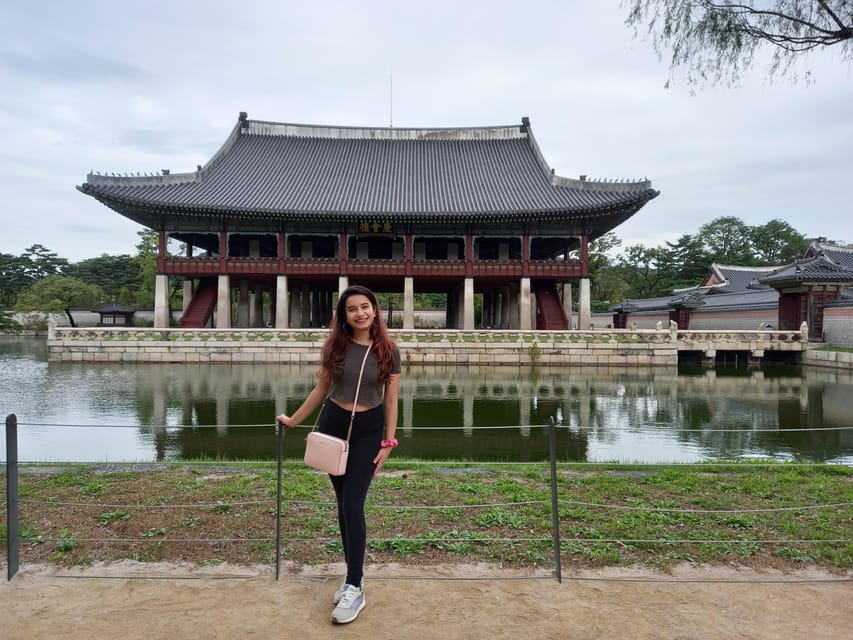
Reviewed · GYEONGBOKGUNG PALACE TOURS
Layover tour to Gyeongbokgung-Folk Museum-Bukchon-Insadong
The best thing about this six-hour Seoul layover tour is its clear cultural focus. You move from the royal court at Gyeongbokgung to everyday Joseon life at the National Folk Museum, then on through Bukchon’s old houses and Insadong’s traditional shops. Guide Paul Koo adds the missing thread: Confucian ideas, palace design, and the meaning behind what you are seeing.
I like two practical details. Airport transport and admission are included, and you are escorted back to Seoul Station for the train to Incheon. I also like the private format, since Paul can explain the sites at your pace, take photos, and help you handle Seoul’s public transport. The main drawback is time: six hours goes quickly, and the airport train ride takes a sizeable part of the outing.
Key points to know before booking
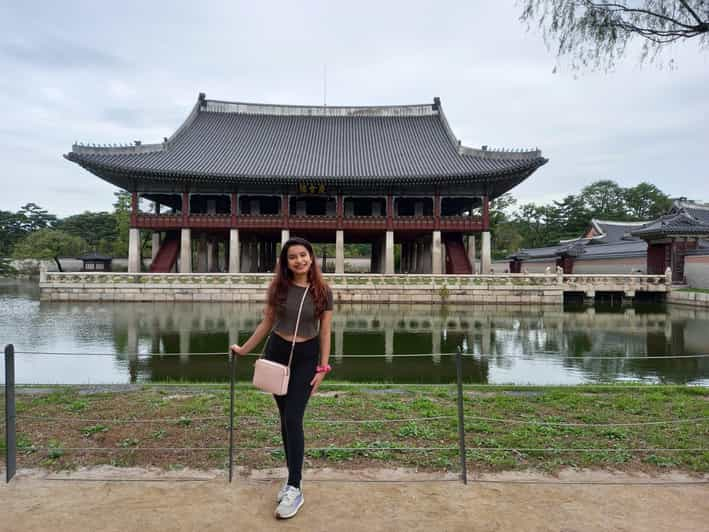
- Gyeongbokgung gets the most time: Plan on about two hours at Seoul’s grandest Joseon palace.
- Paul Koo leads the tour: He focuses on Korean culture, Confucianism, architecture, and practical help around Seoul.
- The route is built for a layover: You meet at Incheon Airport and finish at Seoul Station, ready to continue to the airport.
- AREX timing matters: The express train has reserved seats and runs about hourly, but a normal train may be used if the wait exceeds 20 minutes.
- Bukchon combines old and new Seoul: Traditional hanok houses are seen with city buildings and N Seoul Tower in the distance.
- Food is not included: You will need to pay for your own meals and drinks, though the schedule includes Insadong time.
Why this route works for a Seoul layover
A long airport stop can leave you stuck between two bad choices: stay inside the terminal, or attempt Seoul alone and spend half the day worrying about trains. This tour gives you a firm route and a local escort, while still showing you several sides of the city.
You begin at Incheon Airport and travel into Seoul by AREX, the airport railroad. The transport section is listed as about one and a half hours, which accounts for a meaningful portion of the six-hour schedule. That is the price of seeing central Seoul during a layover, but the train is far more practical than arranging a private road transfer through uncertain traffic.
The tour finishes at Seoul Station, not back at your airport gate. That distinction matters. Paul escorts you to the station so you can board the airport train yourself. You should allow enough time after the official end of the tour for your train ride, airport procedures, and your onward flight.
The meeting time can be chosen after booking. A sample schedule begins at 7 a.m. and ends around 1 p.m. at Seoul Station. Since the express train has designated seats and may sell out during busy periods, advance planning is useful. If waiting more than 20 minutes for an express train would cost too much sightseeing time, the normal train may be used instead. The normal service takes about an hour to Seoul, with an estimated difference of 20 minutes compared with the express option.
More Gyeongbokgung tours in Seoul:
- Seoul: Gyeongbok Palace, Bukchon Village, and Gwangjang Tour
★ 4.9 · 2,321 reviews - Best Seoul City Tour (Gyeongbokgung Palace,Insadong,Namsan Tower)
★ 5.0 · 1,647 reviews - Seoul City Sightseeing Tour Including Gyeongbokgung Palace, N Seoul Tower, and Namsangol Hanok Village
★ 5.0 · 1,423 reviews
Gyeongbokgung, the royal heart of the morning
Gyeongbokgung receives about two hours, and that is the right priority. Built in 1395 as the main palace of the Joseon Dynasty, it was the first and largest of Seoul’s major royal palaces. Its position on relatively flat ground and its formal arrangement reflect the rules of traditional palace design.
I find the palace more rewarding when you understand the ideas behind the buildings. The tour places architecture at the center, explaining how Joseon design expressed Confucian values and the political order of its time. Without that background, you can admire the painted details, courtyards, gates, and rooflines, but you may miss why the complex was arranged as it was.
Paul Koo’s role is especially useful here. His explanations focus on the spirit of the period rather than stopping at names and dates. He has studied Korean culture and history for more than 10 years, and his discussions of Confucianism are a major part of the experience. That turns the palace from a collection of handsome buildings into a place where social rules, government, family life, and architecture meet.
You will not see every corner of Seoul’s palace system in two hours, nor is this meant to be a slow photography walk. The schedule is designed to give you a strong first look before moving on. If Gyeongbokgung is your main reason for leaving the airport, the time allocation should satisfy you. If you want an exhaustive palace visit, a longer dedicated tour would be better.
The National Folk Museum and ordinary Joseon life
The National Folk Museum of Korea follows Gyeongbokgung, with about 30 minutes of guided time. This is a short stop, but it corrects the palace’s natural bias toward kings, officials, and grand ceremonies.
The museum focuses on daily life and folk customs. Its displays cover seasonal activities and the stages of life, from birth and childhood through marriage, old age, illness, treatment, and death. Ceremonies and commemorative events help show how people marked important moments.
I like this pairing. The palace introduces the official culture of Joseon, while the Folk Museum turns toward common people. Together, they give you a more complete view of traditional Korea than either site alone.
Thirty minutes is enough for an introduction, not a full museum visit. You will need to keep moving and let Paul point out the most useful exhibits. If museum time is important to you, this is one place where the schedule may feel tight. Still, the stop makes sense for a layover because it is close to Gyeongbokgung and adds context without requiring another long transfer.
Admission to Gyeongbokgung is included. The information provided specifically lists that palace admission, while food, drinks, and insurance are not included.
Bukchon Hanok Village, old houses above modern Seoul
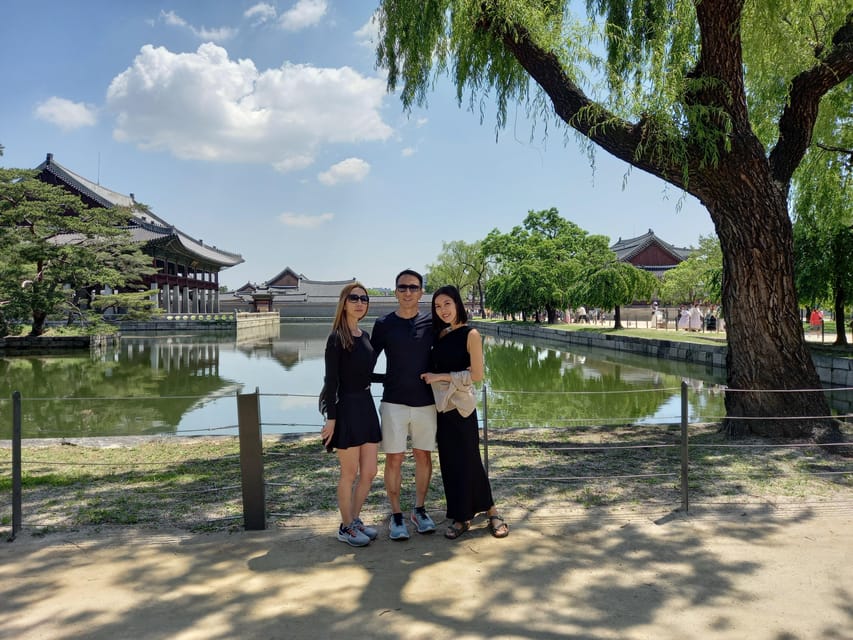
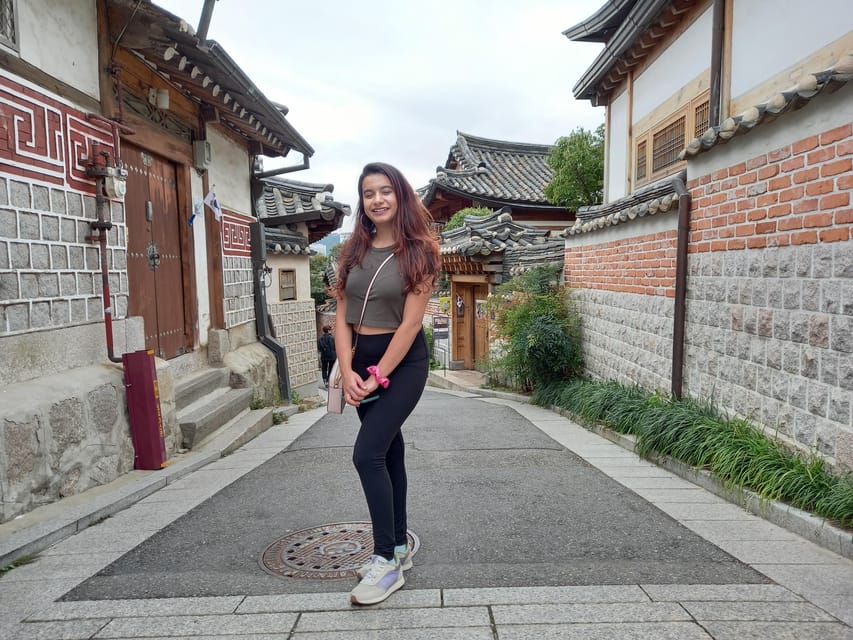
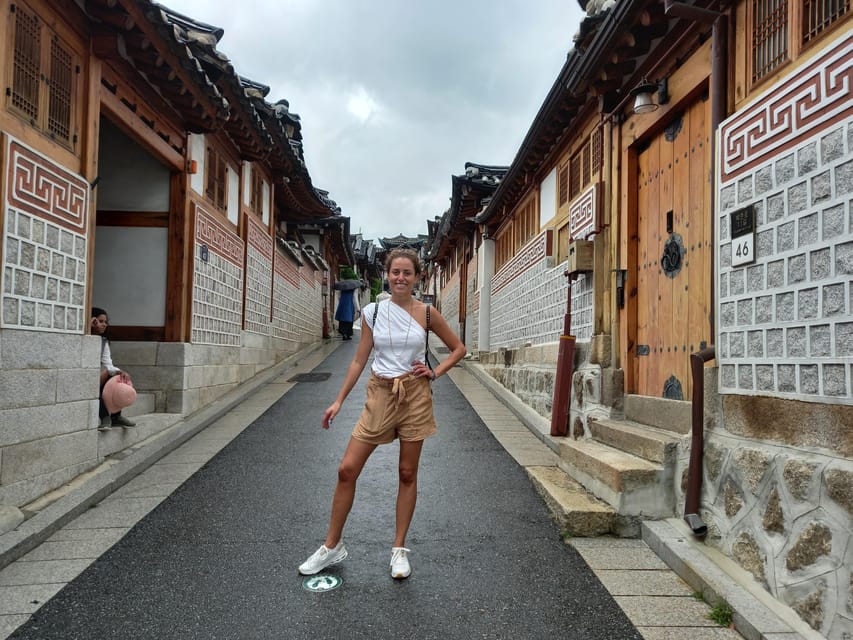
Bukchon Hanok Village gives you a different view of the city. Instead of royal buildings, you see a historic residential district made up of traditional Korean homes called hanok. The area is described as Seoul’s largest cluster of these houses, with about 1,000 hanoks.
The appeal is the contrast. Traditional rooflines and narrow streets sit within modern Seoul, with city buildings and N Seoul Tower visible in the distance. It is one of the clearest places on this route to see how old and new Korea occupy the same city.
Paul’s help is valuable here because Bukchon is not simply a backdrop for photos. The buildings represent a way of living, and the district’s streets feel different from the open courtyards of Gyeongbokgung. A guided walk can help you notice the difference between royal architecture and traditional residential design.
The stop lasts about 40 minutes, so expect a focused walk rather than a long wander through every lane. Wear comfortable shoes and be ready for walking. The supplied information does not give a precise distance or accessibility plan, so anyone with mobility concerns should ask for current details before booking.
Bukchon is also a residential area, so a respectful approach matters. Keep voices down, avoid treating doorways as photo props, and follow Paul’s lead on where to stop. The charm comes from seeing a living neighborhood, not just a preserved display.
More Bukchon and hanok village tours in Seoul:
- Seoul: Gyeongbok Palace, Bukchon Village, and Gwangjang Tour
★ 5.0 · 1,044 reviews - Seoul: Gyeongbok Palace and Bukchon Hanok Walking Tour
★ 4.8 · 157 reviews - Best Walking Tour to Gyeongbok Palace Bukchon Hanok Village
★ 5.0 · 138 reviews - Experience Korean Cooking in Modern Hanok Kitchen
★ 5.0 · 118 reviews
Insadong and the small Jogyesa Temple stop
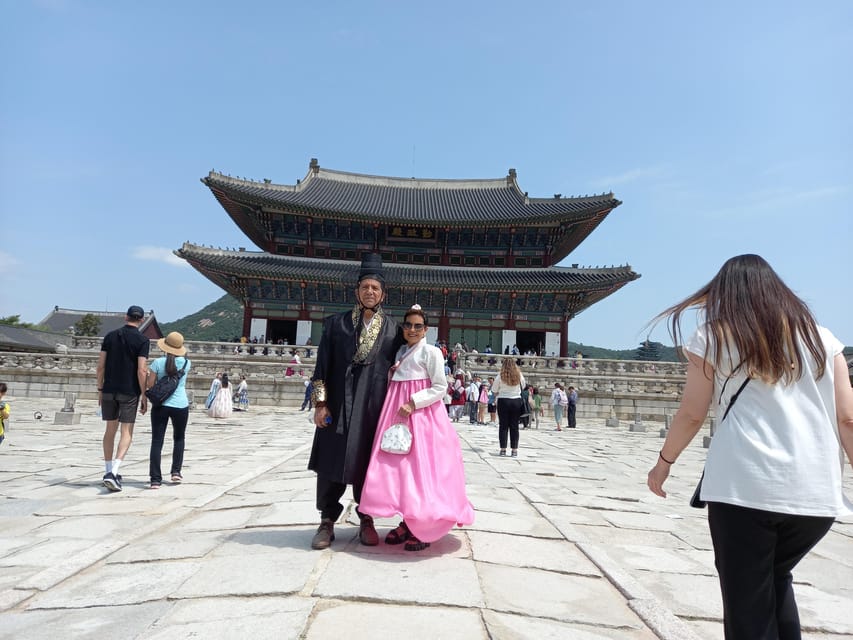
The final main sightseeing area is Insadong, with about one hour. This gives you time to move away from palace grounds and see a traditional commercial district. Insadong is a natural place to finish the cultural portion of the tour because it brings historic themes into a modern Seoul street setting.
Jogyesa Buddhist Temple is located next to the area. It is a small temple, but it serves as the headquarters of Korea’s Buddhist organization and was built in 1926. That combination makes it important even though it is not a vast temple complex.
The temple adds a useful religious counterpoint to the Confucian palace. Gyeongbokgung represents the official spirit of the Joseon Dynasty, while Jogyesa introduces Korean Buddhist practice in a central urban setting. I appreciate that the route does not present Korean culture as only royal or architectural. You see court life, household customs, residential tradition, commercial streets, and Buddhist life within one morning.
Insadong is also the most natural place on the route to look for a snack or meal, but food and drinks are at your own expense. The tour schedule does not promise a restaurant stop or a specific food tasting. Paul has helped visitors experience local street food, but you should treat that as possible guidance rather than an included part of the package.
What Paul Koo adds to the experience
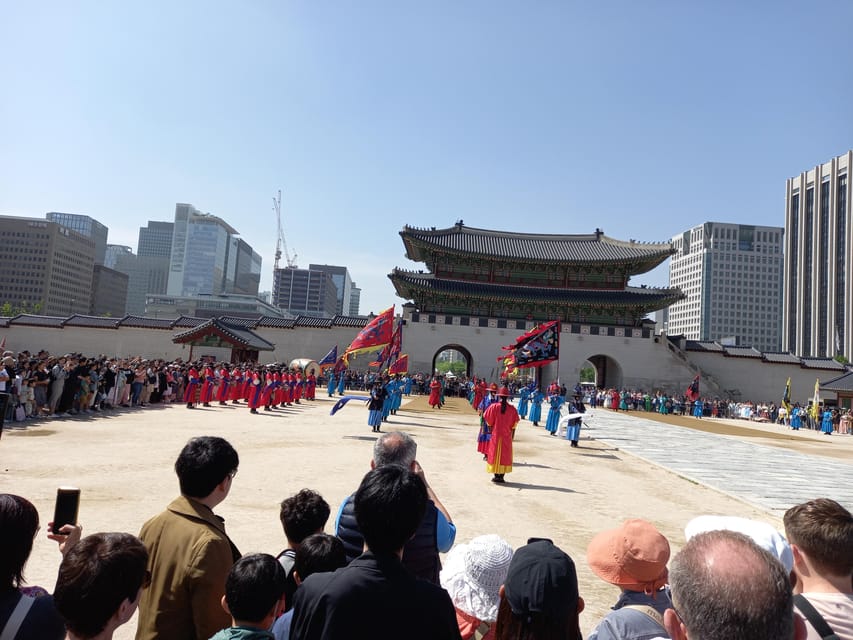
A private guide makes the biggest difference on a short tour. Paul Koo meets you at Incheon, helps you get onto the correct train, leads you through the city, and escorts you back to Seoul Station. That reduces the small but real stress of navigating an unfamiliar rail system during a flight connection.
His strongest subject is cultural interpretation. The tour places special weight on Confucianism and the way a society’s values appear in its buildings. Paul’s explanations can help you understand why Gyeongbokgung is considered a key symbol of Korean identity, rather than simply telling you that it is old and beautiful.
He also takes photographs for visitors and sends them afterward, with no extra charge, according to the experience details. That can be useful during a busy day when you do not want to choose between taking pictures and listening. It is worth confirming the current photo arrangement when you meet, since the tour’s core inclusions are guiding, transport, and palace admission.
The private format should suit first-time visitors who want direct help. It may be less appealing if you prefer to explore alone, spend long periods in museums, or stop whenever you like. The route has a firm timetable because it must work around an onward flight.
Is $254 good value for one person?
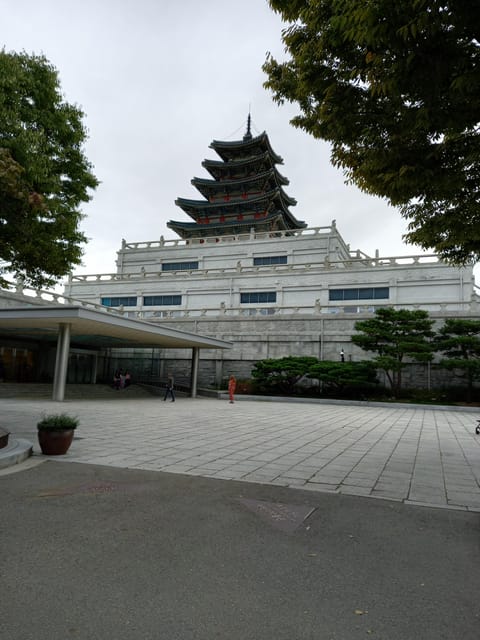
The listed price is $254 for a private group of up to one person. That wording is unusual, so confirm the final group and price details before paying, especially if you are booking for more than one person.
For a solo visitor, the value depends on what you want from a layover. The fee includes six hours of guiding, airport-to-city and city-to-airport rail transport, the return airport train arrangement, and Gyeongbokgung admission. You are paying for a private escort and cultural explanation, not just entry tickets.
The price is harder to justify if you only want to see one palace and are comfortable using Seoul’s trains alone. The AREX system is practical, and independent visitors can reach central Seoul without a guide. But doing the route independently means handling airport timing, finding each site, buying or arranging return transport, and deciding what the palace details mean without Paul’s cultural explanations.
For a solo visitor on a valuable layover, I see the price as a convenience and interpretation fee. You get a planned cultural route with little wasted time. For a larger party, the price may become more attractive if the published booking system allows your group to share the private service, but you should verify that point before booking.
Timing, train choices, and the return to Incheon
The train plan is the part you should study most carefully. The tour starts at Incheon Airport, moves into Seoul, visits four cultural areas, and ends at Seoul Station. You then continue to Incheon Airport by train on your own.
The express AREX train runs roughly every hour and uses reserved seats. In busy periods, seats can sell out, so the guide plans around availability and may buy the return ticket in advance. If the next express train requires a wait of more than 20 minutes, the normal train may be chosen. That train takes about one hour to Seoul, with only about a 20-minute difference from the express service.
This is sensible on a layover. A reserved express seat sounds attractive, but waiting too long for it can waste the very time you came into Seoul to use. The normal train is slower, yet the difference is modest. I would prioritize the schedule and your flight connection over the prestige of taking the express service.
Tell the guide your onward flight time and keep a generous buffer. The official tour ends at Seoul Station, not at Incheon Airport. The tour includes the transportation cost through arrival at Incheon Airport, but the actual sightseeing service ends when Paul has escorted you to the station.
Who should book this half-day tour?
I would choose this experience if you have a substantial Incheon layover and want a guided introduction to Korean culture rather than a shopping trip. It suits first-time visitors, solo passengers, and anyone who wants a local guide to explain Confucian ideas, palace design, and the connection between historic Seoul and the modern city.
It also suits people who value order and reassurance. Meeting at the airport, traveling with an escort, and ending at Seoul Station removes much of the guesswork from a short stopover.
I would hesitate if your connection is tight, if you dislike fixed schedules, or if your main goal is an unhurried meal and free exploration. The tour covers a lot, but it does so at a purposeful pace. A six-hour service cannot provide a full museum visit, an extended Bukchon walk, and a relaxed food crawl.
Free cancellation is available up to 24 hours before the tour, and you can reserve now and pay later. Those terms help if your flight plans are still changing, but they do not replace checking your layover time and return train options carefully.
Should you book it?
Book this tour if you want to turn an airport wait into a well-organized first look at Seoul. Gyeongbokgung, the Folk Museum, Bukchon, Insadong, and Jogyesa form a smart cultural sequence, and Paul Koo’s focus on Confucianism and architecture gives the route more meaning than a quick photo stop.
Skip it if you have only a short connection or want complete independence. For the right layover, though, the private guide, included transport, and direct return to Seoul Station make this a practical way to see the city without gambling your flight.
FAQ
Where does the tour begin?
The tour begins at Incheon International Airport, where the English-speaking guide meets you.
Where does the tour end?
The sightseeing service ends at Seoul Station, specifically at the airport railroad area. The guide escorts you there so you can continue to Incheon Airport.
How long is the tour?
The tour lasts six hours. Starting times can be selected based on availability, and a sample schedule runs from 7 a.m. to 1 p.m. at Seoul Station.
Which places are visited?
The route includes Gyeongbokgung Palace, the National Folk Museum of Korea, Bukchon Hanok Village, Insadong, and Jogyesa Buddhist Temple.
Is transportation included?
Yes. Transportation from Incheon Airport into Seoul and onward to Seoul Station is included. The return airport train ticket is also arranged as part of the transport plan.
Is the AREX express train guaranteed?
No. The express train has reserved seats and runs about every hour, but it can sell out during busy periods. The normal train may be used if waiting for the express would take more than 20 minutes.
Is food included?
No. Food and drinks are not included in the tour price.
What language is the tour offered in?
The tour is offered in English with a live guide. The experience provider is Paul Koo, and the format is a private group.
More layover and stopover tours in Seoul
- Flexible Private Guided Tour in Seoul (Optional Incheon Layover)
★ 5.0 · 323 reviews - Private Layover Tour from Incheon Airport to Seoul
★ 5.0 · 78 reviews - Seoul Layover Private Tour from Incheon Airport
★ 5.0 · 65 reviews - Seoul Layover Private Incheon Cultural Odyssey from Airport
★ 5.0 · 33 reviews
More Insadong tours in Seoul
- Seoul Highlights: Gyeongbok Palace, Insadong & N Seoul Tower
★ 4.7 · 726 reviews - Korean Palace and Market Tour in Seoul Including Insadong and Gyeongbokgung Palace
★ 4.0 · 174 reviews - Carve Your Personal Korean Stone Seal with Jeongju in Insadong
★ 5.0 · 134 reviews - Write a Meaningful Korean Calligraphy Scroll in Insadong
★ 5.0 · 36 reviews
Just added around Seoul
- Your Personal Seoul Photographer!★ 4.1 · 15 reviews
- From Seoul: Hwacheon Ice Fishing and Lighting Festival Tour★ 4.5 · 4 reviews
- You’re Invited to Our Home in Seoul: The Only Cooking Class!★ 5.0 · 8 reviews
- Seoul: Gangneung BTS K-Pop & K-Drama Filming Locations Tour★ 4.6 · 14 reviews
- Unique Native Experience : Han River Picnic, Board game, BBQ★ 5.0 · 3 reviews
- 2-Hour Private Kayaking and Paddleboarding Experience in Hanriver★ 5.0 · 3 reviews
- Yun Korean Cooking Class in Seoul★ 5.0 · 6 reviews
- Day Trip to Yongin Daejanggeum and Korean Folk Village from Seoul★ 4.0 · 9 reviews
Gyeongbokgung Palace Tours, compared.
Gyeongbok Palace, Bukchon Village, and Gwangjang Tour
Read our review →
Best Seoul City Tour (Gyeongbokgung Palace,Insadong,Namsan Tower)
Read our review →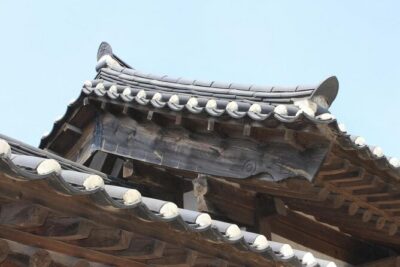
Seoul City Sightseeing Tour Including Gyeongbokgung Palace, N Seoul Tower, and Namsangol Hanok Village
Read our review →Gyeongbok Palace, Bukchon Village, and Gwangjang Tour
Read our review →
Seoul Highlights: Gyeongbok Palace, Insadong & N Seoul Tower
Read our review →
Seoul City Half Day Tour-Gyeongbok Palace Guard Changing Ceremony
Read our review →
Browse the lists this tour appears in