
Reviewed · GYEONGBOKGUNG PALACE TOURS
Seoul: Gyeongbokgung Palace Half day Tour
Gyeongbokgung Palace makes Seoul’s royal past easy to read: start at Gwanghwamun Gate, then follow the route through throne halls, royal offices, bed-chambers, and the graceful Gyeonghoeru pavilion. An English-speaking guide turns a grand but sometimes puzzling complex into a story about Joseon kings, court life, architecture, and the palace’s long restoration.
I like the detailed English explanation, especially for visitors who would otherwise see a lot of colorful roofs without knowing what they mean. I also like the chance to ask questions directly, and guide Gabriela has shown the kind of practical care that matters when a visitor walks to the wrong meeting place.
The main drawback is the strict setup: the tour can be canceled if fewer than four people book, late arrivals cannot join, and Gyeongbokgung is closed on Tuesdays. At $35 per person for about two hours, the value depends on how much context you want rather than simply walking through the grounds.
Key points to know before booking
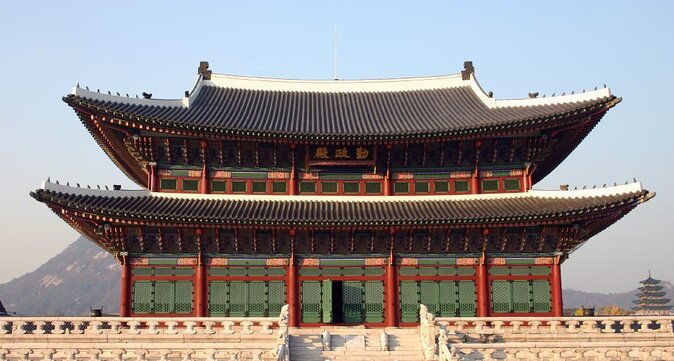
- Gwanghwamun Gate begins the story: You start at the palace’s south gate, not somewhere deep inside the complex.
- Six important palace areas: The route includes the throne hall, king’s office, royal bed-chambers, queen’s bed-chamber, and Gyeonghoeru pavilion.
- English guidance is the main value: The guide explains Joseon history, architecture, royal figures, and the animal statues placed around the palace.
- Admission is included: The $35 price covers the palace entrance and guided visit.
- Small minimum, larger maximum: The tour needs at least four participants and can include up to 20 people.
- Plan carefully for Tuesday: Gyeongbokgung closes that day, and late arrival or incorrect contact details can mean missing the tour without a refund.
Why Gyeongbokgung is worth seeing with a guide
Gyeongbokgung was built in 1394 and is the oldest and most important of Seoul’s five palaces. It was the principal palace of the Joseon dynasty, so the complex gives you more than attractive buildings. It shows how royal power was organized, where the king worked, where the royal family slept, and how official events were staged.
You can walk through the palace alone, of course. The trouble is that the meaning of the buildings is not always obvious. A wide courtyard may look like an empty space until you learn that it leads to the main throne hall. A carved animal may seem decorative until the guide explains why such figures appear throughout the palace.
That explanation is the heart of this tour. The guide speaks in English and connects the buildings to the kings of Joseon, the construction of the palace, and the damage it suffered during the Japanese Colonial Period. Continuous restoration has preserved much of its value, but the site also carries evidence of a difficult past.
I would choose this tour if you want the palace to make sense, not just look impressive. It is especially useful for first-time visitors to Seoul, families with older children, and anyone interested in Korean royal history but unsure where to begin.
More Gyeongbokgung tours in Seoul:
- Seoul: Gyeongbok Palace, Bukchon Village, and Gwangjang Tour
★ 4.9 · 2,321 reviews - Best Seoul City Tour (Gyeongbokgung Palace,Insadong,Namsan Tower)
★ 5.0 · 1,647 reviews - Seoul City Sightseeing Tour Including Gyeongbokgung Palace, N Seoul Tower, and Namsangol Hanok Village
★ 5.0 · 1,423 reviews
Meeting at the National Palace Museum of Korea
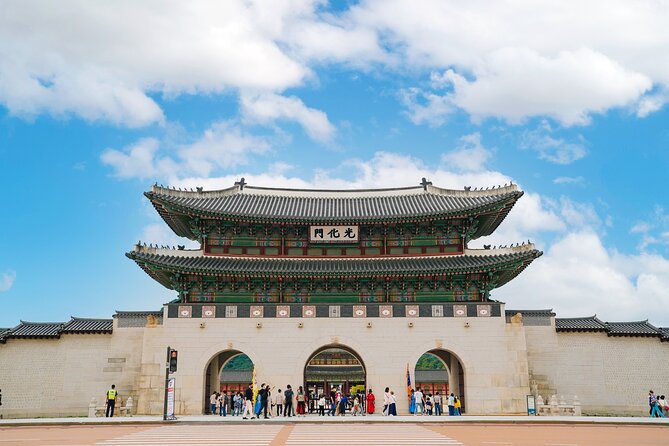
The meeting point is the National Palace Museum of Korea, at 12 Hyoja-ro in Jongno District. The tour ends at 7-25 Tongui-dong, also in the palace area.
The starting point matters because Gyeongbokgung is large, and meeting at the correct place helps the group begin together. Leave time to find the National Palace Museum of Korea and check the exact meeting instructions sent by email or WhatsApp.
You must provide a name and a contact number that works in Korea, or an available messenger contact such as WeChat or Line. This is not a minor formality. The operator says it is not responsible if you miss the tour because you supplied an incorrect number or one that cannot be reached in Korea.
The guide may be able to help if you make a navigation mistake. Gabriela, named in the tour information, went out of her way to find a visitor who walked to the wrong meeting point. That is reassuring, but it is not a reason to arrive late. Joining after the tour begins is not allowed because it would disrupt the rest of the group.
Gwanghwamun Gate: the formal entrance
The tour opens at Gwanghwamun Gate, the south gate of Gyeongbokgung Palace. This is a fitting starting point because it introduces the palace as an organized royal center rather than a collection of separate buildings.
Your guide begins the story of the palace here, explaining its construction in 1394 and its role during the Joseon dynasty. From this first stop, you get the basic framework needed for the rest of the visit: the palace was built for government, ceremony, and royal life.
The gate also gives the tour a clear sense of arrival. Instead of stepping into the complex without context, you begin with the main entrance and move inward through the royal grounds. I like that structure because it follows the way the palace was designed to be understood.
The guide also points out the animal imagery found around Gyeongbokgung. These figures are easy to miss when you are focused on roofs and courtyards, so an explanation gives you a second way to read the site.
Geunjeongjeon: the throne hall
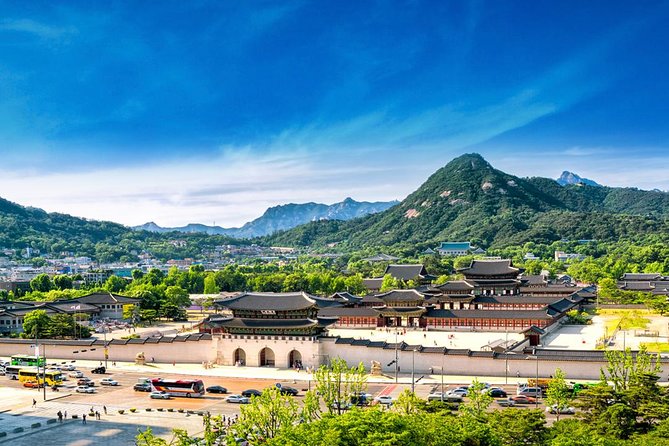
The next major stop is Geunjeongjeon, the main throne hall. This is where the scale and ceremony of Gyeongbokgung become most apparent.
The guide explains the hall’s role and connects it to the kings of Joseon. You can expect the focus here to be on royal authority, formal events, and the architectural details that helped make the space suitable for court ceremonies.
This is also the point where a guide adds real value. A photograph can show you a large hall with a decorated roof, but it cannot explain why the building occupies such a central place in the palace or how it fits into the royal system. The tour gives you that framework in plain English.
The palace’s beauty is part of the appeal, but the explanation keeps the visit from becoming a photo stop only. You learn to look at the arrangement of the buildings and the animals placed around them, rather than rushing from one colorful structure to the next.
More palace tours in Seoul:
- Small-Group Royal Palace and Seoul City Tour (hotel pick-up)
★ 5.0 · 1,474 reviews - Seoul: Gyeongbok Palace, Bukchon Village, and Gwangjang Tour
★ 5.0 · 1,044 reviews - Seoul Highlights: Gyeongbok Palace, Insadong & N Seoul Tower
★ 4.7 · 726 reviews - Seoul: Hanbok Rental with Gyeongbokgung Palace Entry
★ 4.6 · 611 reviews
Sajeongjeon: the king’s office
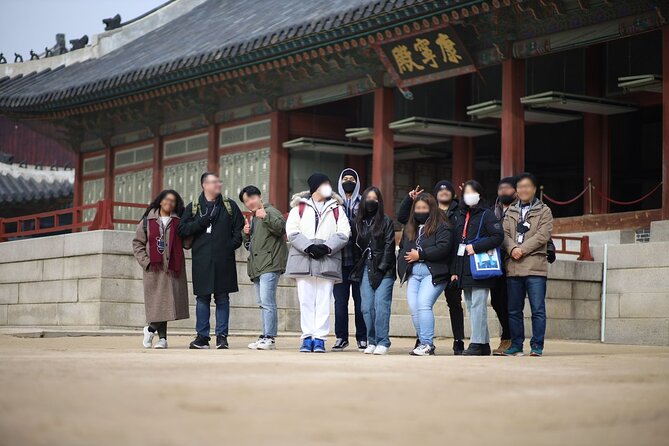
Sajeongjeon was the king’s office space, giving the tour a more practical view of royal life. This stop shifts the focus away from major ceremonies and toward the work of governing.
The distinction between the throne hall and the king’s office is useful. It shows that the palace was not only a backdrop for formal occasions. It was also a working center where decisions were made and administration took place.
I would pay close attention here if you are interested in how Joseon government functioned. The guide can place the building within the broader story of the dynasty and explain how the king’s public role connected with his daily work.
Because the tour lasts only about two hours, the guide cannot spend unlimited time at every building. Still, the sequence from formal throne hall to working office makes the palace easier to understand as a living royal institution.
Gangnyeongjeon and Gyotaejeon: the private royal rooms
The route continues to Gangnyeongjeon, the king’s bed-chamber, and Gyotaejeon, the queen’s bed-chamber. These buildings bring the tour closer to the private side of palace life.
The change from official halls to royal sleeping quarters helps you see how the complex was divided between public duties and personal life. The guide explains the role of each space and places the rooms within the story of the royal family.
I find these stops valuable because they keep the palace from feeling like a series of government buildings. The king and queen had formal responsibilities, but they also lived within this complex. Seeing their bed-chambers gives the royal household a more human scale.
The guide also ties the palace’s layout to the people who used it. You are not simply looking at restored structures. You are following a route through spaces assigned to different roles, from the king’s public work to the royal family’s private quarters.
Gyeonghoeru: the event pavilion
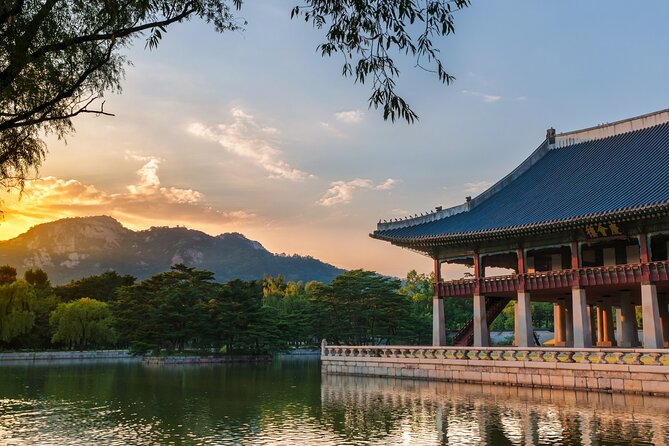
The final listed stop is Gyeonghoeru Pavilion, described as an event hall. Its position in the itinerary gives the visit a fitting close because it returns to the ceremonial side of palace life.
The guide explains the pavilion’s role and its connection to royal events. It also provides another chance to consider how architecture shaped court life. The palace was built not only for residence and administration, but also for gatherings and important occasions.
Gyeonghoeru is the sort of place where a guide’s comments can sharpen what you see. The pavilion’s beauty is easy to appreciate, but the story of its use gives the building a purpose beyond appearance.
Since the tour ends nearby at 7-25 Tongui-dong, you should not expect a long transfer to another Seoul district afterward. The end point keeps the experience focused on Gyeongbokgung and its immediate surroundings.
What the English explanation adds
The tour’s strongest feature is the guide’s explanation in English. You hear stories about the Joseon dynasty, famous kings, palace architecture, restoration, and the animal statues placed throughout the grounds.
That range is important. Some palace tours focus mainly on dates. This one is designed to connect political history with the physical details around you. You can ask questions as you go, which is useful when a building, symbol, or royal custom catches your attention.
Gabriela is the guide named in the available information, and her response to a visitor who went to the wrong meeting place suggests a personal, attentive approach. I would not assume every departure will have Gabriela, but her name gives you a useful point of reference when confirming details.
The tour does not allow recording or filming. If you like taking notes, you should plan to remember key points without recording the guide. That rule may be frustrating for some visitors, but it keeps the explanation as a live group experience.
Is $35 a fair price?
At $35 per person, this is not the cheapest way to enter Gyeongbokgung. The price makes more sense when you separate the admission cost from the guide’s time and the value of having the palace explained in English.
If you already know Joseon history and prefer to move at your own pace, a self-guided visit may suit you better. You would have more freedom to linger, leave early, or focus on photography.
If the palace is one of your main Seoul stops, the guided option offers a stronger return. In two hours, you get a planned route through six major areas, admission is included, and you can ask questions instead of trying to piece the story together alone.
The group can reach 20 people, so this is not guaranteed to be a private or very small tour. It does require at least four participants to operate. If you want a private tour, you need to request an estimate by email.
Timing, weather, and booking conditions
The duration is about two hours. That is long enough for a focused introduction, but not long enough to cover every corner of the palace in detail. You should treat it as a well-defined visit to the main royal spaces, not an all-day palace study.
Gyeongbokgung is closed on Tuesdays. The operator offers a Deoksugung night tour as an alternative on that day, but that is a different experience and should not be confused with this palace visit.
The tour requires good weather. If poor weather causes cancellation, you are offered another date or a full refund. The same applies if the minimum number of participants is not met.
You can cancel for a full refund up to 24 hours before the start time. Cancellations or schedule changes made less than 24 hours ahead are not accepted. Check the local cut-off time carefully, especially if you are booking around a tight Seoul itinerary.
Pets are not allowed, and there is no stated place to leave them. Most people can participate, but the supplied information does not promise a specific accessibility setup, so contact the operator if you have mobility or other participation concerns.
Who should book this Gyeongbokgung tour?
I would recommend it to you if:
- You want an English explanation rather than a silent walk through palace courtyards.
- You are curious about the Joseon dynasty and the lives of its kings and queens.
- You want to ask questions during the visit.
- You have about two hours and want a focused introduction to Seoul’s most important palace.
- You prefer a planned route that includes admission.
I would hesitate if you want a private experience, need complete flexibility, or plan to film the guide. The group may include up to 20 people, late arrivals cannot join, and recording or filming is not permitted.
Families and first-time Seoul visitors should find the route manageable in concept, since it moves from the main gate through official halls and into royal living areas. History enthusiasts may appreciate the chance to ask more detailed questions, though anyone wanting a full study of the palace should allow additional time outside the tour.
Should you book it?
Book this tour if you want Gyeongbokgung to tell you a story rather than simply provide a grand backdrop for photographs. The combination of included admission, an English-speaking guide, a clear two-hour route, and access to questions gives the palace useful shape.
Before paying, confirm that your date is not Tuesday, provide a working Korean contact number or messenger account, and make sure you can arrive at the National Palace Museum of Korea on time. If at least four people are not booked, the experience may be canceled, so keep a little flexibility in your schedule.
At $35, this is a sensible choice for visitors who value context and human explanation. If you already know the palace well or want to wander alone, save the money and explore independently. For everyone else, especially a first visit to Seoul, the guide can turn six impressive stops into one coherent look at Joseon royal life.
FAQ
How long does the Gyeongbokgung Palace tour last?
The tour lasts approximately two hours.
What is included in the price?
Admission to Gyeongbokgung Palace is included in the $35 per-person price.
Where does the tour begin?
The meeting point is the National Palace Museum of Korea, 12 Hyoja-ro, Jongno District, Seoul.
Where does the tour end?
The listed end point is 7-25 Tongui-dong, Jongno District, Seoul.
Is the tour conducted in English?
Yes. The experience provides detailed explanations in English.
Which palace areas are included?
The route includes Gwanghwamun Gate, Geunjeongjeon, Sajeongjeon, Gangnyeongjeon, Gyotaejeon, and Gyeonghoeru Pavilion.
Is Gyeongbokgung open on Tuesdays?
No. Gyeongbokgung Palace is closed on Tuesdays. A Deoksugung night tour may be available instead.
How many people can join the tour?
The maximum group size is 20 people. The tour requires at least four participants to operate.
Can I join if I arrive late?
No. Joining after the tour has started is not allowed.
Can I cancel for a refund?
You can cancel up to 24 hours before the start time for a full refund. Cancellations or changes made less than 24 hours before the tour are not accepted.
Just added around Seoul
- Your Personal Seoul Photographer!★ 4.1 · 15 reviews
- From Seoul: Hwacheon Ice Fishing and Lighting Festival Tour★ 4.5 · 4 reviews
- You’re Invited to Our Home in Seoul: The Only Cooking Class!★ 5.0 · 8 reviews
- Unique Native Experience : Han River Picnic, Board game, BBQ★ 5.0 · 3 reviews
- Seoul: Gangneung BTS K-Pop & K-Drama Filming Locations Tour★ 4.6 · 14 reviews
- 2-Hour Private Kayaking and Paddleboarding Experience in Hanriver★ 5.0 · 3 reviews
- Yun Korean Cooking Class in Seoul★ 5.0 · 6 reviews
- Day Trip to Yongin Daejanggeum and Korean Folk Village from Seoul★ 4.0 · 9 reviews
Gyeongbokgung Palace Tours, compared.
Gyeongbok Palace, Bukchon Village, and Gwangjang Tour
Read our review →
Best Seoul City Tour (Gyeongbokgung Palace,Insadong,Namsan Tower)
Read our review →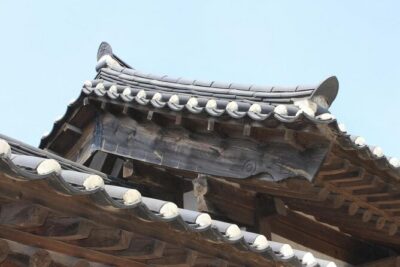
Seoul City Sightseeing Tour Including Gyeongbokgung Palace, N Seoul Tower, and Namsangol Hanok Village
Read our review →Gyeongbok Palace, Bukchon Village, and Gwangjang Tour
Read our review →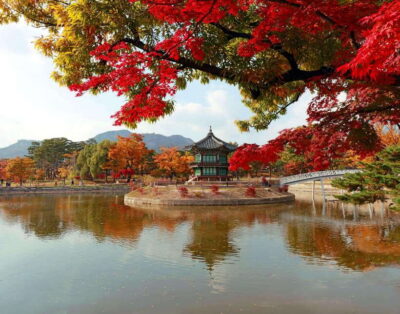
Seoul Highlights: Gyeongbok Palace, Insadong & N Seoul Tower
Read our review →
Seoul City Half Day Tour-Gyeongbok Palace Guard Changing Ceremony
Read our review →
Browse the lists this tour appears in