
Reviewed · SEOUL TRADITIONAL MARKET TOURS
Korean Kimchi Making Day Experience with a Local Market Tour
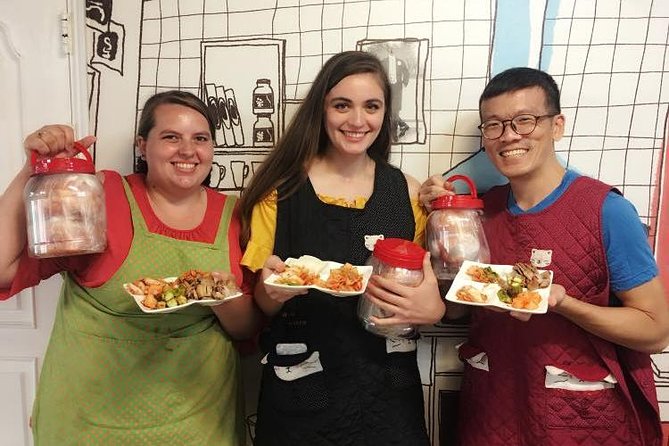
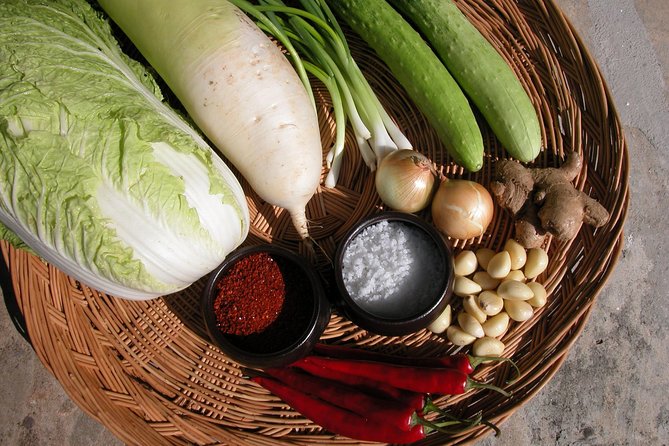
Making kimchi is the heart of this Seoul experience, but the Mangwon Market walk gives it much more flavor. Jomin introduces the cabbage, radish, cucumber, seafood, and other ingredients before you use them, then guides you through four kinds of kimchi in a home-style cooking studio.
I like the hands-on teaching and the generous takeaway. You do not just watch a demonstration: you make the food yourself, eat it with boiled pork and fried tofu, and pack the rest for later. The main thing to check is group size. The experience is promoted as a maximum-four class, while the booking details also mention up to 11 participants.
Key points to know before you book
- Start at Mangwon Station: Meet at Entrance 2 of Mangwon Metro Station on Line 6, then walk through the market with Jomin.
- Four kinds of kimchi: You work with Korean cabbage, radish, cucumber, and other fresh ingredients.
- Market tasting included: The walk includes explanations of Korean food culture and chances to sample street food.
- A real meal follows: Eat your freshly made kimchi with boiled pork and fried tofu, with makgeolli mentioned in the class details.
- Bring a container mindset: You receive a large container for your kimchi, plus a recipe or cookbook to help you repeat the dishes at home.
- Check the minimum: The class may be changed or canceled if the minimum number of four participants is not reached.
Why the market comes before the cooking class
This experience starts at Mangwon Station, not at a polished tourist attraction. That is part of its appeal. You meet Jomin at Entrance 2, then walk toward the cooking studio through Mangwon Market.
The market visit gives you a useful introduction to Korean food before you start chopping and seasoning. Jomin points out the produce used in class, explains the stalls, and helps you recognize the ingredients that can be hard to identify on your own. You may see seafood, vegetables, prepared foods, and products used in everyday Korean cooking.
The street-food tasting is a pleasant bonus. The precise snacks can vary, but the walk gives you a chance to try local bites and see how people shop for food in Seoul. If this is your first visit to a Korean market, that guidance matters. It can be difficult to know which stall sells what, or how the same ingredient may appear fresh, salted, fermented, or prepared.
I especially like that the market visit is not treated as a quick photo stop. You get some time to explore and buy items on your own. The class also gives you enough confidence to return to Mangwon Market later without a guide, which is useful if you want to shop for more Korean ingredients during your stay.
The market section is not a full food tour. Its purpose is to explain the ingredients for the class and set the cultural scene. If you want a long meal crawl or an extended market history lesson, this may feel limited. For a three-and-a-half-hour cooking experience, though, the balance is sensible.
More Korean cooking classes in Seoul:
- Local Home Korean Cooking Class & Market Adventure in Seoul
★ 5.0 · 1,024 reviews - Master Korean traditional cooking with a Kimchi chef
★ 5.0 · 385 reviews - Seoul: Korean Cooking Class at a Local Home and Market Tour
★ 5.0 · 348 reviews
Four kimchi recipes, not just one
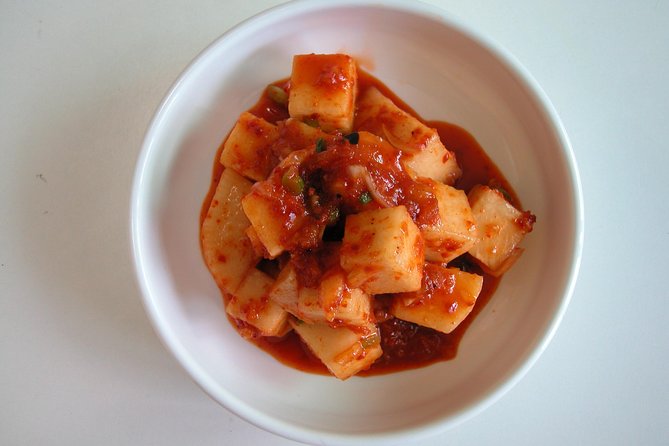
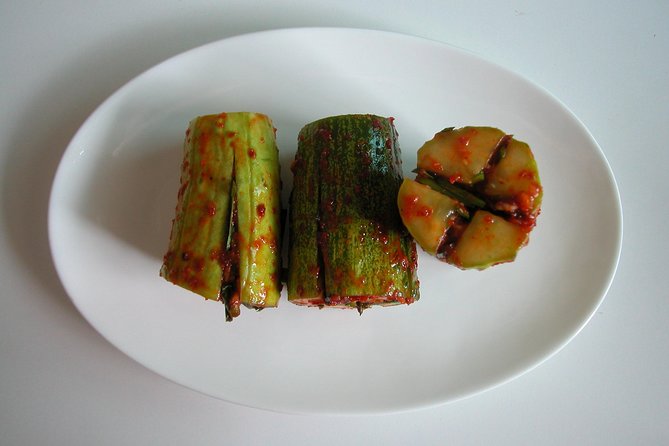
At the cooking studio, Jomin takes you through four types of kimchi. The class uses familiar ingredients such as Korean cabbage, radish, and cucumber, so you learn more than the standard napa cabbage version found in many restaurants.
That variety is one of the strongest reasons to book. You can compare different textures and seasoning styles, and you begin to understand that kimchi is not one fixed dish. The class also covers short-term and longer-term versions, according to the class details, which helps explain how fermentation changes the food over time.
The work is hands-on. You prepare the ingredients and mix the seasoning yourself while Jomin gives instructions and corrects mistakes. This is a better fit for you if you want practical cooking skills rather than a demonstration where you simply watch someone else work.
The class is designed for beginners. Several details point to a patient, clear teaching style, and the recipes are presented in a way that lets you repeat them at home. You receive a small cookbook or recipe book, which is a useful souvenir because it turns the experience into something you can use later.
English communication is described as good, and the teaching includes explanations of the ingredients and the background to Korean food traditions. One class participant with a 15-year-old daughter found the instructions clear and the atmosphere enjoyable, suggesting that the experience can work for families with older children.
Still, kimchi preparation involves several steps and four recipes. You should expect to stay involved for much of the class. It is not a sit-back activity, and it may be less appealing if you dislike handling food or want a relaxed tasting session only.
The meal: kimchi with pork, tofu, and makgeolli
After making the kimchi, you sit down to eat it. The freshly prepared kimchi is served with boiled pork and fried tofu, a combination that turns the lesson into a proper meal rather than a series of samples.
This is a smart part of the experience because you can taste the kimchi immediately. Fresh kimchi has a different character from kimchi that has fermented for days or weeks. Eating it with pork and tofu also shows how Korean families may serve kimchi as part of a larger meal, not just as a side dish in a small bowl.
Makgeolli is also mentioned as part of the meal. The supplied information does not specify how much is served, so you should not book this as a drinking tour. Think of it as a traditional pairing within the cooking experience.
The meal gives you a chance to compare the four versions and decide which one you prefer. Cucumber kimchi may feel crisp and fresh, while cabbage and radish preparations offer different textures. The exact result depends on your group’s preparation, which is part of the fun of a hands-on class.
Vegetarian and vegan options are available. You should state your needs when booking or before the class so the host can plan the food served with the kimchi. The standard meal includes pork and tofu, so this is an important point for anyone avoiding meat or animal products.
How much kimchi do you take home?
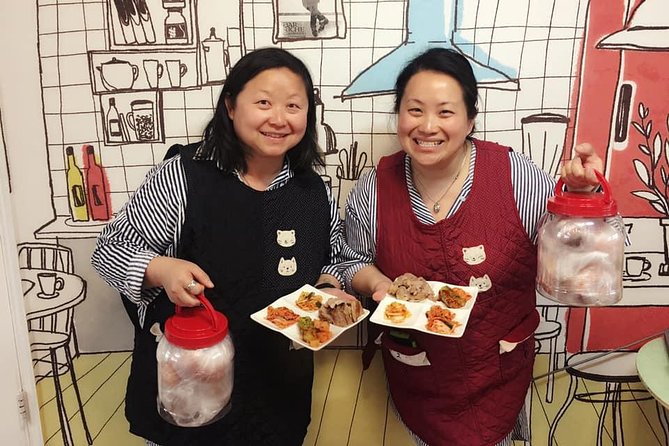
You take home the kimchi you make. This is not a tiny souvenir portion. The class provides a large container, and several details indicate that you may end up with a substantial amount.
That is excellent value if you love kimchi or want to practice the recipes at home. It also creates one practical problem: you need a plan for carrying it. If you are staying in Seoul for several more days, the container should be easy to use during your trip. If you are flying home soon, pack it carefully and check airline rules.
One useful detail is that the container should go in checked luggage if you carry it on an international flight. Kimchi can also smell strongly, so sealed packaging matters. The class information does not promise special airline packaging, so you should be prepared to handle that part yourself.
You also receive the recipes, which adds lasting value. At $89 per person, the price is not simply paying for a meal. You are paying for a market visit, ingredient guidance, four preparations, instruction, the meal, the container of kimchi, and the recipes.
The value is strongest for people who will actually cook again. If you only want to taste kimchi and have no interest in making it at home, a market visit or food tour may cost less and suit you better. If you love cooking, the take-home food and recipe book make the price easier to justify.
More traditional market tours in Seoul:
- Seoul: Gyeongbok Palace, Bukchon Village, and Gwangjang Tour
★ 4.9 · 2,321 reviews - Seoul Street Food Market Tour
★ 5.0 · 1,226 reviews - DMZ Tour Seoul to North Korea’s 3rd Tunnel & Majang Lake Crossing
★ 5.0 · 1,185 reviews - Seoul: Gyeongbok Palace, Bukchon Village, and Gwangjang Tour
★ 5.0 · 1,044 reviews
Group size and the feel of the class
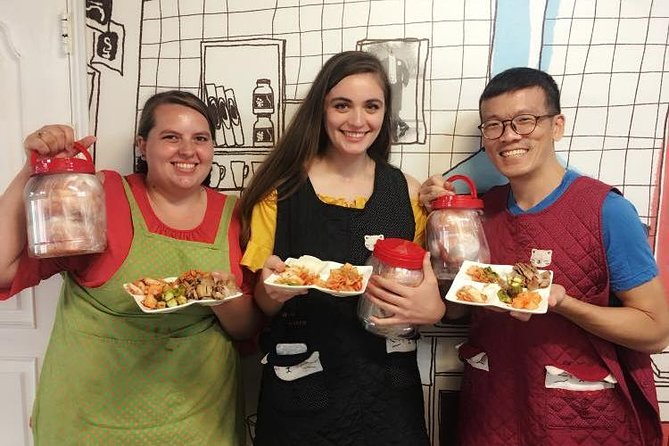
The experience is described as a small class with a maximum of four people. That is an appealing format for cooking because Jomin can watch each person’s work and answer questions without rushing from table to table.
A group of four also works well for couples, families, or friends who want a shared activity. Solo participants may find it easy to meet other people, and several class details point to a friendly social setting.
There is one point to clarify before booking. The additional information lists a maximum of 11 participants, while the main description says the class size is no more than four. The experience may use different group limits for different dates or booking arrangements, but the supplied details do not explain the difference.
If personal attention is a deciding factor, ask the provider, cookorean, to confirm the expected class size for your date. The class can also be rescheduled or canceled if the minimum of four participants is not met. That condition is worth noting if you are building a tight Seoul itinerary.
Timing, meeting point, and practical planning
The activity lasts about three hours and 30 minutes. It begins at Mangwon Station and ends back at the meeting point, so you do not need to arrange a separate return transfer from the cooking studio.
Mangwon Station is on Line 6. The meeting point is Entrance 2, and you should allow enough time to find the correct exit. Meeting at a subway station keeps the start simple, but Seoul stations can have several exits and long underground passages. Follow the booking instructions closely.
Because the market walk comes first, comfortable shoes are sensible. You will be walking from the station through the market to the cooking studio, then standing and working during the food preparation. The available details do not give an exact walking distance, so you should not assume this is a purely seated class.
A mobile ticket is provided, and confirmation arrives when you book. The experience is near public transportation, which makes it practical to reach from other parts of Seoul.
The class is booked, on average, about 30 days ahead. That does not guarantee that every date sells out, but it is a useful sign that you should reserve early if your Seoul schedule is fixed. It also gives you time to plan what you will do with the kimchi afterward.
Free cancellation is available if you cancel at least 24 hours before the local start time. Cancellations or changes inside that window are not refunded or accepted. If the provider cancels because the minimum group size is not reached, you are offered another date or experience, or a full refund.
Who will enjoy this most?
This is a strong choice for you if food is one of the main reasons you visit Seoul. You get a close look at ordinary ingredients, a local market, practical instruction, and a meal built around your own work.
It also suits couples and families with older children. The class is active without being physically demanding, and making several kinds of kimchi gives everyone a job. A family can turn it into a shared project rather than another sightseeing stop.
It is useful for curious cooks who want to continue the experience at home. The recipes, instructor guidance, and market introduction make it easier to find the right ingredients later. You do not need advanced kitchen skills.
The class may not suit you if you have very limited luggage space, are leaving Seoul immediately, or do not want to carry a large container of food. It is also not the right pick if you want a broad tour of Seoul’s major sights. The focus is narrow and food-centered.
Is the $89 price fair?
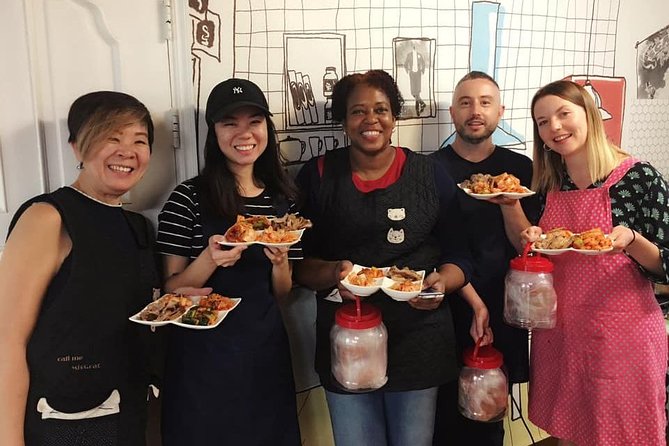
At $89, this sits above the cost of a simple Korean meal, but it offers far more than dinner. The price covers about three and a half hours, a guided market visit, street-food tasting, instruction in four kimchi styles, a meal with pork and tofu, a large amount of homemade kimchi, and a recipe book.
The strongest value comes from the amount of participation. You are not paying only for access to a studio or for a chef’s demonstration. You learn the process, taste the result, and leave with food you prepared yourself.
The value is less convincing if your main goal is sightseeing. Mangwon Market is the setting and an important part of the activity, but this is not a general Seoul tour. Book it for food, not for landmarks.
Should you book the kimchi-making day?
I would book this experience if you want a practical Korean food memory that continues after your trip. The market visit, four kimchi recipes, shared meal, and large take-home portion give the class more substance than a short cooking demonstration.
Before paying, confirm the class size for your date and think about how you will transport the kimchi. If you are vegetarian or vegan, request the suitable option in advance. If those details work for you, the $89 cost is reasonable for a focused, hands-on Seoul experience led by Jomin.
FAQ
Where does the kimchi-making experience begin?
It begins at Entrance 2 of Mangwon Metro Station in Seoul. Mangwon Station is on Line 6.
Where does the activity finish?
The activity ends back at the meeting point.
How long does the experience last?
It lasts approximately three hours and 30 minutes.
How many kinds of kimchi will I make?
You will learn to prepare four types of kimchi using ingredients such as Korean cabbage, radish, and cucumber.
Is the class suitable for vegetarians or vegans?
Yes. Vegetarian and vegan options are available.
Can I take the kimchi home?
Yes. You can take the kimchi you make with you, and a large container is provided.
Is the class always limited to four people?
The experience is described as a maximum-four small class, but the additional booking information also lists a maximum of 11 participants. Confirm the expected group size with the provider for your date.
What happens if the class does not reach its minimum group size?
The class may be rescheduled or canceled if the minimum of four participants is not met. If the provider cancels, you are offered another date or experience, or a full refund.
Just added around Seoul
- Your Personal Seoul Photographer!★ 4.1 · 15 reviews
- From Seoul: Hwacheon Ice Fishing and Lighting Festival Tour★ 4.5 · 4 reviews
- You’re Invited to Our Home in Seoul: The Only Cooking Class!★ 5.0 · 8 reviews
- Seoul: Gangneung BTS K-Pop & K-Drama Filming Locations Tour★ 4.6 · 14 reviews
- Unique Native Experience : Han River Picnic, Board game, BBQ★ 5.0 · 3 reviews
- 2-Hour Private Kayaking and Paddleboarding Experience in Hanriver★ 5.0 · 3 reviews
- Yun Korean Cooking Class in Seoul★ 5.0 · 6 reviews
- Day Trip to Yongin Daejanggeum and Korean Folk Village from Seoul★ 4.0 · 9 reviews
Seoul Traditional Market Tours, compared.

Gyeongbok Palace, Bukchon Village, and Gwangjang Tour
Read our review →

DMZ Tour Seoul to North Korea’s 3rd Tunnel & Majang Lake Crossing
Read our review →Gyeongbok Palace, Bukchon Village, and Gwangjang Tour
Read our review →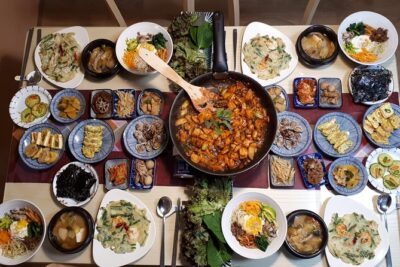
Local Home Korean Cooking Class & Market Adventure in Seoul
Read our review →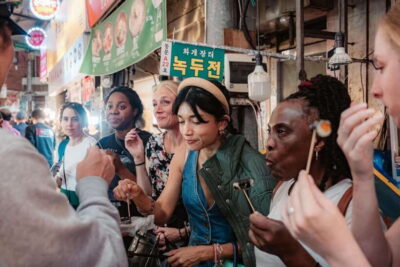
Downtown Seoul Guided Food & Market Tour with 8+ Local Tastings
Read our review →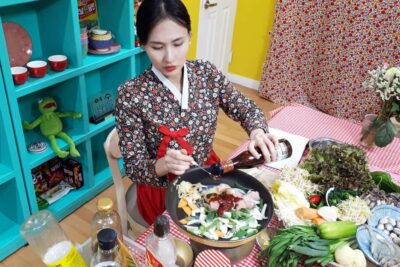
Korean Cooking Class at a Local Home and Market Tour
Read our review →Browse the lists this tour appears in