
Reviewed · SEOUL PUB CRAWLS AND MAKGEOLLI TASTINGS
Learn and Make Your Very Own Craft Makgeolli
Makgeolli is not simply Korea’s milky rice drink. In this two-hour class, you get your hands into the process, taste several styles, and leave with about 1.2 liters of your own brew to finish at home. Instructor Joe leads the session in clear English and takes time to answer questions.
I like the balance here: first you learn how aroma, sweetness, acidity, and texture change from one makgeolli to another, then you put that knowledge to work. I also like that the class teaches a method you can repeat, rather than ending with a quick tasting and a souvenir bottle. The main consideration is that you must handle the remaining fermentation yourself after class, so this suits curious drinkers who want a small project, not just a finished beverage.
Key points at a glance
- Taste before you brew: Compare several makgeolli styles and learn how sweetness, acidity, aroma, and texture differ.
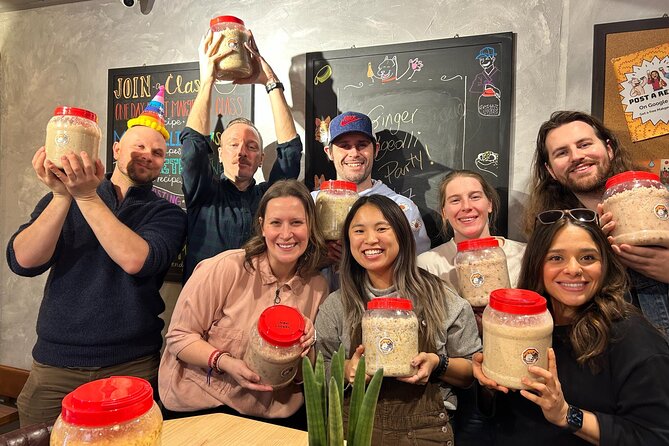
- Make about 1.2 liters: You prepare your own batch and take it home to continue fermenting.
- Learn traditional ingredients: The class explains rice, nuruk, yeast activity, filtering, and conditioning.
- Joe teaches in clear English: He also uses written Korean terms and translation help when needed.
- Small, social setting: The class accepts a maximum of 15 people and ends where it begins in Ahyeon-dong.
- A practical Seoul souvenir: Your takeaway is not just a bottle. It is a brewing experiment you can continue after Korea.
Why this makgeolli class is different from a tasting
A makgeolli tasting can show you what the drink tastes like. This class explains why it tastes that way.
At Baekusaeng Makgeolli, the point is to turn you into a brewer, even if your experience begins and ends with this one session. You learn the basic ingredients, see how fermentation changes the mixture, and take home a batch that still needs time and care. That makes the class more useful than a simple drink stop, but also a little more demanding.
Makgeolli is traditionally made from rice, water, and nuruk, a fermentation starter that supports the work of yeast and other microorganisms. The exact balance affects the final drink. A batch may be sweet or dry, light or full, smooth or textured, sharply acidic or softly tangy.
You do not need to arrive with brewing experience. The class is designed to explain the process from the ground up. Still, it helps to come with curiosity and a willingness to pay attention. You are not just pressing a button and waiting for a machine to finish the job.
More pub crawls and makgeolli tastings in Seoul:
- Seoul: Pub Crawl
★ 4.7 · 903 reviews - The Seoul Pub Crawl Official
★ 5.0 · 838 reviews - Drinking and Eating through the Alleys of Seoul
★ 5.0 · 364 reviews
Meeting Joe in Ahyeon-dong
The meeting point is 346-35 Ahyeon-dong, Mapo-gu, Seoul, and the class returns to that same spot. The setting is a small, cozy makgeolli bar and brewery space rather than a large visitor center. That gives the class a personal feel, though it also means you should allow a little time to find the entrance.
One participant got lost despite receiving clear directions, and Joe helped sort it out. That tells you something useful about the practical side of the class: save the meeting details before you leave your hotel, and do not assume you will spot a large tour sign from the street.
The room is intimate, with a maximum of 15 people. Some sessions may feel like a small group lesson, while a quieter booking could give you more one-to-one time with Joe. One solo participant ended up with an individual class, which made it possible to ask questions at length and move at a comfortable pace.
The location is near public transportation, but the supplied information does not specify a station or walking time. Use the exact address when planning your route rather than relying on a general map pin.
First, taste the range of makgeolli
The class begins with an introduction to makgeolli and a tasting of several different versions. This is one of the strongest parts of the experience because it gives you a sensory guide for the technical information that follows.
Pay attention to the differences in:
- Aroma
- Sweetness
- Acidity
- Texture
- Strength and overall balance
The samples help you understand that makgeolli is not one fixed drink. The supermarket bottle and the fresh craft version served at a specialty bar can be very different. The class also helps explain why two batches made with similar basic ingredients may still develop different character.
This tasting is not an afterthought. It gives you a reason to care about fermentation, filtering, and conditioning. When Joe explains a brewing choice, you have already tasted the kind of result it can create.
The drink continues to be available during the class, but pace yourself. The session lasts about two hours, and the tasting portion can make the time pass quickly. You want to leave able to remember what you learned and handle your take-home batch properly.
Learning the ingredients, tools, and Korean terms
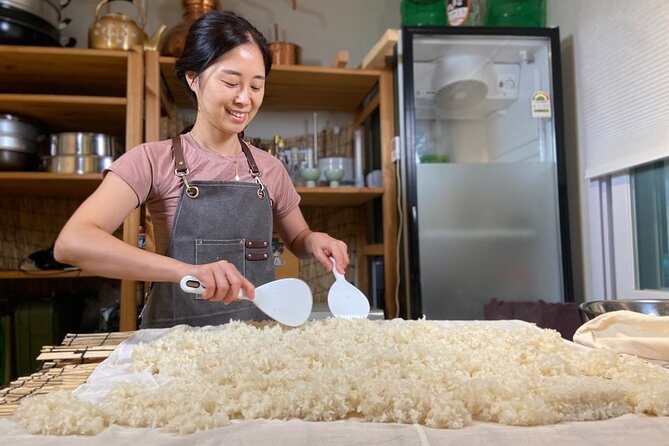
Joe introduces the essential ingredients and equipment used in traditional and modern makgeolli brewing. The emphasis is on real ingredients and practical methods rather than shortcuts that remove the character from the process.
You learn what each part contributes. Rice provides the base. Water affects the mixture. Nuruk supports fermentation. Yeast activity changes the sugars and helps shape the drink. Filtering and conditioning then affect the final texture and drinking experience.
The class also connects the brewing process to Korean food culture. Makgeolli has a long place in everyday Korean drinking, but this experience focuses on how the drink is made rather than presenting a broad lecture on Korean history.
Joe teaches in English, and his explanations are designed for an international audience. One participant noted that he wrote Korean brewing terms on a whiteboard to make them easier to hear and remember. Another Japanese-speaking couple used Google Translate with his help when needed.
That makes the class workable for people who do not speak Korean. The practical steps also rely on demonstration and hands-on work, so you are not expected to follow a long talk without visual help.
More craft and perfume workshops in Seoul:
- Seoul: Create Your Own Natural Perfume with a Perfumer
★ 4.9 · 109 reviews - Make your K-scent perfume: Modern oneday class in Seoul
★ 5.0 · 40 reviews - Traditional Korean Mother-of-Pearl Craft Workshop
★ 5.0 · 16 reviews - Create Your Own Luxury Niche Perfume in Hongdae
★ 5.0 · 14 reviews
Making your own batch by hand
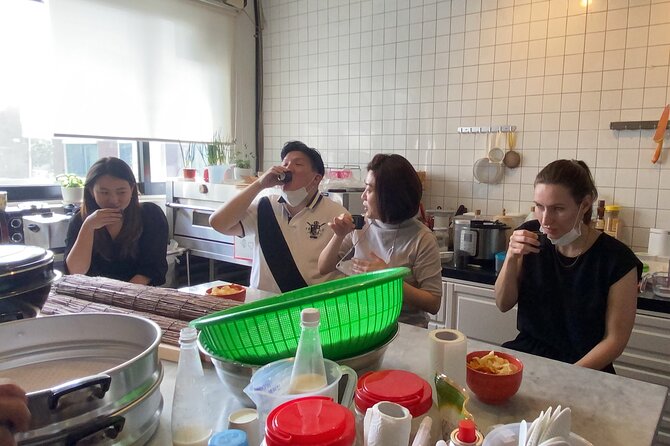
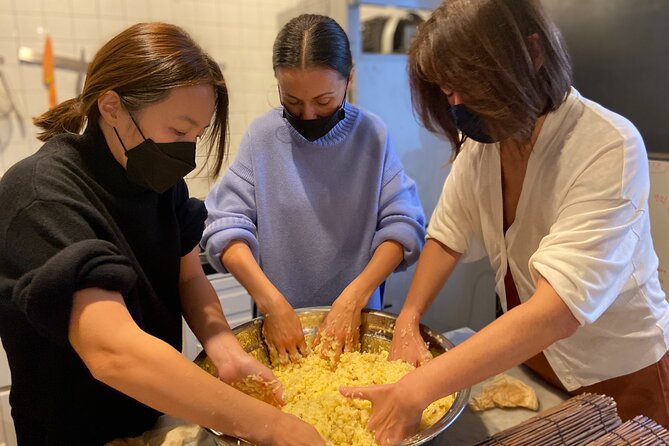
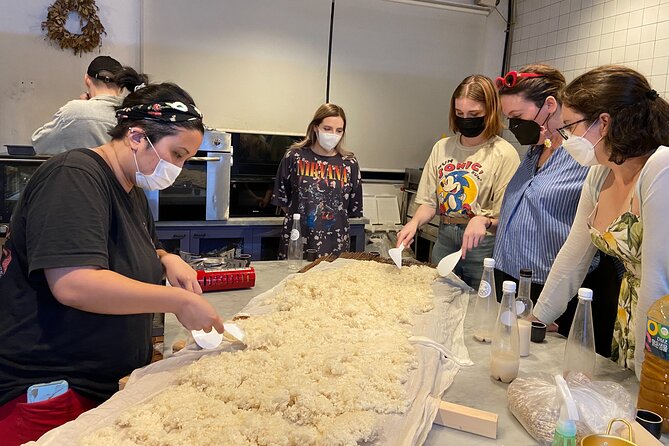
The most satisfying part comes when you start making the makgeolli yourself. This is a hands-on class, so you spend real time handling the mixture rather than watching Joe do everything.
The process includes preparing the ingredients and combining them in the correct way. The reviews describe a pumpkin mash in at least one session, suggesting that the class may allow some creative variation, but the supplied information does not promise pumpkin for every booking. Treat that as a possible feature, not a guaranteed ingredient.
The class encourages experimentation and personal style. That matters because makgeolli is not presented as a single recipe with only one correct outcome. You are given a foundation, then shown how brewing choices can shape the drink.
This is also where the small group size helps. With no more than 15 participants, Joe can watch the work, answer questions, and help you understand what you are doing. A large class would make the process harder to follow and would give you less time at the worktable.
At the end, your brew is placed into a large plastic bottle. You take it with you, but it is not yet the final finished drink. The fermentation continues after the class, so follow the instructions Joe gives you.
Taking home 1.2 liters to finish fermenting
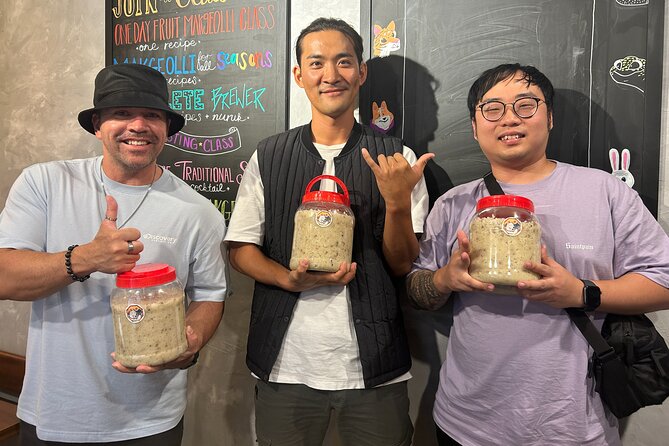
Your take-home batch is one of the best reasons to book this activity. You receive approximately 1.2 liters of makgeolli that you made during the lesson.
This creates a useful connection between your time in Seoul and what happens later. You do not simply taste the drink and forget the method. You get to see how the brew develops after the class, then try the result yourself.
There is a tradeoff. The class does not send you home with a fully finished bottle ready for immediate drinking. You have to continue the process, and the details of storage, timing, and conditioning matter. If you are flying home soon, plan how you will carry the bottle and follow the instructions. The supplied information does not state airline rules, baggage arrangements, or how long the final fermentation takes, so ask Joe directly during the class.
For anyone interested in making makgeolli at home, this is a major benefit. You gain a starting recipe, practical confidence, and a better sense of what to watch for as the drink changes.
What the two-hour schedule feels like
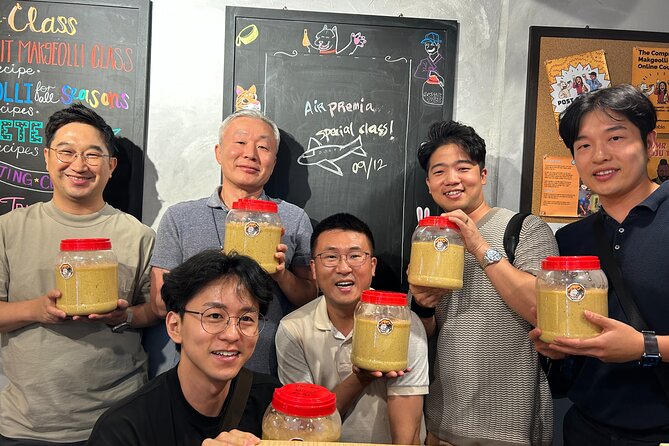
The experience lasts about two hours, with time divided between explanation, tasting, and hands-on brewing. The exact minute-by-minute schedule is not provided, so expect a flexible workshop rather than a rigid sightseeing itinerary.
A typical flow includes:
- Meeting Joe and settling into the small brewery space.
- Learning what makgeolli is and how different styles compare.
- Tasting several examples while discussing aroma, sweetness, acidity, and texture.
- Reviewing ingredients, equipment, nuruk, yeast activity, filtering, and conditioning.
- Preparing your own batch through hands-on work.
- Packing the brew to take home and continue fermenting.
- Finishing at the same meeting point.
The class works well in the afternoon or evening because it is a contained activity rather than a full-day commitment. It can also fit travelers who want a cultural experience that does not require a long bus ride or a packed schedule.
Still, do not schedule a tight appointment immediately afterward. Small-group classes can run at a relaxed pace, and the tasting portion is social. Give yourself a little breathing room.
Is the $70.70 price good value?
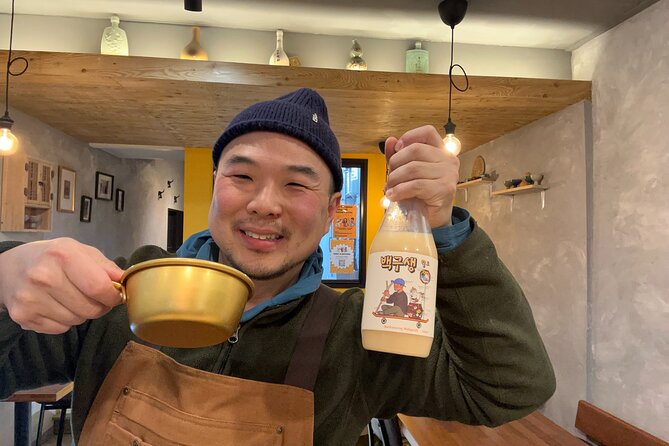
At $70.70 per person, this is more expensive than simply ordering makgeolli at a Korean restaurant. The price makes more sense when you count what is included: guided instruction, several tastings, hands-on preparation, and approximately 1.2 liters of your own brew to continue at home.
You are paying for access to a working brewing method, not just a drink sample. The class also gives you a chance to compare craft versions with the more familiar supermarket or restaurant styles, which adds useful context if you already enjoy makgeolli.
The value is strongest for three types of people:
- You want to understand how Korean rice wine is made.
- You enjoy practical workshops where you make something yourself.
- You hope to brew makgeolli after returning home.
The value is weaker if you only want a quick tasting, dislike fermentation projects, or cannot take the unfinished batch home. In that case, a bar visit may be simpler and cheaper.
The experience is booked an average of 23 days ahead, so it is sensible to reserve early if your Seoul dates are fixed. Confirmation arrives at booking, and the ticket is mobile, which keeps the arrival process simple.
Who will enjoy this class most?
I would recommend this for curious drinkers, home brewers, food-focused visitors, and anyone who wants a more personal look at Korean culture. It also works well for couples and solo visitors. One solo participant received an especially personal lesson, while other sessions brought together couples from different countries.
The class is social without requiring you to be outgoing. You work with the group, taste together, and share a common task. English is used by the instructor, and written terms or translation support can help if English is not your first language.
You should think twice if you want a polished show with little participation. The hands-on work is the point, and the final product needs additional fermentation after you leave. The drink tasting also means you should be comfortable with alcohol.
Service animals are allowed, and the activity is near public transportation. The provider does not give further details about general accessibility, so contact Baekusaeng Makgeolli if you have specific mobility or equipment needs.
Booking and cancellation details
The experience offers free cancellation if you cancel at least 24 hours before the start time. Changes or cancellations made less than 24 hours before the start time are not accepted for a refund.
The cutoff uses Seoul local time. That matters if you are arranging the class from another country or changing plans close to departure.
The activity has a maximum of 15 participants. Since Joe’s teaching style includes questions, demonstrations, and individual help, a smaller group may give you more room to ask about brewing at home.
Should you book Learn and Make Your Very Own Craft Makgeolli?
Book it if you want to do more than drink makgeolli. The tasting explains the range of the drink, the workshop gives you a practical introduction to brewing, and the 1.2-liter take-home batch keeps the experience going after you leave Seoul.
I especially like the combination of clear instruction and real hands-on work. Joe’s friendly communication, use of Korean brewing terms, and willingness to help with directions or translation make the class accessible to an international audience.
Skip it if you want a finished souvenir with no follow-up or if your schedule cannot accommodate carrying an unfinished fermented drink. For everyone else, $70.70 is a fair price for a focused, two-hour cultural activity that gives you both a taste of Korea and a small brewing project to take home.
FAQ
Where does the makgeolli class take place?
The class takes place at 346-35 Ahyeon-dong, Mapo-gu, Seoul, South Korea.
How long does the activity last?
The class lasts approximately two hours.
Who teaches the class?
The instructor is Joe, the owner and host associated with Baekusaeng Makgeolli.
How much does the experience cost?
The listed price is $70.70 per person.
How much makgeolli can I take home?
You take home approximately 1.2 liters of your own makgeolli to continue fermenting.
Do I taste makgeolli during the class?
Yes. The class includes several selected makgeolli samples so you can compare aroma, sweetness, acidity, and texture.
Does the class finish at the meeting point?
Yes. The activity ends back at the starting meeting point.
How many people can join the class?
The maximum group size is 15 participants.
Can I cancel for a full refund?
Yes, if you cancel at least 24 hours before the experience start time. Cancellations or changes made less than 24 hours before the start time are not accepted for a refund.
Just added around Seoul
- Your Personal Seoul Photographer!★ 4.1 · 15 reviews
- From Seoul: Hwacheon Ice Fishing and Lighting Festival Tour★ 4.5 · 4 reviews
- You’re Invited to Our Home in Seoul: The Only Cooking Class!★ 5.0 · 8 reviews
- Seoul: Gangneung BTS K-Pop & K-Drama Filming Locations Tour★ 4.6 · 14 reviews
- Unique Native Experience : Han River Picnic, Board game, BBQ★ 5.0 · 3 reviews
- Yun Korean Cooking Class in Seoul★ 5.0 · 6 reviews
- 2-Hour Private Kayaking and Paddleboarding Experience in Hanriver★ 5.0 · 3 reviews
- Day Trip to Yongin Daejanggeum and Korean Folk Village from Seoul★ 4.0 · 9 reviews
Seoul Pub Crawls and Makgeolli Tastings, compared.


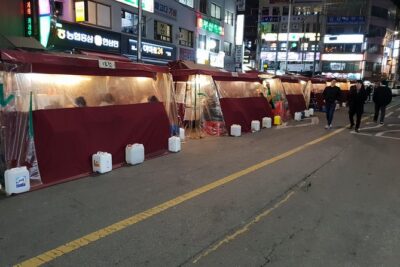
Drinking and Eating through the Alleys of Seoul
Read our review →

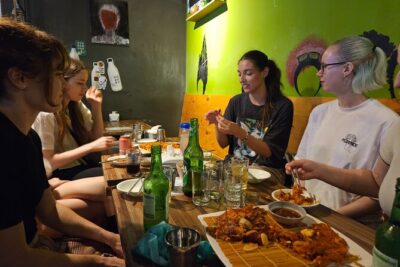
Korean Drinking Games Night (non-drinkers are also welcome)
Read our review →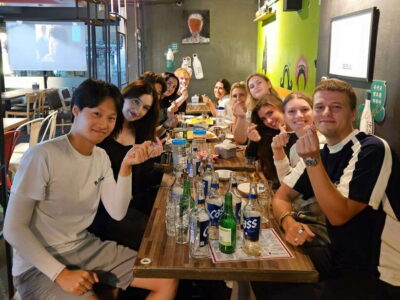
Korean Drinking Games Night (non-drinkers welcome)
Read our review →Browse the lists this tour appears in