
Reviewed · SEOUL DMZ TOURS
Seoul: DMZ Tour with Optional Suspension Bridge
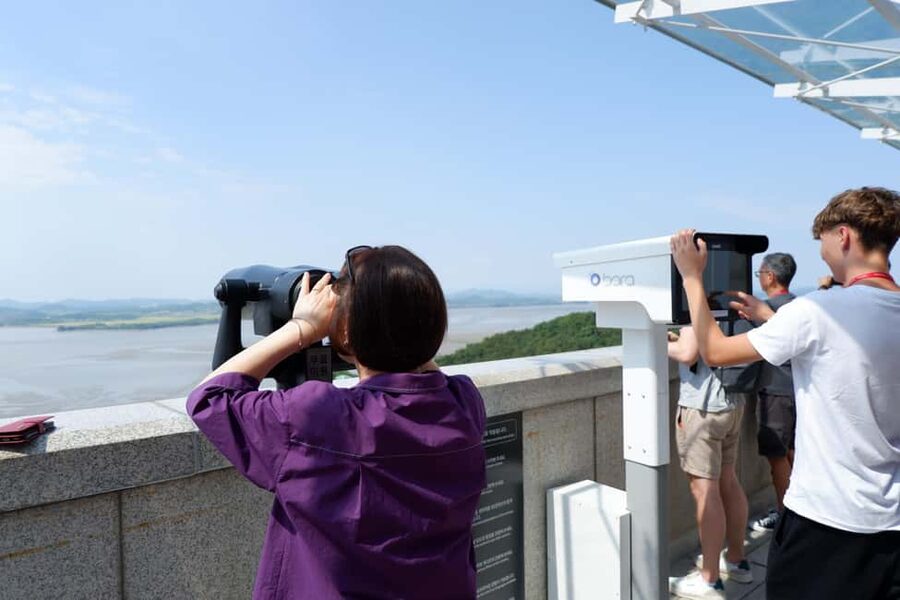
The most striking part of this day trip is the chance to look across the 4-kilometer-wide DMZ toward North Korea, then walk through a tunnel dug beneath the border. Dora Observatory gives you the view; the 3rd Infiltration Tunnel gives you the physical sense of how close and tense this frontier remains.
I like the clear historical thread, from Imjingak and the Bridge of Freedom to the tunnel and Unification Village. I also like the guides’ personal touch: Kenny, Winnie, Sophie, Henry, and others are praised for strong English, humor, family stories, and careful instructions. The main drawback is the walking. The tunnel has a steep slope, and the optional Gamaksan bridge adds a 40-minute hike, so this is not an easy sightseeing day.
Key points to know before booking
- Look into North Korea from Dora Observatory: Clear weather can reveal North Korean territory, border villages, and the broad DMZ buffer.
- Walk through the 3rd Infiltration Tunnel: The 30 to 40-minute round trip is short in distance but demanding because of the steep grade.
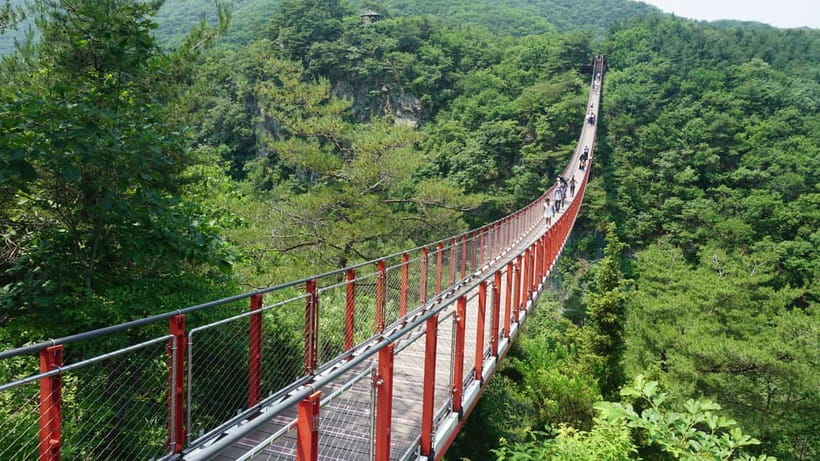
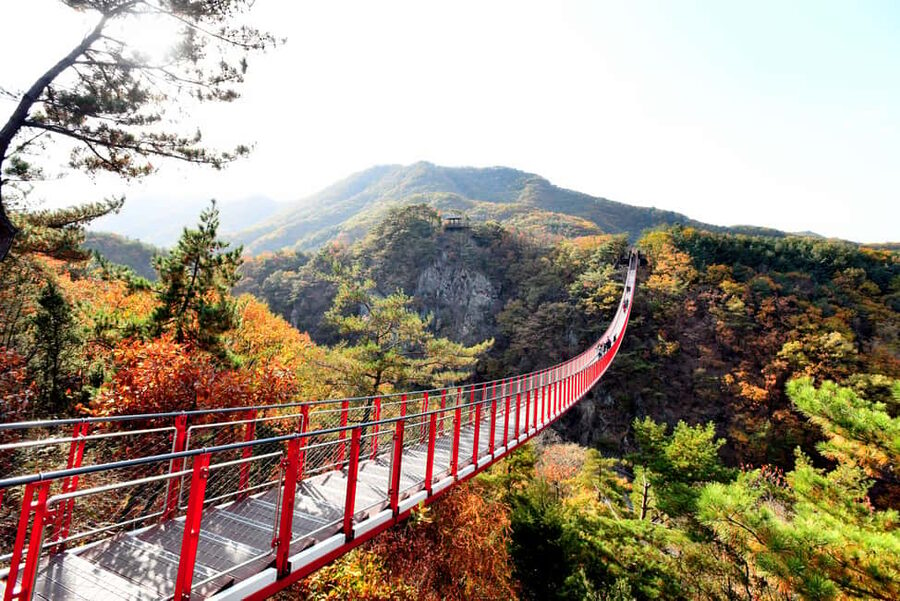
- Choose the Gamaksan add-on for more scenery: The suspension bridge and Ungye Falls bring fresh air and a physical outdoor element to the historical tour.
- Expect strong English commentary: Guides including Kenny, Winnie, Sophie, and Henry are known for lively explanations and personal stories.
- Allow seven to nine hours: Traffic, security checks, military rules, and the number of participants can affect your return to Seoul.
- Bring your passport and sturdy shoes: Flip-flops, slippers, and heels are poor choices for the tunnel and mountain walk.
Why the DMZ is worth a full day from Seoul
The DMZ is not a normal sightseeing stop. It is a controlled military border and a living reminder that the Korean War ended with an armistice in 1953, not a peace treaty. You are not simply looking at a line on a map. You are seeing a divided peninsula, separated families, military tension, and the continuing wish for reunification.
The tour gives you several ways to understand that story. Imjingak introduces the human cost. The tunnel shows the military reality. Dora Observatory offers a literal view across the divide. Unification Village brings the subject back to daily life near the border.
You pay about $45 per person for round-trip shared transport, entrance fees, and a licensed English-speaking guide. For a seven to nine-hour day, that is a strong value, especially since independent access to the DMZ is restricted and the military can change the rules without notice. The price does not include food, drinks, travel insurance, or a visit to the Joint Security Area at Panmunjom.
More DMZ tours in Seoul:
- Best DMZ Tour Korea from Seoul (Red Suspension Bridge Optional)
★ 5.0 · 41,422 reviews - DMZ Tour: 3rd Tunnel, Option(Suspension Bridge, Boat) from Seoul
★ 5.0 · 21,373 reviews - DMZ tour south Korea from Seoul (NK experience hall, defector)
★ 5.0 · 20,599 reviews
Leaving Seoul and reaching Imjingak
Pickup depends on the option you choose. Centrally located hotels in areas such as Myeongdong, Gangnam, Gwanghwamun, Itaewon, and Dongdaemun may offer pickup. If your accommodation is difficult to reach or outside the central area, you may be asked to meet the guide at a central hotel or nearby subway station.
The ride toward the border takes about an hour, though traffic can make the journey longer. The bus or minivan is air-conditioned, and some recent vehicles have charging ports. That matters on a long day, particularly if you plan to use your phone for photographs and maps.
Pay attention to the pickup email and check for updates the day before. The pickup time can change, and you need to know exactly where your group is meeting. One practical weakness to keep in mind is that a large group may be divided between guides or vehicles. Follow the guide’s instructions closely at every stop, especially after security checks.
If fewer than 30 people are in the vehicle, government policy may require a transfer to a DMZ shuttle bus. This is normal for the area, but it can add another layer of movement to the day.
Imjingak and the Bridge of Freedom
Imjingak Park is the emotional starting point. It is built around the memory of separation and the hope that the peninsula may someday be reunited. The site gives your guide room to explain the Korean War, the armistice, and the families who were separated by the border.
The Bridge of Freedom is especially moving because its meaning is personal rather than merely military. It symbolizes the hopes of families who cannot freely cross the border to see one another. Your guide can help connect the bridge to the human stories behind the political division.
Plan on roughly an hour at Imjingak, with about 30 minutes focused on the bridge. This is a useful early stop because it gives you context before the more unusual parts of the visit. It also helps you understand why the DMZ is treated with such care and why access is controlled.
The stop is not only solemn. There are places to look around and take photographs, but keep the mood in mind. This is a memorial area first, not a casual photo stop.
The DMZ Theater and Exhibition Hall
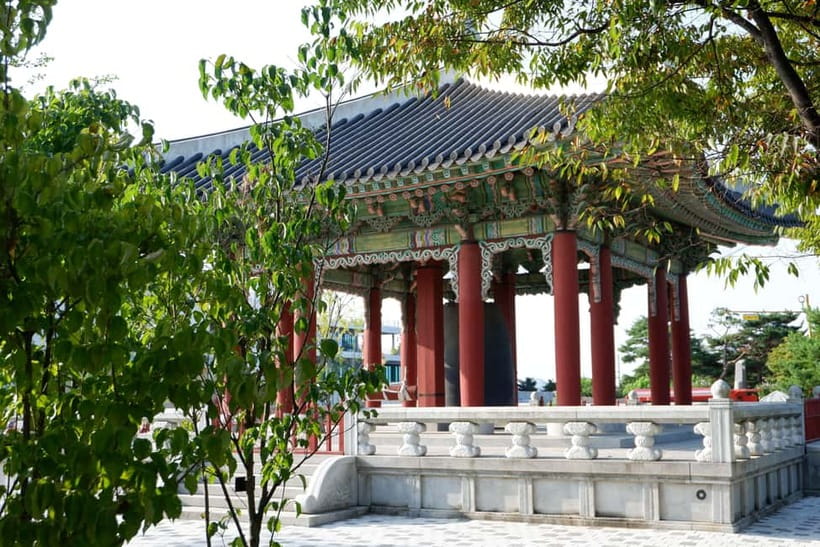
The DMZ Theater presents a short video, followed by the DMZ Exhibition Hall. These stops provide basic background on the conflict and the continuing tension between North and South Korea.
I find this kind of introduction useful because the border can otherwise feel abstract. A quick visual explanation makes the later stops easier to follow, particularly if you do not already know the difference between the armistice line, the DMZ, and the wider border area.
The quality of the day depends heavily on the guide here. Kenny is praised for explaining both the history and the current situation with humor and clarity. Winnie has used pictures and videos on the bus to help explain what you are seeing. Sophie is known for adding family stories, which can make the subject feel less like a school lesson and more like living history.
A different kind of day out around Seoul:
- Signature DMZ Tour: Exclusive Defector Talk & Suspension Bridge
★ 5.0 · 4,459 reviews - Thrilling Korean DMZ 3rd Tunnel Tour from Seoul + Red Bridge Rush
★ 5.0 · 3,097 reviews - DMZ Past and Present: Korean Demilitarized Zone Tour from Seoul
★ 5.0 · 2,481 reviews - Ultimate Korea DMZ Tour from Seoul (Gondola & Suspension Bridge)
★ 5.0 · 2,396 reviews
Walking into the 3rd Infiltration Tunnel
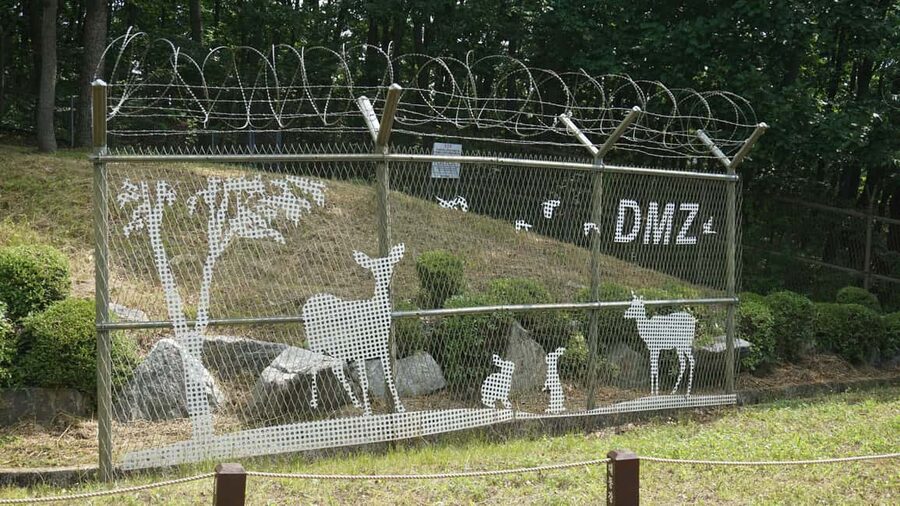
The 3rd Infiltration Tunnel is the most physical and memorable stop. North Korea dug the passage as a covert route beneath the border. It is now open to the public, allowing you to walk into the tunnel and understand the scale of the attempt.
The round trip takes about 30 to 40 minutes on foot. The tunnel has a steep slope, and the return climb can be tiring. You may need to bend your head in parts of the passage, and the confined setting is not ideal for anyone who dislikes tight spaces. The supplied information specifically warns that the walk can challenge children and older people, though you can wait at the tunnel entrance if you decide not to go in.
Wear comfortable walking shoes. This is not the place for sandals, slippers, flip-flops, or heels. Bring water, although food and drinks are not included in the tour.
The tunnel gives you a physical understanding that photographs cannot provide. You feel the descent, the enclosed space, and the effort needed to climb back out. That physical effort is part of the lesson, but it also means you should not treat this as a relaxed coach excursion.
Dora Observatory and the view into North Korea
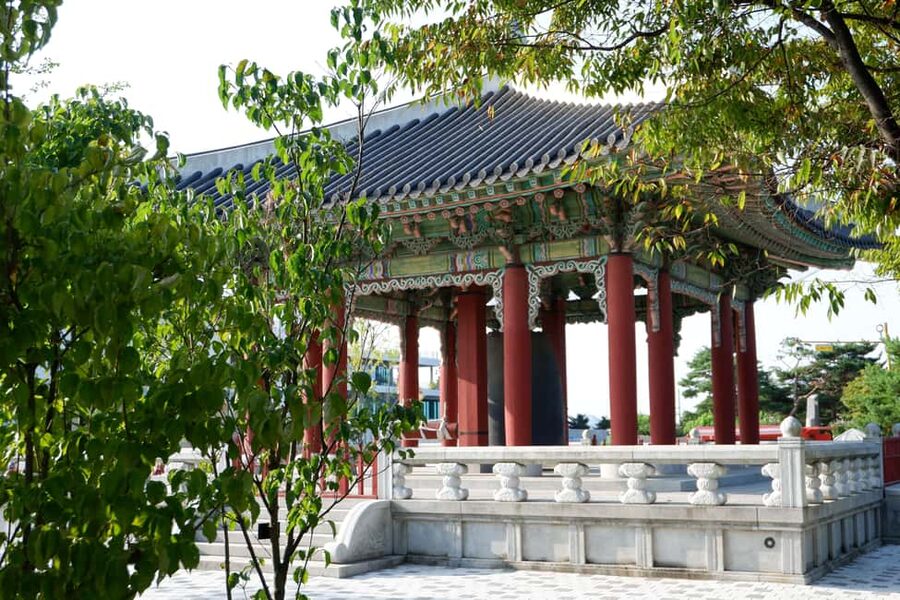
At Dora Observatory, you look across the DMZ toward North Korea. From Mount Dora, the viewpoint can reveal North Korean territory, border villages, and the buffer zone separating the two countries.
This is the moment many people anticipate, but keep your expectations realistic. Visibility depends on weather. Fog, haze, or poor conditions can limit the view, even when the rest of the tour runs perfectly. Bring patience rather than assuming you will see every feature clearly.
The observatory is valuable because it turns the division into something visible. You are not just hearing about the border. You are looking across it, with the military-controlled zone between you and the villages beyond.
Your guide will explain what you are seeing and where the border lies. Follow the photography rules and any instructions given at the site. Military regulations can change, and access to specific areas is not guaranteed.
Unification Village and border life
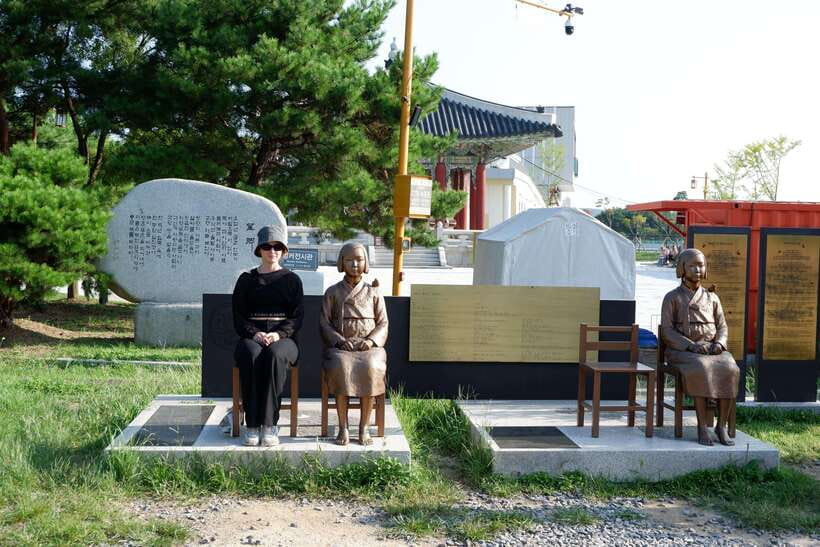
The visit to Unification Village adds a quieter note after the observatory. This is a farming community close to the border, and you may have time to browse locally made products, symbolic souvenirs, and sometimes goods associated with North Korea.
This stop is useful because it moves the focus away from battle plans and military structures. People live and work near this highly controlled area, and the village reflects the everyday side of a place usually discussed only in political terms.
Do not expect a long independent shopping session. Time is limited, and the village visit is part of a tightly managed day. Still, it can be a good chance to pick up something more meaningful than a generic souvenir, especially if you are interested in products connected with peace and reconciliation.
Adding Gamaksan Suspension Bridge and Ungye Falls
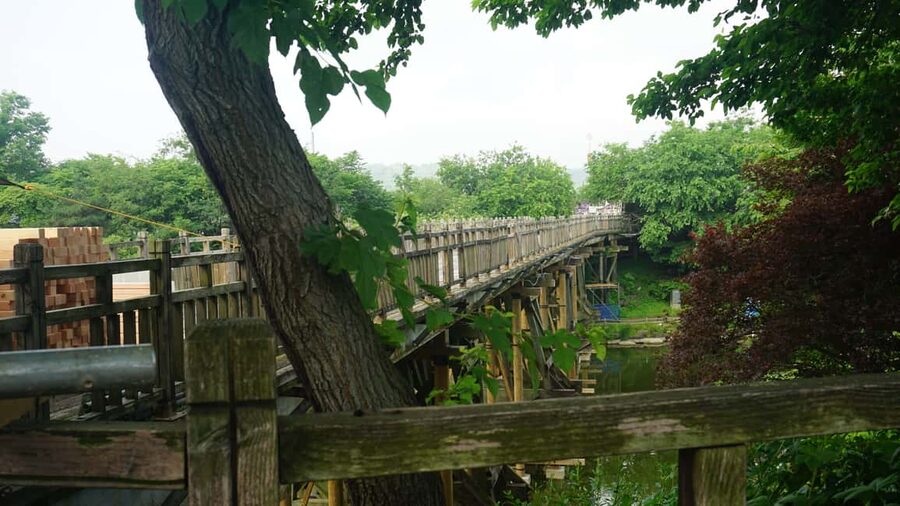
The Gamaksan option combines the standard DMZ route with a mountain stop. The bridge sits in an area connected with a Korean War battle involving British troops, giving the add-on another historical layer.
Getting to the bridge requires about a 40-minute hike. The effort is rewarded with open views and a different mood from the border sites. After the serious subject matter of the DMZ, the suspension bridge gives you a chance to move, breathe fresh air, and take photographs in a more scenic setting.
The route also includes a short photo stop at Ungye Falls. At about 10 minutes, this is a quick pause rather than a long nature walk. Still, it breaks up the day and adds variety.
Choose this option only if you genuinely want the extra exercise. The standard DMZ route already includes the tunnel walk, and the bridge adds another climb when your legs may already be tired. If you enjoy active sightseeing, the combination makes the day feel fuller. If you prefer museums and viewpoints, the basic DMZ option may suit you better.
The Aegibong Observatory option
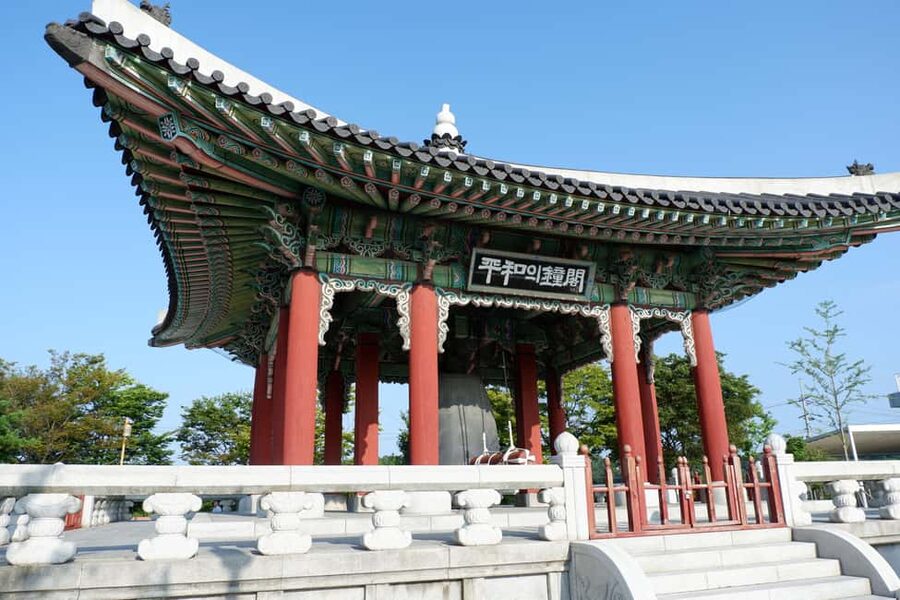
A separate option visits Aegibong Observatory and the Starbucks café located there. Aegibong has a strong connection with displaced people who came to the area after the Korean War to look toward their former hometowns.
That detail gives the stop a personal emotional focus. It is about memory, longing, and the people who could see the direction of home but could not return.
The Aegibong option operates Monday through Sunday, while the standard DMZ tour and the Gamaksan add-on operate Tuesday through Sunday. Check the exact option and meeting point before booking, since the pickup arrangement depends on the route you select.
What the guides add to the day
A good guide matters here because the DMZ can otherwise become a series of checkpoints and photo stops. The strongest guides turn each place into part of one clear story.
Kenny receives repeated praise for his humor, detailed explanations, safety checks, and friendly approach. Winnie is especially good at keeping communication clear, helping solo visitors with photographs, and using visual material during the bus ride. Sophie adds personal and family stories, while Henry is praised for strong English, humor, and clear explanations of the conflict.
The guide also keeps the group moving. You will have set meeting times and must return promptly after each stop. That structure is necessary because the area is controlled by military and government regulations, but it can feel rushed if you want to linger at every viewpoint.
The English commentary is a major part of the value. You are not simply being transported to the border. You are given context for why the bridge, tunnel, observatory, and village matter.
Timing, cancellations, and comfort
Plan on seven to nine hours from Seoul. A typical day includes about an hour of driving each way, guided stops at Imjingak, Freedom Bridge, the tunnel, Dora Observatory, and Unification Village, plus extra time for the optional bridge route.
The DMZ can close or change access without prior notice because it is operated by the military. Weather, government rules, and security conditions can alter the schedule. If the planned route cannot operate, the replacement stops may include Imjingak, Art Space BEAT 131, Odusan Unification Observatory, or the War Memorial of Korea. The supplied conditions state that a refund will not be offered in this situation.
That uncertainty is part of booking a DMZ tour. You should choose this trip for the broader experience of learning about the border, not only for one promised photograph from Dora Observatory.
The tour is family-friendly in its subject matter and presentation, but not every part suits every family. Infants under 24 months can go free, though no seat is provided. The activity is not suitable for wheelchair users, people with heart problems, or unaccompanied minors.
Is the $45 price good value?
At about $45, the tour offers a practical way to reach a difficult and restricted destination. You receive entrance fees, shared transport, an air-conditioned vehicle, and a licensed English-speaking guide. Pickup may be included if you select an eligible centrally located hotel option.
You still need to budget for food and drinks, and hotel drop-off is not included. The return is to two stated Seoul drop-off locations in Myeongdong, Jung-gu, so confirm where you will finish before planning an evening reservation.
The value is strongest if you want history explained as you go. If you only want a quick border photograph, the seven to nine-hour commitment may feel long. If you want a serious look at the Korean division, with the option of an active mountain stop, the cost is reasonable.
Should you book this DMZ tour?
Book it if you want the full story: the human meaning of the Bridge of Freedom, the steep walk through the 3rd Tunnel, the view from Dora Observatory, and a glimpse of life near the border. It is also a good choice if you value a guide who can explain difficult history in clear English and keep a large day organized.
Choose the standard option if you want to limit the physical effort. Add Gamaksan if you like hiking and want the suspension bridge and Ungye Falls. Pick Aegibong if the story of displaced families and the viewpoint café appeal to you.
I would not choose this tour if you need a flexible schedule, guaranteed access to every stop, or an easy day with little walking. For everyone else, bring your passport, wear firm shoes, check your pickup email, and allow the DMZ to be what it is: a serious place where history is still unfinished.
FAQ
How long does the Seoul DMZ tour last?
The tour lasts about seven to nine hours. Traffic, group size, security checks, weather, and military regulations can affect the total time.
What is included in the tour price?
The price includes entrance fees, round-trip shared transport, an air-conditioned bus or minivan, and a licensed professional English-speaking guide. Hotel pickup is included only when the selected option offers it.
Is hotel pickup available in Seoul?
Pickup may be available from centrally located hotels in areas such as Gangnam, Myeongdong, Gwanghwamun, Itaewon, and Dongdaemun. If your accommodation is outside the pickup area, you may be asked to meet at a central hotel or nearby subway station.
Do I need to bring my passport?
Yes. You must bring your passport for the DMZ visit.
How difficult is the 3rd Infiltration Tunnel?
The tunnel walk takes about 30 to 40 minutes round trip and includes a steep slope. It may be difficult for children and older people, and you can wait at the entrance instead of walking through it.
Is the Gamaksan Suspension Bridge physically demanding?
Yes. Reaching the bridge requires about a 40-minute hike. Comfortable walking shoes are strongly recommended.
Does the tour visit Panmunjom or the Joint Security Area?
No. A visit to the Joint Security Area, also called Panmunjom, is not included.
Can the DMZ tour be canceled or changed?
Yes. Military, government, or weather conditions can cause the planned route to change or the trip to be canceled without prior notice. Replacement visits may include Imjingak, Art Space BEAT 131, Odusan Unification Observatory, or the War Memorial of Korea.
Just added around Seoul
- Your Personal Seoul Photographer!★ 4.1 · 15 reviews
- From Seoul: Hwacheon Ice Fishing and Lighting Festival Tour★ 4.5 · 4 reviews
- You’re Invited to Our Home in Seoul: The Only Cooking Class!★ 5.0 · 8 reviews
- Seoul: Gangneung BTS K-Pop & K-Drama Filming Locations Tour★ 4.6 · 14 reviews
- Unique Native Experience : Han River Picnic, Board game, BBQ★ 5.0 · 3 reviews
- 2-Hour Private Kayaking and Paddleboarding Experience in Hanriver★ 5.0 · 3 reviews
- Yun Korean Cooking Class in Seoul★ 5.0 · 6 reviews
- Day Trip to Yongin Daejanggeum and Korean Folk Village from Seoul★ 4.0 · 9 reviews
Seoul DMZ Tours, compared.
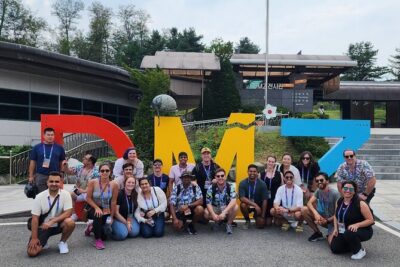
Best DMZ Tour Korea from Seoul (Red Suspension Bridge Optional)
Read our review →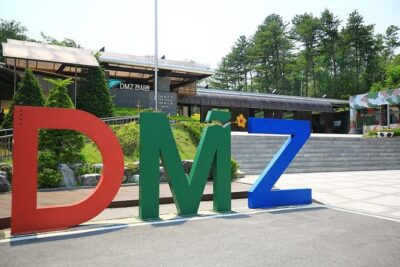
DMZ Tour: 3rd Tunnel, Option(Suspension Bridge, Boat) from Seoul
Read our review →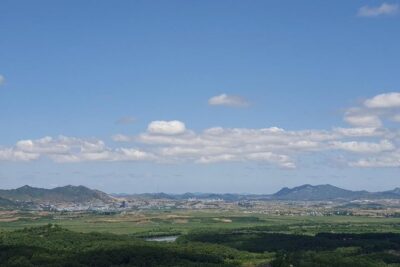
DMZ tour south Korea from Seoul (NK experience hall, defector)
Read our review →
Signature DMZ Tour: Exclusive Defector Talk & Suspension Bridge
Read our review →
Thrilling Korean DMZ 3rd Tunnel Tour from Seoul + Red Bridge Rush
Read our review →
DMZ Past and Present: Korean Demilitarized Zone Tour from Seoul
Read our review →
Ultimate Korea DMZ Tour from Seoul (Gondola & Suspension Bridge)
Read our review →
DMZ; NK Defector, 3rd Tunnel, Suspension Bridge,Hotel pickup
Read our review →Browse the lists this tour appears in