
Reviewed · SEOUL TRADITIONAL MARKET TOURS
Seoul History Tour: Dark Past & Market Street Flavors
Seoul’s difficult past comes into sharp focus at Seodaemun Prison, then gives way to palace courtyards, a former journalist’s home, and the noisy pleasures of Namdaemun Market. I like the way this tour connects Korea’s fight for independence with ordinary food people still eat today. I also like that transportation, entrance fees, and tastings are included in the $65 price.
The main thing to weigh is the pace. Four hours covers five places, and one traveler found the schedule rushed. You’ll walk quite a bit, so bring comfortable shoes and expect a full afternoon rather than a slow museum visit.
Key points to know before booking
- Seodaemun Prison sets the tone: Allow time for a serious look at Korea’s resistance to Japanese colonial rule.
- Dilkusha adds an international angle: Albert W. Taylor’s house shows how an American journalist supported Korea’s independence.
- Deoksugung mixes old and new Seoul: Korean palace buildings sit beside Western-style architecture and the modern city.
- Namdaemun finishes with food: Kalguksu Alley and market tastings give the tour an everyday, local ending.
- The price covers the essentials: Your guide, transportation, entrance fees, and food tastings are included.
- Expect a moderate physical effort: The tour begins at 2:30 pm, lasts about four hours, and includes plenty of walking.
Why this tour works as a Seoul introduction
Many Seoul sightseeing tours stay with palaces, shopping streets, or grand city views. This one takes a more thoughtful route. It begins with confinement and political violence, moves through stories of resistance and foreign support, then ends among food stalls and market lanes.
That order matters. You do not just see famous buildings as isolated sights. You get a basic framework for understanding how Korea moved from colonial rule and political upheaval toward modern democracy. The final stop at Namdaemun Market keeps the experience from becoming too solemn. History here is not locked away in a museum. It continues in the meals people share and the streets they use every day.
I especially like the balance between indoor historical sites and outdoor walking. Seodaemun Prison and Dilkusha give you focused places to listen. Deoksugung, Sungnyemun Gate, and Namdaemun let you watch Seoul carry its past into the present.
The tour is priced at $65 per person. That is a fair package if you value an English-speaking guide and want the logistics handled for you. The price includes all entrance fees, transportation costs, and food tastings, so you are not paying the base rate and then adding the main parts one by one.
The tradeoff is time. Five stops in roughly four hours means the guide has to keep the group moving. If you want long, quiet visits at each site, plan to explore one or two of them again on your own.
More traditional market tours in Seoul:
- Seoul: Gyeongbok Palace, Bukchon Village, and Gwangjang Tour
★ 4.9 · 2,321 reviews - Seoul Street Food Market Tour
★ 5.0 · 1,226 reviews - DMZ Tour Seoul to North Korea’s 3rd Tunnel & Majang Lake Crossing
★ 5.0 · 1,185 reviews
Seodaemun Prison, where the afternoon begins
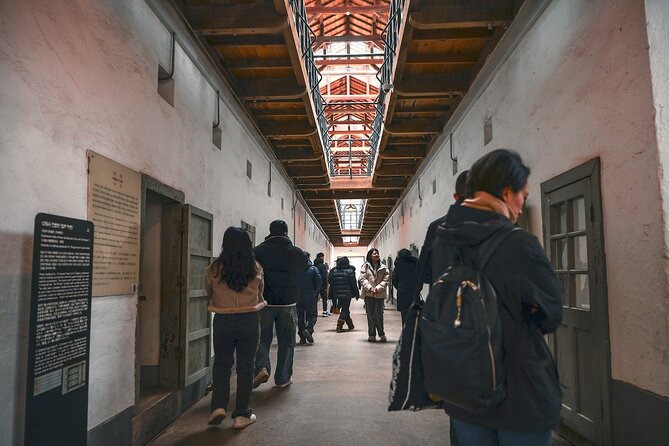
The tour starts at 95-10 Hyeonjeo-dong in Seodaemun-gu at 2:30 pm. The first scheduled visit is Seodaemun Prison History Hall, with about 50 minutes set aside and admission included.
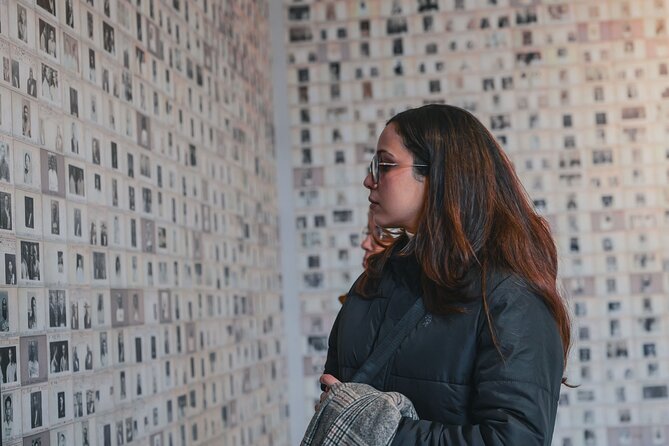
This former Japanese colonial prison is the emotional center of the tour. You will see the setting where Korean independence fighters were held and learn about the hardship they endured during the struggle for freedom. The subject is grim, but it gives useful context for the rest of the afternoon.
Do not expect a light opening. The prison’s rooms and displays are meant to make political repression personal. A guide can help explain the independence movement and place individual suffering within Korea’s larger story. That extra explanation matters, especially if you know little about the Japanese colonial period.
The prison is also where the walking begins in earnest. You will want shoes that can handle several hours on your feet. A moderate fitness level is requested, and that is a fair description of the day.
Fifty minutes is enough for a guided introduction, but not for an exhaustive look at every display. If this subject matters greatly to you, take note of the areas you would like to revisit later. The tour’s purpose is to connect the site to other parts of Seoul, not to spend the entire afternoon inside the prison.
Dilkusha and the story of Albert W. Taylor
The next stop is Dilkusha, the former home of American journalist Albert W. Taylor. The visit lasts about 30 minutes, and admission is free.
Dilkusha adds a point of view that many visitors may not expect. The house is linked to Taylor’s support for Korea’s independence, giving the tour an international dimension without shifting attention away from Korean voices and events.
The name Dilkusha means Heart’s Delight. In this setting, the house represents resilience and the cooperation that helped carry news of Korea’s struggle beyond the country. Your guide may also explain how Taylor’s work connected local events with an international audience.
This stop is shorter than Seodaemun Prison, so listen closely and ask questions while you have the chance. It is not presented as a separate grand attraction. Its value comes from the link it creates between Korea’s independence movement and people abroad who recognized what was happening.
I like this part of the route because it keeps the story from becoming too simple. Korea’s path through occupation and independence involved local courage, outside attention, and later international relationships. Dilkusha gives that wider story a physical address.
Deoksugung Palace beside the modern city
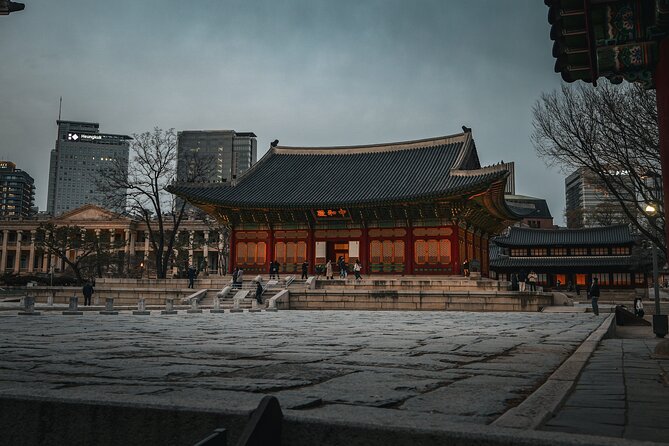
Deoksugung Palace receives about 40 minutes of the tour, with admission included. This is where the mood changes. After the prison and Dilkusha, you enter a royal compound that shows Korea adapting to a changing political world.
The palace is known for its mix of traditional Korean and Western architectural styles. That combination makes Deoksugung different from a visit focused only on older royal forms. You can see how modernization arrived amid political uncertainty, rather than appearing as a clean break from the past.
The palace’s setting also matters. It is a royal space surrounded by Seoul’s modern streets and skyline. That contrast helps you understand the city as a place where eras overlap. The experience is not only about carved details or formal buildings. It is about a country trying to adjust while outside pressure and internal change reshaped public life.
Several people rate Deoksugung as one of the most memorable parts of the afternoon, and I can see why. It offers visual relief after Seodaemun Prison while keeping the historical questions alive. The Western influence is easy to spot, yet the palace still feels connected to Korea’s older court traditions.
Forty minutes is a useful introduction, but the schedule will not suit anyone who wants to linger at every building. Keep your attention on the guide’s explanation of modernization and political change. Those ideas are the reason this palace belongs on this particular route.
More food tours in Seoul:
- Seoul: Night Market Food Tour with Local Guide
★ 4.9 · 943 reviews - Downtown Seoul Guided Food & Market Tour with 8+ Local Tastings
★ 5.0 · 580 reviews - Small-Group Night Food Tour in Seoul with Korean BBQ
★ 5.0 · 304 reviews - Seoul Night Palace & Market Food Tour with Vehicle
★ 5.0 · 275 reviews
Sungnyemun Gate and Seoul’s changing public face
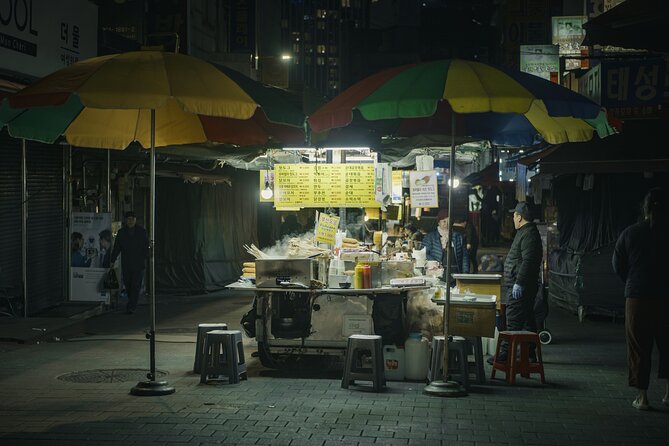
The tour then passes by Seoul City Hall and Sungnyemun Gate, also called Namdaemun. About 20 minutes is assigned to this part of the route, and there is no separate admission charge.
Sungnyemun is one of Seoul’s major historic gates. Here, the route shifts from royal architecture to the city’s public and civic identity. Seoul City Hall provides a modern counterpoint, described on the tour as a symbol of Korea’s movement from a colonial past toward a thriving democracy.
You should think of this as a connecting stop rather than a long guided visit. Twenty minutes goes quickly, especially if the group needs to walk, gather, and hear the explanation. The benefit is the contrast: a historic gate and a modern government center appear within the same city view.
This section helps tie together the afternoon’s themes. Seodaemun showed the cost of colonial rule. Deoksugung showed a monarchy facing modernization. Sungnyemun and City Hall point toward the public city that followed.
If you are hoping for a long photo stop, you may find this part brief. Still, it gives the final market visit more meaning. You are not simply heading to a shopping district. You are following Seoul’s physical changes through several periods of Korean history.
Namdaemun Market and the comfort of Kalguksu
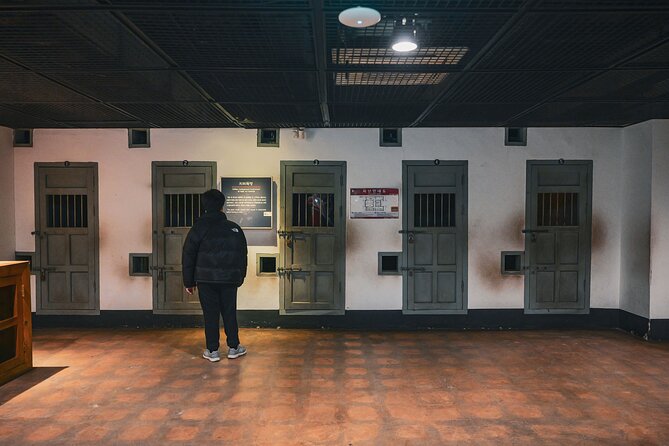
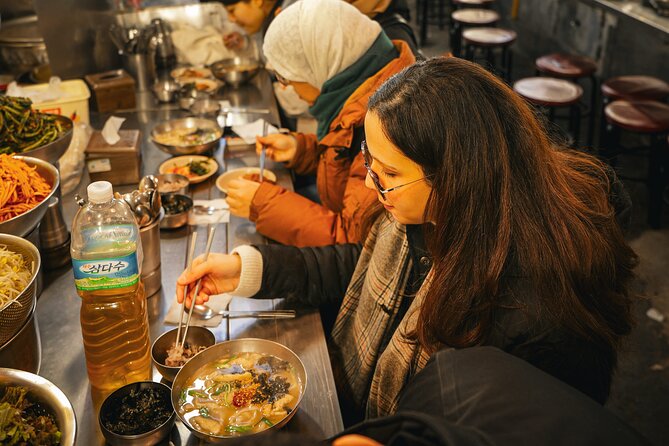
The last stop is Namdaemun Market, with about one hour planned for the visit. The market is described as Korea’s largest and oldest traditional market, with vendors selling goods there for more than 600 years. Food tastings are included, and the tour highlights Kalguksu Alley.
This is the most relaxed and practical part of the afternoon. After several serious historical stops, you get to experience the everyday rhythm of a market. The food is not presented as a luxury meal. It is simple street food with a strong place in Seoul’s daily life.
Kalguksu is hand-cut noodle soup, and Kalguksu Alley is known for its cluster of food stalls and restaurants serving it. The tour gives you a chance to taste local food without having to work out where to go or how to order. That makes the final hour especially useful if you are new to Seoul’s food markets.
Namdaemun also gives you room to observe. Look at the goods, the narrow lanes, and the way the market moves around you. The point is not only the included tastings. It is seeing how a long-running market remains part of modern city life.
The hour may feel short if you want to shop as well as eat. This is a guided food and culture stop, not a dedicated shopping excursion. You can return later if you want more time with the stalls.
The guide makes the history easier to follow
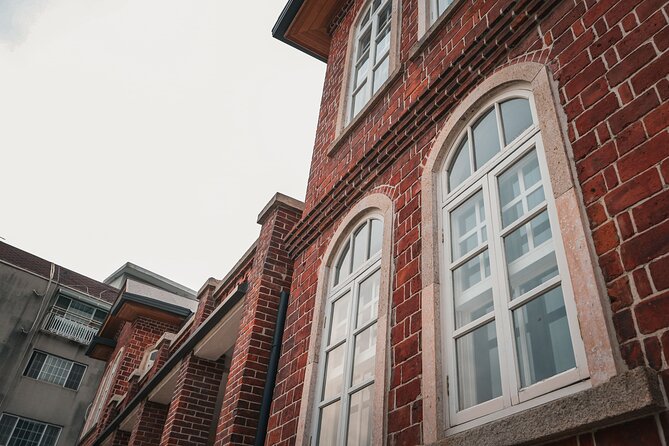
The tour uses an English-speaking professional guide with training in Korean history. That matters most at Seodaemun Prison and Dilkusha, where the buildings alone cannot explain the political events connected to them.
The strongest praise is directed at the guides’ clear explanations, patience, and willingness to answer questions. Kim is one guide specifically named in the feedback, and he is noted for going out of his way to help a participant with personal needs. Other guides are described as friendly and attentive.
Do not expect a lecture delivered without interruption. The tour works best when you ask questions. The material covers colonial rule, independence movements, international support, royal modernization, and democratic change. A good guide can help you connect those subjects instead of treating them as separate facts.
The maximum group size is listed as 99 people. That is a large possible group, and it may affect how personal the experience feels if the tour fills. A large group can also slow movement at narrow market lanes and historic sites. The guide’s communication style will matter more in that setting, so stay close enough to hear and follow meeting instructions.
Timing, walking, and what to bring
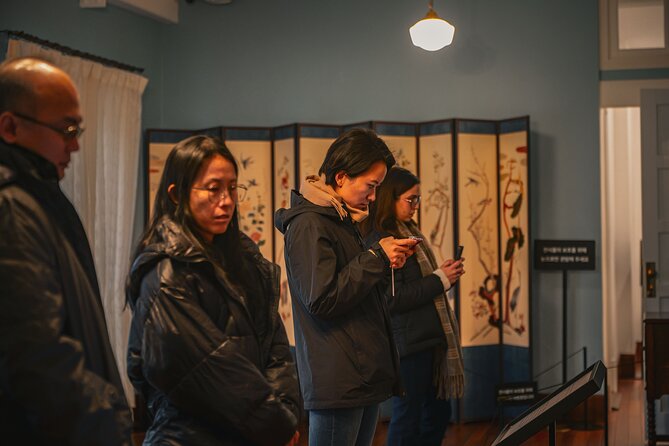
The start time is 2:30 pm, and the total duration is about four hours. The route ends at Namdaemun Market, not back at the starting point. That is useful if you want to continue eating or shopping nearby after the tour.
The meeting point is 95-10 Hyeonjeo-dong, Seodaemun-gu. The listed end point is Namdaemun Market, 21 Namdaemunsijang 4-gil in Jung District. Check the exact directions sent before the tour and keep your phone available.
You will receive detailed information and the guide’s contact through WhatsApp one day before the tour. If you do not use WhatsApp, the information is sent by email, but communication with the guide may be harder. Make sure the phone number on your booking can receive WhatsApp messages.
Wear comfortable shoes. The route includes several stops and a lot of walking, and one person found the schedule hurried. Carry water and dress for the weather, especially because the tour operates outdoors between sites.
The weather policy needs a careful reading. The tour is scheduled to run in rain or snow, but if conditions make the activity impossible, it may be canceled, with a different date or full refund offered. You can cancel for a full refund up to 24 hours before the start time. After that cutoff, the payment is not refunded.
Who will get the most from this tour?
I would choose this experience if you want historical context but do not want to spend an entire day inside museums. It suits first-time visitors who need a clear introduction to Korea’s colonial period, independence movement, royal change, and modern Seoul.
It is also a good fit if food helps you connect with a place. Namdaemun Market and Kalguksu Alley keep the tour grounded in ordinary life. You get a taste of the city, not only its official monuments.
The tour may be less suitable if you prefer a slow pace, extensive photography, or long independent visits. Four hours and five stops require discipline. Families and older visitors should consider the moderate fitness requirement, while anyone sensitive to difficult historical subjects should know that Seodaemun Prison is not a casual sightseeing stop.
The tour has a listed rating of 4.9 from 12 ratings, with 100 percent recommending it. The praise centers on the guides, the clear history explanations, and the emotional impact of Seodaemun Prison and Deoksugung Palace. The one useful caution is pace, so book it with realistic expectations.
Should you book Seoul History Tour: Dark Past & Market Street Flavors?
Book it if you want a compact, guided route through several important parts of Seoul, with food at the end and the main costs already covered. The combination of Seodaemun Prison, Dilkusha, Deoksugung Palace, Sungnyemun Gate, and Namdaemun Market gives you more range than a standard palace visit.
The best reason to choose it is the connection between places. You see the damage caused by colonial rule, the courage of independence supporters, the pressure of modernization, and the ordinary market culture that continues today.
Skip it if you need lots of free time at each stop or dislike walking on a fixed schedule. If you do book, use WhatsApp if possible, wear good shoes, and treat the 2:30 pm departure as the start of a brisk but worthwhile afternoon.
FAQ
How long does the Seoul history and market tour last?
The tour lasts approximately four hours.
What time does the tour start?
The start time is 2:30 pm.
Where does the tour begin?
The meeting point is 95-10 Hyeonjeo-dong, Seodaemun-gu, Seoul, South Korea.
Where does the tour end?
The tour ends at Namdaemun Market, 21 Namdaemunsijang 4-gil, Jung District, Seoul, South Korea.
Are entrance fees and food included?
Yes. The English-speaking guide, transportation cost, entrance fees, and food tastings at Namdaemun Market are included. Tips are not included.
Do I need WhatsApp for the tour?
The operator sends detailed information and the guide’s contact through WhatsApp one day before the tour. If you do not use WhatsApp, the information is sent by email, but communication with the guide may be more difficult.
Can I cancel for a full refund?
You can cancel at least 24 hours before the experience start time for a full refund. Cancellations or changes made less than 24 hours before the start time are not accepted for a refund.
More history and heritage tours in Seoul
- Seoul: Evening Dark History, Folklore & Ghost Story Walking Tour
★ 5.0 · 593 reviews - Hanbok Photoshoot and History Tour at Gyeongbokgung Palace
★ 5.0 · 276 reviews - From Seoul: Dae Jang Geum Park Historic K-Drama Set Tour
★ 4.9 · 143 reviews - Seoul: City Highlights and Historical Experience No Shopping
★ 5.0 · 74 reviews
Just added around Seoul
- Your Personal Seoul Photographer!★ 4.1 · 15 reviews
- From Seoul: Hwacheon Ice Fishing and Lighting Festival Tour★ 4.5 · 4 reviews
- You’re Invited to Our Home in Seoul: The Only Cooking Class!★ 5.0 · 8 reviews
- Seoul: Gangneung BTS K-Pop & K-Drama Filming Locations Tour★ 4.6 · 14 reviews
- Unique Native Experience : Han River Picnic, Board game, BBQ★ 5.0 · 3 reviews
- Yun Korean Cooking Class in Seoul★ 5.0 · 6 reviews
- 2-Hour Private Kayaking and Paddleboarding Experience in Hanriver★ 5.0 · 3 reviews
- Day Trip to Yongin Daejanggeum and Korean Folk Village from Seoul★ 4.0 · 9 reviews
Seoul Traditional Market Tours, compared.
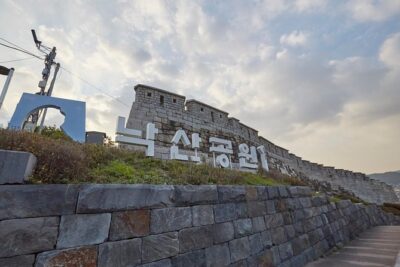
Gyeongbok Palace, Bukchon Village, and Gwangjang Tour
Read our review →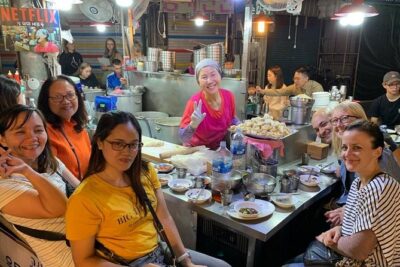
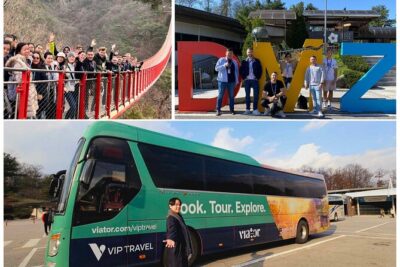
DMZ Tour Seoul to North Korea’s 3rd Tunnel & Majang Lake Crossing
Read our review →Gyeongbok Palace, Bukchon Village, and Gwangjang Tour
Read our review →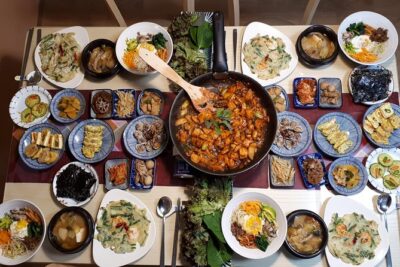
Local Home Korean Cooking Class & Market Adventure in Seoul
Read our review →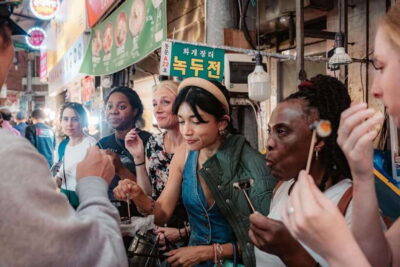
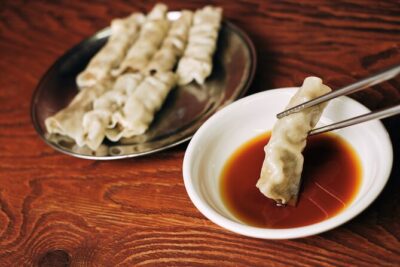
Downtown Seoul Guided Food & Market Tour with 8+ Local Tastings
Read our review →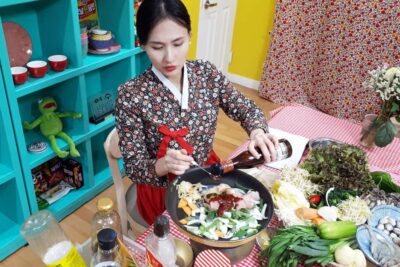
Korean Cooking Class at a Local Home and Market Tour
Read our review →Browse the lists this tour appears in