
Reviewed · SEOUL TRADITIONAL MARKET TOURS
Seoul Vegan & Vegetarian Gwangjang Market Food Tour (11 Tastings)
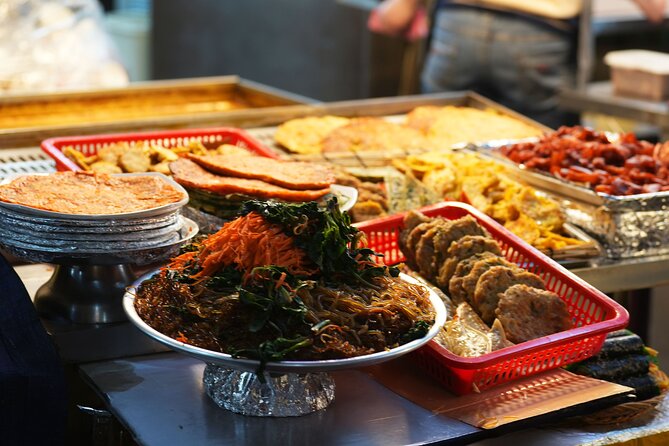
Gwangjang Market is easy to enjoy when someone else has already solved the hard part: finding Korean food without meat, fish, egg, dairy, or honey. On this two-hour evening tour, Jungho leads you through the market for 11 or more plant-based tastings, from vegetable mandu and tteokbokki to mung-bean pancakes, soju, and sweets.
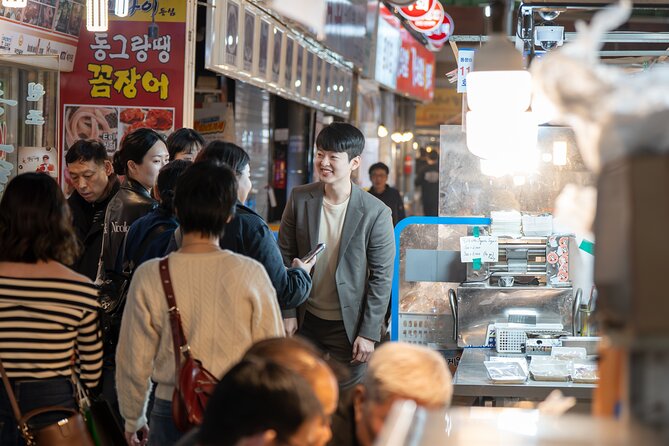
I like the small eight-person limit, which keeps the market walk manageable and lets you ask questions. I also like the careful ingredient checking behind the route. Jungho spent more than a month speaking with cooks and testing dishes before bringing vegetarian family members here.
The catch is that Gwangjang is a working food market, not a dedicated vegan kitchen. Cross-contact can happen, and this tour is not suitable for severe food allergies or strict gluten-free diets.
Key points at a glance
- 11 or more tastings included: Food and drinks are part of the $89 price, so you do not need to keep opening your wallet at each stall.
- A plant-based route through Gwangjang: Dishes contain no meat, fish, egg, dairy, or honey according to the tour’s ingredient checks.
- Jungho handles the tricky details: He orders, translates, explains preparation, and helps you avoid guesswork at Korean-language stalls.
- A compact evening experience: Meet at Jongno 5-ga Station at 5:30 p.m. and finish back at the same meeting point after about two hours.
- Maximum eight people: This is far more personal than a large market walk and gives you room to ask about food and Korean dining customs.
- Important allergy warning: Some cross-contact may occur, and the experience is not recommended for severe food allergies or gluten intolerance.
Why Gwangjang Market is hard for vegans to navigate alone
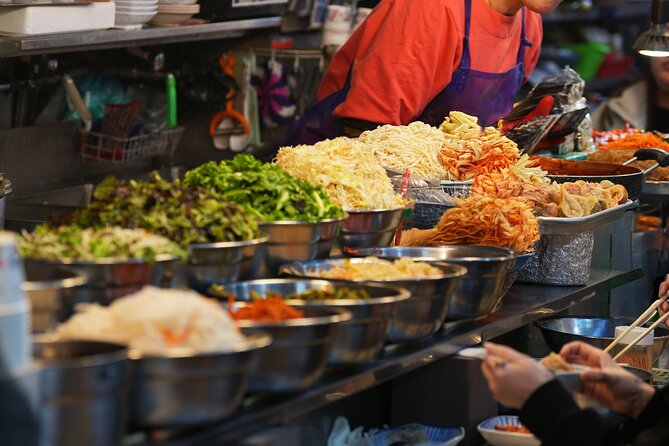
Gwangjang Market is famous for quick Korean food served in tight rows of stalls. That sounds ideal for a food lover, but it can be awkward if you need to avoid animal products.
A dish that appears vegetable-based may still contain egg, fish stock, meat broth, dairy, or honey. Even asking about ingredients can be difficult when menus are in Korean and the market is busy. That is the main reason this experience has value: you are not simply being shown around. You are following a route built around ingredient checks and direct conversations with the cooks.
Jungho created the tour after vegetarian family members visiting Seoul struggled to find food they could eat with confidence. He spent more than a month checking dishes and speaking with vendors before settling on the route. That personal reason gives the experience a practical focus. It is designed for the problem you actually face at a Korean market, not just for a general introduction to Korean cuisine.
You still need to keep your expectations sensible. This is not a sealed, allergy-controlled restaurant. Shared surfaces and cooking equipment may create cross-contact. If even a trace of an ingredient could cause a serious reaction, this is not the right food outing for you.
More traditional market tours in Seoul:
- Seoul: Gyeongbok Palace, Bukchon Village, and Gwangjang Tour
★ 4.9 · 2,321 reviews - Seoul Street Food Market Tour
★ 5.0 · 1,226 reviews - DMZ Tour Seoul to North Korea’s 3rd Tunnel & Majang Lake Crossing
★ 5.0 · 1,185 reviews
Starting at Jongno 5-ga Station at 5:30 p.m.
The tour begins at Jongno 5-ga Station at 5:30 p.m. That timing places you in Gwangjang Market during the evening food period, when the stalls are ready for dinner and the market feels like a real part of Seoul’s daily routine.
The tour ends back at the starting meeting point, which makes the logistics simple. You do not need to arrange a ride across the city at the end, and the nearby subway station is useful for continuing your evening.
A mobile ticket is provided, and confirmation comes at booking. Hotel pickup and drop-off are not included, so plan to make your own way to Jongno 5-ga Station. You should allow a little extra time to locate the meeting point, especially if this is your first visit to the market area.
The group limit is eight people. That matters here. Narrow market aisles are not a great setting for a large crowd, and a small group makes it easier to stay close to Jungho while he orders food and explains what you are eating.
The first tastings: vegetable mandu and Korean market flavors
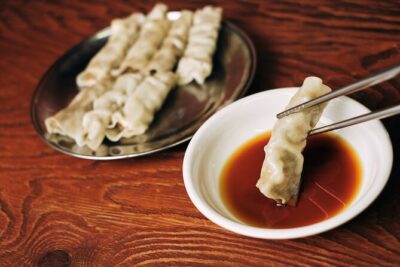
One of the early tastings is hand-steamed vegetable mandu. Mandu are Korean dumplings, and the plant-based version offers a familiar starting point if Korean food is new to you. You can focus on the wrapper, filling, seasoning, and texture without worrying about how to place the order yourself.
The useful part is not only the dumpling. Jungho explains preparation and ingredients as you go, giving you context for how each dish fits into Korean food culture. The tour is built for people who want to understand what they are eating, not just collect small samples.
You will also encounter tteokbokki, the chewy rice-cake dish often served with a spicy sauce. Its texture is very different from mandu, so the tasting sequence gives you a quick lesson in the range of Korean street food. Tteokbokki can be filling despite its modest size, so pace yourself. There are at least 11 tastings ahead.
The food is served in market settings rather than arranged as a formal sit-down meal. That gives you a closer look at the stalls and the cooks, but it also means standing, walking, and eating in a place built for local trade. Wear comfortable shoes and expect a practical market experience rather than a quiet restaurant dinner.
Mung-bean pancakes, soju, and a sweet finish
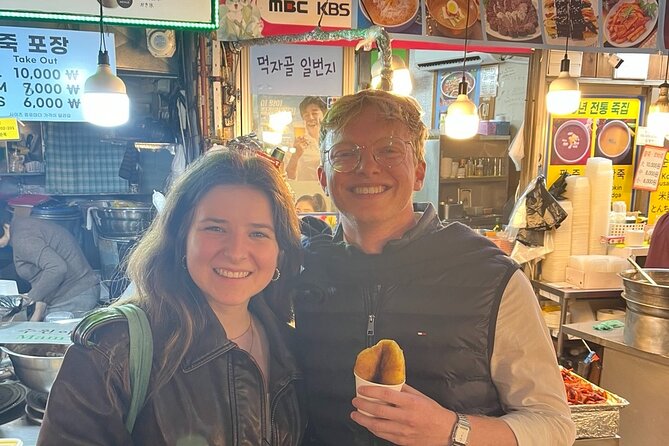
Crispy mung-bean pancakes bring another texture to the route. They are cooked until crisp on the outside and provide a savory change from soft dumplings and chewy rice cakes.
The tour also includes a refreshing shot of vegan-verified soju. This is a small but interesting detail because alcohol production and flavoring can raise questions for some vegans. Jungho identifies the option that fits the tour’s plant-based standard, so you are not left to inspect labels or ask difficult questions at the stall.
A sweet treat is included as well. The exact item may depend on the route and market conditions, but the tour promises a surprising dessert among the 11 or more food and drink tastings. That gives the evening some range instead of making it a parade of savory snacks.
Because everything is included, you can concentrate on comparing flavors and textures. At $89 per person, the cost is not low for a two-hour food walk. But the price covers at least 11 tastings, drinks, bottled water, an English-speaking guide, ordering, translation, and the ingredient research that makes the route possible. If you tried to identify and purchase that many suitable items by yourself, you might spend less, but you would also face the language barrier and a good deal of uncertainty.
More food tours in Seoul:
- Seoul: Night Market Food Tour with Local Guide
★ 4.9 · 943 reviews - Downtown Seoul Guided Food & Market Tour with 8+ Local Tastings
★ 5.0 · 580 reviews - Small-Group Night Food Tour in Seoul with Korean BBQ
★ 5.0 · 304 reviews - Seoul Night Palace & Market Food Tour with Vehicle
★ 5.0 · 275 reviews
What Jungho adds beyond the food
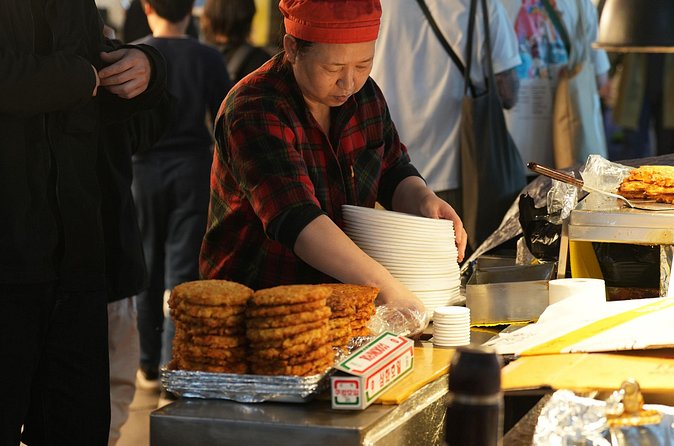
Jungho’s role is central to the experience. He handles ordering and translation, which removes one of the biggest sources of stress for a vegan or vegetarian visitor at Gwangjang Market.
He also explains how dishes are prepared and shares stories about market culture, royal-court recipes, and Korean dining etiquette. These details help connect the food to local habits. You learn not only what is safe for the tour, but also how Korean dishes and eating customs fit together.
Several parts of the experience are especially useful for a first visit to Korean cuisine. The tour introduces unfamiliar textures, gives you the language help needed at the stalls, and lets you ask questions as they come up. People who already know Korean food can still find value in tasting local market versions of familiar dishes.
The tone appears to be conversational rather than lecture-like. Past participants appreciated Jungho’s prompt communication before the tour, clear explanations, and willingness to answer questions. That matters in a small group because your curiosity can shape the evening instead of being lost in a crowd.
A genuinely useful option for mixed-diet families
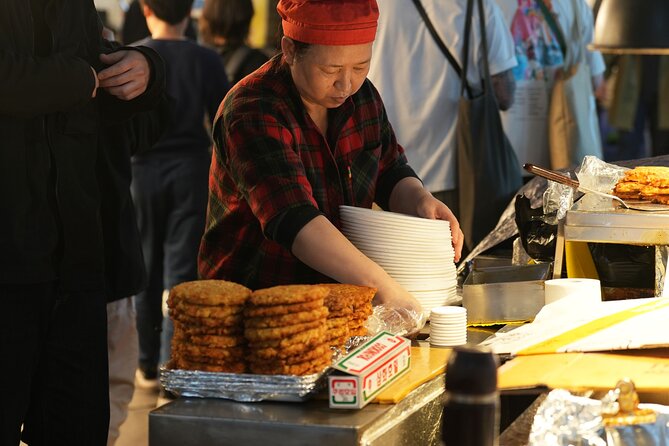
You do not need to be vegan to enjoy this tour. A family or group with different diets can eat together without splitting up. The plant-based focus is the point, but the variety and market setting make the experience suitable for anyone curious about Korean food.
This can be especially helpful when one person in your group is vegetarian and everyone else wants a food outing. At ordinary market stalls, the vegetarian may have limited choices or need to sit out while others order. Here, the whole group follows the same route and shares the same tastings.
The food is plentiful enough that one past participant described being unable to eat another bite. That is useful to know because 11 tastings can sound like small samples, but the total amount may function as a full evening meal.
Still, do not expect every dish to resemble a Western vegan substitute. The attraction is Korean food in a market setting, with plant-based versions and naturally suitable dishes selected along the way. If you want imitation meat, a formal vegan menu, or a quiet table, this is probably not the right fit.
The practical limits of a market food tour

The market environment is part of the appeal, but it also brings limits. You will be walking through active food alleys, stopping at stalls, and eating in a place where space may be tight. The atmosphere is more active and informal than a restaurant.
Cross-contact is the key concern. The tour avoids meat, fish, egg, dairy, and honey in the selected food, but it cannot promise a completely isolated cooking environment. Strict vegans should consider how much contact they are comfortable with, and anyone with a severe allergy should choose a setting with stronger controls.
The tour is also not recommended for gluten intolerance. If you need strict gluten-free food, this experience does not offer the necessary guarantee. The same caution applies to complex medical diets that require exact ingredient and preparation control.
Most people can participate, and service animals are allowed. Bottled water is provided, but hotel transport is not. Free cancellation is available if you cancel at least 24 hours before the 5:30 p.m. start time. Changes or cancellations made later are not accepted for a refund.
Is $89 a fair price for two hours?
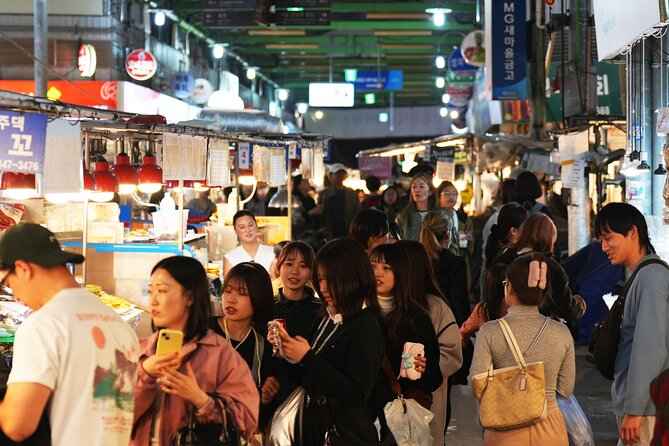
The price makes the most sense if you value certainty and guidance. You are paying for at least 11 tastings, but also for the work behind the route. Jungho researched ingredients, spoke with cooks, and continues to refine the selection.
A self-guided visit could cost less. Gwangjang Market has many inexpensive foods, and confident Korean speakers may be able to ask questions and make their own choices. But you would need to identify suitable dishes, explain your restrictions, manage ordering, and judge whether a sauce or cooking method contains something you avoid.
For a first evening in Seoul, the tour can also save time. Instead of spending two hours searching for suitable food, you spend those two hours eating and learning. The small group adds value, especially for people who prefer asking questions rather than following a large crowd.
I would not call it a bargain for someone who only wants a quick snack. I would call it a fair specialized price for a vegan or vegetarian visitor who wants a full market meal and help with Korean food terms and ingredients.
Who should book this Gwangjang Market experience?
You should consider booking if you are vegan or vegetarian, want to eat Korean market food, and do not speak enough Korean to question every stall. It is also a good choice for mixed-diet families, first-time visitors to Seoul, and food lovers who enjoy learning while they eat.
The experience suits you particularly well if you want:
- A small group instead of a large guided walk
- More than 11 tastings in one evening
- Help with ordering and translation
- Korean market food without meat, fish, egg, dairy, or honey
- Stories about food customs and royal-court recipes
- A meal that does not require you to research every dish yourself
You should skip it if you need strict gluten-free food, have severe food allergies, or require an environment free from cross-contact. You may also prefer another option if you want hotel transport or a seated restaurant meal.
Should you book it?
Book this tour if Gwangjang Market interests you but its food stalls feel difficult to navigate as a vegan or vegetarian. The strongest reasons are the careful ingredient research, Jungho’s hands-on help, and the chance to try a wide range of Korean textures in one compact evening.
The main caution is the market setting. It is not an allergy-controlled kitchen, and the two-hour route involves walking and eating at active stalls. For the right person, though, this is a practical way to enjoy one of Seoul’s best-known food markets without spending the evening guessing what is safe.
FAQ
Where does the tour begin?
It begins at Jongno 5-ga Station in Seoul, South Korea.
What time does the tour start?
The tour starts at 5:30 p.m.
How long does the experience last?
It lasts approximately two hours.
Where does the tour end?
It ends back at the meeting point.
How many food and drink tastings are included?
You receive at least 11 plant-based food and drink tastings.
Are the food and drinks included in the price?
Yes. All food and drinks included in the tour are covered by the $89 price.
What ingredients are excluded from the selected tastings?
The selected food contains no meat, fish, egg, dairy, or honey.
How large is the group?
The tour has a maximum of eight people.
Is hotel pickup included?
No. Hotel pickup and drop-off are not included.
Is the tour suitable for severe food allergies or strict gluten-free diets?
No. Some cross-contact may occur, and the tour is not recommended for severe food allergies or gluten intolerance.
Can I cancel for a full refund?
Yes. You can cancel at least 24 hours before the experience start time for a full refund.
More vegan and vegetarian food in Seoul
- Vegan & Vegetarian Korean Market Adventure Gwangjang Market
★ 5.0 · 34 reviews - Vegan Korean Food Cooking Class: Gimbap, Sundubu Jjigae, and more
★ 5.0 · 32 reviews
Just added around Seoul
- Your Personal Seoul Photographer!★ 4.1 · 15 reviews
- From Seoul: Hwacheon Ice Fishing and Lighting Festival Tour★ 4.5 · 4 reviews
- You’re Invited to Our Home in Seoul: The Only Cooking Class!★ 5.0 · 8 reviews
- Seoul: Gangneung BTS K-Pop & K-Drama Filming Locations Tour★ 4.6 · 14 reviews
- Unique Native Experience : Han River Picnic, Board game, BBQ★ 5.0 · 3 reviews
- 2-Hour Private Kayaking and Paddleboarding Experience in Hanriver★ 5.0 · 3 reviews
- Yun Korean Cooking Class in Seoul★ 5.0 · 6 reviews
- Day Trip to Yongin Daejanggeum and Korean Folk Village from Seoul★ 4.0 · 9 reviews
Seoul Traditional Market Tours, compared.

Gyeongbok Palace, Bukchon Village, and Gwangjang Tour
Read our review →

DMZ Tour Seoul to North Korea’s 3rd Tunnel & Majang Lake Crossing
Read our review →Gyeongbok Palace, Bukchon Village, and Gwangjang Tour
Read our review →
Local Home Korean Cooking Class & Market Adventure in Seoul
Read our review →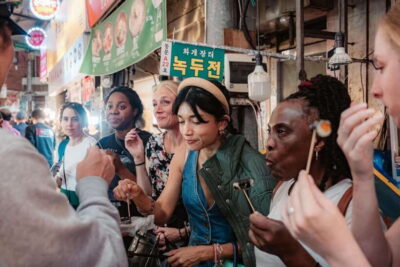
Downtown Seoul Guided Food & Market Tour with 8+ Local Tastings
Read our review →
Korean Cooking Class at a Local Home and Market Tour
Read our review →Browse the lists this tour appears in