
Reviewed · SEOUL DMZ TOURS
365-day DMZ Special Tour including Monday & Public Holiday
The most striking part of this day is the sudden change from Seoul’s busy streets to the quiet, heavily guarded border zone. From Dora Observatory, you can look toward North Korea, while places such as Freedom Bridge and Gloster Hill put the Korean War into human scale.
I like the choice of a Monday and public holiday itinerary, since many DMZ sights close on those days. I also like the guides’ clear, lively approach. Sookhee, Young, Roy, Chloe, and Veronica are among the guides praised for keeping the long day organized and making difficult history easier to follow.
The tradeoff is time. This is a full nine-hour outing, with some quick stops and plenty of walking. The 3rd Tunnel and Heroes Suspension Bridge require moderate fitness, and your exact route can change because the DMZ is an active military zone.
Key points to know before booking
- Monday access: Closed DMZ attractions are replaced by the DMZ Peace Gondola, Gloster Hill Memorial Park, and Heroes Suspension Bridge.
- North Korea views: Dora Observatory offers a look across the border, although fog and weather can limit what you see.
- War sites with context: Freedom Bridge, the 3rd Tunnel, and the Gloucester memorial help explain both the Korean War and its lasting division.
- Early start: Pickup times range from about 6:00 to 7:50 a.m., depending on season and meeting point.
- Physical effort: Expect walking, stairs, and uneven or demanding sections, especially at the tunnel and bridge.
- Good value at $59: Transport, an English-speaking guide, and several admissions are included, but lunch and hotel pickup are not.
Why this DMZ trip is worth a full day from Seoul
The DMZ is close to Seoul in distance, but it is not simple to reach independently. Military controls, restricted roads, and changing access rules make a guided trip the practical choice for most people.
At $59 per person, this outing gives you transportation from Seoul, an English-speaking guide, and a tightly planned route through several border and war-related sites. That is fair value, especially because the day covers places spread around the Paju border area. You still need to budget for lunch and drinks, and the group can reach up to 40 people, so this is not a private car experience.
The tour runs for about nine hours. Pickup begins early, with seasonal times listed between roughly 6:00 and 7:50 a.m. The day usually ends around 3:30 p.m., though traffic and military schedules can affect the return.
You choose from designated subway meeting points rather than individual hotel pickup. The published information refers to a limited set of meeting points, with City Hall Station listed as the main start and end location. Be ready at least 10 minutes early. The vehicle cannot wait for late arrivals, and the morning schedule is built around reaching the DMZ before access conditions change.
More DMZ tours in Seoul:
- Best DMZ Tour Korea from Seoul (Red Suspension Bridge Optional)
★ 5.0 · 41,422 reviews - DMZ Tour: 3rd Tunnel, Option(Suspension Bridge, Boat) from Seoul
★ 5.0 · 21,373 reviews - DMZ tour south Korea from Seoul (NK experience hall, defector)
★ 5.0 · 20,599 reviews
Imjingak and Freedom Bridge set the tone
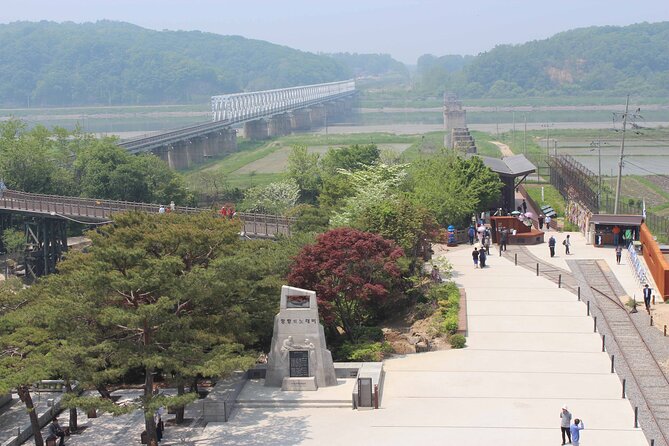
The first major stop is Imjingak Pyeonghoa-Nuri Park, often simply called Imjingak. It was created as a place of comfort for people who fled North Korea during the Korean War.
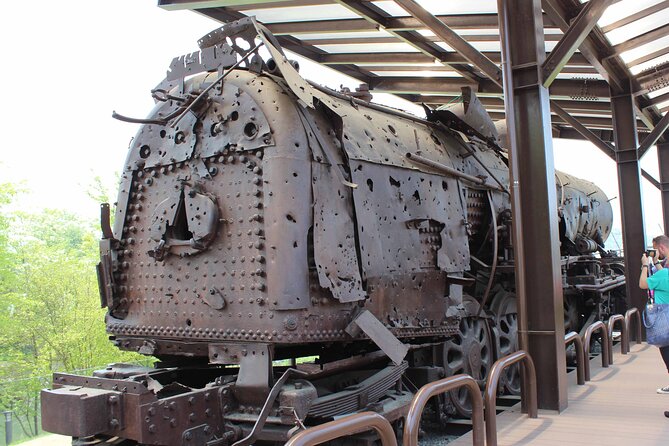
This is not just a photo stop. Monuments, memorials, and Freedom Bridge introduce the emotional weight of a divided country. The bridge became associated with prisoners of war and displaced families, making it one of the most meaningful places on the route.
You usually have about an hour here. That gives you time to see the principal memorials and listen to the guide’s explanation without rushing through every corner. Bring a camera, but give yourself room to pause. The value of Imjingak comes from understanding what the border meant to ordinary families, not simply from checking off another attraction.
The North Korea Experience Hall adds another 30-minute stop. It offers a more educational look at life and conditions north of the border. This helps balance the outdoor memorials with visual material and explanations, especially if you have limited prior knowledge of the Korean War.
Tuesday through Sunday: the 3rd Tunnel and border line
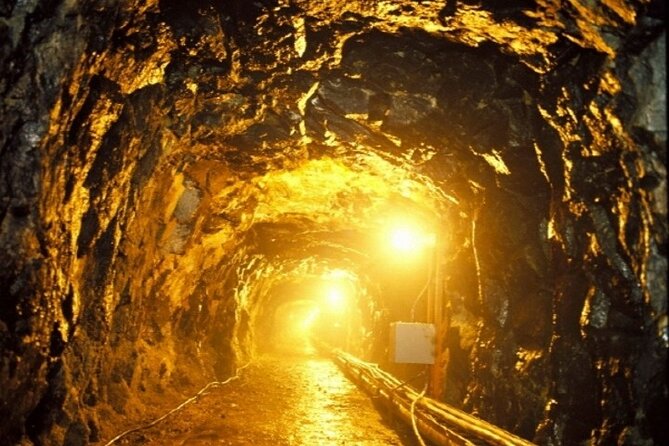
From Tuesday through Sunday, the most demanding stop is the 3rd Infiltration Tunnel. South Korean authorities discovered it in 1978. The tunnel stretches 1,635 meters and was built for an invasion from North Korea.
Only part of the tunnel is accessible, but the visit still gives you a physical sense of the effort involved in building it underground. The route is not a casual stroll. The information warns that the tunnel visit is physically demanding, and that matters for anyone with heart problems, serious medical conditions, or pregnancy.
Allow for walking and a strenuous return section. Comfortable shoes are more useful here than fashionable ones. If you dislike confined spaces or steep walking, this may be the hardest part of the day.
The tunnel also gives the tour a different feel from a museum visit. Instead of only hearing about military tension, you are standing inside a structure made for military action. The experience is direct, but the short visit means your guide’s explanation is important.
The DMZ Theater or Exhibition Hall follows the tunnel. An eight-minute film presents South Korea’s view of the Korean conflict and its continuing effects. The short format works well on a busy schedule, though you should not expect a long museum visit or a full academic treatment of the war.
Dora Observatory offers the day’s defining view
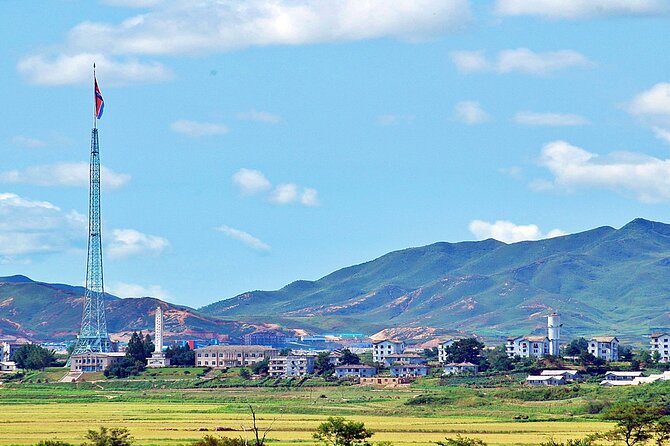
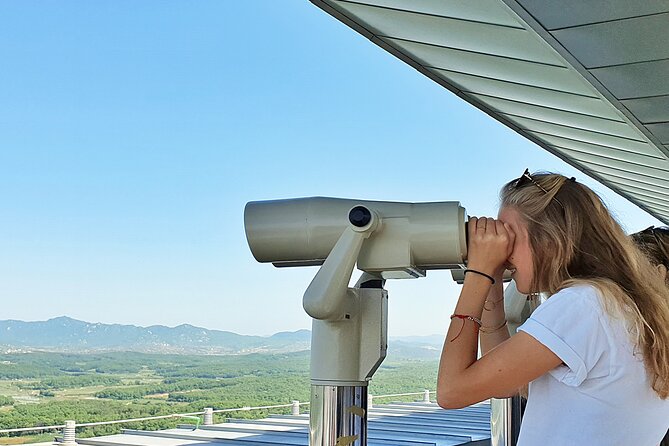
Dora Observatory sits on Dorasan Mountain and looks toward the northern side of the border. It is the stop most people picture when they imagine a DMZ visit: a broad view across the restricted zone toward North Korea.
Weather matters here. Fog can obscure much of the view, and there is no guarantee that you will see distant details clearly. Even on a gray day, the displays and videos provide useful material, so the stop does not become pointless if visibility is poor.
Give the guide’s explanation your full attention. The scene can look peaceful, but the quiet fields and hills sit inside one of the world’s most heavily guarded borders. The contrast between calm scenery and military tension is what makes this stop memorable.
A different kind of day out around Seoul:
- Seoul: DMZ Tour with Optional Suspension Bridge
★ 4.8 · 5,277 reviews - Signature DMZ Tour: Exclusive Defector Talk & Suspension Bridge
★ 5.0 · 4,459 reviews - Thrilling Korean DMZ 3rd Tunnel Tour from Seoul + Red Bridge Rush
★ 5.0 · 3,097 reviews - DMZ Past and Present: Korean Demilitarized Zone Tour from Seoul
★ 5.0 · 2,481 reviews
Unification Village gives a glimpse of life inside the control zone
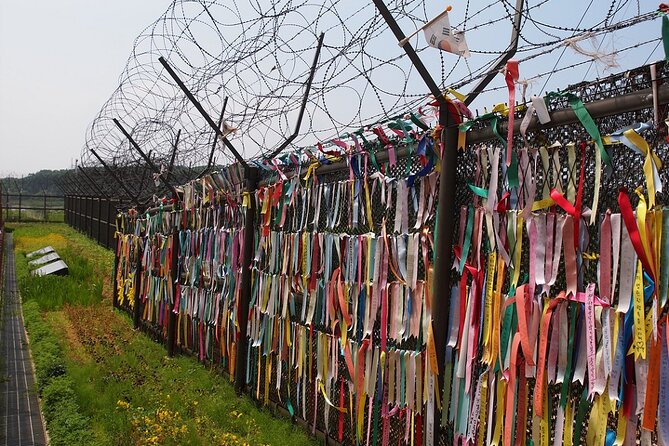
Tongilchon Village sits inside the Civilian Control Zone and is not shown on many ordinary maps. It is known for Jangdan soybeans and provides a reminder that people live and work close to the border under special restrictions.
The stop lasts about 20 minutes, so think of it as a brief introduction rather than a long village visit. You may have time to look around and hear about local life, but the schedule does not allow for extended wandering.
This is one reason the tour works best for people who want context, not only dramatic viewpoints. The DMZ is not an empty line on a map. It affects communities, farming, movement, and daily routines.
Monday and holiday routes keep the day worthwhile
The alternative route is one of this tour’s strongest features. The 3rd Tunnel, Dora Observatory, Dorasan Peace Park, and Tongilchon Village are listed for Tuesday through Sunday. On Mondays and national holidays, you follow a different route because several DMZ facilities close.
The Monday and holiday schedule includes:
- Imjingak Pyeonghoa-Nuri Park
- DMZ Peace Gondola
- Jangsan Natural Observatory or Odusan Unification Observatory
- Gloster Hill Memorial Park
- Heroes Suspension Bridge
- Return to Seoul
The DMZ Peace Gondola crosses the Imjin River area and gives you a different way to think about the border. The river carries memories of division, but the ride also adds a calmer, more scenic element to a serious day.
Jangsan Natural Observatory or Odusan Unification Observatory provides another viewpoint. The exact choice can depend on the day’s conditions and operating arrangements. These sites may not offer the same close connection to the 3rd Tunnel, but they keep the Monday trip focused on the border and the region around it.
Gloster Hill and the Heroes Bridge bring the war closer
Gloster Hill Memorial Park honors soldiers of the British Army’s Gloucester Regiment who fought in the Seolmari battle against Chinese forces during the Korean War.
This is a particularly useful stop if you want to understand that the war was international, not only a conflict between North and South Korea. The memorial connects the broad political story to a specific battle and the people who fought there.
The Heroes Suspension Bridge was built in an area that became a fierce battlefield. At the time of construction, it was Korea’s longest suspension bridge. The stop combines scenery, military memory, and a physical crossing, though it can be demanding for anyone uneasy with heights or long walks.
Weather and security rules can close Gloster Hill or the bridge. If that happens, the route may use Odusan Unification Observatory or the War Memorial of Korea instead. You will not receive a refund for a site removed because of military restrictions, but the replacement keeps the day moving.
Your guide shapes the experience
A DMZ day can become a string of signs and viewpoints if the guide only gives basic facts. Here, the guide is central to the experience because the history is complicated, politically sensitive, and spread across many short stops.
Guides named Sookhee, Sooki, Veronica, Young, Roy, and Chloe have led this experience. Sookhee is especially associated with an organized, attentive style, while Young and Roy are described as friendly and funny as well as informative. The guide assigned to your departure may be different, so do not book based on a promise of a particular person.
The best guides help you connect the tunnel, memorials, villages, and observatories into one story. They also manage the group when the schedule is tight. On a nine-hour outing with military checkpoints and fixed access times, that practical skill matters as much as historical knowledge.
Expect a group tour, not a private tour. The maximum is 40 people, and some stops may feel busy. The advantage is a lower price and a guide who handles the route. The disadvantage is less flexibility if you want to linger at one memorial or take extended photographs.
Lunch, clothing, and walking tips
Lunch is not included, and food and drinks are your responsibility. Bring snacks, especially for a Monday departure. Food choices may be limited on the route, and one Monday schedule had only Dunkin’ Donuts open as a practical food stop.
Wear shoes suitable for stairs and sustained walking. The tunnel and Heroes Suspension Bridge are the clearest physical challenges, but even the easier stops involve moving between memorials, viewpoints, and outdoor areas.
Carry a light jacket or rain protection because much of the day takes place outside. Weather also affects what you see from the observatories and whether some Monday sites can open.
Bring patience as well as a camera. The DMZ is a working military zone, not a normal sightseeing district. Roads can close without notice, and the route may change because of weather, traffic, inspections, or military schedules.
Group size, closures, and cancellation rules
The tour requires at least five participants to operate. If that minimum is not reached, the provider may change or cancel the departure, offering another date or experience, or a full refund.
The DMZ can close suddenly, even after you have booked. In that case, the route will be adjusted to a similar site, and a refund is not provided for the altered stop. The first Monday of March, June, September, and December is also excluded for regular safety inspections.
You can cancel for a full refund up to 24 hours before the start time. Cancellations or changes made inside that 24-hour window are not accepted for a refund. If poor weather causes the tour to be canceled, you can choose another date or receive a full refund.
Who should book the $59 DMZ tour?
Book this tour if you want a clear introduction to the Korean War, the division of the peninsula, and the modern border without arranging transport yourself. It suits first-time DMZ visitors, history-minded visitors, and anyone who values a guide who can explain what you are seeing.
The Monday option is especially useful. You will miss the 3rd Tunnel and the standard Dora Observatory route, but you still get border views, the gondola, Gloster Hill, and the Heroes Suspension Bridge. For many schedules, that is a much better choice than skipping the DMZ because of a weekday closure.
Think twice if you need a relaxed pace, dislike early starts, or have difficulty with demanding walking. Also avoid booking it for a guaranteed North Korea view. Weather and military restrictions are part of the reality here.
For most people, I would book it for the history, the guide, and the chance to see a carefully controlled border area that is difficult to reach alone. Just pack snacks, wear sensible shoes, arrive early, and accept that the DMZ decides the final itinerary.
FAQ
How long does the DMZ tour last?
The experience lasts about nine hours and usually returns to Seoul around 3:30 p.m. Traffic, weather, and military schedules can affect the timing.
Where does the tour start and finish?
The main meeting point is City Hall Station in Seoul, and the published end point is also City Hall Station. Pickup locations vary by the selected option and are limited to designated subway meeting points.
Does the Monday itinerary visit the 3rd Tunnel?
No. The 3rd Tunnel is listed for Tuesday through Sunday. Monday and national holiday departures use an alternative route with the DMZ Peace Gondola, Jangsan or Odusan Observatory, Gloster Hill, and Heroes Suspension Bridge.
Is lunch included?
No. Lunch, food, and drinks are not included. Bring snacks, particularly for a Monday departure, when food choices may be limited.
Is the tour physically demanding?
Yes. The 3rd Tunnel and Heroes Suspension Bridge require a moderate level of fitness and walking. The tour is not recommended for people with heart conditions, serious medical issues, or those who are pregnant.
Can the itinerary change after booking?
Yes. The DMZ is a military zone and may close without notice. Weather, traffic, inspections, and military schedules can also change the route. If a site closes, a similar stop may be substituted without a refund for the changed itinerary.
Just added around Seoul
- Your Personal Seoul Photographer!★ 4.1 · 15 reviews
- From Seoul: Hwacheon Ice Fishing and Lighting Festival Tour★ 4.5 · 4 reviews
- You’re Invited to Our Home in Seoul: The Only Cooking Class!★ 5.0 · 8 reviews
- Seoul: Gangneung BTS K-Pop & K-Drama Filming Locations Tour★ 4.6 · 14 reviews
- Unique Native Experience : Han River Picnic, Board game, BBQ★ 5.0 · 3 reviews
- 2-Hour Private Kayaking and Paddleboarding Experience in Hanriver★ 5.0 · 3 reviews
- Yun Korean Cooking Class in Seoul★ 5.0 · 6 reviews
- Day Trip to Yongin Daejanggeum and Korean Folk Village from Seoul★ 4.0 · 9 reviews
Seoul DMZ Tours, compared.
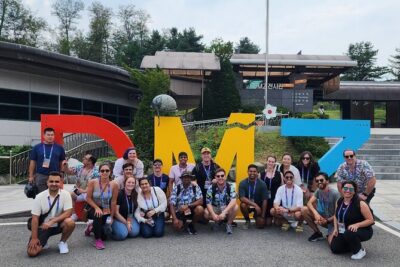
Best DMZ Tour Korea from Seoul (Red Suspension Bridge Optional)
Read our review →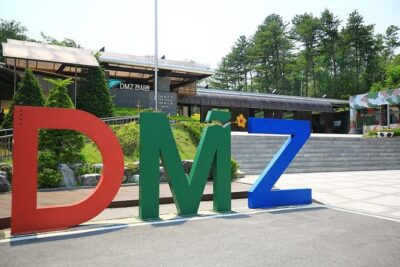
DMZ Tour: 3rd Tunnel, Option(Suspension Bridge, Boat) from Seoul
Read our review →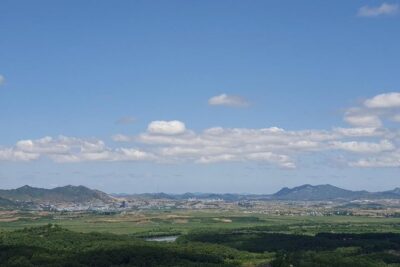
DMZ tour south Korea from Seoul (NK experience hall, defector)
Read our review →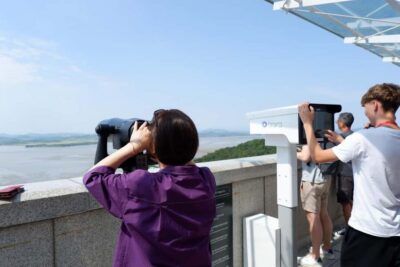

Signature DMZ Tour: Exclusive Defector Talk & Suspension Bridge
Read our review →
Thrilling Korean DMZ 3rd Tunnel Tour from Seoul + Red Bridge Rush
Read our review →
DMZ Past and Present: Korean Demilitarized Zone Tour from Seoul
Read our review →
Ultimate Korea DMZ Tour from Seoul (Gondola & Suspension Bridge)
Read our review →Browse the lists this tour appears in