
Reviewed · SEOUL
Seoul Tram Pedal Challenge
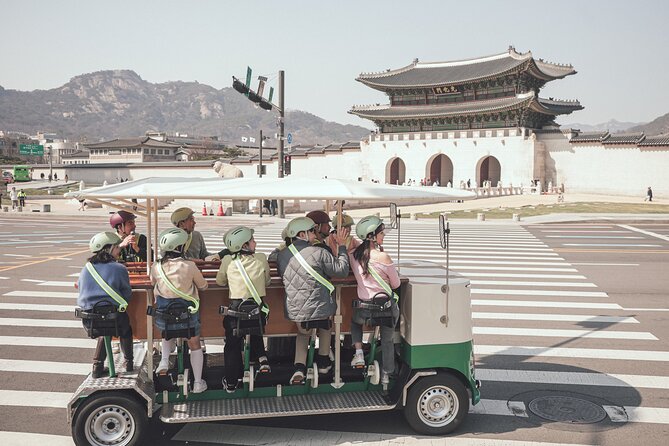
The Seoul Tram Pedal Challenge turns central Seoul into a moving sightseeing seat. You pedal a shared tram bike through old palace districts and narrow traditional neighborhoods, while your guide handles the route and adds historical context. It is a smart way to cover several central sights without spending the whole morning walking between them.
I like the small group size, capped at nine, and the pleasant mix of views, short walks, and food. I also like that the tour includes a stop at Tongin Market, where you can try Korean market dishes rather than simply roll past another landmark. Guides Ma Dong-seok and Vincent are noted for polished introductions, thoughtful restroom stops, and taking good photos.
The main consideration is that this is a sightseeing ride, not a full palace tour or serious cycling outing. You will see several places from the tram and make brief walks, but the 2.5-hour schedule does not allow long visits inside every attraction. The tour also needs at least two people to operate and may be changed or canceled in poor weather.
Key points at a glance
- Pedal through central Seoul on a shared tram bike: You cover more ground than on foot while keeping the pace easy.
- See Gwanghwamun, Changdeokgung, and traditional hanok lanes: The route links major sights with quieter neighborhood streets.
- Enjoy a city view from Jeongdong Observatory: A short stop gives you a broad look toward Deoksugung Palace, City Hall, Seoul Square, and Inwang Mountain on a clear day.
- Try food at Tongin Market: The market stop includes vegetarian food and a newer style of tteokbokki.
- Small-group guiding matters: With no more than nine people, it is easier to hear the guide and pause for photos.
- Plan for a 20-minute arrival window: Safety training, ticketing, height checks, and equipment fitting happen before boarding.
Why the tram bike works well in Seoul
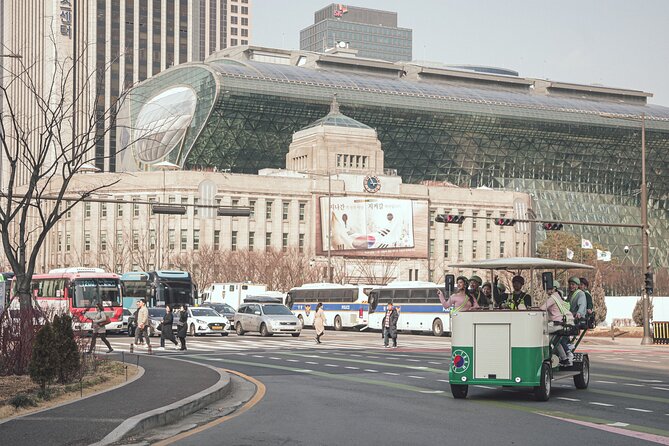
Seoul can feel large even when the sights you want are close on a map. Palace gates, government buildings, markets, and hanok neighborhoods sit within central districts, but walking between them takes time. Public transport is efficient, yet it can also break up your morning with station entrances, transfers, and route planning.
The tram bike offers a middle ground. You pedal, but the vehicle is designed for sightseeing rather than speed. You get a seat, a guide, and a moving view of the streets. The appeal is not athletic achievement. It is seeing more of central Seoul while keeping your energy for the food stop and short walks.
The experience lasts about two and a half hours and ends where it begins. That makes it easy to fit into a first morning in Seoul, especially if you want an introduction to Jongno and nearby historic districts before exploring on your own.
The group limit of nine is useful here. A larger vehicle could carry more people, but it would make street-level guiding and photo stops less personal. With a small group, you should have a better chance of hearing the guide and keeping the ride together.
Other Seoul days people book alongside this one:
- Best DMZ Tour Korea from Seoul (Red Suspension Bridge Optional)
★ 5.0 · 41,422 reviews - DMZ Tour: 3rd Tunnel, Option(Suspension Bridge, Boat) from Seoul
★ 5.0 · 21,373 reviews - DMZ tour south Korea from Seoul (NK experience hall, defector)
★ 5.0 · 20,599 reviews
Arriving at Jongno Station
Meet at the We Ride Korea shop at Le Meiller Jongno Town, 19 Jong-ro, in Jongno District. The scheduled start is 9:30 am, but you need to arrive 20 minutes early. This is not optional spare time. The staff use it for ticketing, safety instruction, equipment fitting, and boarding preparation.
You will receive a helmet, and the staff measure height on-site. Anyone under 100 centimeters cannot board. Children between 100 and 140 centimeters must wear extra safety equipment, including a harness, and need to wear pants. A child who refuses the equipment cannot take part.
That rule may seem fussy, but it is practical on a pedal vehicle shared by several people. Families should explain the harness requirement before arriving, rather than treating it as a surprise at the shop.
The tour runs only when at least two people are confirmed. If that minimum has not been reached two days before your date, you may be asked to change your plans. Keep that in mind if your Seoul schedule is tight.
Jeongdong Observatory gives you the big picture
The first listed stop is Jeongdong Observatory, on the 13th floor of the Seoul City Hall annex in Seosomun. You get about 20 minutes here, enough for a quick look and photographs rather than a long museum visit.
The view takes in Jeong-dong, Deoksugung Palace, Seoul City Hall, and Seoul Square. On a clear day, you can also see toward Inwang Mountain. This is a useful early stop because it gives you a sense of how the old palace quarter and modern civic center fit together.
I particularly like the timing of this visit. Seeing Seoul from above before moving through its streets helps you read the route. You can spot the contrast between formal city blocks, palace roofs, and the surrounding hills.
Cloudy weather will affect the long-distance view, so keep your expectations sensible. The observatory still provides orientation, but this is not the part of the tour to count on for a perfectly clear skyline.
Gwanghwamun Square puts history in the open
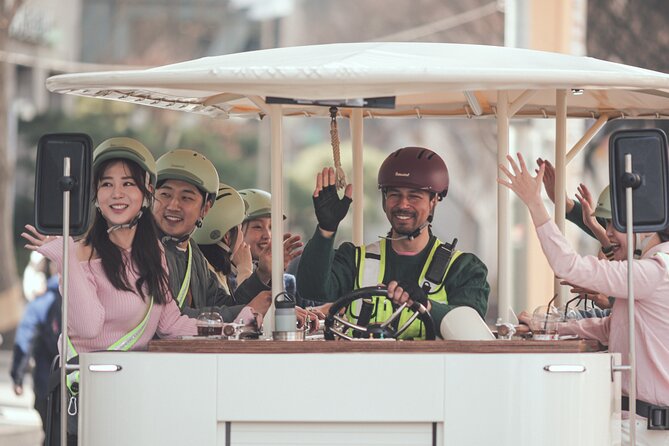
Gwanghwamun Square is one of central Seoul’s most recognizable public spaces. It stretches between Gwanghwamun Gate and City Hall, with statues of King Sejong and Admiral Yi Sun-sin at its center.
The tram gives you a way to take in the scale of the square without spending your morning crossing it on foot. Your guide can point out the important features as you move through the area, and the open setting makes photography easy.
This is a strong introduction to Seoul because the square shows the city’s layers in one place. Royal history, national symbols, civic buildings, and modern urban life all meet here. Still, the tour is not designed as a detailed visit to Gyeongbokgung Palace or a long walk around the gate. If you want extensive palace interiors, plan a separate visit.
A different kind of day out around Seoul:
- Seoul: DMZ Tour with Optional Suspension Bridge
★ 4.8 · 5,277 reviews - Signature DMZ Tour: Exclusive Defector Talk & Suspension Bridge
★ 5.0 · 4,459 reviews - Thrilling Korean DMZ 3rd Tunnel Tour from Seoul + Red Bridge Rush
★ 5.0 · 3,097 reviews - DMZ Past and Present: Korean Demilitarized Zone Tour from Seoul
★ 5.0 · 2,481 reviews
Insadong and Ikseon-dong bring the route into the old lanes
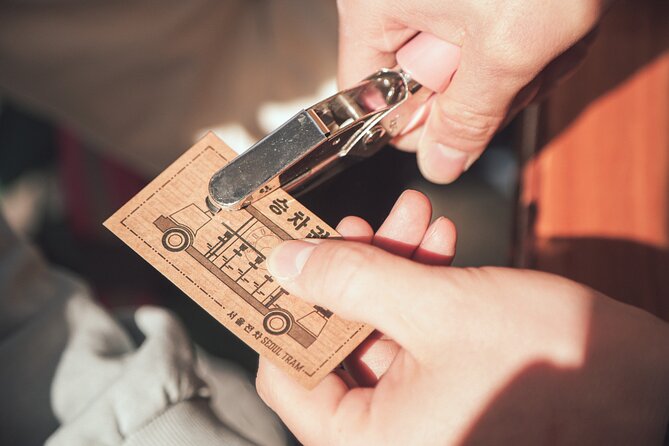
The route continues toward Insadong Antique Street, an area known for traditional Korean culture and shops. From the tram, you get a moving look at the streets and the goods sold along them. The advantage is coverage. You can see the area without giving up the time needed for the later food stop.
Next comes Ikseon-dong Hanok Street. This district is known for traditional hanok houses adapted to modern shops and cafés. The tour includes a short stop of about 15 minutes and a taste of Ikseondong salt bread, a popular Korean snack.
That small tasting is one of the tour’s more current details. The route does not only point toward old buildings and royal sites. It also shows how Seoul uses traditional architecture as a setting for newer food and shopping culture.
The short timing cuts both ways. You get a quick taste of Ikseon-dong, but not enough time for a slow browse through every lane. If this neighborhood is a high priority for you, note the location and return later with more time.
Changdeokgung passes by, then Wonseo-dong slows the pace
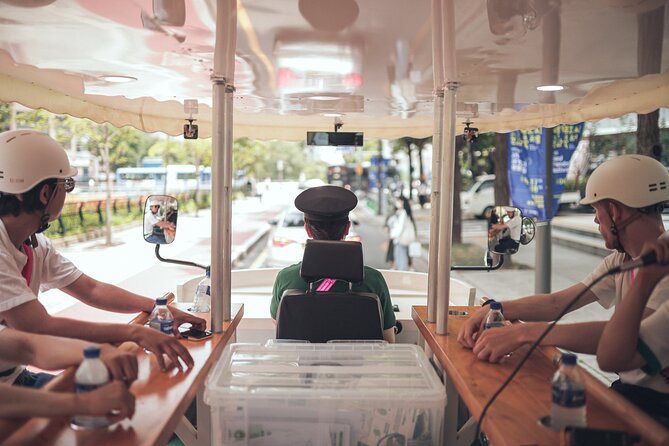
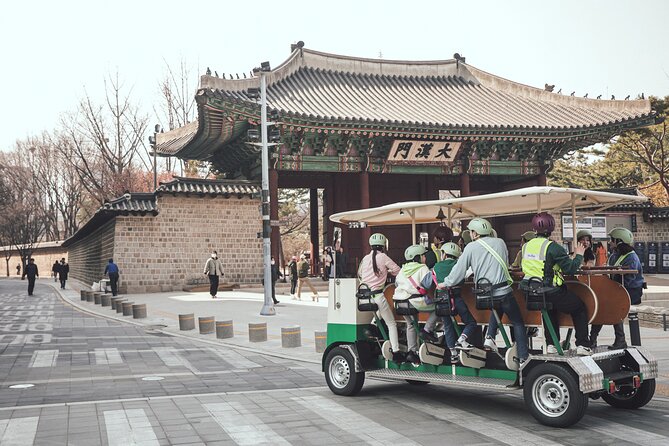
As the tram rolls past Changdeokgung Royal Palace, you see one of Seoul’s most graceful royal sites from the route. The palace is presented as part of the city rather than as a full admission stop. You should not expect a guided palace tour or an extended visit inside.
That distinction matters when you compare this activity with a dedicated palace outing. The tram tour gives you a broad introduction to several districts. A palace-focused tour gives you more detail at one site. You may want both if royal Seoul is central to your plans.
The next short walk takes you through Wonseo-dong Hanok Village. Traditional houses line quieter lanes here, offering a calmer contrast to the wide civic spaces around Gwanghwamun. This is the kind of stop that makes the ride feel less like a checklist of famous names.
I like the balance between seeing the city from the tram and getting off for brief neighborhood walks. You are not confined to the seat for the entire morning, but you also avoid a long walking route in the heat, rain, or cold.
Tongin Market is the tour’s tastiest stop
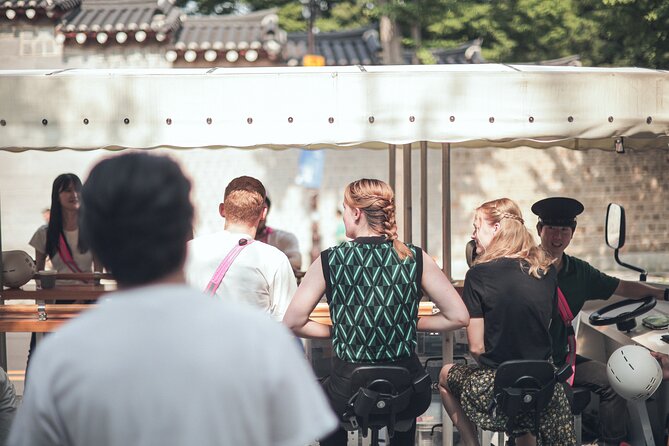
The visit to Tongin Traditional Market is built around local food. You have about 20 minutes to try recommended dishes and eat alongside people using the market for everyday meals. The experience includes vegetarian food, which is helpful if you do not eat meat.
A highlight is a newer style of tteokbokki, along with other market bites. Tteokbokki is usually associated with chewy rice cakes in a spicy sauce, so this gives you a chance to try a variation rather than only the standard version.
The food stop adds value because it connects the sightseeing to daily Seoul. You are not only looking at historic gates and hanok roofs. You are also tasting the kind of casual food that makes a neighborhood feel lived in.
Twenty minutes is enough for a snack and a quick look, but it is not a full market meal. If you want to shop, compare many dishes, or eat slowly, return another time. For a guided morning route, the brief stop keeps the schedule moving.
The food should also be understood as a snack, not a promised large lunch. Wear comfortable clothes and shoes, since you will be getting on and off the tram and walking through market and neighborhood areas.
The guides shape the experience
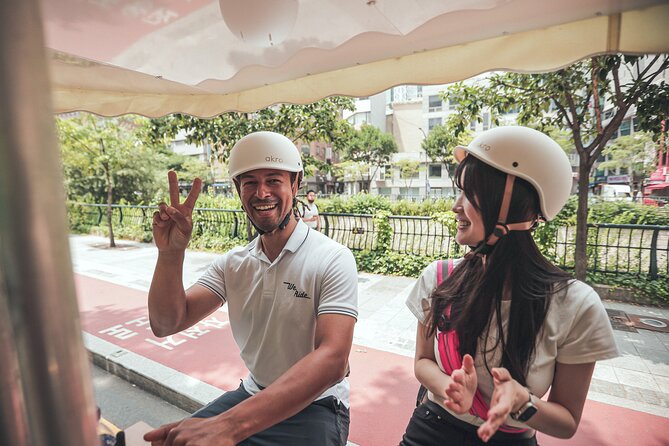
A route like this depends heavily on the guide. The guide must manage the tram, traffic awareness, timing, safety, and commentary without turning the morning into a lecture.
The guides associated with this experience are Ma Dong-seok and Vincent. Their role includes historical introductions, photo help, and practical pauses for restrooms and local food. Those small touches matter on a short city tour. A good photo stop can save you from trying to frame a group picture while the vehicle is moving, and a planned restroom break makes the schedule easier for families and older participants.
You should also expect the guide to lead the route rather than hand you a map and send you off. That is useful in central Seoul, where a few turns can take you from a major avenue into a maze of side streets.
The tour has received a perfect rating from 32 reviews, with 100 percent recommending it. That is a small sample, so I would not treat it as a guarantee. It does support the idea that the strongest parts are the friendly guiding, the easy pedaling, the food, and the chance to see several districts in one compact outing.
Is $85 a fair price?
At $85 per person, this is not the cheapest way to see Seoul. You could walk through some of the same districts for little or no admission cost, and public transport is inexpensive compared with a guided experience.
The price makes more sense when you value structure. You receive a guide, a tram bike, a helmet, safety preparation, the short food tasting at Tongin Market, and a planned route linking several central sights. You are paying to reduce planning time and to see the city with context.
I would call it good value for a first visit if you want an active introduction and prefer not to work out the route yourself. It is weaker value if you already know central Seoul well, want long visits at each palace, or simply prefer to explore at your own pace.
Because the tour lasts only 2.5 hours, it works best as a starting point rather than a complete day of sightseeing. Use the route to mark places you want to revisit later, especially Insadong, Ikseon-dong, Changdeokgung, and Tongin Market.
Weather, clothing, and who should book
The activity operates in all weather conditions, so dress for the forecast. The cancellation terms also say the experience may be canceled in poor weather, with a new date or full refund offered. In practical terms, bring clothing that handles the conditions and keep a little flexibility in your schedule.
The tour suits adults, families with eligible children, and anyone who wants to see central Seoul without a long walking day. Most people can participate, but the height rules matter for children. The additional harness requirement applies to anyone between 100 and 140 centimeters, regardless of age or gender.
I would avoid booking this as your only Seoul history experience. The route offers views and introductions, not lengthy site visits. Pair it with a later palace visit or a return walk through the neighborhood that interests you most.
Free cancellation is available up to 24 hours before the start time for a full refund. Changes or cancellations inside that window are not accepted for a refund. Since the minimum group size can affect operation, booking ahead is sensible, especially because the activity is commonly reserved about 10 days in advance.
Should you book the Seoul Tram Pedal Challenge?
Book it if you want a friendly, active orientation to central Seoul with a guide, a small group, and a proper food stop. The tram bike is easy to pedal, the route covers more ground than a walking tour, and the mix of Gwanghwamun, hanok streets, palace views, an observatory, and Tongin Market gives you a useful first look at the city.
Skip it if you want deep time inside Changdeokgung or other palaces, a serious cycling workout, or a completely flexible schedule. For most first-time visitors with a free morning, I see this as a practical and enjoyable way to get your bearings, taste local food, and decide which parts of Jongno deserve a longer visit.
FAQ
Where does the Seoul Tram Pedal Challenge start?
The tour starts at the We Ride Korea Bicycle Tours and Rentals shop at Le Meiller Jongno Town, 19 Jong-ro, Jongno District, Seoul. It ends back at the same meeting point.
What time does the tour begin?
The scheduled start time is 9:30 am. You should arrive 20 minutes early for ticketing, safety training, equipment fitting, and boarding.
How long does the activity last?
The experience lasts approximately 2 hours and 30 minutes.
What sights are included on the route?
The route includes Jeongdong Observatory, Gwanghwamun Square, Insadong Antique Street, Ikseon-dong Hanok Street, a view of Changdeokgung Royal Palace, Wonseo-dong Hanok Village, and Tongin Market.
Is food included?
Yes. The experience includes a snack at Tongin Market, including recommended market food and a style of tteokbokki. The food described for the tour is vegetarian.
How many people can join the tour?
The maximum group size is nine people. At least two confirmed participants are required for the tour to operate.
Can children join the tram bike?
Children under 100 centimeters cannot board. Anyone between 100 and 140 centimeters must wear additional safety equipment, including a harness, and must wear pants. Children who refuse the required safety equipment cannot board.
Just added around Seoul
- Your Personal Seoul Photographer!★ 4.1 · 15 reviews
- From Seoul: Hwacheon Ice Fishing and Lighting Festival Tour★ 4.5 · 4 reviews
- You’re Invited to Our Home in Seoul: The Only Cooking Class!★ 5.0 · 8 reviews
- Seoul: Gangneung BTS K-Pop & K-Drama Filming Locations Tour★ 4.6 · 14 reviews
- Unique Native Experience : Han River Picnic, Board game, BBQ★ 5.0 · 3 reviews
- Yun Korean Cooking Class in Seoul★ 5.0 · 6 reviews
- 2-Hour Private Kayaking and Paddleboarding Experience in Hanriver★ 5.0 · 3 reviews
- Day Trip to Yongin Daejanggeum and Korean Folk Village from Seoul★ 4.0 · 9 reviews