
Reviewed · SEOUL FOOD TOURS
Seoul Fun Food Tour: 12 different food tastings
Gwangjang Market is the star here, but this is more than a street-food stop. In three hours, you move from old market stalls to a make-your-own ramen shop, along Cheonggyecheon Stream, and into the hanok lanes of Ikseon-dong. Twelve tastings give you a fast, tasty introduction to Korean food.
I like two things in particular. First, your English-speaking guide handles the ordering and explains what you are eating, which matters in a crowded market. Second, the route mixes food with Seoul neighborhoods, Korean words, local customs, and a gentle city walk. Guides such as Suha are repeatedly praised for being warm, clear, and attentive.
The main caution is simple: come very hungry. The tastings can add up to a full meal, and sometimes more. If you want a quiet, slow dinner or have strict dietary limits, this may feel rushed and difficult to manage.
Key points to know before booking
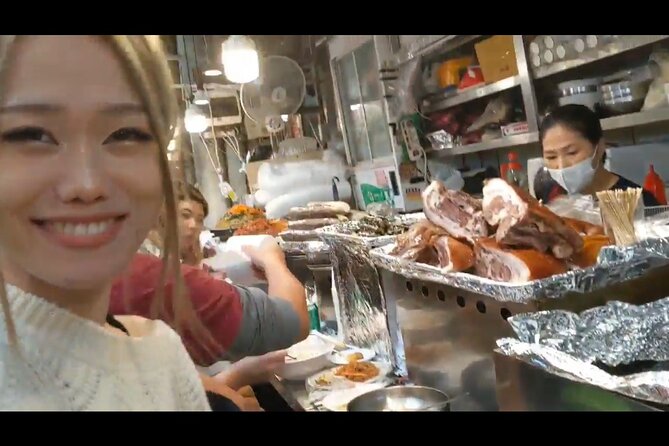
- Gwangjang Market leads the food crawl: Expect traditional Korean dishes in one of Seoul’s oldest and largest markets.
- The food count can exceed 12: Portions are generous enough that you may not want another meal afterward.
- The ramen stop is hands-on: Choose from many ramen options and prepare your own bowl in a 24-hour shop.
- The route includes more than eating: You also walk beside Cheonggyecheon Stream and visit historic hanok streets in Ikseon-dong.
- Small groups make a difference: The tour is described as up to eight people, while the additional information allows a maximum of ten.
- Budget for local transport: Public transportation costs an additional ₩2,000 per person.
Why this Seoul food tour works so well
Many first visits to Seoul create a food problem: there is too much to choose from, menus can be hard to read, and the best places are often busy. This tour solves much of that by putting a local guide between you and the guesswork.
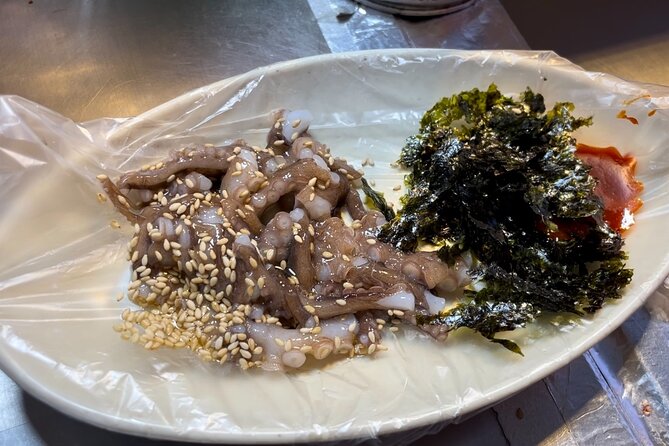
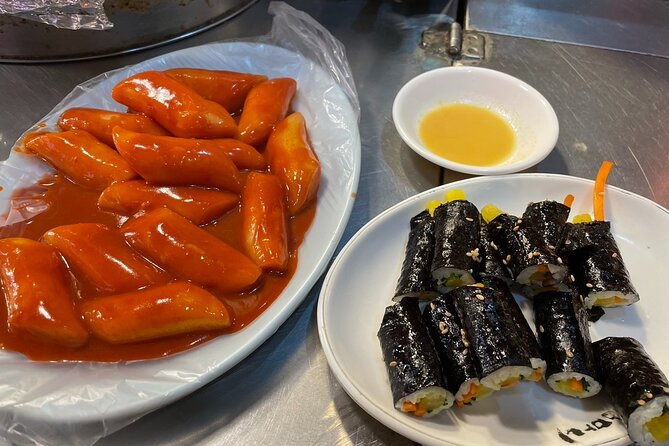
The experience is built around 12 different tastings, though the actual number may be higher depending on the day and the group. Food can include familiar Korean favorites such as tteokbokki, savory pancakes, fish cakes, bulgogi, soup, banchan, egg dishes, and sweets. One tasting may be adventurous, including octopus with moving tentacles. You can decide for yourself, but the guide helps you understand what is on the table before you try it.
I like the way the food is paired with context. You are not simply handed a plate and told its name. Guides explain Korean food customs, local history, pronunciation, and everyday culture as you move between stops. Several guides, especially Suha, are described as patient and engaging, with strong English and a talent for keeping a group together.
The tour also changes shape as it goes. Gwangjang Market supplies the traditional food setting. The ramen shop adds a playful, modern stop. Cheonggyecheon gives you a short break from eating, and Ikseon-dong finishes the route with cafes and old hanok architecture. That variety makes the three hours feel fuller than a simple market tasting.
More food tours in Seoul:
- Seoul Street Food Market Tour
★ 5.0 · 1,226 reviews - Seoul: Night Market Food Tour with Local Guide
★ 4.9 · 943 reviews - Downtown Seoul Guided Food & Market Tour with 8+ Local Tastings
★ 5.0 · 580 reviews
Starting at Gwangjang Market
The meeting point is Jinju Yukhoe 3rd Branch at 403 Dongho-ro in Seoul’s Jongno District. From there, your guide takes you into Gwangjang Market for about an hour of food and conversation.
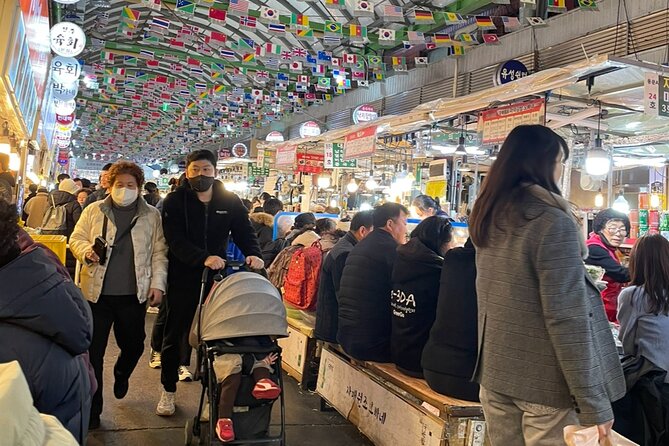
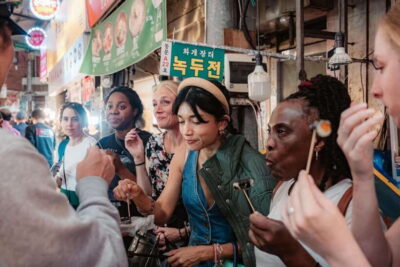
Gwangjang is one of Seoul’s oldest and largest traditional markets. It is the right place to begin if you want to see Korean food in an everyday setting rather than only in polished restaurants. The market can be crowded and noisy, so having a guide identify the right stalls and manage the movement is useful.
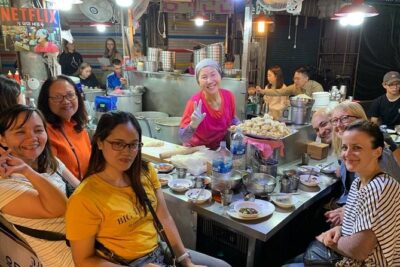
Expect several stops rather than one long meal. Some groups have eaten at three or four sit-down locations inside or near the market, which is a welcome detail. Sitting together makes it easier to hear the guide, share dishes, and ask questions. It also gives you a break from standing in busy aisles.
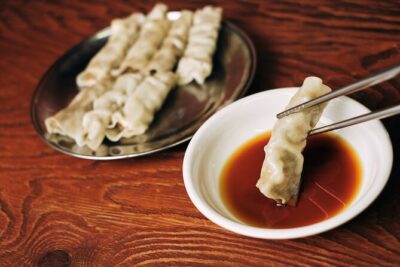
The food selection is broad. You may try tteokbokki, soybean pancakes, fish cakes, soup, bulgogi, banchan, and fluffy egg soup. The exact menu can change with the season and the day, so do not treat the 12 tastings as a fixed restaurant menu. That flexibility is useful because it lets the guide keep the food fresh and current.
Some dishes are easy introductions to Korean flavors. Others may be unfamiliar in texture, spice, or presentation. I appreciate that the guide can explain what you are trying before you take a bite. You can still make your own choices, but you are less likely to order blindly or miss a dish simply because its name is unfamiliar.
One thing to watch is your appetite. The word tasting may suggest a few tiny bites, but that is not always how this tour works. Multiple sit-down dishes, shared plates, snacks, and drinks can leave you full well before the end. Eat lightly beforehand, and avoid scheduling an important dinner immediately afterward.
A short pause at Cheonggyecheon Stream
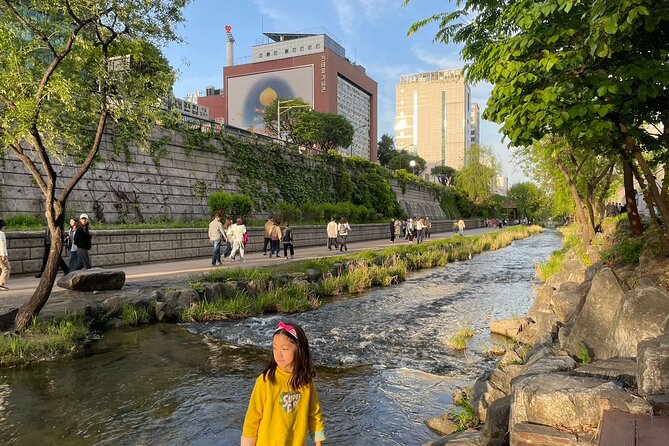
After the market, the route includes about 20 minutes at Cheonggyecheon Stream. This section gives your stomach and your feet a brief rest while adding a different view of central Seoul.
The walk may be adjusted in winter or during poor weather. In good conditions, you can expect a peaceful change from the market streets, with time for photographs and a short stroll. The stream is also a practical bridge between the market and the next food stop.
Do not expect a long sightseeing visit here. Twenty minutes is enough for a pause, a few pictures, and some conversation, not a full tour of the stream. That short length is actually helpful on a food crawl. You get a change of scene without losing too much eating time.
Rain can affect this part of the route. Guides have moved quickly between covered areas during wet weather, and the experience requires good weather overall. If conditions force cancellation, you are offered another date or a full refund.
Making your own ramen in Jongno
The next stop is a 24-hour convenience-style ramen shop in Jongno. You spend about 40 minutes here and prepare your own ramen from a wide selection of options.
This is one of the tour’s more unusual stops. It is not a traditional market stall, and that is the point. Korean convenience-store ramen is part of modern food culture, and the make-your-own format gives you an active break from simply receiving shared dishes.
You choose your ramen, cook it at the shop, and eat it with the group. The selection can include more than 70 types, so having a guide nearby is useful if you are unsure what to pick. The stop is casual and fun, but it can be filling. If you have already sampled heavily at Gwangjang Market, you may want to take a smaller portion or pace yourself.
This part also suits people who like food experiences with a bit of participation. You are not taking a cooking class, and the tour does not promise a lesson in Korean cuisine. Instead, you get a quick look at a familiar local habit and the pleasure of choosing your own bowl.
A different kind of day out around Seoul:
- Best DMZ Tour Korea from Seoul (Red Suspension Bridge Optional)
★ 5.0 · 41,422 reviews - DMZ Tour: 3rd Tunnel, Option(Suspension Bridge, Boat) from Seoul
★ 5.0 · 21,373 reviews - DMZ tour south Korea from Seoul (NK experience hall, defector)
★ 5.0 · 20,599 reviews - Seoul: DMZ Tour with Optional Suspension Bridge
★ 4.8 · 5,277 reviews
Exploring Ikseon-dong by hanok streets
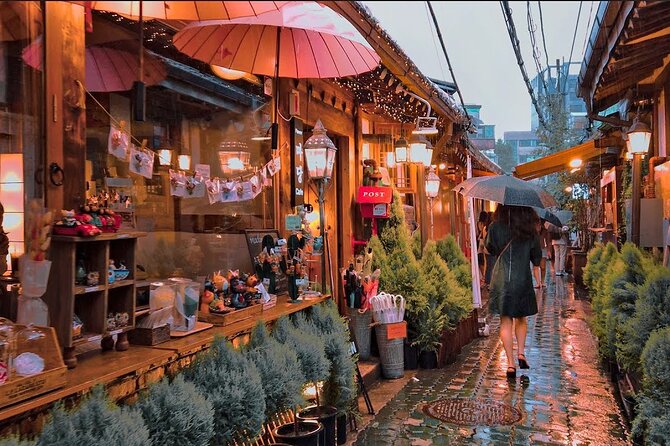
The final major stop is Ikseon-dong, where traditional hanok homes have been adapted into cafes, restaurants, and small shops. You spend about an hour exploring the area and stopping for tea or coffee.
Ikseon-dong gives the tour a softer finish. After the market crowds and the ramen shop, the old rooflines and narrow streets create a more relaxed setting. The neighborhood is especially useful for first-time visitors who want to see how Seoul places historic buildings beside modern cafes and restaurants.
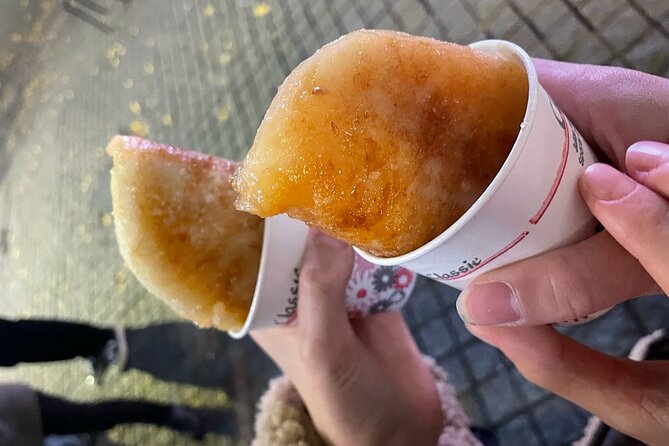
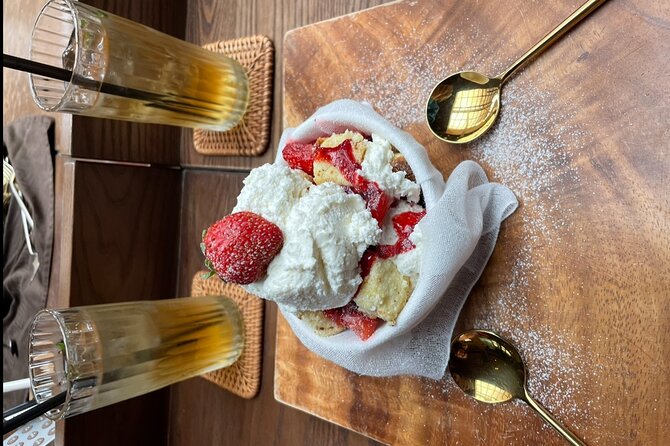
The cafe stop is included as part of the route, but the precise drink and dessert selection can vary. Some groups have finished with shaved ice, fruit, red beans, ice cream, and chocolate ice cream. Those generous sweets help explain why people leave very full.
I like ending here because you have time to talk with the guide and ask questions about places to eat later in your trip. You may also want to return to Ikseon-dong on your own, though the tour itself does not promise shopping time or a long independent visit.
The guides make or break the experience
The strongest part of this tour is the guide. Names associated with the experience include Suha, Soo-ha, Suhan, Sunha, June, and Sue. Spelling varies in the available information, but the repeated picture is clear: the guide is expected to lead confidently, explain the dishes in English, and make sure everyone stays involved.
Suha receives especially strong praise for her energy, patience, and clear English. She explains both the food and the customs around it, answers questions, and keeps the group moving without making the experience feel like a race. That balance matters in a market, where it is easy for a small group to split up.
A good guide also helps with less obvious details. You may learn Korean food words and their correct pronunciation. You may hear personal stories about the neighborhood or explanations of how a dish fits into Korean life. These small lessons turn an eating route into a useful introduction to the city.
Because the experience is led by a person rather than a recorded audio system, the tone may vary from one guide to another. Still, the repeated emphasis on friendly, informative hosts is reassuring. The group size is intended to stay small, listed as up to eight people in the main description, with a maximum of ten in the additional information. Either way, this is a more personal setup than a large bus tour.
What the $88 price really includes
At $88 per person, this is not the cheapest way to eat in Seoul. You can buy individual street foods for far less, and independent visitors who enjoy researching menus may spend less than the tour price.
The value comes from the combination. You are paying for 12 food tastings, a three-hour route, an English-speaking local guide, bottled water, snacks, neighborhood walks, and help navigating places that can be confusing on your own. The food itself can amount to several small meals, and some groups try more than 12 items.
I consider the price reasonable for a first or short visit, especially if you want to cover several types of Korean food without planning every stop. It is also useful on your first evening in Seoul, when you may not yet know how ordering works or which market foods suit your taste.
The value is weaker if you already know Gwangjang Market well, speak Korean, or prefer to choose each dish yourself. In that case, the guide and the organized route may not justify the extra cost. Remember to add ₩2,000 per person for public transportation, which is not included.
Who should book this food crawl
I would recommend it to first-time visitors who want a broad sample of Korean food in one outing. It suits couples, friends, solo visitors comfortable joining a small group, and families whose members are open to trying different flavors.
It is also a good match for people who want cultural explanation along with food. You will learn Korean words, hear about food customs, and visit parts of Jongno that you might otherwise pass without understanding.
You should think twice if you have severe food allergies, strong dietary restrictions, or do not eat meat or seafood. The provided information does not promise a special dietary menu, and the food selection is varied and sometimes adventurous. Ask before booking if your diet requires careful substitutions.
This is also not ideal if you want a slow, formal dining experience. You move through several locations in three hours, and the main pleasure is variety. The tour rewards curiosity, a flexible appetite, and a willingness to taste something unfamiliar.
Practical details for a smoother afternoon or evening
The tour lasts about three hours and ends at Jongno 3-ga Station. That makes the finish convenient if you want to continue exploring central Seoul or return to your hotel by subway.
Wear comfortable shoes. The route includes market walking, a streamside section, and neighborhood streets. Weather can affect the walking plan, especially in winter, and the experience may be canceled if conditions are poor.
Bring your mobile ticket and arrive at the stated meeting point, Jinju Yukhoe 3rd Branch. Confirmation is provided when you book. Service animals are allowed, and the meeting area is near public transportation.
The cancellation terms are straightforward: cancel at least 24 hours before the start time for a full refund. Changes or cancellations inside that window are not accepted for a refund. If the minimum number of participants is not met, you are offered another date, another experience, or a full refund.
Should you book the Seoul Fun Food Tour?
Book it if you want a guided first taste of Seoul, not just a list of dishes. The mix of Gwangjang Market, local explanations, ramen, Cheonggyecheon Stream, and Ikseon-dong gives you food and a useful sense of place in one compact outing.
The best reason to choose it is the guide. A host such as Suha can help you order, explain unfamiliar foods, teach simple Korean words, and keep the group connected. The main tradeoff is the price and the amount of food. At $88, it is an organized introduction rather than a bargain meal, and you should arrive ready to eat heavily.
For most first-time visitors with an adventurous appetite, I think the convenience and variety make it worth booking. Plan it early in your Seoul stay so you can return to the market or Ikseon-dong later with more confidence.
FAQ
How long does the Seoul Fun Food Tour last?
The tour lasts approximately three hours.
How many food tastings are included?
The tour includes 12 different Korean food tastings. The number can be higher depending on the day and the route.
Where does the tour start?
The meeting point is Jinju Yukhoe 3rd Branch, South Korea, Seoul, Jongno District, Dongho-ro, 403, 1st floor.
Where does the tour end?
The tour ends at Jongno 3-ga Station in Seoul’s Jongno District.
Is public transportation included?
No. Public transportation costs ₩2,000 per person and is not included in the tour price.
How many people can join the tour?
The experience is described as a small group of up to eight people. The additional information lists a maximum of ten participants.
Can I cancel for a full refund?
Yes. You can receive a full refund if you cancel at least 24 hours before the experience start time. Cancellations or changes made less than 24 hours before the start time are not refunded.
Just added around Seoul
- Your Personal Seoul Photographer!★ 4.1 · 15 reviews
- From Seoul: Hwacheon Ice Fishing and Lighting Festival Tour★ 4.5 · 4 reviews
- You’re Invited to Our Home in Seoul: The Only Cooking Class!★ 5.0 · 8 reviews
- Seoul: Gangneung BTS K-Pop & K-Drama Filming Locations Tour★ 4.6 · 14 reviews
- Unique Native Experience : Han River Picnic, Board game, BBQ★ 5.0 · 3 reviews
- 2-Hour Private Kayaking and Paddleboarding Experience in Hanriver★ 5.0 · 3 reviews
- Yun Korean Cooking Class in Seoul★ 5.0 · 6 reviews
- Day Trip to Yongin Daejanggeum and Korean Folk Village from Seoul★ 4.0 · 9 reviews
Seoul Food Tours, compared.
Downtown Seoul Guided Food & Market Tour with 8+ Local Tastings
Read our review →
Small-Group Night Food Tour in Seoul with Korean BBQ
Read our review →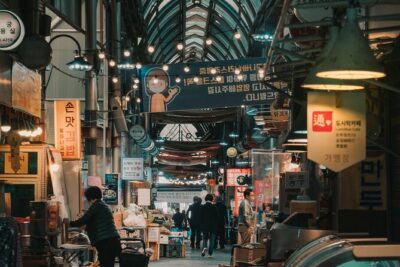
Seoul Night Palace & Market Food Tour with Vehicle
Read our review →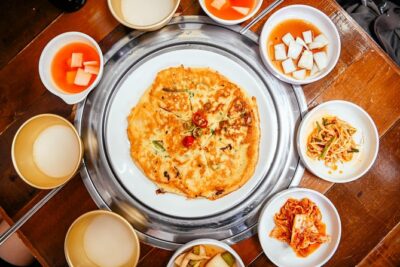
The Award-Winning PRIVATE Food Tour of Seoul: The 10 Tastings
Read our review →
Full Day- Essential Seoul City Tour & Gourmet Tour(including Lunch and Dinner)
Read our review →
Browse the lists this tour appears in