
Reviewed · KOREAN FOLK VILLAGE TOURS FROM SEOUL
Korean Folk Village Half-day Guided Tour from Seoul
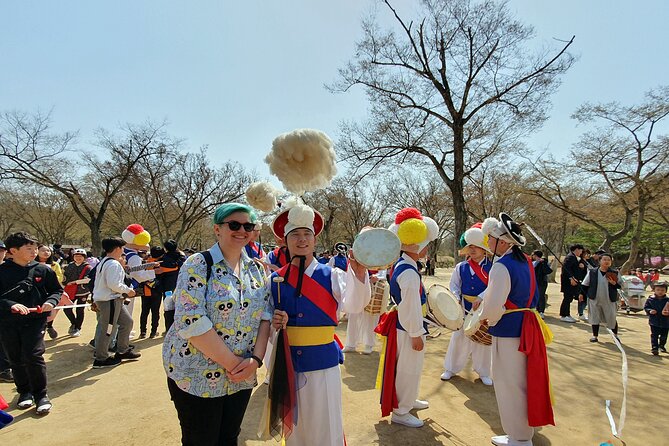
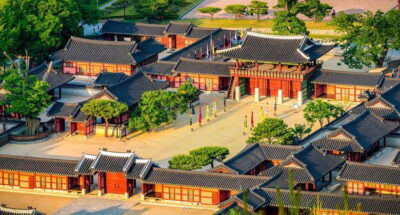
Korean Folk Village brings old Korea to life with more than 270 traditional homes, working craft shops, folk music, dance, and even tightrope acrobatics when weather allows. Instead of viewing historic objects behind glass, you can walk into houses, inspect household tools, and watch artisans make pottery, baskets, brassware, and other goods.
I like the live performances, since they give the visit a pulse that a row of preserved buildings cannot. I also like the guide-led format, especially for first-time visitors who want help making sense of Joseon-era customs. The main drawback is time: after the roughly one-hour ride each way, you have about two hours and 50 minutes at the village, so you will need to keep moving.
Key points to know before booking
- More than 270 restored homes: Explore traditional buildings relocated from different parts of Korea and arranged as a working historical village.
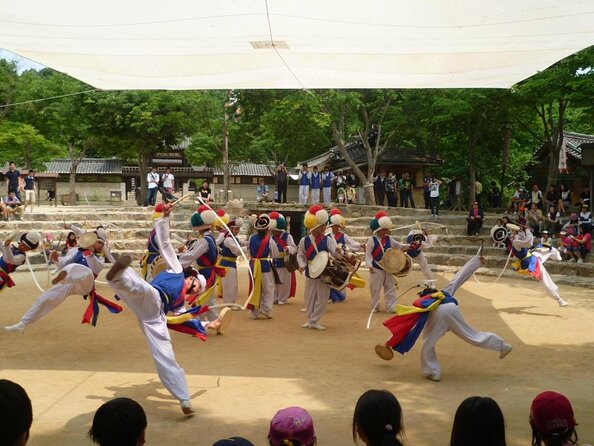
- Performances may shape your visit: Jultagi tightrope acrobatics, nongak music, dance, and other folk arts are offered when conditions allow.
- Strong guide feedback: Jenny, Anna, and Veronica are specifically praised for clear explanations, friendly manners, and good timing around shows.
- Simple central meeting point: Meet at Myeongdong Station Exit 10 and return there after the tour.
- About five hours in total: The village visit takes roughly 2 hours and 50 minutes, with about an hour of travel in each direction.
- Good value for a first visit: The $63 price includes transportation, admission, a professional guide, and taxes, but not food or drinks.
Why Korean Folk Village is worth your afternoon
Seoul is full of modern towers, shopping streets, and fast-moving trains. Korean Folk Village gives you a different side of the country without requiring a long trip or a separate overnight stay.
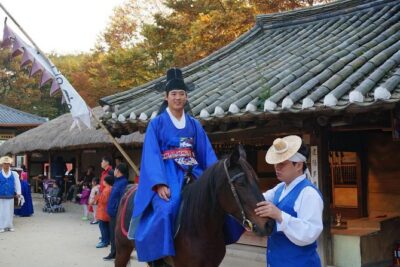
Founded in 1974, the site gathers traditional homes relocated and reconstructed from several parts of Korea. The buildings represent different regions and social settings, so you get more than one standard house repeated down a path. Architectural details and household objects help show how daily life varied in the late Joseon period.
The village is also a place of action. You may see a blacksmith, potter, basket maker, or brassware craftsperson at work. Folk music, dancing, and acrobatics add sound and movement. If you have already visited palaces in central Seoul, this is a useful next step because it puts traditional architecture into a broader setting.
The setting has also been used for Korean historical television dramas. That may be a small detail, but it helps explain why the village feels visually complete. You are not looking at one palace gate or a single preserved home. You are walking through a large setting designed to show how a community once functioned.
More Korean Folk Village trips from Seoul:
- Seoul: Suwon Hwaseong Fortress & Korean Folk Village Tour
★ 4.7 · 214 reviews - Yongin Dae Jang Geum Park Tour from Seoul
★ 5.0 · 176 reviews - Korean Folk Village and Suwon Hwaseong Fortress Day Tour(EG Tour)
★ 4.5 · 80 reviews
The one-hour ride from Myeongdong
The tour begins around midday at Myeongdong Station Exit 10, at 61-7 Chungmuro 2-ga in Jung District. The supplied timing gives both 12:30 p.m. and a departure around 1 p.m., so check your booking confirmation carefully for the exact meeting time.
The ride to the village takes about one hour in a climate-controlled bus. Transportation matters here. Korean Folk Village is outside central Seoul, and reaching it independently would add planning, navigation, and admission arrangements to your day. This tour keeps those pieces together.
Your guide provides background during the drive. Jenny, one of the named guides, is praised for using the journey to explain Korean history before arrival. That is a useful approach because you reach the village with some context rather than meeting the buildings cold.
The bus is a practical choice, but it also creates the main time limit. Roughly two hours of your half-day are spent getting there and back. I would treat this as a focused introduction to the village, not a full-day exploration of every path, workshop, and show.
Entering the Joseon-era village
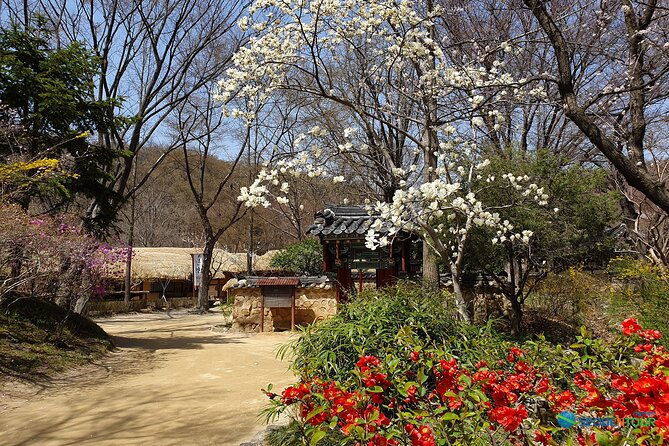
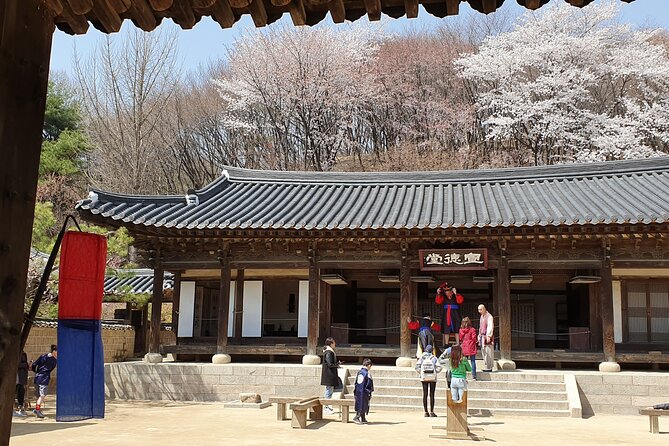
Once inside, you can enter traditional homes rather than simply viewing their exteriors. The restored buildings include structures from different parts of Korea, with regional architectural details and household artifacts helping to show how people lived.
Your guide can point out the cultural meaning behind what you see. This is where the tour earns its place over a solo visit. A house can look attractive on its own, but an explanation of its layout, tools, customs, or social use gives the building a purpose.
Anna is specifically praised for explaining the village thoroughly and arranging the visit so the group could catch live shows. That timing is important. The village is large, and performances may be scheduled at different times. A guide who watches the clock can save you from reaching a show area after the action has ended.
You will not have endless time in each home. Plan to listen, look closely, and move on. If you stop for every architectural detail, you may miss a performance or workshop. I suggest keeping your first pass with the guide, then using any spare minutes for photographs and closer looks at the buildings that interest you most.
Folk music, dance, and jultagi performances
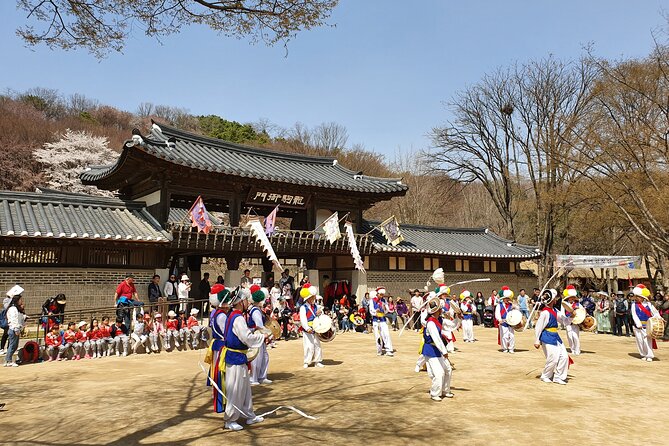
The shows are one of the strongest reasons to book this excursion. Traditional houses provide the setting, but live folk arts make the visit feel less like an open-air museum.
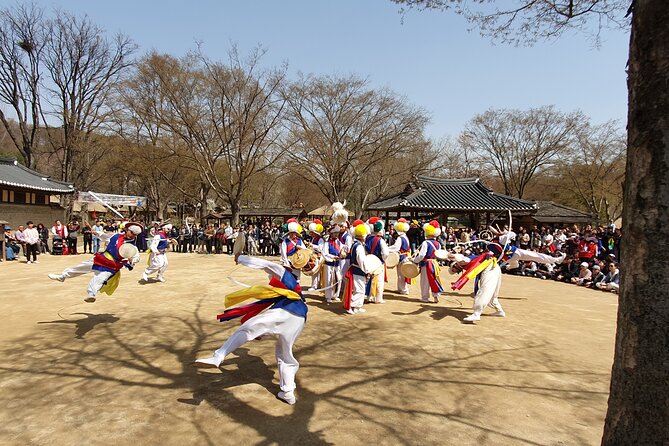
Possible performances include jultagi, a Korean tightrope tradition, and nongak, a musical performance linked with rural life. Dance and other traditional arts may also be part of the program. The schedule depends on conditions, and the supplied details note that performances are weather permitting.
You can also take photographs of the dancers, who have been described as willing to pose for pictures. Be polite and follow your guide’s instructions, especially when a performance is underway. A quick photograph is one thing, but the show itself is the reason to be there.
The guide’s role is especially useful during this part of the visit. Anna is praised for making sure the group reached the live-action shows, while Jenny is praised for explaining the cultural side of the village. Those are different strengths, and both matter. Good timing gets you there. Clear explanation helps you understand what you are watching.
The performance schedule is not guaranteed, so do not book this solely for one particular act. Think of the shows as a major possible highlight rather than a fixed promise. If the weather is poor, the tour itself may be canceled, with a different date or full refund offered.
More half-day trips in Seoul:
- Half-Day DMZ Tour Led by a Retired Military Officer from Seoul
★ 5.0 · 1,774 reviews - Seoul: Half-Day DMZ Tour Led by a Retired Military Officer
★ 4.9 · 1,399 reviews - Half-Day South Korea DMZ Small-Group Tour from Seoul
★ 5.0 · 43 reviews
Workshops where traditional crafts still happen
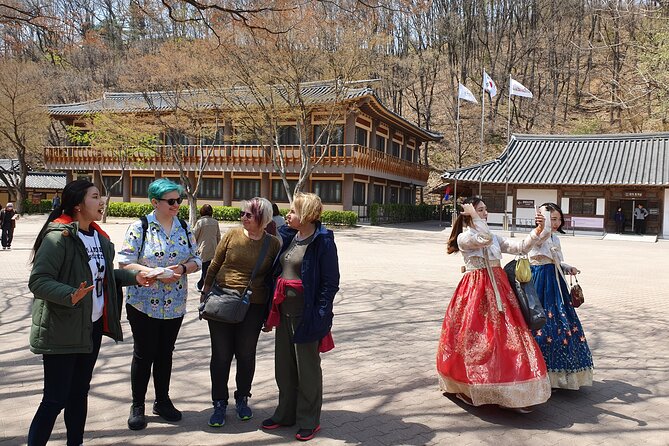
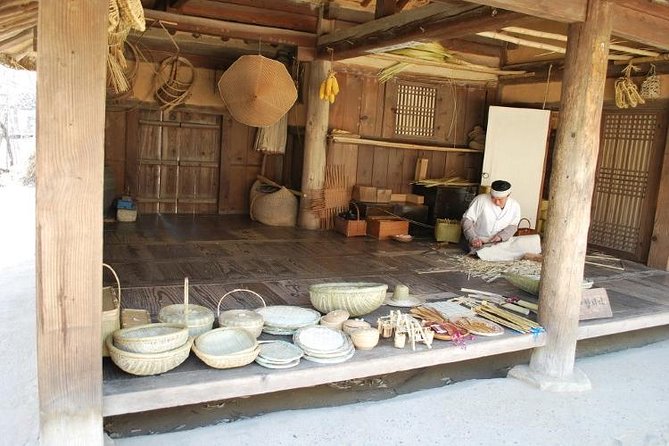
The craft areas add a hands-on feel without turning the tour into a shopping stop. You may see artisans working with clay, metal, reeds, and other materials.
Blacksmithing, pottery, basket making, and brassware are among the crafts represented. Watching the process gives you a better sense of the skill behind ordinary household items. It also helps connect the buildings to daily work, rather than treating the village as a collection of decorative facades.
This section suits curious adults and older children who want more than history explained in dates. The child rate applies only when a child shares with two paying adults, so families should check the final booking terms before assuming a discount applies.
You will want comfortable shoes. The tour is not recommended for people with walking problems, and the village covers a large site. Even though the visit is guided, you should expect steady walking between homes, workshops, and performance areas.
A realistic look at the schedule
The advertised experience is described as four hours in some places and about five hours in the overall tour summary. The stop-by-stop timing explains the difference:
- About one hour from Seoul to the village
- About 2 hours and 50 minutes at Korean Folk Village
- About one hour back to Seoul
The return drop-off is at Myeongdong Station Exit 10. This makes the tour easy to pair with an evening in central Seoul, though you should leave some flexibility in your plans because drive times can vary.
The village visit is long enough to see the main homes, catch a performance if the schedule works, and inspect several workshops. It is not long enough for an unhurried look at every corner. If you want a slow photographic study or a full day of craft demonstrations, you may prefer visiting independently.
For most people, the guided pace is a fair trade. You avoid spending extra time figuring out where to go, and the guide helps focus your attention on the buildings and customs that matter most.
What the $63 price covers
At $63 per person, the tour includes the professional guide, transportation, entrance fees, and taxes. Food and drinks are not included, and hotel pickup and drop-off are not provided.
The value depends on what you want from the visit. If you are comfortable navigating outside Seoul on your own and prefer to set your own pace, a guided half-day tour may feel restrictive. You would have more control over how long you stay at each workshop or house.
If you want a straightforward outing with the major practical pieces handled, the price is more appealing. Admission is already included, the ride is arranged, and the guide adds cultural context during the drive and inside the village. For a first visit to Seoul, that combination can save effort.
The maximum group size is 40 people. That is not an intimate private tour, and a full group may make it harder to hear in crowded areas. Still, the positive feedback about Veronica, Jenny, and Anna suggests that guide quality is a major part of the experience.
Who will enjoy this tour most
I would recommend this outing to you if you want to see traditional Korean homes but do not want to plan transportation outside central Seoul. It is also a good choice if you enjoy performances and demonstrations more than silent museum displays.
Families can find plenty to watch, especially in the music, dance, acrobatics, and craft areas. Children may respond better to a blacksmith or tightrope performer than to a long explanation inside a quiet house. Check the child-rate rule before booking.
History-minded visitors will appreciate the guide’s explanations, but you do not need specialist knowledge. The tour is designed as an accessible introduction, and the guide can connect the buildings to customs and everyday life.
I would hesitate to recommend it if you have walking difficulties, dislike group schedules, or want a full day at the village. The site is large, the walking is substantial, and the fixed return to Seoul leaves little room for lingering.
The experience requires at least five participants. If that minimum is not met, the operator may move the tour to another date or cancel it, offering another date, another experience, or a full refund. Free cancellation is available up to 24 hours before the start time. Poor weather can also lead to a new date or full refund.
Should you book the Korean Folk Village tour?
Book it if you want an efficient first look at Joseon-era architecture, traditional crafts, and Korean folk performance from a central Seoul meeting point. The best parts are the live shows, the chance to enter restored homes, and the guide’s help with timing and cultural meaning.
The strongest guide names in the available feedback are Jenny, Anna, and Veronica, each praised for clear explanations and friendly service. That matters because the site is large enough to feel scattered without direction.
Skip it if you need a slow, independent visit or cannot manage a fair amount of walking. For everyone else, $63 is a reasonable price for transportation, admission, and a guided introduction to one of Seoul’s most useful windows into traditional Korean life.
FAQ
Where does the tour begin?
The tour begins at Myeongdong Station Exit 10, at 61-7 Chungmuro 2-ga, Jung District, Seoul.
Where does the tour end?
The tour returns you to Myeongdong Station Exit 10.
What time does the tour start?
The meeting information lists a 12:30 p.m. start. Other timing details mention departure around 1 p.m., so check your booking confirmation for the exact time.
How long does the tour last?
The overall experience takes about five hours, including roughly one hour of travel each way. The village visit lasts about 2 hours and 50 minutes.
What is included in the price?
The price includes a professional guide, transportation, entrance fees, and all taxes.
Are food and drinks included?
No. Food and drinks are not included.
Can the tour be canceled because of weather or low enrollment?
Yes. Poor weather or fewer than five participants can lead to cancellation. You will be offered a different date or a full refund.
Just added around Seoul
- Your Personal Seoul Photographer!★ 4.1 · 15 reviews
- From Seoul: Hwacheon Ice Fishing and Lighting Festival Tour★ 4.5 · 4 reviews
- You’re Invited to Our Home in Seoul: The Only Cooking Class!★ 5.0 · 8 reviews
- Seoul: Gangneung BTS K-Pop & K-Drama Filming Locations Tour★ 4.6 · 14 reviews
- Unique Native Experience : Han River Picnic, Board game, BBQ★ 5.0 · 3 reviews
- 2-Hour Private Kayaking and Paddleboarding Experience in Hanriver★ 5.0 · 3 reviews
- Yun Korean Cooking Class in Seoul★ 5.0 · 6 reviews
- Vivaldi Park Winter Ski Resort with Nami Island Tour from Seoul★ 4.5 · 7 reviews
Korean Folk Village Tours from Seoul, compared.
Suwon Hwaseong Fortress & Korean Folk Village Tour
Read our review →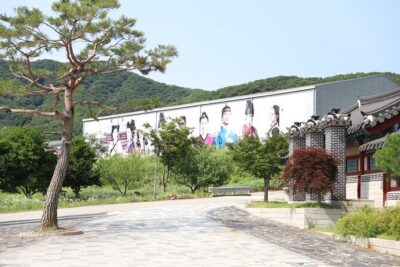
Korean Folk Village and Suwon Hwaseong Fortress Day Tour(EG Tour)
Read our review →
Suwon Hwaseong, Folk Village, & Starfield Library
Read our review →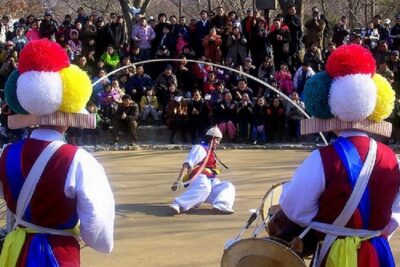
Namhansanseong UNESCO Historical Sites and Korean Folk Village-Private Tour
Read our review →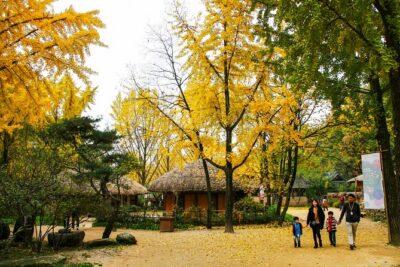
Private Day Trip to Korean Folk Village and Hwaseong Fortress
Read our review →
Incheon Airport (ICN) Transfer to Seoul/Suwon/Seongnam/Yongin
Read our review →Browse the lists this tour appears in