
Reviewed · SEOUL DMZ TOURS
7 Day Essential Korea Tour(Seoul, Nami, DMZ, Andong, Gyeongju, Busan_Meal Incl.)
This is a fast, finely packed way to see Korea beyond Seoul. In seven days, you move from royal palaces and street markets to the DMZ, old Confucian villages, Silla-era temples, and Busan’s coast, with guide Bergen Park handling the driving and daily details. The range is impressive, and the private format lets your group travel at its own pace.
I like the 16 included meals, especially because the tour is designed around different Korean dishes rather than repeating the same menu. I also like the mix of famous sights and less familiar places, such as Buyongdae, Byeongsan Seowon, and Baek In-je’s House. The main drawback is the pace: several days run from one major stop to the next, so this suits you if you want broad coverage more than long, lazy visits.
Key points to know before booking
- Seoul starts with the essentials: Gyeongbokgung, Bukchon, Insadong, Jogyesa Temple, Cheonggyecheon Stream, and Kwangjang Market fill the first day.
- The private vehicle saves time: You avoid arranging separate transport between Seoul, Nami Island, Andong, Gyeongju, and Busan.
- Korean history changes as you travel: The route moves from Joseon royal Seoul to Andong’s Confucian traditions and Gyeongju’s Silla monuments.
- Food is part of the trip: The package includes three breakfasts, seven lunches, and six dinners.
- The final days focus on Busan: Coastal temples, Haeundae, Jagalchi Market, the UN Memorial Cemetery, and Gamcheon Culture Village provide a strong finish.
- The schedule is active: Most sightseeing days begin at 9 a.m., with many stops lasting between 30 minutes and three hours.
What $3,399 covers, and what it really buys you
At $3,399 per person, this is not a budget sightseeing package. Its value comes from bundling the expensive and time-consuming parts of a long Korea route: private air-conditioned transport, a licensed English-speaking guide, admission fees, 16 meals, hotel stays in Andong, Gyeongju, and Busan, and hotel pickup and drop-off in Seoul.
You are also paying for a route that would be awkward to arrange independently in only one week. Seoul, Nami Island, the DMZ, Andong, Gyeongju, and Busan are spread across the country. A private vehicle means you are not piecing together each intercity transfer or losing time at bus and train connections.
The accommodation portion covers three nights in 3-star or 4-star hotels, with rooms arranged for two people. The supplied details name Andong, Gyeongju, and Busan as the overnight locations. Seoul hotel accommodation is not listed as included, so check your booking details carefully if you need a Seoul room before or after the tour.
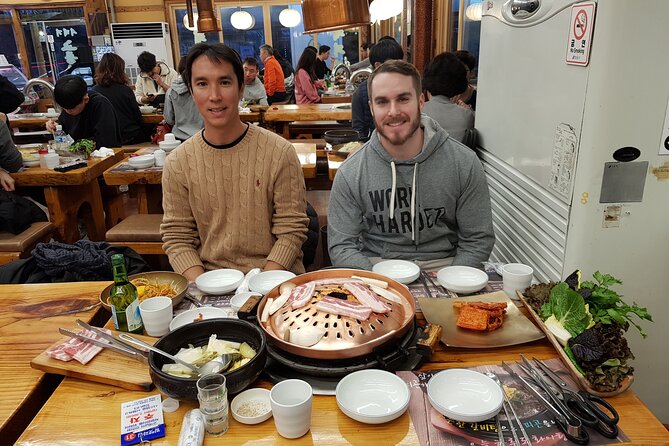
The meal plan is one of the strongest parts of the value. You receive three breakfasts, seven lunches, and six dinners. One earlier guest praised the fact that lunch and dinner were different each day, while another highlighted the chance to eat local Korean food rather than simply visit monuments. That matters here because food is not treated as an afterthought. It is part of how the route introduces each region.
The tradeoff is flexibility. Most meals are included, so you will have fewer chances to choose every restaurant yourself. Food and drink outside the stated meal plan, along with services beyond the itinerary, are extra.
More Nami Island trips from Seoul:
- Mt. Seorak+Nami Island+Garden of Morning Calm Day Trip from Seoul
★ 5.0 · 959 reviews - Seoul: Nami Island and Garden of Morning Calm opt Railbike
★ 4.6 · 907 reviews - From Seoul: Nami Island, K-drama Garden & Rail Bike Day Tour
★ 4.6 · 724 reviews
Seoul begins with palaces, tea, and street food
Your first day is a full introduction to old and modern Seoul. Gyeongbokgung Palace gets about 90 minutes, enough time to see the main royal setting and understand why it remains the city’s essential palace visit. It was the first and largest palace built during the Joseon Dynasty, when Seoul became the capital.
The National Folk Museum of Korea follows with a shorter 30-minute visit. It presents Korean culture and daily life from prehistoric times through the end of the Joseon period. The timing is brisk, so I would listen closely to the guide and focus on the displays that help explain what you see later in the trip.
Bukchon Hanok Village provides a change of pace. Its narrow lanes and traditional houses sit on a hill between central Seoul sights. You get an hour here, along with another hour at Baek In-je’s House, a preserved hanok and cultural site inside Bukchon. These stops help you see traditional architecture as part of a lived urban district, not only as a museum display.
Jogyesa Temple offers a 30-minute look at Korean Buddhist life. Its central location makes it easy to pair with Insadong, where you have an hour to browse galleries, handicraft shops, antique stores, restaurants, and traditional tea houses.
The Kyung-In Museum of Fine Art adds a quieter stop. You visit its hanok-style tea garden, taste traditional tea, and have time to sit in a setting recognized among Seoul’s notable traditional tea houses. After the hills and busy streets, this pause is useful.
Cheonggyecheon Stream gives you another view of downtown. The 11-kilometre waterway is a public recreation space created through a major urban renewal project. You get only 30 minutes, so expect a short walk rather than a full exploration.
The day finishes at Kwangjang Market, one of South Korea’s oldest traditional markets. With 90 minutes, you can see food stalls and try Korean street food. This is one of the most practical places to ask Bergen Park about ingredients, dining customs, and regional dishes you will encounter later.
The weakness of Day 1 is obvious: it is a lot. Nine stops leave little room for wandering. Still, the order makes sense, moving from royal Seoul to neighborhood houses, religious sites, crafts, a restored stream, and market food.
Nami Island and three very different garden stops
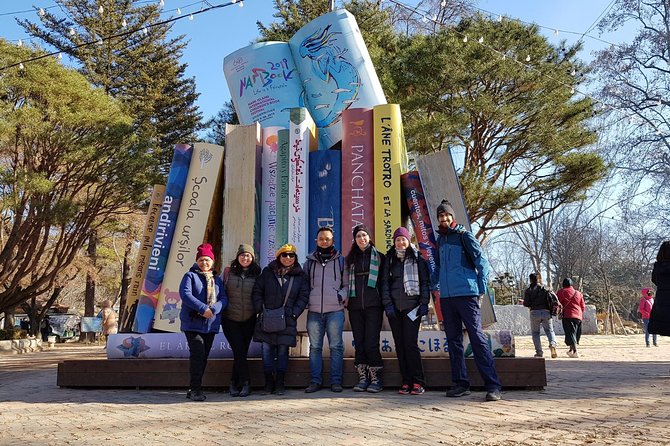
Day 2 leaves Seoul for Nami Island, Petite France, and the Garden of Morning Calm. Nami Island receives three hours, the longest visit of the day. Its tree-lined paths, woodland areas, riverside walks, and seasonal scenery make it the most relaxed outdoor stop on the itinerary.
Three hours gives you room to walk rather than simply take a photograph and leave. The island is also known as a popular attraction in every season, though the character of the visit will change with the time of year.
Petite France is a small French-themed cultural village in Korea. You get one hour for cultural programs, performances, and European-style displays. Some people will enjoy the playful contrast after Nami Island. Others may find it less essential than the Korean sites, so keep your expectations measured.
The Garden of Morning Calm closes the day with two hours. This 82-acre garden contains more than 20 themed sections, including a bonsai garden, herb garden, and Chinese garden. It gives you time to stroll and compare different planting styles rather than rushing through one formal garden.
This day is scenic and lighter on historical explanation. It works well as a break from city sightseeing, though it still involves three major attractions. Comfortable shoes will help.
The DMZ and Seoul from above
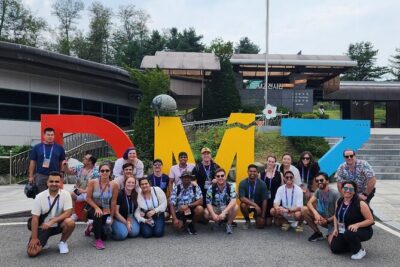
Day 3 brings a sharp change in mood. The DMZ was established in 1953 after the Korean War, and the visit includes key places such as Freedom Bridge, the Third Infiltration Tunnel, Imjingak Park, and Dora Observatory. You have three hours for this section.
The DMZ is not simply another viewpoint. It connects modern Korea with the division that still shapes the peninsula. The named stops offer several angles: a bridge linked to wartime separation, an underground military tunnel, a memorial and public park, and a lookout toward the border area.
Your guide is especially valuable here because the meaning of the sites is as important as what you see. The schedule allows a serious visit, but access and movement at sensitive sites can be controlled, so follow the day’s instructions closely.
Later, N Seoul Tower gives you two hours for broad views across Seoul. After the solemn tone of the DMZ, the tower shifts your attention back to the scale and energy of the capital. It is a good pairing: one stop explains why Korea is divided, while the other shows the vast city that grew beside that history.
More Gyeongju and Busan trips from Seoul:
- 5-Day Korea Golden route by K-shuttle Tour from Seoul Including Busan, Yeosu
★ 4.5 · 37 reviews - Andong Hahoe Village [UNESCO site] Premium Private Tour from Seoul
★ 5.0 · 24 reviews - Danyang Tour:Guinsa Temple & Bobaljae & Cheongpung Cable Car
★ 5.0 · 15 reviews - Small Group 7D Korea package Tour with Seoul Gyeongju Busan Jeju
★ 4.5 · 13 reviews
Andong offers Korea’s quieter traditions
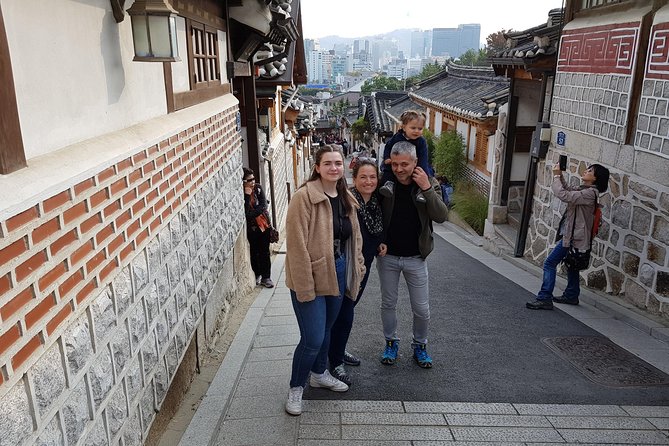
Day 4 is one of the most culturally distinctive parts of the tour. You leave the capital region for Buseoksa Temple, Andong Hahoe Folk Village, Buyongdae, and Byeongsan Seowon.
Buseoksa Temple was founded in 676 and is known for its setting, wooden architecture, and national treasures. The two-hour visit gives you enough time to appreciate the buildings rather than treating the temple as a quick photo stop.
Andong Hahoe Folk Village receives three hours. This traditional community preserves an older pattern of housing and daily life, with roots reaching back roughly 600 years to the early Joseon period. Compared with Seoul’s reconstructed or preserved urban pockets, Hahoe gives you a broader sense of a traditional village arrangement.
Buyongdae is a 64-metre cliff across the river from Hahoe. The scheduled visit lasts 30 minutes and provides a panoramic view over the village. The climb and footing may require care, so this is one place where the tour’s general note that most people can participate should not be confused with a guarantee that every walk will feel easy.
Byeongsan Seowon completes the day. A seowon was a private Confucian school and shrine, used for teaching, honoring scholars, and shaping local public life. The one-hour visit helps explain why education, scholarship, and Confucian ideals matter so much in Andong’s cultural identity.
This is a long transfer day, but it earns its place. Andong is where the tour feels less like a checklist of famous attractions and more like a look at older Korean customs and institutions.
Gyeongju presents Silla Korea in one concentrated day
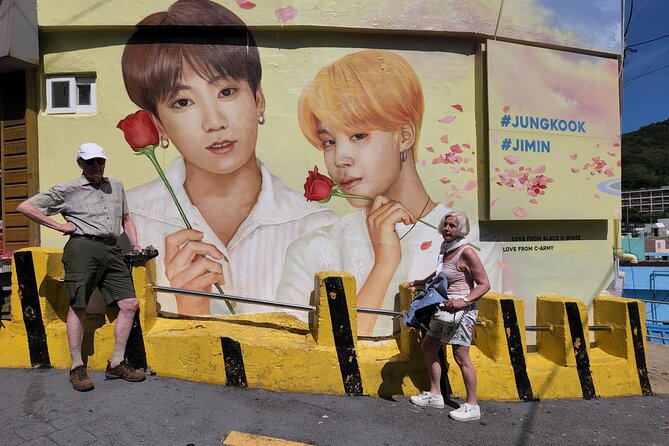
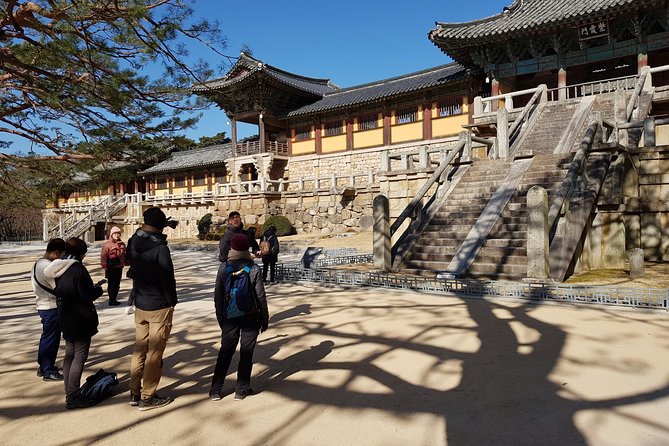
Day 5 is devoted to Gyeongju, the former center of the Silla Kingdom. Bulguksa Temple is first, with an hour to see one of Korea’s most important Buddhist sites. Built in 751, it is known for its architectural beauty and historical importance.
Seokguram follows for another hour. This stone Buddhist shrine sits on the slope of Mount Tohamsan and was also created in the eighth century. The central hall contains a large granite Buddha statue. Together, Bulguksa and Seokguram show how Silla builders joined religious belief, engineering, and artistic skill.
The afternoon moves into Gyeongju’s historic center. Donggung Palace and Wolji Pond receives 30 minutes. The former secondary palace served the crown prince and hosted important banquets and state events.
Cheomseongdae Observatory is another short stop. This seventh-century astronomical observatory is a national treasure, built in a hollow cylindrical form. With only 30 minutes, you will see it quickly, but it adds a useful scientific dimension to a day otherwise centered on temples and royal remains.
Daereungwon Tomb Complex receives an hour. Its large burial mounds belonged to Silla kings and nobles, and the complex includes 26 major tombs. Cheonmachong and Hwangnamdaechong are the best-known examples, with excavated treasures that help show the wealth and power of the Silla court.
Gyeongju is one of the tour’s strongest stops, but the timing is tight. Five significant sites in one day can feel like a history course conducted at walking speed. I would pay attention to the guide’s explanations, since the broader story linking each place is what makes the day rewarding.
Busan combines temples, coast, and wartime memory
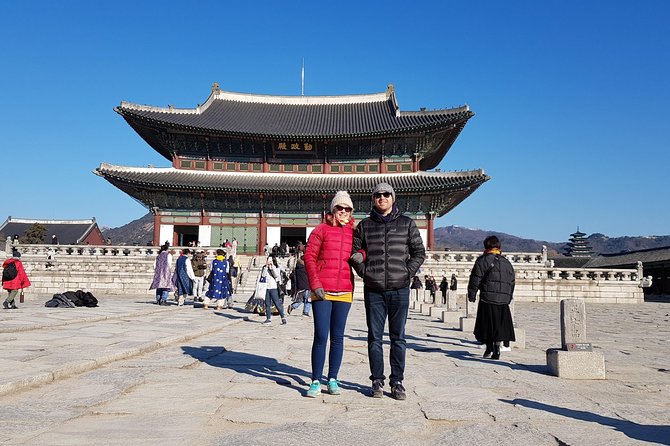
Day 6 begins at Haedong Yonggungsa, one of Korea’s unusual temples because it sits beside the sea. Most Korean temples are inland or in mountain settings, so the coastal location gives this visit a different feel from Bulguksa and Buseoksa.
Nurimaru APEC House follows. It served as the meeting hall for the 13th APEC summit in 2005. The name combines words meaning world and summit, and the site connects Busan’s modern international role with its coastal setting.
Dongbaekseom, a former island at the western end of Haeundae Beach, takes 30 minutes. Its name refers to camellias, and the stop provides a short walk near one of Busan’s best-known seaside areas.
Jagalchi Market is a more everyday Busan experience. It is the country’s largest fish market, with raw fish sold on the first floor and restaurants where it can be prepared. You have an hour here, and the included meal plan may shape how you use it. Ask Bergen Park what is arranged and what, if anything, you may wish to purchase separately.
The UN Memorial Cemetery in Korea gives the day a quieter close. It honors UN soldiers from 16 countries and UN support personnel from five countries who died during the Korean War. The one-hour visit adds personal weight to the conflict discussed at the DMZ.
Busan’s sixth day is well balanced, but it covers very different subjects. You move from Buddhism to international diplomacy, coastal walking, seafood commerce, and war remembrance. That variety is a strength, though the schedule leaves limited time for spontaneous beach or market wandering.
Gamcheon Culture Village finishes the route
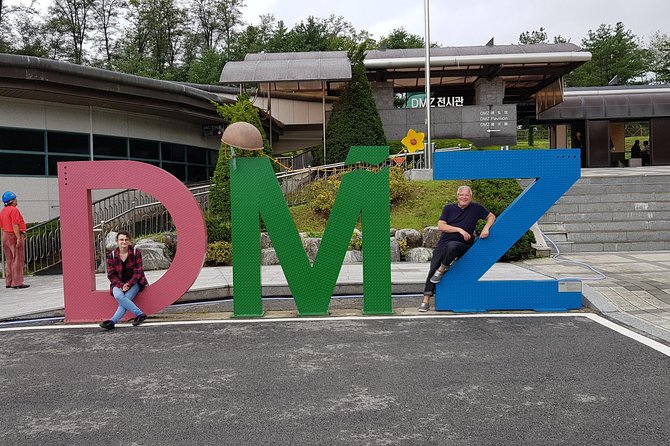
The final stop is Gamcheon Culture Village, known for homes built in stair-step fashion on the hills above the coast. Its many narrow alleys, bright homes, and hillside arrangement create a very different view of Busan from Haeundae and the seafood market.
The supplied schedule does not state how long you spend here, so confirm the final timing when you book. You should expect a visit focused on walking, views, and the shape of the neighborhood rather than a formal museum program.
Gamcheon is a fitting final image because it brings you back to ordinary urban life. After palaces, temples, tombs, and national memorials, you see how a dense hillside community became one of Busan’s best-known cultural areas.
The private format and daily pace
The private arrangement is the core reason to choose this trip. Only your group participates, and the air-conditioned vehicle handles the long route. Hotel pickup and drop-off in Seoul are included, with a 9 a.m. start time.
You still need to be ready for full days. Stops range from 30 minutes to three hours, and the itinerary regularly combines several sites. The vehicle makes the route possible, but it does not remove the walking involved at palaces, villages, temples, gardens, markets, and hillside viewpoints.
Bergen Park is the named guide associated with the tour. The experience includes an official licensed English-speaking guide, and the strongest practical advantage is having one person connect the food, history, and transport schedule across seven days. One guest specifically praised the care shown in the private vehicle and hotel arrangements, while another valued the guide’s role in introducing local food.
The package works best for couples, families, or a small group that wants a private trip without planning every transfer. It is less suited to someone who prefers one base, late mornings, or long unstructured afternoons.
Should you book this Korea tour?
Book it if you have only a week and want the widest possible introduction to Korea. The route covers Seoul, the DMZ, Nami Island, Andong, Gyeongju, and Busan, with important admission fees, transport, hotels in three cities, and most meals already handled.
The price makes sense for a group that values a private car, a licensed guide, and regional meals. It makes less sense if you are comfortable arranging Korea’s transport yourself or want control over every restaurant and hotel.
My main advice is to treat this as a highlights tour with real cultural depth, not a slow vacation. If you can manage the pace, the combination of royal Seoul, traditional Andong, ancient Gyeongju, and coastal Busan gives you a broad and memorable first look at Korea. The three five-star ratings fit the tour’s strongest qualities: personal service, varied Korean food, and a route that goes well beyond the capital.
FAQ
How long does the tour last?
The tour lasts approximately seven days and begins at 9 a.m.
Is this a private tour?
Yes. Only your group participates in the activity.
What meals are included?
The package includes 16 meals: three breakfasts, seven lunches, and six dinners.
Is transportation included?
Yes. Private transportation in an air-conditioned vehicle is included.
Are admission fees included?
Yes. Admission fees for the listed attractions are included.
Where are the included hotel nights?
The package includes three nights of accommodation in Andong, Gyeongju, and Busan, in 3-star or 4-star hotels. Rooms are arranged for two people, with a single room provided when required for an odd-numbered group.
Does the tour include a guide?
Yes. A professional English-speaking guide with an official tour guide license is included. Bergen Park is the named guide associated with the experience.
Can I cancel for a full refund?
You can receive a full refund if you cancel at least three full days before the experience start time. Cancellations or changes made less than three full days before the start time are not accepted for a refund.
More DMZ tours in Seoul
- Best DMZ Tour Korea from Seoul (Red Suspension Bridge Optional)
★ 5.0 · 41,422 reviews - DMZ Tour: 3rd Tunnel, Option(Suspension Bridge, Boat) from Seoul
★ 5.0 · 21,373 reviews - DMZ tour south Korea from Seoul (NK experience hall, defector)
★ 5.0 · 20,599 reviews - Seoul: DMZ Tour with Optional Suspension Bridge
★ 4.8 · 5,277 reviews
Just added around Seoul
- Your Personal Seoul Photographer!★ 4.1 · 15 reviews
- From Seoul: Hwacheon Ice Fishing and Lighting Festival Tour★ 4.5 · 4 reviews
- You’re Invited to Our Home in Seoul: The Only Cooking Class!★ 5.0 · 8 reviews
- Seoul: Gangneung BTS K-Pop & K-Drama Filming Locations Tour★ 4.6 · 14 reviews
- Unique Native Experience : Han River Picnic, Board game, BBQ★ 5.0 · 3 reviews
- 2-Hour Private Kayaking and Paddleboarding Experience in Hanriver★ 5.0 · 3 reviews
- Yun Korean Cooking Class in Seoul★ 5.0 · 6 reviews
- Day Trip to Yongin Daejanggeum and Korean Folk Village from Seoul★ 4.0 · 9 reviews
Seoul DMZ Tours, compared.
Best DMZ Tour Korea from Seoul (Red Suspension Bridge Optional)
Read our review →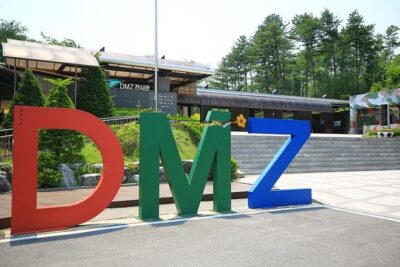
DMZ Tour: 3rd Tunnel, Option(Suspension Bridge, Boat) from Seoul
Read our review →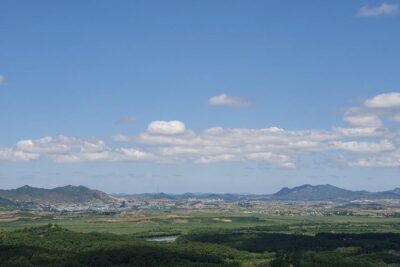
DMZ tour south Korea from Seoul (NK experience hall, defector)
Read our review →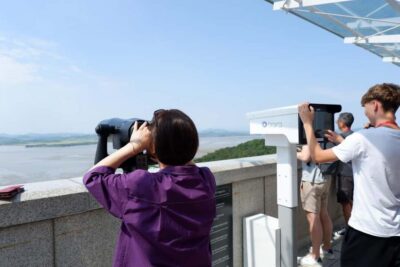

Signature DMZ Tour: Exclusive Defector Talk & Suspension Bridge
Read our review →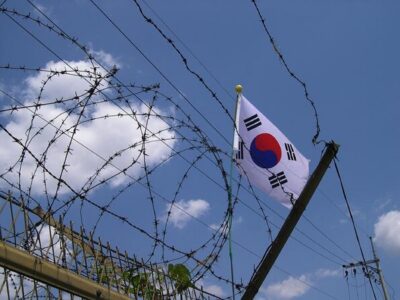
Thrilling Korean DMZ 3rd Tunnel Tour from Seoul + Red Bridge Rush
Read our review →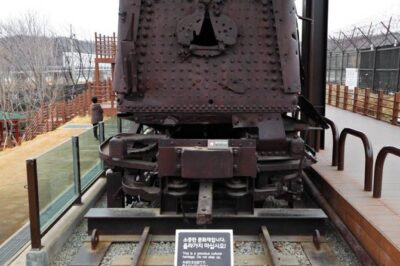
DMZ Past and Present: Korean Demilitarized Zone Tour from Seoul
Read our review →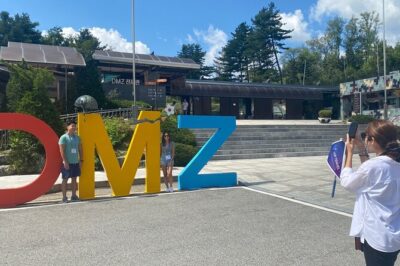
Ultimate Korea DMZ Tour from Seoul (Gondola & Suspension Bridge)
Read our review →Browse the lists this tour appears in