
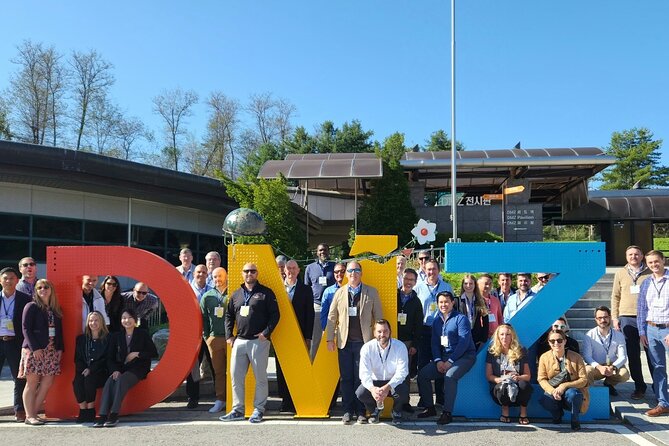
Reviewed · SEOUL DMZ TOURS
Signature DMZ Tour: Exclusive Defector Talk & Suspension Bridge
The most affecting part of this day is not the barbed wire or military checkpoints. It is the North Korean defector talk, where a personal account gives human meaning to the political division you are seeing. Guides such as Han Solo, Jackie, SP Hong, Molly, and JJ have been praised for making the history clear, lively, and easy to follow.
I like the Third Tunnel because it turns a large political story into a physical experience. I also like the Dora Observatory, where you can look across the border toward North Korea, including Gaeseong and the so-called Propaganda Village. The main caution is simple: the day can feel rushed, and the tunnel is hard work.
Key points to know before booking
- North Korean defector talk: Hear personal testimony and ask questions during the journey.
- Third Tunnel walk: Descend into a former infiltration tunnel, then climb back up a steep passage.
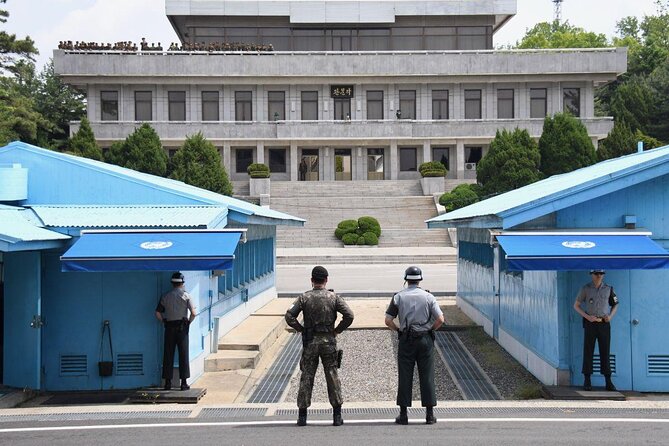
- Dora Observatory: Look toward North Korea, though military rules restrict photography.
- Optional suspension bridge: Gamaksan Chulleong Bridge adds a scenic stop, but weather and minimum numbers can affect it.
- Licensed English guide: Guides including Han Solo, Jackie, SP Hong, and Molly are known for clear explanations and good group management.
- Full morning to afternoon outing: The tour starts at 7:30 a.m. and usually lasts seven to nine hours.
Why the defector talk gives the day a human face
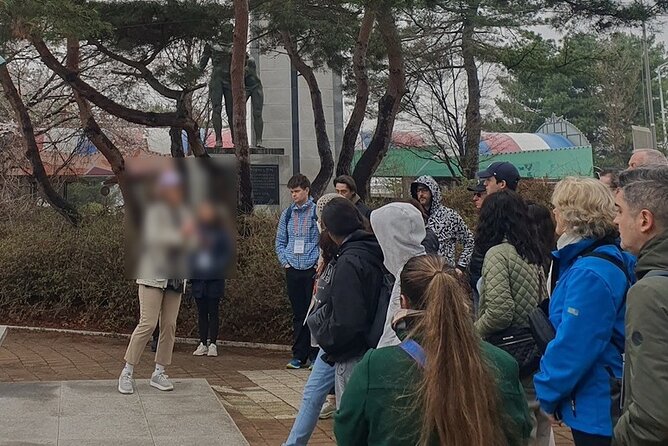
A visit to the DMZ can become a parade of viewpoints, tunnels, and warning signs. The defector session helps prevent that. You hear about life in North Korea, the decision to leave, and the escape itself. The format can be an interview or question-and-answer session, often held on the bus while you travel north.
This is the feature I would weigh most heavily when comparing DMZ tours. The military sites are tightly controlled, so many companies visit the same core places. A personal account gives this tour something more than transport and sightseeing.
The talk is also a reminder to listen with care. The subject is serious, and the experience is not entertainment in the usual sense. You may have a chance to ask questions, but the timing and speaker can vary.
Guides make a big difference here. Han Solo is praised for mixing facts with humor, while Jackie has earned the nickname The Storyteller for his lively explanations. SP Hong is often singled out for keeping the group organized while adding historical detail. The guide you receive is not guaranteed, but the tour includes an English guide with a DMZ license.
More DMZ tours in Seoul:
- Best DMZ Tour Korea from Seoul (Red Suspension Bridge Optional)
★ 5.0 · 41,422 reviews - DMZ Tour: 3rd Tunnel, Option(Suspension Bridge, Boat) from Seoul
★ 5.0 · 21,373 reviews - DMZ tour south Korea from Seoul (NK experience hall, defector)
★ 5.0 · 20,599 reviews
Leaving Seoul for Imjingak and the Freedom Bridge
You meet at 92 Sejong-daero in central Seoul at 7:30 a.m. The exact meeting arrangement matters because late arrival can mean missing the departure. No changes or refunds are offered if you arrive late, regardless of the reason.
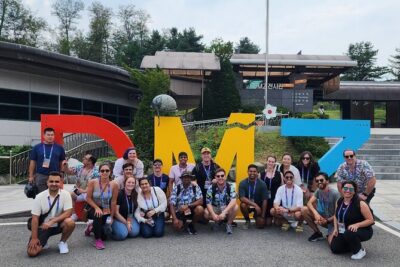
The air-conditioned vehicle takes about an hour to reach the northern part of the city and the Imjingak area. Group size can reach 90 people, although some departures use a bus of about 40 passengers. That means this is not a private or small-group outing. You gain a lower price, but you should expect a larger group and some waiting.
Imjingak Pyeonghwa-Nuri Park is an unusual starting point. It combines memorials and war reminders with a theme-park feel, rides, shops, and open space. The contrast can seem odd at first, but it reflects the way South Korea has turned the border area into a place for remembrance, education, and public discussion.
The Freedom Bridge is the important stop here. In 1953, about 13,000 prisoners of war crossed it toward freedom. Standing near the bridge gives you a direct link to the Korean War armistice and the families separated by the conflict.
You get about an hour in the Imjingak area, though the exact order and amount of free time can change. Do not expect to spend the whole morning exploring every exhibit. The focus is on getting you through the main sights before the controlled DMZ visits.
Entering the controlled DMZ area
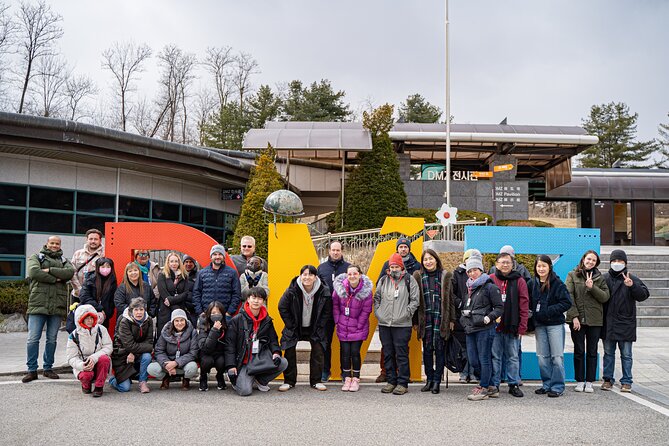
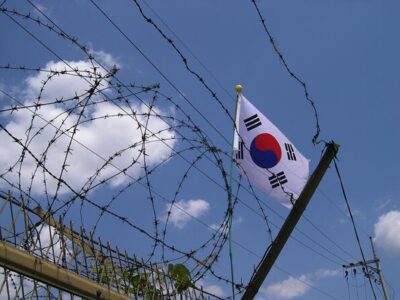
The Korean Demilitarized Zone is not a normal national park. It is a military-controlled strip separating North and South Korea, and access can change with little warning. Military training, official events, weather, or ticket limits can force the operator to alter the route.
That uncertainty is part of the experience, but it also creates the tour’s biggest practical weakness. A scheduled DMZ visit is not a promise that every listed stop will operate that day. If the area closes, an alternative route may include Tomorrow’s Whistle, Bunker Beat 131, Odusan Unification Tower, or the War Memorial of Korea. There is no refund when a sudden closure requires a substitute.
At checkpoints, you must show your current original passport. A copy is not accepted. Keep it easy to reach, and do not leave it in your hotel. One person who forgot theirs was helped by the guide, but you should not count on that outcome.
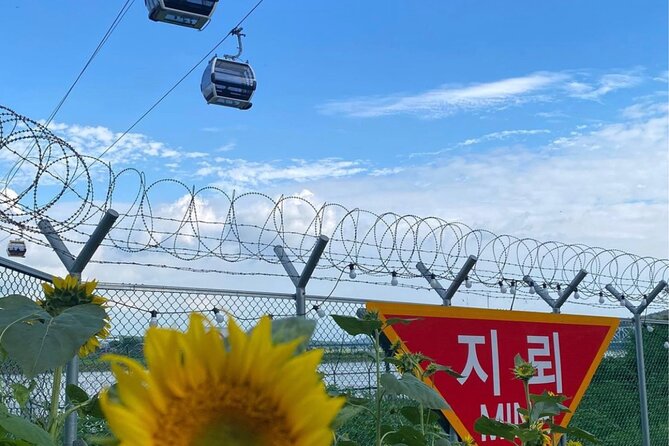
The border rules are strict. Photography may be banned in the Third Tunnel and from the observatory viewing area. That can be frustrating if you are used to recording every part of a day out, but it is a clear reminder that this is still an active military zone, not simply a historical attraction.
The Third Tunnel turns history into a workout
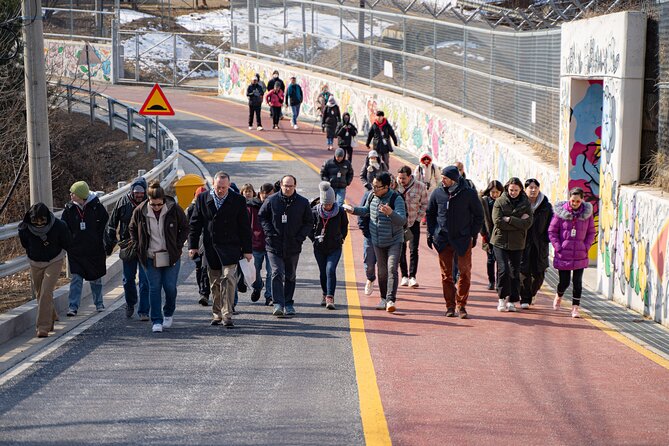
The Third Infiltration Tunnel is usually the day’s most physical stop. North Korea built the tunnel, which extends about 435 meters into South Korean territory. It was discovered in 1978 and is presented as a possible military route for an attack southward.
You first descend into the tunnel and then walk along the passage. The return climb is the hard part. The route is steep, enclosed, and physically demanding, with some tight sections. Comfortable shoes are required, and you should think twice if you have a heart condition or another serious medical issue.
At the far end, a barrier prevents further progress. You will not walk freely through the whole tunnel. The point is to see the scale and position of the passage, then understand how close it came to the South Korean side.
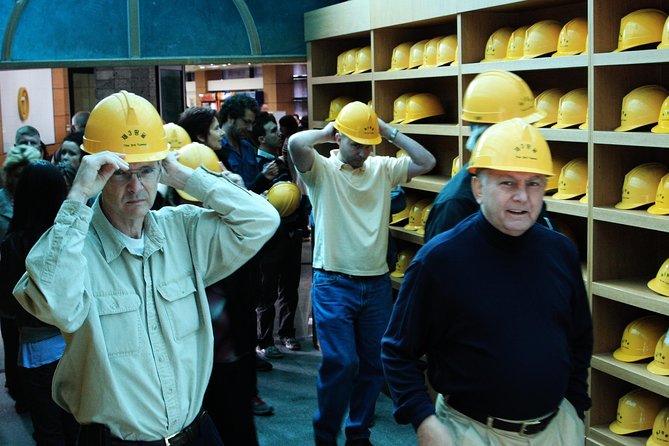
A documentary and displays help explain the discovery and military significance. The monorail may not be operating, so be prepared to walk the full route. This is not a gentle museum visit. If you are fit enough for the climb, the effort makes the site far more memorable than seeing a diagram in a gallery.
No photography is allowed inside. Bring your attention instead of focusing on your phone. The tunnel is dark, narrow, and more impressive as a physical space than as a photo subject.
A different kind of day out around Seoul:
- Seoul: DMZ Tour with Optional Suspension Bridge
★ 4.8 · 5,277 reviews - Thrilling Korean DMZ 3rd Tunnel Tour from Seoul + Red Bridge Rush
★ 5.0 · 3,097 reviews - DMZ Past and Present: Korean Demilitarized Zone Tour from Seoul
★ 5.0 · 2,481 reviews - Ultimate Korea DMZ Tour from Seoul (Gondola & Suspension Bridge)
★ 5.0 · 2,396 reviews
Dora Observatory and the view toward North Korea
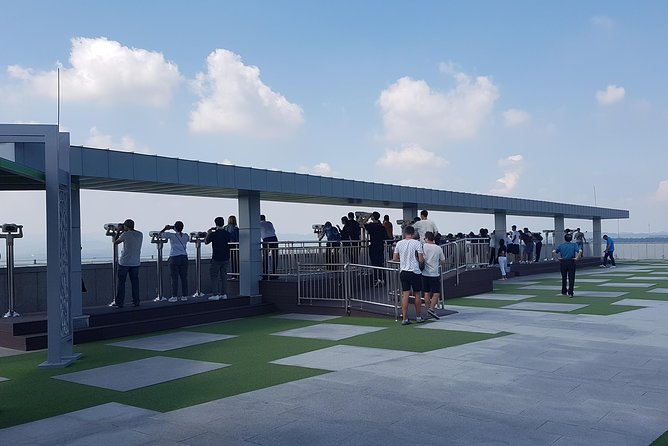
At Dora Observatory, you look across the border toward North Korea. On a clear day, the view can include Gaeseong City, the Gaeseong Industrial Complex, and a North Korean border village often called Propaganda Village.
The viewing area gives you a rare chance to see the two countries in the same frame. The experience is less about dramatic scenery than about scale and distance. You may find yourself looking at farmland, buildings, and hills while knowing that the political boundary is heavily guarded.
The observatory is also where expectations need adjusting. You may not get a crisp, close view, and photography can be restricted. Follow instructions from the guide and military staff. The rules are not optional, and the group may have limited time at the railing.
Lunch may be available at a cafe near the observatory, but it is not included. Food choices can be limited, and one common stop has been described as offering basic items such as a hot dog or ham sandwich. Bring money and keep expectations modest. The setting is more memorable than the meal, since you may be eating while looking toward one of the world’s most tightly controlled countries.
What the optional Gamaksan bridge adds
The Gamaksan Chulleong Bridge is an optional add-on rather than a guaranteed part of every departure. At about 220 meters, it crosses the Silmari Valley and offers a different mood from the solemn DMZ sites. You trade military history for a walk, open views, and a little height.
The bridge section takes about an hour when it operates. It can be a good choice if you want more scenery and physical activity after the tunnel. It is less useful if your main goal is to spend every possible minute on border history.
The operator needs a minimum number of people to run this option. Weather can also close the bridge. In that case, you may spend extra time transferring or following a revised route without receiving the attraction you expected. One poor experience involved a weather closure and a long detour, so ask at the meeting point whether the bridge is confirmed that day.
There have also been departures where people who chose the bridge were moved between buses or joined a different route. Language coordination was not always smooth. If the bridge is the main reason you are booking, confirm how the English guiding will work before you pay for the add-on.
The return to Seoul is not always a straight run
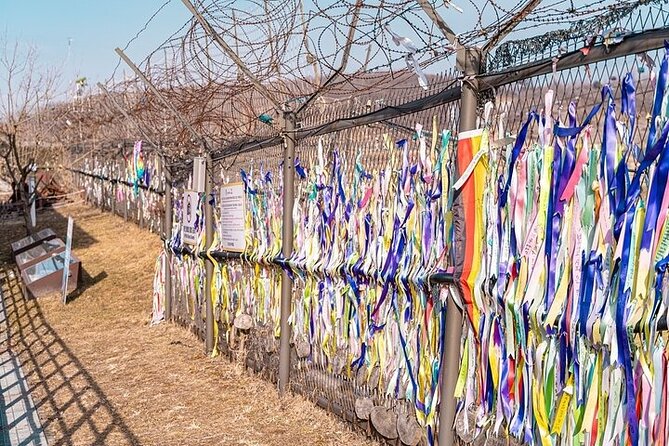
The planned end point is back at the original Seoul meeting point, with the tour often finishing around mid-afternoon. Traffic and military schedules can stretch the day beyond the estimate, so avoid booking a tight evening reservation.
A stop in the Imjingak area may be passed again on the return. Some departures have also included an unadvertised or poorly explained visit to a jade, jewelry, or ginseng shopping center. This is the clearest value concern in the whole outing. A short shopping stop may not bother you, but it can feel like wasted time after a long day, especially if you were told the bus was returning directly to Seoul.
In some cases, you may be able to leave the vehicle at the shopping stop if that location suits your plans. Do not assume this is available. Ask the guide before leaving Imjingak, and keep your afternoon flexible.
The tour provider has a strong overall rating of 4.9 from 4,459 ratings, with 98 percent recommending it. That suggests the main DMZ program works well for most people, especially when the guide is strong. The low ratings point to a real issue, though: late departures, ticket limits, poor coordination between buses, and unexpected commercial stops can undermine the day.
Is $27 good value for a DMZ day?
At $27 per person, the price is low for a seven to nine-hour outing that includes transportation, a licensed guide, admission fees, the Third Tunnel, Dora Observatory, and the defector talk. You are paying for access and logistics that would be difficult to arrange alone.
The value is especially good if you want a first look at the DMZ without hiring a private vehicle. You get the major sites in one day and avoid figuring out military access, transport connections, and entry procedures.
The tradeoff is scale. This can be a large-group tour with fixed schedules, shared buses, and limited time at each stop. The low price does not buy flexibility. It also does not include lunch or personal spending.
I would treat the $27 as a strong base price, not a promise of a polished small-group experience. The guide can make the difference between a thoughtful day and a rushed circuit. The defector talk adds real value, while the optional bridge is worthwhile only if the logistics are confirmed.
Who should book this DMZ experience?
You should book it if you want the major South Korean DMZ sights, a personal account from a North Korean defector, and a guide who can explain the Korean War and present-day division in plain English.
It suits first-time visitors to Seoul, history-minded adults, and anyone willing to give up most of a day for a serious subject. Children can join, but they must be accompanied by an adult. The tunnel is not suitable for everyone, and the walking should be taken seriously.
You should look elsewhere if you need a private group, a guaranteed bridge visit, a relaxed lunch, or a strict return time. You may also be disappointed if photography is central to your experience.
My advice is to book the core DMZ tour for the defector talk, Third Tunnel, and Dora Observatory. Add the suspension bridge only if you are comfortable with a possible change caused by weather or minimum numbers. Bring your passport, wear sturdy shoes, carry lunch money, and arrive early. Those small preparations protect the value of an otherwise memorable and unusually direct look at Korea’s divided present.
FAQ
How long does the DMZ tour last?
The tour takes approximately seven to nine hours. It begins at 7:30 a.m., and the finish time can change because of traffic, military schedules, weather, and site conditions.
Where does the tour start and end?
You meet at 92 Sejong-daero in Jung District, Seoul. The activity is scheduled to end back at the meeting point, although some departures may offer a stop in Seoul where you can leave the bus.
Is lunch included?
No. Lunch and personal expenses are not included. Bring money for food, and expect limited options at some stops.
Do I need my passport?
Yes. You must bring your current, valid original passport on the day of the tour. A photocopy is not accepted.
Is the Third Tunnel difficult to walk?
Yes. The tunnel includes a steep descent and climb, tight sections, and a demanding return walk. Comfortable shoes are required, and the visit is not recommended for people with heart conditions or other serious medical problems.
Can I take photographs inside the tunnel or at Dora Observatory?
Photography is restricted in the Third Tunnel and on the observatory viewing deck. Follow the instructions given by military personnel and your guide.
What happens if the DMZ closes?
The tour may be replaced with an alternative visit, such as Tomorrow’s Whistle, Bunker Beat 131, Odusan Unification Tower, or the War Memorial of Korea. The DMZ can close without notice, and such changes do not qualify for a refund.
Just added around Seoul
- Your Personal Seoul Photographer!★ 4.1 · 15 reviews
- From Seoul: Hwacheon Ice Fishing and Lighting Festival Tour★ 4.5 · 4 reviews
- You’re Invited to Our Home in Seoul: The Only Cooking Class!★ 5.0 · 8 reviews
- Seoul: Gangneung BTS K-Pop & K-Drama Filming Locations Tour★ 4.6 · 14 reviews
- Unique Native Experience : Han River Picnic, Board game, BBQ★ 5.0 · 3 reviews
- Yun Korean Cooking Class in Seoul★ 5.0 · 6 reviews
- 2-Hour Private Kayaking and Paddleboarding Experience in Hanriver★ 5.0 · 3 reviews
- Day Trip to Yongin Daejanggeum and Korean Folk Village from Seoul★ 4.0 · 9 reviews
Seoul DMZ Tours, compared.
Best DMZ Tour Korea from Seoul (Red Suspension Bridge Optional)
Read our review →
DMZ Tour: 3rd Tunnel, Option(Suspension Bridge, Boat) from Seoul
Read our review →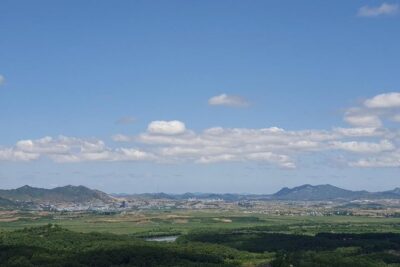
DMZ tour south Korea from Seoul (NK experience hall, defector)
Read our review →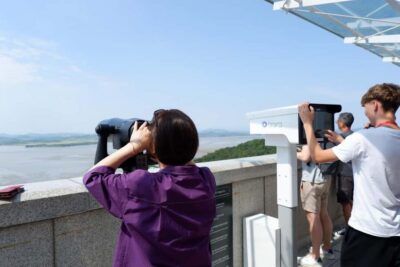
Thrilling Korean DMZ 3rd Tunnel Tour from Seoul + Red Bridge Rush
Read our review →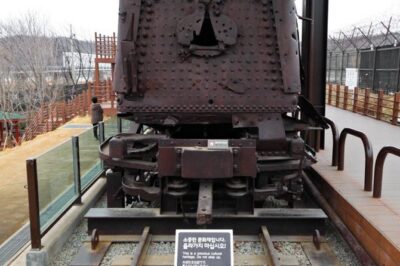
DMZ Past and Present: Korean Demilitarized Zone Tour from Seoul
Read our review →
Ultimate Korea DMZ Tour from Seoul (Gondola & Suspension Bridge)
Read our review →
DMZ; NK Defector, 3rd Tunnel, Suspension Bridge,Hotel pickup
Read our review →Browse the lists this tour appears in