
Reviewed · SEOUL DMZ TOURS
DMZ tour south Korea from Seoul (NK experience hall, defector)
The most striking part of this tour is the short distance between ordinary South Korea and one of the world’s most tense borders. In a single day, you can walk through the 3rd Infiltration Tunnel, peer toward North Korea from Dora Observatory, and hear a defector explain life on the other side.
I like the strong historical context provided by guides such as Katie, Sadie, Felicity, and Yoon. I also like the chance to add the North Korean defector session, which gives the border story a human voice rather than leaving you with maps and military facts alone.
The main drawback is that this is a tightly managed group outing, with up to 40 people and several fixed stops. The tunnel requires a steep walk, the views depend on weather, and military conditions can change the route without a refund.
Key points to know before booking
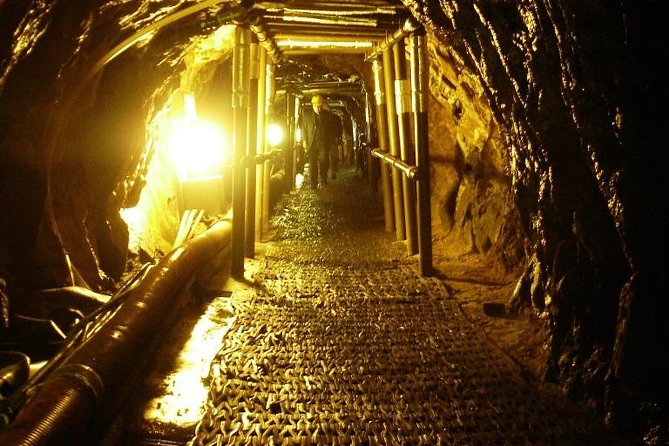
- The 3rd Infiltration Tunnel is physical: Expect a steep, narrow walk and a warm climb back up.
- The defector talk adds personal context: The NK Experience Hall and live Q&A can be the most memorable part of the day.
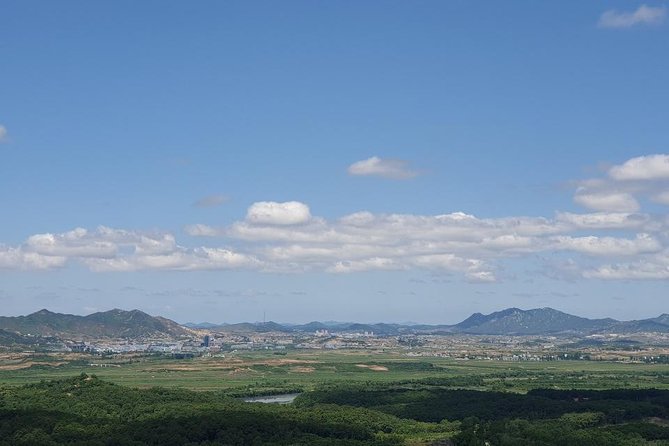
- Dora Observatory offers a real border view: Binoculars let you look toward North Korea and the model village of Kijongdong.
- The half-day tour returns to City Hall: The standard route lasts about seven hours, with a full-day option adding a suspension bridge.
- Your passport is required: You do not need to send a copy before the tour.
- The price is low for a full day out: At about $26.04 per person, transport, guide service, and admissions are included, but food and the tunnel tram are not.
Why this DMZ trip is worth your Seoul time
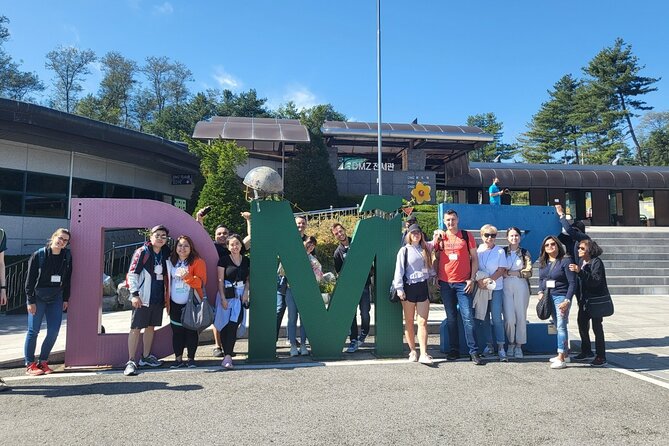
The DMZ is not a normal sightseeing stop. It is a heavily controlled border zone shaped by the Korean War, the 1953 armistice, and the continuing separation of North and South Korea. You do not simply arrive, take photos, and wander around. Your movement is directed, and parts of the route can close with little warning.
That controlled setting is part of the point. You are seeing a place where history is still active. The border is not an old battlefield preserved behind glass. It remains a political and military dividing line.
I like this tour because it makes that complicated story easier to follow. The guide gives background before each stop, then explains what you are looking at once you arrive. Guides including Katie, Chloe, Sadie, Felicity, Yeoni, and Yoon have been praised for clear English, humor, good pacing, and the ability to answer questions without turning the day into a lecture.
The tour is also good value. For around $26.04, you get a coach ride north from Seoul, several admissions, and a guide for roughly seven hours. A private visit would cost far more and would not necessarily give you the same access to the designated DMZ sites.
More DMZ tours in Seoul:
- Best DMZ Tour Korea from Seoul (Red Suspension Bridge Optional)
★ 5.0 · 41,422 reviews - DMZ Tour: 3rd Tunnel, Option(Suspension Bridge, Boat) from Seoul
★ 5.0 · 21,373 reviews - Seoul: DMZ Tour with Optional Suspension Bridge
★ 4.8 · 5,277 reviews
The ride north from Seoul
The day begins with pickup from a centrally located Seoul hotel, depending on the booking arrangement, or with a meeting at City Hall. The drive to the DMZ takes about 50 minutes to an hour, though traffic can affect the timing.
This first stretch matters because your guide uses it to explain the Korean War, the armistice, and the rules surrounding the border area. That advance briefing makes each later stop easier to understand. Sadie, for example, has been especially praised for sending clear messages before departure, including a photo of the bus and its license plate when meeting arrangements were crowded.
Confirm your exact pickup time with the local operator. The supplied details also state that Incheon pickup is not available. If you are staying far outside central Seoul, City Hall may be the simpler meeting point.
The vehicle is an air-conditioned coach, and the maximum group size is 40 people. That keeps the cost down, but it also means you need to listen carefully for meeting times. Good guides make a point of telling you when to return to the bus, and you should still set your own reminder.
Imjingak Park and the Freedom Bridge
Imjingak Park sits beside the Imjin River and introduces the human cost of the conflict. You can see artillery and other war artifacts, then continue toward the Freedom Bridge.
The bridge has strong symbolic weight. Nearly 13,000 Korean prisoners of war crossed it after the fighting ended. It is not simply a bridge with a good photo angle. It represents families, soldiers, and a country still divided after the ceasefire.
You get about 30 minutes here, so expect a compact visit rather than a long independent walk. This is one of the places where the guide’s explanation matters most. Without context, the artillery and bridge can seem like isolated sights. With context, they connect the war to the separation that remains today.
The NK Experience Hall and DMZ exhibition
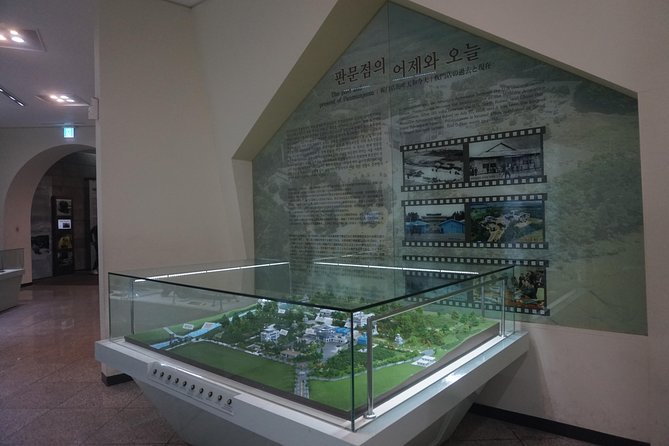
The DMZ Theater and Exhibition Hall provides a useful indoor break and a visual introduction to the border. Photographs, displays, and war artifacts help explain the military zone before you move on to the more physical parts of the day.
The supplied tour information also highlights an NK Experience Hall and a session with a North Korean defector. Check the exact version of your booking, since tour routes and included activities can vary. The defector portion is an optional addition in some descriptions, but it is clearly one of the features most worth choosing when available.
A personal account can explain details that maps cannot. The session helps you think about the difference between daily life in North and South Korea, as well as the difficult process of leaving the North. It is a group Q&A, so the tone may depend on the speaker and the questions asked, but it gives the day a human focus.
I would add this option if you want more than military history. The observatory shows the border from a distance. The defector talk helps you understand the people affected by it.
A different kind of day out around Seoul:
- Signature DMZ Tour: Exclusive Defector Talk & Suspension Bridge
★ 5.0 · 4,459 reviews - Thrilling Korean DMZ 3rd Tunnel Tour from Seoul + Red Bridge Rush
★ 5.0 · 3,097 reviews - DMZ Past and Present: Korean Demilitarized Zone Tour from Seoul
★ 5.0 · 2,481 reviews - Ultimate Korea DMZ Tour from Seoul (Gondola & Suspension Bridge)
★ 5.0 · 2,396 reviews
Walking through the 3rd Infiltration Tunnel
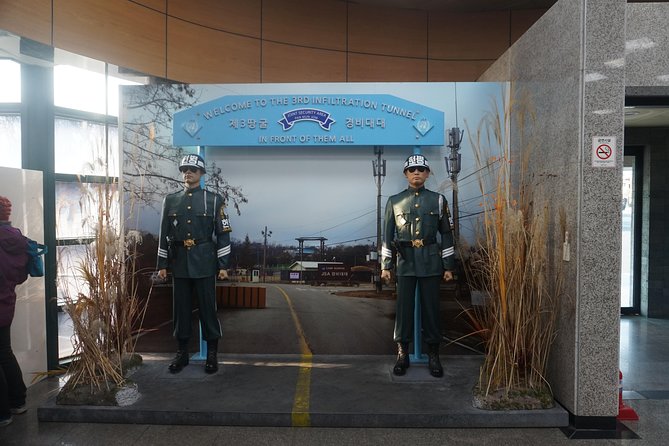
The 3rd Infiltration Tunnel is the most demanding stop. South Korea says North Korea built it as a route for a military attack, and it was discovered in 1978. The tunnel was later blocked near the Military Demarcation Line.
You walk through a section beneath the border, then turn around at the restricted point. The route is steep and narrow, and the return climb is harder than the walk down. One useful tip is to leave bulky coats in a locker before entering, since the tunnel can feel warm and the climb back up takes effort.
Comfortable shoes are essential. The tour information calls for a moderate amount of walking, but the tunnel is the part that makes this advice especially important. Anyone with limited mobility should consider the steep grade carefully and speak with the operator before booking.
There is no grand reveal at the end of the tunnel. The reward is the sense of scale and purpose. You are walking through a passage built for a possible invasion, not visiting a polished museum attraction. If you prefer easy sightseeing, this may be the least comfortable part of the tour. If you want a physical connection to the border story, it is one of the most effective.
Dora Observatory and the view into North Korea
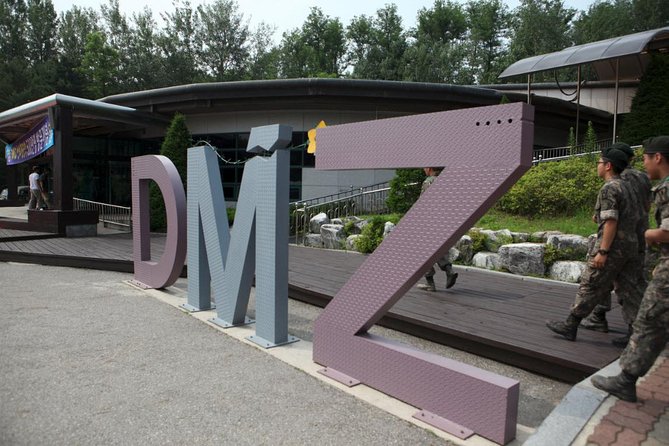
At Dora Observatory, provided binoculars let you look across the border. On a clear day, you may see North Korean territory and Kijongdong, a model village often described as a carefully presented symbol of the North Korean state.
The visit lasts about 20 minutes, so do not expect a long, quiet period at the windows. The view depends heavily on weather and visibility. On a clear day, you might see buildings, fields, roads, or people. On a hazy day, the experience is more about understanding the geography than taking a sharp photograph.
Your guide explains what you are seeing and describes the village’s unusual role in the border story. This is where the tour can feel surreal: an ordinary-looking rural view sits on the other side of a heavily guarded dividing line.
Bring realistic expectations. You are not guaranteed a dramatic sighting of North Korean residents, and photography rules may apply. Still, simply looking across the border makes the political separation feel much more concrete.
Unification Village and Dorasan Station

The route continues through or near Unification Village, a small farming community associated with soybean milk, traditional soy sauce, and corn products. This stop offers a glimpse of civilian life near the DMZ, though it is brief and not designed as a long village visit.
Dorasan Station adds another layer. The station once represented the hope of a rail connection between North and South Korea. Today, it carries more symbolic than practical importance. Your guide explains that contrast as you look around the site.
I find these stops useful because they prevent the tour from becoming only about soldiers and fences. The DMZ also involves farmers, transport links, families, and the idea of reunification. The mood can shift quickly from military tension to quiet rural life.
Choosing the half-day or full-day version
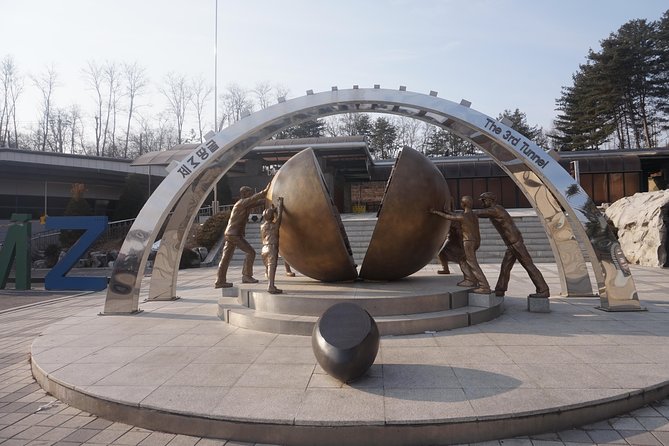
The standard visit lasts about seven hours and finishes at City Hall Station after a stop at a ginseng center. The half-day route includes the main DMZ sights and returns you to Seoul without adding a second major attraction.
The full-day option adds a suspension bridge stop, with the exact attraction described as either Gamaksan Chulleong Bridge or the Majang Lake Suspension Bridge. This portion usually adds about an hour at the bridge or lake area, depending on the selected option.
Choose the half-day version if you want the DMZ experience without giving up the rest of your Seoul day. Choose the full-day route if you prefer a slower outing and like the idea of pairing the border visit with a scenic bridge stop.
The full-day option is not automatically better. The central value of the tour is the DMZ, not the extra bridge. If your Seoul schedule is tight, the standard route gives you the essential sites.
Price, group size, and what you actually get
At about $26.04 per person, this is an inexpensive way to reach an area that is difficult to visit independently. The fee includes the guide, air-conditioned coach transport, and admission fees listed for the route.
You should budget separately for food, breakfast, lunch, and the tunnel tram if one is offered or required on your selected version. The supplied details also conflict slightly on hotel pickup: the overview mentions round-trip hotel pickup, while the inclusion section says hotel pickup and drop-off are not included. Confirm your pickup arrangement before departure rather than assuming your hotel is covered.
A group of up to 40 people keeps the price attractive but limits personal attention. The best guides reduce this problem by giving clear instructions and checking on the group. Katie is repeatedly praised for energy and for speaking with people individually, while Lisa has been noted for helping a mobility-challenged family member make the most of the route.
The tour is free to cancel up to 24 hours before departure. Cancellations made less than 24 hours ahead are not refunded. Military closures or unexpected local conditions can also change or cancel parts of the visit without a refund, so keep your plans flexible.
Who should book this DMZ tour?
Book it if you want a clear introduction to the Korean border, prefer organized transport, and enjoy learning through a guide. It suits first-time visitors who want the main sites in one day without arranging complicated permissions or connections.
The tour is especially worthwhile if you add the defector session. That conversation gives emotional and personal meaning to the military sites, and it helps explain why the DMZ matters beyond its fences and observation points.
Think twice if you dislike fixed schedules, group transport, steep walking, or the possibility of itinerary changes. This is not a scenic countryside day trip, and the views are not guaranteed. It is an educational outing with a serious subject and a fair amount of time on a coach.
My verdict: a strong-value introduction to the DMZ
I would book this tour for a first visit to the DMZ, especially with the defector talk included. The 3rd Tunnel, Dora Observatory, Freedom Bridge, and Dorasan Station create a solid overview, while the guides provide the background needed to make sense of what you see.
The experience is not polished into easy entertainment, and that is part of its value. You may climb hard, wait with a large group, or see less than expected through the binoculars. But you will come away with a clearer understanding of the division between North and South Korea, and that makes this one of the more worthwhile day trips from Seoul.
FAQ
How long does the DMZ tour last?
The tour lasts about seven hours. The standard half-day route returns you to City Hall, while the full-day option adds a suspension bridge or lake stop.
Is a passport required?
Yes. You must bring a current valid passport on the day of the tour. You do not need to send a passport copy in advance.
Does the tour include hotel pickup?
The tour information is inconsistent. The overview mentions round-trip hotel pickup, while the inclusion details say hotel pickup and drop-off are not included. Contact the local operator to confirm your exact pickup arrangement and time.
Is the 3rd Infiltration Tunnel difficult to walk through?
The tunnel involves a steep and narrow walk, with a challenging climb back up. Comfortable clothing and shoes are recommended, and bulky coats can be left in a locker before entering.
Is lunch included?
No. Breakfast and lunch are not included in the tour price.
Can the itinerary change because of military conditions?
Yes. Military issues or local circumstances can cause part of the itinerary to be cancelled or replaced with an alternative DMZ-related route. The supplied policy states that no refund is provided for those changes.
Just added around Seoul
- Your Personal Seoul Photographer!★ 4.1 · 15 reviews
- From Seoul: Hwacheon Ice Fishing and Lighting Festival Tour★ 4.5 · 4 reviews
- You’re Invited to Our Home in Seoul: The Only Cooking Class!★ 5.0 · 8 reviews
- Seoul: Gangneung BTS K-Pop & K-Drama Filming Locations Tour★ 4.6 · 14 reviews
- Unique Native Experience : Han River Picnic, Board game, BBQ★ 5.0 · 3 reviews
- 2-Hour Private Kayaking and Paddleboarding Experience in Hanriver★ 5.0 · 3 reviews
- Yun Korean Cooking Class in Seoul★ 5.0 · 6 reviews
- Day Trip to Yongin Daejanggeum and Korean Folk Village from Seoul★ 4.0 · 9 reviews
Seoul DMZ Tours, compared.
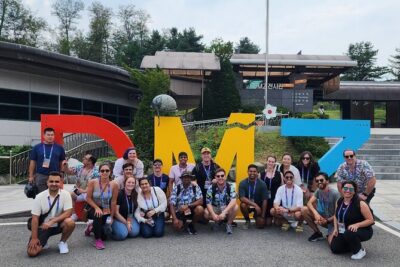
Best DMZ Tour Korea from Seoul (Red Suspension Bridge Optional)
Read our review →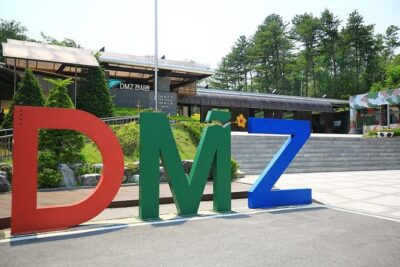
DMZ Tour: 3rd Tunnel, Option(Suspension Bridge, Boat) from Seoul
Read our review →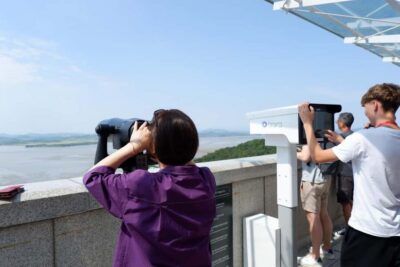

Signature DMZ Tour: Exclusive Defector Talk & Suspension Bridge
Read our review →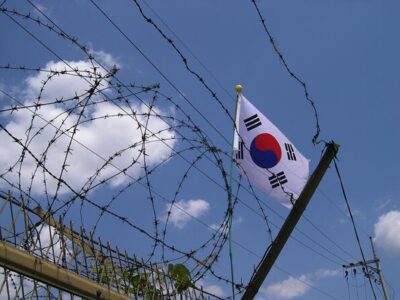
Thrilling Korean DMZ 3rd Tunnel Tour from Seoul + Red Bridge Rush
Read our review →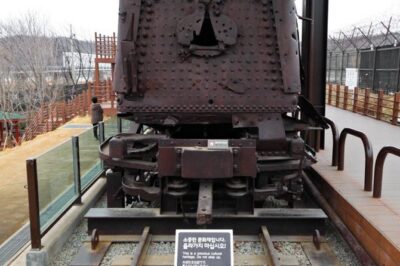
DMZ Past and Present: Korean Demilitarized Zone Tour from Seoul
Read our review →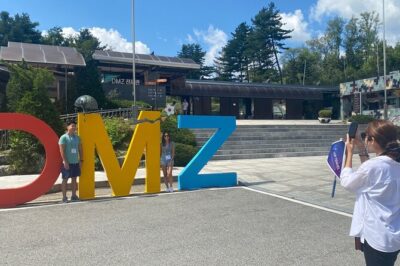
Ultimate Korea DMZ Tour from Seoul (Gondola & Suspension Bridge)
Read our review →
DMZ; NK Defector, 3rd Tunnel, Suspension Bridge,Hotel pickup
Read our review →Browse the lists this tour appears in