
Reviewed · SEOUL SHOPPING DISTRICT TOURS
Traditional Korean Bookbinding Experience in Seoul, Hongdae
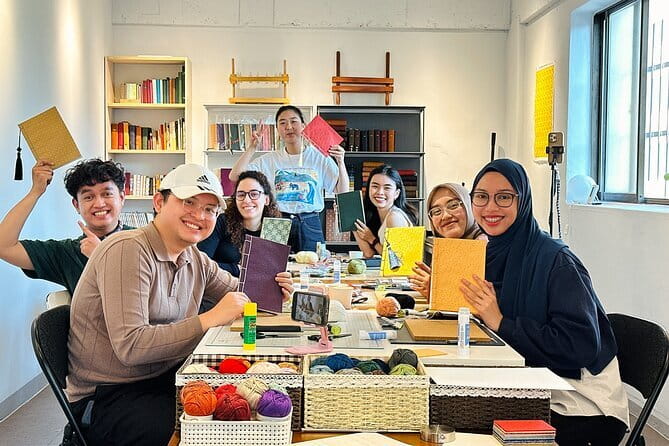
The most memorable part of this Seoul craft class is that you make a real notebook by hand, using Hanji, Korea’s traditional paper, and silk woven with Korean patterns. You choose the cover, thread, and Norigae ornament, then learn the binding method step by step.
I like the small group limit of 12, which should leave room for help when your thread tangles or your pages need straightening. I also like that the finished book is ready to take home at once, rather than being shipped later. The main consideration is the age rule: only people 17 or older may reserve.
Key points
- Choose from 22 silk covers: Each notebook can look different, from understated to colorful.
- Use historic Hanji paper: The paper is linked to Joseon records, diaries, and scholarly writing.
- Finish with a Norigae knot: This traditional ornament gives the notebook a distinctly Korean touch.
- Make a useful souvenir: Your completed book can serve as a journal, scrapbook, or travel notebook.
- Expect about two hours: The pace allows time for instruction, handwork, and decoration.
- Meet in Daeheung-dong: The studio is near public transportation and returns you to the same meeting point.
Why this Seoul craft class feels different
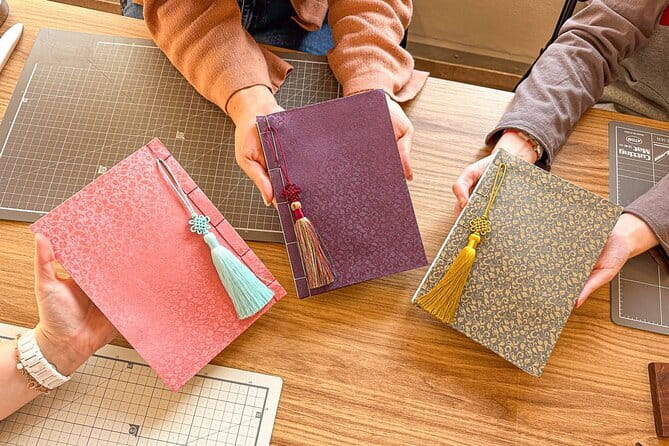
Many souvenirs begin and end in a shop. This one gives you a hand in making the object, which changes how you see it afterward. A notebook assembled with Korean paper, silk, thread, and a traditional knot carries more meaning than a factory-made trinket.
The class focuses on traditional Korean bookbinding, not a generic paper craft with Korean decoration added afterward. The materials are central to the lesson. You learn why Hanji matters, how the pages and silk are joined, and how the final ornament completes the book.
I especially like the balance between structure and choice. The binding method is taught to you, but the appearance is yours. You select one of 22 silk covers, pick your thread color, and choose a Norigae ornament. That gives you enough freedom to make something personal without leaving you wondering what to do next.
The experience is also a good fit for a Seoul itinerary that already includes palaces, markets, and museums. After seeing Joseon-era objects behind glass, you get to work with a material used in that period. It is a quiet way to connect cultural history with your own hands.
Hanji, the paper behind the notebook
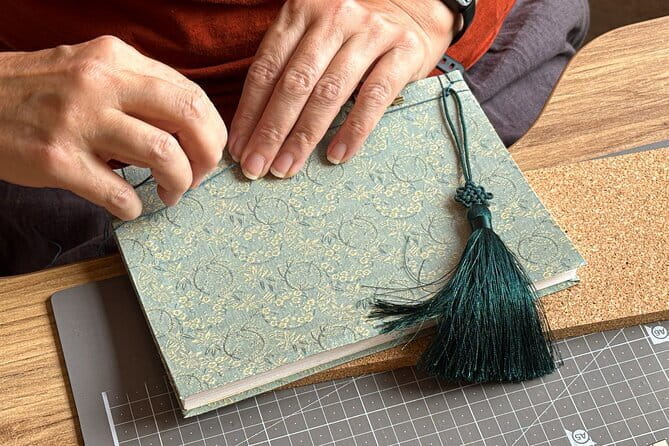
Hanji is traditional Korean handmade paper. It was used for the Annals of the Joseon Dynasty, which are listed on the UNESCO Memory of the World register. Joseon royal family members, Confucian scholars, and intellectuals used it for diaries, notes, and written records.
That background gives the class more weight than a simple notebook-making session. You are not just handling attractive paper. You are learning about a material that supported writing and record-keeping in Korea for centuries.
The old saying presented in the class claims that silk lasts 500 years and Hanji lasts 1,000 years. You should treat those numbers as a traditional saying rather than a guarantee for every finished notebook, but they explain the value placed on these materials. Hanji is known for long life, and silk adds a durable, tactile cover.
I like that the lesson includes this context before you begin making the notebook. It helps you understand why the materials were chosen. The result is a souvenir with a clear connection to Korean culture, not simply a pretty object with a Korean label.
More shopping district tours in Seoul:
- Beyond Seoul: Starfield Library, Hwaseong Fortress & Cave Quest
★ 5.0 · 177 reviews - Suwon Hwaseong+Gwangmyeong Cave+Starfield Library from Seoul
★ 5.0 · 104 reviews - Day Tour of Suwon Hwaseong Fortress Starfield Waujeongsa Temple
★ 5.0 · 61 reviews
Choosing your silk cover and thread
Your first major design choice is the silk cover. There are 22 Korean traditional patterns to choose from, so you can select something that suits your taste rather than receiving a random design.
This part may take longer than expected if you are drawn to several patterns. That is not a bad problem, but it is worth knowing if you prefer a fast, highly structured activity. The range of choices makes the notebook feel personal, though it may also test your ability to decide.
You then select your thread color and Norigae. The available threads are colorful, and the silk covers offer different moods. Some combinations may feel formal, while others may look more playful. You do not need to produce a historically exact object. The point is to use traditional materials and methods while making a notebook that fits you.
The Norigae is a traditional Korean ornament often associated with clothing and decorative knots. Here, it becomes the final touch on the notebook. This small detail matters because it gives the finished piece an unmistakable Korean character.
How the two-hour binding session works
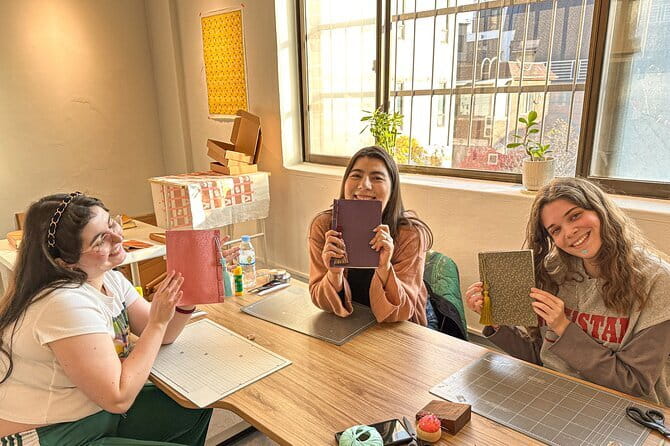
The class lasts about two hours, beginning at 10:30 a.m. You meet at Danchoodan in Daeheung-dong, Mapo-gu, at 100 Daeheung-ro, third floor. The activity ends back at the same studio, which keeps the logistics simple.
The exact timing of each stage can vary with the group, but the process follows a clear order:
- Select your silk cover.
- Choose your thread and Norigae ornament.
- Learn about Hanji and its place in Korean culture.
- Bind the silk and Hanji using Korean traditional bookbinding.
- Add the Norigae knot.
- Pack the finished notebook for the journey home.
The guide supplies the binding tools and materials, so you do not need to bring a craft kit. A licensed guide leads the class and explains the work as you go. The teaching style described for the class is patient and kind, with room for questions and practical help.
That last point matters. Bookbinding looks simple when you see a finished object, but neat results depend on careful alignment and even tension. A guide can show you how to correct small mistakes before they become permanent. You should expect to work with your hands, pay attention, and follow instructions rather than simply watching a demonstration.
The finished notebook is the real souvenir
The strongest reason to book this class is the object you take away. Your notebook is not just decorated by you. You choose the visible materials and take part in the binding itself.
It can become a scrapbook for your Korean trip, a journal, a place for notes, or a keepsake for someone at home. The class suits people who like useful souvenirs better than fragile ornaments. It also works well for anyone who enjoys stationery, paper, textiles, or handmade objects.
The finished notebook is packed in a gift-ready package. That is practical if you are buying a present or want to keep the cover protected in your luggage. You will not need to find wrapping materials afterward.
The book may also become a memory aid. A palace ticket or key ring recalls where you went, but a notebook can hold the details of the trip. You can use it for addresses, sketches, short reflections, or photographs and captions later.
A different kind of day out around Seoul:
- Best DMZ Tour Korea from Seoul (Red Suspension Bridge Optional)
★ 5.0 · 41,422 reviews - DMZ Tour: 3rd Tunnel, Option(Suspension Bridge, Boat) from Seoul
★ 5.0 · 21,373 reviews - DMZ tour south Korea from Seoul (NK experience hall, defector)
★ 5.0 · 20,599 reviews - Seoul: DMZ Tour with Optional Suspension Bridge
★ 4.8 · 5,277 reviews
What the teaching adds
The class is led by a licensed guide, and the teacher explains Hanji and Korean culture while helping you with the craft. The information supplied for the experience does not give the teacher’s name, so you should not expect a named specialist to be part of the booking details.
The teaching appears to be one of the experience’s strongest features. The class is described as educational, well paced, and filled with laughter and crafting. Those qualities matter because two hours of precise handwork can become tiring if the session feels rushed or overly formal.
You should also expect direct help rather than a hands-off workshop. The teacher can guide you through the traditional binding and help you make the final notebook look tidy. That is useful for beginners, and it means you do not need prior bookbinding experience.
The small maximum group of 12 supports this format. It is not a private lesson, but it is much more manageable than a large class. You will still be working alongside other people, yet the guide should have a reasonable chance to assist when needed.
Price, value, and who gets the most from it

The price is $49 per person. For roughly two hours, that is more than you would pay for a plain notebook in Seoul, but the comparison is not really fair. The fee covers instruction, tools, materials, silk, Hanji, thread, the Norigae decoration, and gift-ready packing.
I see the value in the combination of activity and object. You are paying for a cultural lesson, guided making time, and a handmade souvenir that you can use. If you only want an inexpensive notebook, a stationery shop will be cheaper. If you want to understand and make one, the price is more reasonable.
This class is a good match for:
- Adults aged 17 and above who enjoy hands-on activities.
- Couples or friends looking for a quieter Seoul experience.
- Book lovers, stationery fans, and people who enjoy textile crafts.
- Visitors who want a souvenir connected to Korean culture.
- People who prefer making something to simply buying it.
- Anyone with enough time for a two-hour morning class.
It may be less suitable if you dislike detailed handwork, want a fast photo opportunity, or are traveling with children under 17. The age rule is firm according to the booking conditions.
Getting to Danchoodan in Daeheung-dong

The meeting point is Danchoodan, located at 100 Daeheung-ro, third floor, in Mapo-gu’s Daeheung-dong. The studio is near public transportation, but the supplied details do not identify a particular subway exit or walking time.
Plan to arrive with enough time to find the building and reach the third floor before the 10:30 a.m. start. Since the activity is held in a studio, you should not expect a sightseeing route or transport between several locations. The class begins and ends at the same place.
There is no air-conditioned vehicle included, but that is not a serious concern here. This is a stationary studio activity, not a road tour. The important comfort question is the room itself, and the available details do not promise air conditioning.
Only the number of people named on the reservation may enter the studio. Do not plan to bring an unbooked friend or family member to watch. Service animals are allowed, and the activity is near public transportation.
A practical choice for a rainy Seoul morning
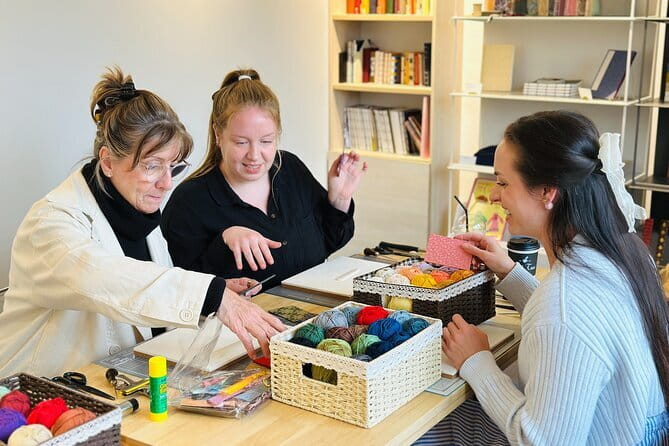
This class can fit neatly into a day when the weather is poor or when you want a break from crowded sights. You have a set start time, a warm indoor focus, and a finished item to carry with you afterward.
The morning schedule also leaves much of the day open. After the class, you can continue exploring Seoul without giving up an entire afternoon. Since the end point is the meeting point, you can collect your belongings and make your next plan from there.
Do not book it expecting a palace tour, neighborhood walk, or broad introduction to Korean culture. Its subject is narrow: traditional bookbinding, Hanji, silk, thread, and the Norigae finish. That narrow focus is exactly what makes the experience useful for someone who wants to learn one craft properly.
Booking and cancellation details
Confirmation is normally sent when you book. If you reserve within one day of the activity, confirmation arrives as soon as possible and depends on availability.
You can cancel for a full refund up to 24 hours before the 10:30 a.m. start time. Cancellations or changes made less than 24 hours before the start are not accepted for a refund. The cut-off uses Seoul local time, so keep that in mind if you are booking from another time zone.
The group limit is 12 people, and the class has had at least five bookings in the most recent month listed. That suggests regular interest without indicating that every session will sell out. If the date matters to your schedule, booking ahead is sensible.
Should you book this Korean bookbinding class?
Book it if you want a personal Seoul souvenir, enjoy careful craft work, and like learning the story behind the materials you use. The silk choices, Hanji lesson, traditional binding, and Norigae finish give the two-hour session a clear purpose.
I would especially recommend it for a return visit to Seoul, when you may want something beyond the standard palace and shopping circuit. It also suits anyone who wants a gift they can honestly say they made in Korea.
Skip it if you want a quick activity, have a child under 17 in your group, or would rather spend your morning moving between major sights. For everyone else, $49 buys more than a notebook. It buys the time, tools, instruction, and cultural context needed to make one that can stay with you long after the trip.
FAQ
Where does the Korean bookbinding class take place?
The class takes place at Danchoodan, at 100 Daeheung-ro, third floor, in Daeheung-dong, Mapo-gu, Seoul.
What time does the class begin?
The class starts at 10:30 a.m.
How long does the experience last?
The activity lasts approximately two hours.
What is included in the price?
The price includes binding tools, materials, and a licensed guide.
How much does the class cost?
The price is $49 per person.
Can I choose the notebook cover?
Yes. You can choose from 22 silk covers featuring Korean traditional patterns.
Can I choose the thread and decoration?
Yes. You select the thread color and a Norigae, a traditional Korean ornament, for the final decoration.
What do I take home?
You take home the notebook you made, packed in a gift-ready package.
What is the maximum group size?
The class allows a maximum of 12 participants.
Are children allowed to join?
Reservations are available only to people aged 17 or older.
Is the activity accessible by public transportation?
Yes. The studio is near public transportation.
Can I cancel for a refund?
You can cancel up to 24 hours before the start time for a full refund. Cancellations or changes made less than 24 hours before the start are not accepted for a refund.
Just added around Seoul
- Your Personal Seoul Photographer!★ 4.1 · 15 reviews
- From Seoul: Hwacheon Ice Fishing and Lighting Festival Tour★ 4.5 · 4 reviews
- You’re Invited to Our Home in Seoul: The Only Cooking Class!★ 5.0 · 8 reviews
- Seoul: Gangneung BTS K-Pop & K-Drama Filming Locations Tour★ 4.6 · 14 reviews
- Unique Native Experience : Han River Picnic, Board game, BBQ★ 5.0 · 3 reviews
- Yun Korean Cooking Class in Seoul★ 5.0 · 6 reviews
- 2-Hour Private Kayaking and Paddleboarding Experience in Hanriver★ 5.0 · 3 reviews
- Day Trip to Yongin Daejanggeum and Korean Folk Village from Seoul★ 4.0 · 9 reviews
Seoul Shopping District Tours, compared.

Beyond Seoul: Starfield Library, Hwaseong Fortress & Cave Quest
Read our review →
Suwon Hwaseong+Gwangmyeong Cave+Starfield Library from Seoul
Read our review →
Day Tour of Suwon Hwaseong Fortress Starfield Waujeongsa Temple
Read our review →
Suwon Hwaseong, Folk Village, & Starfield Library
Read our review →
Seoul Food n Night view with Local Korean BBQ dinner Hongdae st.
Read our review →
Suwon Hwaseong & Waujeongsa & Starfield Heritage Tour
Read our review →
Browse the lists this tour appears in