
Reviewed · SEOUL DMZ TOURS
Best North Korea View & Closest Starbucks to DMZ tour from Seoul
North Korea comes into view from a coffee shop, a suspension bridge, and an observatory only about 1.4 kilometers from the border. This Aegibong tour offers a striking look at the Korean Peninsula without the longer security process of a standard DMZ entry tour. I like the clear mix of history and scenery, and I like that the outing lasts about five hours, leaving room in your Seoul day.
I also like the practical setup: round-trip coach transport, entrance fees, and an English or Chinese-speaking guide are included. Guides such as Gogo, Judy, Alex, Crystal, Alice, Juno, and Hana have been praised for clear explanations and a warm manner. The main consideration is simple: this tour does not enter the official DMZ. If you want tunnels, the Joint Security Area, or a formal border crossing experience, choose another outing.
Key points to know before you book
- The closest coffee stop: Spend about an hour at the Starbucks near Aegibong, with views toward North Korea.
- A remarkably near viewpoint: The Jogang Observatory offers an unobstructed look toward villages around 1.4 kilometers away.
- A 150-meter suspension bridge: Cross the park’s bridge for a high viewpoint over the river and border area.
- A history-rich half-day: Visit a Marine Corps memorial and several peace monuments tied to the Korean War and hopes for reunification.
- Passport required: You must show your passport at the Aegibong security checkpoint.
- Not a formal DMZ entry tour: You reach the edge of the area along the Jogang River, but do not enter the Korean Demilitarized Zone itself.
Why Aegibong offers a different view of North Korea
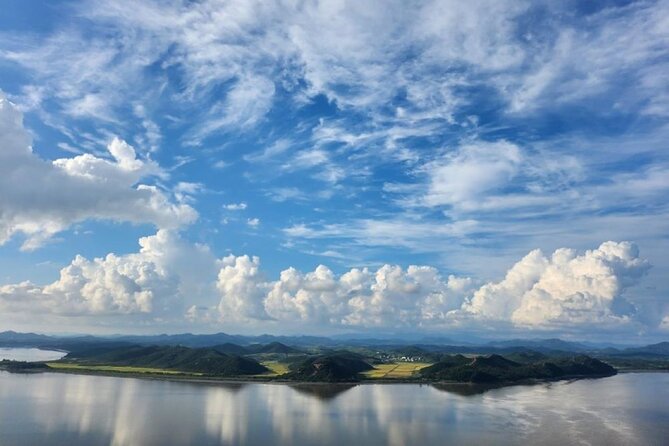
Most Seoul visitors picture the DMZ as a tightly controlled military zone reached through a standard tour route. Aegibong gives you a different angle. The park sits near the Jogang River, which forms part of the border area, so your view is across water and fields toward North Korea rather than through a heavily staged military attraction.
That setting matters. You are not simply looking at a map or a distant flag. From the park and observatory, you may see villages and open ground on the other side. The lack of dense development around the border makes the scene feel unusually quiet, even though Seoul is only a short drive away.
The tour does not claim to take you into the DMZ. That distinction is important. You visit the edge of the area, pass through a security checkpoint, and see North Korea from South Korea. For many people, that is enough. You get the geography and the political tension without committing a full day to a formal DMZ route.
More DMZ tours in Seoul:
- Best DMZ Tour Korea from Seoul (Red Suspension Bridge Optional)
★ 5.0 · 41,422 reviews - DMZ Tour: 3rd Tunnel, Option(Suspension Bridge, Boat) from Seoul
★ 5.0 · 21,373 reviews - DMZ tour south Korea from Seoul (NK experience hall, defector)
★ 5.0 · 20,599 reviews
Starting from Seoul at 9:00 am
The tour begins in the morning and lasts about five hours. The listed departure points include Myeongdong Subway Station Exit 9, Seoul City Hall Subway Station Exit 6, and Hongdae Subway Station Exit 3. The detailed meeting information identifies Hongik University Station Exit 3, at 183 Yanghwa-ro, as the start and end point, so check your confirmation carefully for the pickup assigned to you.
The coach transfer is one of the tour’s useful features. You do not need to arrange a taxi or work out public transport to Aegibong, and the guide can explain the history of the two Koreas on the way. Several named guides, including Judy, Alex, Alice, Crystal, and Juno, have been singled out for clear explanations, patient answers, and an easy sense of humor. Gogo was especially praised for combining Korean history with jokes, which can help keep a serious subject approachable.
Allow some patience at the pickup. One person arriving at a later departure point waited about 30 minutes. With several Seoul pickup locations, the morning schedule can take a little time to organize. The group size can reach 100 people, so this is a shared coach outing rather than a small private visit.
The Aegibong checkpoint and Marine Corps memorial
Your first formal stop is the Aegibong ticket office. It takes about 10 minutes, and the guide handles entrance tickets. This is also the point where you show your passport before entering the security area.
Bring your actual passport. A copy or another identity document is not listed as an alternative, and the tour states that you cannot enter without it. This is not a casual park entrance. Aegibong remains a sensitive geopolitical area, so the passport check is part of the experience.
Next comes the Marine Corps Memorial, where you spend about 20 minutes. The site honors roughly 15,000 Marines who fought during the Korean War. This stop gives the day a human focus before you reach the viewpoints. It is easy to look across the river and think only about borders and military maps. The memorial reminds you that the division of Korea was created through real battles and enormous personal loss.
The stop is brief, so you should not expect a long museum visit or a detailed military exhibition. Its value is as a pause for reflection and context.
Aegibong Peace Eco Park, with North Korea across the river
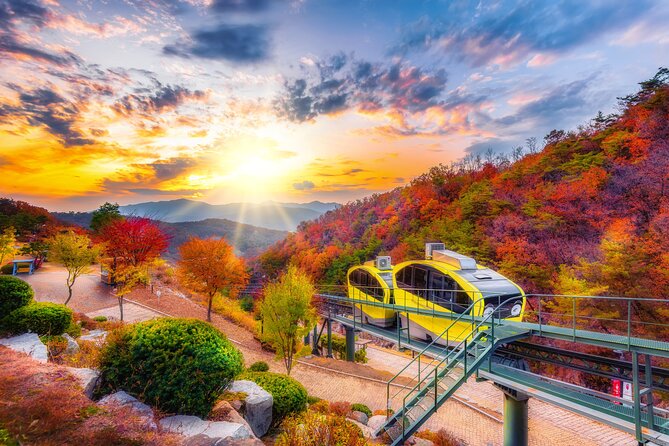
The main visit takes place at Aegibong Peace Eco Park. The itinerary divides your time into several sections, with about an hour for the core park visit and additional time for gardens, the bridge, monuments, and the outdoor stage.
The park combines planted areas, walking routes, war relics, and viewpoints facing North Korea. The setting is designed around both peace and ecology, so the visit is not only a military lookout. The park notes more than 80 rare bird species, although you should treat birdwatching as a possible bonus rather than the main purpose of the tour.
One section leads toward the Sky Forest canopy and themed gardens. You can look at the border from a different angle, take photographs, and listen to the guide connect the park’s symbols with the history of division. The combination of gardens and military relics may seem unusual, but it keeps the visit from feeling like one long observation post.
The park includes several short stops, so the pace is varied. You might walk one section, pause for a view, then move on to a monument or seating area. Comfortable shoes make sense, although the supplied information does not describe a strenuous hike. One practical warning appears in the tour feedback: if the bridge is closed because of weather, reaching one viewpoint may involve a steeper walk uphill. That makes weather conditions worth checking on the day.
A different kind of day out around Seoul:
- Seoul: DMZ Tour with Optional Suspension Bridge
★ 4.8 · 5,277 reviews - Signature DMZ Tour: Exclusive Defector Talk & Suspension Bridge
★ 5.0 · 4,459 reviews - Thrilling Korean DMZ 3rd Tunnel Tour from Seoul + Red Bridge Rush
★ 5.0 · 3,097 reviews - DMZ Past and Present: Korean Demilitarized Zone Tour from Seoul
★ 5.0 · 2,481 reviews
Crossing the 150-meter suspension bridge
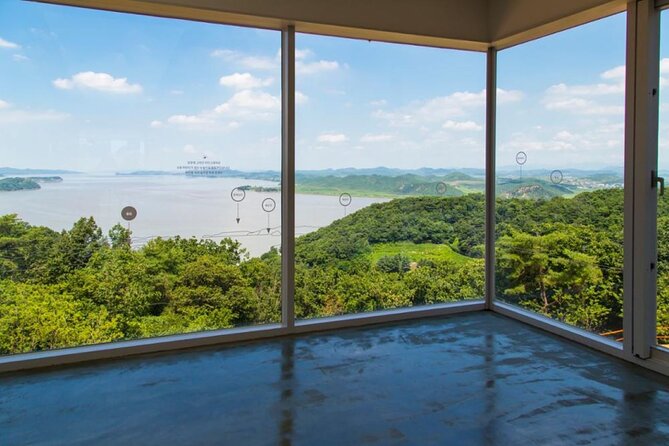
The park’s 150-meter suspension bridge is one of the more memorable physical parts of the outing. You cross above the park area while looking toward the Jogang River and North Korea. It adds movement to a tour that otherwise centers on standing, listening, and looking through binoculars.
The bridge is also one of the best spots for photographs. The height gives you a broader view than the lower paths, and the structure itself makes a more interesting picture than a standard fence or sign. If heights make you uncomfortable, you can still appreciate the park without treating the bridge as the whole point of the visit.
The bridge may close in poor weather. If that happens, the tour can still continue, but you may face a longer uphill walk to reach some of the views. The guide can help explain the changed route, but you should not book this outing expecting every feature to operate in all conditions.
Peace bells, outdoor seating, and symbols of reunification
The tour pauses at an outdoor performance area for about 20 minutes. You can sit, rest, and look over the Jogang River. If the timing is right, you might catch a modern or traditional cultural performance, but no particular performance is guaranteed.
This is a useful breathing space in the middle of the visit. The park includes several symbolic sites, and a short rest keeps the day from becoming a procession of monuments. It also gives you a chance to take in the quiet border setting without rushing to the next photo stop.
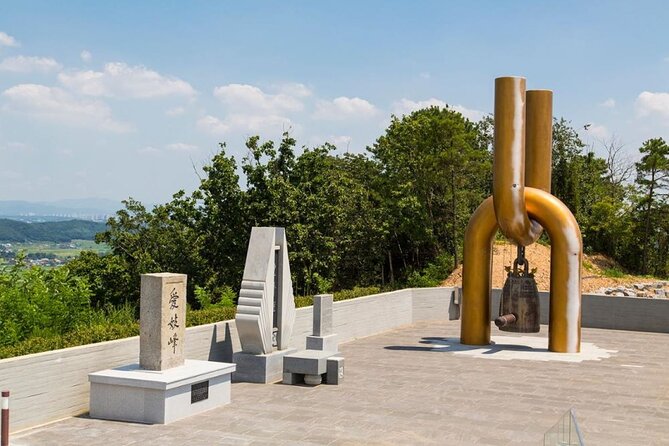
At the Peace Bell, you can take part in a simple ritual by ringing the bell. Cast in 2000, it represents hope for peace and reunification. Another 10-minute stop takes you to an altar built in 2018, also dedicated to the hope of unity.
These sites can feel more symbolic than historic. If you prefer hard military facts, the memorial and observatory will interest you more. If you want to understand how South Korea publicly expresses hope for reunification, the bell and altar add useful context.
The Starbucks near North Korea
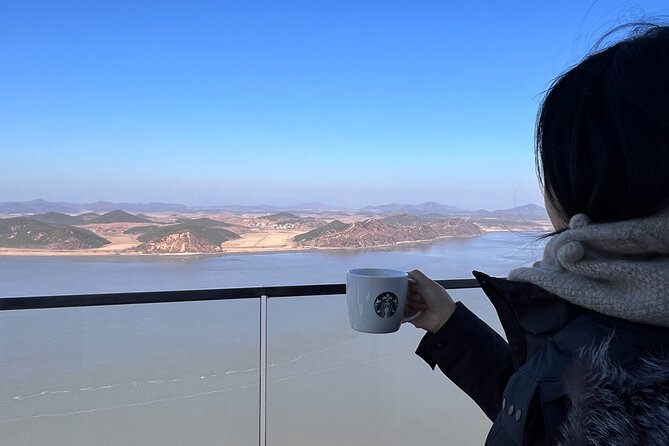
The Starbucks stop is the tour’s unusual hook, but it is not a gimmick without meaning. You spend about an hour at the branch described as the closest Starbucks to North Korea, sitting with a drink while looking toward the border.
Coffee is not included, so you pay for your own latte or tea. The hour gives you a relaxed chance to use the café, take a break, and look outside rather than rushing in for a quick photograph. The juxtaposition is hard to miss: an international coffee brand operating beside one of the world’s most heavily watched borders.
I like this stop because it makes the political situation feel immediate in a very ordinary way. You are not standing only at a military memorial. You are drinking coffee in a normal commercial space while looking toward an isolated neighboring country. That contrast is the point.
Still, the Starbucks stop can divide opinion. If you want constant guided history and many separate sights, an hour at a café may feel too long. If you enjoy unusual settings and a slower pause, it is one of the tour’s most distinctive features. You can also use the time to recover before the final observatory visit.
The Jogang Observatory and the clearest border view

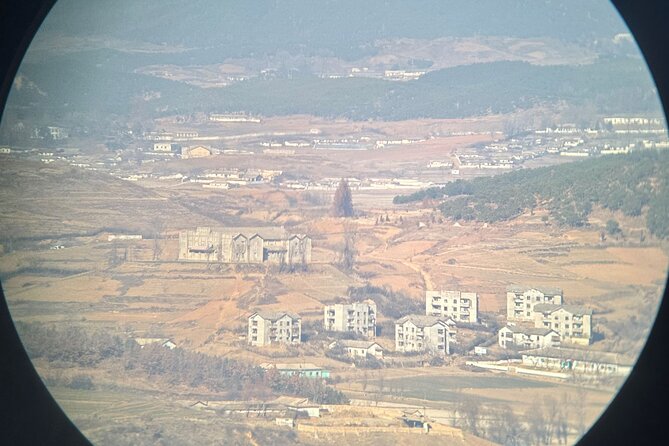
The final major stop is the Jogang Observatory, where you spend about 30 minutes. It is described as the closest observatory to the DMZ on this route and offers an unobstructed view toward North Korea. With binoculars, you may see villages around 1.4 kilometers away.
This is the stop that matters most if your main goal is to see North Korea clearly. The park provides several views, but the observatory concentrates your attention on the river, fields, settlements, and the border beyond. Bring your camera, but remember that distance and weather control how much detail you can capture.
The guide’s explanation is especially useful here. A border view can look simple at first, with water, farmland, and buildings. Context helps you understand why the area is so tightly controlled and why ordinary movement across the river is impossible. Guides such as Alex and Alice have been praised for explaining how North and South Korea came to exist as separate states and for answering questions in a personal, approachable way.
The observatory visit is short enough to keep the tour moving, but some people may want more time with binoculars. If you are very interested in photography or military geography, you may find the half-hour limit a little tight.
What the $49 price includes
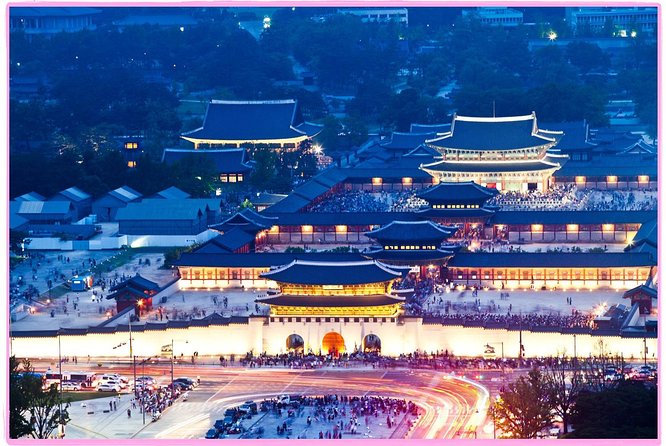
At about $49 per person, the tour offers solid value for a five-hour outing. Your fee covers the coach from Seoul and back, entrance fees, and an English or Chinese-speaking guide. That removes the largest practical costs of reaching Aegibong on your own.
The value is strongest if you want a guided half-day rather than a self-planned border visit. You receive transport, entry to the park, access to the observatory and bridge, and historical explanation in one package. The price does not include coffee, tea, or meals, but the Starbucks stop gives you a convenient place to buy something if you want it.
The group can reach 100 people, so the low price comes with a shared-tour feel. You may not receive the same personal attention as you would from a private guide. On the other hand, the guide names associated with this outing, including Gogo, Judy, Hana, Alex, Crystal, Alice, Juno, and Gabby, show that the quality of the day depends heavily on who leads your group. The strongest accounts emphasize clear history, good humor, and patient answers.
Who should choose this Aegibong tour?
I would choose this tour if you have limited time in Seoul and want a border experience without giving up most of your day. The five-hour length leaves space for another activity, and the Hongdae drop-off is convenient for continuing into central Seoul.
It suits you especially well if you want:
- A clear view toward North Korea
- A guide to explain the Korean War and the division of Korea
- A relaxed coffee stop with an unusual setting
- A mixture of monuments, gardens, walking, and viewpoints
- A shared coach tour at a moderate price
I would think twice if your priority is entering the official DMZ or visiting its best-known military sites. This route does not include the Joint Security Area, tunnels, or a formal DMZ entry. It is also not ideal if you dislike group schedules or have no interest in spending an hour at Starbucks.
The tour has a free cancellation policy up to 24 hours before the start time. Cancellations made later are not refunded, and changes within that period are not accepted. Keep your passport with you, confirm your exact pickup point, and remember that weather can affect the bridge and walking route.
Should you book it?
Book this Aegibong tour if you want the most accessible combination of North Korea views, Korean War context, and a memorable coffee stop from Seoul. The observatory and bridge give the day real substance, while the café makes the experience more relaxed and distinctive.
Skip it if the words DMZ tour mean a formal military-zone entry to you. For everyone else, this is a practical, fairly priced way to see the border from a different angle, with enough history to make the view meaningful and enough free time to keep the day enjoyable.
FAQ
Does this tour enter the Korean DMZ?
No. The tour does not technically enter the DMZ. It reaches the edge near Aegibong along the Jogang River, which forms part of the DMZ area.
How long does the tour last?
The tour lasts approximately five hours.
Where does the tour start?
The listed pickup points include Myeongdong Subway Station Exit 9, Seoul City Hall Subway Station Exit 6, and Hongdae Subway Station Exit 3. The detailed meeting information gives Hongik University Station Exit 3, at 183 Yanghwa-ro, as the start point.
Where does the tour end?
The coach drops you off in Hongdae, with the detailed meeting information also identifying Hongik University Station Exit 3 as the end point.
Is a passport required?
Yes. You must bring your passport and show it at the Aegibong security checkpoint. You cannot enter without it.
Is coffee included in the tour price?
No. Coffee, tea, and meals are not included. You have about an hour at the Starbucks near North Korea and can purchase your own drink.
What language is the guide?
The guide speaks English or Chinese.
Is the suspension bridge always open?
The tour information indicates that weather can affect the bridge. If it is closed, reaching a viewpoint may involve a steeper uphill walk.
What does the $49 price include?
The price includes round-trip transportation, entrance fees, and the tour guide. It does not include meals, coffee, or tea.
Just added around Seoul
- Your Personal Seoul Photographer!★ 4.1 · 15 reviews
- From Seoul: Hwacheon Ice Fishing and Lighting Festival Tour★ 4.5 · 4 reviews
- You’re Invited to Our Home in Seoul: The Only Cooking Class!★ 5.0 · 8 reviews
- Seoul: Gangneung BTS K-Pop & K-Drama Filming Locations Tour★ 4.6 · 14 reviews
- Unique Native Experience : Han River Picnic, Board game, BBQ★ 5.0 · 3 reviews
- 2-Hour Private Kayaking and Paddleboarding Experience in Hanriver★ 5.0 · 3 reviews
- Yun Korean Cooking Class in Seoul★ 5.0 · 6 reviews
- Day Trip to Yongin Daejanggeum and Korean Folk Village from Seoul★ 4.0 · 9 reviews
Seoul DMZ Tours, compared.
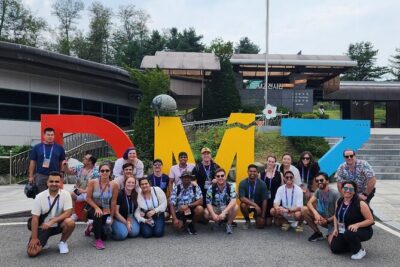
Best DMZ Tour Korea from Seoul (Red Suspension Bridge Optional)
Read our review →
DMZ Tour: 3rd Tunnel, Option(Suspension Bridge, Boat) from Seoul
Read our review →
DMZ tour south Korea from Seoul (NK experience hall, defector)
Read our review →

Signature DMZ Tour: Exclusive Defector Talk & Suspension Bridge
Read our review →
Thrilling Korean DMZ 3rd Tunnel Tour from Seoul + Red Bridge Rush
Read our review →
DMZ Past and Present: Korean Demilitarized Zone Tour from Seoul
Read our review →
Ultimate Korea DMZ Tour from Seoul (Gondola & Suspension Bridge)
Read our review →Browse the lists this tour appears in