
Reviewed · SEOUL WALKING TOURS
Buam dong Walking Tour Art, History and Parasite in Seoul
Buam-dong gives you a different side of Seoul: a quiet hillside district where Cold War stories, poetry, art, and mountain views share the same narrow streets. This 2.5-hour walk also includes a Parasite filming location, Changuimun Gate, and Mugyewon, a traditional Korean house with ties to royal history.
I like the route for two clear reasons. First, it connects several small, meaningful places instead of racing between major sights. Second, the group is capped at 15 people, so guide Jon can add the kind of history and humor that makes a walk feel personal. The main drawback is the moderate physical fitness requirement, since Buam-dong is a hillside neighborhood and the tour is done on foot.
Key points to know
- A local bus starts the outing: The first 10 minutes provide an introduction to Buam-dong before the walking begins.
- Seoul’s first hanok library: Cheongun Literature Library offers a quiet stop in a traditional Korean setting.
- History with a human scale: Changuimun Gate and the Seoul City Wall show Seoul’s defensive past without the crowds of the city’s largest attractions.
- Mountain views shape the route: Look for Bugaksan, Inwangsan, and Bukhansan from the hillside.
- A film connection: The walk includes a location associated with Parasite.
- Small-group format: No more than 15 people join, and guide Jon has earned praise for his stories, humor, and friendly manner.
Why Buam-dong makes a good half-day escape
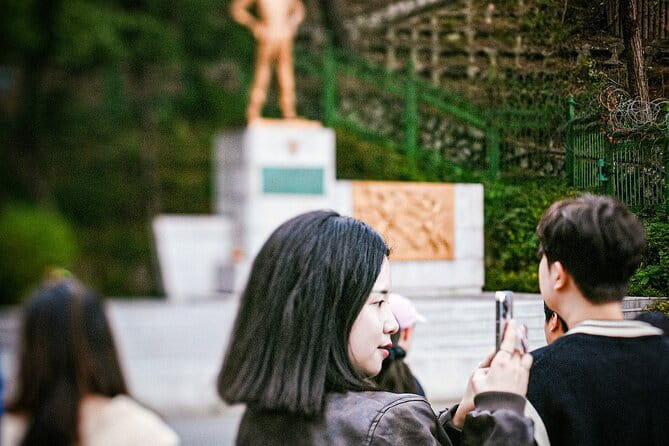
Seoul can feel enormous. Grand palaces, shopping streets, cafés, and traffic fill much of the usual sightseeing circuit. Buam-dong offers a slower contrast, with a hillside setting and views toward several of the mountains that shape the city.
This is not a tour built around one blockbuster monument. Instead, it links places that help you understand how Seoul works: old gates beside modern neighborhoods, literary spaces in traditional buildings, and mountain paths close to the capital’s center. I like that balance. You get culture and history, but also time to look around.
The tour begins at 2:00 p.m. at 시민약국, 106-3 Jeokseon-dong, in Jongno District. From there, you take a bus for about 10 minutes to Buam-dong. That ride is part of the introduction. Your guide explains the area as you go and sets up the stories you will hear on foot.
The experience is priced at $38.50 per person. That is a reasonable cost if you want a guide to connect several sights and explain the history behind them. You are not paying for admission tickets, since the listed stops are free. The value comes from the route, local interpretation, and the convenience of seeing several distinct places in one organized outing.
More walking tours in Seoul:
- Seoul moonlight walking tour with local historian
★ 5.0 · 940 reviews - Seoul: Nighttime Hidden Gems Walking Tour
★ 5.0 · 775 reviews - Seoul: Evening Dark History, Folklore & Ghost Story Walking Tour
★ 5.0 · 593 reviews
The short bus ride into Buam-dong
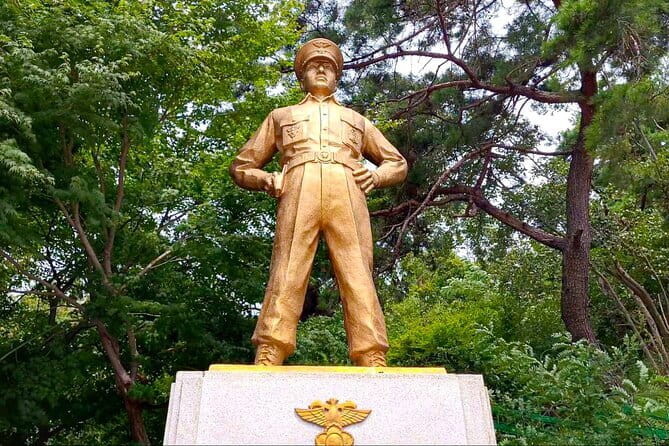
The opening bus ride may seem like a small detail, but it helps the tour feel like a neighborhood visit rather than a standard city excursion. You leave the starting area and move toward Buam-dong while the guide explains why the district matters.
The ride lasts about 10 minutes, so do not expect a long sightseeing journey. Its real purpose is orientation. You begin to understand that Buam-dong is close to central Seoul but feels removed from the busiest tourist routes.
This is also a useful moment to listen carefully to the guide’s introduction. The tour includes several types of history, from Cold War events to the Seoul City Wall, and the opening explanation helps connect them. Guide Jon has been singled out for his interesting stories and funny, easygoing manner, which is a good fit for a route that depends on storytelling.
Because the tour starts at a fixed meeting point and ends back there, you should allow enough time to find the address before 2:00 p.m. The supplied location is written in Korean as well as by street address, which may help when using a map or asking for directions.
Cheongun Literature Library in a hanok setting
The Cheongun Literature Library is one of the tour’s most distinctive stops. It is described as Seoul’s first hanok library, placing books and literary culture inside traditional Korean architecture.
You spend about 20 minutes here. That is long enough to appreciate the setting and pause after the bus ride, but not long enough for an extended library visit. Think of it as an atmospheric stop rather than a full research session.
The value of this place is its sense of contrast. Seoul is known for glass towers, dense streets, and rapid movement. A library housed in a hanok presents another idea of the city, one where architecture, reading, and quiet reflection belong together.
I would pay attention to the building as much as the books. The tour description emphasizes traditional architecture and an artistic side of Seoul, so this is a chance to see how old forms remain part of present-day life. You may also appreciate the pause if you prefer cultural experiences that are calmer than a crowded palace courtyard.
The short visit means the guide’s explanation matters. Listen for how the library fits into Buam-dong’s artistic character, then use the surrounding quiet to take in the place for yourself.
Poet Yoon Dong-ju and the hillside views
The route continues to the Hill of Poet Yoon Dong-ju. The supplied tour details do not give a separate stop time, so the exact length of this portion may depend on the group and the walking pace.
Its importance comes from the connection between literature and place. Rather than treating poetry as something locked inside a museum, the tour brings it into the hills above Seoul. That fits naturally with the earlier library stop and gives the walk a clear cultural thread.
This is also one of the places where the scenery becomes part of the story. You can expect views toward Bugaksan, Inwangsan, and Bukhansan, three mountains named in the tour description. These views help explain why Buam-dong has long appealed to people looking for a quieter setting without leaving Seoul.
Do not treat this as a mountain hike. It is a neighborhood walking tour, not a full-day trek. Still, the hillside setting means you should be comfortable walking for the full 2.5 hours, including some changes in elevation. Good shoes and a sensible pace will make the experience easier, especially if you are not used to Seoul’s sloping neighborhoods.
More history and heritage tours in Seoul:
- Hanbok Photoshoot and History Tour at Gyeongbokgung Palace
★ 5.0 · 276 reviews - From Seoul: Dae Jang Geum Park Historic K-Drama Set Tour
★ 4.9 · 143 reviews - Seoul: City Highlights and Historical Experience No Shopping
★ 5.0 · 74 reviews - Street photoshoot and Seoul Hidden gem History Walking Tour
★ 5.0 · 68 reviews
Changuimun Gate and the Seoul City Wall
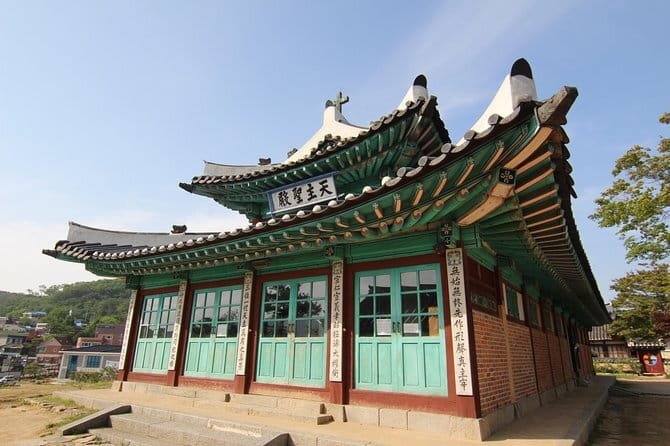
Changuimun Gate, also called Jahamun Gate, is one of the clearest historical anchors on the route. You spend about 15 minutes exploring the gate and nearby sections of the Seoul City Wall.
The wall and gate once formed part of Seoul’s defenses. Here, the history is easy to grasp because it is tied to a visible structure rather than only to dates and names. Your guide can explain how the gate fit into the city’s defensive system and why it remains important to Seoul’s heritage.
I like this stop because it brings scale to the city. Seoul is often presented through palaces and modern landmarks, but the wall shows how the city was once organized and protected. A gate also gives you a more direct sense of movement through the old capital. People passed through it for practical reasons, not simply to admire it.
The 15-minute visit is fairly brief. That suits you if you want a broad introduction to several sites, but it may feel short if military architecture is your main interest. You will not have hours to study every section of the wall. The strength here is the guide’s context and the way the gate fits into the larger walk.
The area also connects the historical and natural parts of Buam-dong. You can look from old stone defenses toward the surrounding mountains, seeing in one view why the location mattered both strategically and aesthetically.
A Parasite filming location without a movie-only tour
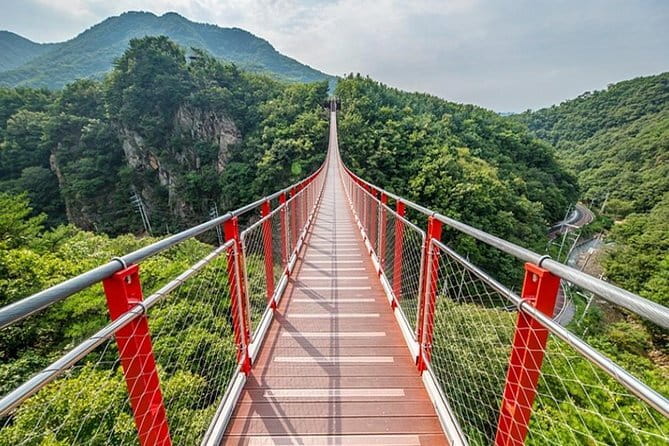
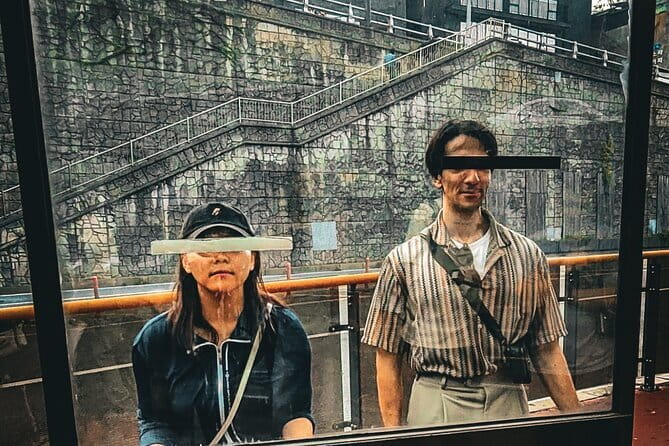
The experience includes a filming location associated with Parasite. This adds a popular culture angle to a route otherwise centered on history, literature, architecture, and scenery.
The tour is not presented as a dedicated film-location walk, so the movie reference works best as one part of the larger experience. If you know the film, the stop gives you a visual connection to a well-known Seoul production. If you do not, it still fits the tour’s main idea: discovering how ordinary-looking parts of the city can carry cultural meaning.
The supplied information does not identify the exact scene or explain how long the group stays there. I would treat it as a bonus rather than the main reason to book. Choose this tour for Buam-dong as a whole, with the film location as an extra point of interest.
That approach also keeps expectations in check. You are not signing up for a studio visit or a behind-the-scenes film experience. You are walking through a real Seoul neighborhood and seeing one place linked to a major movie.
Mugyewon and the final hanok stop
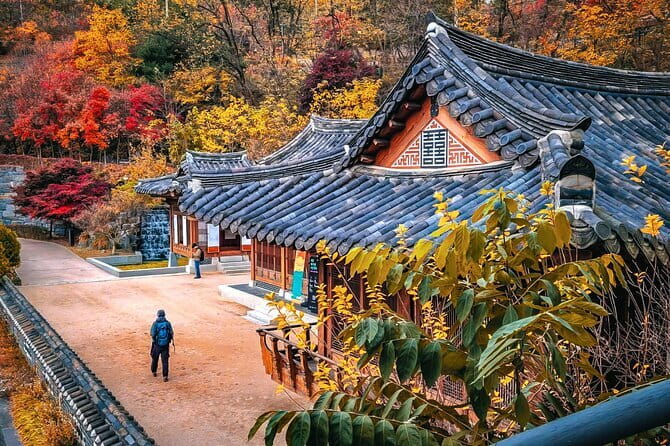
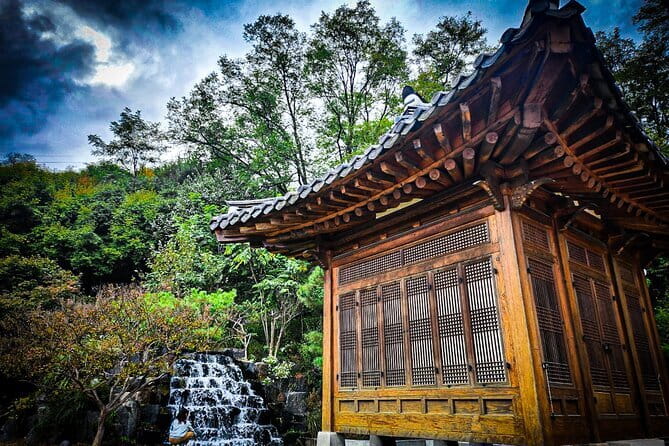
The tour finishes at Mugyewon, where you spend about 20 minutes. This traditional Korean house once served as the villa of Grand Prince Anpyeong, and it now functions as a hanok cultural space.
Mugyewon gives the tour a fitting ending. The library introduced traditional architecture in a literary setting. Changuimun Gate showed the old city’s defenses. Mugyewon brings those themes together through a historic house connected to royal life.
The stop is described as an example of old-world elegance in the modern city. That does not mean you should expect a palace-scale complex. The appeal is more intimate: a traditional home and cultural space that lets you consider how Korean architecture survives within present-day Seoul.
You have about 20 minutes here, enough for a focused visit and an explanation from the guide. Since the activity ends back at the original meeting point, confirm with your guide how the return portion works and stay with the group after the final stop.
What the small group adds
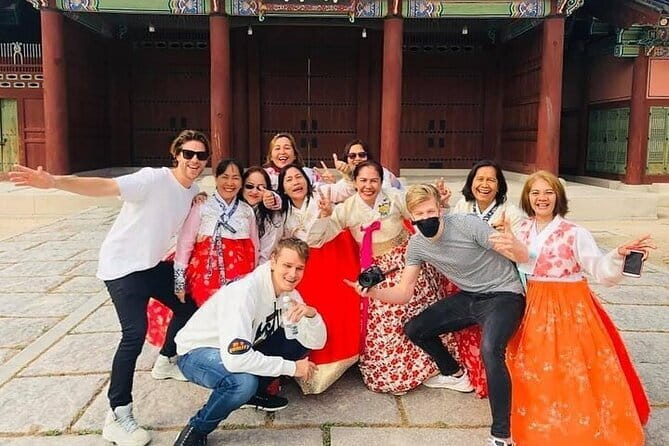
The maximum group size is 15 people. That is not a private tour, but it is small enough to make questions practical and keep the group from feeling like a moving crowd.
This matters on a walking route with several short stops. A large group can make it harder to hear stories, gather around a gate, or pause without blocking the route. A smaller group also gives the guide more room to adjust explanations to the people present.
Jon is the only guide named in the supplied material, and he is described as friendly, funny, and good at sharing stories about Korean history. The provider is ZenKimchi Experiences. Guide quality matters here because the stops are not all major attractions with large signs explaining everything. Much of the tour’s value lies in the connections your guide makes between them.
The group format also keeps the price below that of a private outing. At $38.50, you get a guided route and local context without paying for individual attention. If you need a completely flexible pace, private timing, or long photo stops, this may feel structured. If you like having the route handled for you, the format makes good sense.
Timing, fitness, and practical planning

The full activity lasts about 2 hours and 30 minutes and begins at 2:00 p.m. That afternoon timing leaves your morning open for a palace, market, museum, or a relaxed start to the day.
The route requires a moderate level of physical fitness. The information does not give a precise distance or list specific climbs, so you should not assume it is flat. Buam-dong is a hillside district, and the itinerary includes walking between several outdoor and cultural sites.
Wear comfortable shoes. Bring water if you normally need it on a two-and-a-half-hour walk. Since this is a walking tour, weather may affect your comfort, though no weather policy is provided.
The meeting point is near public transportation, and service animals are allowed. A mobile ticket is available, and confirmation is provided when you book. The tour is often reserved about 19 days ahead, so I would not leave it until the last minute if your Seoul schedule is fixed.
Free cancellation is available if you cancel at least 24 hours before the 2:00 p.m. start time. Changes or cancellations made within 24 hours are not accepted for a refund.
Who will get the most from this walk?
I would choose this outing if you want to see a quieter part of Seoul and prefer stories that connect several modest places. It suits culture lovers, people interested in Korean history, readers, architecture fans, and anyone who wants mountain views without committing to a long hike.
It also works well for a second or third day in Seoul, after you have seen the city’s most famous central sights. The route shows you a less familiar side of the capital while still touching major themes: defense, literature, traditional homes, film, and the mountains around the city.
You may want something else if your priority is a long palace visit, extensive museum time, shopping, or a strenuous mountain walk. The stops are relatively short, and the tour covers a range of subjects rather than exploring one in great depth.
Should you book the Buam-dong walk?
Book it if you want a small-group introduction to an overlooked Seoul neighborhood, especially one that mixes history, art, architecture, and scenery. The combination of the hanok library, Yoon Dong-ju’s hill, Changuimun Gate, a Parasite location, and Mugyewon gives the afternoon a satisfying range.
The price is fair for a guided 2.5-hour route with no extra admission costs. I would book with the expectation that the guide’s stories and the neighborhood setting are the main attractions, not grand interiors or long visits at any one site.
If you can manage hillside walking and enjoy a slower, more local-feeling afternoon, this is an easy tour to recommend. If you need a flat route or want a highly specialized film tour, choose a different experience.
FAQ
How long does the Buam-dong walking tour last?
The tour lasts approximately 2 hours and 30 minutes.
What time does the tour begin?
The tour begins at 2:00 p.m.
Where does the tour start?
It starts at 시민약국, 106-3 Jeokseon-dong, Jongno District, Seoul, South Korea.
Where does the activity finish?
The activity ends back at the meeting point.
How much does the tour cost?
The listed price is $38.50 per person.
What is the maximum group size?
The tour allows a maximum of 15 people.
Is the tour available with a mobile ticket?
Yes. A mobile ticket is available.
Does the tour include a local bus ride?
Yes. The itinerary includes a bus ride of about 10 minutes to Buam-dong.
Is the tour suitable for people with limited fitness?
Participants should have a moderate level of physical fitness.
Can I cancel for a full refund?
Yes, if you cancel at least 24 hours before the experience start time. Cancellations made less than 24 hours before the start are not refunded.
Just added around Seoul
- Your Personal Seoul Photographer!★ 4.1 · 15 reviews
- From Seoul: Hwacheon Ice Fishing and Lighting Festival Tour★ 4.5 · 4 reviews
- You’re Invited to Our Home in Seoul: The Only Cooking Class!★ 5.0 · 8 reviews
- Seoul: Gangneung BTS K-Pop & K-Drama Filming Locations Tour★ 4.6 · 14 reviews
- Unique Native Experience : Han River Picnic, Board game, BBQ★ 5.0 · 3 reviews
- 2-Hour Private Kayaking and Paddleboarding Experience in Hanriver★ 5.0 · 3 reviews
- Yun Korean Cooking Class in Seoul★ 5.0 · 6 reviews
- Day Trip to Yongin Daejanggeum and Korean Folk Village from Seoul★ 4.0 · 9 reviews
Seoul Walking Tours, compared.
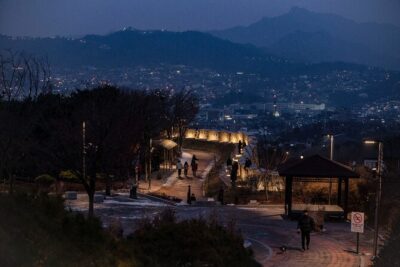
Seoul moonlight walking tour with local historian
Read our review →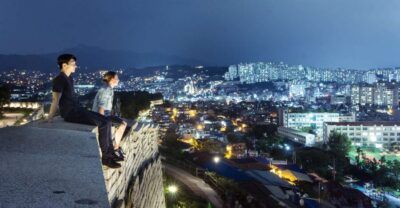
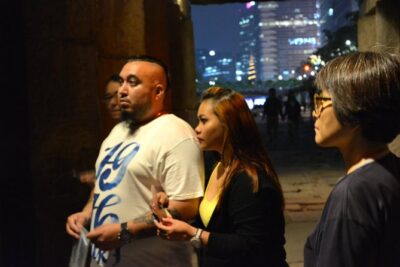
Evening Dark History, Folklore & Ghost Story Walking Tour
Read our review →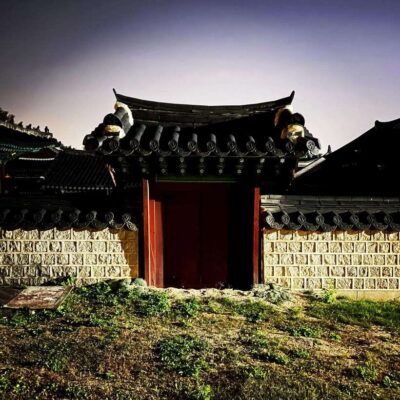
Dark Side of the City and Ghost Stories Walking Tour
Read our review →
Gangnam Walking Tour on Youth and Society in Seoul Korea
Read our review →
Gyeongbok Palace and Bukchon Hanok Walking Tour
Read our review →
Best Walking Tour to Gyeongbok Palace Bukchon Hanok Village
Read our review →
Highlights & Hidden Gems With Locals: Best of Seoul Private Walking Tour
Read our review →Browse the lists this tour appears in