
Reviewed · GYEONGBOKGUNG PALACE TOURS
Best Walking Tour to Gyeongbok Palace Bukchon Hanok Village
Gyeongbokgung Palace and Bukchon Hanok Village make a fine first chapter in Seoul. In three hours, you move from the King Sejong Statue and Gwanghwamun area into the Joseon royal compound, then through old residential lanes toward Insadong. The changing of the royal guard adds ceremony, while the palace buildings and hanok houses give the history a physical shape.
I like the small group size, capped at eight, and the chance for a guide to answer real questions instead of delivering a speech to a crowd. I also like the range of guides, including Jay Kim, Stella, Jack, Paul, and Joe, who bring in personal stories, language tips, food suggestions, and details about Korean daily life.
The main drawback is the walking. Bukchon includes steps and uphill streets, and the tour moves at a steady pace. Guide quality can also vary, so the experience may feel lively and personal with one guide but rather bare-bones with another.
Key points to know before booking
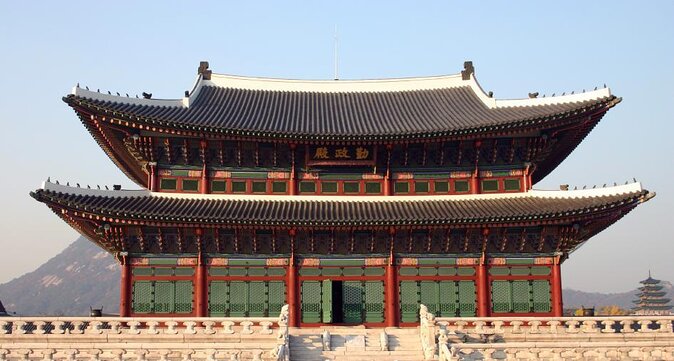
- Royal ceremony first: The changing of the guard at Gyeongbokgung can be one of the tour’s most memorable sights.
- A useful three-hour introduction: You cover palace architecture, Joseon-era history, the National Folk Museum area, Bukchon, and the route toward Insadong.
- Small groups matter: The maximum of eight makes it easier to hear the guide and ask questions.
- Guide quality shapes the day: Jay Kim, Stella, Jack, Paul, and Joe have all led especially strong tours, but the experience is not identical with every guide.
- Expect hills and steps: Comfortable shoes are essential, and this is not a good choice if steps or uphill walking are difficult.
- Good finish in Insadong: The tour ends near 75-5 Insa-dong, handy for continuing with food, crafts, tea, or shopping.
Why this is a good first walk through Seoul
Seoul can feel enormous at first. Modern towers, palace walls, busy roads, old lanes, and shopping streets all meet within a short distance. This tour gives you a clear route through that mix, beginning near the center of political Korea and ending in one of the city’s best-known traditional districts.
I like the way the walk links places instead of treating them as isolated photo stops. The King Sejong Statue introduces an important national figure. Gyeongbokgung then shows royal power in brick, timber, courtyards, gates, and painted decoration. Bukchon shifts the focus from kings to ordinary residential life. By the time you reach Insadong, you have seen several sides of Seoul in one morning or afternoon.
The guide is the key to making those connections. Strong guides on this tour have explained how the palace reflects the Joseon Dynasty, how traditional houses were built, and how Korean life changed from the past to today. Some have also used photographs and personal stories to answer questions about the country and its capital.
This is especially useful if you are visiting Seoul for the first time. You do not need to arrive with a working knowledge of Korean history. You can simply follow the route and let the guide supply the setting, names, and stories.
More Gyeongbokgung tours in Seoul:
- Seoul: Gyeongbok Palace, Bukchon Village, and Gwangjang Tour
★ 4.9 · 2,321 reviews - Best Seoul City Tour (Gyeongbokgung Palace,Insadong,Namsan Tower)
★ 5.0 · 1,647 reviews - Seoul City Sightseeing Tour Including Gyeongbokgung Palace, N Seoul Tower, and Namsangol Hanok Village
★ 5.0 · 1,423 reviews
Starting near Gwanghwamun and King Sejong
The meeting point is at 24-1 Taepyeongno 2-ga in Jung District. The route includes the King Sejong Statue, a natural early stop because it connects the modern capital with one of Korea’s best-known historical figures.
This opening section is brief, but it helps frame the rest of the walk. Instead of rushing straight into palace gates, you get a sense of the public space around Gwanghwamun and the way Seoul places national history in the middle of its present-day city center.
Your guide may also use this point to explain the past and present of Seoul. That broad theme is useful because the tour is not only about old buildings. It is about how royal institutions, language, architecture, neighborhoods, and modern city life sit side by side.
Meeting instructions are worth checking closely before you set out. The tour is near public transportation, but Seoul has several busy roads and large landmarks in this area. Arriving with a little spare time will make the start calmer.
Entering Gyeongbokgung Palace and watching the guard change
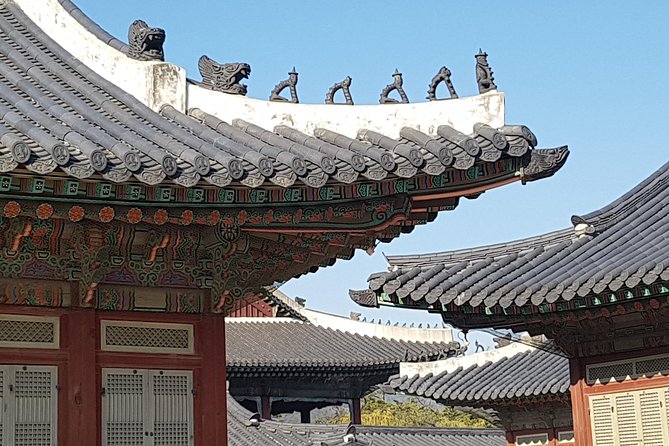
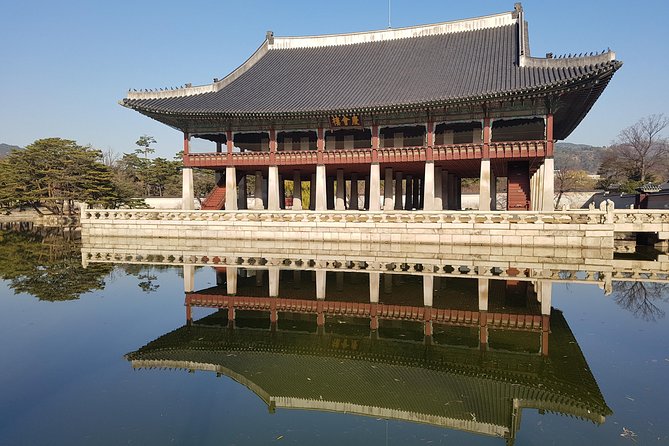
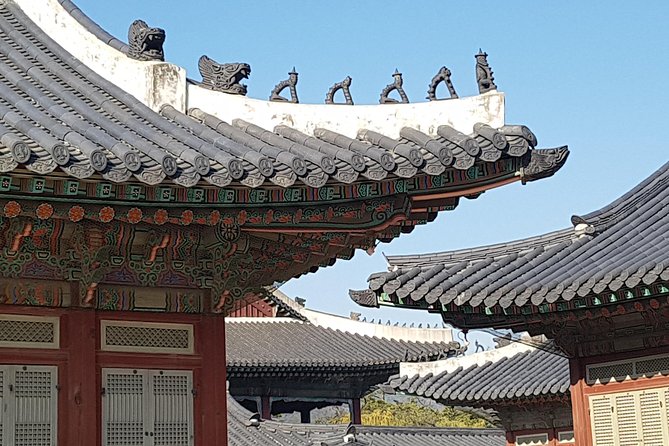
Gyeongbokgung Palace is the main event, with about an hour assigned to the visit and admission included in the price. The palace offers a strong visual introduction to Joseon-era court life, with formal gates, courtyards, halls, rooflines, and traditional construction details.
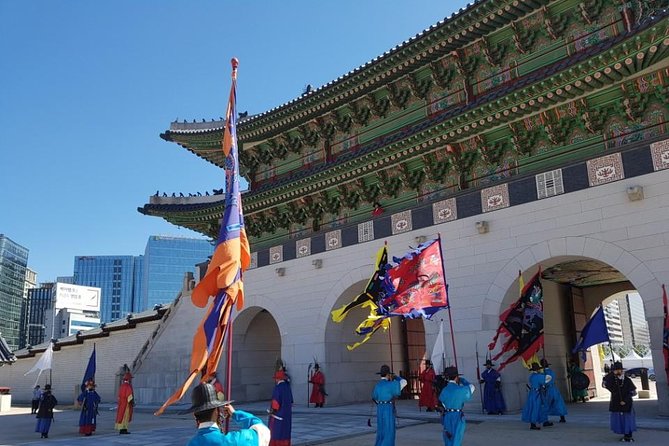
The changing of the royal guard adds movement to what could otherwise be a quiet architecture visit. It gives you a scheduled spectacle to watch and photograph, then the guide can explain how the ceremony connects with the palace setting. Timing can matter, so the exact order of the walk may depend on the day’s schedule.
This is where guide quality matters most. A good guide does more than name buildings. Jay Kim has been praised for explaining Seoul and the palace in a way that connects individual sites to the wider story of Korea. Stella has been described as especially clear in English and good at keeping younger visitors interested. Jack has drawn praise for linking one historical reference to the next, which helps the palace feel less like a collection of disconnected courtyards.
Paul and Joe have also been singled out for adding cultural details and answering questions at length. Joe, also referred to as Joseph, has used pictures and facts to explain the palace and everyday life. Paul has sometimes added language explanations, street food stops, or food recommendations when the schedule and circumstances allowed.
You should still keep expectations sensible. The scheduled palace time is about an hour, so this is an introduction, not an exhaustive examination of every building. If you want to photograph every courtyard or read every sign, you may wish you had more time. The benefit is that the tour keeps moving and leaves room for the next two areas.
The National Folk Museum and daily Korean life
The route includes the National Folk Museum of Korea, described as holding more than 98,000 artifacts connected with South Korea’s past. The museum gives the tour a different angle from the palace.
Gyeongbokgung shows official royal space. The folk museum helps explain how people lived, worked, celebrated, and organized daily life. That contrast is valuable. You can look at palace architecture and then consider the homes, tools, customs, and routines beyond the court.
The available information does not give a separate museum time, so do not plan on an extended museum visit. The guide’s focus is the overall three-hour route. Still, this stop can make the history easier to understand, especially if you prefer practical details about people and customs over a long list of kings and dates.
Several guides have been praised for explaining culture alongside architecture. That is one reason I would choose this walk early in a Seoul stay. You may leave with useful context for other neighborhoods and museums you visit later.
More Bukchon and hanok village tours in Seoul:
- Seoul: Gyeongbok Palace, Bukchon Village, and Gwangjang Tour
★ 5.0 · 1,044 reviews - Seoul: Gyeongbok Palace and Bukchon Hanok Walking Tour
★ 4.8 · 157 reviews - Experience Korean Cooking in Modern Hanok Kitchen
★ 5.0 · 118 reviews - Royal Seoul Cooking Class in a 100-Year-Old Hanok
★ 5.0 · 81 reviews
Walking toward Bukchon Hanok Village
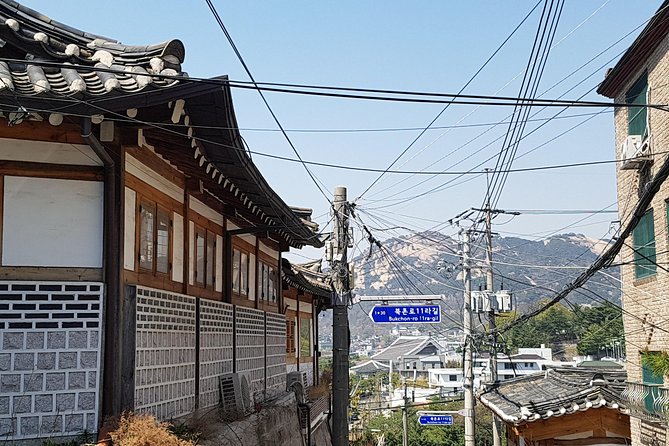
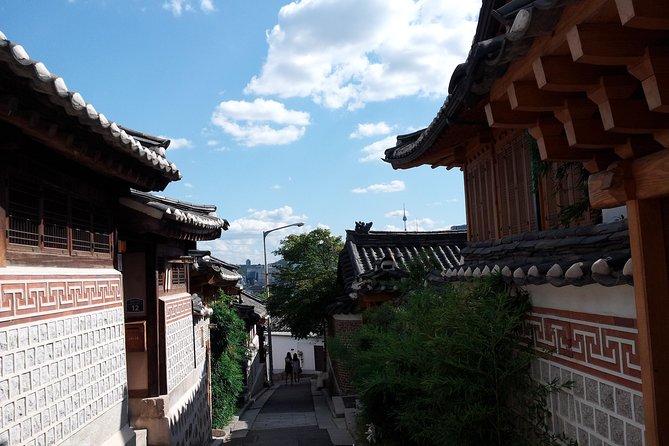
From the palace area, the route heads toward Bukchon Hanok Village. The neighborhood is known for traditional Korean houses, or hanok, and the tour gives you a look at the lanes and houses that preserve an older style of urban living.
The listed time here is about 30 minutes, so expect a focused walk rather than a full neighborhood exploration. Your guide may point out house design, construction methods, and signs of how traditional homes fit into a modern capital. The phrase hidden looks in the route description suggests the appeal: Bukchon is best understood by looking past the famous street views and noticing doorways, rooflines, walls, and the way homes sit along the slopes.
This is also the most physically demanding part. Bukchon includes uphill streets and steps. Wear comfortable shoes and clothing suited to walking. If you have trouble with hills, steps, or long periods on your feet, this tour may not be the right choice.
Bukchon is a residential area, so the visit requires ordinary courtesy. Follow the guide’s directions, keep voices reasonable, and remember that the houses are part of a living neighborhood, not only a backdrop for photographs.
Finishing near Insadong
The tour ends around 75-5 Insa-dong in Jongno District. That is a useful finish because you are not dropped at an isolated attraction. You can continue exploring Insadong on your own after the guided walk.
The route toward Insadong helps complete the transition from royal Seoul to traditional commercial Seoul. You can use the remaining day for food, shops, tea, or more independent wandering. Paul has recommended restaurants and street food to people on the tour, and Joe has helped point visitors toward typical Korean dishes. Those extras are not guaranteed, but they show why it is worth asking your guide for practical suggestions before parting.
I also like this ending because you can stop when the formal tour stops. Three hours is enough for an introduction without taking over your whole day. If you still have energy, Insadong gives you an easy next step. If you are tired, you can finish with a meal and call it a useful half-day.
What the $88 price gets you
At $88 per person, this is not the cheapest way to see Gyeongbokgung and Bukchon. The value depends on how much help you want with history, navigation, timing, and local context.
The price includes a professional guide and the palace admission fee. It also buys a small group, with no more than eight people, which is a real advantage in crowded central Seoul. You are paying for interpretation and a planned route, not simply entry to the sights.
I think the price is reasonable for a first visit if you want a strong overview and prefer not to research the palace beforehand. It is less appealing if you are comfortable using signs, maps, and public transportation on your own. Independent visitors can see the main areas without a guide, but they will miss the personal explanations and the chance to ask questions as the route develops.
The strongest value appears when the guide is active and engaged. Some guides have turned a standard route into a personal lesson in Korean history and culture, while a few have delivered only basic information. That variation is the biggest uncertainty in the purchase.
Which guide style suits you best
You cannot choose from a fixed guide menu in the information provided, but several names have received especially strong praise.
Jay Kim is a good match if you want clear explanations of Seoul, the palace, and the country’s history. He has also made meeting easier by sending clothing details in advance.
Stella suits families and anyone who enjoys a warm, energetic presentation. Her clear English and ability to keep a young person interested have been especially useful.
Jack is a strong choice for people who ask many questions and like connections between different historical periods. He has also been praised for giving time to take photographs and for adding traditional songs to the walk.
Paul has led both group walks and one-person tours. His best tours have included language, food, history, and flexible local suggestions. The important caution is that his style, like any guide’s, may not suit everyone.
Joe brings detailed explanations, personal stories, and practical food advice. He has also been praised for explaining how palace history fits into the larger story of Korea.
Do not assume every guide will offer the same extras. The core route is consistent, but the tone and depth can change.
Who should book this walk
I would recommend it to first-time visitors who want to understand what they are seeing rather than simply collect photographs. It also suits families, couples, and small groups who like asking questions and moving through several major sights without planning every turn.
It works well near the start of a Seoul visit. The palace gives you an immediate sense of Korean history, while Bukchon and Insadong help you notice traditional details during the rest of your stay.
You should think twice if you dislike hills, steps, or a set walking pace. You should also consider an independent visit if you prefer a quiet, self-guided look at the palace or want to spend much longer inside one site.
The tour requires good weather and may be moved or refunded if poor weather or low enrollment causes cancellation. You can cancel for a full refund up to 24 hours before the start time. That gives you some flexibility, but last-minute changes are not accepted.
Final call: book it for context, not just sightseeing
Book this tour if you want Seoul’s most famous traditional sights explained in plain language, with palace admission, a small group, and a convenient finish near Insadong. The changing of the guard, the palace courtyards, the folk museum, and Bukchon’s uphill lanes make a satisfying three-hour introduction.
I would not book it solely for a guaranteed perfect guide experience. The best guides, including Jay Kim, Stella, Jack, Paul, and Joe, can make the walk memorable, but the guide assigned to you will shape the day. For most first-time visitors who value context and do not mind walking, the combination of major sights and personal explanation makes the $88 worthwhile.
FAQ
How long does the Gyeongbokgung and Bukchon tour last?
The tour lasts approximately three hours.
What is included in the price?
A professional guide and the admission fee are included.
How large is the group?
The tour has a maximum of eight participants.
Where does the tour start?
It starts at 24-1 Taepyeongno 2-ga in Jung District, Seoul.
Where does the tour finish?
The tour finishes near 75-5 Insa-dong in Jongno District.
Does the tour include the changing of the guard?
The itinerary includes the royal guard changing ceremony at Gyeongbokgung Palace.
Is the tour suitable for people with walking difficulty?
It is not recommended for people who have difficulty with steps and uphill walking. A moderate level of physical fitness is advised.
More walking tours in Seoul
- Seoul moonlight walking tour with local historian
★ 5.0 · 940 reviews - Seoul: Nighttime Hidden Gems Walking Tour
★ 5.0 · 775 reviews - Seoul: Evening Dark History, Folklore & Ghost Story Walking Tour
★ 5.0 · 593 reviews - Seoul: Dark Side of the City and Ghost Stories Walking Tour
★ 4.8 · 484 reviews
More palace tours in Seoul
- Small-Group Royal Palace and Seoul City Tour (hotel pick-up)
★ 5.0 · 1,474 reviews - Seoul Highlights: Gyeongbok Palace, Insadong & N Seoul Tower
★ 4.7 · 726 reviews - Seoul: Hanbok Rental with Gyeongbokgung Palace Entry
★ 4.6 · 611 reviews - Seoul City Half Day Tour-Gyeongbok Palace Guard Changing Ceremony
★ 4.5 · 357 reviews
Just added around Seoul
- Your Personal Seoul Photographer!★ 4.1 · 15 reviews
- From Seoul: Hwacheon Ice Fishing and Lighting Festival Tour★ 4.5 · 4 reviews
- You’re Invited to Our Home in Seoul: The Only Cooking Class!★ 5.0 · 8 reviews
- Seoul: Gangneung BTS K-Pop & K-Drama Filming Locations Tour★ 4.6 · 14 reviews
- Unique Native Experience : Han River Picnic, Board game, BBQ★ 5.0 · 3 reviews
- 2-Hour Private Kayaking and Paddleboarding Experience in Hanriver★ 5.0 · 3 reviews
- Yun Korean Cooking Class in Seoul★ 5.0 · 6 reviews
- Vivaldi Park Winter Ski Resort with Nami Island Tour from Seoul★ 4.5 · 7 reviews
Gyeongbokgung Palace Tours, compared.
Gyeongbok Palace, Bukchon Village, and Gwangjang Tour
Read our review →
Best Seoul City Tour (Gyeongbokgung Palace,Insadong,Namsan Tower)
Read our review →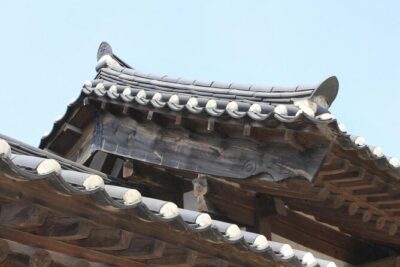
Seoul City Sightseeing Tour Including Gyeongbokgung Palace, N Seoul Tower, and Namsangol Hanok Village
Read our review →Gyeongbok Palace, Bukchon Village, and Gwangjang Tour
Read our review →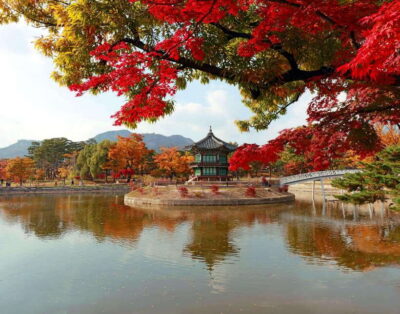
Seoul Highlights: Gyeongbok Palace, Insadong & N Seoul Tower
Read our review →
Seoul City Half Day Tour-Gyeongbok Palace Guard Changing Ceremony
Read our review →
Browse the lists this tour appears in