
Reviewed · SEOUL HIKING AND MOUNTAIN TOURS
Bukhansan mountain hiking tour – 6 hours
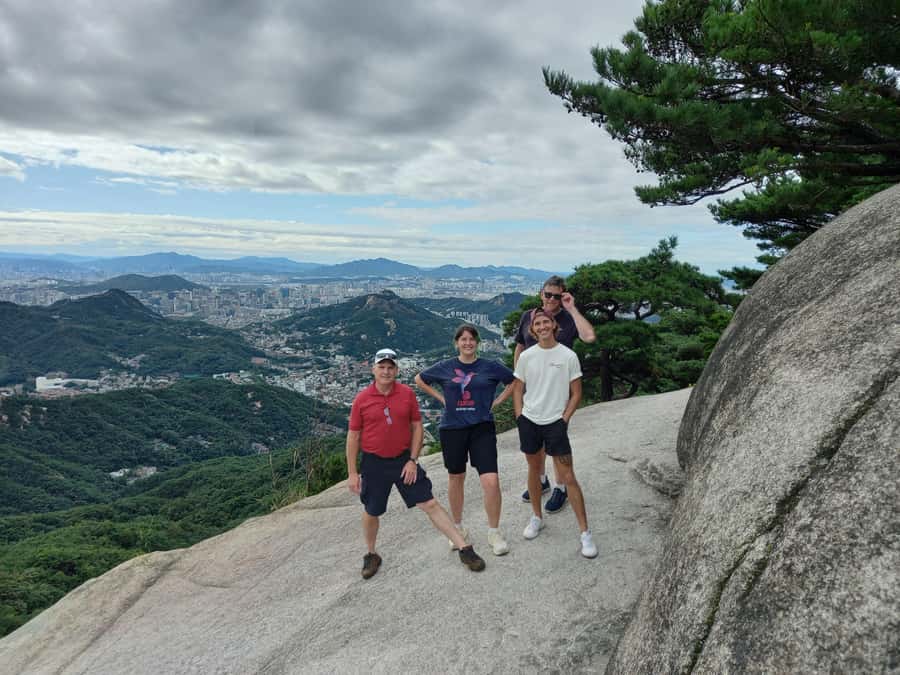
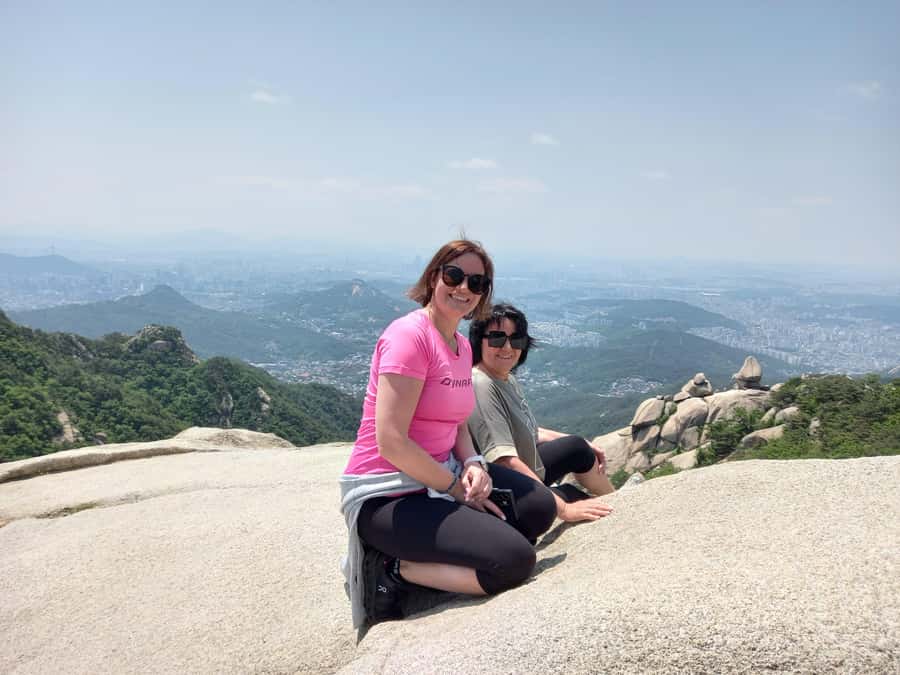
Bukhansan gives you a rare Seoul experience: within roughly half an hour of central streets, you are climbing through granite rock formations, forested valleys, and mountain ridges with the city below. The route reaches Munsubong Peak, Tongcheonmun Rock, Seunggabong Peak, Bibong Peak, and Samobawi Rock before descending beside flowing water.
I like two things right away. First, the private format lets the guide adjust the pace, which matters on a route with several steep sections. Second, guide Paul Koo adds more than directions, explaining the mountain’s geography, Buddhist traditions, and place in Korean culture. The main caution is simple: this is not a gentle city walk. Expect about five hours on foot, including a steep opening climb and another demanding section near Munsubong Peak.
Key points to know before you book
- Bukhansan reaches 836.5 meters: You get a true mountain outing while staying close to downtown Seoul.
- The route uses Seoul buses: Travel time is about 30 minutes each way, but transportation costs are not included.
- The hike is middle-high difficulty: Most of the ridge is fairly level, but the first 50 minutes and a 20-minute section near Munsubong are steep.
- Paul Koo guides in English: He covers natural features, Korean mountain worship, Buddhist life, and local history.
- The best views depend on clear weather: Munsubong and the ridge near Bibong offer broad views across Seoul when the sky is open.
- The tour costs $305 for up to two people: That is a serious price, but it buys a private guide for six hours rather than a large group outing.
Why Bukhansan feels different from a normal Seoul excursion
Seoul is often presented through palaces, markets, shopping streets, and modern towers. Bukhansan adds another side of the city. It is one of Seoul’s three major natural landmarks, along with the Han River and Namsan Mountain, and it was designated a national park in 1983.
What makes the mountain especially useful for a short Seoul visit is its location. You do not lose half a day reaching a remote trailhead. The outing begins at Gwanghwamun Square, near the King Sejong statue, then uses a city bus toward the Gugi National Park office. The ride takes about 30 minutes.
That quick shift from central Seoul to open mountain country is part of the pleasure. You begin among major civic sights, then trade traffic and stone plazas for granite outcrops, ridges, and a valley with running water. The contrast gives the tour more meaning than a simple walk in a park.
Bukhansan also carries spiritual weight in Korea. Mountains have long been treated as places of worship, reflection, and contact with forces larger than everyday life. Ten Buddhist temples in the area offer temple stays, and your guide uses the hike to explain that religious and cultural background.
More hikes and mountain trips in Seoul:
- Seoul: Guided City Wall Sunset Hike with Korean Dinner
★ 4.9 · 227 reviews - Private Hiking tour to Bukhansan Peak(Baegundae: 836.5m) with Mountain Expert
★ 5.0 · 113 reviews - Fortress Night Hike & Snack at a Local Market
★ 5.0 · 112 reviews
The 30-minute bus ride from Gwanghwamun
The standard meeting point is Gwanghwamun Square, at the King Sejong statue, with a planned start at 9:30 in the morning. After meeting your guide, you ride by bus to the Gugi National Park office. The scheduled transfer takes around 30 minutes.
The meeting point and time can be adjusted after booking, and your hotel may also serve as the meeting place. That flexibility is useful if you are staying away from central Seoul, though you should confirm the arrangements and guide availability in advance.
Transportation is listed separately from the guide service, so bring money for the bus. Food and drinks are also not included. Pack water, a snack, an energy bar, bananas, or a simple meal. This is not the kind of hike where you want to rely on finding food along the route.
The opening climb from Gugi National Park office
The walking portion begins at the Gugi National Park office. The first major section leads uphill toward Daenammun Gate, scheduled to take about an hour and a half.
The first 50 minutes include a noticeably steep incline. That early effort sets the tone for the day. You do not need to be an expert mountaineer, but you should be comfortable walking uphill for a sustained period. The description calls the route suitable for casual walkers, yet also rates its difficulty as middle-high. Those two points fit together: the route is not technical, but it demands stamina.
This is where a private guide can make a real difference. Paul Koo has been praised for managing time well and offering hands-on support when the trail becomes harder. One family group included a mother who needed extra help on difficult sections, and the guide adjusted his care without losing control of the schedule.
That detail matters more than a generic promise of a friendly guide. You can expect a patient pace, useful help, and explanations as you walk. Still, you should judge your own fitness honestly. Older walkers and people who describe themselves as non-hikers have completed the route, but the climb challenged them.
Daenammun Gate and the ridge toward Munsubong
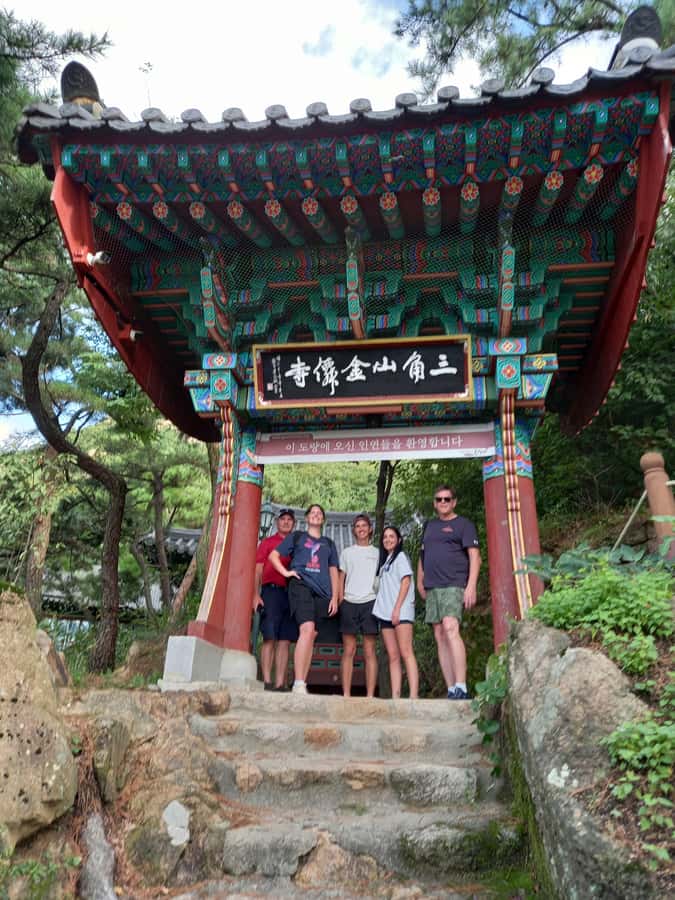
The route reaches Daenammun Gate after the first long climb. From here, the hike moves into a mix of ridge walking and steeper stretches. Much of the trail is close to level along the mountain ridge, which gives you time to recover and focus on the scenery.
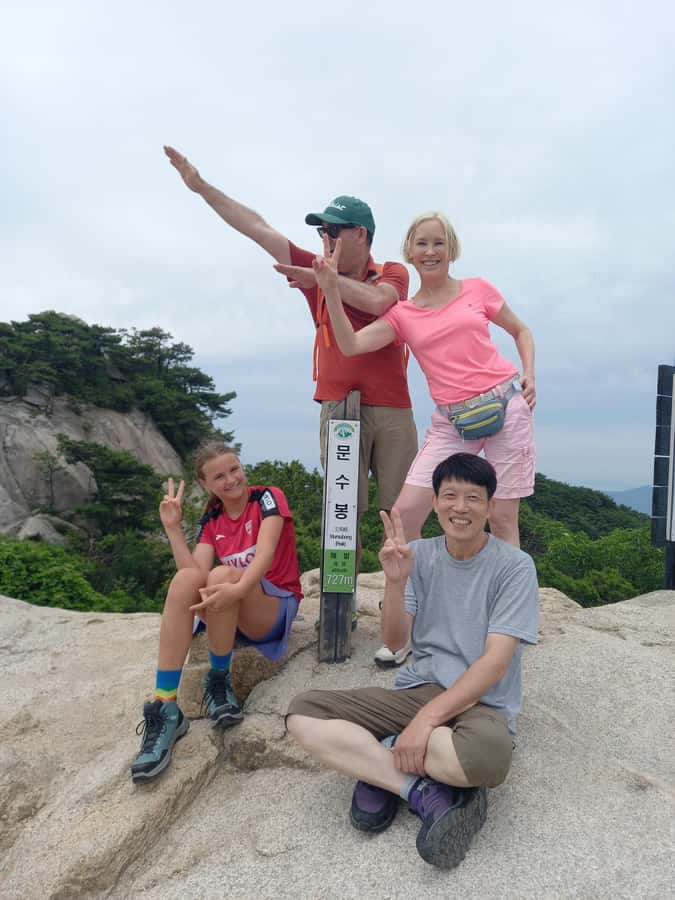
The next demanding point comes on the approach to Munsubong Peak. Expect around 20 minutes of fairly steep uphill walking. The effort is rewarded by a high point with excellent views over Seoul, especially when the weather is clear.
The schedule allows a short break and snack around Daenammun, followed by photo time at Munsubong. That pause is important. You have already spent about 90 minutes walking, and the day is far from over. Use it to drink water, eat something, and settle your breathing before continuing along the rock formations.
A different kind of day out around Seoul:
- Best DMZ Tour Korea from Seoul (Red Suspension Bridge Optional)
★ 5.0 · 41,422 reviews - DMZ Tour: 3rd Tunnel, Option(Suspension Bridge, Boat) from Seoul
★ 5.0 · 21,373 reviews - DMZ tour south Korea from Seoul (NK experience hall, defector)
★ 5.0 · 20,599 reviews - Seoul: DMZ Tour with Optional Suspension Bridge
★ 4.8 · 5,277 reviews
Munsubong Peak and the granite scenery
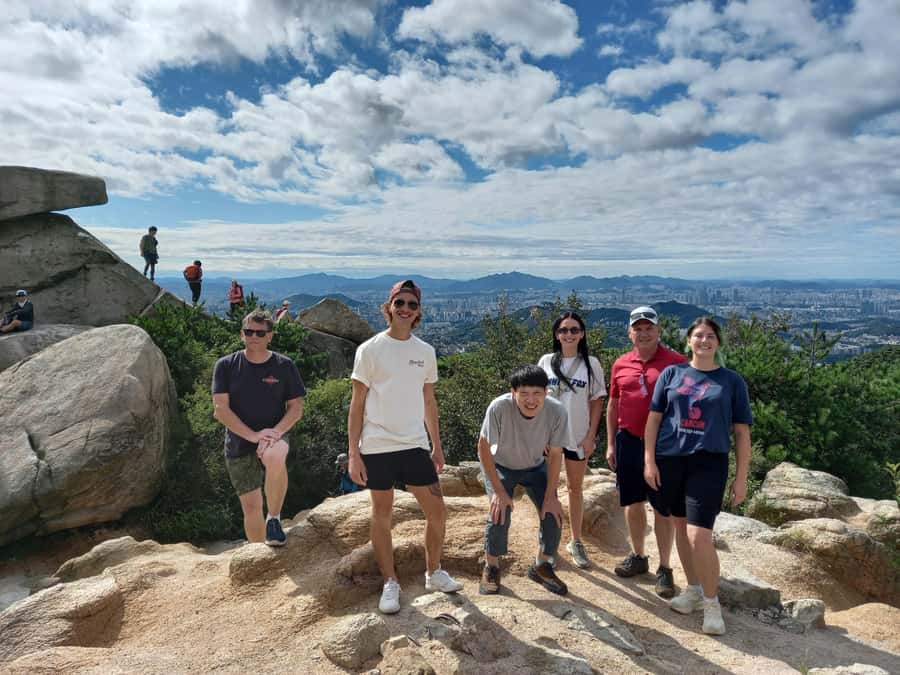
Munsubong is one of the strongest points of the route. From the top, you can look toward downtown Seoul and see how closely the mountain sits beside the capital. The city view is weather-dependent, so clouds or haze may soften the panorama, but the granite scenery remains the main attraction in any conditions.
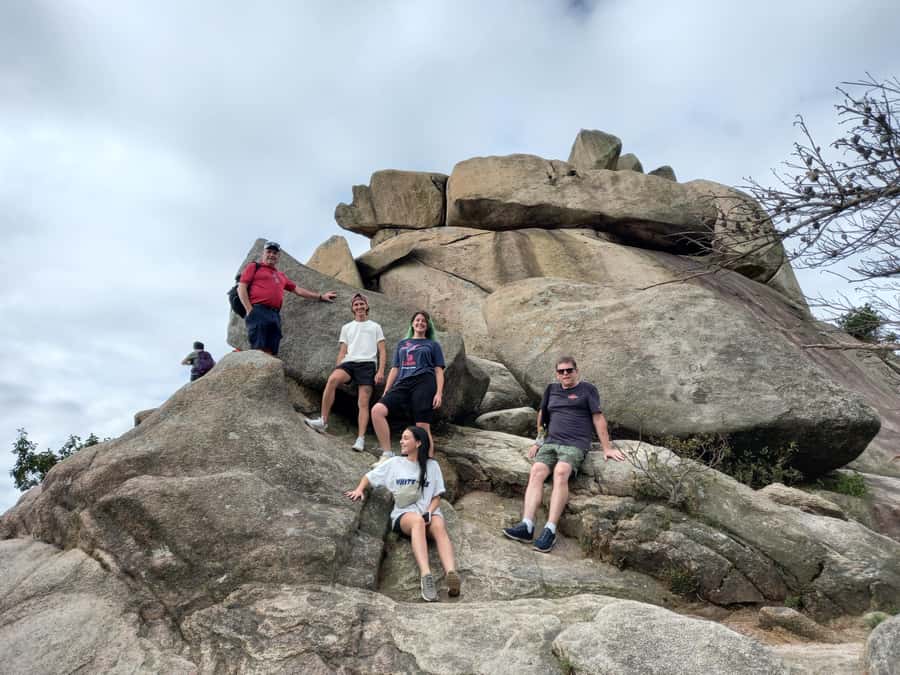
Bukhansan’s rocks are not just background scenery. The trail passes oddly formed granite shapes and unusual stones that give the route a sculptural character. The formations continue from Bibong through Samobawi Rock, Seunggabong Peak, Tongcheonmun Rock, and Munsubong Peak.
I like this section because the mountain does not offer only one viewpoint followed by a long ordinary path. The rocks keep changing as you move along the ridge. Your guide can give names and meaning to the features, helping you notice the difference between a simple outcrop and a landmark with a place in local tradition.
Tongcheonmun Rock, Seunggabong, Bibong, and Samobawi
After Munsubong, the scheduled route continues toward Tongcheonmun Rock and Seunggabong Peak. This section takes about 30 minutes. It is followed by Bibong Peak and Samobawi Rock, with another 30-minute block set aside for walking and photographs.
These are the route’s most distinctive rock landmarks. Bibong and Samobawi form part of the granite chain that makes Bukhansan feel unlike an ordinary wooded hill. The trail gives you repeated chances to stop, look back, and see Seoul from a changing angle.
The Bibong ridge follows for about ten minutes. By this stage, you have covered the high points and can begin thinking about the descent. The ridge sections are generally easier than the steep climbs, but uneven mountain trails still require attention. Wear proper walking shoes and keep both hands available where the rocks make the footing awkward.
The descent through the water-filled valley
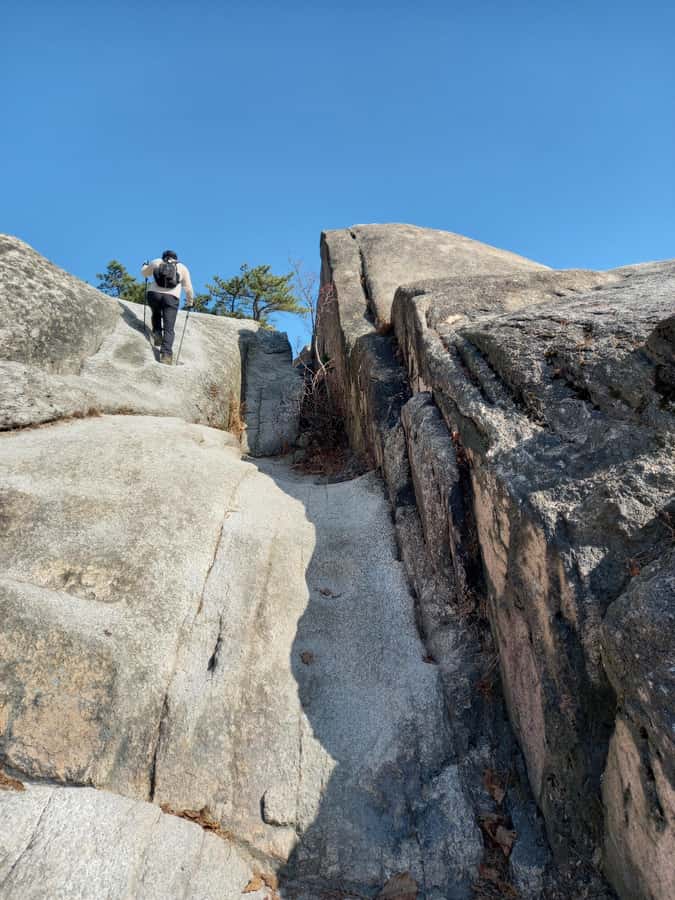
The route then heads toward the North 5 Provincial Office, with about an hour and ten minutes scheduled for the descent. This is not simply a return over the same ground. The way down leads through a valley where water continues to flow even during dry periods.
The sound of running water changes the mood after the exposed ridge. It gives you a cool, calmer finish and creates a natural place to slow down. The valley also offers another angle on Seoul, combining the sound of the stream with views toward the city.
The descent lasts around an hour and a half in the wider tour description, so do not assume the hard work ends at the summit. Downhill walking can be tiring, particularly after several hours on your feet. This is another reason to bring water and food rather than treating the outing as a casual sightseeing stop.
What Paul Koo adds to the walk
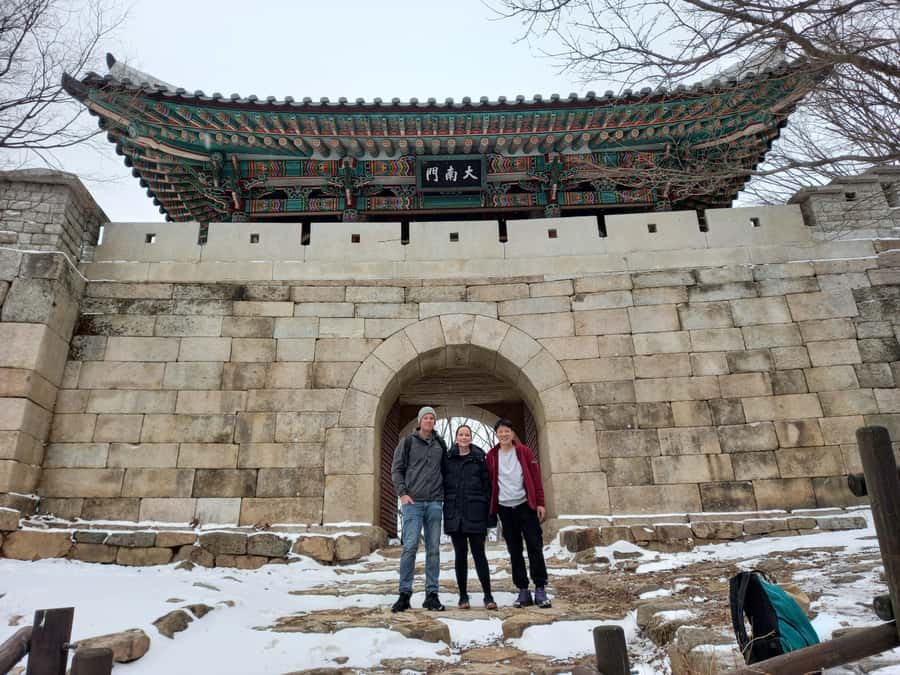
The guide’s role is not limited to finding the trail. Paul Koo explains Bukhansan’s natural, historical, and spiritual features as you go. That context helps connect the rocks and ridges to Korean culture instead of leaving them as attractive scenery with unfamiliar names.
The cultural side is particularly valuable here. In Korea, mountains have traditionally been more than places for exercise or views. They have been treated as sacred spaces, and Bukhansan’s Buddhist temples reflect that tradition. You will not be spending the day at temple stays, but the guide can help you understand why the mountain has drawn spiritual practice as well as hikers.
The strongest practical quality is patience. Paul has managed the route for people with very different abilities, including older non-hikers who found the trail challenging. If your group includes someone who needs a slower pace or occasional support, the private arrangement gives you a better chance of keeping the day comfortable.
The price: good value for the right group
The price is $305 per group of up to two people. For one person, that is expensive. For two people splitting the cost, it becomes $152.50 each before transport, food, and drinks.
You are paying for a private six-hour experience with an English-speaking guide, not simply access to the national park. That matters if you want explanations, help on steep parts, and the freedom to discuss pace or meeting arrangements. It also suits couples or friends who would rather not be tied to a large group.
The value is weaker if you only want to walk independently. Bukhansan can be enjoyed without a private guide, and the tour does not include bus fares, meals, or insurance. The price makes the most sense for people who value guidance and cultural background, or for a small group that wants personal attention on a demanding route.
Who should book this Bukhansan hike
I would choose this tour if you want nature without leaving Seoul, and if a long, active day sounds better than another indoor attraction. It works well for couples, friends, or a family group of two who want a private outing with flexible meeting arrangements.
It can also suit older walkers or people with limited hiking experience, but only if they are ready for sustained uphill walking. The private guide and patient pacing help, yet they do not remove the physical effort. The steep first section and the climb near Munsubong are real tests.
I would not pick it for anyone seeking a relaxed stroll, a short viewpoint visit, or a tour where all costs are bundled into one payment. You should be comfortable carrying your own water and snacks, paying for public transport, and spending most of six hours outdoors.
Practical details for a smoother day
The planned schedule begins at 9:30 a.m. and returns to Gwanghwamun around 3:30 p.m. The walking portion takes about five hours, while the two bus transfers account for roughly one hour.
Wear sturdy walking shoes. The supplied information does not specify equipment, but the steep sections, ridge route, and granite formations make sensible footwear a practical choice. Bring enough water, plus compact food that you can eat during the scheduled break.
Clear weather gives you the best chance of seeing downtown Seoul from Munsubong and the Bibong area. Even if haze limits the city view, the rock formations and valley remain central parts of the outing. Build your expectations around the whole route, not just one summit photograph.
Cancellation is free up to 24 hours before the activity, and you can reserve while paying later. Confirm the guide and meeting details in advance, since the starting place and time can be adjusted after booking.
Should you book it?
Book this Bukhansan tour if you want a serious half-day walk, personal guidance, and a close look at Korea’s mountain culture without making a long journey from Seoul. The combination of granite peaks, city views, Buddhist traditions, and a flowing valley gives the day real variety.
Skip it if you want an easy walk or if the $305 private-group price feels too high for an activity that still requires you to pay for transport and food. For two people who value a private guide, Paul Koo’s patience and support make the cost easier to justify. For confident independent hikers, the extra service may be less important.
FAQ
How long does the Bukhansan tour last?
The full activity lasts six hours. The planned schedule runs from 9:30 a.m. to 3:30 p.m., including about 30 minutes by bus each way and roughly five hours of hiking.
Where does the tour start?
The standard meeting point is Gwanghwamun Square, at the King Sejong statue. The meeting place and time may be adjusted after booking, and your hotel may be used as the meeting point.
Is transportation included in the price?
Transportation costs are not included. The route uses a Seoul bus, with about 30 minutes of travel to and from Bukhansan National Park.
How difficult is the hike?
The hike is described as middle-high difficulty. The first 50 minutes include a steep incline, and another section near Munsubong Peak climbs steeply for about 20 minutes. Most of the remaining ridge trail is nearly level.
What should I bring?
Bring water, snacks, an energy bar, bananas, or simple food. Food, drinks, insurance, and transportation are not included.
Is this a private tour?
Yes. The tour is for a private group of up to two people and includes an English-speaking guide. The guide is Paul Koo.
Just added around Seoul
- Your Personal Seoul Photographer!★ 4.1 · 15 reviews
- From Seoul: Hwacheon Ice Fishing and Lighting Festival Tour★ 4.5 · 4 reviews
- You’re Invited to Our Home in Seoul: The Only Cooking Class!★ 5.0 · 8 reviews
- Seoul: Gangneung BTS K-Pop & K-Drama Filming Locations Tour★ 4.6 · 14 reviews
- Unique Native Experience : Han River Picnic, Board game, BBQ★ 5.0 · 3 reviews
- 2-Hour Private Kayaking and Paddleboarding Experience in Hanriver★ 5.0 · 3 reviews
- Yun Korean Cooking Class in Seoul★ 5.0 · 6 reviews
- Day Trip to Yongin Daejanggeum and Korean Folk Village from Seoul★ 4.0 · 9 reviews
Seoul Hiking and Mountain Tours, compared.
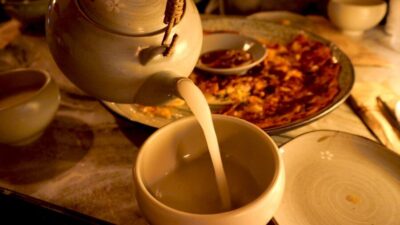
Guided City Wall Sunset Hike with Korean Dinner
Read our review →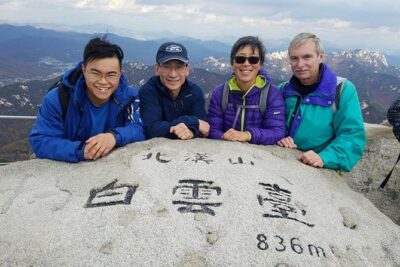
Private Hiking tour to Bukhansan Peak(Baegundae: 836.5m) with Mountain Expert
Read our review →
Seoul Mountain Hike: Temples, Folklore & Traditional Meal
Read our review →
Private Hiking to Bukhansan & Korean Style Spa(Include Lunch)
Read our review →
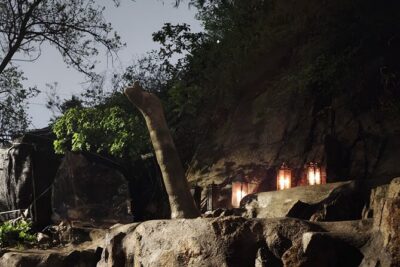
Spiritual Adventure : Into Inwangsan and Korean Shamanism
Read our review →Browse the lists this tour appears in