
Reviewed · SEOUL PALACE TOURS
Deoksugung & Jeongdong-gil: A Walk in Korea’s Rich Heritage
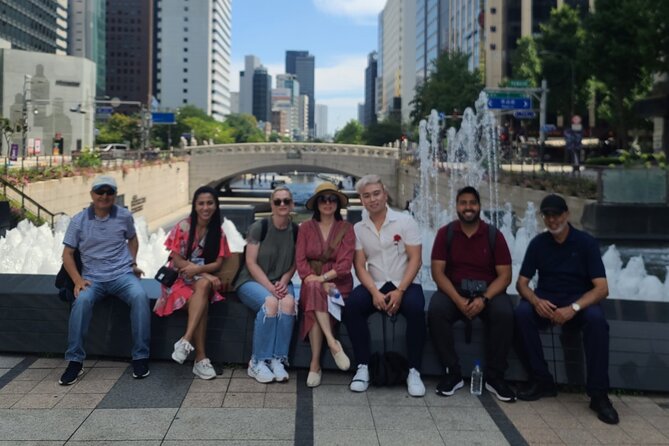
Seoul’s past comes into focus on this walk through Deoksugung Palace and Jeongdong-gil, where royal grounds, missionary buildings, theaters, and public squares sit within a modern city center. The route is especially useful for understanding the uneasy transition from the Joseon Dynasty to the Korean Empire in the late 19th and early 20th centuries.
I like the mix of traditional Korean and Western-style landmarks, and I like that the guide puts the buildings into a local story rather than treating them as isolated photo stops. Sam is named as one possible guide and is described as offering a fun, informative introduction to Seoul. The main consideration is pace: six stops in about three hours means some visits are brief, with only 10 minutes at the Appenzeller Noble Memorial Museum and 15 minutes at Jungmyeongjeon Hall.
Key points at a glance
- Deoksugung begins the story with a royal palace in the middle of central Seoul.
- Jungmyeongjeon Hall connects palace history to Emperor Gojong and the Eulsa Treaty.
- Appenzeller Noble Memorial Museum adds the story of Methodist education and Korea’s early modern institutions.
- Jeongdong Theater provides a planned rest stop for coffee, drinks, and the restroom.
- Gwanghwamun Square ends the walk with King Sejong’s statue, a fountain, and a major civic gathering place.
- The small group is capped at 15 people, making a guide-led walk easier to follow than a large group tour.
Why this three-hour walk matters
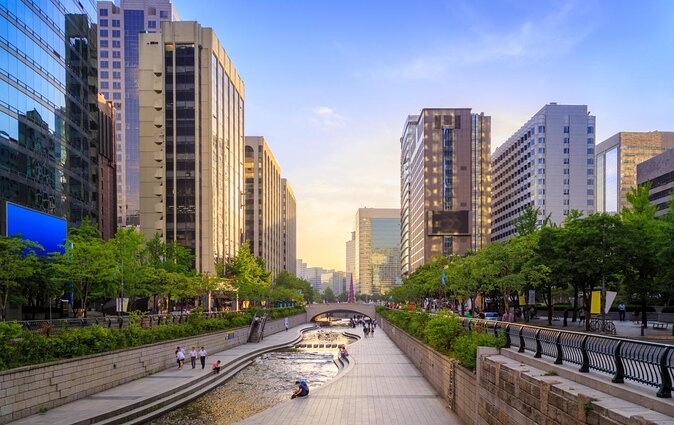
Many Seoul tours focus on the grandest royal sites or the most famous modern districts. This experience takes a narrower, more thoughtful route. It follows the period when Korea was balancing royal tradition, foreign influence, missionary education, imperial politics, and rapid urban change.
That combination gives you a better sense of Seoul’s character than a palace visit alone. You see a royal residence, a former school, a theater tied to Korean performing arts, an imperial library, and a modern public square. The route is not simply old buildings in a row. It shows how different forces shaped the city.
The tour starts at 9:30 a.m. at Deoksugung Palace and finishes at Cheonggyecheon Stream near Jongno. Since the experience lasts about three hours and includes six stops, expect a guided orientation rather than long, leisurely visits inside every site. I would choose it early in a Seoul stay, when you want historical bearings before exploring the city on your own.
The maximum group size is 15. That is small enough for a guide such as Sam to explain details without the walk feeling like a moving crowd. The tour includes an English-speaking guide, but lunch and personal purchases are not included. The price is $48 per person, so the value depends on how much you want interpretation and historical context rather than independent sightseeing.
More palace tours in Seoul:
- Seoul: Gyeongbok Palace, Bukchon Village, and Gwangjang Tour
★ 4.9 · 2,321 reviews - Best Seoul City Tour (Gyeongbokgung Palace,Insadong,Namsan Tower)
★ 5.0 · 1,647 reviews - Small-Group Royal Palace and Seoul City Tour (hotel pick-up)
★ 5.0 · 1,474 reviews
Deoksugung Palace: Korea’s old order meets the modern city
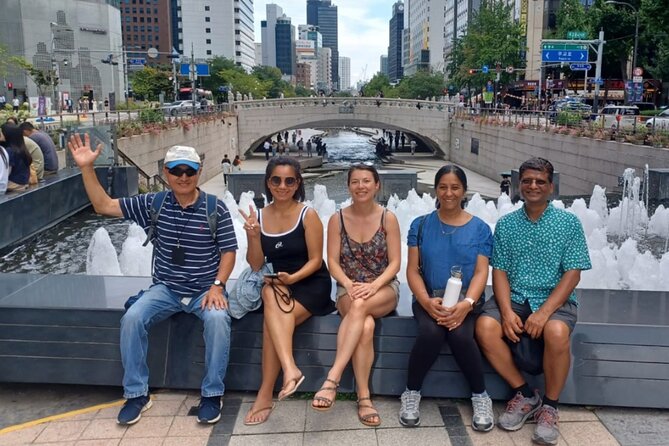
Deoksugung is a strong starting point because it sits in central Seoul beside busy roads and office buildings. The palace was built during the Joseon Dynasty and later became closely linked with the final years of the dynasty and the Korean Empire.
You receive about 20 minutes here, with admission listed as free. That is enough time for a guided introduction and a first look at the palace setting, but not enough for an unhurried exploration of every corner. If you are hoping to spend an hour examining architecture on your own, plan to return after the tour.
The palace matters because it helps explain the changing role of the royal court. The tour’s larger theme is not just ancient Korea. It is the period when Korea faced outside pressure and tried to adapt while preserving its own political and cultural identity.
I like beginning here because the palace immediately establishes the contrast that defines the rest of the walk. Traditional royal architecture is close to streets, offices, and modern traffic. You do not need a long ride to move from one period of Seoul to another.
Gyeonghuigung Palace: a quieter royal chapter
The second stop is Gyeonghuigung Palace, also called Gyeonghui Palace, in Jongno-gu. It was originally built in 1623 during the Joseon Dynasty as a royal residence.
The visit lasts about 20 minutes, and admission is listed as free. Compared with Deoksugung, this stop helps widen the story. You are not looking at a single palace with one famous event. You are seeing another royal site and learning how palace life was spread across the capital.
The short stop works well if your main goal is context. Your guide can point out why the palace mattered and connect it to the political history of the Joseon period. It may feel too brief if you want extensive architectural detail, but the tour is designed as a connected walk, not a series of long museum visits.
This is one reason the experience suits first-time visitors to Seoul. You get several historical reference points without spending an entire day inside one complex.
Appenzeller Noble Memorial Museum: education and foreign influence
The Appenzeller Noble Memorial Museum occupies the former home of Baekjae Hakdang, a missionary school later expanded into a university now known as Pai Chai University in Daejeon. The museum explains the school’s history and its Methodist connection.
This is a useful change of subject after the royal palaces. Korea’s transformation was not shaped only by kings and court politics. Schools and religious institutions also played a role in the country’s contact with Western ideas and educational systems.
The scheduled visit is only 10 minutes. Treat it as a focused stop, not a full museum session. The short timing may limit how much you can examine, but it keeps the overall route moving and gives you one clear example of early modern education in Korea.
I especially like this part of the walk because it adds social history. Palaces tell you about power at the top. The former school helps show how institutions outside the court affected Korea’s developing modern identity.
More history and heritage tours in Seoul:
- Seoul: Evening Dark History, Folklore & Ghost Story Walking Tour
★ 5.0 · 593 reviews - Hanbok Photoshoot and History Tour at Gyeongbokgung Palace
★ 5.0 · 276 reviews - From Seoul: Dae Jang Geum Park Historic K-Drama Set Tour
★ 4.9 · 143 reviews - Seoul: City Highlights and Historical Experience No Shopping
★ 5.0 · 74 reviews
Jeongdong Theater: a practical pause with cultural meaning
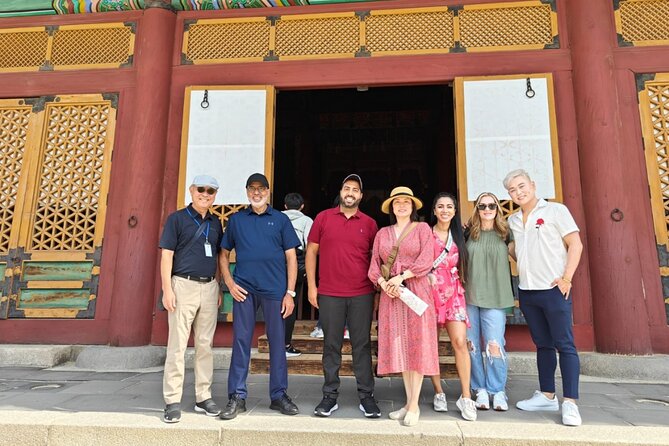
Jeongdong Theater presents concerts, plays, and musicals that incorporate elements of traditional Korean culture. The tour stops here for about 25 minutes so you can get coffee or another drink and use the restroom.
That planned pause is more valuable than it may sound. Three hours on foot can feel long if there is no break, particularly in warm or wet weather. Since personal consumption is not included, bring a payment method for anything you buy.
The theater also fits the tour’s main idea. Seoul’s heritage is not locked away in palace courtyards. Traditional culture continues through performance, theater, and public life. You are given a chance to pause in a modern cultural venue while still discussing Korean traditions.
Do not expect a performance as part of the tour. The stop is for refreshments and facilities, with the theater’s cultural role providing the setting and talking point.
Jungmyeongjeon Hall: the most politically charged stop
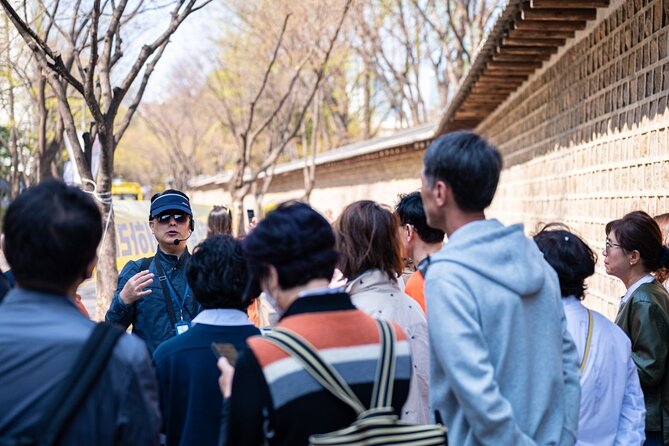
Jungmyeongjeon Hall was built in 1899 as the imperial library of the Korean Empire. After Deoksugung Palace caught fire in 1904, it became the temporary residence of Emperor Gojong.
It was also the site of the infamous Eulsa Treaty, an event that makes this small building central to the story of Korea’s early 20th century. The stop lasts about 15 minutes, so your guide’s explanation is especially important. Without context, the building might appear modest. With context, it becomes one of the most meaningful places on the route.
This is where the tour moves beyond attractive architecture. You are dealing with imperial history, political pressure, and a turning point in Korea’s national story. I would pay close attention here and save questions for the guide. The short visit means the quality of the explanation matters more than the amount of time spent inside.
For many people, Jungmyeongjeon will be the stop that justifies choosing this route over a general city walk. It gives the tour a clear historical focus and links the palace district to the difficult final years of the Korean Empire.
Gwanghwamun Square: finishing in Seoul’s civic center
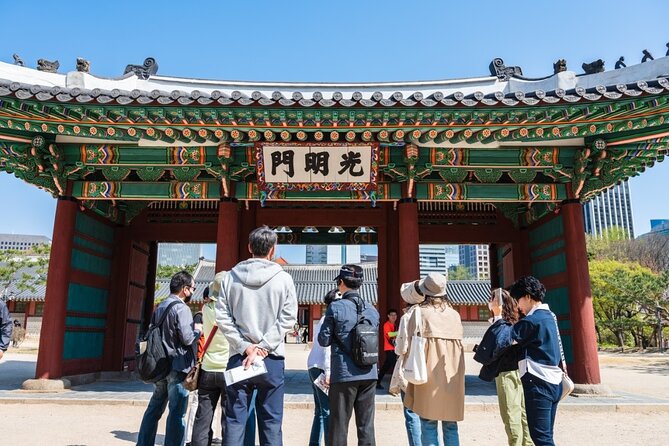
The walk ends at Gwanghwamun Square, a large public square in central Seoul built in 2009. It includes a large fountain, a statue of King Sejong the Great, and several other features.
The square provides a useful final contrast. You begin with palace grounds and finish in a modern civic space used by locals and visitors. The route therefore connects royal authority, imperial politics, education, the performing arts, and present-day public life.
You receive about 20 minutes here. That is enough for an overview and for taking in the square’s main landmarks. It also gives you a practical end point in central Seoul, with Cheonggyecheon Stream nearby.
The finish works well for independent plans. You can continue toward the stream, remain in the Jongno area, or use public transportation. The tour does not include a meal, so arrange lunch afterward rather than expecting food at the end.
What $48 buys you
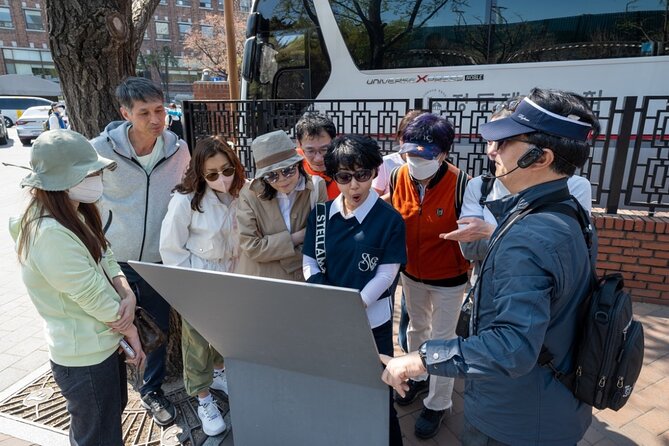
At $48 per person, this is not the cheapest way to walk around central Seoul. Several listed stops have free admission, so you are mainly paying for the guide, the route planning, and the historical connections between sites.
That can be good value if you want help understanding the transition from Joseon rule to the Korean Empire and modern Seoul. A self-guided walk may show you the same buildings, but it will not necessarily make the connection between Deoksugung, Jungmyeongjeon Hall, missionary education, and Gwanghwamun Square.
The price is less compelling if you prefer to move at your own speed or spend long periods inside museums. The schedule gives you short visits and a broad overview. You are buying interpretation and structure, not extensive admission access.
The small group limit of 15 helps support the price. A guide can answer questions more easily than on a large coach-style tour, and the walking format keeps the experience close to the neighborhoods and landmarks.
Who should book this experience
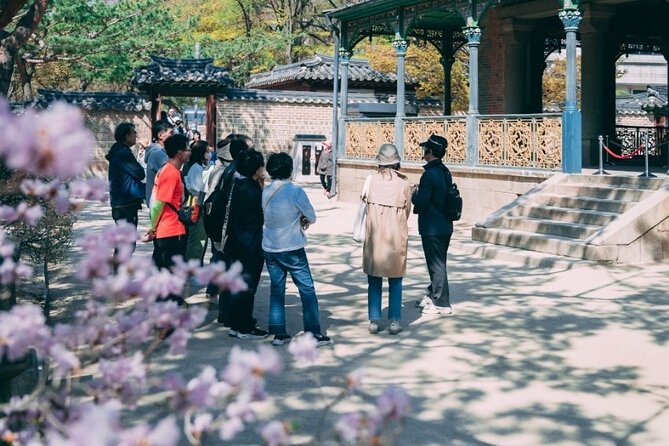
I would recommend this walk to first-time visitors who want a clear introduction to Seoul’s modern historical story. It also suits anyone interested in the meeting of Korean tradition, Western-style institutions, imperial politics, and contemporary public life.
It is a good match if you prefer:
- A small walking group rather than a large bus tour
- An English-speaking guide who explains the connections between sites
- A morning activity lasting about three hours
- A route with free-admission historical stops
- A mix of royal, educational, cultural, and civic landmarks
You may want a different plan if your main goal is a long visit at one palace, extensive museum time, or a food-focused experience. Lunch is not included, and the coffee stop is a practical break rather than a meal.
Most people can participate, and the meeting point is near public transportation. Good weather is required, so keep the cancellation terms in mind: you can receive a full refund if you cancel at least 24 hours before the start time, while poor weather or failure to meet the minimum group size may lead to a new date or a full refund.
Should you book Deoksugung and Jeongdong-gil?
Book it if you want Seoul’s major historical shifts explained in a compact, walkable route. The strongest parts are the palace-to-modern-city contrast, the politically important Jungmyeongjeon Hall, and the guide-led context that connects places you might otherwise visit separately.
The main tradeoff is limited time at each stop. For a first morning in Seoul, that broad coverage is a strength. For a specialist who wants to study palace architecture in detail, it will feel rushed.
At $48, I see the tour as a worthwhile orientation rather than a full heritage day. Choose it for the story, the small group, and the unusual combination of royal sites, missionary education, traditional performance culture, and modern Seoul.
FAQ
How long is the Deoksugung and Jeongdong-gil tour?
The tour lasts approximately three hours.
What time does the tour start?
The start time is 9:30 a.m.
Where does the tour begin?
It begins at Deoksugung Palace, at 99 Sejong-daero in Jung District, Seoul.
Where does the tour end?
The tour ends at Cheonggyecheon Stream in Jongno District, Seoul.
What is included in the price?
The price includes a professional English-speaking tour guide.
Is lunch included?
No. Lunch and other personal consumption are not included.
How many people can join the tour?
The tour has a maximum group size of 15 people.
Are admission tickets included?
The listed admission for Deoksugung Palace, Gyeonghuigung Palace, the Appenzeller Noble Memorial Museum, Jeongdong Theater, Jungmyeongjeon Hall, and Gwanghwamun Square is free.
Is the tour suitable for most people?
Yes. The activity information states that most people can participate, and the meeting point is near public transportation.
Can I cancel for a full refund?
Yes, if you cancel at least 24 hours before the experience start time. Cancellations or changes made less than 24 hours before the start time are not refunded or accepted.
More walking tours in Seoul
- Seoul moonlight walking tour with local historian
★ 5.0 · 940 reviews - Seoul: Nighttime Hidden Gems Walking Tour
★ 5.0 · 775 reviews - Seoul: Dark Side of the City and Ghost Stories Walking Tour
★ 4.8 · 484 reviews - Gangnam Walking Tour on Youth and Society in Seoul Korea
★ 5.0 · 401 reviews
Just added around Seoul
- Your Personal Seoul Photographer!★ 4.1 · 15 reviews
- From Seoul: Hwacheon Ice Fishing and Lighting Festival Tour★ 4.5 · 4 reviews
- You’re Invited to Our Home in Seoul: The Only Cooking Class!★ 5.0 · 8 reviews
- Seoul: Gangneung BTS K-Pop & K-Drama Filming Locations Tour★ 4.6 · 14 reviews
- Unique Native Experience : Han River Picnic, Board game, BBQ★ 5.0 · 3 reviews
- Yun Korean Cooking Class in Seoul★ 5.0 · 6 reviews
- 2-Hour Private Kayaking and Paddleboarding Experience in Hanriver★ 5.0 · 3 reviews
- Day Trip to Yongin Daejanggeum and Korean Folk Village from Seoul★ 4.0 · 9 reviews
Seoul Palace Tours, compared.
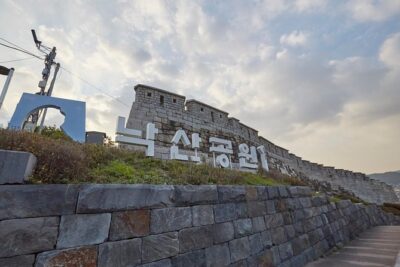
Gyeongbok Palace, Bukchon Village, and Gwangjang Tour
Read our review →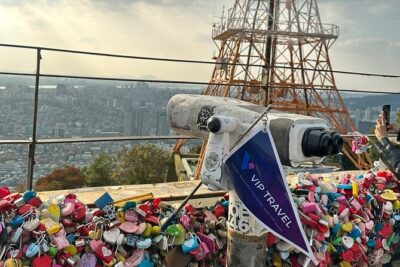
Best Seoul City Tour (Gyeongbokgung Palace,Insadong,Namsan Tower)
Read our review →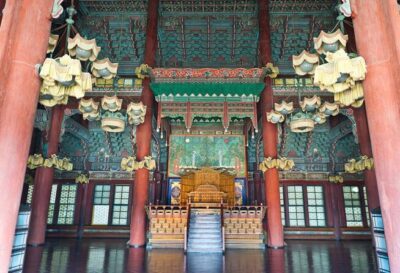
Small-Group Royal Palace and Seoul City Tour (hotel pick-up)
Read our review →
Seoul City Sightseeing Tour Including Gyeongbokgung Palace, N Seoul Tower, and Namsangol Hanok Village
Read our review →Gyeongbok Palace, Bukchon Village, and Gwangjang Tour
Read our review →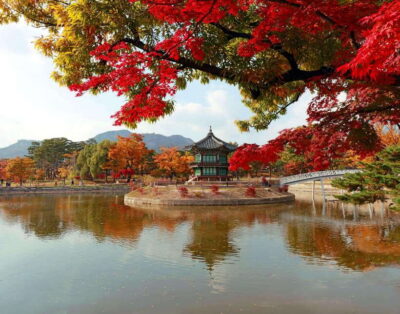
Seoul Highlights: Gyeongbok Palace, Insadong & N Seoul Tower
Read our review →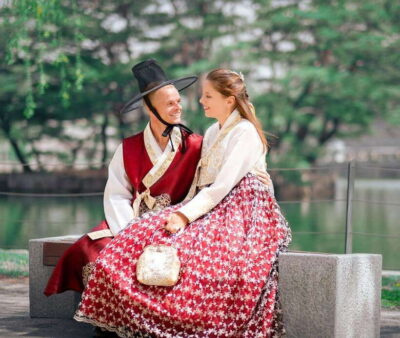
Seoul City Half Day Tour-Gyeongbok Palace Guard Changing Ceremony
Read our review →Browse the lists this tour appears in