
Reviewed · SEOUL DMZ TOURS
DMZ Tour, 2nd Tunnel & UNESCO Suspension Bridge Tour from Seoul
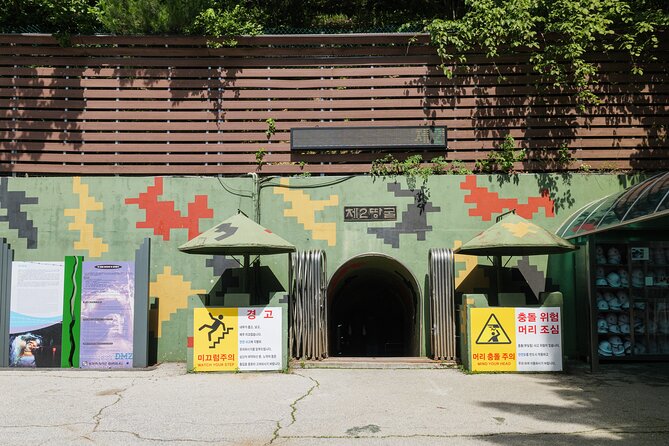
The most striking part of this day is the 2nd Tunnel, built for a possible North Korean invasion and discovered in 1975. You walk about 500 meters underground, close to the southern limit of the tunnel, then look across the DMZ from Cheorwon Peace Observatory. It is a sobering mix of military history, raw rock, and quiet countryside.
I like the way this tour pairs serious DMZ sites with Hantangang’s UNESCO Global Geopark, including a suspension bridge and Bidulginang Falls. I also like the practical setup: an English-speaking guide, air-conditioned transport, hotel pickup, and no shopping stops.
The tradeoff is the long day. You leave around 7:00 am, spend roughly four to five hours in the vehicle, and return to Myeong-dong after 11 to 13 hours. The tunnel also requires moderate fitness, and lunch is not included.
Key points to know before booking
- The 2nd Tunnel is the main event: You can walk roughly 500 meters through a tunnel that runs 3.5 kilometers underground.
- Cheorwon gives you a less polished DMZ experience: The area includes guard posts, battle sites, old railway remains, and views toward North Korea.
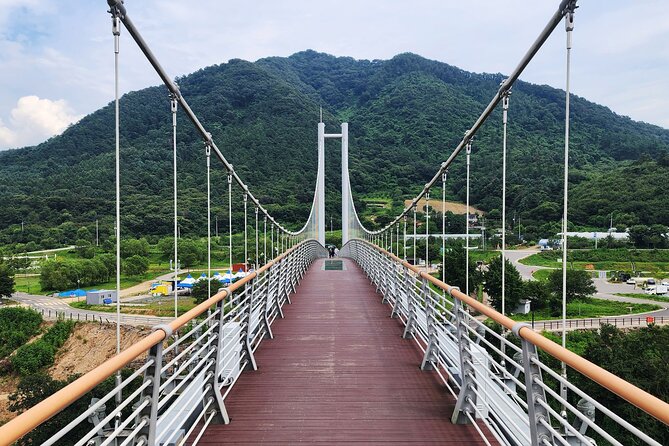
- The suspension bridge adds scenery: Hantangang Geopark brings cliffs, columnar rock, and river views into an otherwise military-focused day.
- Guide Leo may be available: Leo is praised by name in the tour feedback, but guide assignment is not guaranteed.
- This is a full-day outing: The advertised duration is 11 to 13 hours, with four to five hours spent traveling by vehicle.
- Plan for lunch and walking: Lunch costs extra, and the tour asks for a moderate level of physical fitness.
Why the Cheorwon DMZ feels different from Seoul
Most people picture the DMZ as a single famous viewpoint near Seoul. Cheorwon offers a broader look at the border zone. You see military structures, former railway links, a North Korean-built tunnel, and open countryside that has had decades to recover with little human activity.
That contrast gives the day its force. One moment you are standing near old wartime ruins. Soon after, you are looking at cliffs shaped by volcanic rock and walking above the Hantan River. The tour is not only about a line on a map. It shows how conflict and nature occupy the same narrow region.
The road trip is part of the bargain. From central Seoul, the round trip takes about four to five hours by vehicle. That is a large slice of an 11 to 13-hour day, but it also explains why a guided trip is useful. The stops are spread across the Cheorwon area, and the DMZ rules and access points are not simple to manage independently.
The tour begins at Myeong-dong Station at about 7:00 am and returns there. Hotel pickup is also included, so confirm the exact pickup arrangement when booking if you are staying outside the standard meeting area. The vehicle is air-conditioned, a welcome feature on a long day.
More DMZ tours in Seoul:
- Best DMZ Tour Korea from Seoul (Red Suspension Bridge Optional)
★ 5.0 · 41,422 reviews - DMZ Tour: 3rd Tunnel, Option(Suspension Bridge, Boat) from Seoul
★ 5.0 · 21,373 reviews - DMZ tour south Korea from Seoul (NK experience hall, defector)
★ 5.0 · 20,599 reviews
Korean Workers’ Party Headquarters and the border’s hard edges
The first stop is the former Korean Workers’ Party Headquarters, with about 30 minutes to look around. The building dates to the early postwar period, though its exact origins are unclear. It was built in early 1946, before the current Workers’ Party of Korea was formally established.
This is not a polished museum complex. The value is in seeing a damaged political building in its setting. Its plain, severe appearance helps you picture how divided power once worked in this region. You get a short introduction before moving on, so do not expect a long indoor presentation.
I like this stop because it gives the tour a physical starting point. Instead of opening with an abstract lecture about the Korean peninsula, you encounter a real structure tied to the conflict. The 30-minute visit is also brief enough that it does not slow the rest of the day.
Walking 500 meters inside the 2nd Tunnel
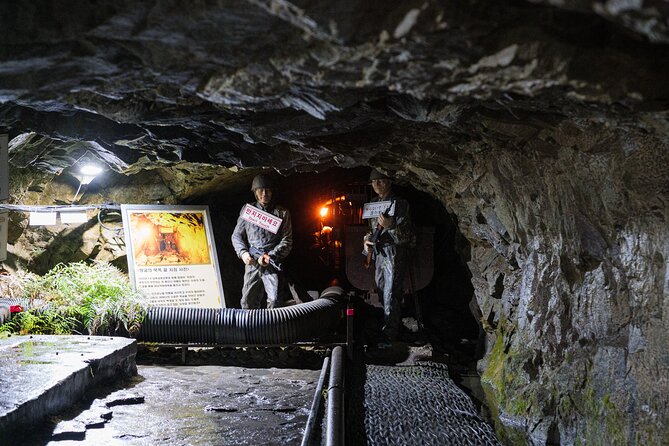
The 2nd Tunnel was discovered on March 19, 1975, in the area north of Cheorwon. It extends for about 3.5 kilometers and lies between roughly 50 and 160 meters below ground. Its narrow passage was designed to move troops and heavy equipment toward South Korea.
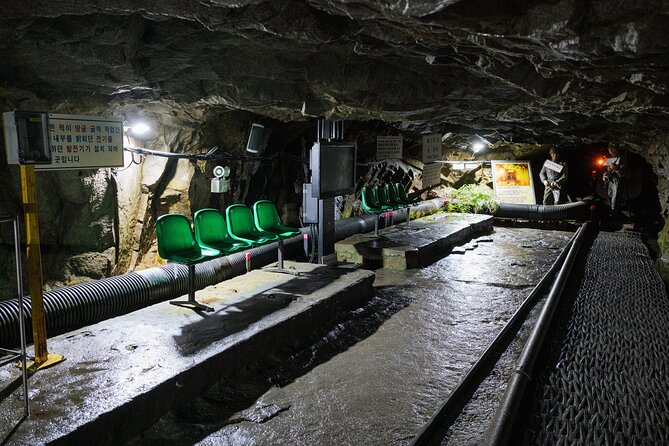
The scale is unsettling. The tunnel was wide and high enough for armed troops, vehicles, artillery pieces, and tanks to move through. The stated estimate is that about 30,000 troops could pass through in an hour. That number gives you a clear sense of why the tunnel was treated as a serious military threat.
You can currently explore about 500 meters of it. The walk takes around 1 hour and 30 minutes, including the visit and related explanations. Expect a low, enclosed route with uneven sections rather than a smooth museum walkway. The tour specifically calls for moderate physical fitness, so this is not the place to book if you need an entirely effortless outing.
The tunnel is the most distinctive stop because it places you inside the strategy of the conflict. A lookout point can show you the border. This passage shows how an attack might have been carried out. Your guide can also help connect the engineering details with the wider military story.
Wear practical shoes and keep your pace sensible. The information provided does not list a required dress code or exact accessibility arrangements, so anyone with mobility concerns should ask the operator before booking. The tunnel visit is included in the tour price.
Cheorwon Peace Observatory and a view toward North Korea
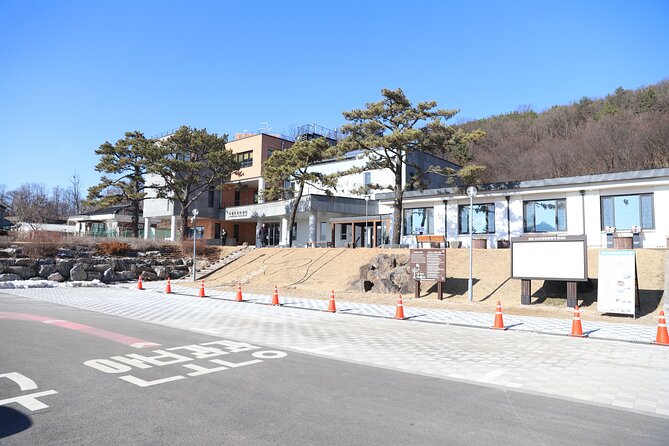
At Cheorwon Peace Observatory, you spend about an hour in a three-story building with a basement. The first floor functions as an exhibition area. The second floor provides the viewing area, where you can look across the DMZ and observe parts of the surrounding ecosystem and old defensive positions.
This is the stop that turns the tunnel visit into a wider picture. From underground, you learn how forces might move unseen. From the observatory, you see the open ground they would have needed to cross. The area includes views toward South Korean guard posts and general outposts, as well as points on the North Korean side such as Naktagoji and Kim Ilsung goji.
Visibility matters here. The tour requires good weather, and poor conditions can lead to a different date or a full refund. Even on a clear day, the view is about more than spotting a specific building. You are looking at a restricted border zone where greenery has grown around military infrastructure.
Give yourself time to use the observatory as a place for context, not just photographs. The display area helps explain the site, while the viewing floor lets you compare the quiet countryside with the tension built into its purpose.
A different kind of day out around Seoul:
- Seoul: DMZ Tour with Optional Suspension Bridge
★ 4.8 · 5,277 reviews - Signature DMZ Tour: Exclusive Defector Talk & Suspension Bridge
★ 5.0 · 4,459 reviews - Thrilling Korean DMZ 3rd Tunnel Tour from Seoul + Red Bridge Rush
★ 5.0 · 3,097 reviews - DMZ Past and Present: Korean Demilitarized Zone Tour from Seoul
★ 5.0 · 2,481 reviews
Woljeongri Station and the Iron Triangle
Woljeongri Station was the last railway stop before the DMZ. Today, the remains of a train and the old station area point to a railway system that once connected places now separated by the border.
The site is often called part of the Iron Triangle battlefield area. The visit lasts about 30 minutes, so it works as a compact stop rather than a full museum visit. The remains of the train are the visual focus, while the station gives you a sense of a divided transport route.
I find this kind of stop especially useful for understanding the human cost of division. A railway is practical and ordinary. It moves people, goods, and families. Seeing its broken end makes the border feel less like a line drawn by governments and more like an interruption in daily life.
Do not expect a long train ride or a restored station. This is a brief outdoor visit, best appreciated as part of the larger sequence from headquarters to tunnel to observatory.
Hantangang Sky Bridge and the UNESCO Global Geopark
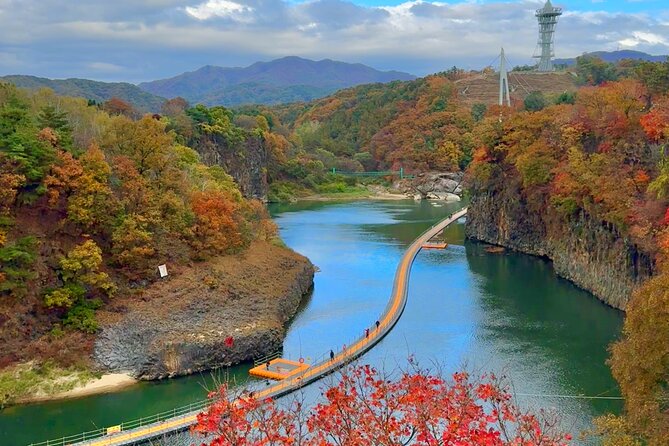
The second half of the day shifts from military history to geology. At Hantangang Geopark, you walk across a suspension bridge known for its appearance in the Korean drama Crash Landing on You. The visit lasts about 30 minutes.
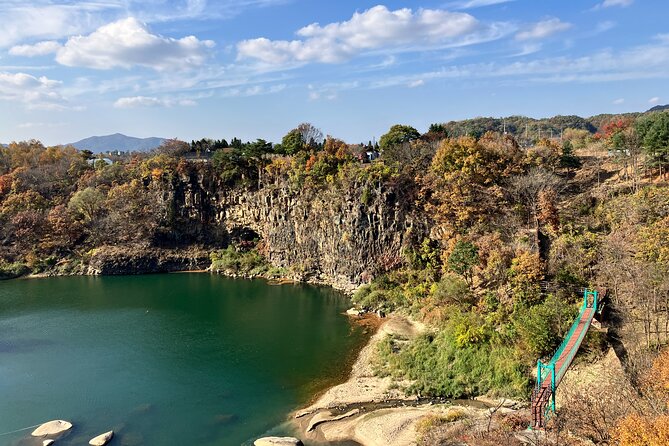
The bridge crosses a dramatic section of the Hantan River area, with cliffs rising around the water. The nearby rock formations began as granite formed about 110 million years ago. Later, basalt lava covered the granite, and erosion shaped the uneven cliffs you see today.
The result is a sharp change of mood. After the tight tunnel and guarded border sites, the open river gorge gives you space to breathe. The bridge is not only a photo stop. It shows why the area has UNESCO Global Geopark status, with its combination of volcanic rock, river erosion, and tall cliff walls.
The information describes a cliffside route around 3.6 kilometers long and 1.5 meters wide, with cliffs reaching about 30 to 40 meters. The scheduled bridge visit is only about 30 minutes, so you should not expect to walk the full route during this tour. Still, the stop gives you a strong sample of the area’s geology.
If heights make you uneasy, the suspension bridge may be the most demanding part psychologically, even if the walk itself is short. The tour requires at least two people for the activity to take place. That minimum is worth noting if you are booking alone or on a less popular date.
Bidulginang Falls and the day’s final change of pace
Bidulginang Falls is a short 20-minute stop. Its name comes from the Korean word nang, meaning nest, linked to the white doves that once nested in a cave behind the waterfall.
The stop is brief, but it fits the day well. You finish beside water and rock rather than at another military site. The waterfall also adds a small piece of local character, since its name is tied to the animals once associated with the cave.
Do not book this tour expecting a long waterfall hike. Twenty minutes gives you time to see the falls and take in the setting, but not to make a full outing of it. It works best as a final nature break before the drive back to Seoul.
What $87 buys you
At $87 per person, this tour offers solid value if you want several remote sites in one day. The price includes an English-speaking guide, hotel pickup, an air-conditioned vehicle, taxes, fees, and admission to the 2nd Tunnel and Cheorwon Peace Observatory.
The value is strongest for people who do not want to arrange transport through the Cheorwon area. You are paying not only for entry tickets but also for a full route that links six different stops. The guide helps explain places that can feel confusing without context, especially the guard posts, railway remains, and tunnel.
Lunch is not included. That is a small but important budget detail on a full-day tour. One guide, Leo, is specifically praised for taking the group to a local restaurant, but that should not be treated as a guaranteed part of every departure. Bring money for lunch and confirm how the meal stop works on your date.
There are no shopping stops, which improves the value for anyone who wants a focused day. You spend your time at the listed cultural, military, and nature sites rather than being routed through retail outlets.
Group discounts are available. The maximum group size is listed as 80 people, so the experience may feel quite different depending on the date and departure. If you want a quieter outing, ask about the expected group size before paying.
The guide can shape the whole day
A good guide matters here because the sites are spread out and much of their meaning is not obvious at first glance. A short explanation can connect the tunnel to the observatory, or explain why a ruined railway station matters beyond its appearance.
Leo is the guide most clearly associated with the praise for this tour. The feedback describes him as friendly, informative, and kind, and one person singled out a private tour with him. Another account credits him with choosing a local restaurant for lunch. The operator may assign different guides, so treat Leo as a possibility, not a promise.
The tour is conducted in English. If your guide has a strong storytelling style, the long drive becomes more useful, since it provides time to explain the Korean War, the DMZ, and Cheorwon’s role. If you prefer a very small group, note the possible maximum of 80 people before booking.
Who should book this day trip?
I would choose this tour if you want a serious look at the DMZ but also want nature and geology in the same day. It suits first-time visitors to South Korea who have only one day for a border excursion and want more than a single observatory stop.
It is also a good match for people who like unusual infrastructure. The 2nd Tunnel, abandoned railway, guard posts, suspension bridge, and volcanic cliffs give you a varied day with plenty to discuss afterward.
You should think twice if you dislike long vehicle rides, early starts, or enclosed spaces. The tunnel requires moderate fitness, and the entire day can last up to 13 hours. Anyone with mobility concerns should ask the operator about the tunnel route and cliffside areas before booking.
Free cancellation is available up to 24 hours before the start time for a full refund. Changes made within 24 hours are not accepted, and late cancellations are not refunded. Poor weather or failure to meet the minimum number of participants can lead to a new date, another experience, or a full refund.
Should you book the 2nd Tunnel and Hantangang tour?
Book it if you want the most varied full-day DMZ outing from Seoul. The 2nd Tunnel gives you a rare underground view of the conflict, while Cheorwon Peace Observatory and Woljeongri Station add military and railway context. The suspension bridge and Bidulginang Falls keep the day from feeling like six versions of the same border viewpoint.
Skip it if your priority is a short, simple DMZ visit near Seoul. This tour takes most of the day, includes several hours on the road, and asks you to handle a tunnel walk, outdoor stops, and a suspension bridge. For the right person, though, the long route is the point: you see how war, borders, railways, rivers, and geology all meet in one part of Korea.
FAQ
Where does the tour start and end?
The listed meeting point and return point are Myeong-dong Station in Seoul. Hotel pickup is also included, so confirm the exact pickup details when booking.
What time does the tour start?
The stated start time is 7:00 am.
How long does the tour last?
The tour lasts approximately 11 to 13 hours. Around four to five hours of that time is spent traveling by vehicle.
Is lunch included?
No. Lunch is not included in the tour price.
Is admission to the 2nd Tunnel included?
Yes. Admission to the 2nd Tunnel is included.
Is admission to Cheorwon Peace Observatory included?
Yes. Admission to Cheorwon Peace Observatory is included.
How far can you walk inside the 2nd Tunnel?
You can currently explore about 500 meters of the tunnel.
What level of fitness is required?
A moderate level of physical fitness is required. The tour includes the 2nd Tunnel and outdoor walking areas.
Is the tour conducted in English?
Yes. A professional English-speaking guide is included.
What happens if the weather is poor?
If poor weather causes the tour to be canceled, you will be offered a different date or a full refund. The tour can also be changed or refunded if its minimum number of participants is not reached.
Just added around Seoul
- Your Personal Seoul Photographer!★ 4.1 · 15 reviews
- From Seoul: Hwacheon Ice Fishing and Lighting Festival Tour★ 4.5 · 4 reviews
- You’re Invited to Our Home in Seoul: The Only Cooking Class!★ 5.0 · 8 reviews
- Seoul: Gangneung BTS K-Pop & K-Drama Filming Locations Tour★ 4.6 · 14 reviews
- Unique Native Experience : Han River Picnic, Board game, BBQ★ 5.0 · 3 reviews
- 2-Hour Private Kayaking and Paddleboarding Experience in Hanriver★ 5.0 · 3 reviews
- Yun Korean Cooking Class in Seoul★ 5.0 · 6 reviews
- Vivaldi Park Winter Ski Resort with Nami Island Tour from Seoul★ 4.5 · 7 reviews
Seoul DMZ Tours, compared.
Best DMZ Tour Korea from Seoul (Red Suspension Bridge Optional)
Read our review →
DMZ Tour: 3rd Tunnel, Option(Suspension Bridge, Boat) from Seoul
Read our review →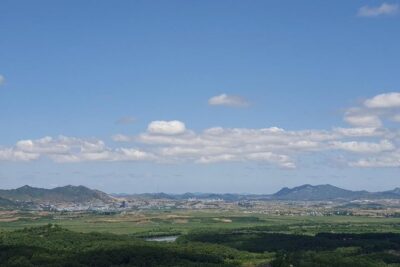
DMZ tour south Korea from Seoul (NK experience hall, defector)
Read our review →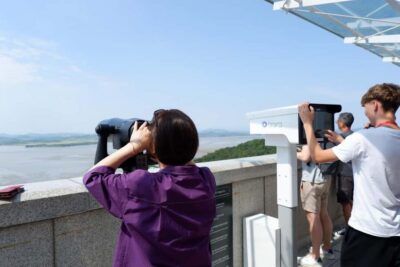

Signature DMZ Tour: Exclusive Defector Talk & Suspension Bridge
Read our review →
Thrilling Korean DMZ 3rd Tunnel Tour from Seoul + Red Bridge Rush
Read our review →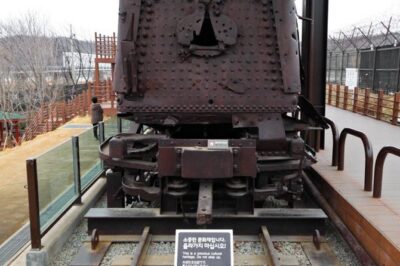
DMZ Past and Present: Korean Demilitarized Zone Tour from Seoul
Read our review →
Ultimate Korea DMZ Tour from Seoul (Gondola & Suspension Bridge)
Read our review →Browse the lists this tour appears in