Reviewed · TOURS
Gwanghwamun Tour l 120 minutes to Understand Local Korean Society
Gwanghwamun is more than a pretty square with royal statues. It is the place to see how Joseon-era values, war, foreign influence, and rapid development still shape life in South Korea today. This two-hour walk links major Seoul sights with questions Koreans still debate: North Korea, Japan, the United States, social hierarchy, work, and national identity.
I like the clear route from Gwanghwamun to Blue House, and I like that June, a history major, explains present-day customs rather than stopping at dates and monuments. The small group, capped at 20 people, should also make questions easier. The tradeoff is that this is a walking lesson, not a museum tour, and a few uphill sections may feel tiring in hot, wet, or cold weather.
Key points to know before booking
- Gwanghwamun becomes your classroom: The route begins in Seoul’s historic center and uses the city itself to explain Korean society.
- June connects past and present: Expect discussion of Confucian hierarchy, postwar capitalism, politics, work culture, coffee shops, and Korean spa customs.
- The route covers five distinct stops: You’ll move from Gwanghwamun Square through the U.S. Embassy area, Samcheongdong, Bukchon, and the University of North Korean Studies.
- It is short but idea-packed: Two hours is enough to stay focused, though the pace leaves little room for long visits inside attractions.
- Expect an easy walk with some hills: Most people can participate, but comfortable shoes matter.
- The price is modest: At $14.10 per person, the tour offers strong value if you want context rather than admission to major sights.
Why Gwanghwamun is the right place to begin
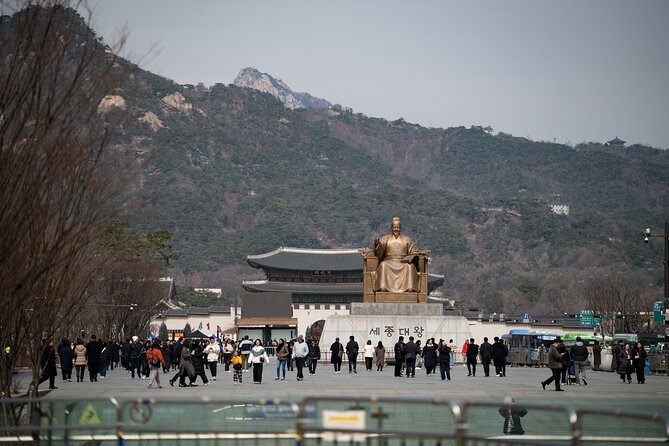
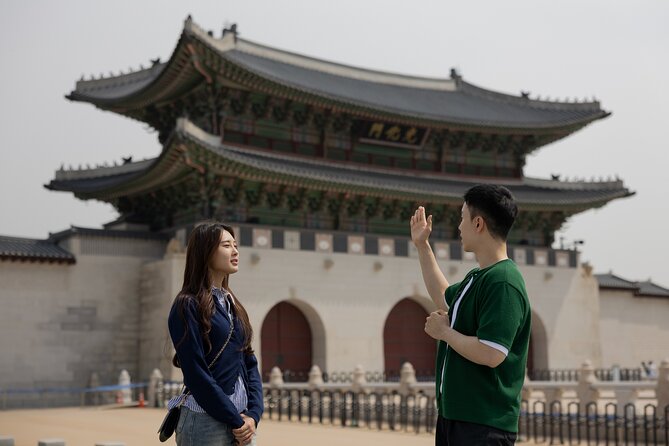
The tour starts at Gwanghwamun Square at 10:30 a.m. This broad civic space sits in the center of Seoul and has served as a political and symbolic heart of the country for more than 600 years.
Here, June sets up the story of the Joseon kingdom and the ideas that still influence Korean social life. Confucian values are especially important. They help explain age-based manners, respect for elders, family roles, education, and the way people position themselves within a group.
I like this opening because it gives you a useful lens for the rest of the walk. Instead of treating Korean customs as isolated curiosities, you begin to see how older ideas continue in modern settings. A question about who speaks first, who pours a drink, or how people address one another can lead back to centuries of social thought.
You spend about 15 minutes here, with no admission fee. That makes the stop efficient, but do not expect a long historical lecture on every monument in the square. The focus is Korean society, not a full architectural survey.
Other Seoul days people book alongside this one:
- Best DMZ Tour Korea from Seoul (Red Suspension Bridge Optional)
★ 5.0 · 41,422 reviews - DMZ Tour: 3rd Tunnel, Option(Suspension Bridge, Boat) from Seoul
★ 5.0 · 21,373 reviews - DMZ tour south Korea from Seoul (NK experience hall, defector)
★ 5.0 · 20,599 reviews
The U.S. Embassy and Korea’s outside influences
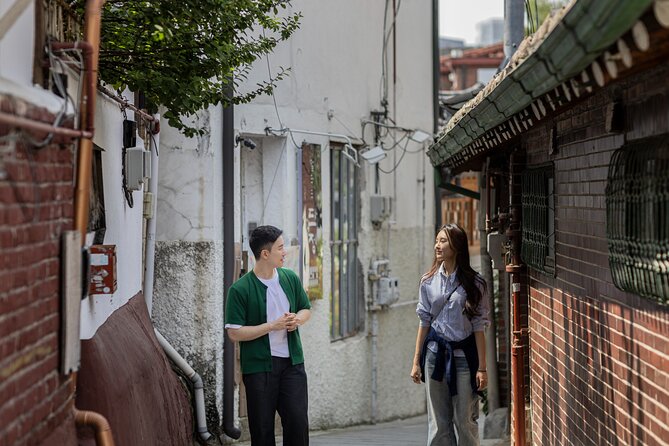
The next stop is the U.S. Embassy and Consulate area, where the discussion shifts from Joseon traditions to modern international relationships. You’ll look at how the United States influenced Korea from the country’s establishment through the present day.
This stop matters because South Korea’s modern identity cannot be separated from foreign involvement, security concerns, military history, trade, and popular culture. June also addresses how Koreans think about the United States, rather than presenting the relationship as simple admiration or opposition.
The visit lasts about 15 minutes and takes place outside, so the value comes from the explanation rather than from entering the embassy. You should expect public-area viewing and conversation, not an interior visit.
For me, this is one of the tour’s most useful transitions. Gwanghwamun introduces older Korean values. The embassy area helps explain why modern South Korea developed in the way it did, and why international politics remains part of ordinary conversation.
Samcheongdong connects work, style, and rapid change
Samcheongdong-gil Road brings a different mood. This retro-style street is lined with shops and restaurants, giving you a chance to see a more relaxed side of central Seoul.
The point here is not simply to admire the storefronts. June uses the area to talk about modern development, the costs of rapid growth, and Korean working culture. South Korea’s economic rise transformed cities, workplaces, families, and expectations. The same success that produced opportunity also brought pressure, long work hours, competition, and sharp changes in neighborhoods.
You spend about 15 minutes walking through this area. That is enough to get a feel for the street and hear the larger story, though it is not enough for shopping, a meal, or a proper café stop. If you want time for photos or browsing, plan to return later.
This is also where the tour’s everyday-life focus becomes clearer. June connects big subjects such as capitalism and development to familiar details, including Seoul’s coffee culture. You are not just hearing about national policy. You are being shown how economic change appears in the places people work, meet, eat, and spend free time.
Bukchon Hanok Village and the cost of preservation
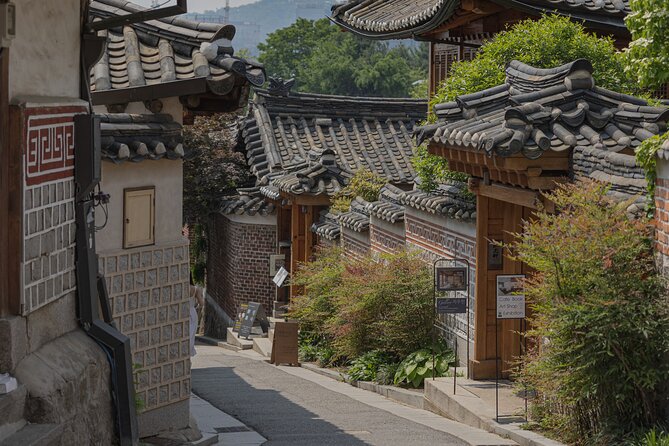
Bukchon Hanok Village is the longest stop, at about 25 minutes. Its traditional houses offer a clear look at older Korean architecture and neighborhood life, but the area also raises a difficult modern question: how do you preserve a historic district while allowing a living city to function?
June explains the tension between development and preservation. That is a valuable angle because Bukchon is not simply a postcard setting. It is also a neighborhood affected by tourism, renovation, local residents, and changing land values.
The walk through Bukchon includes uphill sections, so this is where footwear and weather matter most. The route is described as easy overall, but easy does not mean perfectly flat. If hills are difficult for you, keep that in mind before booking.
You should also expect a short look at the village rather than a full architectural tour. The purpose is to understand what the houses represent and why preservation can create conflicts. I like that the stop avoids treating old buildings as frozen scenery. You get a more useful question to take with you: who gets to decide what a historic neighborhood should become?
A different kind of day out around Seoul:
- Seoul: DMZ Tour with Optional Suspension Bridge
★ 4.8 · 5,277 reviews - Signature DMZ Tour: Exclusive Defector Talk & Suspension Bridge
★ 5.0 · 4,459 reviews - Thrilling Korean DMZ 3rd Tunnel Tour from Seoul + Red Bridge Rush
★ 5.0 · 3,097 reviews - DMZ Past and Present: Korean Demilitarized Zone Tour from Seoul
★ 5.0 · 2,481 reviews
The University of North Korean Studies puts politics in human terms
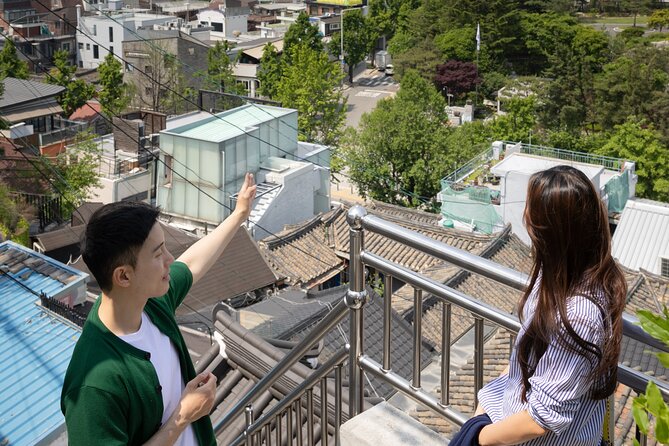
The final stop is the University of North Korean Studies, described as the only college specializing only in North Korea. You spend about 20 minutes here discussing South Korea’s relationship with North Korea and how people in the South think about it.
This subject can be hard to understand through headlines alone. The tour gives you a chance to consider the issue as part of Korean society, not just as a matter of military news or government policy. June addresses opinions about North Korea and the differing emotions and views surrounding the relationship.
The stop also gives the route a strong finish. You begin with the long story of Joseon society, pass through foreign influence and industrial development, and end with one of the central political questions of the Korean Peninsula.
The information provided does not indicate that you enter the college or attend a formal class. Plan for an exterior stop and discussion in the surrounding area. That distinction matters if you are expecting an indoor campus visit.
What June’s teaching style adds
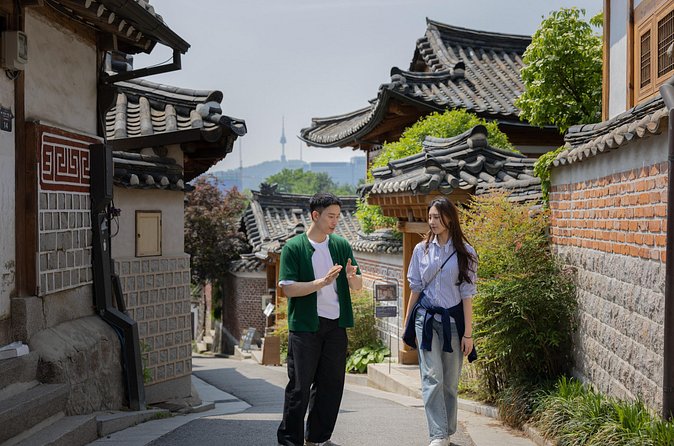
June is a history major, and his role is central to the experience. The strongest part of the tour is the way he links facts to daily life. You may hear about Confucianism, the Korean War, capitalism, national division, or international relations, then see how those forces connect to manners, work, social rank, coffee shops, and spa culture.
Several elements of his approach are especially useful:
- Clear explanations: Complex subjects are presented in a straightforward way, with humor used at times to keep the walk from feeling like a lecture.
- Structured pacing: The tour follows a logical path, so each stop adds another piece to the main theme.
- Room for questions: The small-group limit of 20 people makes conversation more practical than on a large coach tour.
- Personal follow-up: June can offer tips based on your interests after the walk, which is useful if you want to explore Seoul’s history or culture on your own.
- Respectful discussion: Subjects such as Japan, the United States, and North Korea can be sensitive. A calm guide matters here.
I would not book this expecting entertainment at every turn. The format is educational and discussion-based. If you enjoy asking why people behave as they do, you will get much more from it than someone looking only for landmarks and photo stops.
A strong value at $14.10
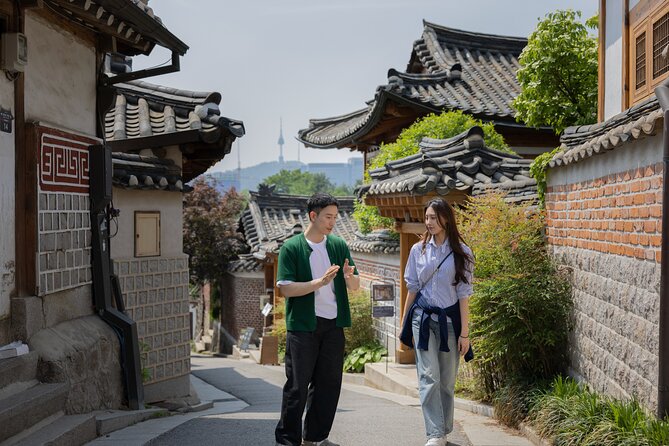
At $14.10 per person, this is an inexpensive way to add context to a Seoul visit. You are not paying for entry to a palace, museum, or observation deck. Instead, you are paying for June’s preparation, interpretation, and ability to connect places that you could visit on your own.
That distinction is important. You can walk through Gwanghwamun Square, Samcheongdong, Bukchon, and the Blue House area without a guide. What you cannot easily recreate is the single thread linking these locations to Korean social values and modern political questions.
The two-hour length also helps the value. A full-day tour might provide more detail, but it can be hard to absorb a long series of dates and buildings. This route stays compact and focused. One participant who joined several SeoulDude walks found the shorter format easy to follow, and that makes sense: two hours is enough to build a framework without taking over your day.
The main limitation is depth. Each stop receives roughly 15 to 25 minutes, so you will not get a full treatment of every subject. Think of this as a foundation. Afterward, you may want to visit a palace, museum, or neighborhood again with better questions in mind.
Practical details for the walk
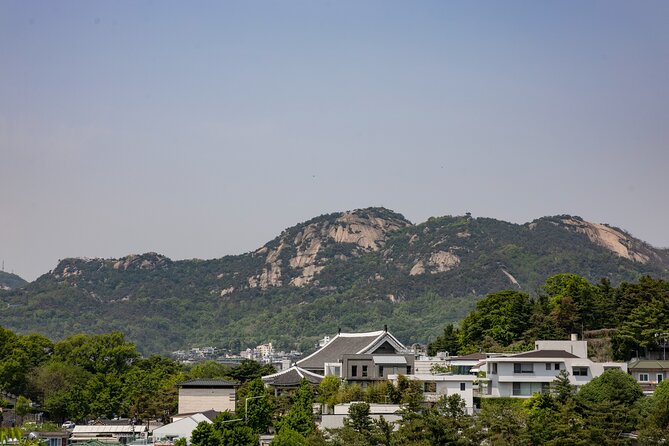
You meet at Gwanghwamun Square, at 172 Sejong-daero in Jongno District. The walk ends in front of Blue House, also called Cheong Wa Dae, at 1 Cheongwadae-ro.
The route is near public transportation, which makes the 10:30 a.m. start convenient for building into a day in central Seoul. Since you finish near Blue House, you can continue exploring that area afterward, though the tour itself does not include admission to any attraction.
The experience uses a mobile ticket, and confirmation is provided when you book. Most people can take part, but remember that this is still a walking tour with some uphill stretches. Wear shoes suited to pavement and slopes, and check the weather before setting out.
The group can include up to 20 people. That is not a private tour, but it is small enough to keep the guide’s voice and questions manageable. If you prefer a completely personal pace, this may feel too structured. If you want company without a large crowd, the size should work well.
Free cancellation is available up to 24 hours before the start time for a full refund. Changes made within 24 hours are not accepted, and late cancellations are not refunded. Poor weather or failure to reach the minimum group size can lead to a new date, another experience, or a full refund.
Who should book this Gwanghwamun walk?
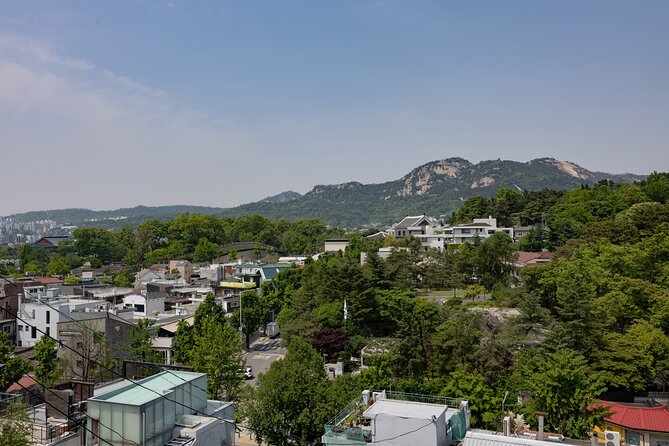
I would choose this tour early in a Seoul visit if you want a framework for understanding the country. It suits solo visitors, couples, and curious adults who prefer social history and current affairs to a checklist of monuments.
It is especially useful if you want to understand:
- Why age and rank affect everyday manners
- How Joseon-era Confucian ideas remain visible
- How postwar capitalism changed Korean life
- Why North Korea remains a major part of South Korean identity
- How Koreans view Japan, the United States, and national development
- Why historic neighborhoods such as Bukchon face pressure from modern city life
You may want something else if you prefer shopping time, food tastings, palace interiors, or long photography stops. The tour passes restaurants and cafés, but food is not included, and there is no stated tasting component.
Should you book it?
Book this walk if you want meaning behind the sights. For $14.10, June gives you a compact introduction to Korean history, politics, customs, and daily life, all tied to places you can see along the way.
Skip it if you want a relaxed photo walk with little discussion. The route covers a lot in two hours, and the material asks you to listen and think. For most first-time visitors who want to understand more than Seoul’s surface, that is exactly the point.
FAQ
How long does the Gwanghwamun tour last?
The tour lasts about two hours, or 120 minutes.
Where does the tour start?
It starts at Gwanghwamun Square, 172 Sejong-daero, Jongno District, Seoul.
Where does the tour finish?
The walk finishes in front of Blue House, also called Cheong Wa Dae, at 1 Cheongwadae-ro, Jongno District.
What time does the tour begin?
The scheduled start time is 10:30 a.m.
Which places are included on the route?
The route includes Gwanghwamun Square, the U.S. Embassy and Consulate area, Samcheongdong-gil Road, Bukchon Hanok Village, and the University of North Korean Studies.
Is the walk difficult?
It is described as an easy walk, but a few sections go uphill. Most people can participate, though comfortable walking shoes are recommended.
What happens if I need to cancel?
You can cancel at least 24 hours before the start time for a full refund. Cancellations or changes made less than 24 hours before the start time are not accepted for a refund.
Just added around Seoul
- Your Personal Seoul Photographer!★ 4.1 · 15 reviews
- From Seoul: Hwacheon Ice Fishing and Lighting Festival Tour★ 4.5 · 4 reviews
- You’re Invited to Our Home in Seoul: The Only Cooking Class!★ 5.0 · 8 reviews
- Seoul: Gangneung BTS K-Pop & K-Drama Filming Locations Tour★ 4.6 · 14 reviews
- Unique Native Experience : Han River Picnic, Board game, BBQ★ 5.0 · 3 reviews
- 2-Hour Private Kayaking and Paddleboarding Experience in Hanriver★ 5.0 · 3 reviews
- Yun Korean Cooking Class in Seoul★ 5.0 · 6 reviews
- Day Trip to Yongin Daejanggeum and Korean Folk Village from Seoul★ 4.0 · 9 reviews
Tours, compared.
Best DMZ Tour Korea from Seoul (Red Suspension Bridge Optional)
Read our review →
DMZ Tour: 3rd Tunnel, Option(Suspension Bridge, Boat) from Seoul
Read our review →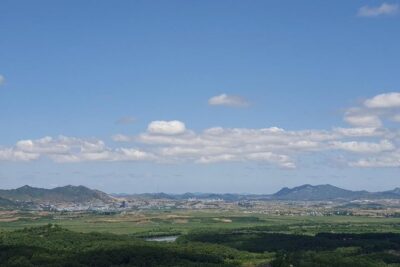
DMZ tour south Korea from Seoul (NK experience hall, defector)
Read our review →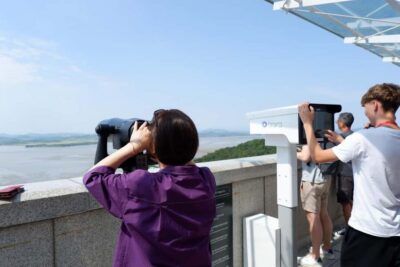

Signature DMZ Tour: Exclusive Defector Talk & Suspension Bridge
Read our review →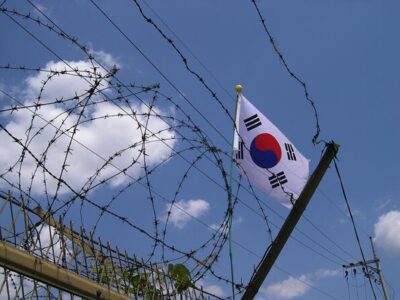
Thrilling Korean DMZ 3rd Tunnel Tour from Seoul + Red Bridge Rush
Read our review →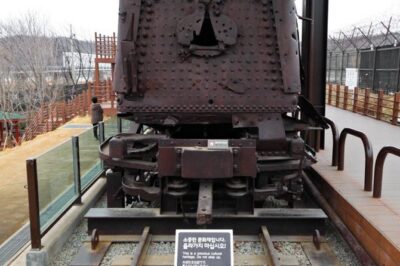
DMZ Past and Present: Korean Demilitarized Zone Tour from Seoul
Read our review →