
Reviewed · HISTORICAL TOURS
Korean History & Heritage Tour
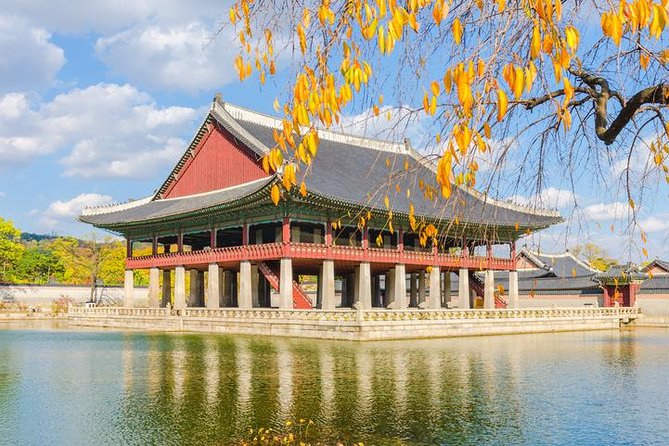
Gyeongbokgung Palace, a Buddhist temple, a 600-year-old market, and a living hanok neighborhood make this a strong first look at old Seoul. I like the way the day moves from royal ceremony to ordinary food and shopping, instead of treating Korean heritage as a museum display. Hotel pickup and a private car also save you from piecing together several subway rides.
I especially like the range of stops and the chance to ask a guide about daily life during the Joseon Dynasty. The market visit is another plus: you can see where Korean comfort food fits into the city’s story, not just admire old buildings. Guides such as Michael and Judy have been praised for friendly, personal service.
The main drawback is the price and the fairly short time at each stop. At $475 per group of up to six, this is good value for a full private day, but less so for one or two people. Also, the tour description says palace admission is not included, and one poor review raised concerns about a guide using the car less than expected, so it is wise to confirm the driving plan at the start.
Key points at a glance
- Seven stops in roughly seven hours: You move from Gyeongbokgung Palace and the National Folk Museum to Bukchon, Insadong, Jogyesa Temple, Cheonggyecheon Stream, and Kwangjang Market.
- A private group of up to six: Your party travels together, with room to ask questions and adjust the pace within the day’s schedule.
- Free pickup across Seoul: Hotel pickup and drop-off are included anywhere in Seoul, while pickups outside Seoul in Gyeonggi Province cost an extra $50.
- A useful mix of royal and everyday Seoul: You see palace architecture, Buddhist worship, old crafts, a traditional neighborhood, and street food in one outing.
- Plan for extra costs: Lunch is not included, and admission to Gyeongbokgung Palace is listed separately.
- Strong overall satisfaction: The experience carries a 4.8 rating from 51 ratings, with 96 percent recommending it, though one complaint concerned the use of the private car.
Why this day works for seeing old Seoul
Seoul can feel enormous, fast, and modern. This tour gives you a clear route through Gangbuk, the northern part of the city where royal Seoul, traditional homes, old commerce, and Buddhist culture sit fairly close together.
You are not simply walking through one historic site for seven hours. The day changes character several times. You begin with the royal court, move into family customs at the folk museum, walk through a neighborhood where people still live, then shift to art shops, a temple, a restored stream, and a market built around food.
That variety is the tour’s best feature. If you are new to Seoul, it helps you connect big subjects to visible places. If you already know the city, the private format gives you a chance to ask more specific questions about Korean customs, architecture, religion, and food.
The day begins at 9:00 a.m. and lasts about seven hours. That is enough time for a broad introduction, but not enough for long, leisurely visits at every stop. I would choose this outing when I wanted orientation and context more than an unhurried study of one palace or museum.
More history and heritage tours in Seoul:
- Seoul: Evening Dark History, Folklore & Ghost Story Walking Tour
★ 5.0 · 593 reviews - Hanbok Photoshoot and History Tour at Gyeongbokgung Palace
★ 5.0 · 276 reviews - From Seoul: Dae Jang Geum Park Historic K-Drama Set Tour
★ 4.9 · 143 reviews
Gyeongbokgung Palace and the morning guard ceremony
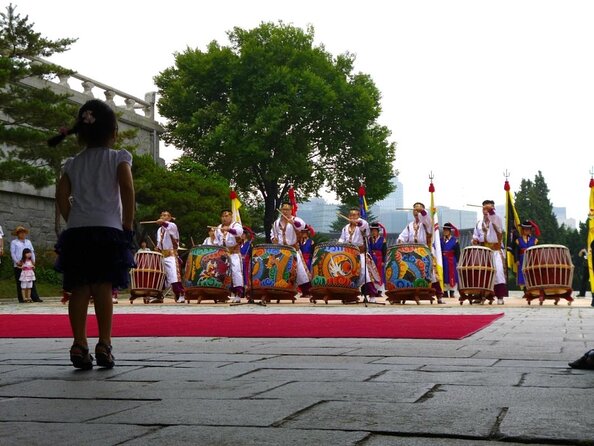
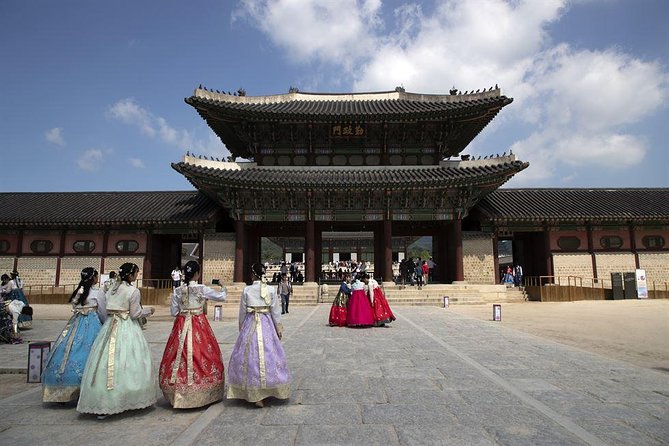
Gyeongbokgung is the grand opening act. The visit includes the Changing of the Guard Ceremony, followed by time inside the palace grounds to look at the architecture and the spaces connected with royal life.
The ceremony gives the first stop a clear visual hook. Costumes, formal movement, and the palace setting make it easier to picture the court as an active institution rather than a collection of courtyards. Afterward, the guide can help you notice how the palace was arranged and what its buildings meant for the king’s life.
The scheduled visit is 45 minutes. That is enough for a focused introduction, especially with a guide explaining what you are seeing, but it is short if you want to explore every corner. The admission ticket is not included, so ask about the current entry cost before the day begins.
This is also the point where I would confirm how the vehicle will be used. The tour promises an air-conditioned vehicle and pickup and drop-off, but one very unhappy account described the experience as becoming largely a walking tour. That appears to be an exception rather than the general pattern, yet a quick question about parking, walking distances, and transfers can prevent confusion.
National Folk Museum: from birth to the afterlife
The National Folk Museum of Korea provides a different view of Korean history. Instead of focusing on kings and formal buildings, the visit follows the life of an ordinary Korean, from birth through adulthood and death, with attention even to beliefs about the afterlife.
You have about 30 minutes here, and admission is free. That short visit works best as a guided introduction. The museum gives useful context for customs you may notice elsewhere in Korea, particularly family rituals and the way life stages have been marked over time.
I like this stop because it keeps the day from becoming palace-heavy. The royal compound tells you how the court lived. The folk museum shifts the lens toward household life and shared customs. Together, they give you a more balanced picture of the Joseon period and its influence.
Do not expect a long museum session. If museums are your main reason for visiting Seoul, you may want to return independently with more time. On this tour, the value comes from the guide’s explanation and the link between the exhibits and the rest of the day.
Bukchon Hanok Village, a living neighborhood
Bukchon Hanok Village is a traditional Korean neighborhood where people still live. The 40-minute walk lets you see hanok, or traditional Korean houses, in an active residential setting rather than behind a museum barrier.
That distinction matters. A preserved building tells you what a home once looked like. A living neighborhood shows how old architecture fits into present-day Seoul, though it also means you should treat the area as someone’s home. Keep voices down, stay aware of signs, and avoid assuming every doorway or courtyard is open to the public.
The time here is enough for a look at the streets and architectural style, but you will not have hours to wander. The village can also involve walking on slopes or uneven streets, although the supplied information says most people can participate. Comfortable shoes are a sensible choice for the entire day.
This is one of the tour’s most useful stops for first-time visitors because it makes traditional design easy to recognize. You will see the curved rooflines, wood, and compact street pattern in context, then carry that visual understanding into Insadong and the palace grounds.
A different kind of day out around Seoul:
- Best DMZ Tour Korea from Seoul (Red Suspension Bridge Optional)
★ 5.0 · 41,422 reviews - DMZ Tour: 3rd Tunnel, Option(Suspension Bridge, Boat) from Seoul
★ 5.0 · 21,373 reviews - DMZ tour south Korea from Seoul (NK experience hall, defector)
★ 5.0 · 20,599 reviews - Seoul: DMZ Tour with Optional Suspension Bridge
★ 4.8 · 5,277 reviews
Insadong and the old artists’ district
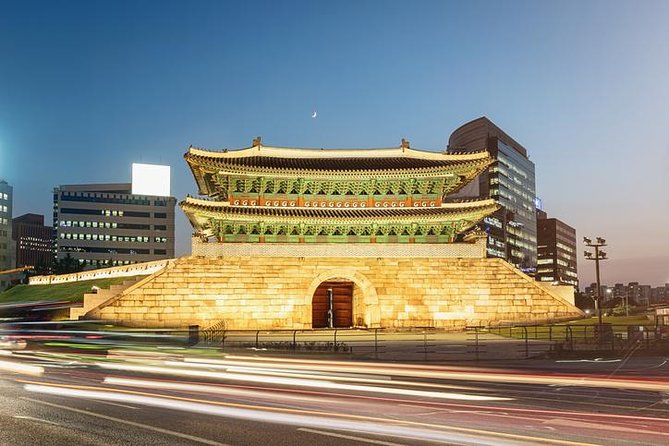
Insadong is presented as the former guild area where the king commissioned artists and designers. Today, it is known for antique shops and Korean souvenirs.
The stop lasts about 45 minutes and is free. This is the place to browse rather than rush toward one monument. You might find artwork, crafts, antiques, and small gifts, but the tour does not include purchases, and the guide cannot guarantee what any particular shop will have on the day.
I like Insadong as a bridge between court culture and modern shopping. The old connection to artists gives the district historical weight, while the present-day shops let you see how Korean design and traditional themes are sold today.
The possible catch is that shopping time can disappear quickly. If you want a serious look at antiques or gifts, tell your guide early. If you prefer not to shop, use the walk to ask about the old guild system and how the neighborhood changed.
Jogyesa Temple and Seoul’s Buddhist tradition
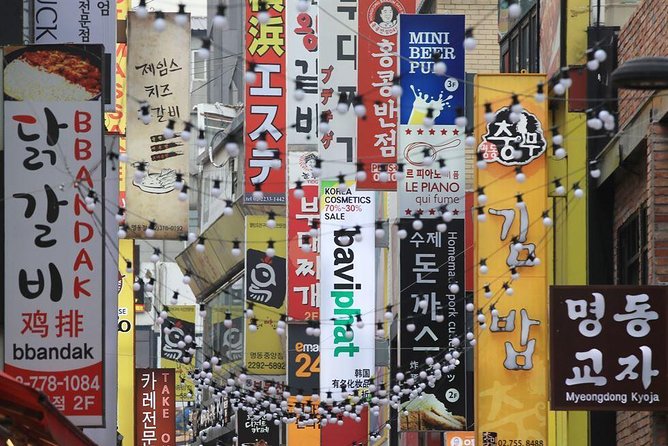
Jogyesa Temple is a compact but meaningful stop. The tour explains that Buddhism once served as the country’s national religion, giving you a chance to place the temple within Korea’s religious past.
You have around 20 minutes here, so expect a short visit rather than a long temple study. The guide can point out the setting and explain the role of Buddhism, while you take in the atmosphere of an active place of worship.
This stop works well after Insadong. The shopping streets show objects and crafts connected with tradition, while Jogyesa turns the focus toward belief and practice. The change of mood is welcome.
As at Bukchon, remember that this is not only a sightseeing location. Keep your behavior respectful, especially if worshippers are present. The tour information does not promise a religious ceremony or special access, so think of this as an introduction to the temple and its background.
Cheonggyecheon Stream and the city’s changing face
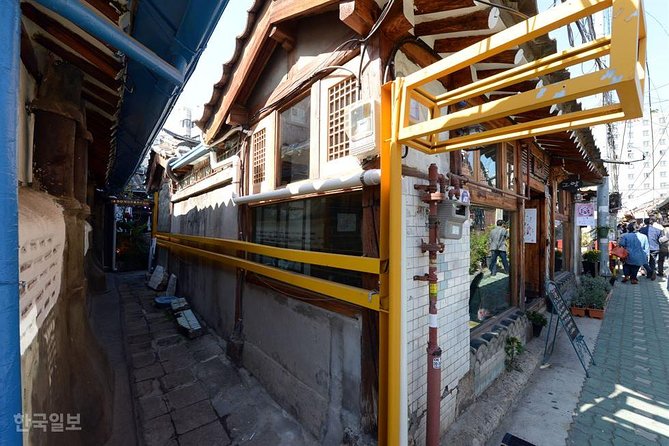
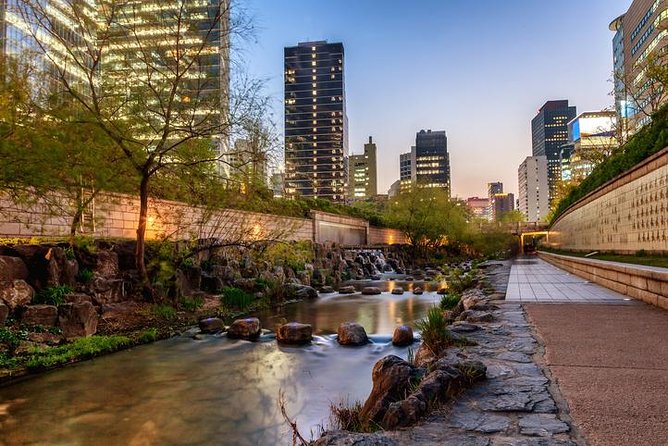
Cheonggyecheon Stream gives the day a break from buildings and interior spaces. You walk beside the water for about 30 minutes while hearing the stories connected with the stream.
The stop is free and easy to fit into the route. It also gives you a way to think about Seoul as a city that has changed over time. The tour promises stories behind the stream, but it does not spell out a particular route or set of landmarks, so the guide’s explanation will shape this part of the experience.
I appreciate the pause here. Seven hours of palaces, museum displays, shops, and streets can feel dense. A walk along the stream lets you reset before the food-focused final stop.
Do not expect a long scenic walk. Thirty minutes is a sample, not a full exploration of the waterway. The point is to connect the stream to Seoul’s urban story and give your feet a change of pace.
Kwangjang Market, finishing with Korean comfort food
Kwangjang Market is the most sensory ending to the tour. The market is about 600 years old and began with linen sales for special occasions. Over time, it became known for food stalls and Korean comfort dishes.
The planned visit lasts about 30 minutes. That is enough to walk through the market and see the food stalls, but lunch is not included. You should budget separately if you want to eat, and you may want to ask the guide which dishes are suitable for your preferences.
This is also the part of the day where a private guide can add real value. A guide may help you understand what you are looking at, explain how the market changed, and point you toward a local favorite. One particularly positive account described Michael taking the couple to a favorite restaurant for ginseng black chicken. That meal was not part of the stated package, so treat it as an example of personal guidance, not a guaranteed inclusion.
The short visit means you may need to choose between browsing and eating. If food is a major reason for booking, say so at the beginning. If the market is simply your final glimpse of daily Seoul, 30 minutes gives you a lively finish without making the day revolve around lunch.
The private car, walking, and group size
The tour costs $475 per group of up to six. That means the value changes sharply depending on your party size. For six people, the price works out to about $79 per person before any palace admission, lunch, or other personal spending. For two people, it is about $238 per person, making the private service a much bigger commitment.
The air-conditioned vehicle matters in Seoul’s warm or tiring days, especially when you are combining seven stops. Hotel pickup and drop-off anywhere in Seoul remove the need to work out a meeting point or navigate back to your accommodation.
Still, this is not a car tour in which you remain seated all day. You will walk through palaces, a village, a shopping district, a temple, a stream, and a market. Ask at the start how close the vehicle can get to each location and where you will meet it afterward.
The private setup is best when you value flexibility and conversation. You can ask about Korean family customs at the museum, architecture in Bukchon, or food at Kwangjang Market without waiting for a large group. It is less compelling if you are comfortable using public transport and prefer to set your own pace.
Guides, ratings, and the fair reading of feedback
The experience has a 4.8 rating from 51 ratings, with 96 percent recommending it. The strongest praise focuses on the personal nature of the day, comfortable transport, and guides who explain Korean culture in an approachable way.
Michael received warm praise for connecting palaces, temples, food, and everyday Korean life. Judy was described as patient, kind, friendly, and good company during the walking portions. Those details matter because the guide is responsible for turning a list of stops into a coherent day.
There is also one serious negative account involving YT Kim. The complaint said the private car was not used as expected and that the vehicle was parked far from the first stop. I would not ignore that warning, even though the overall score is high. Confirm the transport arrangement, walking expectations, and any extra charges before leaving the first location.
Free cancellation is available up to 24 hours before the start time. Changes or cancellations made less than 24 hours before the 9:00 a.m. start are not accepted for a refund. Pickup outside Seoul but within Gyeonggi Province adds $50.
Who should book this Seoul heritage day
I would choose this tour if you have one full day for traditional Seoul and want a guide to connect the sites. It is especially suitable for families, couples who prefer a private outing, and groups of friends who can divide the $475 cost.
It also suits you if you want both major sights and ordinary city life. Gyeongbokgung gives you the royal setting, while Bukchon, Insadong, Cheonggyecheon, and Kwangjang Market show how tradition appears in neighborhoods, shops, worship, public spaces, and food.
I would look elsewhere if you want slow photography, long museum visits, or hours at the market. The schedule is broad and efficient, not leisurely. Independent visitors who enjoy Seoul’s subway system may also find the price hard to justify for a small party.
Should you book it?
Book this tour if convenience, private guiding, and a wide look at Seoul’s traditional side matter more to you than keeping costs low. For a group of four to six, the math is reasonable, and the route gives you a useful first-day framework.
Before booking, make sure your group understands that lunch and palace admission cost extra, and confirm how the car will be used between stops. If you do that, this is a well-shaped day for seeing royal Seoul, living traditions, and Korean food culture without spending your first day trying to assemble the route yourself.
FAQ
How long is the Korean History & Heritage Tour?
The tour lasts approximately seven hours.
What time does the tour start?
The listed start time is 9:00 a.m.
How many people can join the private tour?
The price covers one private group of up to six people.
Is hotel pickup included?
Yes. Free hotel pickup and drop-off are provided anywhere in Seoul.
Is pickup available outside Seoul?
Pickup outside Seoul but within Gyeonggi Province is available with a $50 surcharge.
Is transportation provided during the tour?
Yes. The tour includes an air-conditioned vehicle.
Is lunch included?
No. Lunch is not included in the tour price.
Is admission to Gyeongbokgung Palace included?
No. Admission to Gyeongbokgung Palace is listed as not included.
Are the other listed attractions free?
The National Folk Museum of Korea, Bukchon Hanok Village, Insadong, Jogyesa Temple, Cheonggyecheon Stream, and Kwangjang Market are listed with free admission.
Can I cancel for a full refund?
Yes. You can cancel at least 24 hours before the experience start time for a full refund. Cancellations or changes made less than 24 hours before the start time are not accepted for a refund.
Just added around Seoul
- Your Personal Seoul Photographer!★ 4.1 · 15 reviews
- From Seoul: Hwacheon Ice Fishing and Lighting Festival Tour★ 4.5 · 4 reviews
- You’re Invited to Our Home in Seoul: The Only Cooking Class!★ 5.0 · 8 reviews
- Seoul: Gangneung BTS K-Pop & K-Drama Filming Locations Tour★ 4.6 · 14 reviews
- Unique Native Experience : Han River Picnic, Board game, BBQ★ 5.0 · 3 reviews
- 2-Hour Private Kayaking and Paddleboarding Experience in Hanriver★ 5.0 · 3 reviews
- Yun Korean Cooking Class in Seoul★ 5.0 · 6 reviews
- Day Trip to Yongin Daejanggeum and Korean Folk Village from Seoul★ 4.0 · 9 reviews
Historical Tours, compared.
Evening Dark History, Folklore & Ghost Story Walking Tour
Read our review →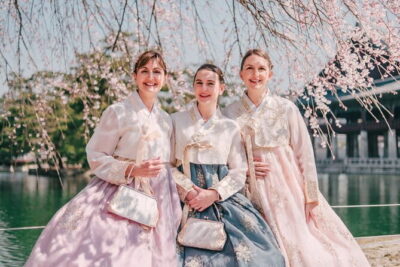
Hanbok Photoshoot and History Tour at Gyeongbokgung Palace
Read our review →
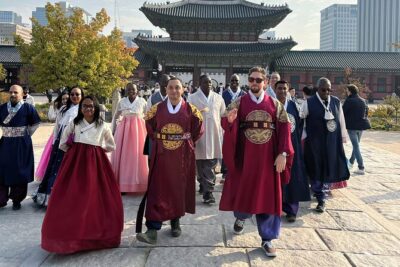
City Highlights and Historical Experience No Shopping
Read our review →
Street photoshoot and Seoul Hidden gem History Walking Tour
Read our review →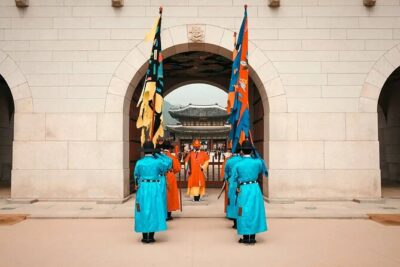
Namhansanseong UNESCO Historical Sites and Korean Folk Village-Private Tour
Read our review →
Seoul Cultural Tour – Kimchi Making, Gyeongbok palace with Hanbok
Read our review →Browse the lists this tour appears in