
Reviewed · SEOUL DMZ TOURS
Private DMZ Tour with North Korean Defector + N Korean Lunch
The most meaningful part of this DMZ tour is not a military display or a quick photo stop. It is hearing Jun, a North Korean defector, explain what the border means through the lens of his own life. His story gives the views across the river a human weight that a standard bus tour cannot easily provide.
I like the small group size, capped at four people, and I like that lunch takes place at a North Korean restaurant run by a defector. Those details make the day feel more personal and less like a borderland sightseeing circuit. The main consideration is that this is a selective DMZ-area visit, not a tour of every famous border site, and there is no vegetarian meal option.
Key points to know before booking
- Jun leads the day with first-hand experience: He moved from North Korea to South Korea in 2017 and shares his story while you visit the border area.
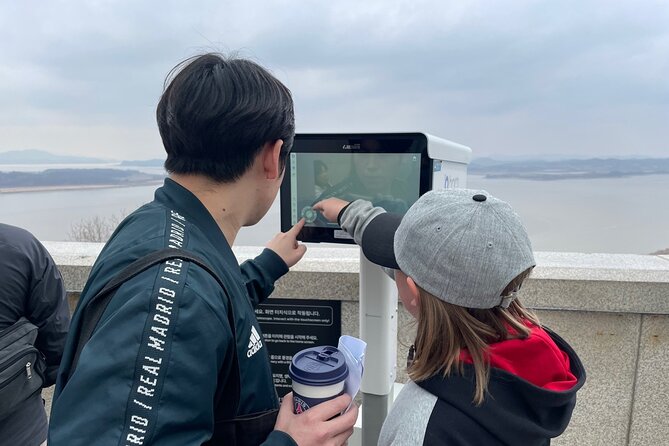
- Odusan offers close views across the border: Binoculars let you look toward North Korean villages about 2 kilometers away.
- Lunch has a direct connection to the subject: You eat North Korean food at a restaurant operated by a North Korean defector.
- The group stays very small: The maximum is four people, though a booking with two or fewer participants may include up to two additional guests.
- Pickup is included, but the finish is central Seoul: The tour begins with hotel pickup and ends at Hapjeong Station, not back at your hotel.
- The price pays for access to a personal story: At $150 per person, the value rests less on the number of sights and more on the intimacy, transport, meal, and guide’s perspective.
Why Jun changes the meaning of a DMZ visit
Many border tours give you facts, dates, and designated viewpoints. This experience adds a person who lived under the system being discussed. Jun moved to South Korea in 2017, and his account of life in North Korea, his escape, and his new life gives the day a personal center.
I would choose this tour if you want to understand more than the map. You can ask questions, listen to Jun explain what he remembers, and connect the visible border with the lives of people on both sides. His story is described as heroic, tragic, difficult, and inspiring, but the important point is that it is personal rather than a general lecture.
That personal approach also makes the tour more emotional than a normal sightseeing outing. You may find that the most memorable part is not the photograph of North Korea, but the quiet conversation that comes before or after it. Jun’s story includes the continuing concern he feels for family remaining in the North, a reminder that the division is not simply a historical subject.
The tour does place limits on filming or streaming personal information. That is a reasonable boundary for a day built around someone’s life story. You should arrive ready to listen, ask respectful questions, and keep the focus on the experience rather than treating the guide’s past as a spectacle.
More DMZ tours in Seoul:
- Best DMZ Tour Korea from Seoul (Red Suspension Bridge Optional)
★ 5.0 · 41,422 reviews - DMZ Tour: 3rd Tunnel, Option(Suspension Bridge, Boat) from Seoul
★ 5.0 · 21,373 reviews - DMZ tour south Korea from Seoul (NK experience hall, defector)
★ 5.0 · 20,599 reviews
A small group with transport already arranged
The tour lasts about seven to eight hours and starts at 10:30 a.m. Hotel pickup is included, which takes away one of the less pleasant parts of visiting the DMZ area: working out the route and timing on your own.
The small format matters. With a maximum of four people, you have a better chance to ask questions without shouting across a coach. A very small group also suits a subject that can be sensitive and complex. You are not being moved from one stop to another by a large crowd, and the day can feel more like a conversation with planned visits than a standard package excursion.
There is one important transport detail. The tour does not include a return to your hotel. It finishes at Hapjeong Station after a 15-minute drop-off segment. From there, you can reach central parts of Seoul, including Itaewon and Yongsan, by public transport. Plan your evening around that finish rather than expecting to be delivered back to your accommodation.
The small-group promise has a slight wrinkle. If two or fewer people book, up to two additional people may join. Even so, the maximum remains four, so this is still far removed from a 30-person coach tour.
North Korean lunch in Goyang
The first major stop is a North Korean local food restaurant in Goyang. The restaurant is operated by a North Korean defector, making lunch part of the subject rather than a convenient pause between attractions.
That connection gives the meal extra value. You are not simply eating something labeled North Korean. You can ask about the food and its place in daily life, while Jun adds context from his own experience. Several of the strongest impressions of the day come from the combination of food and conversation.
The lunch is included in the $150 price, along with admissions and hotel pickup. It also means you do not need to pack snacks for the middle of the day. This is useful because the tour runs for most of the day and includes a two-hour restaurant visit.
The limitation is clear: no vegetarian option is offered. If you do not eat meat or have strict dietary needs, this experience may not suit you. The supplied information does not list alternative meals, so you should not book assuming the menu can be changed.
A two-hour lunch stop is also longer than a quick meal at a tourist attraction. That gives you time to talk, but it may feel slow if you want a fast-moving day packed with viewpoints. I see the length as part of the tour’s purpose. The meal is one of the places where you learn through conversation, not just one more item on a checklist.
Odusan Unification Tower and the villages across the border
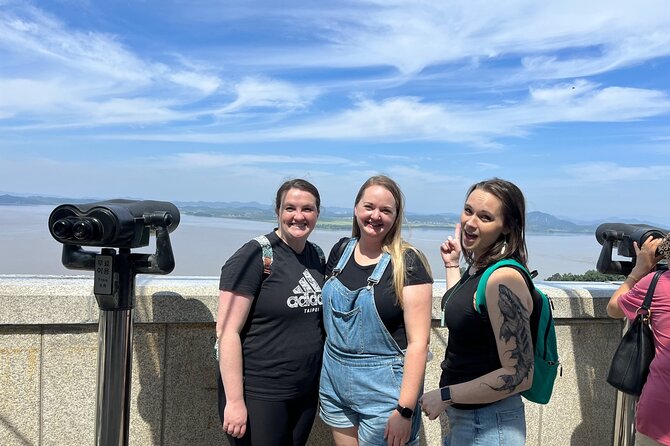
Odusan Unification Tower is the visual heart of the day. From here, North Korean villages are about 2 kilometers away. Binoculars help you see signs of everyday life, along with propaganda buildings erected by the North Korean government.
The distance is close enough to make the border feel real, yet the view is still a view across a divide. You are not walking through North Korea or meeting its residents. You are observing from the South Korean side, with the tower providing a controlled point from which to consider what lies beyond.
This is where Jun’s presence matters most. A village, road, or building can look abstract when viewed through binoculars. His explanations give those details context and help you think about what cannot be seen. The tour is less about collecting dramatic photographs and more about understanding the people who live under the division.
Allow about two hours for this stop. That is enough time to look carefully, hear the explanation, and ask questions. Bring patience. Visibility can affect how much you see, and the experience depends on observing rather than moving through a long list of attractions.
You should also keep your expectations in check. This tour does not promise every well-known DMZ site. It focuses on Odusan, Imjingak, the lunch stop, and Jun’s account. If you want a broad route with many military exhibits and border attractions, another tour may offer more stops. If you want fewer places with more time for discussion, this format is a better match.
More lunch stops in Seoul:
- Seoul City Private Full-Day Tour Including Lunch
★ 5.0 · 469 reviews - Premium Private DMZ Tour & (Suspension Bridge or N-Tower) include lunch
★ 5.0 · 348 reviews - From Seoul: Cheorwon DMZ and 2nd Tunnel Tour with Lunch
★ 4.9 · 116 reviews - Full Day- Essential Seoul City Tour & Gourmet Tour(including Lunch and Dinner)
★ 5.0 · 73 reviews
Imjingak Peace-Nuri Park and the Bridge of Freedom
The final principal stop is Imjingak Peace-Nuri Park, a site created for refugees who fled North Korea during the Korean War. The park connects the modern tourist visit with the displacement caused by the conflict.
You will also see the Bridge of Freedom. The bridge was temporarily constructed by the U.S. Army Corps of Engineers in 1953 to release 12,773 South Korean prisoners of war. That number turns a simple structure into a record of people waiting to return to safety.
The visit lasts about an hour. Compared with the two-hour stop at the tower and restaurant, this is a shorter, more focused visit. It gives you another physical reminder of separation and return, while Jun’s story helps connect the Korean War era with the division that remains today.
The park is not simply a photo background. Its purpose is tied to refugees, separation, and memory. You may find the shift from looking at current North Korean villages to standing near a bridge linked to prisoners of war especially effective. One stop shows the border as it exists now; the other recalls the human cost that helped create it.
What the $150 price really covers
At $150 per person, this is not the cheapest way to visit the DMZ area. The price includes hotel pickup, lunch, admissions, and a full day lasting roughly seven to eight hours. Those practical inclusions reduce the extra costs and planning work that can come with arranging the visit yourself.
The larger value is the guide. You are paying for a small-group day led by someone who can speak about North Korea from direct experience. Jun’s English is described as excellent, and he is able to answer questions about North Korea, South Korea, the border, and his own defection.
I would not judge this tour by the number of stops. It does not try to win by adding shopping, unrelated activities, or a long parade of viewpoints. Its value comes from time spent with Jun, the defector-run meal, and the chance to ask questions in a group small enough for real conversation.
The price makes the most sense if you already know that a personal account is more important to you than a packed sightseeing schedule. It makes less sense if you want only the lowest-cost way to take a photograph near the border.
The day also avoids the feel of a generic coach excursion. The group can be as small as two to four people, although additional guests may be added when only two people book. That is still a major difference from a large group, especially when the topic is personal and potentially painful.
Who will get the most from this experience
I recommend this tour most strongly to people interested in Korean history, the current division of the peninsula, refugee experiences, and the practical realities of life in North Korea. It also suits anyone who prefers conversation and context over a long list of attractions.
Teenagers can enjoy it if they are willing to listen. The personal story gives younger visitors a clearer way into a complicated subject than dates and political terms alone. Families should remember that the material can be serious and emotionally difficult.
This is also a good choice for a short Seoul visit if you want one major day outside the city. Pickup makes the start simple, and the Hapjeong Station finish gives you a practical way to continue your evening in Seoul.
I would think twice if you need vegetarian food, dislike long conversations, or want a tour built around constant movement. The experience is not designed as light entertainment. It asks you to give attention to Jun’s story and to the people affected by the border.
Practical details that affect your day
Confirmation is provided when you book, and the tour begins at 10:30 a.m. Hotel pickup is included, but the supplied details do not state a universal pickup time for every hotel, so check the booking information carefully.
Admission fees are included, as is the North Korean lunch. Travel insurance is not included. Most people can participate, and the tour is near public transportation.
Free cancellation is available until 24 hours before the start time for a full refund. Changes or cancellations inside that 24-hour window are not accepted for a refund. The experience requires good weather, and poor weather may lead to a new date or a full refund. If the minimum number of participants is not met, you may be offered another date or experience, or receive a full refund.
Keep personal privacy in mind. Filming or streaming personal information is not allowed. That rule is especially relevant here because the day includes a private account of defection and family separation.
Should you book Jun’s DMZ tour?
Book it if you want the DMZ to mean more than a border photograph. Jun’s first-hand story, the North Korean meal, and the small group make this a personal and unusually focused day. The views from Odusan and the Bridge of Freedom provide the setting, but the conversation is the main event.
Skip it if you want every major DMZ attraction, a vegetarian lunch, or a quick sightseeing loop. You will see fewer sites than on a large route, and the tour ends at Hapjeong Station rather than returning you to your hotel.
For most people who care about the human side of the Korean division, I consider the $150 a fair price. You get transport, food, admissions, and a rare chance to learn from someone whose own life is tied to the border. That is a very different experience from simply pointing a camera north.
FAQ
How long does the tour last?
The experience lasts approximately seven to eight hours, including the restaurant visit, border-area sightseeing, and transport to the final drop-off.
What time does the tour start?
The stated start time is 10:30 a.m.
Is hotel pickup included?
Yes. Hotel pickup is included in the tour price.
Does the tour return me to my hotel?
No. The tour ends at Hapjeong Station. From there, you can reach central Seoul areas such as Itaewon and Yongsan by public transportation.
How many people can join the tour?
The maximum is four people. If two or fewer participants book, up to two additional guests may join.
Is lunch included?
Yes. Lunch is included and features North Korean food at a restaurant operated by a North Korean defector.
Is there a vegetarian meal option?
No vegetarian option is provided.
What can I see from Odusan Unification Tower?
You can view North Korean villages about 2 kilometers away through binoculars. You can also see propaganda buildings erected by the North Korean government.
What happens if bad weather cancels the tour?
If poor weather causes cancellation, you will be offered a different date or a full refund. Free cancellation is also available up to 24 hours before the scheduled start time.
Just added around Seoul
- Your Personal Seoul Photographer!★ 4.1 · 15 reviews
- From Seoul: Hwacheon Ice Fishing and Lighting Festival Tour★ 4.5 · 4 reviews
- You’re Invited to Our Home in Seoul: The Only Cooking Class!★ 5.0 · 8 reviews
- Seoul: Gangneung BTS K-Pop & K-Drama Filming Locations Tour★ 4.6 · 14 reviews
- Unique Native Experience : Han River Picnic, Board game, BBQ★ 5.0 · 3 reviews
- 2-Hour Private Kayaking and Paddleboarding Experience in Hanriver★ 5.0 · 3 reviews
- Yun Korean Cooking Class in Seoul★ 5.0 · 6 reviews
- K-Pop Making Class with a Producer!★ 5.0 · 3 reviews
Seoul DMZ Tours, compared.
Best DMZ Tour Korea from Seoul (Red Suspension Bridge Optional)
Read our review →
DMZ Tour: 3rd Tunnel, Option(Suspension Bridge, Boat) from Seoul
Read our review →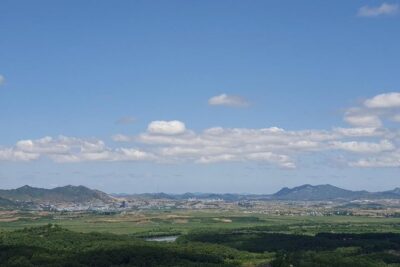
DMZ tour south Korea from Seoul (NK experience hall, defector)
Read our review →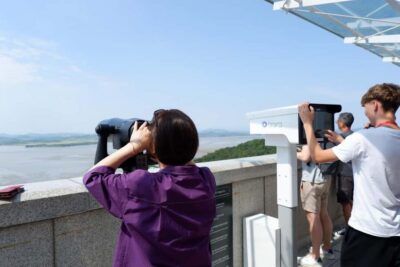

Signature DMZ Tour: Exclusive Defector Talk & Suspension Bridge
Read our review →
Thrilling Korean DMZ 3rd Tunnel Tour from Seoul + Red Bridge Rush
Read our review →
DMZ Past and Present: Korean Demilitarized Zone Tour from Seoul
Read our review →
Ultimate Korea DMZ Tour from Seoul (Gondola & Suspension Bridge)
Read our review →Browse the lists this tour appears in