Reviewed · GUIDED
Seoul Self-Guided Audio Tour
Seoul’s story is told through royal palaces, Buddhist temples, war memorials, design centers, and skyscrapers. This self-guided audio tour links 16 major sights with recorded commentary and a Google My Maps route, giving you the freedom to set your own pace instead of following a guide with a flag.
I like the low $9 price and the freedom to choose your own starting point. I also like the range: you move from Joseon-era courtyards to Zaha Hadid’s Dongdaemun Design Plaza, then on to museums, parks, shopping districts, and Seoul’s tallest towers. The main catch is that this is not turn-by-turn navigation or a timed sightseeing bus. You must plan your route, pay separate entry fees, and allow time to travel between widely scattered stops.
Key points to know before you go
- Sixteen sights in one audio playlist: The route covers royal Seoul, modern design, religion, war history, art, shopping, and city views.
- Two mobile links do the work: One opens the SoundCloud audio, while the other opens a Google My Maps route with each stop linked to its recording.
- Three hours is a brisk overview: Each stop has about 10 minutes of suggested commentary, but transport and admission lines add time.
- Admission costs are separate: Gyeongbokgung Palace, Changdeokgung Palace, N Seoul Tower, Leeum Art Museum, and Seoul Sky are not included.
- You choose the route: Start and finish anywhere in Seoul, follow the suggested order, or split the stops over several days.
- Plan for delivery timing: Access arrives by email on your selected travel date, and one booking problem involved links arriving after the customer had already left a palace.
What this Seoul audio tour actually is
Think of this as a portable set of location-based talks, not a conventional guided tour. You receive private access to one audio playlist covering 16 attractions, plus a map that shows each stop and links to its matching recording.
At a palace, you can open the palace track. At a temple, you select the temple track. You control the volume, pace, breaks, and order. There is no guide walking beside you, no fixed meeting point, and no required end time.
That flexibility is useful in Seoul, where the sights are spread across several districts. You may want to see the central palaces in one outing, the Han River and National Museum in another, and the Gangnam area on a separate day. The access links remain valid for up to six days, so you do not need to force every stop into one long march.
The advertised duration is about three hours, with roughly 10 minutes assigned to each attraction. That timing describes the audio content more than the complete sightseeing day. Sixteen stops at 10 minutes each already equal about 160 minutes, before subway rides, walking, meals, photographs, queues, and time inside the museums. I would treat three hours as a fast overview, not a relaxed visit to all 16 places.
Other Seoul days people book alongside this one:
- Best DMZ Tour Korea from Seoul (Red Suspension Bridge Optional)
★ 5.0 · 41,422 reviews - DMZ Tour: 3rd Tunnel, Option(Suspension Bridge, Boat) from Seoul
★ 5.0 · 21,373 reviews - DMZ tour south Korea from Seoul (NK experience hall, defector)
★ 5.0 · 20,599 reviews
Gyeongbokgung and Bukchon: the royal heart of Seoul
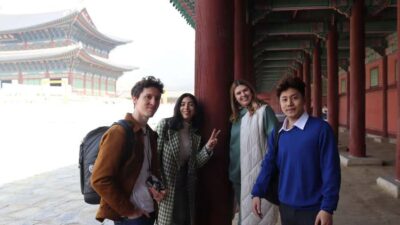
Gyeongbokgung Palace is the natural place to begin if you want Seoul’s royal story first. The audio explains its role as the Joseon Dynasty’s seat of power, its architectural details, and the difficult events that shaped the palace. You can use the recording to give the courtyards and gates some context instead of simply photographing them.
Admission is not included, so check the palace’s current opening arrangements before setting out. A short 10-minute track can orient you, but you will likely need more time if you want to appreciate the grounds.
Nearby Bukchon Hanok Village offers a different view of tradition. Its narrow streets and hanok houses show how Korean homes were designed, while the commentary explains the district’s change into a cultural area with shops and creative businesses. The stop is free, but it is still a residential neighborhood, so quiet behavior matters.
These two locations work well together. Gyeongbokgung presents official royal power, while Bukchon shows traditional housing at street level. You can make this a compact morning, but the audio will not guide you turn by turn through every lane.
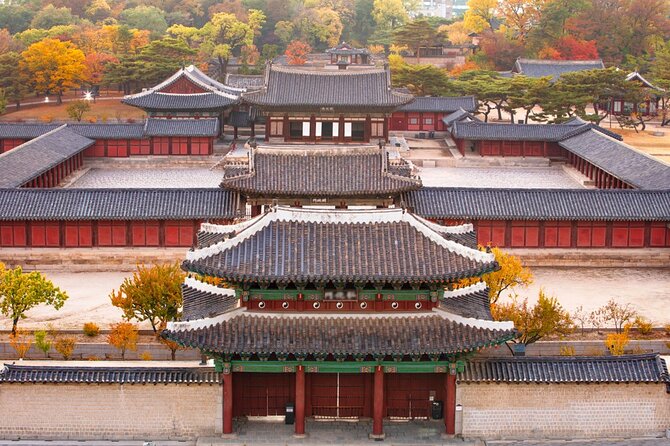
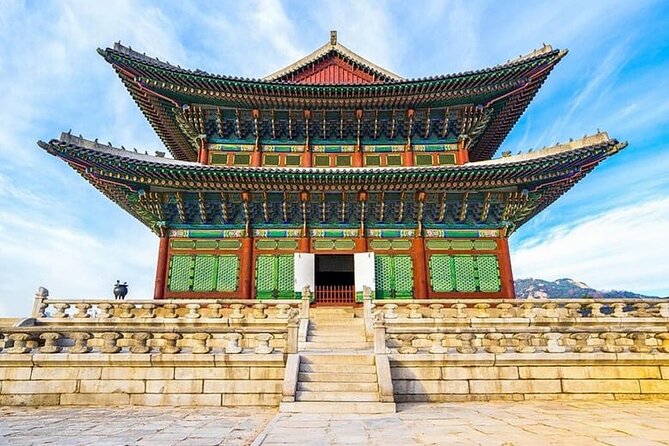
Changdeokgung Palace gives you another royal perspective. Its appeal lies in the way buildings fit their natural setting, and the audio introduces the palace’s place in Korean royal history and its famous Secret Garden. Entry is not included. If the garden requires a separate arrangement or timed access when you visit, build that into your plan rather than assuming the 10-minute stop covers everything.
Jogyesa, Cheonggyecheon, and Myeong-dong
Jogyesa Temple brings modern Korean Buddhism into the route. The recording covers Buddhist practice, temple symbolism, and the site’s role in recent Korean history. Entry is free, making it an easy stop between the paid palace visits.
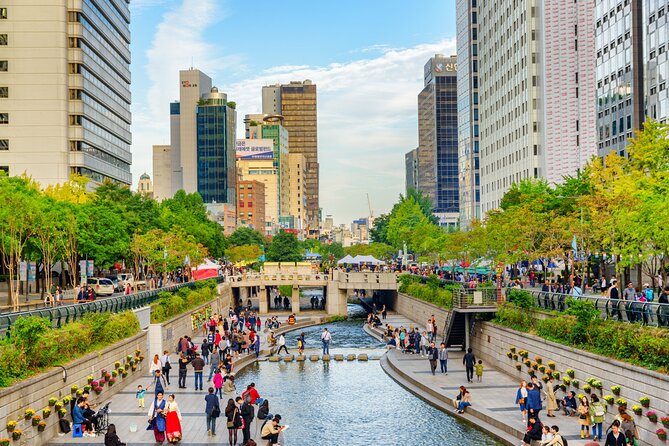
Cheonggyecheon Stream shows Seoul’s talent for changing its own urban fabric. The audio explains how a covered highway gave way to a public stream and discusses the project’s effect on ecology and city life. You can walk beside the water without paying an admission fee, and this is one of the better places to take a break from dense streets.
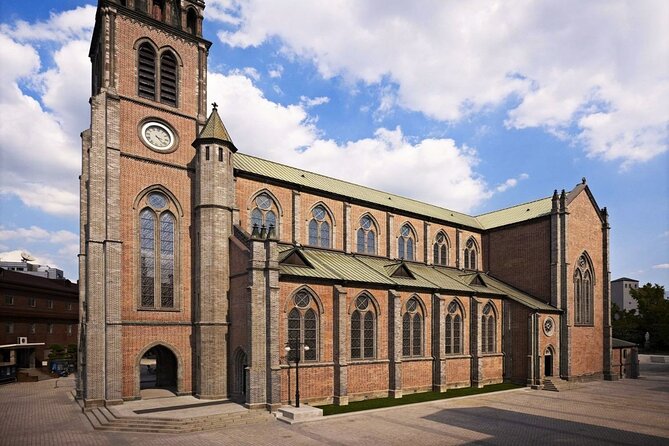
Myeong-dong Cathedral adds a religious and political layer. Its Gothic revival design is distinctive, but the important story is its connection to Korea’s democracy movement. The free stop helps explain how religious buildings can also become part of a country’s civic story.
The three locations make a good central Seoul cluster. The audio gives each one a clear purpose, but you will need to manage the walking order yourself. The map helps locate the stops, yet it is not described as a live navigation system. Use it to choose your path, not to expect spoken directions at every intersection.
Dongdaemun Design Plaza and N Seoul Tower
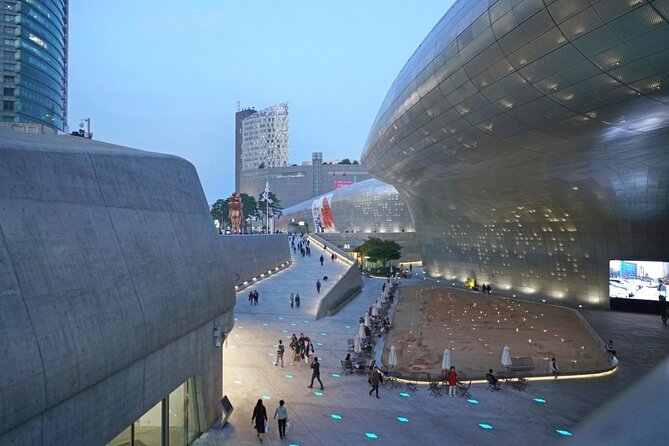
Dongdaemun Design Plaza, usually called DDP, shifts the mood from old Seoul to futuristic Seoul. Designed by Zaha Hadid, its flowing form has become a landmark for design and fashion. The recording explains the building’s architecture and its role as a creative center.
This is a useful stop for understanding the city’s modern identity. Seoul is not only palace roofs and temple courtyards. It is also a place that invests heavily in technology, fashion, and bold public design. Admission depends on what you want to enter, but the landmark itself is presented as a stop in the route.
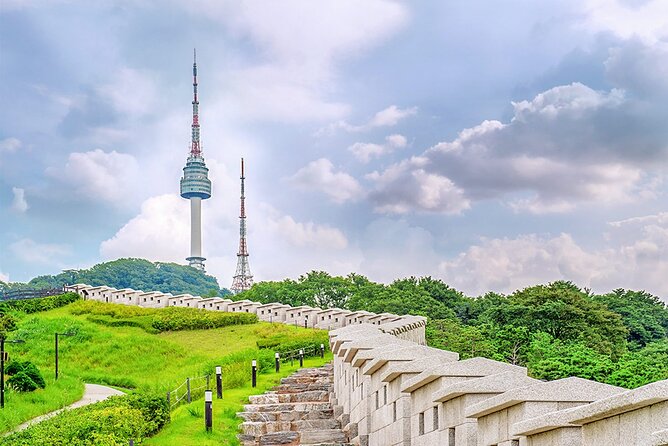
N Seoul Tower offers one of the city’s signature views from Namsan. The audio covers the tower’s communication role and the love-lock tradition that turned it into a romantic meeting place. Admission is not included, and reaching the tower takes planning because it sits above the city.
Namsan Park belongs beside the tower rather than being treated as a separate world. The free park provides green space around Seoul’s central mountain, with commentary on feng shui ideas and the mountain’s role as an urban refuge. If you want both stops, allow more time than the two short tracks suggest. The tower, park, transport, and viewpoints together can easily become a half-day outing.
A different kind of day out around Seoul:
- Seoul: DMZ Tour with Optional Suspension Bridge
★ 4.8 · 5,277 reviews - Signature DMZ Tour: Exclusive Defector Talk & Suspension Bridge
★ 5.0 · 4,459 reviews - Thrilling Korean DMZ 3rd Tunnel Tour from Seoul + Red Bridge Rush
★ 5.0 · 3,097 reviews - DMZ Past and Present: Korean Demilitarized Zone Tour from Seoul
★ 5.0 · 2,481 reviews
Leeum Art Museum and the War Memorial
Leeum Art Museum brings art and architecture into the route. Its collection combines traditional Korean art with contemporary work, and the buildings were designed by renowned architects. Entry is not included, so this stop is best for visitors who plan to spend enough time inside to make the admission worthwhile.
A 10-minute recording can explain the museum’s character, but it cannot replace the galleries. I would use the audio before entering, then put it aside while you look at the works at your own speed.
The War Memorial of Korea provides one of the route’s most serious stops. Its exhibits cover the Korean War and the continuing effect of the peninsula’s division. Admission is free, and the subject gives necessary context for understanding modern South Korea beyond shopping districts and new construction.
These attractions are valuable for different reasons. Leeum shows artistic ambition in the present, while the War Memorial asks you to consider the conflicts that shaped the present. Give the memorial more time than a quick audio stop if modern Korean history is important to you.
National Museum of Korea and Hangang Park
The National Museum of Korea surveys about 5,000 years of Korean history and culture. Its collection reaches from prehistoric times into the modern period, making it one of the most useful places on the route for connecting separate pieces of Korean identity.
The audio highlights important artifacts and the broad historical arc. Admission is free, but the museum is far too large to experience properly in 10 minutes. If you have only a short visit, use the track to choose a focus. If you enjoy museums, this is one stop where extending the time pays off.
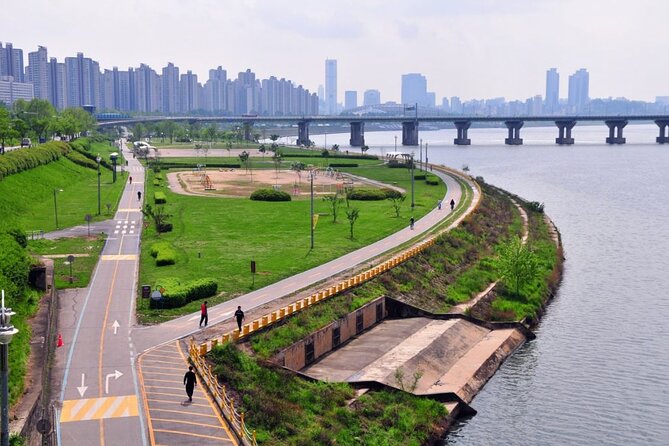
Hangang Park offers a change of pace beside the Han River. The recording explains the river’s role in Seoul’s growth and its place in Korean culture. Entry is free, and the park gives you room to pause after indoor museums and historic sites.
The museum and riverside work well as a separate outing. They are not quick add-ons to the central palace area. The map can show how the stops relate to one another, but you should still allow time for transportation between districts.
Bongeunsa, Starfield Library, and Seoul Sky
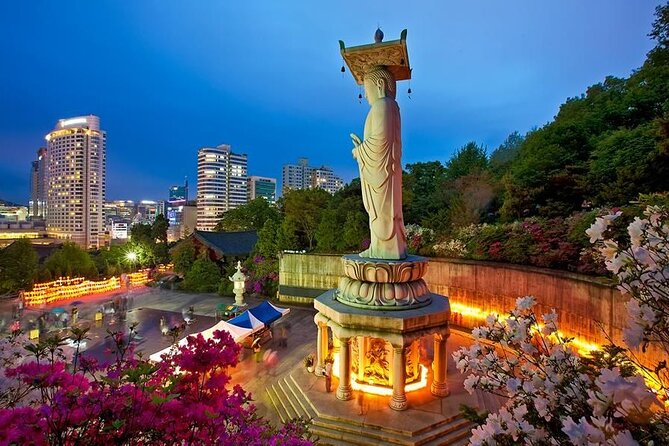
Bongeunsa Temple is an old Buddhist site surrounded by Seoul’s modern district. Its 1,200-year history and role in spreading Korean Buddhism provide a striking contrast with the high-rise setting around it. Entry is free, so this is a simple stop to add when you are already in the area.
Starfield Library offers a very different kind of public space. Its tall shelves and open design have made it a popular photo stop, but the audio also considers how literature, shopping, and public life meet in a Korean commercial center. Admission is free.
Seoul Sky completes the modern Seoul story from above. Located in Korea’s tallest building, the observation deck gives you wide city views and an introduction to the engineering behind the skyscraper. Entry is not included, so check the cost before committing to the stop.
This trio works best as a planned modern-city day. Bongeunsa supplies quiet and age, Starfield Library supplies spectacle at ground level, and Seoul Sky gives you the broad view. The contrast is the point. You can see how quickly Seoul moves from a historic temple to a major shopping complex and then upward into a super-tall tower.
How the links and map shape your day
The experience depends on your phone. Before your selected travel date, you receive an email with two access links. The first opens the audio through SoundCloud. You can play one attraction at a time or listen through the playlist while planning.
The second opens a Google My Maps route. Each marked point connects to its corresponding audio track. This arrangement is simple, but it puts the planning in your hands. You decide which districts to group, which paid attractions to enter, and where to stop for food or rest.
Do not assume the product works like an instant download. One reported problem involved a booking made at 9:50 in the morning, with the access link arriving at 1 p.m., after the customer had already left the palace. The stated process says the links are sent on the selected travel date before the starting time, but I would still book ahead and check your email before heading out.
You can listen to the content before visiting, which is useful when deciding priorities. If you have only one day, select the palaces, one museum, and one modern landmark. If you have several days, the six-day link validity gives you room to spread the route out.
Price, entry fees, and overall value
At $9 per person, the audio guide is inexpensive compared with a private in-person tour. It gives you commentary for 16 places and lets your group explore privately, with no additional guide fee.
The price is most useful if you want background but do not need constant personal attention. You can pause, replay, skip, or move on without waiting for a group. That is a real advantage in a city where different people in the same group may want different amounts of time at a palace or museum.
The cost is less attractive if you expect a fully managed sightseeing experience. Transportation is not included, entry fees are not included, and the guide does not provide step-by-step street directions. You also need to organize the day around opening times and your own route.
Paid stops include Gyeongbokgung Palace, Changdeokgung Palace, N Seoul Tower, Leeum Art Museum, and Seoul Sky. The other listed attractions are free, though special exhibits or activities at a location may have their own arrangements. Since the tour does not cover those costs, make a rough budget before you go.
The overall rating is 3.3 from 12 ratings, with praise for the broad overview and criticism centered on access timing, expectations about navigation, and the level of detail. That pattern gives you a fair warning: buy this for flexible orientation, not for a private historian or a guided walking route.
Who should book this Seoul experience
I would recommend it to an independent visitor who likes choosing the pace and wants a little structure across a large city. It suits first-time visitors who want an introduction to Seoul’s royal past, Buddhist traditions, modern history, art, and technology without paying for a full private guide.
It can also work for a small private group with different interests. One person can spend longer at the museum while another moves on, and everyone can return to the map and audio when ready.
I would be cautious if you want detailed curatorial commentary, live questions, or automatic directions. The recordings provide an overview, and one earlier experience was described as useful for a broad introduction but too brief for people seeking detailed information. The provider says the audio has been improved, but you should still approach 10 minutes per stop as an introduction.
I would also avoid booking it at the last minute if your schedule is tight. The access email is central to the experience, so give yourself room to receive it before visiting your first attraction.
Should you book the Seoul Self-Guided Audio Tour?
Book it if you want a low-cost audio companion and the freedom to arrange Seoul your way. The strongest feature is the range of places covered, from Gyeongbokgung and Bukchon to the National Museum, Han River, Bongeunsa, and Seoul Sky.
Skip it if you want someone to lead you through streets, manage transportation, answer questions, or provide long explanations at each site. For $9, it offers a useful framework, but you still supply the route planning, admission fees, timing, and curiosity. Used that way, it is a practical introduction to a city that rewards both old-fashioned wandering and careful planning.
FAQ
How much does the Seoul Self-Guided Audio Tour cost?
The price is $9 per person.
How long does the tour take?
The estimated duration is about three hours. Each of the 16 listed stops has approximately 10 minutes of suggested audio, but transportation, admissions, and time spent at each attraction can make the full day longer.
Where does the tour start and finish?
There is no fixed start or finish point. You can begin and end anywhere in Seoul because the experience is self-guided.
What do I receive after booking?
You receive a private link to one audio playlist covering 16 attractions and a private link to a Google My Maps itinerary showing the stops and their individual audio guides.
How long are the access links valid?
The access links are valid for up to six days.
Are admission tickets included?
No. Entry fees are not included. Paid attractions listed for the route include Gyeongbokgung Palace, Changdeokgung Palace, N Seoul Tower, Leeum Art Museum, and Seoul Sky.
Is transportation included?
No. Transportation, including pickup and drop-off, is not included.
Is this a guided walking tour with live directions?
No. It is a self-guided audio experience with an interactive map. The map helps you locate the attractions, but the audio is not described as an automated, step-by-step navigation system.
Just added around Seoul
- Your Personal Seoul Photographer!★ 4.1 · 15 reviews
- From Seoul: Hwacheon Ice Fishing and Lighting Festival Tour★ 4.5 · 4 reviews
- You’re Invited to Our Home in Seoul: The Only Cooking Class!★ 5.0 · 8 reviews
- Seoul: Gangneung BTS K-Pop & K-Drama Filming Locations Tour★ 4.6 · 14 reviews
- Unique Native Experience : Han River Picnic, Board game, BBQ★ 5.0 · 3 reviews
- 2-Hour Private Kayaking and Paddleboarding Experience in Hanriver★ 5.0 · 3 reviews
- Yun Korean Cooking Class in Seoul★ 5.0 · 6 reviews
- Vivaldi Park Winter Ski Resort with Nami Island Tour from Seoul★ 4.5 · 7 reviews
Guided, compared.
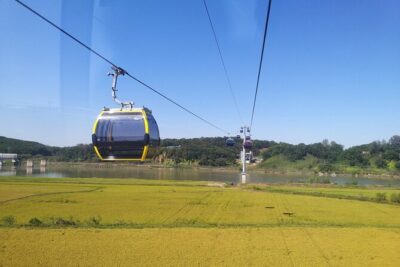
DMZ Guided Tour with Suspension Bridge / Gondola from Seoul
Read our review →
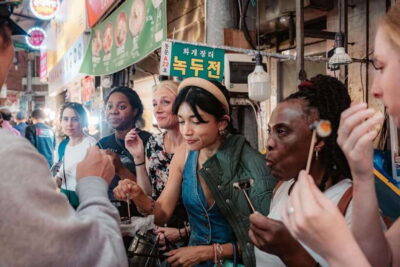
Downtown Seoul Guided Food & Market Tour with 8+ Local Tastings
Read our review →
DMZ Guided Tour with Suspension Bridge and Gondola
Read our review →
Flexible Private Guided Tour in Seoul (Optional Incheon Layover)
Read our review →
DMZ Guided tour from Seoul with Suspension Bridge or Gondola
Read our review →
Guided City Wall Sunset Hike with Korean Dinner
Read our review →