
Reviewed · MUSEUMS
Gyeongju UNESCO Sites Tour by KTX train; The Museum Without walls
Gyeongju is Korea’s museum without walls, and this private day trip gives you a fast way to reach it from Seoul. In one long day, you move from royal tombs and an ancient observatory to Bulguksa Temple, Seokguram Grotto, and the palace pond at Donggung.
I like the easy KTX arrangement and the fact that a private car and guide meet you in Gyeongju. I also like the mix of indoor and outdoor sights, especially the chance to pair the excellent National Museum with the burial mounds and Buddhist monuments. The catch is the distance: this is a full day with about two hours each way on the train, and rain can make much of the sightseeing less enjoyable.
Key points to know before booking
- The KTX makes Gyeongju possible as a Seoul day trip, with round-trip economy-class rail tickets and private transfers included.
- The private format keeps the day flexible, with only your own group taking part.
- Cheonmachong Tomb gives you a close look at Silla burial customs, including an excavated tomb interior.
- Bulguksa and Seokguram form the spiritual heart of the day, but both require outdoor walking.
- Guides including Jay, Andrew, John, and Dylan have been praised for organization, stories, and personal service.
- The $470 price is easiest to justify for two or more people, since it covers rail, car, admissions, pickup, and a private guide.
Why Gyeongju deserves a day from Seoul
Seoul is Korea’s modern center, but Gyeongju tells an older story. For almost a thousand years, it was the capital of the Silla kingdom. The city is scattered with royal tombs, temple remains, stone monuments, and palace grounds, so the title museum without walls fits better here than almost anywhere else in Korea.
The appeal is not one single sight. It is the way the pieces fit together. At Cheonmachong, you see the burial mounds of rulers and court officials. At the museum, you see the gold crowns and ritual objects that give those mounds meaning. At Bulguksa and Seokguram, you see the religious art and architecture that shaped Silla culture.
The tour begins around 7:00 a.m. with pickup in Seoul. A private vehicle takes you to the station, and the KTX carries you south in about two hours. That early start is necessary. Gyeongju is too far for a relaxed late departure, but the train is much more comfortable than spending the whole morning on a road.
This is also a private activity, not a coach tour. Your group alone takes part, which matters when you are moving between six major stops in a single day. Guides have included Jay, Andrew, John, and Dylan. Their roles go beyond pointing out buildings. They help connect the objects, tombs, and temples to the Silla kingdom that created them.
More Gyeongju and Busan trips from Seoul:
- 5-Day Korea Golden route by K-shuttle Tour from Seoul Including Busan, Yeosu
★ 4.5 · 37 reviews - Andong Hahoe Village [UNESCO site] Premium Private Tour from Seoul
★ 5.0 · 24 reviews - Danyang Tour:Guinsa Temple & Bobaljae & Cheongpung Cable Car
★ 5.0 · 15 reviews
Cheonmachong Tomb and the royal burial grounds
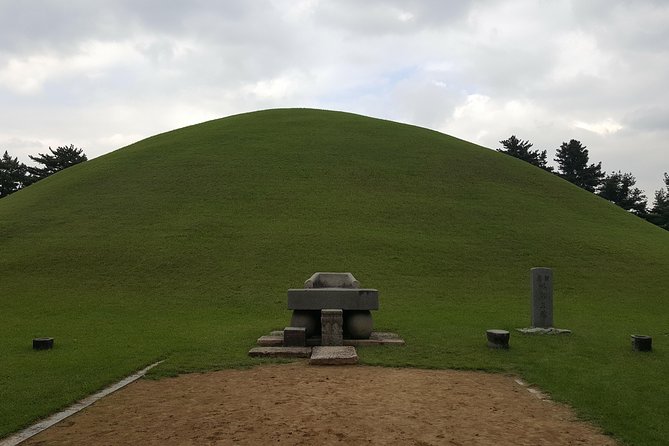
The first major stop is Cheonmachong Tomb, in an area containing more than 20 large and small Silla-era tombs. These rounded earthen mounds rise from the grassy grounds and give Gyeongju its unusual appearance. They are believed to hold kings and high-ranking court officials.
Cheonmachong is especially useful because you can enter an excavated tomb. That changes the experience from simply seeing a mound to understanding how it worked. The tomb is a direct look at the burial customs of the Silla court, and the name refers to a heavenly horse image found among the burial objects.
Plan on about an hour here. The stop involves walking outdoors, so comfortable shoes are a good idea. The grounds are easier to appreciate with a guide who can explain why the mounds are shaped as they are and what the objects found inside tell us about Silla society.
This is one of the tour’s strongest openings. You begin with an actual archaeological site rather than a general introduction. By the time you reach the museum, the displays have a clear connection to what you have already seen.
Gyeongju National Museum puts the day in context
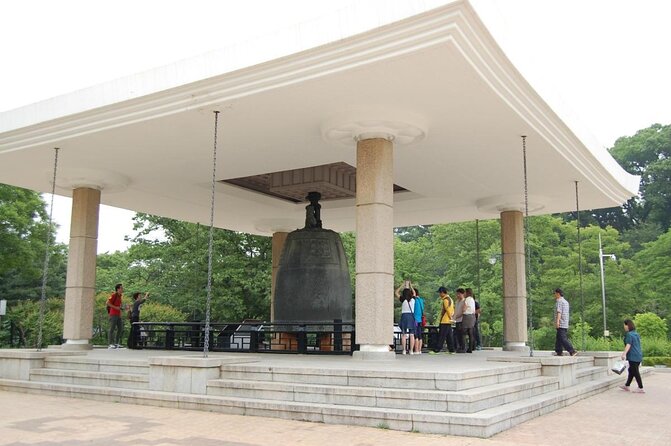
The Gyeongju National Museum may be the most important stop for understanding the city. It gathers Silla crowns, weapons, religious objects, pottery, bells, and other archaeological finds in one place. The main archaeological hall is particularly useful after Cheonmachong because you can see the type of objects that once belonged to royal tombs and palace life.
I like the museum’s place in the schedule. It is not treated as an afterthought on a hot or rainy day. Instead, it gives you the background needed for the rest of the tour. Without it, Bulguksa can look like a beautiful temple complex. With it, the temple becomes part of a larger picture of Silla power, faith, craftsmanship, and royal ceremony.
The museum stop lasts about an hour. That is enough for a guided overview, but not enough to study every gallery closely. If you are a serious museum visitor, you may wish for more time. The tradeoff is that the tour also takes you to several major outdoor sites that would be difficult to fit into a single day on your own.
Admission is included, and the museum offers a welcome change from the open-air stops. Still, do not expect the day to follow a slow museum-going pace. Your guide will keep the schedule moving.
Cheomseongdae, an observatory from Queen Seondeok’s reign
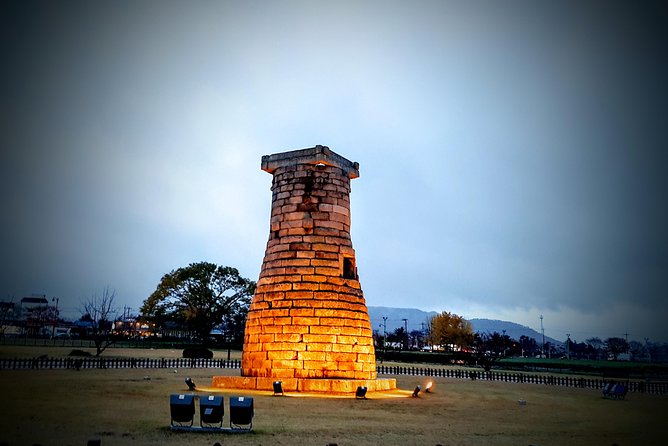
Cheomseongdae means Star Gazing Tower. Built during the reign of Queen Seondeok in 634, it is described as the oldest surviving observatory in the Far East. Its unusual stone form includes 27 levels, and its position near the royal sites shows how closely astronomy and government were linked in Silla Korea.
You spend about an hour in the area, where the tower is viewed from outside. There is no interior climb described for this visit, so think of it as a site for looking, listening, and understanding its purpose rather than an activity stop.
The tower is not large, and it can be easy to underestimate. Its value comes from its age and design. Your guide can help explain how an apparently simple stone structure relates to royal authority, calendars, farming, and court life.
This stop also breaks up the day nicely. After the museum, you return outdoors and see another part of Silla achievement, this time in science and architecture rather than burial or religion.
A different kind of day out around Seoul:
- Best DMZ Tour Korea from Seoul (Red Suspension Bridge Optional)
★ 5.0 · 41,422 reviews - DMZ Tour: 3rd Tunnel, Option(Suspension Bridge, Boat) from Seoul
★ 5.0 · 21,373 reviews - DMZ tour south Korea from Seoul (NK experience hall, defector)
★ 5.0 · 20,599 reviews - Seoul: DMZ Tour with Optional Suspension Bridge
★ 4.8 · 5,277 reviews
Donggung Palace and Wolji Pond after dark in the Silla age
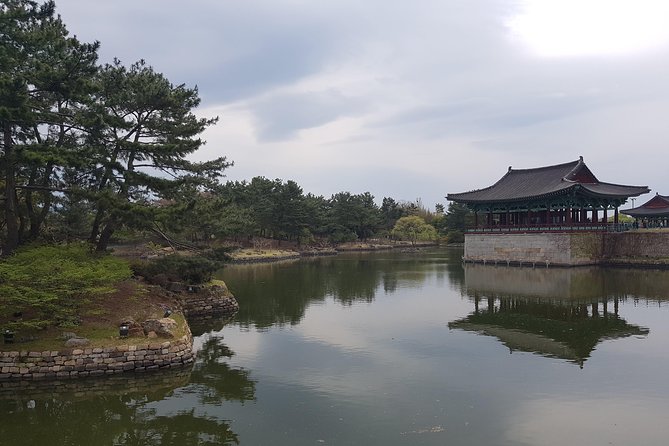
Donggung Palace and Wolji Pond, once called Anapji Pond, was built in 674 after the unification of the Korean Peninsula. The royal grounds included artificial hills, planted trees and flowers, and animals brought into the palace setting. It was not just a practical residence. It was a carefully planned place for royal gatherings and ceremony.
Expect about an hour here. Much of the appeal comes from the relationship between the reconstructed palace grounds, the water, and the surrounding open space. It is easy to picture this as a place designed to impress visiting nobles.
The stop is outdoors, so weather matters. On a clear day, the pond and buildings provide a pleasant change from the more formal museum and temple visits. In heavy rain, the experience becomes less comfortable, especially because several sights on this tour depend on outdoor viewing.
The tour’s schedule gives you enough time to understand the site without turning the visit into a long archaeological walk. Your guide can explain how the pond fit into Silla’s royal life and why it remains one of Gyeongju’s memorable palace settings.
Bulguksa Temple and Silla Buddhist design
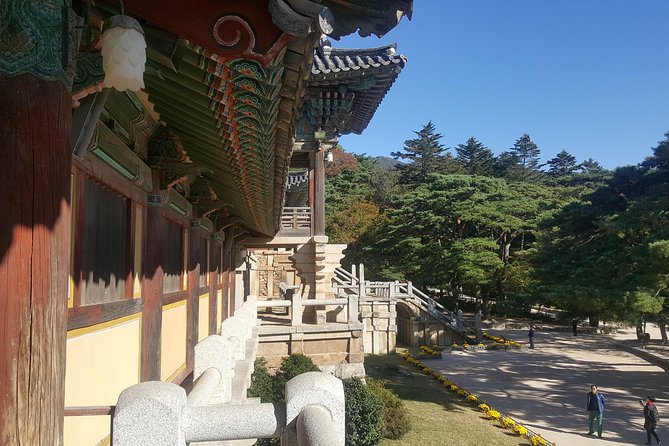
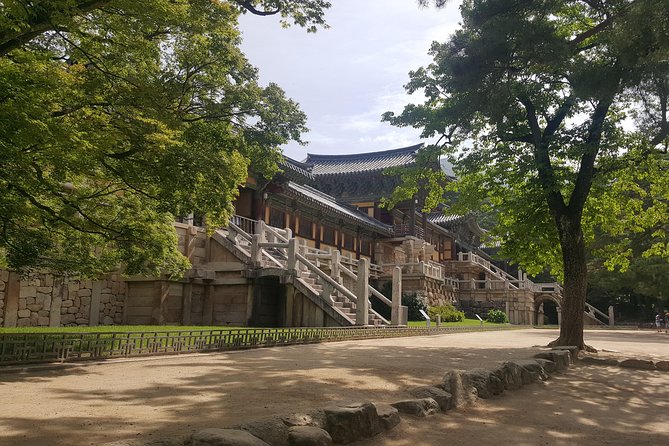
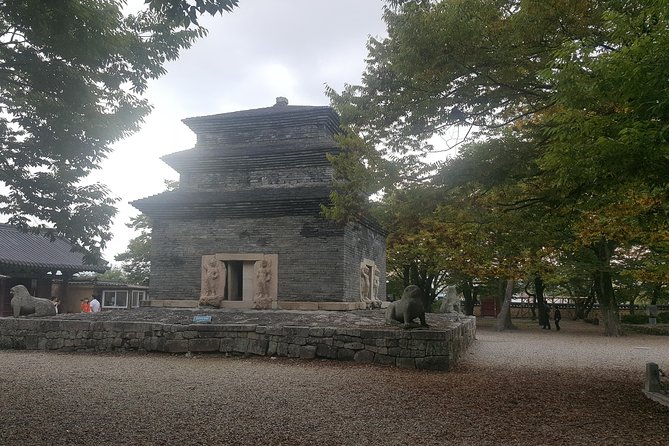
Bulguksa is the best-known Buddhist temple in Korea and one of the day’s central sights. It contains important Silla relics, including the stone pagodas Dabotap and Seokgatap. The temple grounds bring together stairs, courtyards, gates, stonework, and wooden halls in a way that shows how religion and royal patronage worked together.
Allow about an hour. You will be walking around an active historic temple complex rather than visiting a single enclosed building. Uneven surfaces and stairs are part of the experience, so this is not the easiest stop for anyone who has trouble walking.
Bulguksa is also where the tour becomes more architectural. The tombs showed how Silla buried its elite. The museum showed the objects they left behind. Here, you see the setting built for Buddhist worship and the craftsmanship used to express Silla power and belief.
A guide makes a real difference. Without context, you might notice the pagodas and gates but miss the reasons they matter. John, one of the guides used on this tour, has been praised for telling stories about the city and its past. Dylan has also been singled out for being personable and informative. Guide quality can vary by assignment, but the private format allows you to ask questions as you go.
Seokguram Grotto and the mountain road
Seokguram Grotto is a hermitage connected with Bulguksa. It sits about 750 meters above sea level and looks toward the East Sea. Inside is a celebrated Buddhist sculpture group, centered on a seated Buddha.
This is the most remote and atmospheric stop. You leave the lower temple area and travel uphill by private vehicle, then walk to the grotto. The visit lasts about an hour, and the walk is part of the experience. You should be prepared for outdoor conditions and some walking rather than treating this as a quick roadside photo stop.
The grotto’s importance lies in the quality of its sculpture and in the way the site was chosen. The mountain setting, the hermitage, and the Buddha image work together. It is a quieter contrast to the palace grounds and museum.
There is one practical limitation. The grotto itself is not presented as a large space where you can linger freely. The visit is focused on viewing the sculpture and understanding its place in Silla Buddhism. If you are expecting a wide-open cavern, adjust your expectations.
The combination of Bulguksa and Seokguram is still one of the main reasons to choose this excursion. Seeing both in one day lets you understand the temple complex as part of a wider religious setting.
What the $470 price really covers
At $470 per person, this is not a budget outing. The value comes from the number of costly pieces bundled together: KTX rail tickets, private vehicle transfers, hotel pickup in Seoul, a local English-speaking guide, and admission to the paid sites.
The private car matters most at the Gyeongju end. The sights are spread across different parts of the city, and Seokguram is up in the hills. Managing the same route by public transport would take more planning and could reduce the time available at each stop.
The price is easier to defend if you are traveling as a couple, family, or small private group that values convenience. A solo visitor will pay the full per-person rate and may find the total harder to justify. Meals are not included, so budget separately for lunch.
Hotel drop-off in Seoul is also not included. Pickup is provided, but the return arrangement ends with the train and local transport rather than a guaranteed ride back to your hotel. Check your evening plans before booking, especially if you have a late reservation or another timed activity.
The long day, weather, and guide fit
The tour lasts about eight to nine hours, but the day can feel longer because of the early start and train journey. The KTX makes the distance manageable, yet Gyeongju is still far from Seoul. One review described the trip as too much travel for a day trip, and that is a fair warning for anyone who prefers slow sightseeing.
I would book this only if Gyeongju is a priority and your Seoul schedule allows one full day away. You will see a great deal, but you will not have time for an unplanned café stop, a long museum visit, or wandering every historic quarter.
Weather is another real factor. Several of the best stops are outdoors, and heavy rain can spoil the burial grounds, observatory, palace pond, and temple visits. The museum helps, but it cannot replace the outdoor parts of the day.
English ability can also vary by guide. Most feedback has been strongly positive about organization and historical knowledge, but one person found a guide’s accent difficult to follow. If clear spoken English is especially important to you, ask the operator about the guide assigned to your date.
The organization sounds like one of the tour’s strongest features. Andrew has picked people up at their accommodation, driven them to the station, waited through boarding, and helped them find their seats. Another arrangement included a local escort to the subway and a Gyeongju guide named Jay meeting the group as they arrived. Those details matter when you are handling an early train in an unfamiliar city.
Who should book this Gyeongju tour?
I would recommend it most strongly for:
- First-time visitors to Korea who want a clear introduction to Silla culture.
- Couples and families who prefer a private guide to handling several transfers alone.
- History fans who want tombs, museum objects, temples, and palace remains in one day.
- Seoul visitors with only one available day for Gyeongju.
- People who value rail travel and do not want to rent a car.
I would be more cautious if you dislike early starts, long day trips, outdoor walking, or tightly planned schedules. Independent visitors with several days in Korea may get better value by staying overnight in Gyeongju, where the sites can be explored at a slower pace.
The experience has a 4.6 rating from 11 reviews, with 91 percent recommending it. That is a small sample, but the pattern is clear: organization, personal care, and the guides’ stories are the most praised elements. The main concerns are the length of the day, rain, and occasional difficulty understanding an accent.
Should you book it?
Book this tour if you want to see the major Silla sites without arranging KTX tickets, local transport, admissions, and a full route yourself. The private car and guide solve the hardest part of Gyeongju: its sights are spread out, and the best ones do not form a simple walking circuit.
Skip it if you have enough time to spend a night in Gyeongju or if you want leisurely museum and temple visits. For a single day from Seoul, though, this is a well-planned way to reach Korea’s old capital. Go in expecting a long, active day rather than a relaxed outing, and the price becomes easier to understand.
Free cancellation is available up to 24 hours before the 7:00 a.m. start time. Changes made within 24 hours are not accepted, and the minimum number of participants must be met.
FAQ
How long does the Gyeongju tour take?
The tour lasts approximately eight to nine hours, including the KTX journey between Seoul and Gyeongju.
What time does the tour start?
The scheduled start time is 7:00 a.m.
Is hotel pickup included?
Yes. Pickup is offered at hotels in Seoul areas, with a private vehicle transferring you to the train station.
Is hotel drop-off in Seoul included?
No. Hotel drop-off service in Seoul is not included.
Are KTX train tickets included?
Yes. Round-trip KTX tickets in economy class are included.
What admissions are included?
All admission fees to the tourist sites are included, including the paid entries listed for Cheonmachong Tomb, Donggung Palace and Wolji Pond, Bulguksa Temple, and Seokguram.
Is this a private tour?
Yes. Only your own group participates in the private activity.
Can I cancel for a full refund?
You can cancel at least 24 hours before the local start time for a full refund. Cancellations or changes made less than 24 hours before the start time are not refunded or accepted.
More museums and galleries in Seoul
- Seoul: War Memorial of Korea Private Guided Museum Tour
★ 4.9 · 29 reviews - DMZ Tour + The War Memorial of Korea Museum
★ 5.0 · 28 reviews - Color Pool Museum
★ 4.0 · 22 reviews - SEOUL: Gugak – Korean Traditional Music Museum&Concert Tour
★ 4.7 · 17 reviews
Just added around Seoul
- Your Personal Seoul Photographer!★ 4.1 · 15 reviews
- From Seoul: Hwacheon Ice Fishing and Lighting Festival Tour★ 4.5 · 4 reviews
- You’re Invited to Our Home in Seoul: The Only Cooking Class!★ 5.0 · 8 reviews
- Seoul: Gangneung BTS K-Pop & K-Drama Filming Locations Tour★ 4.6 · 14 reviews
- Unique Native Experience : Han River Picnic, Board game, BBQ★ 5.0 · 3 reviews
- 2-Hour Private Kayaking and Paddleboarding Experience in Hanriver★ 5.0 · 3 reviews
- Yun Korean Cooking Class in Seoul★ 5.0 · 6 reviews
- Day Trip to Yongin Daejanggeum and Korean Folk Village from Seoul★ 4.0 · 9 reviews
Museums, compared.

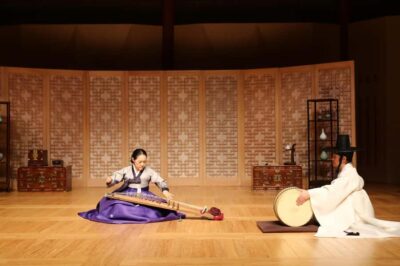
Gugak – Korean Traditional Music Museum&Concert Tour
Read our review →
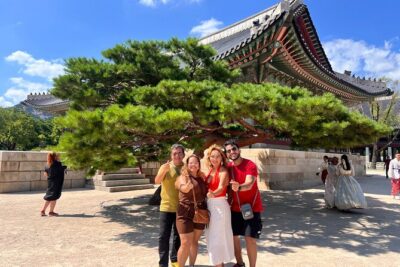
Time Travel in Seoul: Gyeongbokgung Palace, Folk Museum & Bukchon
Read our review →
National Art Gallery Tour and Taste of Korean Cuisine in Seoul
Read our review →Browse the lists this tour appears in