
Reviewed · SEOUL DMZ TOURS
From Seoul: Cheorwon DMZ and 2nd Tunnel Tour with Lunch
The Cheorwon DMZ gives you a less commercial, more grounded look at the Korean border. You visit a North Korean guard post, walk into the Second Infiltration Tunnel, and see how a once-divided town became a military frontier and wildlife refuge. Guides such as Sam, Andrew, and Mr Hong are known for turning the long ride from Seoul into useful history time.
I like two things right away: the tour avoids shopping stops, and the small groups make it easier to ask questions and stay together at military sites. The included breakfast stop and generous bibimbap lunch also make the $95 price feel fair. The drawback is the distance from Seoul, plus steep, slippery sections in the tunnel that can be awkward in winter.
Key points
- Cheorwon offers a quieter DMZ route: You visit a less crowded border area than the better-known Paju route.
- The Second Tunnel is the main physical challenge: Expect steep steps, low ceilings, and a walk that calls for sturdy shoes.
- Guides add the human context: Sam, Andrew, Mr Hong, and other English-speaking guides explain the war, division, and present-day tensions.
- Meals are built into the day: A breakfast and snack stop comes early, followed by a fresh bibimbap set with side dishes and soup.
- The Y-Bridge adds a nature stop: You can view the bridge and volcanic rock formations for free, then pay on site if you want to cross.
- This is not a fixed sightseeing bubble: Military closures can change the route, and the final return time depends on traffic.
Why Cheorwon feels different from the usual DMZ outing
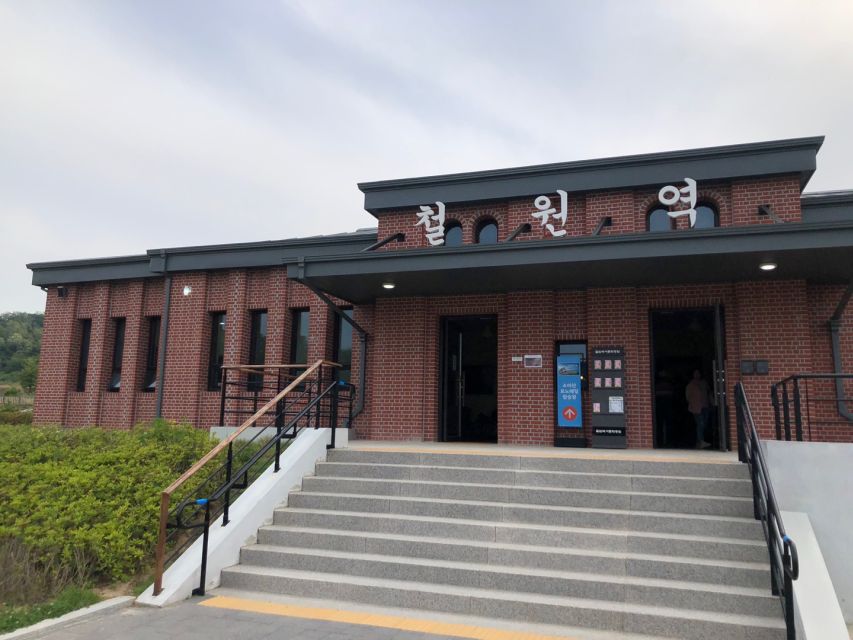
Many Seoul DMZ trips focus on the famous observation points around Paju. Cheorwon takes you farther east into Gangwon Province, where the old border town, military installations, rice fields, and volcanic river country create a different kind of day.
I like this route because the DMZ is not presented as a simple photo opportunity. Your guide explains how the Korean War shaped Cheorwon, why the border runs through the area, and how a former urban center was changed by fighting and division. The Korean Workers’ Party Headquarters ruins are especially useful here. They offer a physical reminder that this area was once under North Korean control, rather than just a modern fence viewed from a platform.
The route also has a quieter feel. Several visitors found far fewer crowds than at the Third Tunnel near Paju, with mostly Korean visitors at Cheorwon’s sites. That matters if you prefer time to listen, look around, and ask questions instead of moving through a packed attraction.
This is still a serious military zone, not a casual day in the countryside. Access can be restricted without much notice, photography is not allowed inside military areas, and you must bring your passport. If political events or landmine clearance close one site, the guide will substitute another destination.
More DMZ tours in Seoul:
- Best DMZ Tour Korea from Seoul (Red Suspension Bridge Optional)
★ 5.0 · 41,422 reviews - DMZ Tour: 3rd Tunnel, Option(Suspension Bridge, Boat) from Seoul
★ 5.0 · 21,373 reviews - DMZ tour south Korea from Seoul (NK experience hall, defector)
★ 5.0 · 20,599 reviews
The Seoul departure and the useful breakfast stop
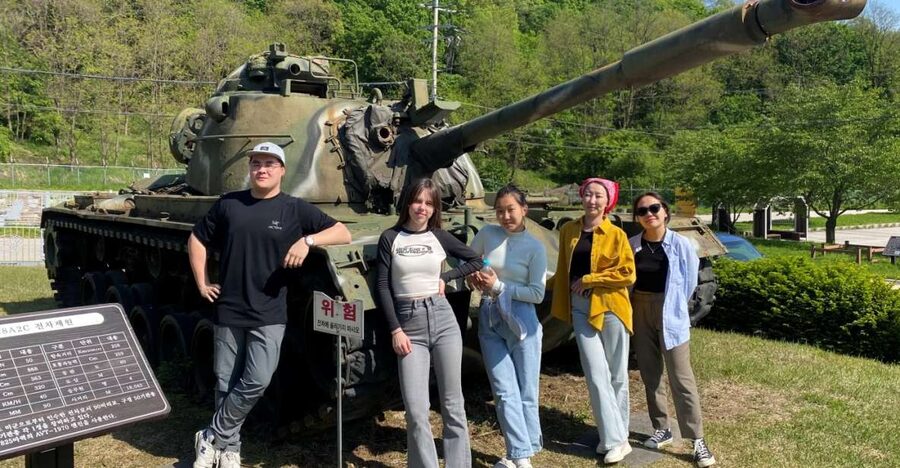
The drive from Seoul takes about an hour before the first planned break, followed by more driving between sites and roughly an hour and a half on the return. Depending on the booking option, you may meet at a set point in Seoul or arrange hotel pickup. Private options include pickup and drop-off, while the exact meeting point varies by package.
The vehicle is usually a comfortable minivan or small coach. Small groups are a major advantage here. Guides can position everyone at the lookout, keep the group moving through controlled areas, and answer questions without shouting across a large bus.
The first break is more than a quick restroom stop. You have about 20 minutes for breakfast and local snacks, and guides have sometimes helped guests choose items or added regional snacks along the way. This is a sensible touch because the day begins early and lunch comes later.
I would use the first drive to ask your guide for the basic timeline of the Korean War and the division of the peninsula. One useful piece of criticism from the tour’s feedback is that the long ride could be used more consistently for this introduction. If your guide does not start there, ask. Guides such as Sam and Andrew are particularly praised for answering questions and adding personal context.
The DMZ zone and the North Korean guard post
As you approach the border area, the mood changes. You may see military activity, control points, and signs that you are entering a restricted zone. The Cheorwon route brings you close to a North Korean guard post, giving you a clearer sense of how near the two sides remain.
This is not a place for careless photography. Follow the guide’s instructions exactly, and keep your passport ready for inspection. The tour includes the required entry fees, but access remains subject to military rules and current conditions.
The value of this stop is scale. Maps and news reports can make the DMZ seem abstract. Here, the guard post, controlled roads, and visible military presence make the division feel like a current fact rather than a completed chapter of history.
Your guide’s explanation matters greatly at this point. A good guide will connect the Korean War to the present armistice, explain the meaning of the Military Demarcation Line, and help you understand why the area remains heavily controlled even though it has also become an important habitat for wildlife.
Walking into the Second Infiltration Tunnel
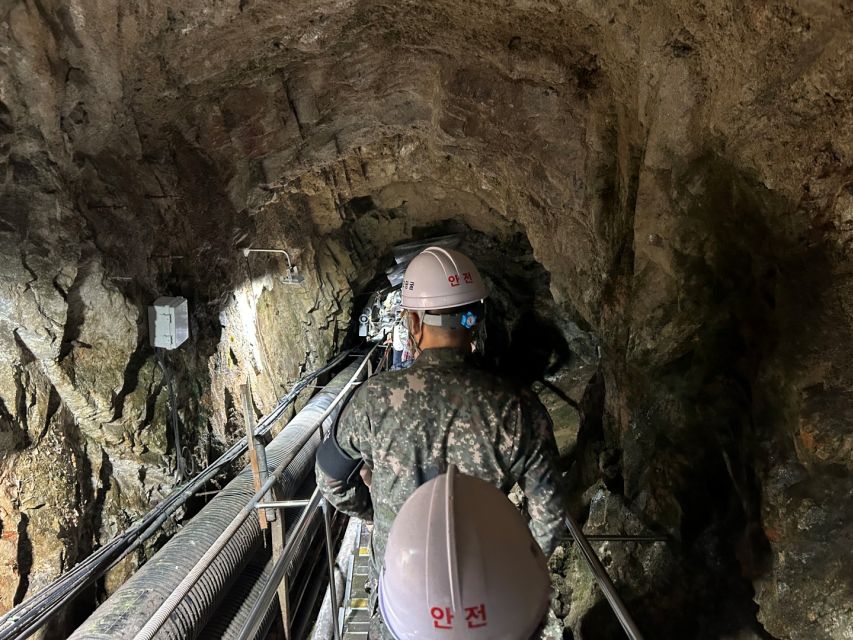
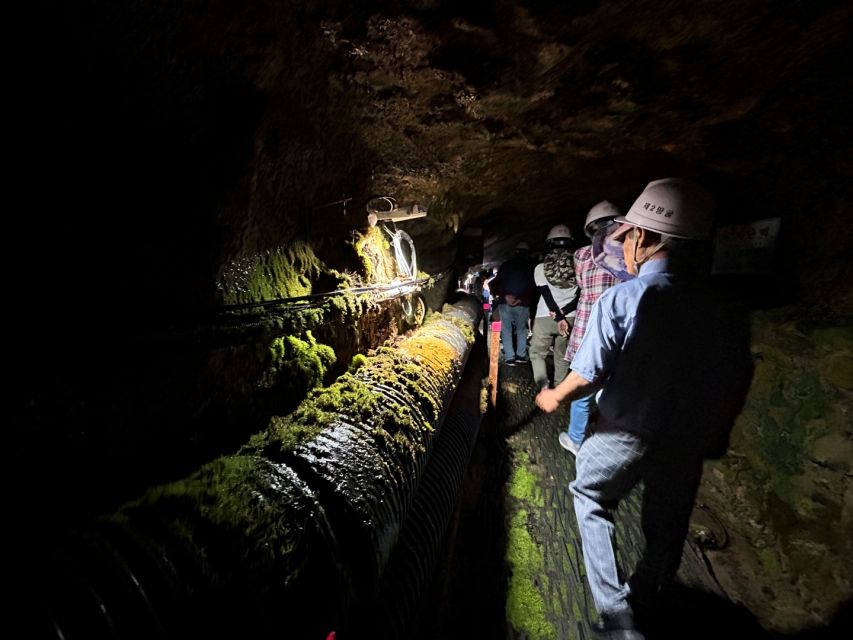
The Second Infiltration Tunnel is the day’s most memorable stop for many people. Discovered in 1975, it was built as a concealed route toward the South. The tour describes it as the widest and closest-to-North-Korea tunnel in Korea, and you walk into the excavated passage with your guide.
The tunnel is not a gentle stroll. You descend steeply, encounter low sections where you need to duck, and climb back out. Winter can make the ground slippery, so wear walking shoes with a reliable sole. If you have knee, balance, or mobility problems, this is the point to think carefully before booking.
The tunnel experience works because it is physical. You are not only hearing about military planning. You can feel the confined space and the effort required to move through it. Your guide may explain the story of the North Korean workers involved in construction and the soldiers who discovered or examined the route.
The published description refers to a 3.5-kilometer tunnel, but the visitor portion is controlled and the exact accessible route may depend on current regulations. Do not assume you will walk the entire underground length. The practical point is that you should expect a substantial walk with slopes, steps, and a low ceiling.
Photography inside the tunnel is not permitted under the stated rules. That can be frustrating if you want a record of the visit, but it keeps the focus on the place itself and respects the restrictions of a military site.
More lunch stops in Seoul:
- Seoul City Private Full-Day Tour Including Lunch
★ 5.0 · 469 reviews - Premium Private DMZ Tour & (Suspension Bridge or N-Tower) include lunch
★ 5.0 · 348 reviews - Private DMZ Tour with North Korean Defector + N Korean Lunch
★ 5.0 · 122 reviews - Full Day- Essential Seoul City Tour & Gourmet Tour(including Lunch and Dinner)
★ 5.0 · 73 reviews
Cheorwon Peace Observatory and the DMZ view
The Peace Observatory gives you the broadest view of the border portion of the day. Entry includes the monorail ticket, which saves you from arranging that separately and makes the climb easier for many people.
From the observatory, your guide points out the DMZ, the Military Demarcation Line, and features across the border. Visibility will depend on weather, so do not expect a perfectly clear view every time. The importance of the stop is less about seeing a particular building and more about understanding the geography: where the boundary runs, how close the two sides are, and why the surrounding land has remained largely undeveloped.
The guide’s storytelling is a major part of the visit. Sam is often praised for mixing clear explanations with humor, while Andrew and Mr Hong are noted for their friendly, thoughtful approach. Several guides also bring personal or family perspectives to the subject, which can make the political story feel more human without turning the stop into a lecture.
The observatory is also where the route can feel most controlled. Stay with your group, listen for instructions, and do not photograph restricted areas. Your guide will tell you what is allowed.
The Korean Workers’ Party Headquarters ruins
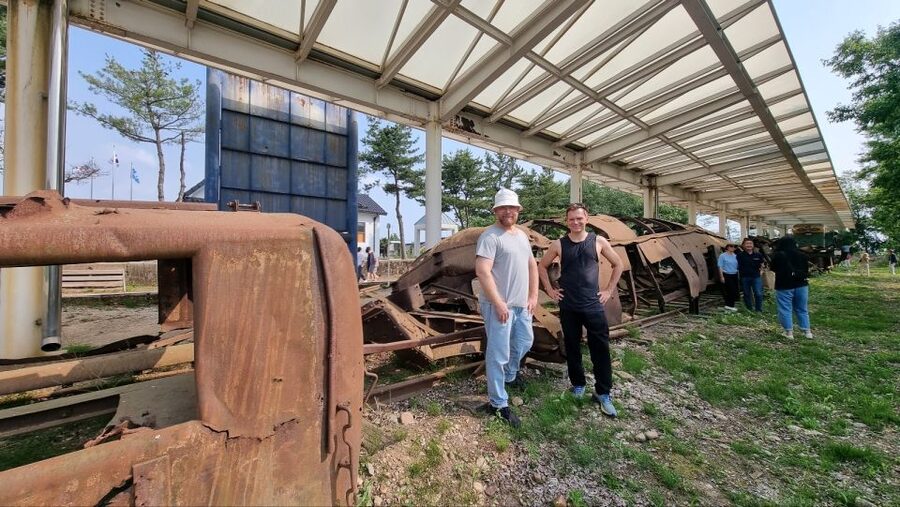
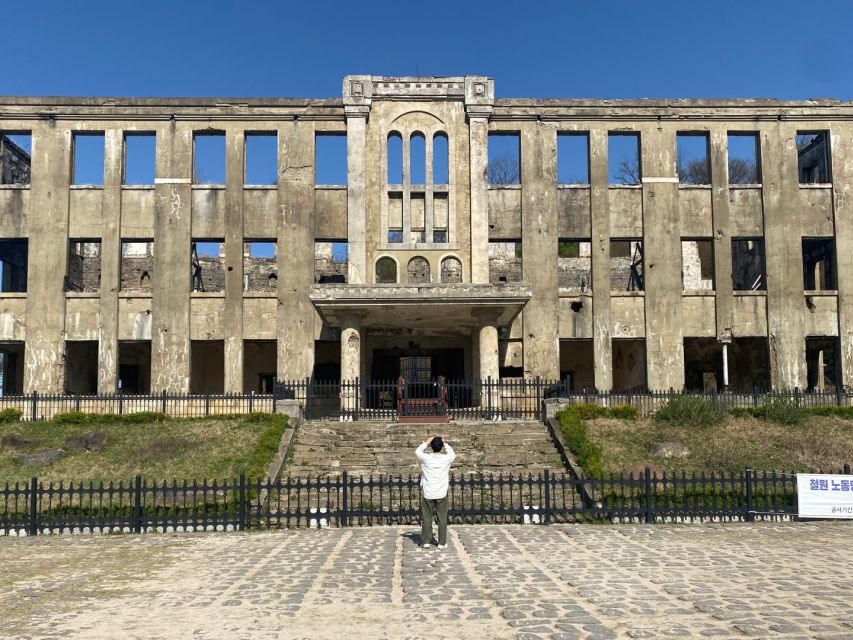
The ruined headquarters is one of the strongest reasons to choose Cheorwon over a standard Paju outing. The damaged concrete structure is not polished or rebuilt. It is a stark remnant of the period when North Korea administered this area.
I find this stop valuable because it gives the history a local address. The DMZ is often presented through fences, watchtowers, and distant hills. These ruins show that people once lived and worked here under a different government, before war and the border transformed the town.
Your guide can explain how Cheorwon once functioned as a regional center and how the fighting changed it. The site does not require a long visit, but it rewards careful looking. Notice the damage, the exposed structure, and the way nature has begun to surround the remains.
A proper bibimbap lunch in Cheorwon
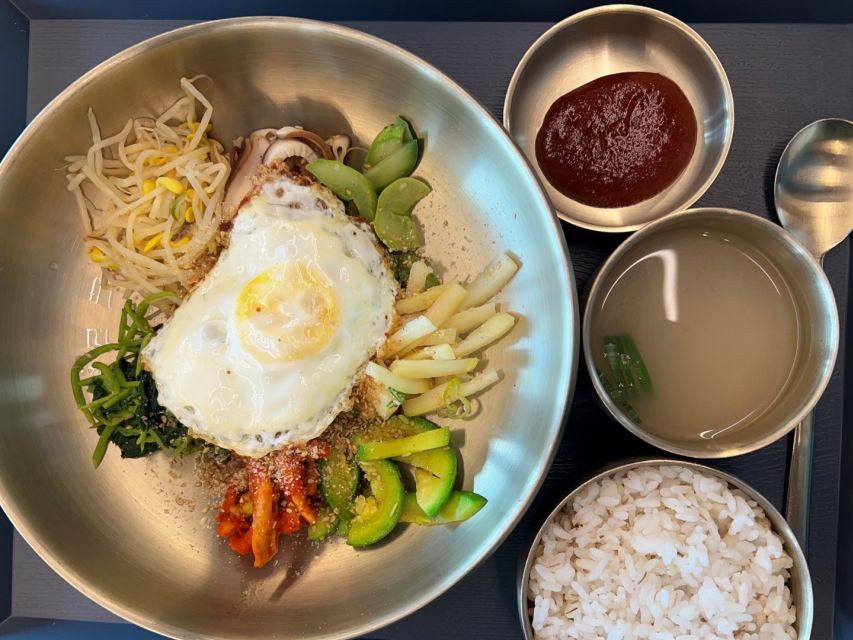
Lunch is a premium bibimbap set at a local restaurant. Expect fresh vegetables, rice, soup, and several side dishes. It is a plant-based meal suitable for vegetarians, though you should raise any other dietary needs when booking or with the guide.
This is one of the tour’s strongest value points. At $95, the price covers transportation, a licensed guide, entry fees, the observatory monorail, breakfast snacks, and lunch. Comparable day trips can cost less at first glance, but a low headline price may leave you paying for food, transport, or site tickets separately.
The meal also breaks up a serious day. After the tunnel and observatory, sitting down to eat local food gives you a chance to ask the guide follow-up questions and talk through what you have seen. Portions are described as generous, and the vegetables and side dishes make this more than a rushed boxed meal.
The restaurant setting may be simple rather than stylish. That is part of the appeal. You are eating in Cheorwon, not in a Seoul tourist district designed around large tour groups.
Hantangang Y-Bridge and the volcanic river country
The final stop shifts the mood from war history to scenery. At the Hantangang Y-Bridge Observatory, you look over Korea’s longest Y-shaped suspension bridge, volcanic rock formations, and the Hantangang river valley.
The observation deck is free. If you want to cross the bridge, you buy the admission ticket on site, so you can decide based on energy, weather, and interest. One practical point: the bridge is a pleasant finish, but it is not the core reason to book this tour. If you are choosing between the bridge and a longer look at the historical sites, I would give the DMZ material priority.
This stop also explains the tour’s wider theme. Cheorwon is not only a military boundary. It is a region of farmland, river cliffs, unusual rock formations, and protected habitat. The route may include information about cranes and conservation work, adding an environmental layer to the day.
Group size, guides, and the pace of the day
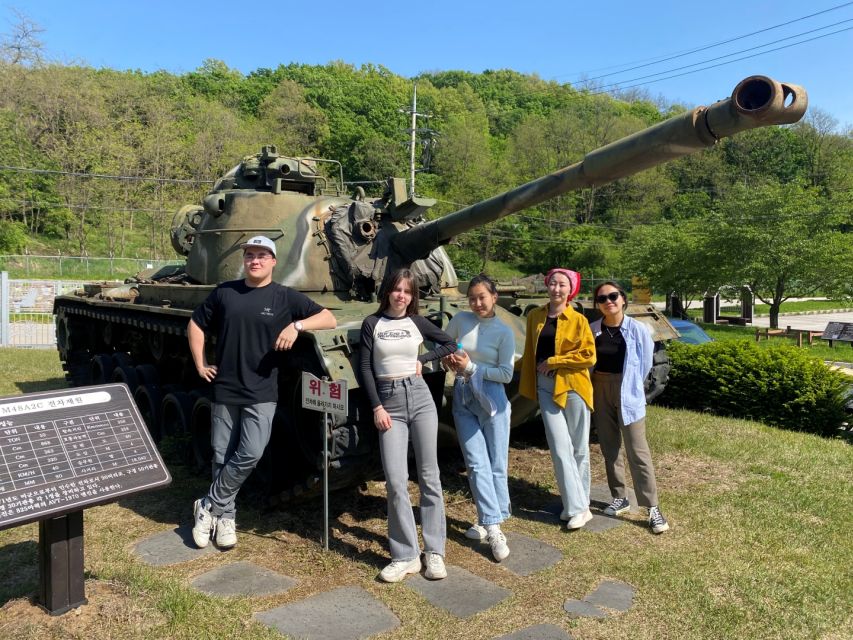
The tour is offered as a private or small-group experience. That distinction matters more here than it would on a city sightseeing route. Military sites have fixed procedures, and a smaller group can hear the guide, move through checkpoints, and gather at viewpoints with less waiting.
The guides named in the feedback include Sam, Andrew, Mr Hong, Oliver, Thomas, Captain, Gina, and others. The most consistent praise is for warm personalities, clear English, useful historical background, and a willingness to answer questions. Sam receives especially strong praise for combining detailed explanations with a relaxed sense of humor.
The pace is full but not frantic. You spend about an hour at the tunnel, about an hour at the Peace Observatory, an hour at lunch, and shorter periods at the DMZ zone and bridge. The long road time is unavoidable, but it lets you see the countryside outside Seoul.
Traffic can change the ending time. The listed duration is eight hours, though the actual return to Seoul may take longer. Plan nothing important immediately afterward, especially if you are catching a train or flight.
Who should book this $95 day trip?
I would choose this tour if you want more than a quick photograph at a border lookout. It suits history-minded visitors, people curious about the Korean War, and anyone who prefers a small group to a large coach.
It is also a good choice if you have already seen the Paju DMZ route and want a less crowded alternative. The Second Tunnel, the Workers’ Party ruins, and the Cheorwon setting give this day its own identity.
You should think twice if you dislike long drives, have difficulty with steep steps or low ceilings, or want a relaxed nature outing. The tunnel is physically demanding, and the military schedule can change. The information also gives conflicting accessibility details: the activity is described as wheelchair accessible in one place but not suitable for wheelchair users in another. Confirm directly before paying if access is important.
Rain and snow do not automatically cancel the tour. Bring your passport, dress for outdoor conditions, and wear shoes suitable for uneven, slippery ground.
Should you book it?
Book this Cheorwon tour if you want a serious, well-explained look at the DMZ with meals, transport, and major entry costs included. The small-group format, no-shopping policy, and strong guiding make the $95 price reasonable, especially for a full eight-hour day.
Skip it if you want a short, easy border visit or cannot manage the Second Tunnel’s steep route. For most active visitors who want history with a real sense of place, Cheorwon offers a more personal and less packaged DMZ experience than the standard route.
FAQ
How long does the Cheorwon DMZ tour take?
The scheduled duration is about eight hours. The exact return time can change because of Seoul traffic and military-area conditions.
What is included in the $95 price?
The price includes a licensed guide, entry fees, the Peace Observatory monorail ticket, breakfast or local snacks, lunch, and transport according to the selected booking option. Private tours include pickup and drop-off.
Is hotel pickup available in Seoul?
Pickup is available from hotels in Seoul, depending on the option booked. The exact meeting point or pickup arrangement can vary.
Do I need my passport?
Yes. Bring your passport because the DMZ is a controlled military area.
Can I take photographs inside the Second Tunnel?
Photography inside is not allowed under the stated rules. Follow your guide’s instructions at all military sites.
Is the tunnel suitable for people with limited mobility?
The tunnel includes steep descents, climbing, low sections, and potentially slippery surfaces. The activity information gives conflicting details about wheelchair access, so confirm directly before booking if you have mobility concerns.
Is the Hantangang Y-Bridge ticket included?
No. The observation deck is free, but crossing the suspension bridge requires an admission ticket purchased on site.
What happens if the DMZ closes?
The DMZ can close because of sudden political events, military restrictions, or other safety issues. If that happens, the tour operates at alternative tourist destinations instead.
Just added around Seoul
- Your Personal Seoul Photographer!★ 4.1 · 15 reviews
- From Seoul: Hwacheon Ice Fishing and Lighting Festival Tour★ 4.5 · 4 reviews
- You’re Invited to Our Home in Seoul: The Only Cooking Class!★ 5.0 · 8 reviews
- Seoul: Gangneung BTS K-Pop & K-Drama Filming Locations Tour★ 4.6 · 14 reviews
- Unique Native Experience : Han River Picnic, Board game, BBQ★ 5.0 · 3 reviews
- 2-Hour Private Kayaking and Paddleboarding Experience in Hanriver★ 5.0 · 3 reviews
- Yun Korean Cooking Class in Seoul★ 5.0 · 6 reviews
- Day Trip to Yongin Daejanggeum and Korean Folk Village from Seoul★ 4.0 · 9 reviews
Seoul DMZ Tours, compared.
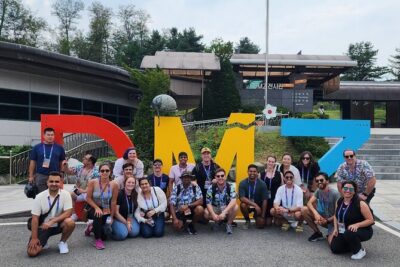
Best DMZ Tour Korea from Seoul (Red Suspension Bridge Optional)
Read our review →
DMZ Tour: 3rd Tunnel, Option(Suspension Bridge, Boat) from Seoul
Read our review →
DMZ tour south Korea from Seoul (NK experience hall, defector)
Read our review →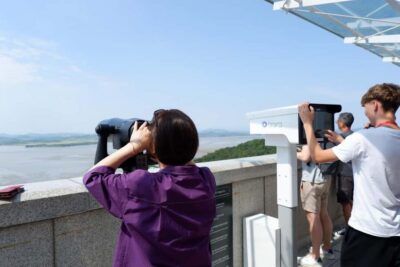

Signature DMZ Tour: Exclusive Defector Talk & Suspension Bridge
Read our review →
Thrilling Korean DMZ 3rd Tunnel Tour from Seoul + Red Bridge Rush
Read our review →
DMZ Past and Present: Korean Demilitarized Zone Tour from Seoul
Read our review →
Ultimate Korea DMZ Tour from Seoul (Gondola & Suspension Bridge)
Read our review →Browse the lists this tour appears in