
Reviewed · SEOUL TRADITIONAL MARKET TOURS
Cook 3 Authentic Korean Dishes with Local Market Tour
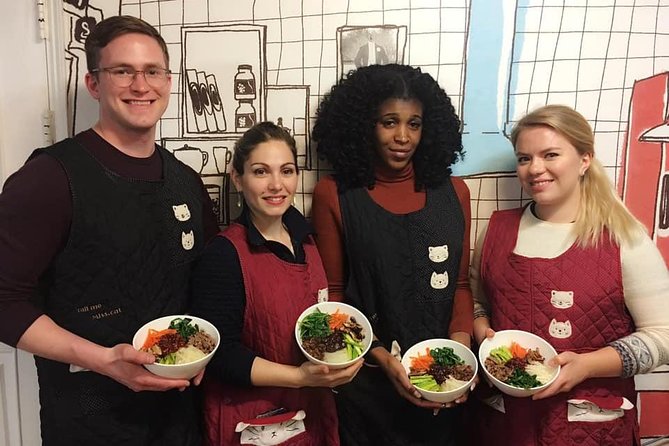
The best part of this Seoul cooking class starts before you reach the stove. Jomin meets you at Mangwon Station and leads you through Mangwon Market, pointing out tofu, seafood, vegetables, anchovies, prawns, and other Korean staples. You then cook three dishes at your own station, rather than sitting back for a demonstration.
I like the tiny class format, advertised at a maximum of four people, and the clear, patient instruction that works for both beginners and confident home cooks. I also like the practical finish: you eat what you make, take home leftovers when available, and leave with a professionally designed cookbook.
The main consideration is that the exact three-course menu can vary, so you may not make every dish listed. The activity information also gives a maximum of 11 travelers for the overall booking, so confirm the class size and menu when you reserve.
Quick reasons to book
- Mangwon Market comes first: Learn about Korean ingredients where locals shop, with time to taste street food and ask questions.
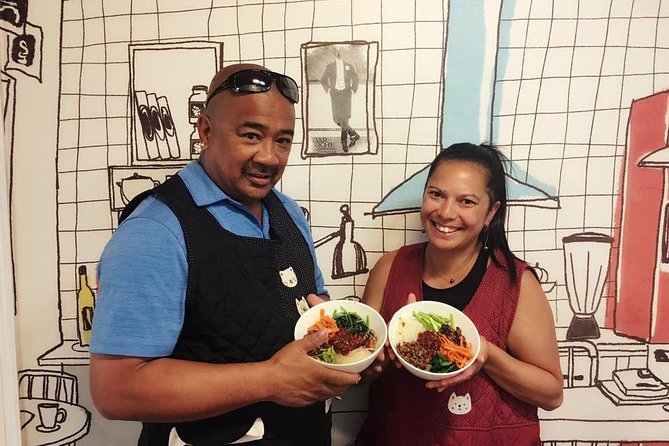
- You cook, not just watch: Each participant gets a personal cooking table, cooker, ingredients, and step-by-step help.
- Three familiar Korean dishes: Possible dishes include bibimbap, bulgogi, soft tofu stew, kimchi stew, japchae, and stir-fried pork.
- Jomin leads the class: She explains ingredients, cooking methods, food customs, and market finds in a relaxed but organized setting.
- Lunch or dinner works: You can choose the class time that fits your Seoul plans.
- Vegetarian and vegan options are available: Tell the provider about dietary needs before you arrive.
A Seoul food lesson that begins at Mangwon Market
Many cooking classes begin in a classroom with neatly measured ingredients. This one begins at a real market. That change matters. Before you learn how to season tofu stew or prepare bibimbap, you see the ingredients in the setting where Korean cooks buy them.
Meet Jomin at entrance 2 of Mangwon Metro Station on Line 6. From there, the walk to the studio passes through Mangwon Market. Jomin points out ingredients used in the class and explains Korean food customs along the way. The market visit also gives you a chance to taste street food and see everyday food shopping in Seoul.
You may learn about banchan, kimchi, seafood, dried anchovies, rice wine, fresh vegetables, and the ingredients that build a Korean stock. The market is not simply a scenic detour. It gives the dishes a useful setting. When you later cook with tofu, clams, prawns, anchovies, or vegetables, you have already seen where those foods fit into Korean cooking.
Market conditions can change. One class took place during the Chuseok holiday, when some stalls were closed, but there were still enough open to give a good introduction. That is worth keeping in mind if you expect a full market tour. The point is food culture and ingredient guidance, not a long shopping expedition.
More traditional market tours in Seoul:
- Seoul: Gyeongbok Palace, Bukchon Village, and Gwangjang Tour
★ 4.9 · 2,321 reviews - Seoul Street Food Market Tour
★ 5.0 · 1,226 reviews - DMZ Tour Seoul to North Korea’s 3rd Tunnel & Majang Lake Crossing
★ 5.0 · 1,185 reviews
Inside the cooking studio
After the market, you return to Jomin’s cooking studio. The space is described as clean, organized, and spacious, with a cooking table and cooker for each participant. That private station setup is one of the strongest features of the class.
You are not watching a chef prepare everything at the front of the room. You cut, mix, season, and cook the dishes yourself. Jomin explains each stage, then gives personal assistance as you work. This makes the class suitable for a first cooking lesson, but it also gives experienced cooks enough control to pay attention to technique.
The studio format helps with pacing. In one detailed account, the class prepared the dishes in stages. The tofu stew was cooked and taken to the dining room while the next dish was set up. The group then prepared vegetables for beef bibimbap, cooked at individual burners, and finished with bulgogi. That order lets you eat while the next preparation is underway instead of waiting for all three dishes to finish at once.
Jomin’s teaching style appears friendly but attentive. One account described her as a strict chef, which can be a good thing in a hands-on class. You get help with cutting, cooking temperatures, and timing rather than being left to guess. At the same time, the class is presented as laid-back, not formal or intimidating.
The three dishes you may prepare
The menu is not fixed in the information provided, so you should not book expecting a particular trio unless the provider confirms it. The possible dishes give you a good sense of the class, though. They cover soups, rice, noodles, grilled meat, and stir-fried dishes.
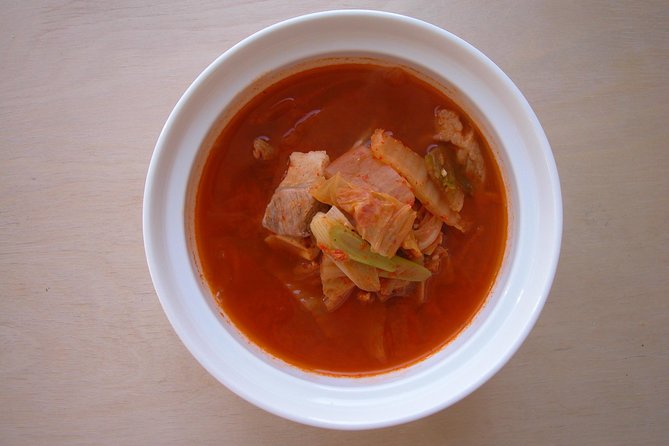
Soft tofu stew and kimchi stew
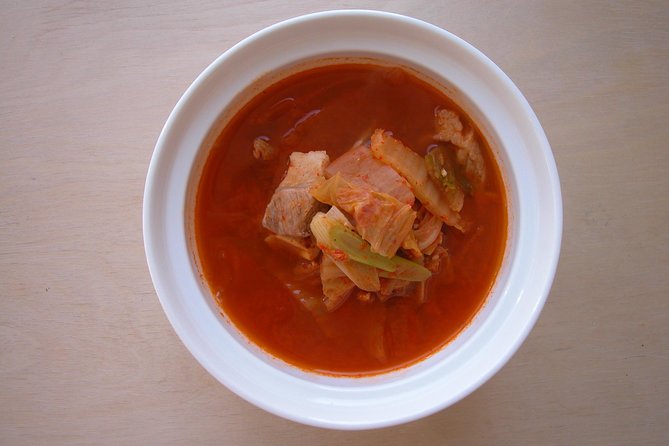
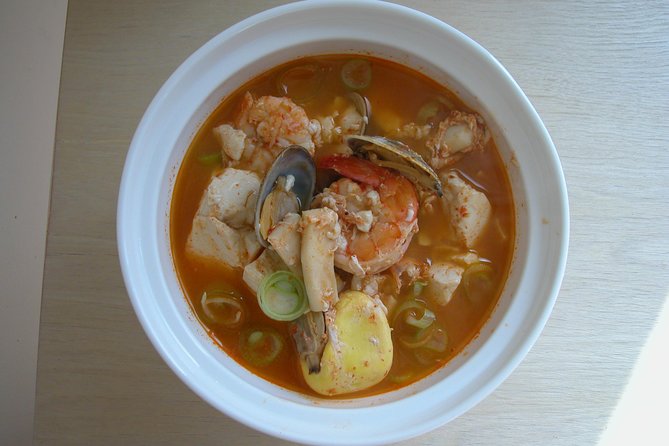
Soft tofu stew, often called sundubu jjigae, is one possible dish. This is a useful introduction to Korean soup because the flavor comes from broth, seasoning, tofu, and whatever seafood or other ingredients are included. A class account described using clams and soft tofu, while another mentioned making stock from prawns and anchovies.
Kimchi stew is another possible choice. It shows how fermented ingredients can form the center of a warm, strongly flavored meal. If you have limited experience with Korean food, these stews help you understand the role of broth and seasoning beyond the familiar restaurant versions.
Seafood can be accommodated in some menu variations, but do not assume every dish will suit your diet. Tell Jomin or the provider about restrictions in advance. Vegetarian and vegan options are available.
A different kind of day out around Seoul:
- Best DMZ Tour Korea from Seoul (Red Suspension Bridge Optional)
★ 5.0 · 41,422 reviews - DMZ Tour: 3rd Tunnel, Option(Suspension Bridge, Boat) from Seoul
★ 5.0 · 21,373 reviews - DMZ tour south Korea from Seoul (NK experience hall, defector)
★ 5.0 · 20,599 reviews - Seoul: DMZ Tour with Optional Suspension Bridge
★ 4.8 · 5,277 reviews
Bibimbap
Bibimbap gives you a lesson in preparation and presentation. You may cut several vegetables, cook them separately, and arrange them with rice and sauce. The work is more involved than simply stirring ingredients into one pan, but it shows how Korean meals balance color, texture, and flavor.
The individual burner at each cooking station makes this dish especially practical. You can control your own cooking and see how the vegetables change as they soften. It is also a dish you can repeat at home without needing a restaurant kitchen.
Bulgogi
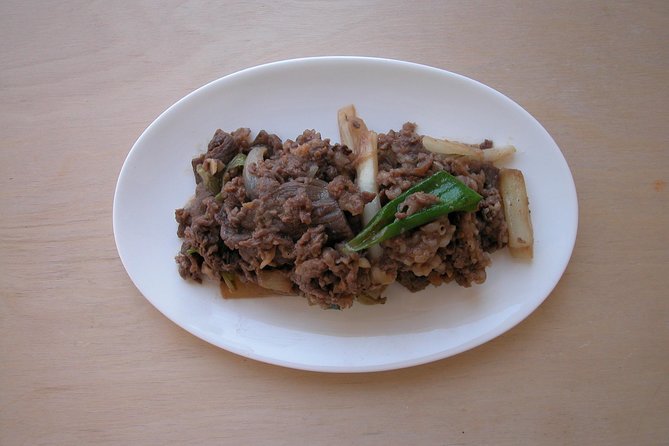
Bulgogi is a natural fit for a first Korean cooking class because the marinade carries much of the flavor. Jomin explains how to prepare it, then guides you through cooking the meat. The method is approachable, but the balance of sweet, savory, and aromatic ingredients is worth paying attention to.
If your class includes beef bibimbap and bulgogi, you get two different uses for meat and seasoning. The bibimbap focuses on assembly with vegetables and rice. Bulgogi focuses more on the marinade and cooking process.
Japchae and stir-fried pork
Japchae may appear on the menu instead of one of the stews or meat dishes. Its noodles and vegetables make it a useful option for anyone who wants to learn a Korean dish that is easy to share and adapt at home.
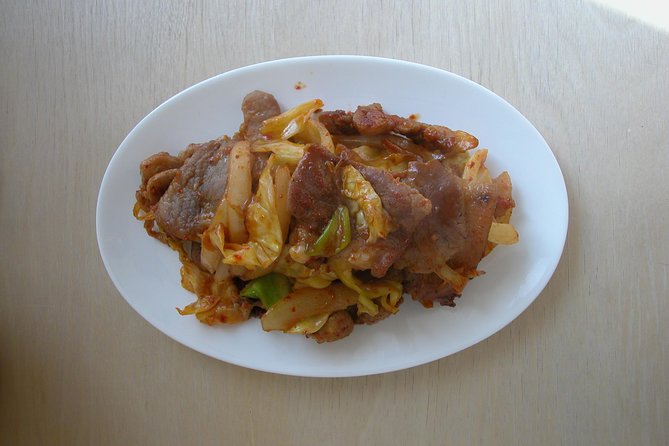
Stir-fried pork is another possible dish. It gives you a chance to work with a quick pan preparation and Korean seasonings. Since the exact menu changes, ask what will be served if you have a strong preference for noodles, seafood, meat, or vegetarian food.
Why the market tour adds real value
The market portion is short compared with the cooking time, but it gives the class its sense of place. You see more than a list of ingredients printed on a recipe sheet. You see the food in stalls, hear how it is used, and can ask what you are looking at without feeling lost.
Mangwon Market also brings you into a neighborhood setting rather than a purpose-built tourist attraction. You can taste street food, watch local shopping, and notice the range of fresh and preserved foods used in Korean meals. Jomin may also show you ingredients that will not appear in your own recipes, such as dried anchovies or particular seafood products.
I would arrive hungry enough to taste a few things, but not so hungry that you cannot concentrate later. The market treats are part of the experience, yet the cooking class ends with a substantial meal of your own making.
The market walk is not designed for buying a large haul of souvenirs. Think of it as a guided introduction to Korean ingredients with opportunities to pause and sample food.
A meal you prepare yourself
Once the cooking is finished, you sit down and eat the food you made. This is more satisfying than receiving a plated meal because you understand the work behind it. You have handled the vegetables, mixed the marinade, built the broth, and watched the dishes come together.
The class may serve the food in courses as it is completed. That can make the meal feel relaxed and gives you time to taste each dish while it is fresh. Leftovers can be taken home when available, and takeout bowls have been provided in at least one class format.
You also receive a professionally designed cookbook. It includes the dishes prepared in class and additional favorites recommended by Jomin. That makes the $79 price more useful after the trip. You are not paying only for a meal and a few hours of entertainment. You are taking home recipes, techniques, and a guide to repeat the food in your own kitchen.
The cookbook cannot replace watching the process in person. Cutting vegetables, building stock, and judging texture are easier to understand when someone is beside you. Still, it gives you a practical record of the class instead of relying on memory.
What $79 gets you
At $79 per person, this is not the cheapest meal or market walk in Seoul. It is a fair price if you value personal instruction and want to cook three dishes yourself.
Your time is about three and a half hours. The price includes the market visit, ingredients, cooking equipment, instruction, the meal, and the cookbook. A small class can also be worth more than a large workshop because you have space to work and a better chance to ask questions.
The value depends on your interests. If you simply want to eat Korean food, you can find less expensive meals in Mangwon and elsewhere in Seoul. If you want to understand how the food is made and recreate it later, the class offers much more.
I especially like the fact that this is not a demonstration. You get your own table and cooker. That changes the experience from watching someone else cook to building confidence with the food yourself.
The class is also a good choice for couples, families, and small groups who want one shared activity. Because the class is advertised as having a maximum of four people, it should feel more personal than a large culinary workshop. Still, the additional booking information lists up to 11 travelers for the activity, so confirm the actual group arrangement before paying if a very small class is essential to you.
Timing, meeting point, and practical details
The meeting point is entrance 2 of Mangwon Station on Line 6. The activity ends back at the meeting point after the cooking session. That makes it easy to pair with other plans in the Mangwon area, but allow the full three hours and 30 minutes rather than trying to squeeze in a tight appointment afterward.
You can choose a lunch or dinner class. A lunch session may leave your evening open for Seoul sightseeing, while a dinner class can fit neatly after a morning of museums or shopping. Choose based on your appetite and schedule, since the class includes a full meal.
Confirmation is provided at booking, and the activity is near public transportation. Vegetarian and vegan options are available. Food restrictions were accommodated in class, but you should share your needs before arrival so the menu and ingredients can be prepared properly.
Free cancellation is available up to 24 hours before the start time for a full refund. Changes or cancellations inside that 24-hour window are not accepted for a refund. The class also requires a minimum number of participants, so if the provider cancels for that reason, you are offered another date or experience, or a full refund.
Who will enjoy this class most
You should consider booking if you want a food experience that teaches as it feeds you. It suits beginners because the instructions are clear and the host provides personal guidance. You do not need to arrive with advanced cooking skills.
It is also a good match for people who already enjoy cooking. You can pay attention to Korean stock, seasoning, marinades, noodles, and vegetable preparation, then use the cookbook to practice at home.
This class works especially well for:
- Couples looking for a shared Seoul activity
- Families with older children who can take part at a cooking station
- Solo visitors who like small-group instruction
- Anyone interested in Korean markets and everyday food customs
- Diners who want vegetarian or vegan choices, with advance notice
- Visitors who want a practical souvenir rather than another object
I would look elsewhere if you dislike hands-on activities, have a very tight schedule, or want a guaranteed menu. The class involves walking through a market, preparing food, and following instructions for several dishes. It is not a passive tasting tour.
Should you book Cook 3 Authentic Korean Dishes with Local Market Tour?
I would book this for a first or second visit to Seoul, especially if you want more than restaurant meals. The combination of Mangwon Market, personal cooking stations, three dishes, and a cookbook gives you a useful look at Korean food from purchase to preparation to dining.
The strongest reason to choose it is Jomin’s role throughout the experience. She connects the market ingredients to the recipes, explains Korean food customs, and stays involved while you cook. The main thing to check before booking is the exact menu and final class size.
At $79, the class makes sense for anyone who values instruction, a substantial meal, and recipes to use later. It is less suitable if your priority is a cheap market visit or a guaranteed dish. For hands-on Korean food with a local setting, it is a strong choice.
FAQ
Where does the cooking class meet?
Meet Jomin at entrance 2 of Mangwon Metro Station on Line 6 in Seoul.
Where does the activity end?
The activity ends back at the meeting point after the cooking class.
How long does the experience last?
The activity lasts approximately three hours and 30 minutes.
Is this a demonstration or a hands-on class?
It is a hands-on class. You receive your own cooking table and cooker and prepare the dishes yourself with guidance from the instructor.
How many people attend the class?
The class is described as having a maximum of four people. The additional activity information lists a maximum of 11 travelers for the overall booking, so confirm the group size when reserving.
What dishes might I cook?
The three-course menu may include soft tofu stew, bibimbap, bulgogi, kimchi stew, japchae, or stir-fried pork. The exact combination can vary.
Are vegetarian and vegan options available?
Yes. Vegetarian and vegan options are available. Provide your dietary requirements before the class.
Can I cancel for a full refund?
Yes. You can cancel at least 24 hours before the experience start time for a full refund. Cancellations or changes made less than 24 hours before the start time are not accepted for a refund.
Just added around Seoul
- Your Personal Seoul Photographer!★ 4.1 · 15 reviews
- From Seoul: Hwacheon Ice Fishing and Lighting Festival Tour★ 4.5 · 4 reviews
- You’re Invited to Our Home in Seoul: The Only Cooking Class!★ 5.0 · 8 reviews
- Unique Native Experience : Han River Picnic, Board game, BBQ★ 5.0 · 3 reviews
- Seoul: Gangneung BTS K-Pop & K-Drama Filming Locations Tour★ 4.6 · 14 reviews
- 2-Hour Private Kayaking and Paddleboarding Experience in Hanriver★ 5.0 · 3 reviews
- Yun Korean Cooking Class in Seoul★ 5.0 · 6 reviews
- Day Trip to Yongin Daejanggeum and Korean Folk Village from Seoul★ 4.0 · 9 reviews
Seoul Traditional Market Tours, compared.

Gyeongbok Palace, Bukchon Village, and Gwangjang Tour
Read our review →

DMZ Tour Seoul to North Korea’s 3rd Tunnel & Majang Lake Crossing
Read our review →Gyeongbok Palace, Bukchon Village, and Gwangjang Tour
Read our review →
Local Home Korean Cooking Class & Market Adventure in Seoul
Read our review →
Downtown Seoul Guided Food & Market Tour with 8+ Local Tastings
Read our review →
Korean Cooking Class at a Local Home and Market Tour
Read our review →Browse the lists this tour appears in