
Reviewed · HISTORICAL TOURS
Discover Seoul: Local Life and History
Seoul’s old center is the best place to see the city’s two personalities at once. This walking tour takes you from modern City Hall and broad Gwanghwamun Square into royal palace grounds, old lanes, tea houses, craft shops, and the hanok-roofed streets of Bukchon.
I like the clear west-to-east route, which gives you a useful first look at Seoul without sending you across town. I also like the local advice, especially the stops and suggestions involving tea houses, Korean beer chicken, street food, and places to eat after the tour.
The main drawback is its walking format and fairly quick pace. You cover several major sites in about three and a half hours, so this is an orientation tour rather than a detailed palace visit. City Hall may also be closed on some Tuesdays, and poor weather can lead to cancellation.
Key points at a glance
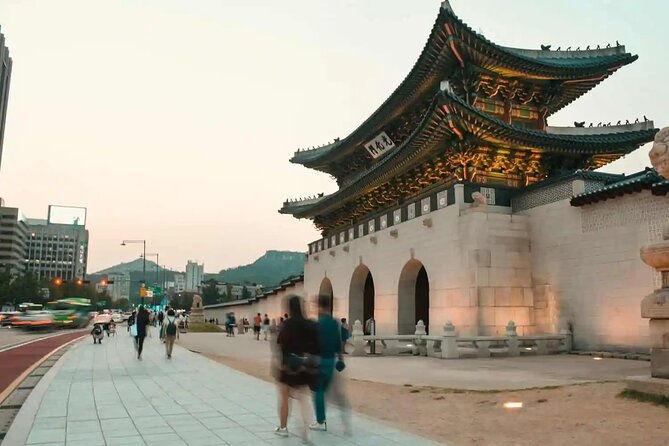
- A useful Seoul introduction: The route links Seoul Plaza, Gwanghwamun, Gyeongbokgung Palace, Insadong, and Bukchon Hanok Village.
- History with modern city life: You move from government buildings and public squares to Joseon-era monuments, palace gates, Buddhist and Confucian sites, and traditional homes.
- Guides with strong historical focus: Moises and Gemma are named guides associated with the experience, with English-language guidance and practical food advice.
- Local stops beyond the headline sights: Tea houses, galleries, craft shops, bars, and hanok lanes add everyday Seoul to the royal attractions.
- A small-group walking tour: The group can include up to 20 people, large enough for social energy but smaller than a city bus outing.
- Good value for a first day: At $96.75, the price is easiest to justify if you want history, orientation, and food tips in one three-and-a-half-hour walk.
Why this route works for a first look at Seoul
Seoul can feel hard to read at first. It is huge, modern, and packed with districts that each have their own mood. This tour solves part of that problem by keeping you in the historic center, where royal power, national politics, religion, shopping, and neighborhood life all meet.
The route begins at Seoul Plaza and finishes near Cafe Onion Anguk, by Bukchon Hanok Village. That direction matters. You begin with the city’s public face, then move toward older neighborhoods and smaller streets. By the end, you have a better sense of where Gyeongbokgung, Insadong, Jongno, and Bukchon fit together.
I would use this walk early in a Seoul visit. One guide, Moises, is praised for offering practical advice on Korean street food and places to eat, while another guide, Gemma, is noted for explaining the country’s history and sights clearly. Those are useful qualities when you are still learning how Seoul works.
The tour is offered Monday through Friday, within the stated 10 a.m. to 5 p.m. operating hours. Check your booking confirmation for the exact departure time, since the information provided does not give one fixed start time for every booking.
More history and heritage tours in Seoul:
- Seoul: Evening Dark History, Folklore & Ghost Story Walking Tour
★ 5.0 · 593 reviews - Hanbok Photoshoot and History Tour at Gyeongbokgung Palace
★ 5.0 · 276 reviews - From Seoul: Dae Jang Geum Park Historic K-Drama Set Tour
★ 4.9 · 143 reviews
Seoul City Hall and the opening view of the capital
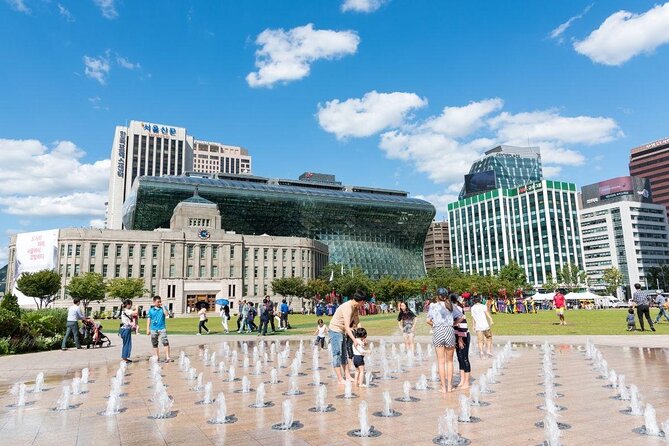
The meeting point is Seoul Plaza, in front of City Hall. This is a sensible starting place because it puts you in the middle of modern Seoul before the walk turns toward older quarters.
You spend about 30 minutes here. The guide uses City Hall as an introduction to Seoul’s past and present, rather than treating it as a quick photo stop. That opening context helps you understand the capital as a political center, not just a collection of palaces and shopping streets.
Admission is listed as free. City Hall may be closed on some Tuesdays, so do not assume the interior will always be available. Even if the building is closed, the meeting area still gives you a clear beginning point for the walk.
Gwanghwamun Square and two figures who shaped Korea
From Seoul Plaza, the walk continues to Gwanghwamun Square, Seoul’s main ceremonial avenue. The stop lasts about 35 minutes, giving you time to hear about the avenue’s role and see the public monuments around it.
The square is anchored by statues of King Sejong the Great and Admiral Yi Sun-sin. King Sejong is closely linked with the creation of Hangul, the Korean alphabet. Admiral Yi Sun-sin is remembered as a major naval commander of the Joseon period. The tour treats these figures as more than names on plaques, connecting them to the national story you will hear again at the palace.
A separate 10-minute stop focuses on The Story of King Sejong and The Story of Admiral Yi Sunshin. These attractions sit directly in front of Gwanghwamun Gate. The short time allocation suggests a focused explanation rather than an extended museum visit, so expect the guide to select the most useful points.
This is also a good place to notice Seoul’s scale. The broad avenue, monuments, government buildings, and mountains in the distance give you a sense of how the capital presents itself. You are not yet in a quiet old neighborhood, but the Joseon story is already under your feet.
Gyeongbokgung Palace and the royal guard ceremony
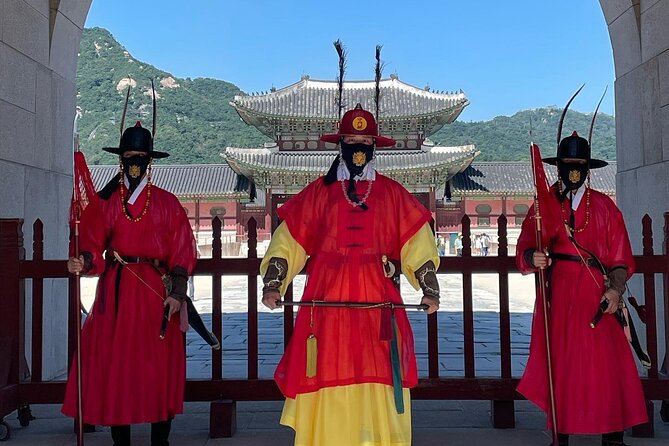
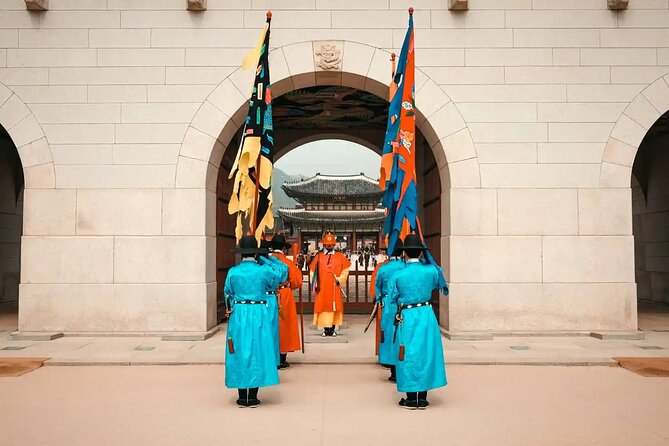
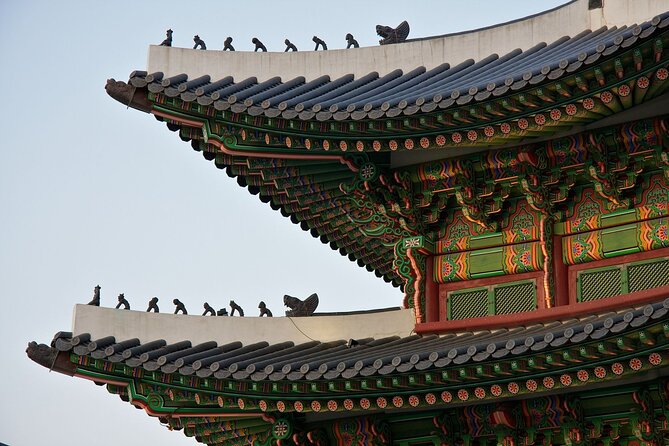
Gyeongbokgung is the central historical sight on this route. It was the main royal palace of the Joseon dynasty, and the tour gives you an introduction to its importance along with the changing of the guards.
The scheduled palace stop is about 30 minutes. That is enough for orientation and a ceremony, but not enough for a slow exploration of every courtyard, gate, hall, and museum. If you want a detailed palace visit, plan to return on your own with extra time.
The guard change adds movement and color to what could otherwise be a purely architectural stop. It also helps you picture the palace as a working royal compound, rather than a set of restored buildings used only for photographs.
The admission information lists the palace stop as free as part of the experience details. Still, check your confirmation for the exact arrangement, especially if you intend to return later independently.
The guide’s role is particularly useful here. Palace buildings can blur together when you first see them. A good explanation of royal power, court life, and the Joseon period gives the courtyards a reason to matter. The experience is strongest if you listen closely rather than rushing from one photo point to the next.
A different kind of day out around Seoul:
- Best DMZ Tour Korea from Seoul (Red Suspension Bridge Optional)
★ 5.0 · 41,422 reviews - DMZ Tour: 3rd Tunnel, Option(Suspension Bridge, Boat) from Seoul
★ 5.0 · 21,373 reviews - DMZ tour south Korea from Seoul (NK experience hall, defector)
★ 5.0 · 20,599 reviews - Seoul: DMZ Tour with Optional Suspension Bridge
★ 4.8 · 5,277 reviews
Insadong, where old Seoul becomes a living neighborhood
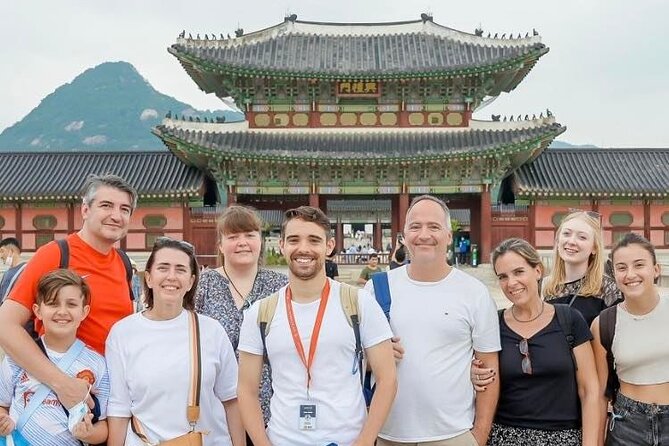
After the palace, the walk turns toward Insadong. This is where the tour shifts from national history to daily culture.
Insadong is known for traditional tea houses, galleries, bars, and craft shops. The planned stop lasts about 30 minutes, with time to wander through narrow streets lined with hanok-style buildings. You might find this section more relaxed than the palace portion, since it gives you a chance to look at shops and absorb the neighborhood’s texture.
The guide’s food and drink suggestions add real value here. Advice on Korean beer chicken, street food, tea, and places to eat can save you from choosing a restaurant at random later. One strong point of this experience is that it does not stop at monuments. It shows you where the historic center still functions as a place to eat, browse, and meet friends.
Keep your expectations practical. Thirty minutes is not enough for a long tea ceremony, a serious shopping session, and a full meal. Think of Insadong as a guided introduction, with ideas for where to return after the walk.
A stop at a traditional tea house can be one of the most memorable parts of the day. It offers a quieter contrast to Gwanghwamun’s grand avenue and Gyeongbokgung’s formal spaces. The precise tea house may depend on the guide and the day, so treat it as part of the local flavor rather than a guaranteed extended tasting.
Bukchon Hanok Village and the final climb
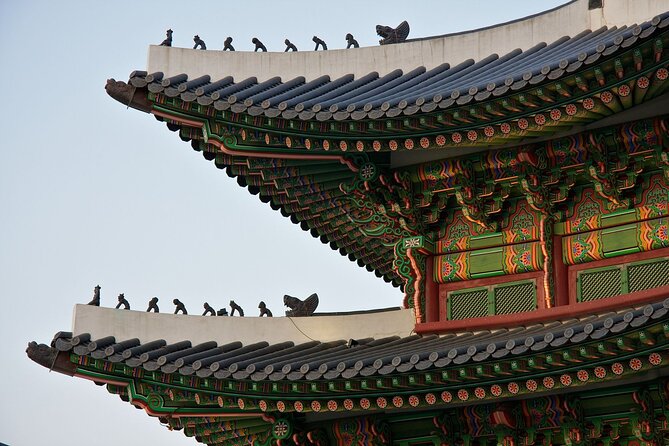
The route finishes in Bukchon Hanok Village, located on a hill between Gyeongbokgung Palace and the other major royal sites. Bukchon is known for its traditional homes, narrow lanes, and views across tiled rooftops.
The scheduled visit is about 30 minutes. Because Bukchon is hilly and the lanes are compact, comfortable shoes matter. The walk is not presented as a strenuous hike, but you should expect some uphill streets and uneven walking surfaces.
Bukchon is also a living neighborhood, not only an open-air museum. Keep your voice low, stay aware of residents, and follow any posted instructions. The beauty here comes from the mix of preserved architecture and ordinary city life.
Finishing near Cafe Onion Anguk is convenient. The endpoint places you close to cafes and the Anguk area, so you can continue exploring after the guide departs. The tour does not return to City Hall, which is helpful if you want to keep moving east, but less convenient if you left luggage or plans near the starting point.
What the $96.75 price really buys you
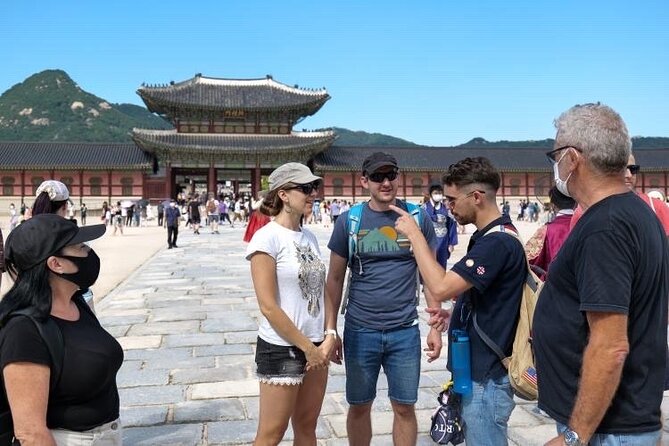
At $96.75 per person, this is not a cheap stroll. The value depends on how much structure and explanation you want.
You are paying for about three and a half hours with a guide, a carefully linked route, historical background, and practical tips on food and drink. The experience also helps you avoid spending your first Seoul day figuring out how Gwanghwamun, Gyeongbokgung, Insadong, and Bukchon connect.
The listed stops show free admission, so the price is not mainly covering entrance tickets. It is paying for the guided walk and the time saved through organization. If you already know Seoul well, prefer independent research, or plan to spend hours inside Gyeongbokgung, the cost may feel high.
For a first visit, the price is easier to defend. You get a strong orientation to the historic core and ideas for what to revisit later. The maximum group size is 20, which is not an intimate private tour, but it is still more personal than a large coach excursion.
The tour is also useful during a short Seoul stay. A visitor with a layover used a similar visit to make good use of limited time and came away wanting to return to South Korea. That makes sense: the route offers a compact introduction without requiring a full day.
Guide style, language, and group size
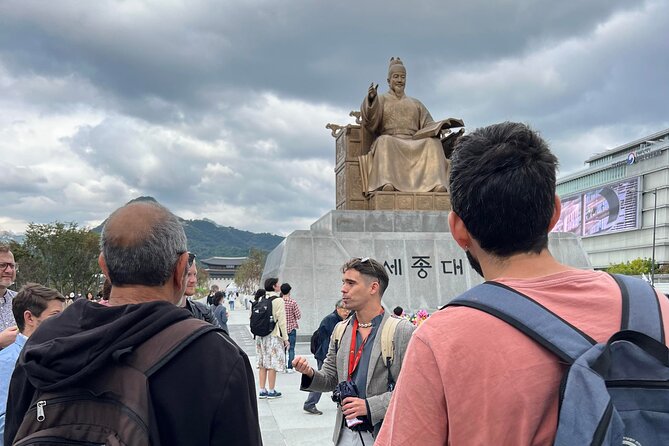
English ability is an important part of this experience. Moises is specifically praised for clear English and for explaining enough history to make the culture easier to understand. Gemma is praised for bringing the city’s past and present together while pointing out other sights.
Guide quality can affect the day because the schedule is tight. You want someone who can explain a palace without turning the walk into a lecture, then switch easily to practical advice about food, tea, and neighborhood customs.
The group limit is 20 people. That gives you a reasonable chance to hear the guide, although the experience may feel less flexible than a private walk. If you are interested in photography, shopping, or spending extra time inside one site, you may need to continue independently after the tour.
The walk can also operate in poor weather only if conditions allow. Rain did not prevent one guide from making the visit worthwhile, but weather will affect your comfort, especially in Bukchon. Bring suitable shoes and clothing for the forecast.
Who should book this Seoul walking tour?
I would recommend it to first-time visitors who want a clear introduction to Seoul’s historic center. It suits you especially well if you enjoy learning the story behind monuments but also want suggestions for tea, street food, bars, craft shops, and casual meals.
It is a good fit for couples, friends, and solo visitors who prefer a guided walk to planning every stop themselves. It can also work well during a long layover, provided your timing allows you to reach Seoul and return to the airport with plenty of margin.
You may want a different option if your priority is a long, detailed visit inside Gyeongbokgung Palace. The palace portion is brief, and the tour covers a lot of ground. It is also not ideal if you dislike hills, walking, or fixed group schedules.
Cancellation is free up to 24 hours before the start time. Cancellations or changes made later are not refunded, and weather or low enrollment can cause the experience to be rescheduled or canceled with a refund or alternative offered.
Should you book Discover Seoul: Local Life and History?
Book it if you want context, orientation, and local eating advice in one half-day walk. The route is well chosen, the historic sights are major Seoul landmarks, and the shift from palace grounds to Insadong and Bukchon gives you more than a standard monument tour.
Skip it if you want an unhurried palace visit or a private guide. At $96.75, the experience earns its price through explanation and organization, not admissions. For a first day in Seoul, that can be worthwhile. For an experienced Seoul visitor, the same money may be better spent on independent time inside the palace and neighborhoods.
FAQ
Where does the tour begin?
The tour begins at Seoul Plaza, at 110 Sejong-daero in Jung District, Seoul.
Where does the tour finish?
It finishes near Cafe Onion Anguk on Gyedong-gil in Jongno District, close to Bukchon Hanok Village.
How long does the experience last?
The walking tour lasts approximately three hours and 30 minutes.
Which Seoul neighborhoods and sights are included?
The route includes Seoul City Hall, Gwanghwamun Square, the statues and stories of King Sejong and Admiral Yi Sun-sin, Gyeongbokgung Palace, Insadong, and Bukchon Hanok Village.
Is Gyeongbokgung Palace included?
Yes. The tour gives you an introduction to Gyeongbokgung Palace and includes the changing of the guards.
Are admission tickets included?
The listed stop details show admission as free for the included attractions.
How many people can join the tour?
The tour has a maximum group size of 20 people.
Is the tour available every day?
The stated operating schedule is Monday through Friday, from 10 a.m. to 5 p.m. Check your confirmation for the exact departure time.
Can service animals join?
Yes. Service animals are allowed.
Can I cancel for a refund?
Yes. You can cancel up to 24 hours before the experience begins for a full refund. Later cancellations or changes are not refunded. If poor weather or insufficient enrollment causes the operator to cancel, you are offered another date or experience, or a full refund.
Just added around Seoul
- Your Personal Seoul Photographer!★ 4.1 · 15 reviews
- From Seoul: Hwacheon Ice Fishing and Lighting Festival Tour★ 4.5 · 4 reviews
- You’re Invited to Our Home in Seoul: The Only Cooking Class!★ 5.0 · 8 reviews
- Seoul: Gangneung BTS K-Pop & K-Drama Filming Locations Tour★ 4.6 · 14 reviews
- Unique Native Experience : Han River Picnic, Board game, BBQ★ 5.0 · 3 reviews
- 2-Hour Private Kayaking and Paddleboarding Experience in Hanriver★ 5.0 · 3 reviews
- Yun Korean Cooking Class in Seoul★ 5.0 · 6 reviews
- Day Trip to Yongin Daejanggeum and Korean Folk Village from Seoul★ 4.0 · 9 reviews
Historical Tours, compared.
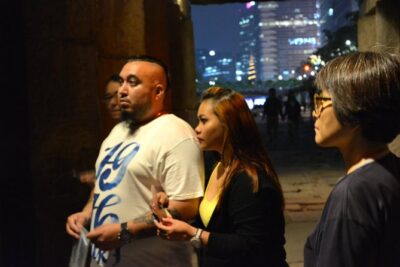
Evening Dark History, Folklore & Ghost Story Walking Tour
Read our review →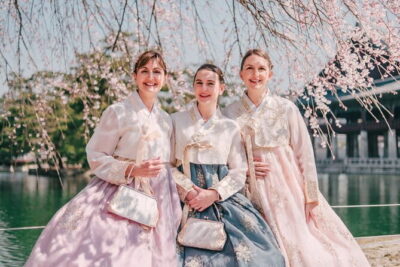
Hanbok Photoshoot and History Tour at Gyeongbokgung Palace
Read our review →
City Highlights and Historical Experience No Shopping
Read our review →
Street photoshoot and Seoul Hidden gem History Walking Tour
Read our review →
Namhansanseong UNESCO Historical Sites and Korean Folk Village-Private Tour
Read our review →
Seoul Cultural Tour – Kimchi Making, Gyeongbok palace with Hanbok
Read our review →Browse the lists this tour appears in