
Reviewed · SEOUL
Discover Eastern Korea in 4days: All-Inclusive Experience
Eastern Korea comes into focus through its best contrasts here: Busan seafood and sea views, Silla-era treasures in Gyeongju, a living village in Andong, and mountain scenery in Seoraksan. The route covers a lot of ground, but it gives you a useful first look at Korea beyond Seoul.
I especially like the no-shopping format and the meals included, since they keep the days focused on places and food rather than sales stops. I also like the mix of hands-on culture, ancient sites, and outdoor scenery. The main catch is the pace, plus the fact that some departures may send you to Busan by KTX on your own rather than with the group.
- Jagalchi Market and Songdo Cable Car give you a lively first taste of Busan.
- Bulguksa, Daereungwon, and Gyeongju National Museum form a strong introduction to Silla Korea.
- Korean dessert making offers a welcome break from sightseeing and a practical cultural encounter.
- Andong Hahoe Folk Village is a living historic settlement, not just a collection of exhibits.
- Seoraksan’s Jujeongol Valley brings mountain scenery into a tour otherwise centered on cities and heritage.
- Three hotel nights and seven included meals make the $1,200 price easier to assess.
Four Days From Seoul to Korea’s Eastern Coast

This is an ambitious small-group-style circuit, though the vehicle can carry up to 35 people. You begin at Seoul Station at 8:00 a.m. and finish at AMID Hotel Seoul in Insadong, moving through Busan, Gyeongju, Andong, Pyeongchang, and Seoraksan.
The route is designed for you if you want the major sights handled in one package. You do not need to arrange separate entrance tickets, long-distance transport within the program, hotels, or most meals. That convenience has a cost: four days is not enough for long, leisurely visits at every stop.
The tour is advertised as all-inclusive, but read that phrase carefully. It includes entrance fees, three nights in twin or double rooms, an English-speaking guide or driver-guide, an air-conditioned vehicle, four lunches, three breakfasts, and two dinners. Drinks, tips, laundry, telephone charges, pay TV, insurance, and other personal spending remain yours.
Busan Begins With Seafood and Sea Views
Your first Busan stop is Jagalchi Market, one of the city’s best-known places for seeing its close connection with the sea. The visit is scheduled for about an hour, after meeting the guide at Busan Station and having lunch together.
An hour gives you time to get a feel for the market, see the seafood stalls, and understand why Busan has such a strong food identity. It is not enough for a slow meal-by-meal exploration, so keep your expectations realistic. This is an introduction, not a full market tour.
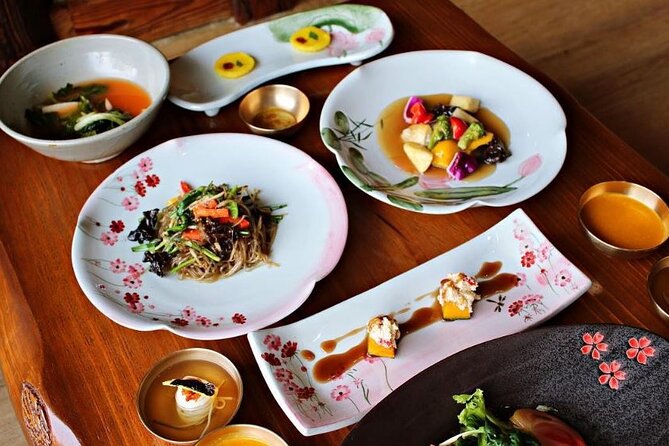
The food program is one of the tour’s stronger points. The organizers promise several kinds of Korean traditional food, and four lunches, three breakfasts, and two dinners are included. That helps protect your budget, especially in a busy country where repeated restaurant meals can add up quickly.
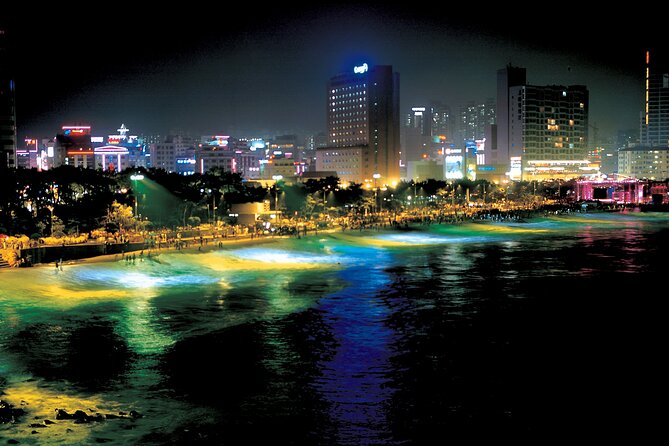
Next comes the Songdo Sea Cable Car, which crosses about 1.6 kilometers from Songdo Beach Station to Songdo Sky Park. The ride takes you above the coast, with wide views over the water and the city.
You have about two hours here, allowing time for the cable car and the surrounding area. This is a good early highlight because it changes the pace after the market. You are not simply looking at another historic building. You are seeing Busan from above and getting a clearer sense of its coastal setting.
More multi-day trips from Seoul:
- Discover Western Korea in 4days: All-Inclusive Experience
★ 5.0 · 6 reviews - Jeonju & Yeosu: 4-Day Foodie & Artist Journey
★ 5.0 · 3 reviews
A Practical Note About Reaching Busan
The published meeting point is Seoul Station, while the first scheduled sightseeing begins at Busan Station. That means the opening transfer deserves your attention before you pay.
One past departure involved a very small four-day group joining a larger day group. Those four-day participants received KTX tickets and made their own way to Busan. A guide and driver then handled the sightseeing portion. This can be perfectly manageable, but it is not the same as being escorted from Seoul.
I would ask directly at booking confirmation if your KTX journey is accompanied, where you collect the ticket, and what time you must board. The tour confirmation is promised within 48 hours, subject to availability, so that is the right moment to clarify the arrangement.
Gyeongju Connects Temples, Tombs, and Royal Gold
Day two moves from Busan to Gyeongju, Korea’s ancient capital for roughly a thousand years. This is the historical center of the program, and the stops work well together.
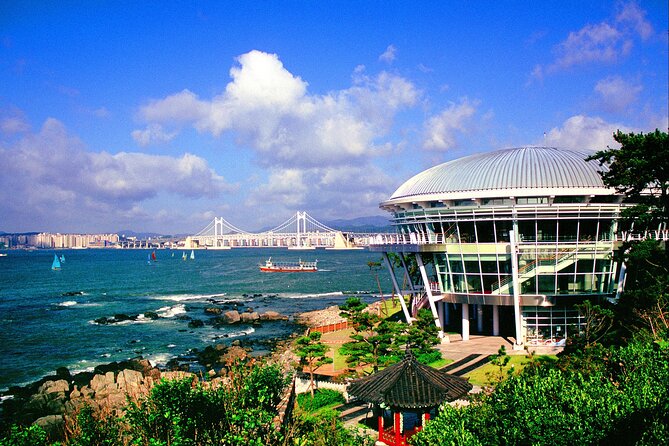
At Nurimaru APEC House on Dongbaekseom Island, you see the modern side of Busan before leaving the city. The glass-walled building hosted the 2005 APEC Summit, and the visit takes about an hour.
It is a short, polished stop rather than an ancient site. Still, it gives you a change of mood and a chance to see how Korea presents its recent international role. The island setting also makes this a pleasant morning visit.
Bulguksa Temple is the day’s major monument. This UNESCO World Heritage Site receives about 90 minutes, enough to see the main areas with a guide and take in its stone bridges, gates, and Buddhist design.
You will get more from Bulguksa if you resist rushing from one photo point to the next. Look at the relationship between the temple buildings and the stonework. The stop is not long enough for a quiet, private examination of every detail, but it is long enough to understand why this temple matters.
Daereungwon Tomb Complex follows, with about an hour among the large burial mounds of the Silla royal court. These rounded grassy mounds can look simple at first, yet they represent a sophisticated royal culture. Gold crowns and other grave goods help explain the power once held by the people buried here.
The Gyeongju National Museum then gives those objects a proper setting. Plan on about 90 minutes. Here you can see golden crowns and other works dating from a millennium ago, which makes the earlier tomb visit easier to understand.
I like this pairing. The tombs show the physical scale of Silla burial customs, while the museum shows the workmanship and ceremonial objects connected to them. The museum shop is mentioned as part of the visit, but this is not a shopping-focused program.
The final Gyeongju stop is Cheomseongdae Observatory, an ancient astronomical structure and one of the city’s familiar symbols. You get only about 20 minutes, so treat it as a brief outdoor stop rather than a full lesson in astronomy.
The short visit still works at the end of a long day. You can see the structure, hear why it mattered, and move on without spending valuable time on a small site.
A Sweet Lesson Before Andong
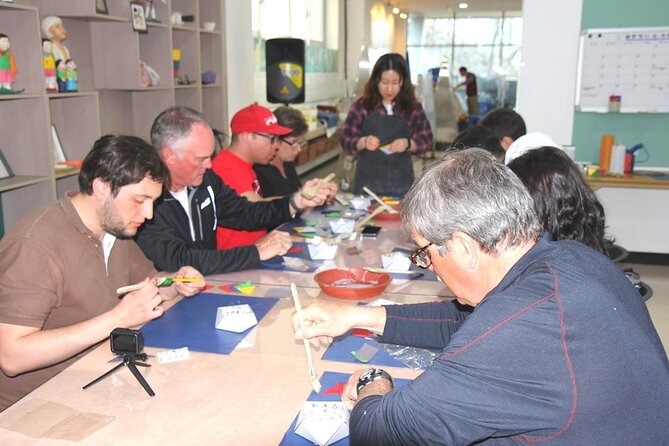
Day three begins at Momyeongjae, described as a Korean Traditional Culture Center. The featured activity is making Korean traditional desserts with instructors, and you have about 90 minutes.
This is one of the most appealing parts of the program because you are doing something rather than only looking. You get a closer sense of Korean food customs, and the activity gives the day a slower start after the packed Gyeongju schedule.
The exact dessert is not specified, so do not book this expecting a particular recipe or pastry. The reliable point is that you will take part in a guided traditional dessert-making session.
Afterward, you visit Andong Hahoe Folk Village for about two hours. This UNESCO World Heritage Site has more than 600 years of history and remains a living traditional village.
Two hours lets you walk through the village and see its old-style setting, but it is not a full day in Andong. You may find yourself wishing for more time if you enjoy architecture, village life, or photography. Even so, the stop adds something that temples and museums cannot: a sense of how a traditional settlement is organized and inhabited.
This is also where the tour’s promise of local encounters and folklore has its best chance to come through. Keep an open mind and pay attention to the setting, not just the most photographed buildings. The value is in seeing a real community shaped by long-standing customs.
A different kind of day out around Seoul:
- Best DMZ Tour Korea from Seoul (Red Suspension Bridge Optional)
★ 5.0 · 41,422 reviews - DMZ Tour: 3rd Tunnel, Option(Suspension Bridge, Boat) from Seoul
★ 5.0 · 21,373 reviews - DMZ tour south Korea from Seoul (NK experience hall, defector)
★ 5.0 · 20,599 reviews - Seoul: DMZ Tour with Optional Suspension Bridge
★ 4.8 · 5,277 reviews
Pyeongchang Leads Into Seoraksan
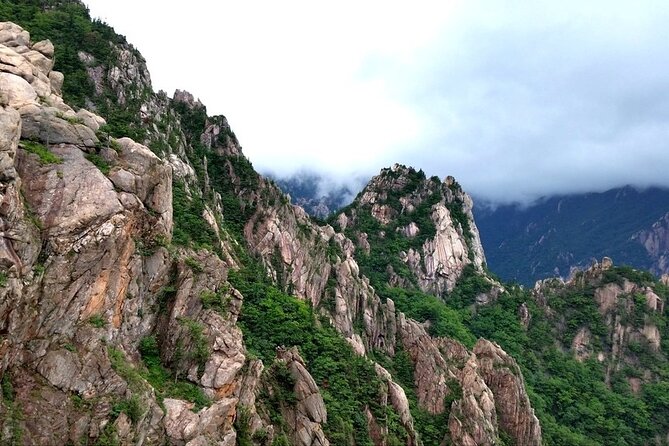
The final morning takes you from Pyeongchang to Jujeongol Valley in Seoraksan National Park. This is the trip’s main outdoor stop, with about two hours in the valley.
Seoraksan is known for dramatic rock formations, high peaks, and clear streams. Jujeongol gives you a taste of that mountain country without requiring a full multi-day hiking plan.
You do need moderate physical fitness. The tour does not describe the trail distance or exact difficulty, so I would not assume the walk is flat or effortless. Wear practical shoes and be prepared for uneven ground, changing weather, and a walking pace set by the group.
Two hours is enough for a short walk and views, but not for a serious exploration of the national park. That limitation is worth accepting if your goal is a broad Korea sampler. If Seoraksan is your main reason for coming, you would want a longer stay in the area.
Weather matters here. The experience can be canceled because of poor conditions, with a different date or a full refund offered. That policy is useful, but a rescheduled date may not suit your wider plans, so leave some flexibility if the mountain visit is important to you.
What the $1,200 Price Really Covers
At $1,200 per person, this is not a cheap four-day excursion. Its value depends on how much planning you want someone else to handle.
Your price covers:
- Three nights in twin or double rooms
- Four lunches
- Three breakfasts
- Two dinners
- All entrance fees during the program
- An English-speaking guide or driver-guide
- Air-conditioned transport, with the vehicle size based on group size
- The Korean dessert-making session and other included admissions
Hotels received strong praise from some past participants, and one person specifically described the hotels as great. Guide service also earned warm approval, with Jay praised for keeping people informed and managing expectations, while Mark was described as professional. Guide assignments can change, so treat those names as useful examples, not guarantees.
The food is another reason the price may make sense. You are not paying separately for most main meals, and the program is built around Korean dishes rather than generic stopgap food. Group discounts may also be available, though the exact savings are not given.
The weaker value appears if you want free time, independent restaurant choices, or deep visits at each place. You are paying for breadth and organization. You are not paying for long stays in Busan, Gyeongju, Andong, or Seoraksan.
Group Size, Hotels, and Daily Comfort
The maximum group size is 35 people. That is not a tiny private tour, and larger groups can take longer to load, gather, and move through busy sites. The vehicle varies according to the number of people booked.
The upside is that the guide can handle tickets, meal arrangements, and site order while you focus on the day. The downside is less freedom to pause or change plans. The listed guide may be an English-speaking guide or a driver-guide, so the guiding style may differ from one departure to another.
Twin and double rooms are included for the three nights. If you are booking alone, confirm the room arrangement and any single supplement before finalizing, since the supplied details do not explain solo-room pricing.
The tour is marked suitable for ages 1 to 80 and older, but the moderate fitness requirement matters more than the broad age range. The main concern is walking at temples, tombs, villages, and the national park, plus the long road movements between regions.
Who Will Enjoy This Four-Day Route
I would recommend this program to you if you want a guided overview of Eastern Korea and prefer one booking to several separate arrangements. It suits first-time visitors who want Busan, Gyeongju, Andong, and Seoraksan in a single sweep.
It also fits you if included meals matter, you appreciate a no-shopping policy, and you enjoy mixing food, history, scenery, and light outdoor activity. The dessert lesson is a particularly good match for anyone who wants more than sightseeing photographs.
I would hesitate if you dislike early starts, long transfers, or fixed meal schedules. Independent visitors may find the pace restrictive, especially in Gyeongju and Andong. You should also think twice if Seoraksan is your priority, since two hours in Jujeongol Valley gives only a taste of the park.
Book well ahead if your dates are fixed. The experience is commonly reserved about 64 days in advance, and confirmation remains subject to availability.
The cancellation terms are fairly workable if you plan carefully. You can receive a full refund when canceling at least six full days before the start time. Canceling two to six full days ahead brings a 50 percent refund, while cancellation less than two full days ahead is nonrefundable. Changes follow the same timing limits, and all cutoffs use Korean local time.
Should You Book This Eastern Korea Experience?
Book it if you want a well-fed, no-shopping introduction to Eastern Korea and accept a brisk schedule. The combination of Jagalchi Market, the Songdo cable car, Silla monuments, Andong village culture, dessert making, and Seoraksan gives you a broad and memorable four-day route.
Skip it if you want long, quiet visits or full control over transport and meals. Before booking, confirm the Seoul to Busan KTX arrangement, the hotel details, and the guide assignment. If those points suit you, $1,200 is a reasonable price for the amount of transport, lodging, food, admission, and planning included.
FAQ
Where does the tour start?
The meeting point is Seoul Station at 43-203 Dongja-dong in Yongsan District. The scheduled start time is 8:00 a.m.
Where does the tour end?
The tour ends at AMID Hotel Seoul, located at 38 Insadong 5-gil in Jongno District.
Is transportation from Seoul to Busan included?
The supplied details do not clearly state how every departure handles this transfer. On one departure, a small four-day group received free KTX tickets and traveled independently to Busan. Confirm the arrangement after booking.
What accommodation is included?
Three nights of accommodation in twin or double rooms are included. The specific hotel names are not provided.
Which meals are included?
The price includes four lunches, three breakfasts, and two dinners. Drinks and other personal expenses are not included.
Is the tour suitable for children and older adults?
The activity is listed as suitable for ages 1 to 80 and older. You should still be able to manage a moderate level of physical activity, particularly at historic sites and Seoraksan National Park.
What happens if bad weather cancels the tour?
If poor weather causes cancellation, you will be offered a different date or a full refund.
Just added around Seoul
- Your Personal Seoul Photographer!★ 4.1 · 15 reviews
- From Seoul: Hwacheon Ice Fishing and Lighting Festival Tour★ 4.5 · 4 reviews
- You’re Invited to Our Home in Seoul: The Only Cooking Class!★ 5.0 · 8 reviews
- Seoul: Gangneung BTS K-Pop & K-Drama Filming Locations Tour★ 4.6 · 14 reviews
- Unique Native Experience : Han River Picnic, Board game, BBQ★ 5.0 · 3 reviews
- 2-Hour Private Kayaking and Paddleboarding Experience in Hanriver★ 5.0 · 3 reviews
- Yun Korean Cooking Class in Seoul★ 5.0 · 6 reviews
- Vivaldi Park Winter Ski Resort with Nami Island Tour from Seoul★ 4.5 · 7 reviews