
Reviewed · INSADONG TRADITIONAL QUARTER TOURS
Gwangjang market Netflix Food Walking Tour with Insadong
Gwangjang Market is the payoff here, but the route earns its way there. You begin in Insadong, Seoul’s traditional arts quarter, then pass through Ikseon-dong’s narrow hanok lanes before sitting down to Korean market food at one of the city’s oldest markets. It is a smart way to connect Seoul’s old crafts, revived neighborhoods, and everyday eating culture in one afternoon.
I like the small group of up to 10 and the fact that the food tastings cost nothing extra. I also like the human touch: guide Alan Han is singled out for taking time with questions, while another guide kept explaining the neighborhood even on a scorching day. The drawback is simple: three hours on foot can feel tiring in heat or rain, and the exact food selection may vary.
Key points to know before booking
- Three Seoul districts in one walk: Spend about 90 minutes around Insadong and then continue to Gwangjang Market, with Ikseon-dong woven into the route.
- Food is included: Expect 3 to 5 tastings, including fish cake, mung-bean pancake, honey dessert, and Korean rice wine.
- Small group format: The maximum is 10 people, which makes questions and conversation with the English-speaking guide easier.
- A 3 p.m. start: The afternoon timing leaves your morning open and brings you to the market as the day moves toward dinner.
- A practical Seoul introduction: You get traditional arts, hanok lanes, neighborhood stories, and street food rather than only a meal.
- Weather matters: The tour can be canceled for poor weather, and comfortable shoes are sensible for the walking portions.
Why this route works so well in Seoul
Seoul can feel like several cities at once. Glass towers rise near palace districts. Quiet tea houses sit beside fashion stores. Old market lanes carry on while nearby streets turn into nightlife zones.
This tour gives you a clear way to read those changes. It starts at Anguk Station, a useful meeting point for the old center, and ends at Gwangjang Market. Along the way, your guide explains how traditional arts, old housing, and local food fit into modern Seoul.
The route lasts about three hours. That is long enough for context and several tastings without taking over your whole day. At $48.60 per person, the value depends on what you want from a food walk. You are not paying only for snacks. You are paying for an English-speaking guide, a planned route, neighborhood background, and the chance to try several foods without ordering each item separately.
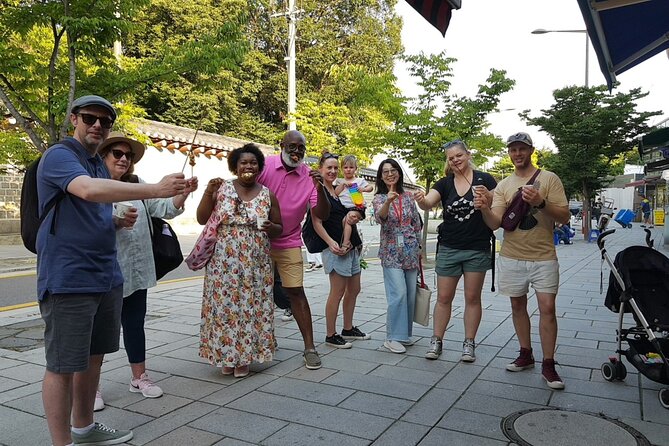
The small group helps here. With no more than 10 people, you should have a better chance to hear the guide and ask questions than on a large coach excursion. Alan Han is specifically named as a guide who allows time for questions and takes a personal approach. That matters in a tour built around places that can be confusing at first glance.
More Insadong tours in Seoul:
- Best Seoul City Tour (Gyeongbokgung Palace,Insadong,Namsan Tower)
★ 5.0 · 1,647 reviews - Seoul Highlights: Gyeongbok Palace, Insadong & N Seoul Tower
★ 4.7 · 726 reviews - Korean Palace and Market Tour in Seoul Including Insadong and Gyeongbokgung Palace
★ 4.0 · 174 reviews
Starting at Anguk and entering Insadong
The tour begins at Anguk Station at 3 p.m. The first major stop is Insadong, a central Seoul neighborhood associated with Korean art, crafts, tea houses, traditional restaurants, and older architectural details.
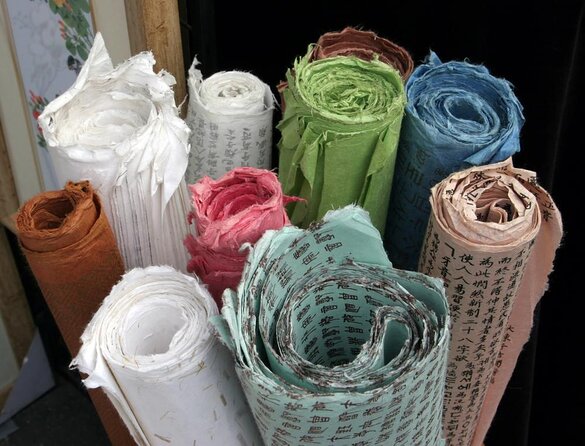
Give this part of the walk your attention. Insadong is not simply a shopping street. It is a place to see how Korean cultural work is presented to a modern audience. You may find pottery, calligraphy brushes, traditional Korean paper, handmade objects, antique shops, art galleries, and small boutiques.
Your guide’s role is important because the shops can otherwise blur together. The tour explains why Insadong matters as a center for Korean culture, rather than leaving you to guess which items are meaningful and which are ordinary souvenirs.
I like this opening because it slows the afternoon down. Food markets are noisy and fast. Insadong gives you time to look closely at objects and understand the setting before the tasting begins.
The tradeoff is that Insadong is also a well-known destination. It can feel more polished and visitor-focused than a residential side street. If you want only obscure local places, this may seem too established. If you are new to Seoul, though, its clear connection to art and traditional crafts makes it an effective starting point.
Plan for roughly one hour and 30 minutes in this first part of the route. That is generous enough to cover the cultural setting rather than rush straight to food.
The old and new sides of Ikseon-dong
Ikseon-dong adds a different mood. Its narrow lanes and traditional hanok houses show an older form of Seoul, while trendy cafes and small businesses point to the neighborhood’s renewed popularity.
The key value here is the explanation. Ikseon-dong’s appeal is not just the look of the buildings. The guide tells you about its past, its changes, and how it became a popular cultural area again. That gives the lanes some meaning beyond taking photographs.
You will move through a neighborhood where old and new sit close together. Traditional house forms remain visible, but the businesses inside them have changed. That contrast is one of the most useful ideas on the tour: Seoul does not preserve every old district as a museum. It often keeps the structure and gives it a new daily purpose.
I would pay attention to the narrow walkways. They are part of the charm, but they also mean the group must stay together. This is not a wide boulevard with plenty of room to wander. Keep your mobile ticket handy, listen for the guide, and wear shoes you can use comfortably for several hours.
The supplied route details place the main Insadong portion and Ikseon-dong experience before Gwangjang Market. The total time assigned to the first side of the tour is about 90 minutes, so do not expect a long cafe stop or an extended shopping session. This is a walking introduction, not a free afternoon in the district.
Arriving at Gwangjang Market
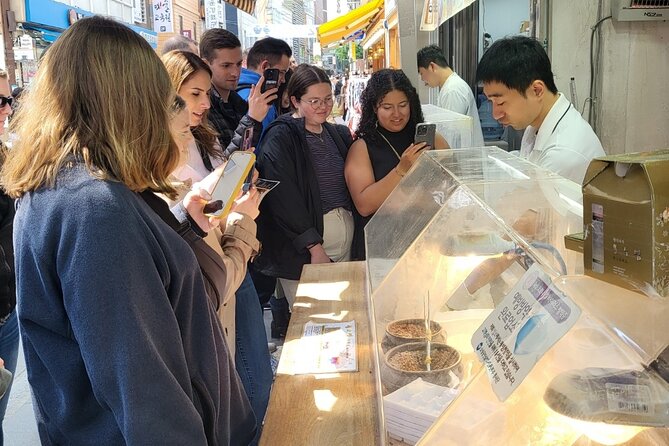
The final stop is Gwangjang Market, at 88 Changgyeonggung-ro in Jongno District. The market has operated since 1905 and is known for food, textiles, and handmade goods.
This is where the tour shifts from looking at Korean culture to tasting it. You are not being led to a formal restaurant with a fixed menu. You are entering a traditional market where food stalls and other vendors share the same setting.
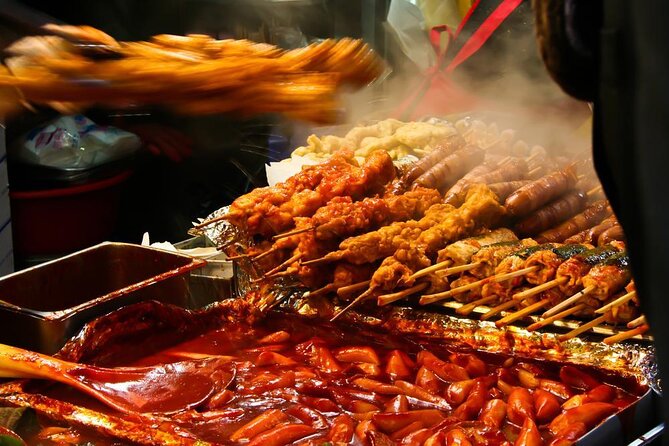
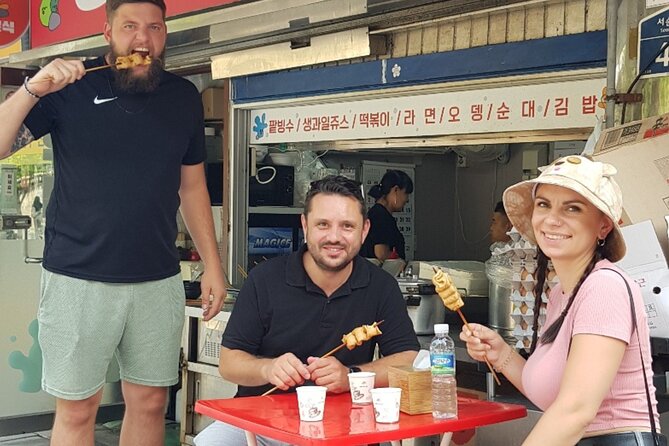
The market is especially known for Korean street food. The included tastings cover three to five kinds of food, with the stated selection including:
- Mung-bean pancake
- Fish cake
- Honey dessert
- Korean rice wine
The food list gives you a good sense of the experience. The mung-bean pancake offers a savory market staple. Fish cake is another familiar street-food item. The honey dessert adds sweetness, and rice wine brings a drink associated with Korean food culture into the tasting.
Because the tour promises 3 to 5 tastings rather than one fixed meal, you should think of this as a guided sampler. The exact number and selection can vary. The important point is that the listed food is included, so you are not continually reaching for your wallet as the guide introduces each item.
The market is also useful beyond eating. You can see textiles and handmade goods, giving the stop a wider role than a food court. The tour includes an explanation of local life and history connected with the market, including the character of Korean life in the 1990s. That recent time frame is worth noting. The tour is not focused only on ancient tradition. It also connects the market to ordinary urban life within living memory.
The market section lasts about 90 minutes. That should give you time to taste, listen, and look around without making the entire evening about food.
More traditional market tours in Seoul:
- Seoul: Gyeongbok Palace, Bukchon Village, and Gwangjang Tour
★ 4.9 · 2,321 reviews - Seoul Street Food Market Tour
★ 5.0 · 1,226 reviews - DMZ Tour Seoul to North Korea’s 3rd Tunnel & Majang Lake Crossing
★ 5.0 · 1,185 reviews - Seoul: Gyeongbok Palace, Bukchon Village, and Gwangjang Tour
★ 5.0 · 1,044 reviews
What the food tasting is really worth
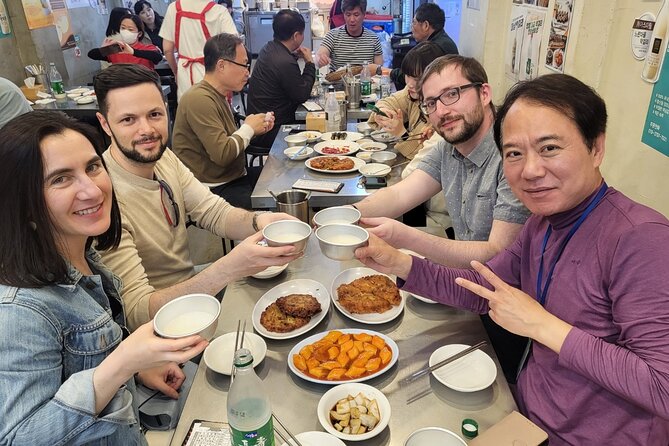
At $48.60, the included food makes a meaningful difference. Three to five tastings at a market can add up quickly, especially when you are unsure what to order or do not speak Korean. A guide also helps you spend your time choosing and tasting rather than studying every stall from scratch.
Still, do not treat the price as an all-you-can-eat promise. The information specifies tastings, not a full dinner or unlimited portions. You may want to budget for other personal purchases at the market, especially if you see textiles, crafts, drinks, or additional food you want to try.
The food component also works well for first-time visitors who feel cautious about street food. A guide can explain what you are eating and keep the group moving through several choices. You get variety without having to commit to a large serving of something unfamiliar.
The included Korean rice wine deserves a practical note. It is part of the listed tasting, so keep that in mind if you do not drink alcohol. The food list also includes a honey dessert, which gives the tasting a clear sweet finish.
The strongest part of the value is the combination: food, context, and a short route through three recognizable parts of Seoul. If you only want a cheap market meal, you can spend less by eating independently. If you want to understand why these neighborhoods belong together, the guided format is easier to justify.
The guide can shape the whole afternoon
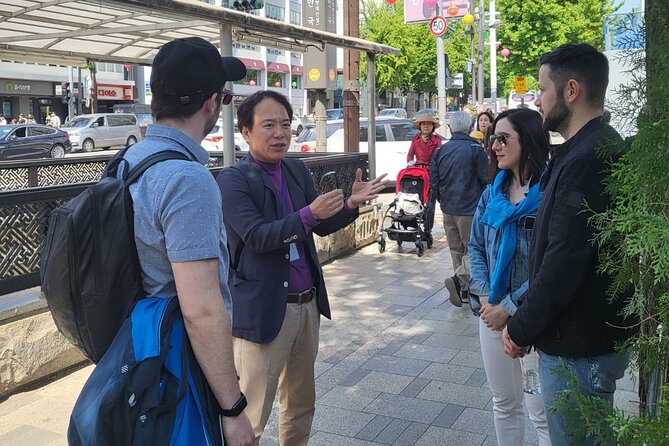
This is a guide-led experience, and the human element matters. Alan Han is described as personable, patient, and willing to answer many questions. That is exactly what you want when the tour moves between art shops, traditional housing, and market stalls.
Another guide handled a very hot day with care and continued explaining the history. That tells you the experience is not built around a hurried script alone. Weather can affect comfort, but the quality of the explanation can keep the walk worthwhile.
You should use the small group to your advantage. Ask about the objects in Insadong. Ask what changed in Ikseon-dong. Ask how Gwangjang Market fits into modern Seoul. A food walk becomes much more useful when you treat it as a conversation rather than a sequence of samples.
The maximum group size is 10. That does not guarantee a private tour, but it is small enough for the guide to manage questions and keep the group together in narrow streets and a busy market.
Heat, rain, and walking conditions
The tour requires good weather, and that is not just fine print. Much of the experience takes place outdoors, in streets and market areas. A hot day can make the walk tiring, while rain can make the lanes uncomfortable.
The experience can be canceled because of poor weather. In that case, you are offered another date or a full refund. The same applies if the minimum number of participants is not reached. Those conditions offer some protection, but you still need a backup plan for your afternoon.
Wear comfortable shoes. The tour is only about three hours, but it combines neighborhood walking with time on your feet in the market. Bring water in hot weather and rain protection if the forecast is uncertain.
One useful detail from the tour experience is that rain does not necessarily ruin the route. A sudden storm made one outing wet, but the food and neighborhood explanations still made the afternoon worthwhile. That said, I would not choose this tour on a day when severe weather is expected. The streets and market are best enjoyed when you can look around without worrying about getting soaked.
Who will get the most from this tour
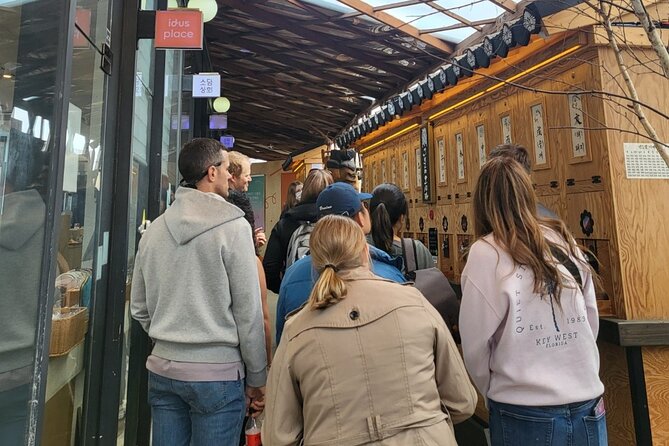
I would recommend this experience to first-time Seoul visitors who want a guided introduction to the old center. It gives you several useful reference points for later exploring on your own.
It also suits anyone who enjoys food but wants more than a restaurant meal. You get street food, market life, and cultural background in one short outing.
The tour works well for people who like questions and conversation. With a guide such as Alan Han and a group capped at 10, you have a better setting for asking about ingredients, neighborhoods, and Korean customs.
It may be less suitable if you dislike walking, want a large meal, or prefer to explore at your own pace. The route is organized, and the food comes as tastings. You will not have unlimited time in every shop or stall.
The 3 p.m. start suits a flexible Seoul day. You can visit another area in the morning, then reach Anguk Station for the afternoon walk. The finish at Gwangjang Market also leaves you in a useful place for continuing your evening, though the tour itself does not include additional personal consumption.
Booking, cancellation, and practical details
The experience uses a mobile ticket, so you should have the booking available when you meet at Anguk Station. Confirmation is sent within 48 hours, subject to availability.
Most people can participate, and the tour is near public transportation. No special access restrictions are stated, but the route includes outdoor walking through streets and market areas, so consider your comfort on foot before booking.
Free cancellation is available up to 24 hours before the 3 p.m. start time. Changes or cancellations inside that window are not accepted for a refund. The local time in Seoul controls the cut-off.
The tour is recommended by 92 percent of the published participants and has a 4.8 rating from 12 reviews. That is a strong result, but the sample is small. I would place more weight on the specific strengths: friendly guides, time for questions, neighborhood explanations, and included tastings.
Should you book the Insadong and Gwangjang Market walk?
Book it if you want a compact, guided introduction to Seoul’s traditional arts, changing hanok neighborhoods, and market food. The best reasons are the small group, the included 3 to 5 tastings, and the way the route links Insadong, Ikseon-dong, and Gwangjang Market instead of treating each place as a separate stop.
Skip it if your main goal is a long, independent meal or an unhurried shopping session. You will have limited time in each area, and the weather can affect the walking comfort.
For most first-time visitors, I think the $48.60 price is fair. You receive a guide, a clear three-hour route, several food samples, and useful context for places you might otherwise pass through without understanding. Just arrive ready to walk, eat small portions, ask questions, and accept that the market is the main event at the end.
FAQ
Where does the tour begin?
The tour begins at Anguk Station in Seoul, South Korea.
What time does the tour start?
The start time is 3:00 p.m.
Where does the tour end?
The tour ends at Gwangjang Market, located at 88 Changgyeonggung-ro in Seoul’s Jongno District.
How long does the experience last?
The tour lasts approximately three hours. About 90 minutes are assigned to the Insadong portion, followed by about 90 minutes at Gwangjang Market, with Ikseon-dong included in the neighborhood route.
What food and drink are included?
The tour includes 3 to 5 street-food tastings. Listed items include honey dessert, fish cake, mung-bean pancake, and Korean rice wine.
What happens if the tour is canceled?
If poor weather causes a cancellation, you are offered a different date or a full refund. If the minimum number of participants is not reached, you are offered a different date or experience, or a full refund.
More walking tours in Seoul
- Seoul moonlight walking tour with local historian
★ 5.0 · 940 reviews - Seoul: Nighttime Hidden Gems Walking Tour
★ 5.0 · 775 reviews - Seoul: Evening Dark History, Folklore & Ghost Story Walking Tour
★ 5.0 · 593 reviews - Seoul: Dark Side of the City and Ghost Stories Walking Tour
★ 4.8 · 484 reviews
More food tours in Seoul
- Seoul: Night Market Food Tour with Local Guide
★ 4.9 · 943 reviews - Downtown Seoul Guided Food & Market Tour with 8+ Local Tastings
★ 5.0 · 580 reviews - Small-Group Night Food Tour in Seoul with Korean BBQ
★ 5.0 · 304 reviews - Seoul Night Palace & Market Food Tour with Vehicle
★ 5.0 · 275 reviews
Just added around Seoul
- Your Personal Seoul Photographer!★ 4.1 · 15 reviews
- From Seoul: Hwacheon Ice Fishing and Lighting Festival Tour★ 4.5 · 4 reviews
- You’re Invited to Our Home in Seoul: The Only Cooking Class!★ 5.0 · 8 reviews
- Seoul: Gangneung BTS K-Pop & K-Drama Filming Locations Tour★ 4.6 · 14 reviews
- Unique Native Experience : Han River Picnic, Board game, BBQ★ 5.0 · 3 reviews
- 2-Hour Private Kayaking and Paddleboarding Experience in Hanriver★ 5.0 · 3 reviews
- Yun Korean Cooking Class in Seoul★ 5.0 · 6 reviews
- Day Trip to Yongin Daejanggeum and Korean Folk Village from Seoul★ 4.0 · 9 reviews
Insadong Traditional Quarter Tours, compared.

Best Seoul City Tour (Gyeongbokgung Palace,Insadong,Namsan Tower)
Read our review →
Seoul Highlights: Gyeongbok Palace, Insadong & N Seoul Tower
Read our review →
Korean Palace and Market Tour in Seoul Including Insadong and Gyeongbokgung Palace
Read our review →
Carve Your Personal Korean Stone Seal with Jeongju in Insadong
Read our review →
Write a Meaningful Korean Calligraphy Scroll in Insadong
Read our review →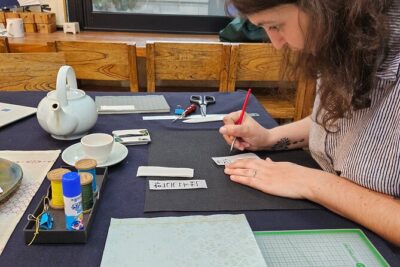
Create a Handmade Traditional Korean Notebook in Insadong
Read our review →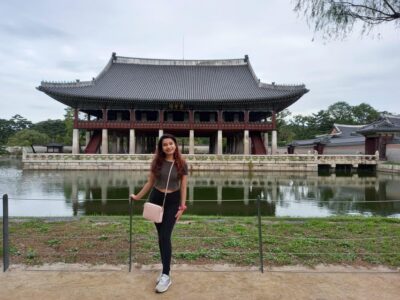
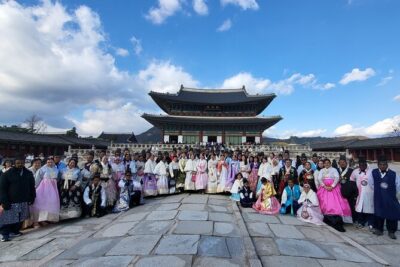
Walking Tour with Gyeongbokgung Palace, Bukchon, Insadong
Read our review →Browse the lists this tour appears in