
Reviewed · BUKCHON HANOK VILLAGE TOURS
Royal Seoul Cooking Class in a 100-Year-Old Hanok
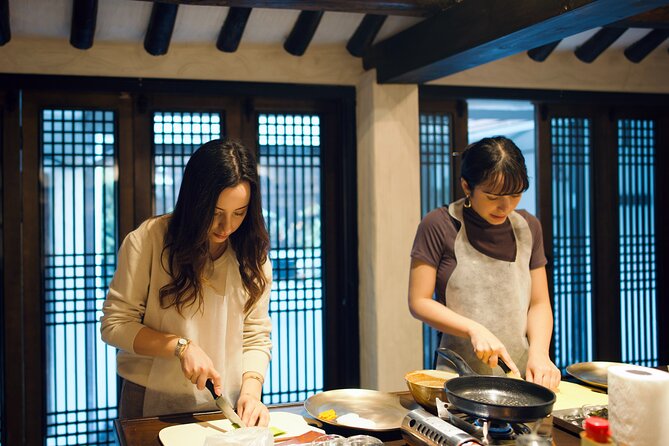
The best part of this Seoul cooking class is the setting: a carefully restored 100-year-old hanok used as a real home, not a standard cooking studio. You prepare several Korean dishes with Ricky or Park, then sit down in the traditional dining room to eat from handmade bangjja bronzeware.
I like the small maximum of six people, which gives the instructor time to help with chopping, mixing, and cooking. I also like the cultural side of the class, from royal cuisine and regional dishes to stories about Korean food and history. The one thing to consider is the price, $98.98 per person, which is high for a two-hour class, though the setting, meal, drinks, and personal instruction add real value.
Key points to know before booking
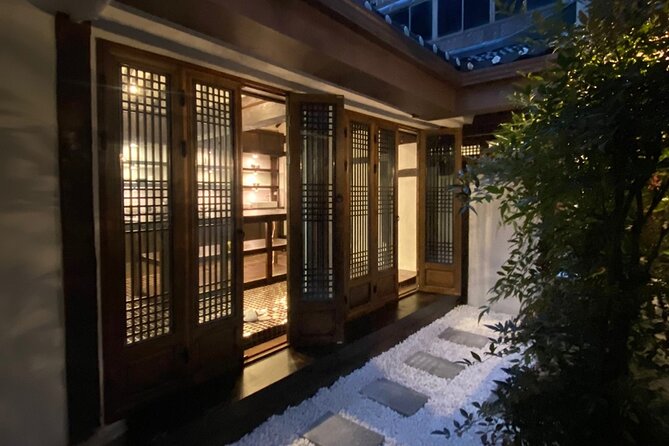
- A restored hanok sets the mood: You cook and dine inside a traditional home in central Seoul.
- The class stays small: The maximum is six people, and some sessions have only three participants.
- The menu is varied: You prepare LA galbi, fresh kimchi, haemul pajeon, and tangpyeongchae.
- Ricky and Park teach more than recipes: Expect food stories, Korean history, and practical cooking guidance.
- The meal is part of the class: You eat your finished dishes on traditional bangjja bronzeware with makgeolli and Korean desserts.
- Ikseon-dong is close by: The meeting point is near historic palaces, markets, and hanok streets for easy sightseeing before or after.
Cooking in a 100-year-old Seoul home
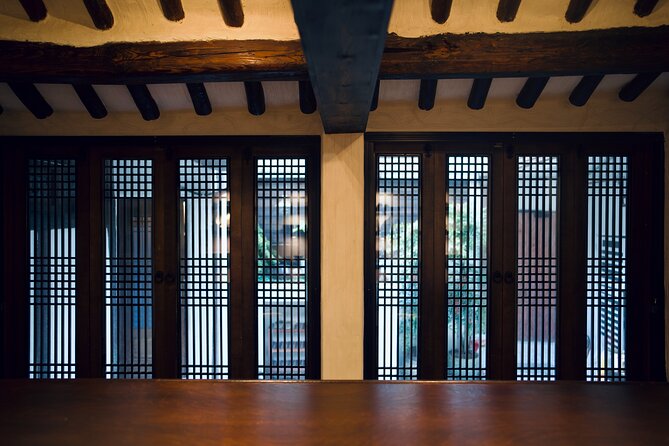
Many cooking classes give you a recipe, a workstation, and a quick meal. This one begins with the house itself. You enter a traditional hanok in the Jongno area, where timber, tiled-roof design, and a quiet residential feel create a very different setting from a modern culinary school.
The home has been lovingly restored, and the cooking space is arranged for teaching. Reviews describe the interior as beautiful, warm, and comfortable, with a traditional dining room that makes the final meal feel special. Classical music may be playing, and the room is designed for conversation rather than a hurried demonstration.
Some descriptions call the building a former geisha residence. The supplied tour information presents it as a residential hanok with more than a century of history. Either way, the appeal is clear: you are cooking in a heritage home with a strong connection to old Seoul, not simply looking at traditional architecture from behind a rope.
That setting matters because Korean food is closely tied to the home. Pancakes, fermented vegetables, grilled meat, and shared side dishes make more sense when you prepare them around a communal table. The house gives the class a sense of place that a restaurant kitchen cannot quite match.
More Bukchon and hanok village tours in Seoul:
- Seoul: Gyeongbok Palace, Bukchon Village, and Gwangjang Tour
★ 4.9 · 2,321 reviews - Seoul City Sightseeing Tour Including Gyeongbokgung Palace, N Seoul Tower, and Namsangol Hanok Village
★ 5.0 · 1,423 reviews - Seoul: Gyeongbok Palace, Bukchon Village, and Gwangjang Tour
★ 5.0 · 1,044 reviews
A small group with Ricky or Park
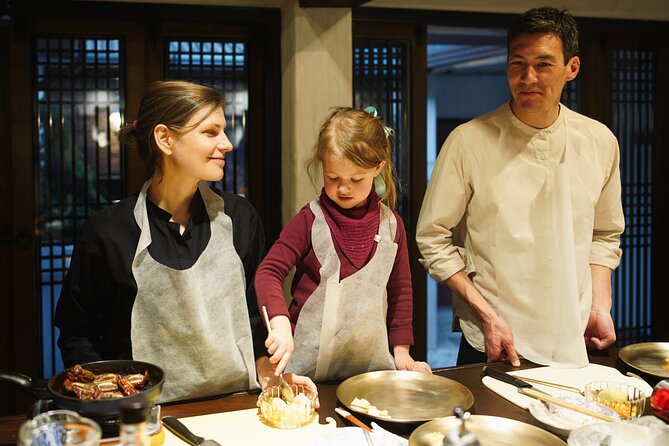
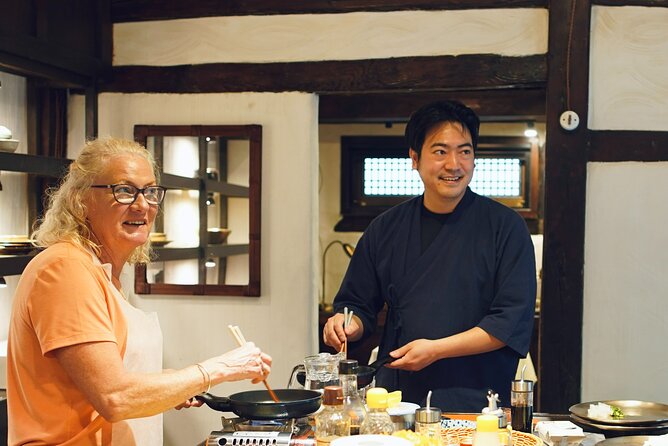
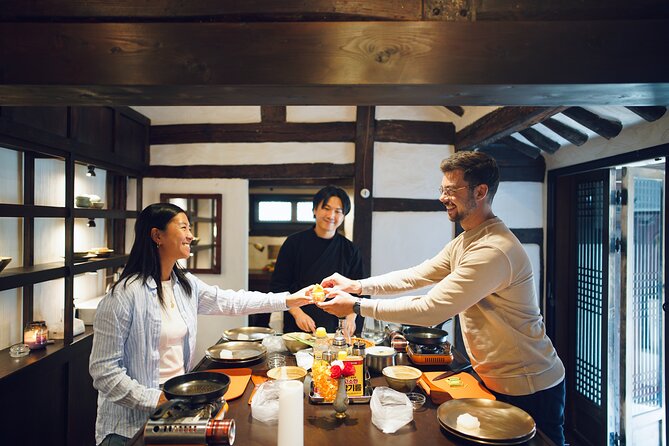
The class is limited to six people. That number is important. You are not left watching a chef work from the back of a crowded room, and you can ask for help when a technique feels unfamiliar.
The instructors are referred to as Ricky and Park in the available information. They are described as certified culinary professionals who teach in a relaxed, friendly way. Their role goes beyond reading instructions. They explain the background of each dish, discuss Korean food culture, and answer questions about restaurants and places to visit in Seoul.
The teaching style appears suited to mixed ability levels. You do not need previous cooking experience, and the recipes are prepared in a way that makes them approachable for beginners. At the same time, someone who cooks regularly should still find useful ideas in the seasoning, preparation, and serving methods.
The class also works well for people who are not traveling with a large group. Solo visitors can share the table with other participants, while couples, friends, and families can book together. One particularly useful detail is the instructor’s willingness to accommodate a participant who needed a stool because of leg pain. That does not guarantee every accessibility request can be met, so contact the provider in advance if you need a specific arrangement.
What goes into the menu
The menu brings together several dishes rather than focusing on one specialty. That gives you a broad introduction to Korean cooking in a short session.
LA galbi
LA galbi is Korean-style beef short rib, usually cut across the bone into thin pieces. It is strongly associated with Korean barbecue and special meals. In this class, it forms the hearty centerpiece of the menu and gives you a chance to work with a familiar Korean favorite.
The dish is also a useful introduction to Korean balance. Sweet, salty, savory, and aromatic flavors work together rather than relying on heat alone. If you enjoy the result, the recipe should be practical to recreate at home.
More Korean cooking classes in Seoul:
- Local Home Korean Cooking Class & Market Adventure in Seoul
★ 5.0 · 1,024 reviews - Master Korean traditional cooking with a Kimchi chef
★ 5.0 · 385 reviews - Seoul: Korean Cooking Class at a Local Home and Market Tour
★ 5.0 · 348 reviews - Seoul: Korean Cooking at Seoul Cooking Club!
★ 5.0 · 311 reviews
Fresh kimchi
Fresh kimchi offers a different lesson from the long-fermented versions you may find in Korean markets. You learn how vegetables are seasoned and combined, with attention to the sharp, fresh flavors that make kimchi such an important part of Korean meals.
This is one of the more useful recipes to take home because it can accompany many simple meals. The class makes it less mysterious by showing you how the ingredients come together under direct guidance.
Haemul pajeon
Haemul pajeon is a savory seafood and green onion pancake. It is social food, easy to share, and a good way to see how Korean cooks turn a simple batter into something crisp and flavorful.
Pajeon also gives the class a hands-on moment. You are not only measuring ingredients. You are shaping and cooking a dish that responds to heat, timing, and handling. That makes it a satisfying choice for beginners because the result is visible right away.
Tangpyeongchae
Tangpyeongchae is a traditional dish made with mung bean jelly and vegetables, often finished with a light dressing and garnishes. It is less familiar to many first-time visitors than galbi or kimchi, which makes it an important part of the menu.
This dish connects the cooking lesson to royal cuisine and older Korean food traditions. It shows that Korean cooking is not just grilled meat and spicy side dishes. Texture, color, balance, and presentation matter too.
The menu can vary, so you should confirm the exact dishes at booking if one item is especially important to you. The supplied description consistently highlights these four dishes, along with dessert and makgeolli.
Dining on bangjja bronzeware
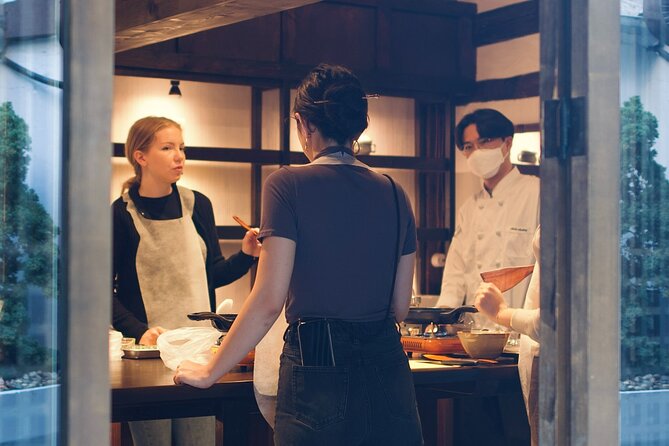
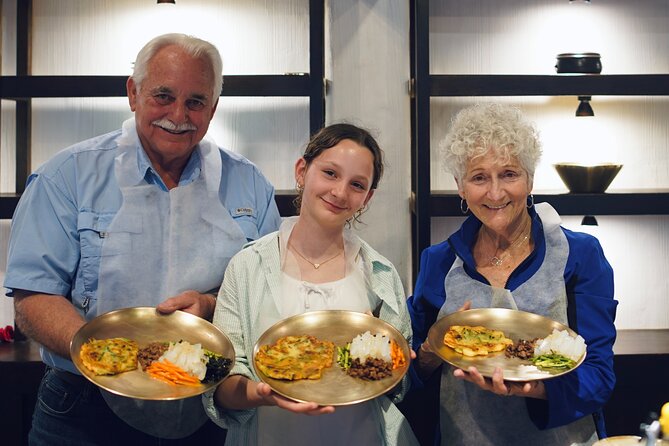
After cooking, you sit down to eat your work. The food is served on bangjja, traditional Korean hand-hammered bronze tableware. It is heavier and more substantial than ordinary restaurant plates, and it adds a formal touch to the meal.
This is where the class earns some of its royal-cuisine language. You are not simply standing at a counter eating the dishes as they finish. You move into a proper dining space and experience the food as a shared Korean meal.
The meal includes a glass of freshly brewed makgeolli, a Korean rice wine with a milky appearance and a gentle, often slightly sweet taste. Traditional Korean desserts are also included. The alcohol portion is limited to the stated serving, so this is a food experience rather than a drinking tour.
The final meal also gives you time to talk. Several of the strongest parts of the experience come from the informal conversation with the instructor and the other people at the table. You may leave with restaurant suggestions, recipe ideas, and a better sense of how the dishes fit into Korean daily life and celebrations.
Why the history lessons add value
The cooking itself is only part of the experience. Ricky and Park explain the background of the dishes and the house, including connections to Korean history and changing food customs. One instructor is also described as having a broad understanding of Korea’s colonial period, which adds context to the discussion.
That historical layer helps you understand why certain ingredients, techniques, and dishes matter. A pancake becomes more than a quick snack. A royal-style jelly dish becomes an example of careful presentation. A hanok becomes more than a photogenic backdrop.
The class is not presented as a formal lecture, and that is a benefit. You can ask questions as you work, so the information stays connected to what is in front of you. The tone is friendly and humorous rather than academic.
Reading the listed Seoul stops correctly
The experience information lists Gyeongbokgung Palace, Changdeokgung Palace, Kwangjang Market, Ikseon-dong Hanok Street, and Gwanghwamun Square. These are useful landmarks for understanding the area, but the activity itself starts and ends at 25 Samil-daero 32ga-gil in Jongno and lasts about two hours and fifteen minutes.
Do not book this expecting a guided palace and market tour in addition to the cooking class. The listed places help you see where the experience fits into a day of sightseeing.
Gyeongbokgung Palace
Gyeongbokgung is one of Seoul’s major palace sites and a natural companion to a class centered on royal food. You can pair a palace visit with the cooking class on the same day, but allow separate time for exploring the grounds.
Changdeokgung Palace
Changdeokgung is another important palace in central Seoul. Its presence on the activity information reinforces the connection between the class and Korea’s royal traditions, though you should treat it as a nearby sightseeing option rather than a confirmed stop during the two-hour session.
Kwangjang Market
Kwangjang Market is a good place to continue your food education after the class. It offers a more casual, public contrast to the quiet hanok dining room. If you visit before class, leave enough time to reach the meeting point without rushing.
Ikseon-dong Hanok Street
Ikseon-dong is especially convenient. The class is described as being in or near the Ikseon-dong hanok area, where narrow lanes, traditional buildings, and modern shops make a pleasant place to walk afterward.
Gwanghwamun Square
Gwanghwamun Square is another central Seoul landmark. It is easy to combine with the palaces and Jongno sights, making this class a smart choice for a day focused on old and modern Seoul.
Is $98.98 a fair price?
At $98.98 per person, this is not a bargain cooking lesson. If you only want to learn one inexpensive recipe, you can find cheaper options.
The value improves when you count everything included: a private-feeling setting, a maximum of six people, instruction from a certified chef, four substantial dishes, the meal afterward, bangjja tableware, makgeolli, dessert, and cultural explanation. You are also paying for access to a private residential-style hanok, which is difficult to reproduce through ordinary sightseeing.
I would compare it with the cost of a good Seoul dinner plus a smaller food activity. The class gives you dinner, but you also do the preparation, learn recipes you can attempt at home, and spend time with a local instructor. For many people, that makes the price reasonable for a special occasion.
It is less attractive if your main goal is a long market visit, a palace tour, or a large menu of dishes. The time is short, and the class concentrates on a few recipes rather than offering a full survey of Korean cuisine.
Practical details that affect your choice
The meeting point is 25 Samil-daero 32ga-gil in Seoul’s Jongno District. The activity ends at the same place, and the location is near public transportation.
You receive confirmation at booking, and mobile tickets are accepted. The provider has been booked more than five times in the past week, and the experience has a five-star rating from 81 reviews with 100 percent recommendation, which suggests strong demand and makes early booking sensible for a preferred date.
The class lasts approximately two hours and fifteen minutes. That is long enough for several dishes and a sit-down meal, but it can feel short if you want extensive time for questions or detailed practice.
Free cancellation is available up to 24 hours before the start time for a full refund. Cancellations or changes made less than 24 hours ahead are not accepted for a refund, and the cut-off follows local Seoul time.
Who will enjoy this class most?
I would recommend it to food-focused visitors who want more than a restaurant meal. It suits couples, solo visitors, families, and small friend groups, and the teaching style works for beginners.
It is also a good first or second-night activity. You get an introduction to dishes, customs, and neighborhoods that can guide the rest of your stay. The restaurant suggestions from the instructor may be useful when you are still finding your way around Seoul.
Families should find the format workable for older children and adults. The class has been used by three-generation groups, and the instructor adjusts his pace for people who need more time.
You may want to choose another activity if you dislike group participation, cannot eat the listed ingredients, or want a formal chef-led demonstration with little hands-on work. The exact menu should be checked before booking if you have dietary restrictions, since no specific substitutions are provided here.
Should you book Royal Seoul Cooking Class?
Book it if you want a personal introduction to Korean food in a setting that feels connected to Seoul’s past. The hanok, six-person limit, easy-to-follow recipes, food stories, and final meal on bangjja bronzeware give the class a clear identity.
I would especially choose it for a first visit, a special evening, or a family activity that needs to work across different ages. The price is above average, but the setting and full meal help justify it.
Skip it if you want a cheap cooking lesson or expect a full palace and market tour. For everyone else, this is one of the more memorable ways to spend two hours in Jongno, and you can take the recipes home with you.
FAQ
Where does the Royal Seoul Cooking Class begin?
The class begins at 25 Samil-daero 32ga-gil in Seoul’s Jongno District.
Where does the activity end?
The activity ends back at the meeting point.
How long does the cooking class last?
The experience lasts approximately two hours and fifteen minutes.
How many people can join the class?
The maximum group size is six people.
What dishes will I prepare?
The stated menu includes LA galbi, fresh kimchi, haemul pajeon, and tangpyeongchae.
Is food included after the cooking lesson?
Yes. You eat the dishes you prepare in the traditional dining area.
What is bangjja bronzeware?
Bangjja is traditional Korean handmade bronze tableware used for serving the meal.
Is makgeolli included?
Yes. The experience includes a glass of freshly brewed makgeolli.
Do I need cooking experience?
No. The class is designed for people without cooking skills, and the instructors provide guidance throughout.
Can I cancel for a full refund?
Yes, if you cancel at least 24 hours before the experience start time. Changes or cancellations made less than 24 hours ahead are not accepted for a refund.
More hands-on classes and workshops in Seoul
- Yongpyong Ski Resort from Seoul with Optional Lesson and Packages
★ 5.0 · 217 reviews - Korean Cooking Class with Grocery Shopping at Seoul Local Market
★ 5.0 · 107 reviews - Seoul : Taste of Korea, Authentic Home-Style Cooking Class
★ 5.0 · 64 reviews - K-pop Dance Class in Seoul (Incl. video shooting & editing)
★ 5.0 · 52 reviews
Just added around Seoul
- Your Personal Seoul Photographer!★ 4.1 · 15 reviews
- From Seoul: Hwacheon Ice Fishing and Lighting Festival Tour★ 4.5 · 4 reviews
- You’re Invited to Our Home in Seoul: The Only Cooking Class!★ 5.0 · 8 reviews
- Seoul: Gangneung BTS K-Pop & K-Drama Filming Locations Tour★ 4.6 · 14 reviews
- Unique Native Experience : Han River Picnic, Board game, BBQ★ 5.0 · 3 reviews
- Yun Korean Cooking Class in Seoul★ 5.0 · 6 reviews
- 2-Hour Private Kayaking and Paddleboarding Experience in Hanriver★ 5.0 · 3 reviews
- Day Trip to Yongin Daejanggeum and Korean Folk Village from Seoul★ 4.0 · 9 reviews
Bukchon Hanok Village Tours, compared.
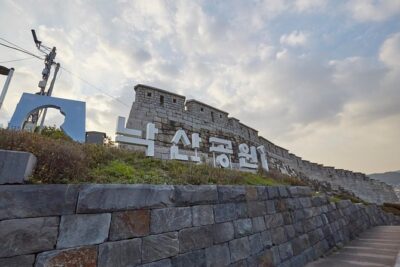
Gyeongbok Palace, Bukchon Village, and Gwangjang Tour
Read our review →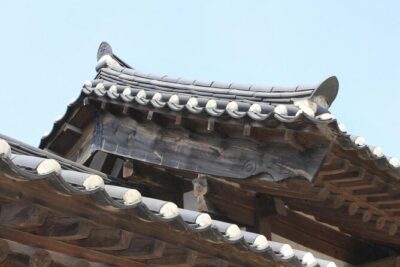
Seoul City Sightseeing Tour Including Gyeongbokgung Palace, N Seoul Tower, and Namsangol Hanok Village
Read our review →Gyeongbok Palace, Bukchon Village, and Gwangjang Tour
Read our review →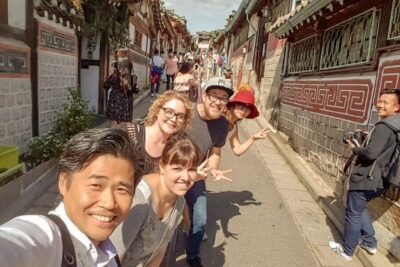
Gyeongbok Palace and Bukchon Hanok Walking Tour
Read our review →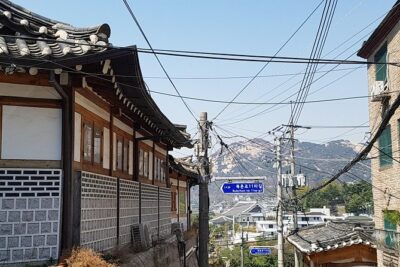
Best Walking Tour to Gyeongbok Palace Bukchon Hanok Village
Read our review →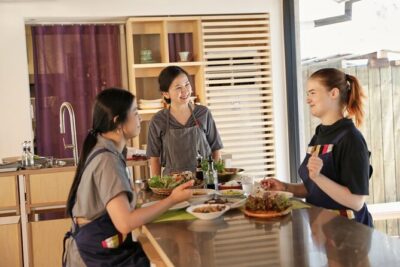
Experience Korean Cooking in Modern Hanok Kitchen
Read our review →
Afternoon Seoul: Hanok Vibes, Netflix Street Food & N Seoul Tower
Read our review →
Tour Seoul’s oldest district with a storyteller from Bukchon
Read our review →Browse the lists this tour appears in