
Reviewed · GYEONGBOKGUNG PALACE TOURS
Gyeongbokgung Palace & Bukchon Village Walking Tour
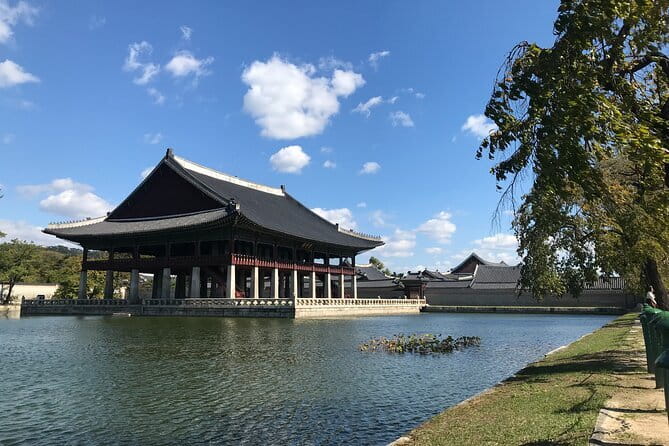
Gyeongbokgung Palace and Bukchon Hanok Village give you two different views of old Seoul in one outing: royal power inside grand palace gates, then quiet lanes lined with traditional Korean houses. I especially like the clear historical focus and the chance to photograph buildings such as Geunjeongjeon Hall and Gyeonghoeru Pavilion.
The small group, capped at 10 people, should make it easier to hear the guide and ask questions. I also like that the Gyeongbokgung admission ticket is included. The main drawback is the short time limit: two and a half hours is enough for an introduction, but not enough for a slow, complete visit to both sites.
Key points at a glance
- Gyeongbokgung was built in 1395 as the first and largest palace of the Joseon Dynasty.
- Geunjeongjeon Hall and Gyeonghoeru Pavilion provide the tour’s strongest architectural and photo stops.
- Bukchon Hanok Village adds narrow lanes, traditional houses, and a calmer change of pace.
- The group is limited to 10 people, a useful size for a walking tour with questions.
- Palace admission is included, while transportation, food, insurance, and personal spending are not.
- Free cancellation is available up to 24 hours before departure, subject to the tour’s minimum-participant rule.
Two historic Seoul districts in 2.5 hours
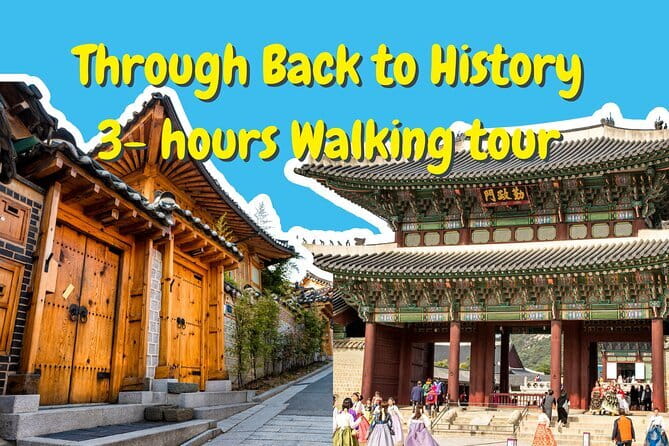
This tour works because the two stops complement each other. Gyeongbokgung Palace shows you Seoul from the viewpoint of kings, queens, government, ceremony, and carefully planned royal buildings. Bukchon Hanok Village shifts the focus to traditional homes and everyday architectural character.
You will walk between major sights rather than sit on a bus. That makes the outing useful early in a Seoul visit, especially if you want a quick sense of the city’s older core. The guide supplies the context that turns attractive buildings into places with a story.
The pace should feel purposeful rather than leisurely. A two-and-a-half-hour schedule has to cover the palace and the village, so you should expect selected highlights instead of every courtyard, pavilion, and alley.
More Gyeongbokgung tours in Seoul:
- Seoul: Gyeongbok Palace, Bukchon Village, and Gwangjang Tour
★ 4.9 · 2,321 reviews - Best Seoul City Tour (Gyeongbokgung Palace,Insadong,Namsan Tower)
★ 5.0 · 1,647 reviews - Seoul City Sightseeing Tour Including Gyeongbokgung Palace, N Seoul Tower, and Namsangol Hanok Village
★ 5.0 · 1,423 reviews
Entering Gyeongbokgung, Seoul’s royal center
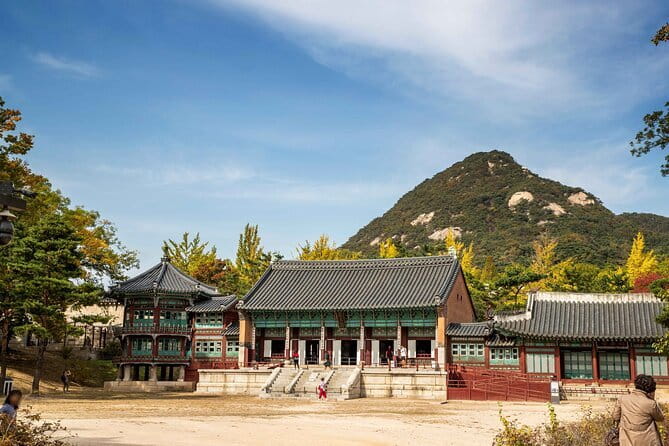
Gyeongbokgung Palace was built in 1395 and became the first and largest palace of the Joseon Dynasty. Its name means Palace Greatly Blessed by Heaven, a hopeful name for a royal center meant to represent prosperity and good government.
This was where Joseon kings and queens lived, and where the kings governed the country. Even without knowing much about Korean history, you can understand the basic idea quickly: this was not simply a residence. It was a working center of royal authority.
The guide’s role matters here. Palace grounds can look like a series of handsome gates and courtyards if you walk through alone without preparation. A good explanation helps you notice how the buildings served different purposes and why the palace remains central to Seoul’s story.
The tour is particularly useful if you are new to Korea. One short review described the outing as a strong introduction for a first visit, with the guide making the setting easy to understand. That is a fair reason to choose a guided walk instead of arriving with no context.
Geunjeongjeon Hall and royal architecture
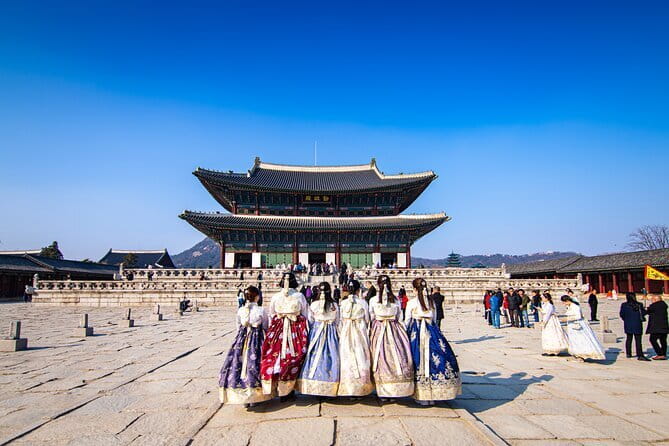
Geunjeongjeon Hall is one of the key structures to see at Gyeongbokgung. It represents the formal side of the palace, with the scale and design needed for royal ceremonies and government business.
Look beyond the general impression of painted timber and sweeping roofs. The value of having a guide is that you can connect the visual details to Joseon court life and the way the palace was organized. You are not just taking a picture of an old hall. You are seeing a building designed to express rank and order.
The tour description specifically highlights the palace’s pavilions and gardens as examples of traditional Korean architecture. That makes the walk worthwhile for visitors who care as much about design as political history.
You will also want to keep your camera ready. The experience is built around major sights and photo opportunities, and one first-time visitor found the palace especially rewarding for pictures. Still, do not let the camera turn the visit into a race. The guide’s explanations are the part you cannot easily recreate later.
Gyeonghoeru Pavilion and the palace’s quieter details
Gyeonghoeru Pavilion is another named highlight. Its open, graceful form gives you a different view of palace design from the more formal Geunjeongjeon Hall.
The contrast is useful. One structure helps you understand ceremony and authority, while the pavilion and surrounding gardens show a more relaxed side of royal life. Together, they give you a better sense of the range within the palace grounds.
The palace is described as having beautiful pavilions and gardens that display traditional Korean design. You might find that these details are easy to overlook if you focus only on the biggest buildings. Stay alert for roof lines, courtyards, painted surfaces, and the way open areas frame the structures.
Because the tour lasts about 2.5 hours in total, the palace portion will be selective. If you want extensive time for gardens, detailed photography, or a slow look at every building, you may want to return on your own another day. This tour is better viewed as a well-shaped introduction.
More Bukchon and hanok village tours in Seoul:
- Seoul: Gyeongbok Palace, Bukchon Village, and Gwangjang Tour
★ 5.0 · 1,044 reviews - Seoul: Gyeongbok Palace and Bukchon Hanok Walking Tour
★ 4.8 · 157 reviews - Best Walking Tour to Gyeongbok Palace Bukchon Hanok Village
★ 5.0 · 138 reviews - Experience Korean Cooking in Modern Hanok Kitchen
★ 5.0 · 118 reviews
Walking into Bukchon Hanok Village
After the palace, the tour moves into Bukchon Hanok Village. The village lies between Gyeongbokgung Palace and Changdeokgung Palace and is known for preserved hanok, or traditional Korean houses.
The mood changes here. The palace is broad, formal, and planned around royal functions. Bukchon is made of lanes, house fronts, and smaller architectural details. The attraction is not one single monument but the way traditional buildings shape the streets.
You will walk through picturesque alleyways and see the distinctive form of hanok architecture. The guide also explains the village’s local history and heritage, giving you a useful link between the royal compound and the wider historic neighborhood.
A first-time visitor to Seoul might find Bukchon especially helpful because it shows a side of the city that is easy to miss when you focus only on modern towers and shopping streets. One review described the village as calm and full of photo spots. That matches the purpose of this part of the tour: a slower cultural break after the palace’s formal spaces.
What makes the hanok streets worth your time
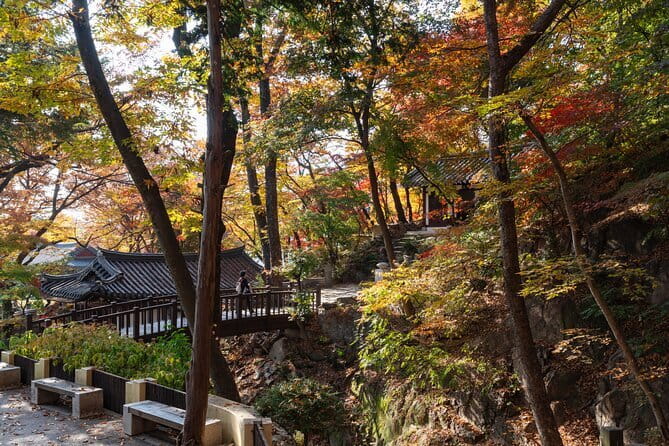
Traditional Korean houses have a strong visual identity, and Bukchon lets you see that design in a neighborhood setting rather than behind palace gates. The narrow streets and repeated roof lines create plenty of opportunities for photographs.
The guide can also help you understand that the village is more than a collection of pretty backdrops. Its value comes from the connection between architecture, local history, and the older form of Seoul. You get a better sense of how traditional housing fits into the city’s story.
Do keep your expectations sensible. The information provided for this tour does not promise entry into private homes, special demonstrations, food tastings, or craft activities. The experience is a walking visit through the area, with explanations and photo stops along the way.
That simplicity is part of its appeal. You are not being rushed through a long list of unrelated attractions. The tour concentrates on two places that belong together and lets the guide provide the link.
Why the group size matters
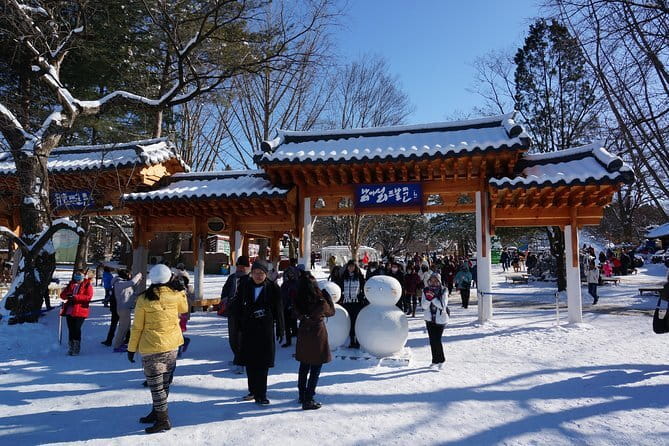
The maximum group size is 10 people. That is a useful limit for a walking tour in streets where you need to stay together and hear instructions.
A smaller group can also make the history feel more conversational. If you are unsure about Joseon-era terms, palace buildings, or hanok design, you should have a better chance of asking a question than you would in a large coach group.
No guide’s name is provided, so you cannot choose a particular guide in advance. The listed experience does include a tour guide, and the feedback supplied describes the explanations as easy to follow. I would treat this as a good fit for someone who wants a personal introduction but does not need a private tour.
The small group does not change the basic walking demands. You will be on your feet for most of the outing, moving through palace grounds and village lanes. Anyone who prefers long breaks, extensive shopping, or a very slow photography session may find the schedule tight.
Price and what you receive for $62.89
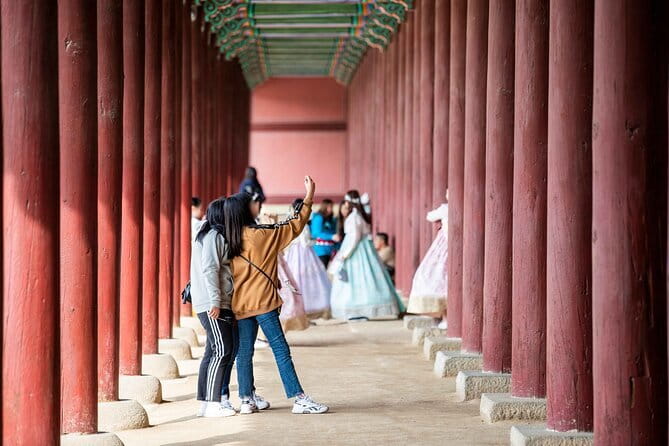
At $62.89 per person, this is not the cheapest way to see Gyeongbokgung and Bukchon. Its value depends on how much you want the guide’s explanations and the convenience of having palace admission handled for you.
The included ticket removes one practical task and ensures that the tour’s main paid attraction is part of the price. You are also paying for a local guide, a planned route, and a small group rather than simply entering the palace on your own.
Transportation is not included, nor are meals, insurance, or personal expenses. That keeps the price from being all-inclusive, but it also means you can choose your own way to reach the meeting point and decide what else to spend money on.
I think the price makes the most sense for a first visit to Seoul, particularly if Korean history is new to you. The guide can help you get more from two major sights in a limited period. If you already know both sites well, or prefer reading your own guidebook, independent entry may offer better value.
The tour is booked an average of 19 days ahead, so planning early is sensible if your Seoul dates are fixed. Confirmation is sent within 48 hours of booking, subject to availability.
Timing, transport, and practical planning
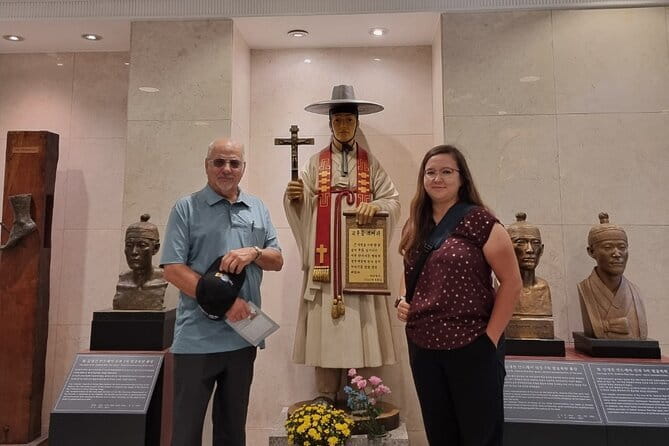
The tour lasts approximately 2 hours and 30 minutes. Since transportation is not included, you need to arrange your own way to the starting point and make sure you arrive ready to walk.
The activity is near public transportation, which helps with arrival planning. The exact meeting instructions are not provided in the available details, so check your booking confirmation carefully for the meeting location and start time.
Wear comfortable shoes. The tour takes place on foot at a palace complex and through village alleys, so practical footwear matters more than dressing for a formal palace visit.
The experience is listed as suitable for most people, but the information does not give detailed accessibility notes. If you have specific mobility needs, contact the provider before booking rather than assuming every lane or palace area will be easy to navigate.
Free cancellation is available until 24 hours before the start time for a full refund. Cancellations or changes inside that window are not accepted for a refund. The tour also requires a minimum number of participants. If the provider cancels because that number is not reached, you will be offered another date or experience, or a full refund.
Who will get the most from this walking tour
I would recommend this outing to a first-time Seoul visitor who wants a compact introduction to traditional Korea. It is also a good match for photographers, architecture fans, and anyone who prefers learning through a guide rather than reading signs alone.
Families and mixed-interest groups may find the two-part route useful. The palace supplies scale and royal history, while Bukchon offers smaller details and a change of pace. The group limit of 10 should help keep the outing manageable.
This is less suitable if you want a full-day historical tour, extensive palace exploration, or a food-focused activity. There is no meal included, and the schedule does not leave room for a long stop at each site.
You should also consider your own walking style. The tour is short enough to fit into a busy Seoul itinerary, but it is not designed as a relaxed café-and-shopping stroll.
Should you book Gyeongbokgung and Bukchon?
Book it if you want the main sights explained clearly, prefer a small group, and are visiting Seoul for the first time. The combination of Joseon royal architecture and traditional neighborhood streets gives you a useful first picture of the city’s older side.
Skip it if you already know Gyeongbokgung and Bukchon well, or if you want to set your own pace. At $62.89, the strongest value comes from the guide and structure, not from the admission ticket alone.
For most first-time visitors, the tour earns its place as a compact orientation walk. Just arrive prepared for steady walking, arrange your own transportation, and remember that two and a half hours means highlights rather than a complete survey.
FAQ
How long does the Gyeongbokgung and Bukchon tour last?
The tour lasts approximately 2 hours and 30 minutes.
What places does the tour visit?
It visits Gyeongbokgung Palace and Bukchon Hanok Village. The palace portion includes sights such as Geunjeongjeon Hall and Gyeonghoeru Pavilion.
Is the Gyeongbokgung entrance fee included?
Yes. The Gyeongbokgung entrance ticket is included in the tour price.
Is transportation included?
No. Transportation is not included, so you must arrange your own way to the meeting point and between any required locations.
How many people can join the tour?
The activity has a maximum of 10 travelers.
Is the tour suitable for most people?
Yes. The activity information states that most travelers can participate. Detailed accessibility information is not provided, so contact the provider if you have specific mobility requirements.
Can I cancel for a full refund?
Yes. You can cancel at least 24 hours before the experience start time for a full refund. Cancellations or changes made less than 24 hours before the start time are not accepted for a refund.
More walking tours in Seoul
- Seoul moonlight walking tour with local historian
★ 5.0 · 940 reviews - Seoul: Nighttime Hidden Gems Walking Tour
★ 5.0 · 775 reviews - Seoul: Evening Dark History, Folklore & Ghost Story Walking Tour
★ 5.0 · 593 reviews - Seoul: Dark Side of the City and Ghost Stories Walking Tour
★ 4.8 · 484 reviews
More palace tours in Seoul
- Small-Group Royal Palace and Seoul City Tour (hotel pick-up)
★ 5.0 · 1,474 reviews - Seoul Highlights: Gyeongbok Palace, Insadong & N Seoul Tower
★ 4.7 · 726 reviews - Seoul: Hanbok Rental with Gyeongbokgung Palace Entry
★ 4.6 · 611 reviews - Seoul City Half Day Tour-Gyeongbok Palace Guard Changing Ceremony
★ 4.5 · 357 reviews
Just added around Seoul
- Your Personal Seoul Photographer!★ 4.1 · 15 reviews
- From Seoul: Hwacheon Ice Fishing and Lighting Festival Tour★ 4.5 · 4 reviews
- You’re Invited to Our Home in Seoul: The Only Cooking Class!★ 5.0 · 8 reviews
- Unique Native Experience : Han River Picnic, Board game, BBQ★ 5.0 · 3 reviews
- Seoul: Gangneung BTS K-Pop & K-Drama Filming Locations Tour★ 4.6 · 14 reviews
- 2-Hour Private Kayaking and Paddleboarding Experience in Hanriver★ 5.0 · 3 reviews
- Yun Korean Cooking Class in Seoul★ 5.0 · 6 reviews
- Day Trip to Yongin Daejanggeum and Korean Folk Village from Seoul★ 4.0 · 9 reviews
Gyeongbokgung Palace Tours, compared.
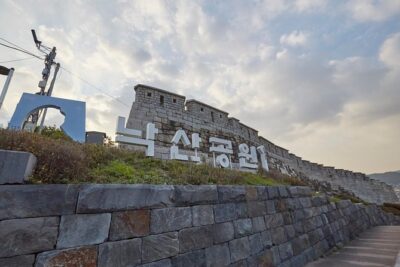
Gyeongbok Palace, Bukchon Village, and Gwangjang Tour
Read our review →
Best Seoul City Tour (Gyeongbokgung Palace,Insadong,Namsan Tower)
Read our review →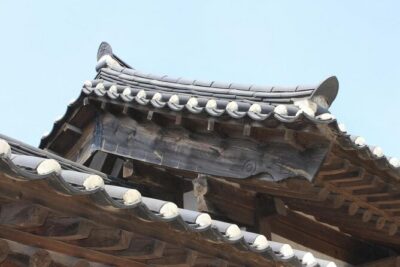
Seoul City Sightseeing Tour Including Gyeongbokgung Palace, N Seoul Tower, and Namsangol Hanok Village
Read our review →Gyeongbok Palace, Bukchon Village, and Gwangjang Tour
Read our review →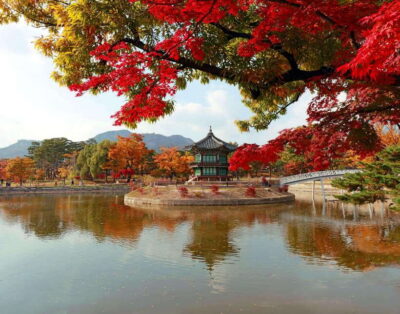
Seoul Highlights: Gyeongbok Palace, Insadong & N Seoul Tower
Read our review →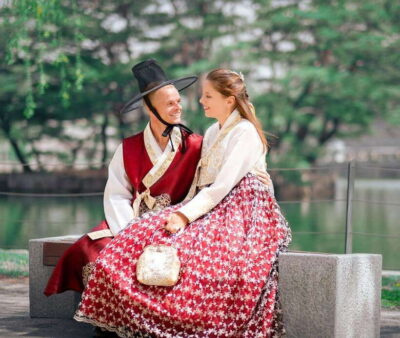
Seoul City Half Day Tour-Gyeongbok Palace Guard Changing Ceremony
Read our review →
Browse the lists this tour appears in