
Reviewed · SEOUL WALKING TOURS
Seoul City Walking Private Tour (3hours)
Seoul’s old center comes into focus quickly on this three-hour walking tour. You move from Jogyesa Temple to Gyeongbokgung Palace, through Bukchon Hanok Village, and finish among the tea houses and food shops of Insadong. It is a smart first look at the city’s traditional side.
I like the small maximum of 15 people, which should make it easier to hear the guide and ask questions. I also like the local help offered by guides Park and Frank, who add practical Seoul tips instead of simply reciting dates. The main drawback is the brisk pace: one hour at both the palace and Bukchon leaves little room for lingering.
Key points at a glance
- Four central Seoul sights in three hours: The route links a Buddhist temple, royal palace, historic residential quarter, and traditional shopping street.
- Guides Park and Frank: The experience includes friendly, personal guidance and useful advice for the rest of your time in Seoul.
- Gyeongbokgung admission included: You do not need to arrange a separate palace ticket.
- A no-shopping route: The focus is on sights, culture, art, food, and local orientation rather than forced store visits.
- Tuesday change: Gyeongbokgung Palace is closed on Tuesdays, so the palace visit is replaced by the Chancellor’s Palace.
- Easy morning timing: The tour begins at 9 a.m. at Jogyesa Temple and ends in Insadong around noon.
Why this route works for a first morning in Seoul
The best feature here is the order of the stops. You begin quietly at Jogyesa Temple, move into the royal world of Gyeongbokgung, walk through Bukchon’s old houses, and end in Insadong, where culture becomes more informal and commercial.
That sequence gives you several views of Seoul without sending you across the city. You get religion, government, architecture, art, tea, and food within one central district. For a first morning, I like this kind of orientation because it gives you a mental map for later sightseeing.
The tour is advertised as a private walking experience, yet the additional information sets a maximum of 15 participants. That means you should confirm the exact group arrangement when booking if a one-party private guide is essential to you. In practical terms, a group capped at 15 is still much more manageable than a large coach tour.
The no-shopping format is another plus. You are not steered toward mandatory retail stops. Instead, the route passes through places where shopping is part of the setting, especially Insadong, while keeping the focus on Seoul’s culture and older neighborhoods.
More walking tours in Seoul:
- Seoul moonlight walking tour with local historian
★ 5.0 · 940 reviews - Seoul: Nighttime Hidden Gems Walking Tour
★ 5.0 · 775 reviews - Seoul: Evening Dark History, Folklore & Ghost Story Walking Tour
★ 5.0 · 593 reviews
Starting at Jogyesa Temple at 9 a.m.
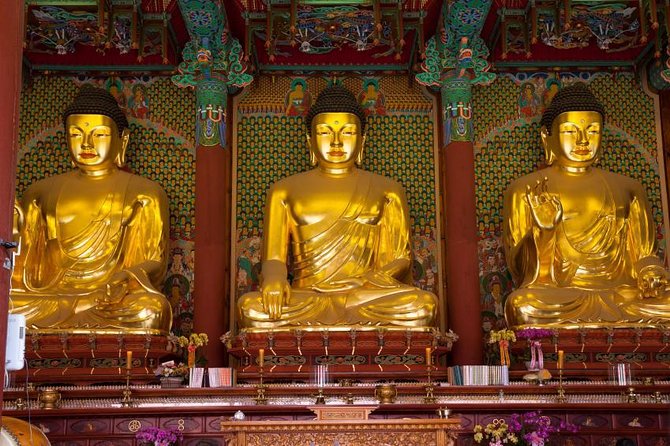
Meet at Jogyesa Temple in central Seoul for the 9 a.m. morning departure. The temple visit lasts about 30 minutes, and admission is free.
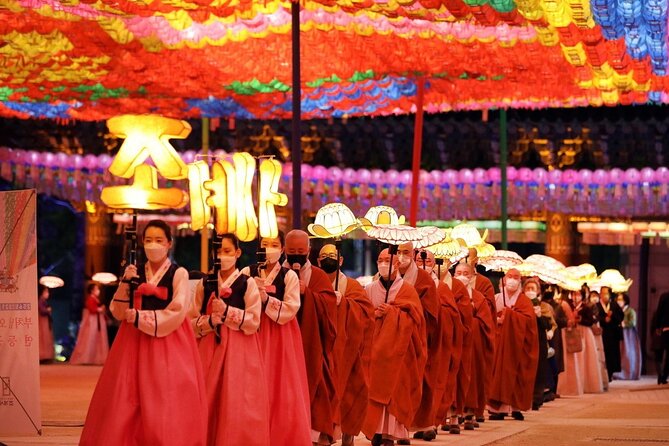
Jogyesa is presented here as the center of Buddhism in Seoul. That makes it a useful first stop, not just a quick photo opportunity. You begin with a place of worship before moving on to the grand royal buildings and busy traditional streets.
I appreciate the short length of this visit. Thirty minutes is enough for an introduction without using up the time needed for the palace and Bukchon. Your guide can explain the temple’s role and point out details you might otherwise walk past.
You should also expect a change of mood from one stop to the next. Jogyesa provides a calm opening, while the rest of the morning becomes more architectural and street-based. If Buddhist sites are your main interest, half an hour may feel brief. If you want a broad introduction to Seoul, the timing is sensible.
Gyeongbokgung Palace and the Joseon capital
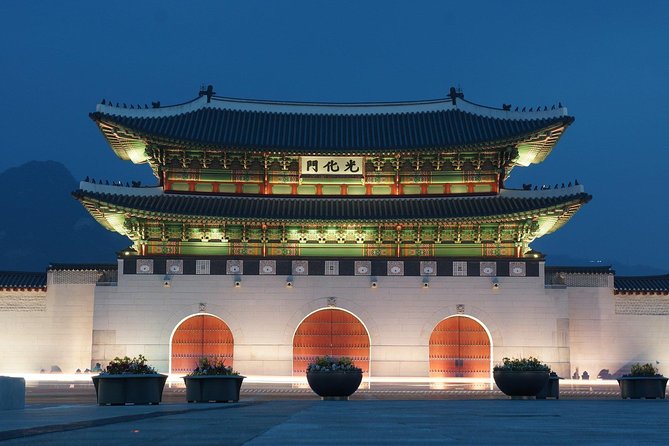
The largest portion of the tour at one hour is spent at Gyeongbokgung Palace. Admission is included, which makes the $49 price easier to assess because one of the main paid attractions is already covered.
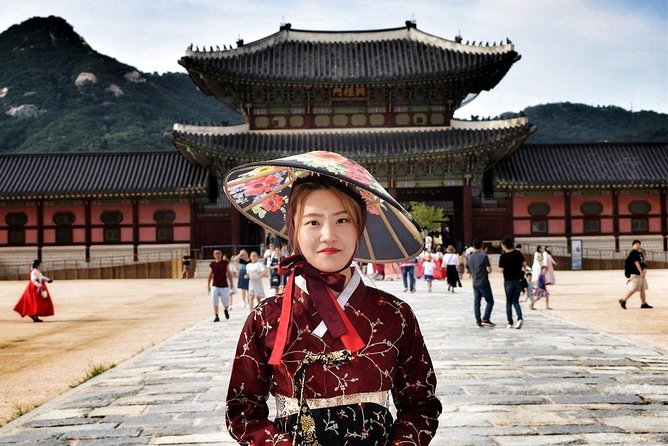
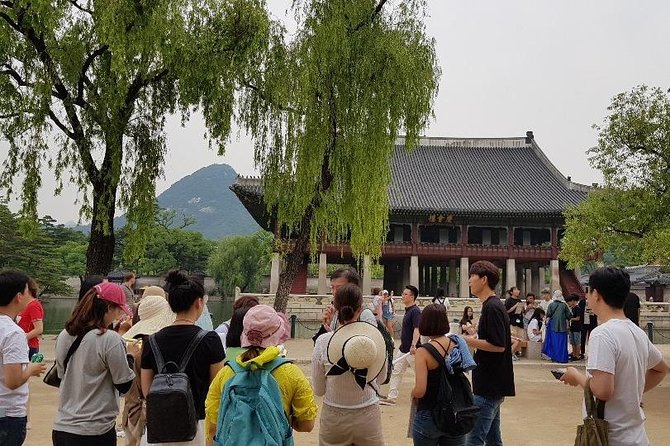
Gyeongbokgung is described as the best-known palace in Korea and a symbol of Seoul’s long role as the capital during the Joseon Dynasty. The route includes the main and largest gate, a landmark tied closely to Seoul’s royal past. You can expect the guide to place the palace buildings and gates within that larger story rather than treating them as isolated photo stops.
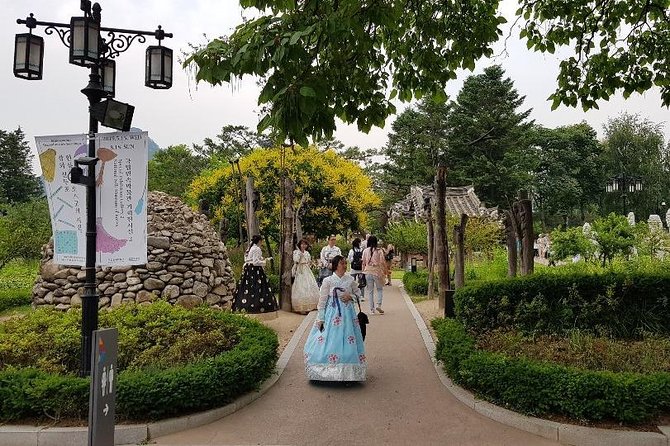
The tour description also refers to wearing hanbok, Korea’s traditional costume, while entering the palace. It does not state that costume rental is included, so you should not assume it is part of the $49 fee. If you already plan to wear hanbok, this palace visit offers the setting for the classic photographs associated with Gyeongbokgung.
One practical issue matters a great deal: Gyeongbokgung is closed on Tuesdays. On that day, the palace portion is replaced by the Chancellor’s Palace. The supplied details do not explain the replacement stop further, so Tuesday visitors should expect a different palace experience rather than the exact route described above.
The one-hour allotment is enough for an introduction, but not for every corner of the grounds. You will get a guided overview and time for photographs, not an exhaustive palace study. That is fine for a first visit, but visitors who want detailed royal architecture may want to return on their own.
Walking through Bukchon Hanok Village
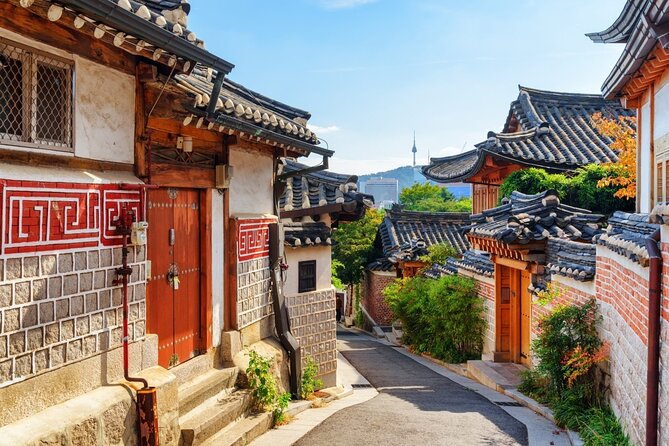
Bukchon Hanok Village receives about one hour and is free to enter. The neighborhood lies between Gyeongbokgung Palace and Changdeokgung Palace and contains about 900 traditional Korean houses.
This is where the tour shifts from formal landmarks to a living residential setting. The narrow streets and traditional homes make Bukchon especially useful for photographs, and the route is designed to pass through a particularly appealing stretch of old Seoul.
I like the decision to give Bukchon as much time as the palace. The village is not a single monument with a quick viewing platform. You need time to walk, look down side streets, and take in the contrast between old houses and modern Seoul.
At the same time, keep your expectations practical. Bukchon is a neighborhood, not an open-air museum arranged only for sightseeing. The information provided does not promise a flat route or describe the walking conditions, so comfortable shoes are a sensible choice. The tour is still only three hours, so you will not cover every part of the village.
A guide is particularly useful here because the appeal comes from context as much as buildings. Park and Frank are described as guides who add useful Seoul advice along the way. That can help you understand what you are seeing and decide which parts of the city deserve more time later.
A different kind of day out around Seoul:
- Best DMZ Tour Korea from Seoul (Red Suspension Bridge Optional)
★ 5.0 · 41,422 reviews - DMZ Tour: 3rd Tunnel, Option(Suspension Bridge, Boat) from Seoul
★ 5.0 · 21,373 reviews - DMZ tour south Korea from Seoul (NK experience hall, defector)
★ 5.0 · 20,599 reviews - Seoul: DMZ Tour with Optional Suspension Bridge
★ 4.8 · 5,277 reviews
Finishing in Insadong’s tea, art, and food streets
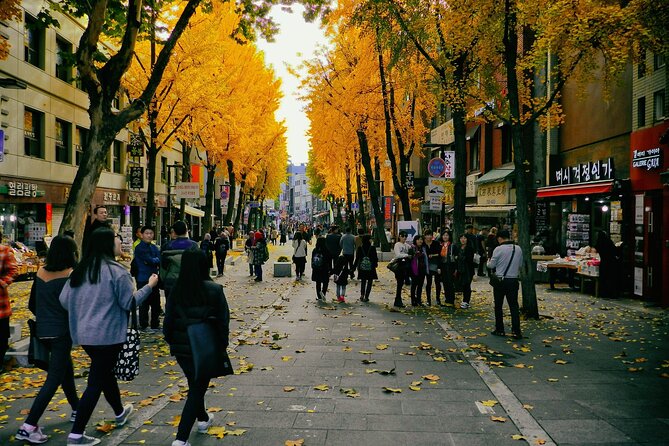
The final stop is Insadong, where the tour ends after about 30 minutes. There is no admission charge, and the endpoint is in Insa-dong, Jongno District.
Insadong is a traditional Korean street known for art galleries, tea houses, hanji shops, and a variety of food. It is a good place to finish because you can continue exploring after the guide leaves. The end of the tour is not an isolated parking area. You finish in a district built for browsing, eating, and further walking.
Half an hour gives you a taste rather than a full visit. I would use the guide’s time to ask where to look for traditional arts, what kind of tea house fits your plans, or which local foods are worth trying. Lunch is not included, so Insadong is also a natural place to arrange your own meal.
The tour ends here rather than returning you to Jogyesa Temple. That is convenient if you want to keep sightseeing in Jongno, but you should plan your next step before the tour ends. The information confirms nearby public transportation, so you can continue by subway or other local transport.
What the guides add
The strongest personal detail attached to this experience is the guide style. Park is described as kind and gentle, with a habit of sharing practical tips for getting around Seoul. That matters on a short orientation tour, since advice about the rest of your schedule can be as useful as the information at the sights.
Frank is described as passionate about Seoul and able to make the tour interesting and exciting. The emphasis is on explaining the city and tailoring the conversation, not simply moving a group from gate to gate.
You should not expect the same guide every day. Park and Frank are examples of guides associated with the experience, and the booking information does not guarantee which person will lead your departure. Still, the feedback points to a friendly approach and a guide who takes interest in the people on the tour.
This is also a good reason to prepare a few questions. Ask about areas you plan to visit, traditional food, or how to use the rest of your Seoul schedule. The guides are specifically noted for offering travel tips, so you can get more value by treating the morning as an orientation session.
Is $49 a fair price?
At $49 per person, this tour sits in a reasonable range for a guided three-hour introduction, particularly because palace admission is included. You are paying for a guide, a carefully linked central route, and help making sense of four major cultural stops.
The value is strongest if you have limited time in Seoul or prefer not to work out the historic center on your own. A guide can connect the temple, palace, village, and art district into one story. You also avoid spending part of your morning figuring out directions and ticket arrangements.
The value is weaker if you already know Jongno well or want long, independent visits at each sight. Three hours goes quickly, and lunch, travel insurance, and any hanbok rental are not included. You may also want to revisit Gyeongbokgung or Bukchon after the tour if you prefer a slower pace.
Group discounts are available, although the information does not specify the discount amount. The maximum is 15 participants, so ask about the final group size and private arrangements if those details affect your decision.
Timing, weather, and booking cautions
The morning starts at 9 a.m. at Jogyesa Temple and finishes in Insadong around noon. That leaves the rest of the day open for lunch and further sightseeing, which is one of the tour’s practical strengths.
The experience requires good weather. If poor weather causes cancellation, you are offered another date or a full refund. It also requires a minimum number of participants, and a cancellation for that reason brings an alternative date or experience, or a full refund.
Your own cancellation terms are much stricter. The booking is non-refundable and cannot be changed for any reason. If your plans are uncertain, consider that condition carefully before paying.
The tour is near public transportation, and most people can participate. No special accessibility details are provided, so you should ask the provider directly if you have mobility concerns or need a route adjustment.
Who should book this Seoul walk?
I would recommend it to a first-time visitor who wants a clear introduction to Seoul’s older center without spending a full day on a single palace complex. It also fits a short stay, a free morning, or the first day of a longer trip when you want local pointers for the days ahead.
Families and mixed-interest groups may like the range of stops. One person can enjoy temple culture, another can focus on palace architecture, and everyone gets time in a neighborhood with food and shops. The small group limit is helpful when you are traveling with questions.
You may want a different plan if your priority is a slow photographic walk, a long palace visit, or a deep focus on Buddhist art. The route covers a lot, but coverage means moving along. I would also avoid booking Tuesday if Gyeongbokgung is the main reason you want this tour, since the palace visit changes to the Chancellor’s Palace.
Should you book this three-hour tour?
Book it if you want a friendly, efficient introduction to central Seoul, with admission to Gyeongbokgung included and the route ending in a useful dining and shopping district. The mix of Jogyesa, the palace, Bukchon, and Insadong gives you a broad sense of traditional Seoul in one morning.
Skip it if you dislike scheduled walking or want to explore each stop at your own speed. For everyone else, $49 is a fair price for the orientation, the guide’s practical advice, and a route that makes good use of three hours. Check the Tuesday substitution, group size, weather risk, and strict cancellation policy before you book.
FAQ
How long does the Seoul City Walking Private Tour last?
The tour lasts approximately three hours.
What time does the morning tour begin?
The morning tour begins at 9 a.m.
Where does the tour start?
The tour starts at Jogyesa Temple in Seoul, South Korea.
Where does the tour end?
The morning course ends in Insa-dong, Jongno District, Seoul.
Is admission to Gyeongbokgung Palace included?
Yes. The tour includes the admission fee.
What happens if I book for Tuesday?
Gyeongbokgung Palace is closed on Tuesdays, so the palace visit is replaced by the Chancellor’s Palace.
Is lunch included?
No. Lunch and travel insurance are not included.
Just added around Seoul
- Your Personal Seoul Photographer!★ 4.1 · 15 reviews
- From Seoul: Hwacheon Ice Fishing and Lighting Festival Tour★ 4.5 · 4 reviews
- You’re Invited to Our Home in Seoul: The Only Cooking Class!★ 5.0 · 8 reviews
- Seoul: Gangneung BTS K-Pop & K-Drama Filming Locations Tour★ 4.6 · 14 reviews
- Unique Native Experience : Han River Picnic, Board game, BBQ★ 5.0 · 3 reviews
- 2-Hour Private Kayaking and Paddleboarding Experience in Hanriver★ 5.0 · 3 reviews
- Yun Korean Cooking Class in Seoul★ 5.0 · 6 reviews
- Day Trip to Yongin Daejanggeum and Korean Folk Village from Seoul★ 4.0 · 9 reviews
Seoul Walking Tours, compared.
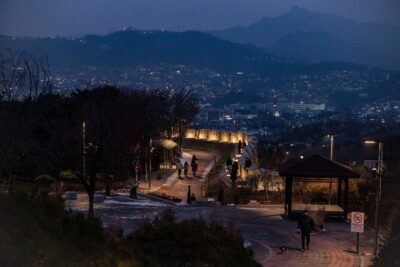
Seoul moonlight walking tour with local historian
Read our review →
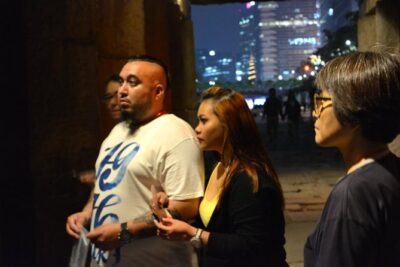
Evening Dark History, Folklore & Ghost Story Walking Tour
Read our review →
Dark Side of the City and Ghost Stories Walking Tour
Read our review →
Gangnam Walking Tour on Youth and Society in Seoul Korea
Read our review →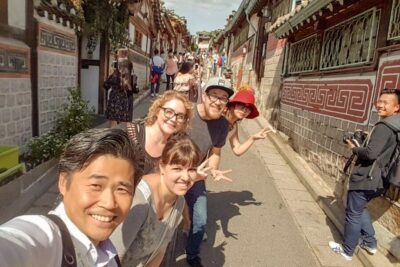
Gyeongbok Palace and Bukchon Hanok Walking Tour
Read our review →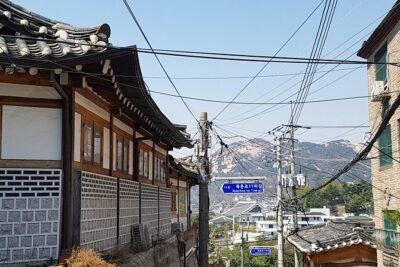
Best Walking Tour to Gyeongbok Palace Bukchon Hanok Village
Read our review →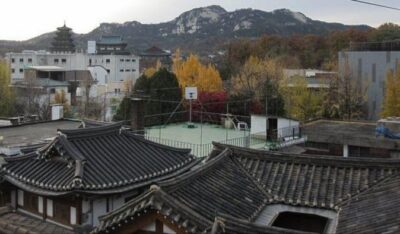
Highlights & Hidden Gems With Locals: Best of Seoul Private Walking Tour
Read our review →Browse the lists this tour appears in