
Reviewed · INSADONG TRADITIONAL QUARTER TOURS
Create a Handmade Traditional Korean Notebook in Insadong
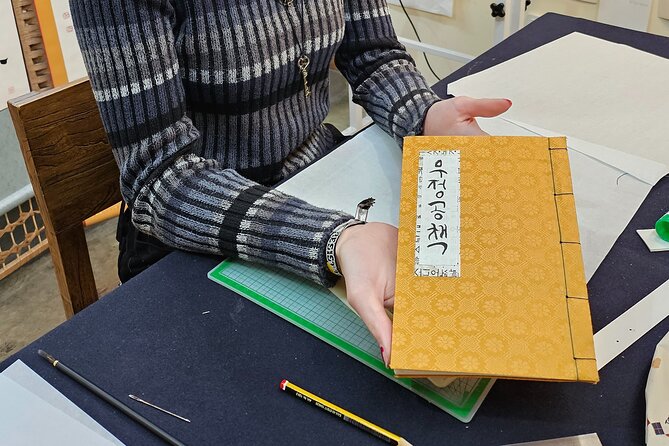
Making a notebook by hand is a fine way to meet Seoul beyond its palaces and shopping streets. In this 90-minute Insadong workshop, you fold 15 sheets of paper, stitch them between covers, and finish the book with your name written in Korean. The result is useful, light, and personal.
I like the small-scale instruction, since Jeongju Kim can guide you through each stage instead of leaving you to guess. I also like the Korean name-writing step. It turns a simple craft project into a keepsake tied to your time in Seoul. The main consideration is that this is a focused workshop, not a broad tour of Insadong, and its limited schedule may require planning ahead.
Key points to know before booking
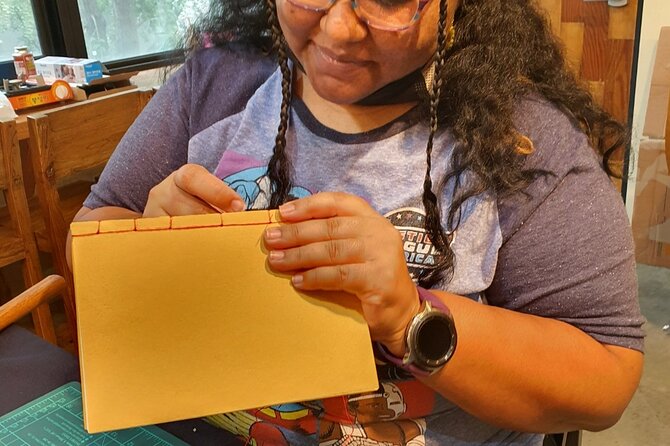
- Fold and stitch 15 sheets yourself: You learn the basic sequence rather than simply decorating a ready-made book.
- Choose your thread color: A small decision, but one that gives your notebook a personal touch.
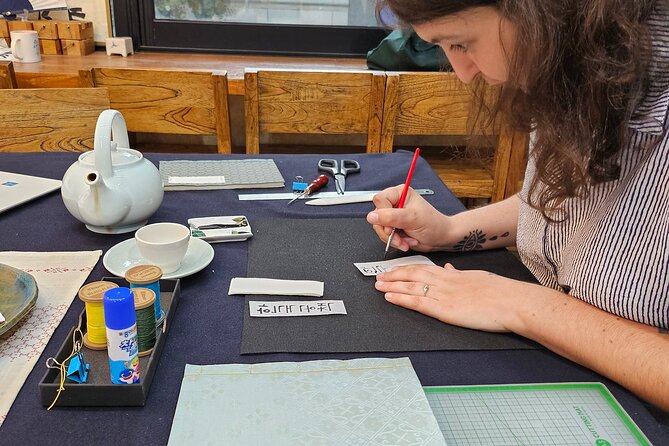
- Practice Korean brush lettering: You write your name in Korean characters for the notebook cover.
- Meet in Insadong: The class takes place at 3rd floor, 55-1 Insadong-gil, in one of Seoul’s best-known cultural districts.
- Private participation: Only your own group attends, even though the format is designed to offer close personal guidance.
- Take home a useful souvenir: The finished notebook can hold notes, sketches, tickets, and memories from your Seoul visit.
Folding paper into a Korean keepsake
The heart of this experience is simple: you make a notebook from individual materials rather than choosing one from a shop shelf. You begin by carefully folding specially selected paper. The process is quiet and methodical, with each fold helping the pages sit neatly inside the cover.
You then arrange 15 sheets between two covers. That number gives you enough room for travel notes without producing a bulky object. It also keeps the project manageable within the 90-minute session. If you have never made a book before, the work should feel approachable rather than like a formal art class.
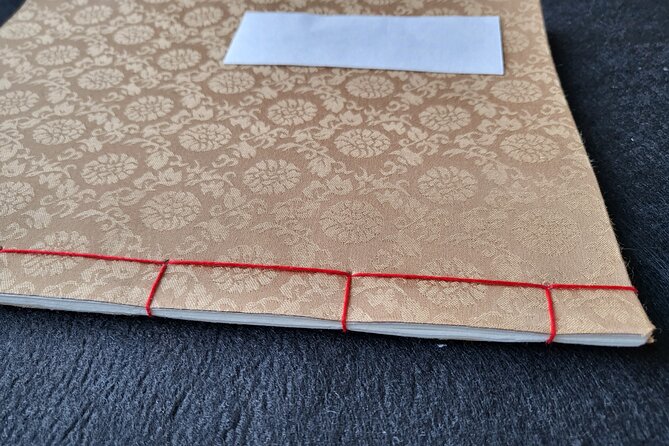
Next comes the binding. You learn how to make precise holes and use a needle and thread to secure the pages. This is the part that gives the notebook its structure and its handmade character. A machine-made souvenir may look tidy, but it cannot carry the small evidence of your own hands in the same way.
Jeongju Kim guides the steps in order, which matters here. Paper folding and sewing are easy to understand in theory, but a small error in spacing can affect the finished book. Direct instruction helps you correct the work as you go instead of discovering a problem at the end.
The class is described as a traditional Korean bookbinding experience, not a modern notebook-decorating session. You are learning a straightforward craft method connected to Korean paper and bookmaking practices. The workshop does not claim to cover every form of Korean bookbinding, so expect an introduction suited to beginners, not a long technical course.
More Insadong tours in Seoul:
- Best Seoul City Tour (Gyeongbokgung Palace,Insadong,Namsan Tower)
★ 5.0 · 1,647 reviews - Seoul Highlights: Gyeongbok Palace, Insadong & N Seoul Tower
★ 4.7 · 726 reviews - Korean Palace and Market Tour in Seoul Including Insadong and Gyeongbokgung Palace
★ 4.0 · 174 reviews
Writing your name in Korean characters
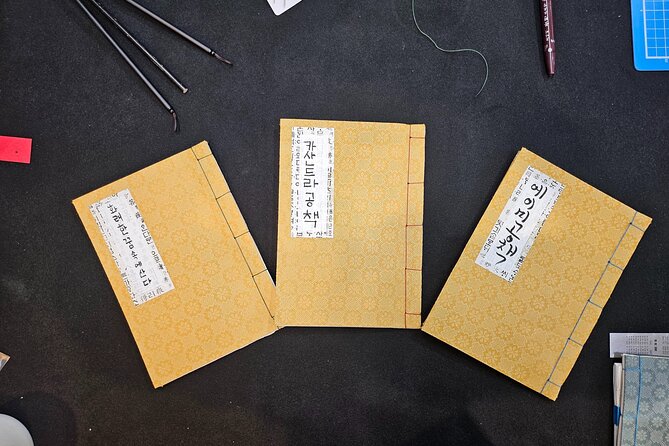
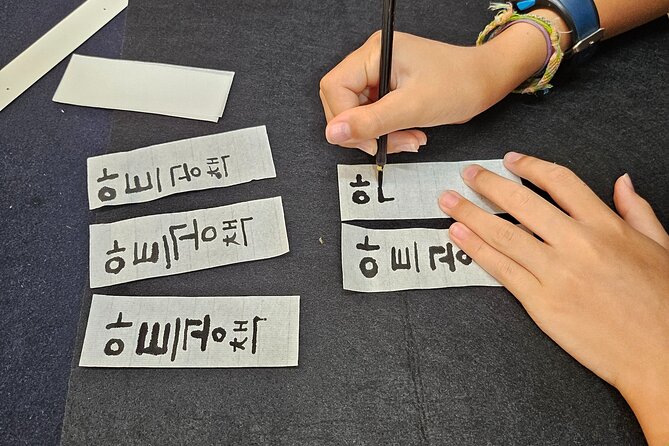
The most memorable part may come after the basic construction. You practice writing your name in Korean with a brush, then create a title piece for the cover.
This adds a cultural layer that paper and thread alone would not provide. You are not just making an object in Seoul. You are learning how your own name can appear in Korean characters and using that lettering as part of the design.
The brush practice also changes the pace. Bookbinding asks for careful hands and steady alignment. Brush lettering asks for a different kind of attention, with more focus on shape and movement. You do not need to arrive as a calligrapher. The point is to learn the form and produce a personal cover element under guidance.
One practical note: the available information does not specify how Korean names are translated or which lettering style you will use. Jeongju Kim helps you practice your name, but the exact presentation may depend on your name and the instruction during your session.
Your finished notebook can serve several purposes. Use it for Seoul memories, quick sketches, ticket stubs, or short notes about food and neighborhoods. Since it is easy to carry home, you do not need to worry about packing a large craft project.
What happens at Tongmoongwan
The activity lists Tongmoongwan as its stop, with the meeting point at 3rd floor, 55-1 Insadong-gil, Jongno District, Seoul. The workshop begins and ends at this same meeting point, so you do not need to arrange a separate return transfer.
The location puts the class in Insadong, a district closely associated with Korean art, crafts, galleries, and traditional culture. That setting makes sense for a bookbinding lesson. You can pair the workshop with a walk through the neighborhood before or after class, though the activity itself remains centered on making the notebook.
One review describes the studio as a lovely small space near Gyeongbokgung Palace. The stated meeting address is in Insadong, so you should follow the confirmed booking details rather than rely only on a general map reference. The useful point is that this is a studio-based activity near major central Seoul sights, not a trip outside the city.
The meeting point is near public transportation. That makes the 90-minute class easy to fit between other plans, especially if you are visiting Jongno, Gyeongbokgung Palace, or Insadong. Leave enough time to find the third-floor location. The available information does not provide a detailed walking route from a subway station, so check the address before setting out.
Because the activity returns to the starting point, you can continue your day in Insadong without having to retrieve belongings from another part of Seoul. That simple arrangement is helpful when you are building a busy sightseeing schedule.
The value of a $39.89 handmade souvenir
At $39.89 per person, this costs more than buying a notebook in a Seoul stationery shop. You are paying for the materials, the private session, the instruction, and the time needed to make the object yourself.
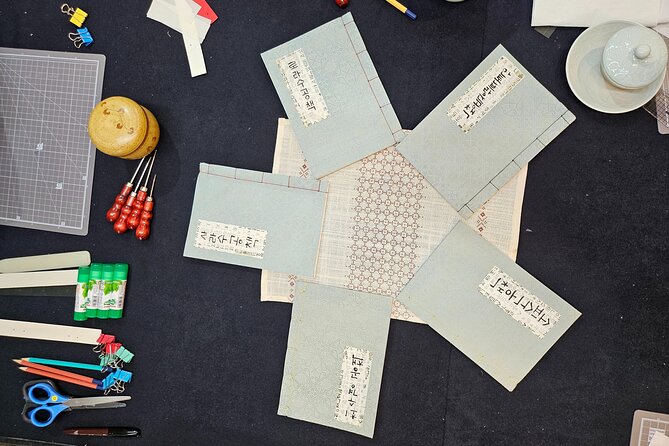
I think the price makes the most sense if you value participation more than the lowest possible souvenir cost. The finished notebook is not simply a product. You learn the folding, piercing, stitching, and brush-writing steps, then leave with something connected to those actions.
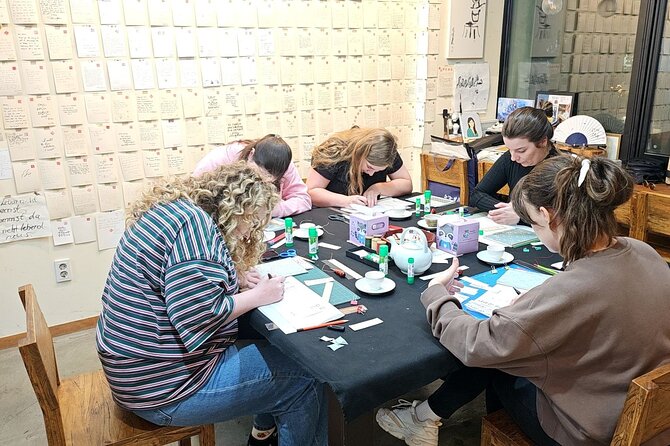
The private format also affects the value. Only your group participates, so the session is not a large public demonstration. That gives you a better chance to ask for help with the thread, page alignment, or Korean lettering. The description also presents the activity as a small-group experience with personal attention. In practical terms, this should suit people who want guidance without the pressure of a crowded class.
The value is less convincing if your main goal is to collect several inexpensive gifts. This experience produces one personal notebook, not a stack of ready-made souvenirs. It also takes about an hour and a half, so the cost includes time that could otherwise go toward another Seoul sight.
For a couple, the workshop has a clear appeal. One review calls it a cute, quick date, and the format gives two people a shared task without requiring advanced artistic skill. It can also work well for a solo visitor who wants an activity with a clear outcome and direct contact with a Korean craft artist.
A different kind of day out around Seoul:
- Best DMZ Tour Korea from Seoul (Red Suspension Bridge Optional)
★ 5.0 · 41,422 reviews - DMZ Tour: 3rd Tunnel, Option(Suspension Bridge, Boat) from Seoul
★ 5.0 · 21,373 reviews - DMZ tour south Korea from Seoul (NK experience hall, defector)
★ 5.0 · 20,599 reviews - Seoul: DMZ Tour with Optional Suspension Bridge
★ 4.8 · 5,277 reviews
Why the private format matters
The booking information says this is a private tour or activity, with only your group taking part. That detail is worth noticing because craft classes can feel very different when the instructor is splitting attention among many people.
You can work at your own pace within the planned sequence. If you need another demonstration of how to thread the book, you can ask. If your Korean brush lettering needs correction, you can receive help without turning the moment into a public performance.
Private does not necessarily mean an elaborate one-to-one masterclass. The session still lasts about 90 minutes and follows a set project. Think of it as a personal workshop with a clear beginning, middle, and end.
The format suits couples, families, and small groups who want to make the same type of souvenir together. It may be less suitable if you prefer watching an expert work while you take photographs. The point is to use your own hands, so expect some concentration and participation.
The activity is for people with reservations only. You cannot simply walk in from the Insadong street and join. Confirmation is provided at booking, which gives you a firm place but also means you should arrange it before arriving at the studio.
A close look at the 90-minute sequence
The timing is short enough to fit into a sightseeing day, but long enough for several distinct stages.
First comes the paper preparation. You fold the selected sheets with care. This stage may feel slow at first, but neat folds help the rest of the notebook come together. The process gives you an early chance to settle into the work.
Then you choose a thread color. It is a small design choice, yet it gives the notebook a visible personal detail. The information does not list the available colors, so you will choose from the options offered during the session.
Next you arrange the pages and covers. The 15 sheets go between two covers. You learn how to keep the stack aligned before making the holes. This is where patient instruction is especially useful.
After that you bind the book. Using a needle and thread, you secure the pages through carefully placed holes. The binding technique is the practical skill at the center of the workshop. Once completed, it turns loose paper into a durable little book.
Finally, you work on the Korean name and title piece. You practice your name with a brush and prepare the cover decoration. This final stage makes the souvenir distinctly yours, even if everyone in your group follows the same basic method.
The precise time spent on each stage is not provided. Some groups may move quickly, while others may need more help with stitching or lettering. The fixed 90-minute estimate gives you a useful planning guide, but do not schedule another activity at the exact minute of the stated finish.
What the high praise tells you
The experience has a 4.9 rating from 10 reviews, with 100 percent recommending it. That is a small review base, so I would not treat the number as proof that every session will be perfect. Still, the pattern is clear: the teaching and the finished notebook receive the strongest praise.
One detailed comment highlights clear instructions and says the notebooks came out well. That is important because the project depends on a sequence of small actions. If the guide explains each step plainly, beginners can focus on the craft instead of worrying about making a costly mistake.
Another comment praises the teacher, referred to as Calli, as kind and effective, and says the notebook turned out wonderfully. The experience identifies Jeongju Kim as the host. If you see the name Calli in communication about the class, it appears to refer to the teacher associated with the workshop, but confirm the host details in your booking message if the distinction matters to you.
The praise is not mainly about a grand setting or a long cultural lecture. It centers on the human part of the class: clear teaching, a pleasant instructor, and a satisfying result. That makes this a good choice if you care more about making something successfully than about hearing a large amount of background information.
Who will enjoy this workshop most
I would choose this activity for you if you like practical cultural experiences, small creative projects, and souvenirs with a story. You do not need to be experienced with paper crafts. The steps are taught during the session, and most participants can take part.
It is especially well suited to:
- Couples looking for a short shared activity
- Solo visitors who want a structured creative break
- Families or small groups who can reserve together
- Anyone interested in Korean paper, bookbinding, or brush lettering
- People who prefer a useful keepsake over a decorative trinket
It may not suit you if you want a full tour of Insadong, a long history lecture, or a completely passive demonstration. It also may not be ideal if your schedule is uncertain, since only people with reservations can attend and changes made within 24 hours are not accepted.
The activity is near public transportation, and most people can participate. The supplied details do not specify wheelchair access, child age limits, language options, or the exact number of people allowed in each private booking. Ask the provider if any of those points affect your plans.
How to fit it into a Seoul day
The workshop works well as part of a Jongno day. You can visit Gyeongbokgung Palace and then head toward Insadong, or explore Insadong before the class and continue browsing afterward.
Do not treat the notebook lesson as a replacement for walking around the district. The class takes place indoors and focuses on the craft. Insadong supplies the wider context, with its cultural shops and traditional atmosphere, while the workshop gives you a direct activity within that setting.
The fixed start and end point keep planning simple. Still, arrive with enough time to find the third floor and settle in. Mobile ticketing makes it easier to keep the reservation on your phone, but you should have the meeting address available before you leave your hotel.
Wear something that lets you work comfortably with paper, thread, a needle, and a brush. No special clothing is listed as required. The materials are provided as part of the project, though the exact paper, cover styles, and thread selection are not specified in advance.
Free cancellation is available if you cancel at least 24 hours before the local start time. A cancellation inside that window is not refundable, and late changes are not accepted. That policy is reasonable for a private appointment, but it makes an early decision important.
Should you book Create a Handmade Traditional Korean Notebook in Insadong?
Book it if you want a hands-on Seoul memory rather than another purchased souvenir. The strongest reasons are the personal instruction from Jeongju Kim, the chance to stitch the notebook yourself, and the Korean brush lettering that finishes the cover.
At $39.89, it is not the cheapest way to get a notebook. It is a fair price for a private, guided craft session that produces something you can use and carry home. The 4.9 rating from 10 reviews and the repeated praise for clear teaching support the choice, though the small number of ratings calls for sensible expectations.
Skip it if your Seoul schedule is packed, you dislike careful handwork, or you want a broad walking tour of Insadong. For everyone else, this is a compact and meaningful activity, especially for a couple, a small group, or a solo visitor who wants to slow down for an hour and make a souvenir with a personal mark.
FAQ
Where does the notebook-making experience take place?
It takes place at 3rd floor, 55-1 Insadong-gil, Jongno District, Seoul, in Insadong.
How long does the activity last?
The experience lasts approximately 1 hour and 30 minutes.
Where does the activity end?
It ends back at the meeting point.
Who leads the workshop?
The experience identifies Jeongju Kim as the host and Korean craft artist. One piece of feedback refers to the teacher as Calli.
What will I make during the class?
You will make a handmade traditional Korean notebook using 15 folded sheets, two covers, thread, and needle binding.
Can I personalize the notebook?
Yes. You choose a thread color and practice writing your name in Korean with a brush. You then make a title piece for the cover.
Is this a private activity?
Yes. Only your own group participates in the private tour or activity.
Do I need to reserve in advance?
Yes. Only people with reservations can attend the workshop. Confirmation is provided at the time of booking.
Can I cancel for a full refund?
Yes, if you cancel at least 24 hours before the experience start time. Cancellations made less than 24 hours before the start are not refunded, and late changes are not accepted.
Just added around Seoul
- Your Personal Seoul Photographer!★ 4.1 · 15 reviews
- From Seoul: Hwacheon Ice Fishing and Lighting Festival Tour★ 4.5 · 4 reviews
- You’re Invited to Our Home in Seoul: The Only Cooking Class!★ 5.0 · 8 reviews
- Unique Native Experience : Han River Picnic, Board game, BBQ★ 5.0 · 3 reviews
- Seoul: Gangneung BTS K-Pop & K-Drama Filming Locations Tour★ 4.6 · 14 reviews
- 2-Hour Private Kayaking and Paddleboarding Experience in Hanriver★ 5.0 · 3 reviews
- Yun Korean Cooking Class in Seoul★ 5.0 · 6 reviews
- Day Trip to Yongin Daejanggeum and Korean Folk Village from Seoul★ 4.0 · 9 reviews
Insadong Traditional Quarter Tours, compared.

Best Seoul City Tour (Gyeongbokgung Palace,Insadong,Namsan Tower)
Read our review →
Seoul Highlights: Gyeongbok Palace, Insadong & N Seoul Tower
Read our review →
Korean Palace and Market Tour in Seoul Including Insadong and Gyeongbokgung Palace
Read our review →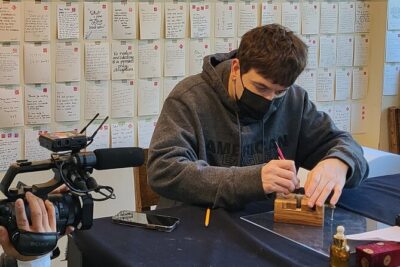
Carve Your Personal Korean Stone Seal with Jeongju in Insadong
Read our review →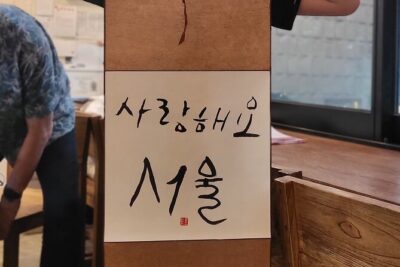
Write a Meaningful Korean Calligraphy Scroll in Insadong
Read our review →
Gwangjang market Netflix Food Walking Tour with Insadong
Read our review →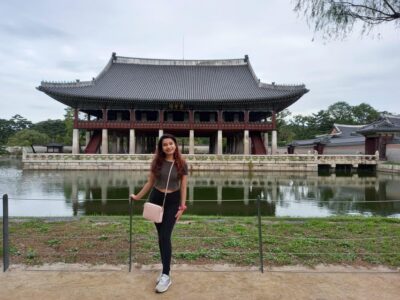
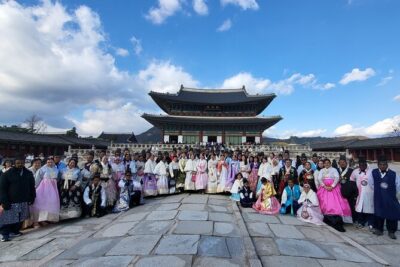
Walking Tour with Gyeongbokgung Palace, Bukchon, Insadong
Read our review →Browse the lists this tour appears in