
Reviewed · SEOUL WALKING TOURS
(Closed) Korea’s White House Walking Tour Blue House
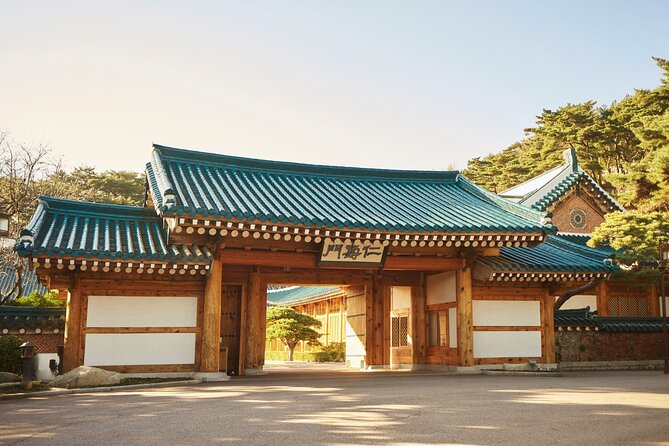
For decades, Seoul’s Blue House, or Cheong Wa Dae, was closed to ordinary people. It served as the president’s office and home, a guarded compound known mostly through news photos and official ceremonies. This walking tour takes you through the former presidential grounds while access is available, with a guide explaining the buildings, politics, architecture, and changing role of the site.
I like the small nine-person limit, which makes it easier to ask questions and keep up with the guide. I also like the way the route covers more than the famous blue-roofed main building. You’ll see the former press center, the presidential residence, formal reception spaces, and several traditional Korean structures.
The main drawback is the price: $199 per person for about two and a half hours is a serious spend in Seoul. The experience also depends on access continuing as described, since the tour information says public entry ends in June. Check availability carefully before planning your day around it.
Key points to know before booking
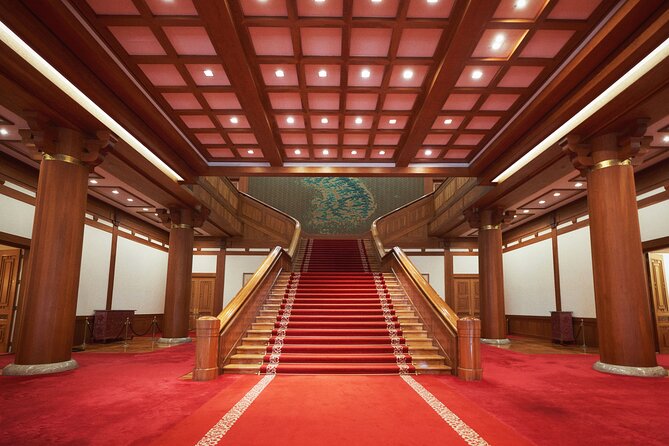
- A rare look inside Korea’s former presidential compound: The Blue House was closed to the general public for more than 70 years.
- Groups are limited to nine people: This suits you if you prefer a personal walk rather than a large sightseeing group.
- Jungho is the named English-speaking guide: His clear explanations, strong conversational English, and storytelling are central to the experience.
- Seven stops cover politics, architecture, and daily life: The route includes the reception hall, offices, residence, pavilions, and press center.
- The tour begins at Gyeongbokgung Station at 10 a.m.: It ends back at the meeting point, with no hotel pickup or drop-off.
- The experience is expensive but focused: You are paying for reserved entry, a licensed guide, and context that would be difficult to get from signs alone.
Why the Blue House matters
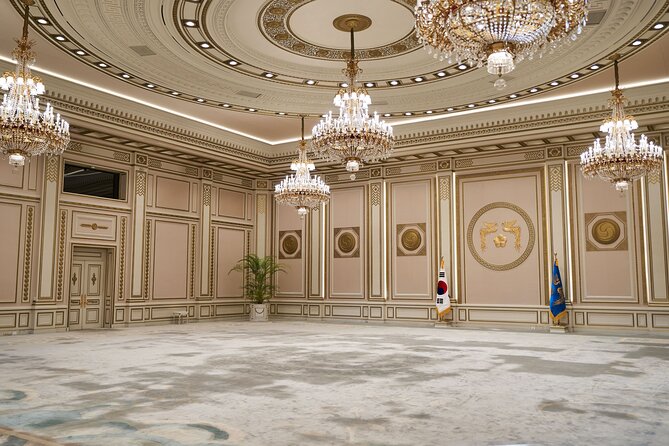
The Blue House was not just another government building. It was the center of South Korean presidential life for more than 70 years, serving as both workplace and residence. Presidents met foreign leaders there, hosted formal dinners, spoke to the press, and made decisions that shaped modern Korea.
That history gives the visit more weight than a standard sightseeing stop. You are not simply looking at a handsome roof and taking a few photos. You are walking through rooms and grounds connected with diplomacy, national policy, media announcements, and presidential family life.
The tour is especially useful if you have been following Korean politics or want more background on how the country is governed. It also works for architecture fans, since the compound combines modern official buildings with traditional Korean pavilions and timber structures.
The timing matters. The description says the tour is offered before public access ends in June. Since the experience is marked closed in the supplied information, do not assume you can book it today. Treat this as a review of the tour format and confirm that a date is active before paying.
More walking tours in Seoul:
- Seoul moonlight walking tour with local historian
★ 5.0 · 940 reviews - Seoul: Nighttime Hidden Gems Walking Tour
★ 5.0 · 775 reviews - Seoul: Evening Dark History, Folklore & Ghost Story Walking Tour
★ 5.0 · 593 reviews
Meeting at Gyeongbokgung Station
The tour starts at Gyeongbokgung Station in Seoul at 10 a.m. You are responsible for reaching the meeting point, and the tour does not include hotel pickup or transportation back to your accommodation.
This is a sensible starting area because the Blue House is closely tied to Seoul’s royal and government districts. Still, give yourself enough time to find the exact meeting spot. Clear arrival instructions matter here, and guide Jungho has been praised for sending detailed directions before the tour.
The activity lasts about 2 hours and 30 minutes and ends back at the starting point. That makes it easy to add another nearby plan afterward, although you should not schedule anything too tightly. A walking tour through a working-era presidential compound can involve pauses, security procedures, and questions.
The group cap of nine is one of the strongest practical features. You will not be lost behind a crowd, and the guide can adjust explanations to the group. It also means the date may fill well ahead of time. The typical booking lead time is about 38 days, so last-minute plans may be difficult.
Yeongbingwan, the formal welcome hall
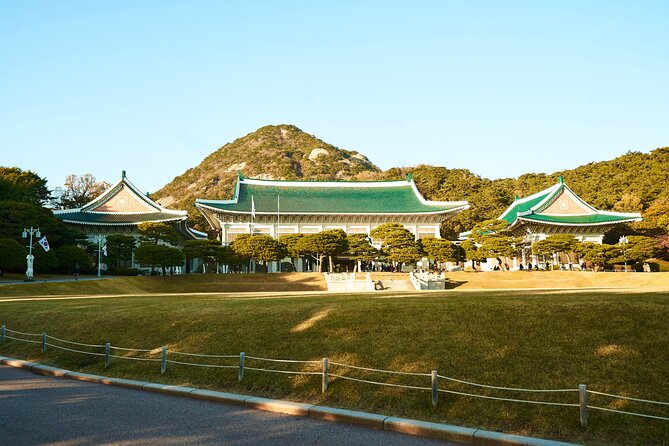
The first stop is Cheong Wa Dae Yeongbingwan, the building used to receive important foreign visitors. Presidents held meetings, dinners, and major events here, making it the formal face of Korean diplomacy.
This is a useful opening stop because it shows how the compound presented Korea to the outside world. The building has a modern appearance, but its purpose is ceremonial and political. Your guide can help connect the rooms and exterior design with the way presidents hosted foreign leaders.
The scheduled visit is about 10 minutes. That is enough for an introduction, but not a long interior tour. Keep your expectations realistic: the value is in understanding the building’s role, not spending an hour examining every room.
The blue-roofed main building
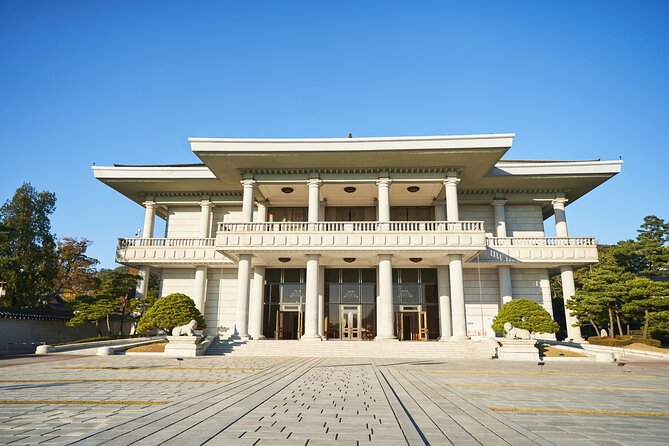
The best-known stop is the main Blue House, or Cheong Wa Dae. This was where the president worked and held important meetings. Its distinctive blue roof became a national symbol of the Korean government.
The building combines modern official design with Korean visual references. The roof is the feature most people recognize, but the guide’s explanation gives it more meaning. You will hear how the building functioned as the center of presidential work rather than treating it as a photo stop alone.
The listed time here is about 20 minutes. That is enough to take in the exterior, hear the main stories, and ask questions. If you want a long interior visit, check the exact access rules before booking, since the information provided does not promise access to every room.
A different kind of day out around Seoul:
- Best DMZ Tour Korea from Seoul (Red Suspension Bridge Optional)
★ 5.0 · 41,422 reviews - DMZ Tour: 3rd Tunnel, Option(Suspension Bridge, Boat) from Seoul
★ 5.0 · 21,373 reviews - DMZ tour south Korea from Seoul (NK experience hall, defector)
★ 5.0 · 20,599 reviews - Seoul: DMZ Tour with Optional Suspension Bridge
★ 4.8 · 5,277 reviews
The former presidential office
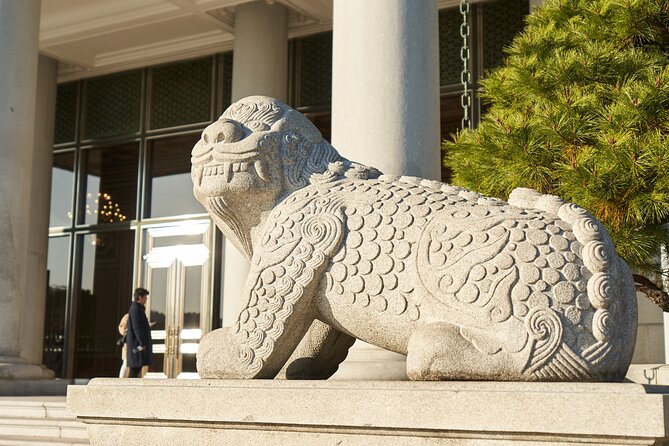
Another 20-minute stop brings you to the area where the old main presidential office once stood, before the current Blue House building was constructed.
This part of the visit helps you see that the compound changed over time. Korean presidents worked in this area and held major meetings here, so it adds a layer that you would miss if you only visited the best-known building.
I find this kind of stop valuable because empty or altered spaces can be hard to understand on your own. Without explanation, you might see an open area and move on. With Jungho’s background on Korean history and presidential use, the location becomes part of a longer story.
The presidential residence
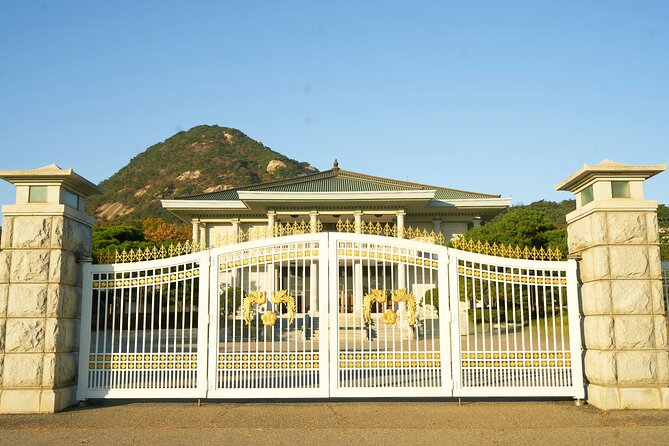
The presidential residence was separate from the office, giving the president and family a more private place to live. The tour allows about 10 minutes here.
This stop changes the mood of the tour. The office buildings are formal and public. The residence offers a glimpse of the private side of presidential life, with bedrooms, living areas, and trees around the house.
Do not expect a full home tour based on the supplied details. The focus is on the purpose of the residence and its separation from the work of government. That distinction is worth noting because it shows how the compound was organized around both public duty and family privacy.
Chimnyugak House and its quiet pavilion
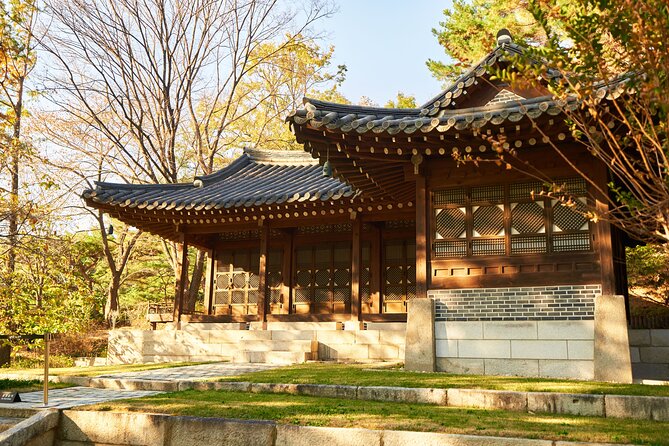
At Chimnyugak House, you will see a small traditional pavilion surrounded by trees. The tour allows about 10 minutes for this stop, including a short break and an explanation of the architecture and history.
This is one of the route’s pleasant contrasts. After the formal halls and presidential offices, a smaller traditional structure gives you a calmer view of the grounds. The pavilion also helps explain how Korean design was used within an official compound.
The stop is brief, so think of it as a pause with context rather than a major attraction on its own. You may appreciate it most if you enjoy details of building style, setting, and the way older forms were retained beside modern government facilities.
Sangchunjae and traditional Korean design
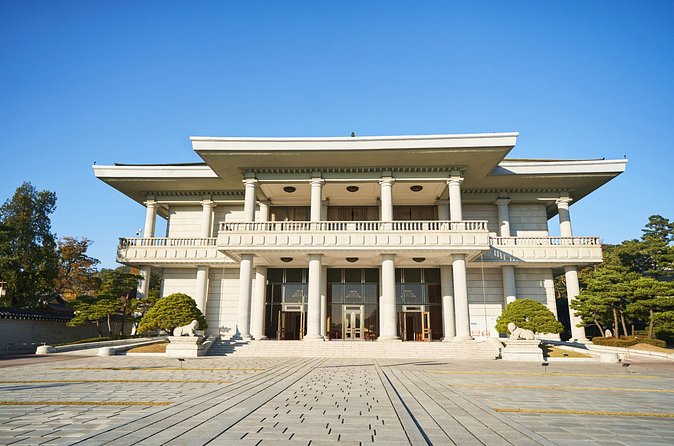
Sangchunjae is described as one of the most beautiful traditional buildings on the grounds. It was used for special guests and quiet meetings, and the tour includes about 10 minutes around its wooden structure.
This is where the Blue House feels less like a single modern government complex and more like a collection of spaces with different jobs. Sangchunjae shows how traditional architecture could serve diplomatic and official purposes without looking like a standard office.
The guide’s role is important here. A short walk around a wooden building can be pleasant, but the story of who used it and why gives the stop purpose. If architecture is your main interest, ask Jungho about the contrast between Sangchunjae and the modern presidential buildings.
Chunchugwan, where presidents faced the press
The final listed stop is Chunchugwan, the former press center. It is where reporters from Korea and other countries gathered for official presidential announcements.
The visit here lasts only about five minutes, but the political meaning is strong. This was the place where the administration presented decisions to the public and international media. It helps connect the quiet buildings you have just seen with the public statements that came from them.
Because the stop is short, you will want to listen closely. It is less about wandering through a large building and more about understanding the role of the press in presidential government.
Jungho’s guiding style
The guide named in the supplied information is Jungho, a licensed English-speaking guide. His strengths are clear conversational English, historical explanation, and storytelling that brings the buildings together.
The most useful detail is that he does not simply point out structures. He explains architecture and political history, answers questions, and keeps the walk personal. He has also been described as sending clear meeting instructions and, on one occasion, walking a participant back to the Metro station after the tour.
That extra help is not listed as a formal inclusion, so do not assume it is guaranteed. Still, it suggests a guide who pays attention to the practical side of the experience, not just the prepared speech.
Jungho’s approach seems best suited to you if you like asking questions. The small group gives you room to discuss Korean history, current political changes, and the meaning of the site. If you prefer to move silently and take photos, you may find the commentary more than you need.
Is $199 a fair price?
At $199 per person, this is not a budget activity. Seoul offers many inexpensive cultural sights, and the Blue House grounds may be accessible through other arrangements when public access is open.
The price makes more sense if three things matter to you:
- You want a small group rather than a crowded tour.
- You need English explanations of political and historical details.
- You are visiting during a limited period when access may soon end.
You are paying for reserved entry and a licensed guide, not just admission. The guide is the main reason to consider it. Without context, you can see the blue roof, offices, and pavilions, but you may not understand how they fit together.
I would not call this good value for every Seoul visitor. It is better value for someone with a strong interest in Korean politics, modern history, architecture, or unusual access. If you are mainly looking for a low-cost photo stop, the price is hard to defend.
Who should book this walk?
This tour suits first-time visitors who want a guided introduction to Korea’s government and recent history. It also works well for repeat visitors who have already seen Seoul’s palaces and want a different side of the city.
The experience is a good match for:
- People who enjoy political and historical context
- Visitors who prefer small groups
- English-speaking travelers who want detailed explanations
- Couples, families, and friends who can manage a 2.5-hour walking activity
- Visitors interested in both modern government buildings and traditional Korean design
Most people can participate, and service animals are allowed. The tour is near public transportation, but the information does not provide a detailed accessibility assessment. If you have specific mobility needs, confirm the walking route and entry conditions before booking.
Booking, cancellation, and timing tips
Confirmation is provided when you book. Free cancellation is available if you cancel at least 24 hours before the local start time. Cancellations or changes made inside that window are not refunded or accepted.
Because the tour starts at 10 a.m. and runs for about two and a half hours, plan your next activity for the afternoon. The route ends at the meeting point, so you can continue sightseeing from there.
Most important, confirm that the tour is operating on your chosen date. The supplied title marks it as closed, while the tour description refers to access ending in June. That conflict is more important than any packing tip.
Should you book the Blue House tour?
Book it if you want a rare, guided look at Korea’s former presidential home and office, and if the cost fits your budget. The small group, reserved entry, seven-part route, and Jungho’s English storytelling give the visit more substance than a quick walk past the gates.
Skip it if you are watching every won, dislike political history, or only want to see the famous roof. Also skip it until you confirm current availability, since public access appears to be time-limited and the experience is marked closed in the supplied information.
For the right person, this is a focused and memorable Seoul walk. It gives you the places, but more importantly, it explains what happened there and why those buildings mattered.
FAQ
How long does the Blue House walking tour last?
The tour lasts approximately 2 hours and 30 minutes.
Where does the tour begin?
It begins at Gyeongbokgung Station in Seoul.
What time does the tour start?
The scheduled start time is 10 a.m.
Where does the tour end?
The activity ends back at the meeting point.
How many people can join the tour?
The maximum group size is nine travelers.
Is an English-speaking guide included?
Yes. A licensed English-speaking tour guide is included.
Does the tour include hotel pickup and drop-off?
No. Hotel pickup and drop-off are not included.
What is included in the tour price?
The price includes reserved entrance to Cheong Wa Dae, also known as Korea’s White House, and a licensed English-speaking guide.
Can I cancel for a full refund?
Yes, if you cancel at least 24 hours before the experience’s local start time. Cancellations made less than 24 hours in advance are not refunded.
Just added around Seoul
- Your Personal Seoul Photographer!★ 4.1 · 15 reviews
- From Seoul: Hwacheon Ice Fishing and Lighting Festival Tour★ 4.5 · 4 reviews
- You’re Invited to Our Home in Seoul: The Only Cooking Class!★ 5.0 · 8 reviews
- Seoul: Gangneung BTS K-Pop & K-Drama Filming Locations Tour★ 4.6 · 14 reviews
- Unique Native Experience : Han River Picnic, Board game, BBQ★ 5.0 · 3 reviews
- 2-Hour Private Kayaking and Paddleboarding Experience in Hanriver★ 5.0 · 3 reviews
- Yun Korean Cooking Class in Seoul★ 5.0 · 6 reviews
- Day Trip to Yongin Daejanggeum and Korean Folk Village from Seoul★ 4.0 · 9 reviews
Seoul Walking Tours, compared.
Seoul moonlight walking tour with local historian
Read our review →
Evening Dark History, Folklore & Ghost Story Walking Tour
Read our review →
Dark Side of the City and Ghost Stories Walking Tour
Read our review →
Gangnam Walking Tour on Youth and Society in Seoul Korea
Read our review →
Gyeongbok Palace and Bukchon Hanok Walking Tour
Read our review →
Best Walking Tour to Gyeongbok Palace Bukchon Hanok Village
Read our review →
Highlights & Hidden Gems With Locals: Best of Seoul Private Walking Tour
Read our review →Browse the lists this tour appears in