
Reviewed · BUKCHON HANOK VILLAGE TOURS
Play Gayageum in Hanbok Cultural Experience in Bukchon
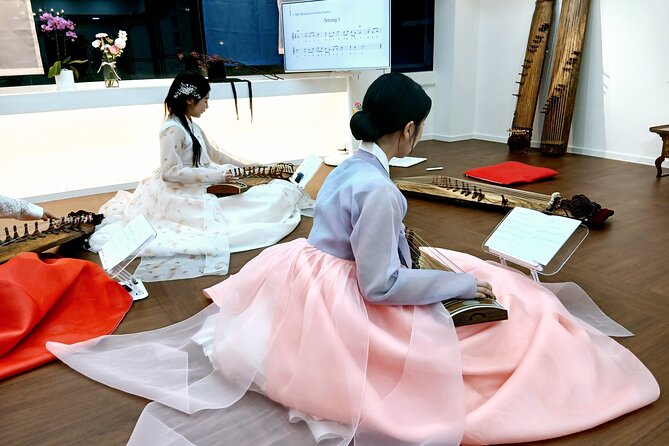
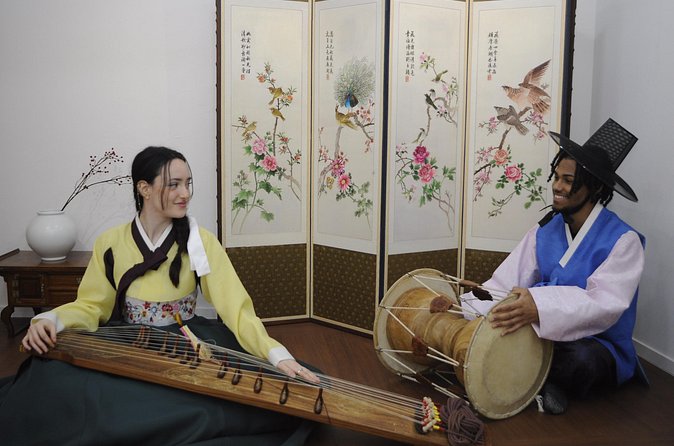
The best part of this Bukchon activity is that you do not just watch Korean culture from the sidelines. You put on a hanbok, sit before a gayageum, and learn a simple folk song on a traditional 12-string instrument with more than 1,500 years of history. The lesson takes place at Beautiful Gayageum, near Gyeongbokgung and Samcheong-dong.
I like two things right away: the instructor makes the lesson friendly enough for complete beginners, and the printed photo keepsake gives you something tangible to take home. The small, private format also suits couples, families, and solo visitors better than a large group demonstration.
The main consideration is the price, $72.19 per person, for about 80 minutes. That is not a bargain if you only want a quick hanbok photo, but it is fairer when you count the instrument lesson, outfit, photo session, private setting, and printed keepsake.
Key points to know before booking
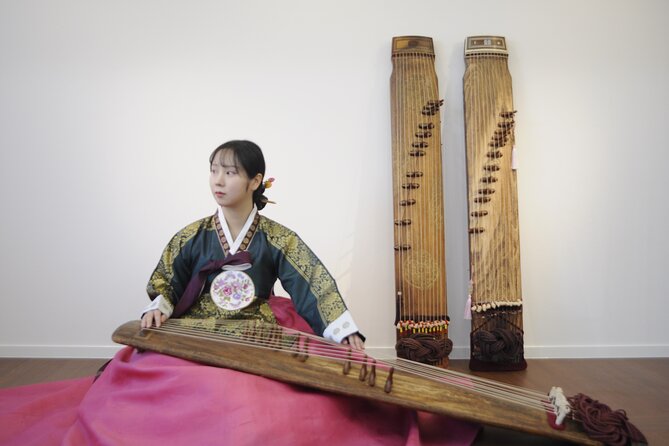
- You play a real gayageum: Learn a Korean folk song on the traditional 12-string zither, even with no previous musical training.
- Hanbok is part of the lesson: You wear traditional Korean clothing while learning and during the photo session.
- English instruction is provided: Japanese and Traditional Chinese subtitles are also available.
- The setting is close to major sights: Beautiful Gayageum is at 43 Bukchon-ro 5ga-gil, near Gyeongbokgung and Samcheong-dong.
- The activity lasts about 80 minutes: The lesson ends where it begins, with no separate transport between stops.
- It is a private activity: Only your own group takes part, which makes the lesson more personal and less intimidating.
Playing gayageum near Gyeongbokgung
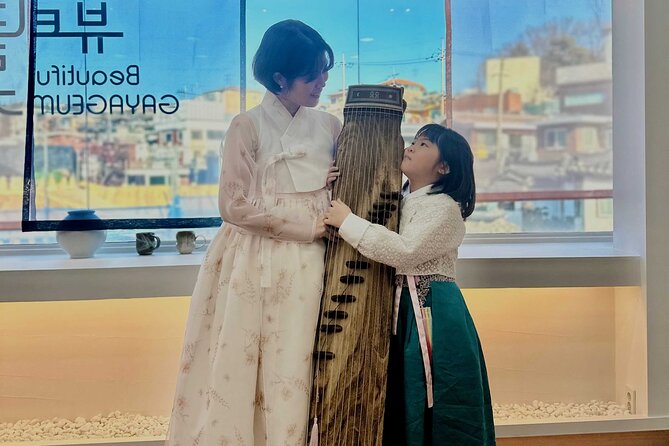
The gayageum is a Korean zither with 12 strings, played by plucking the strings with the fingers. Its long wooden body and clear, ringing tone make it one of Korea’s most recognizable traditional instruments.
At Beautiful Gayageum, you get to handle the instrument rather than simply see one behind glass. That changes the experience. You notice the spacing of the strings, the hand movements, and the care needed to produce a clean note. Even a basic melody gives you a better sense of how Korean music is made.
The studio is on the third floor at 43 Bukchon-ro 5ga-gil in Jongno District. Its hanok-style music hall provides a calm setting close to some of Seoul’s most visited sights. You can pair the activity with time around Gyeongbokgung, Bukchon, or Samcheong-dong, though the lesson itself takes place at the meeting point and does not include a walking tour.
The location is useful for a full day in northern central Seoul. You can plan the lesson before or after palace sightseeing, but leave yourself enough time to reach the studio and find the correct building. The activity begins and ends at the same address.
More Bukchon and hanok village tours in Seoul:
- Seoul: Gyeongbok Palace, Bukchon Village, and Gwangjang Tour
★ 4.9 · 2,321 reviews - Seoul City Sightseeing Tour Including Gyeongbokgung Palace, N Seoul Tower, and Namsangol Hanok Village
★ 5.0 · 1,423 reviews - Seoul: Gyeongbok Palace, Bukchon Village, and Gwangjang Tour
★ 5.0 · 1,044 reviews
What happens during the 80-minute lesson
The experience is built around a short, beginner-friendly lesson. You do not need to know how to read music or play an instrument. Easy sheet music helps you follow the melody, while the instructor guides you through the basic process.
Expect the time to center on learning a Korean folk song. The supplied information does not name the song, so you should not book this expecting a particular famous tune. The useful point is that the program gives you a clear musical goal: by the end, you work toward playing a complete melody rather than only trying a few random notes.
The instructor has experience teaching first-time players, and the lesson is designed to reduce the nerves that can come with picking up an unfamiliar instrument. One published comment describes the instructor as kind and fun, with enough teaching experience to help a person who had never played an instrument before. That is important here. A gayageum looks simple at first, but producing a pleasant sound takes some hand control.
Your pace may depend on the group. A solo participant can focus closely on the instructor, while a family or couple will have a more shared activity. Since the booking is private, you are not placed with unrelated participants. That makes it easier to ask questions, repeat a passage, or take a moment if the notes do not come easily.
The lesson is not a formal concert or a full course in Korean music. It is a compact introduction. You learn enough to understand the basic feel of the gayageum and to perform a simple piece in the studio.
Wearing hanbok while you play
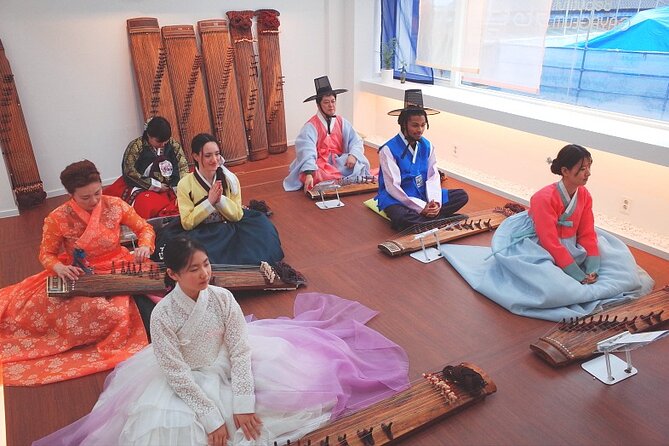
Hanbok is included in the gayageum lesson, not offered as a separate add-on. The clothing matters because it changes the mood of the activity and makes the photo session more meaningful.
You wear the traditional outfit while learning and posing. This creates a direct connection between the instrument, the setting, and Korean visual culture. Instead of taking a standard costume photo and moving on, you spend the session doing something connected to the country’s musical traditions.
The exact colors and styles available are not specified, so you should not assume a particular design or palace-style photo setup. The confirmed benefit is that hanbok is supplied for the lesson and photo session at Beautiful Gayageum.
For families, the clothing can make the activity especially memorable. Children may enjoy the visual change and the chance to try an unusual instrument. Adults who are less interested in a standard photo rental get a stronger reason to dress up, since the outfit is part of a guided cultural activity.
If you are visiting Bukchon mainly for architecture and street views, this gives you a quieter indoor break. It also avoids the feeling of simply passing through a historic neighborhood with a camera. You spend time learning something associated with Korean culture while dressed for the occasion.
The photo session and printed keepsake
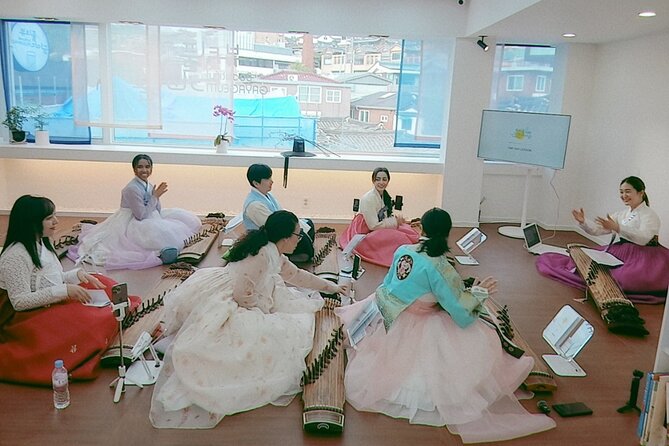
After the music lesson, you have a photo session in the hanok-style music hall. The gayageum remains part of the visual story, so the pictures capture more than a costume alone.
A printed photo is included. I consider this one of the stronger practical touches in the package. Digital pictures can disappear into a phone gallery, but a physical print gives you a small souvenir from the day.
The supplied details do not promise a specific number of poses or prints, nor do they describe professional studio lighting. Keep your expectations focused on a simple photo record of the experience. You will likely want to arrive ready to enjoy the moment rather than treat this as a formal portrait appointment.
The timing also works well. You first learn enough about the instrument to look more comfortable with it, then take pictures. That order is better than posing with an unfamiliar gayageum before you have touched it.
For a couple, the photos can mark a shared activity. For a solo visitor, they provide a record of an experience that is hard to recreate at home. For a family, the printed image can become the most immediate souvenir for children.
More hanbok experiences in Seoul:
- Seoul: Hanbok Rental with Gyeongbokgung Palace Entry
★ 4.6 · 611 reviews - Small Group Seoul Highlight Tour opt. Hanbok & Tea Ceremony
★ 5.0 · 318 reviews - Seoul: Gyeongbok Palace with Gigibebe Hanbok Rental
★ 4.5 · 289 reviews - Hanbok Photoshoot and History Tour at Gyeongbokgung Palace
★ 5.0 · 276 reviews
English instruction and language support
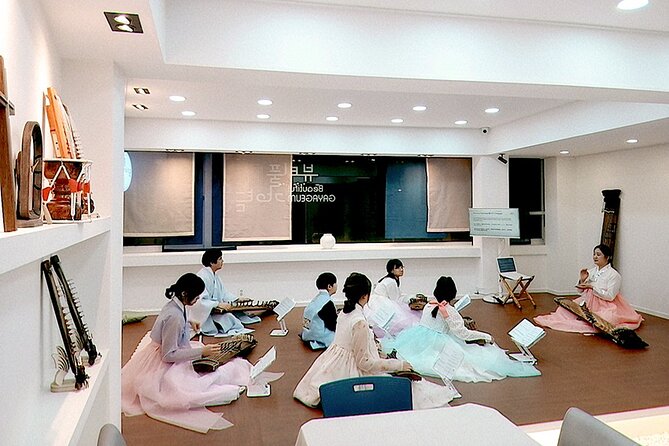
English instruction is provided, which makes this activity practical for English-speaking visitors who know nothing about the gayageum. You do not need to arrive with musical vocabulary or prior experience.
Japanese and Traditional Chinese subtitles are also available. The supplied information does not explain exactly where those subtitles appear, so you should treat them as additional language support rather than a separate translated lesson. Still, they may help members of a mixed-language group follow the guidance more easily.
The instructor’s teaching style matters more than a long lecture in an activity like this. You need clear demonstrations, simple directions, and patience while your hands adjust to the strings. The available feedback points to a friendly instructor who helped a first-time player feel comfortable.
Because this is a private activity, the instructor can work with your group’s pace. That does not mean every participant will master the instrument in 80 minutes. It does mean you are not trying to keep up with a room full of strangers.
Why the private format matters
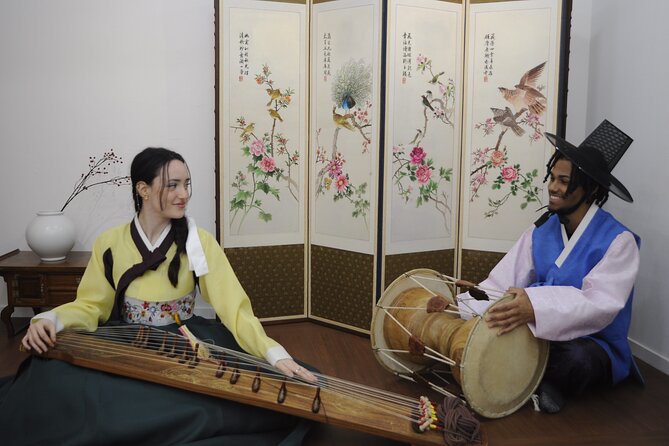
Only your group participates. That is a useful feature for anyone who feels shy about making mistakes in front of a crowd.
Traditional instruments can look intimidating when a skilled performer handles them. A private lesson gives you room to play a wrong note, ask for another explanation, and try again without an audience. It also lets a family or couple share the experience at its own pace.
The format has limits. A private booking does not turn an introductory lesson into a long music workshop. You still have only about 80 minutes, and that time includes the cultural setting, lesson, and photo session.
I would think of this as a focused cultural encounter rather than a serious music class. You get a taste of the instrument, a song to work toward, and a personal connection to Korean musical tradition. If you want weeks of technical instruction, this is not the right product. If you want a memorable first contact, the private format works well.
Is $72.19 a fair price?
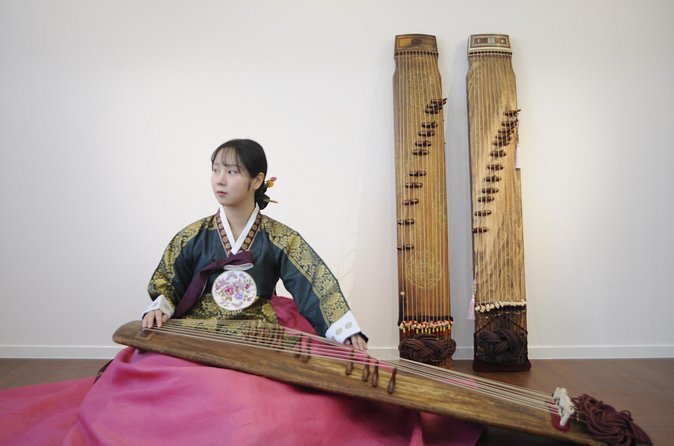
At $72.19 per person, the experience asks more than a basic hanbok rental or a short photo stop. The value comes from the combination of several parts:
- An 80-minute guided activity
- Use of a traditional gayageum
- Beginner instruction and sheet music
- Hanbok for the lesson
- A photo session
- A printed photo
- A private booking for your group
- English instruction, with Japanese and Traditional Chinese subtitle support
The price makes the most sense if you would otherwise pay separately for a costume experience and look for a cultural class. You also save the effort of arranging a music lesson on your own, which would be difficult for a short Seoul visit.
It is less compelling if your main goal is simply to wear hanbok and take pictures. In that case, you may not care about the instrument lesson enough to justify the extra cost. The gayageum is the central reason to choose this activity.
The small number of published ratings means you should not treat the perfect five-star score as a broad statistical guarantee. Still, the strongest praise focuses on the instructor’s warmth, patience, and ability to help a complete beginner enjoy the lesson. Those are exactly the qualities that determine whether an unfamiliar musical activity feels fun or stressful.
Who will enjoy this Bukchon activity?
I would recommend it most strongly to:
- Solo visitors who want a structured cultural activity and a souvenir photo
- Couples looking for something quieter and more distinctive than a standard sightseeing stop
- Families with children who can follow a short lesson
- First-time instrument players who want a low-pressure introduction
- Visitors already planning to spend time near Gyeongbokgung, Bukchon, or Samcheong-dong
- Anyone who values an authentic activity more than a passive performance
It may not suit you if you dislike dressing up, have no interest in music, or want an outdoor tour of Bukchon. It is also not the best choice if you need a long, technical lesson on the gayageum.
The experience is accessible to most participants, and service animals are allowed. The activity is near public transportation, but the details do not specify a particular subway exit or bus route, so check the address before setting out.
Booking, weather, and timing tips
Confirmation is provided at the time of booking. The activity is usually booked about six days in advance, so reserving several days ahead is sensible if your Seoul schedule is fixed.
Free cancellation is available until 24 hours before the start time. Cancel at least 24 hours ahead for a full refund. Changes or cancellations within 24 hours are not accepted for a refund.
The experience requires good weather and may be canceled if conditions are poor. If that happens, you are offered another date or a full refund. A minimum number of participants is also required, and a cancellation for that reason brings the choice of another date or experience, or a full refund.
The weather condition is worth noting even though the activity takes place indoors. Do not schedule it as your final nonrefundable plan if a sudden change could disrupt your day. Give yourself some flexibility around the booking.
Since the lesson ends at the meeting point, you can plan a nearby meal or another Jongno sight afterward. Keep the timing realistic. You may want a few minutes to arrive, change into hanbok, and settle in before the music begins.
Should you book the gayageum experience?
Book it if you want to do something in Seoul that connects clothing, music, place, and personal participation. The gayageum lesson gives the activity more substance than a costume photo alone, while the private format and printed photo make it comfortable and memorable.
Skip it if you only want quick palace photographs, dislike guided instruction, or consider $72.19 too much for an 80-minute introduction. The activity is not a full music course and does not include a broader Bukchon tour.
For most people who enjoy hands-on cultural experiences, I think the price is justified by the number of elements included. You leave with a basic experience of Korea’s traditional 12-string instrument, time in hanbok, and a physical reminder of the lesson. That is a good use of part of a Seoul afternoon, especially near Gyeongbokgung and Samcheong-dong.
FAQ
Where does the gayageum activity take place?
It takes place at Beautiful Gayageum, third floor, 43 Bukchon-ro 5ga-gil, Jongno District, Seoul, South Korea.
How long does the experience last?
The gayageum one-day lesson lasts approximately 80 minutes.
Is hanbok included?
Yes. Hanbok is included in the music lesson and is worn during the activity and photo session.
Is instruction available in English?
Yes. English instruction is provided. Japanese and Traditional Chinese subtitles are also available.
Is the activity private?
Yes. Only your own group participates in this private activity.
What happens if I need to cancel?
You can receive a full refund if you cancel at least 24 hours before the experience start time. Cancellations or changes made within 24 hours are not refunded or accepted.
Just added around Seoul
- Your Personal Seoul Photographer!★ 4.1 · 15 reviews
- From Seoul: Hwacheon Ice Fishing and Lighting Festival Tour★ 4.5 · 4 reviews
- You’re Invited to Our Home in Seoul: The Only Cooking Class!★ 5.0 · 8 reviews
- Seoul: Gangneung BTS K-Pop & K-Drama Filming Locations Tour★ 4.6 · 14 reviews
- Unique Native Experience : Han River Picnic, Board game, BBQ★ 5.0 · 3 reviews
- 2-Hour Private Kayaking and Paddleboarding Experience in Hanriver★ 5.0 · 3 reviews
- Yun Korean Cooking Class in Seoul★ 5.0 · 6 reviews
- Day Trip to Yongin Daejanggeum and Korean Folk Village from Seoul★ 4.0 · 9 reviews
Bukchon Hanok Village Tours, compared.
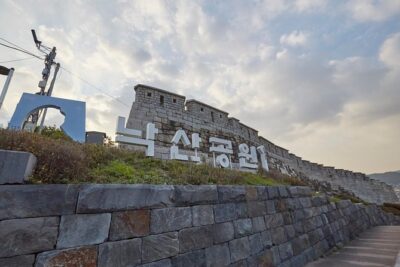
Gyeongbok Palace, Bukchon Village, and Gwangjang Tour
Read our review →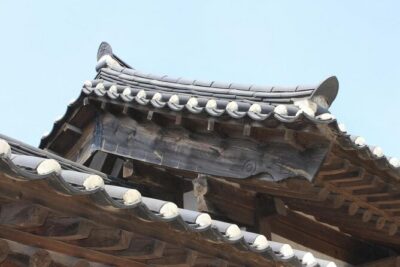
Seoul City Sightseeing Tour Including Gyeongbokgung Palace, N Seoul Tower, and Namsangol Hanok Village
Read our review →Gyeongbok Palace, Bukchon Village, and Gwangjang Tour
Read our review →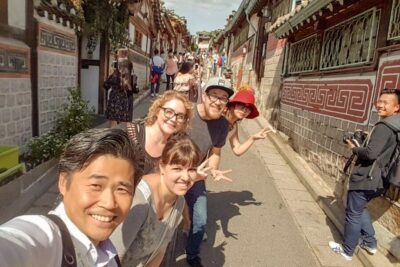
Gyeongbok Palace and Bukchon Hanok Walking Tour
Read our review →
Best Walking Tour to Gyeongbok Palace Bukchon Hanok Village
Read our review →
Experience Korean Cooking in Modern Hanok Kitchen
Read our review →
Royal Seoul Cooking Class in a 100-Year-Old Hanok
Read our review →
Afternoon Seoul: Hanok Vibes, Netflix Street Food & N Seoul Tower
Read our review →Browse the lists this tour appears in