
Reviewed · SEOUL KOREAN COOKING CLASSES
Master Korean traditional cooking with a Kimchi chef
The best part of this Seoul food experience happens before you reach the kitchen. You walk through Gyeongdong Market, a huge food and traditional medicine market, while your chef explains the ingredients you will soon cook. Then you prepare a three-dish Korean meal in a local-style home and sit down to eat it.
I like the hands-on format: you do not just watch a demonstration, and even non-cooks can take part. I also like the intimate group size, which gives the chef time to help with chopping, seasoning, and technique. The main consideration is that the menu depends entirely on the day you book, so choose your date carefully.
Key points to know before booking
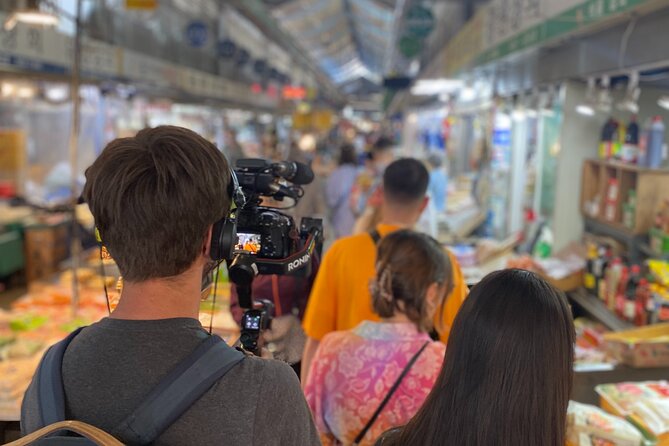
- The market walk comes first: Shop for ingredients at Gyeongdong Market, with explanations about Korean food and traditional ingredients along the way.
- You cook, rather than simply watch: Each participant helps prepare the menu and then eats the finished meal.
- The menu changes by day: Thursday focuses on kimchi, Monday on samgyetang, Friday on bibimbap, and Tuesday or Saturday on bulgogi, japchae, and doenjang jjigae.
- Small groups make a difference: The experience is designed for an intimate group, with a stated limit of seven people for the class.
- Chef Minseon receives special praise: Her patient teaching, clear instructions, and friendly help are repeatedly highlighted in the available feedback.
- Dietary needs can be discussed: Vegan and halal options are available, and children under six cannot participate for safety reasons.
From Jegi-dong Station to Gyeongdong Market
Your morning begins at 10am at Jegi-dong Station, Exit 2, on Seoul’s Line 1. The meeting point is in the Seoul Oriental Medicine Market area, close to the well-known Gyeongdong Market. You need to make your own way there, since subway pickup and drop-off are not included.
I recommend arriving early. The station and market district can feel confusing if you are unfamiliar with Seoul, and one participant even had trouble finding the meeting place before receiving help from the chef. Give yourself enough time to locate Exit 2 without starting the morning in a rush.
Once the group is together, the chef leads a short walk through the surrounding streets. This is not a long city sightseeing tour, and that is a good thing if your main interest is food. The walk gets you from the station to the market while giving you a look at a part of Seoul that many visitors skip.
The market is a major reason to book this experience. Gyeongdong Market is known for vegetables, herbs, spices, food products, and traditional medicinal materials. You may see ingredients that are familiar from Korean restaurant menus, along with items that are less obvious to a first-time visitor.
The chef explains what you are seeing and helps the group choose the ingredients needed for that day’s dishes. This makes the market visit useful rather than a quick photo stop. You learn which ingredients matter, how they are used, and how Korean flavors are built before you begin cooking.
You may also sample a traditional Korean doughnut or another small market treat along the way, depending on the day. Morning tea is included on all versions of the experience.
More Korean cooking classes in Seoul:
- Local Home Korean Cooking Class & Market Adventure in Seoul
★ 5.0 · 1,024 reviews - Seoul: Korean Cooking Class at a Local Home and Market Tour
★ 5.0 · 348 reviews - Seoul: Korean Cooking at Seoul Cooking Club!
★ 5.0 · 311 reviews
Why the market visit matters
A cooking class can easily become a tidy lesson in a studio with ingredients already measured and arranged. This one gives you a better sense of where Korean cooking begins: with shopping, selecting produce, and understanding the ingredients.
I especially like this for first-time visitors to Korea. If you walk through Korean markets alone, you may recognize very little and have no idea what to ask. With the chef beside you, unfamiliar herbs, sauces, vegetables, and seasonings become part of a meal rather than a blur of colorful stalls.
The market is also part of the cultural experience. Gyeongdong is not presented as a polished tourist attraction. It is a working market district, and the setting gives you a more ordinary view of Seoul’s food life.
There is one practical trade-off. Markets can be busy and crowded, and the walk is taken at the group’s pace. Wear comfortable shoes and keep your belongings secure. If you want a quiet, highly polished food tour, this may feel more lively and less controlled than a hotel-based class.
Choosing the right cooking day
The menu is the most important booking decision. The class includes three different menu items, but the dishes change according to the day of the week.
Here is the current schedule:
- Monday: Samgyetang, a traditional chicken soup
- Tuesday and Saturday: Bulgogi, japchae, and doenjang jjigae
- Thursday: Kimchi
- Friday: Bibimbap
- Sunday: A selection of Korean desserts
The Tuesday and Saturday menu is the broadest savory introduction. Bulgogi shows how Korean marinades work, japchae gives you a noodle dish with vegetables, and doenjang jjigae introduces fermented soybean paste in a warm stew. If you want several familiar Korean dishes in one session, these dates are a strong choice.
Thursday is best for anyone specifically interested in kimchi. The experience is titled around learning with a kimchi chef, but kimchi is not necessarily the main activity on every date. Check the day before paying if kimchi is your priority.
Friday’s bibimbap class is a sensible pick for beginners. The dish is easy to recognize, and the class can show you how traditional ingredients change the flavor and texture of a meal that many people know mainly from restaurants.
Monday’s samgyetang has a more focused theme, while Sunday is aimed at people who want sweets rather than a full savory lunch. The description says Sunday includes a variety of Korean desserts, and the included food is dessert rather than lunch or dinner.
Because the menus are fixed by day, you should not book first and assume you can switch dishes later. Pick the menu that matches your appetite and interest.
Cooking in a Korean-style home
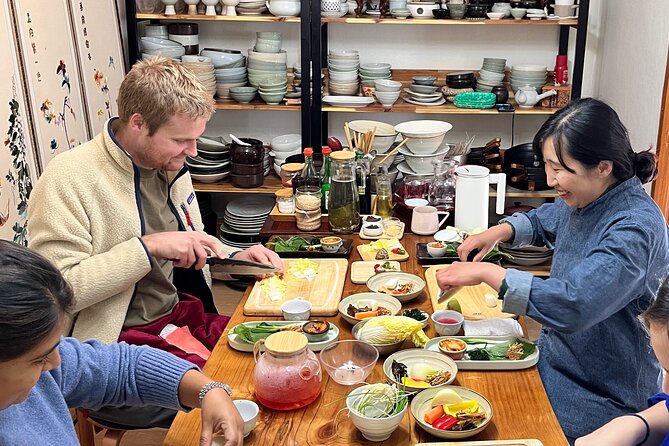
After shopping, you walk to a Korean-style house in a nearby neighborhood. The space is set up for the cooking lesson, and the class begins once everyone is ready.
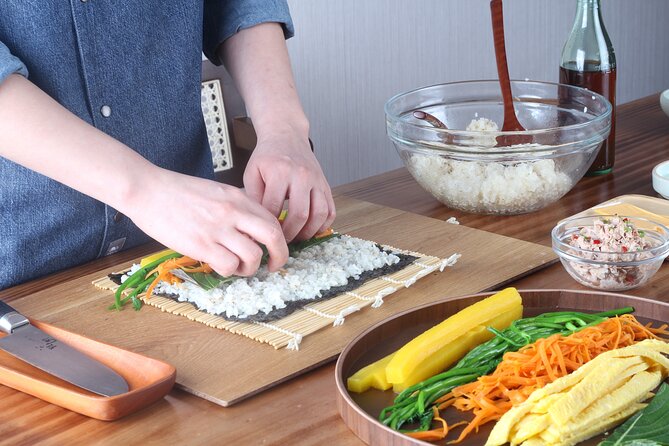
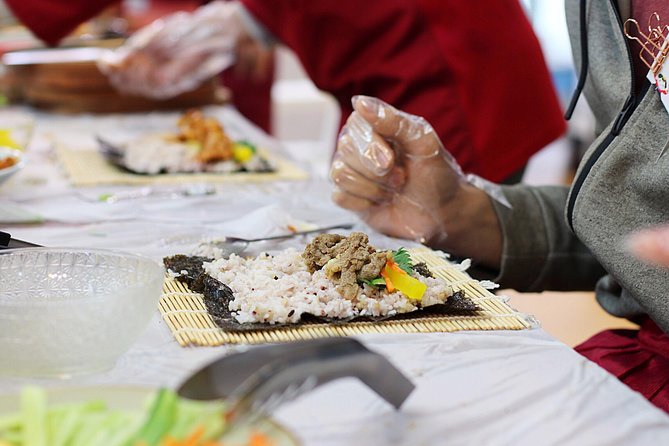
The setup is hands-on. You help prepare small portions of the full menu, rather than standing behind the chef while she does all the work. That matters because Korean cooking often depends on small details: how ingredients are cut, when seasoning is added, and how different textures are brought together.
The class is designed to be manageable for beginners. Chef Minseon is singled out for her patience, clear explanations, and ability to help people who do not cook often. Other descriptions also point to friendly, supportive instruction and good English communication.
The pace appears to be well organized. There is enough time to prepare the food, ask questions, and sit down for the meal without turning the morning into a race. Some participants have prepared four dishes in a shorter cooking period, though the standard experience is described as roughly three hours and 30 minutes including the market visit, cooking, and meal.
You may receive recipes or a small cookbook to take home. That is useful because the real value of a cooking class comes after Seoul, when you try to repeat the dishes in your own kitchen. The recipes are described as straightforward enough to recreate, although ingredients at home may not be identical to those found in Seoul.
A different kind of day out around Seoul:
- Best DMZ Tour Korea from Seoul (Red Suspension Bridge Optional)
★ 5.0 · 41,422 reviews - DMZ Tour: 3rd Tunnel, Option(Suspension Bridge, Boat) from Seoul
★ 5.0 · 21,373 reviews - DMZ tour south Korea from Seoul (NK experience hall, defector)
★ 5.0 · 20,599 reviews - Seoul: DMZ Tour with Optional Suspension Bridge
★ 4.8 · 5,277 reviews
Eating the meal you prepared
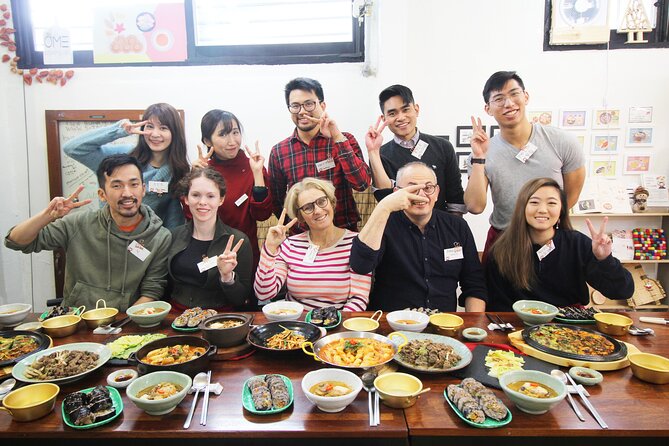
Once the cooking is finished, you sit down with the group and eat the food. Lunch or dinner is included for the savory classes, while Sunday includes dessert.
This shared meal is not an afterthought. It gives you a chance to taste the results while the techniques are still fresh in your mind. You can ask why a sauce tastes a certain way, compare your results with the chef’s version, and talk with the other people in the class.
The meal also helps explain Korean dining habits. Several dishes arrive together, and the experience gives you a practical sense of how soups, noodles, meat, vegetables, and fermented flavors work as part of one table.
Portions appear generous. Some people have had enough food to take some away, although takeaway arrangements can depend on the class and available containers. I would treat that as a pleasant possibility rather than a promised part of the tour.
Morning tea is included throughout the experience. The description does not specify the type of tea, so do not book this expecting a formal tea ceremony. It is best understood as a small refreshment during the morning.
Group size and personal attention
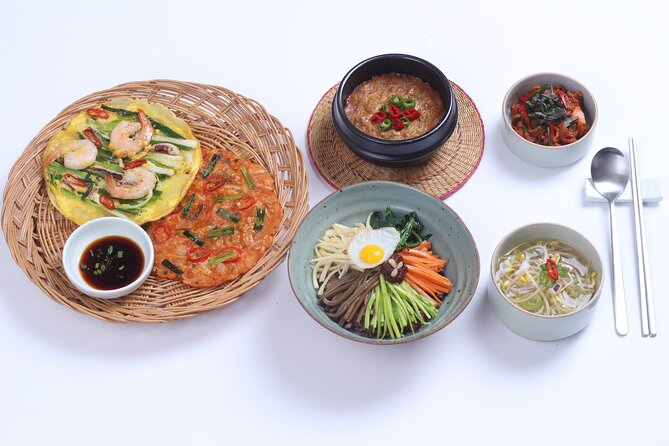
The advertised class limit is seven people, which is a useful size for a practical cooking lesson. You are more likely to get a turn at the cutting board, stove, and mixing bowl than in a large demonstration class.
The booking information also states a maximum of 10 people per booking and describes the activity as private, with only your group participating. Since the information gives both a seven-person class limit and a 10-person booking limit, I would confirm the exact group size if this is important to you.
The intimate format suits solo visitors, couples, families with older children, and small friend groups. It also makes it easier to introduce yourself to the other participants. The chef reportedly begins by helping people get acquainted, which is useful when strangers are sharing a kitchen for several hours.
Children over six may participate, with up to one child per class. Guests over 14 pay the adult price. Children under six are not accepted because of kitchen safety.
Dietary needs and food expectations
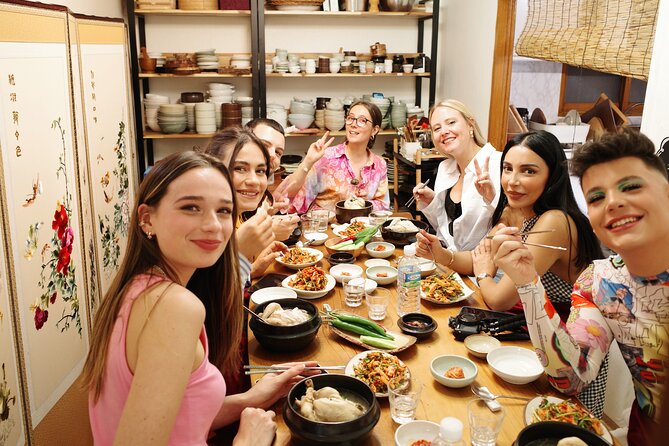
Vegan and halal options are available, but you should state your needs when booking. Do not wait until the market or kitchen to mention a restriction. The class involves shopping for ingredients, so the chef needs to know in advance.
The menus contain classic Korean flavors, including fermented soybean paste, kimchi, marinades, vegetables, noodles, and soup ingredients. If you dislike strong fermented flavors, ask which menu will suit you best. Friday bibimbap or Sunday desserts may feel more approachable than a kimchi-focused class, although the exact suitability depends on your dietary needs.
The experience is especially good for people who want context with their food. It is less suitable if you only want to eat Korean dishes without preparing them, or if you need a completely private lesson with a guaranteed custom menu.
Is $85 a fair price?
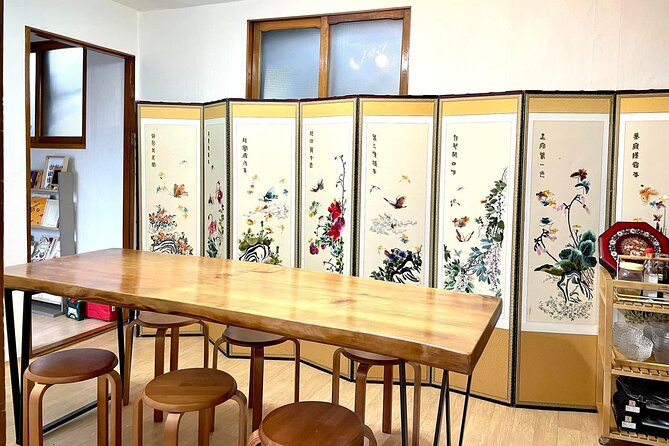
At $85 per person, this is not the cheapest meal you can buy in Seoul. You are paying for several parts at once: a local market walk, ingredient shopping, chef instruction, a cooking space, a full meal or dessert, and a small group setting.
The value improves if you would otherwise book a separate market tour and cooking class. Here, the two parts connect naturally. You see the ingredients in the market, use them in the kitchen, and then eat the finished food.
The price also makes more sense for people who will use the recipes later. A restaurant meal disappears quickly. A cooking class can give you techniques and recipes that you repeat at home, especially if you receive a cookbook or recipe booklet.
I would consider it good value for a food-focused visitor who wants active participation. If you are mainly looking for a cheap lunch, it is too expensive. If you want a local food lesson with a market visit and personal instruction, the cost is reasonable.
The experience is often booked well ahead, with an average booking lead time of 48 days. That suggests you should reserve early, especially if you need a particular day such as Thursday for kimchi or Friday for bibimbap.
Timing, cancellation, and practical details
Plan on about three hours and 30 minutes from the 10am meeting time. The experience ends back at the original meeting point, but subway transportation to and from the station is your responsibility.
Wear comfortable shoes for the market walk and practical clothes for cooking. The supplied information does not give specific details about aprons, footwear, or kitchen equipment, so ask the operator if you have a particular concern.
Confirmation is issued within 48 hours of booking, subject to availability. Free cancellation is available if you cancel at least 24 hours before the local start time. Changes or cancellations made later are not accepted for a refund.
The activity requires a minimum number of participants. If the provider cancels because that minimum is not reached, you are offered another date or experience, or a full refund.
Who should book this class?
Book it if you want to connect Korean food with the place where its ingredients are bought. It is a particularly good choice for first-time visitors, amateur cooks, food lovers, and anyone who prefers doing something active during a Seoul morning.
It also works well for people who feel nervous about cooking. The instruction is structured, the recipes are considered manageable, and the chef has a reputation for patient help. You do not need to arrive with professional kitchen skills.
Choose carefully if your main goal is kimchi. Thursday is the listed kimchi day, while other dates focus on different menus. Also remember that Sunday is a dessert class, not a standard savory lunch.
Should you book it?
I would book this experience if you want more than a restaurant meal and prefer a small, social activity with a clear local connection. The market visit, hands-on cooking, and shared meal form a sensible half-day in Seoul, and Chef Minseon appears to be an especially strong instructor when she leads the class.
The main decision is the date. Pick Thursday for kimchi, Tuesday or Saturday for a broad savory meal, Friday for bibimbap, Monday for samgyetang, or Sunday for Korean sweets. If you make that choice carefully and allow time to find Jegi-dong Station, the $85 price buys a useful lesson, a substantial meal, and recipes you can carry home.
FAQ
Where does the cooking experience begin?
It begins at Jegi-dong Station, Exit 2, in the Seoul Oriental Medicine Market area. The start time is 10am.
How long does the experience last?
It lasts approximately three hours and 30 minutes, including the market walk, cooking class, and meal or dessert.
Is transportation included?
No. Subway station pickup and drop-off are not included. The activity ends back at the original meeting point.
What market will I visit?
You will visit Gyeongdong Market, also known as Kyungdong Market, to buy ingredients for the day’s recipes.
What dishes will I cook?
The menu depends on the day. Monday features samgyetang, Thursday features kimchi, Tuesday and Saturday feature bulgogi, japchae, and doenjang jjigae, Friday features bibimbap, and Sunday includes Korean desserts.
Is this a hands-on cooking class?
Yes. You take part in preparing the dishes rather than only watching a demonstration, then eat the food you helped make.
Can vegan or halal participants join?
Yes. Vegan and halal options are available, but you should provide your dietary requirements when booking.
Can children participate?
Children over six may participate, with up to one child allowed per class. Children under six are not available for the experience for safety reasons.
Just added around Seoul
- Your Personal Seoul Photographer!★ 4.1 · 15 reviews
- From Seoul: Hwacheon Ice Fishing and Lighting Festival Tour★ 4.5 · 4 reviews
- You’re Invited to Our Home in Seoul: The Only Cooking Class!★ 5.0 · 8 reviews
- Seoul: Gangneung BTS K-Pop & K-Drama Filming Locations Tour★ 4.6 · 14 reviews
- Unique Native Experience : Han River Picnic, Board game, BBQ★ 5.0 · 3 reviews
- 2-Hour Private Kayaking and Paddleboarding Experience in Hanriver★ 5.0 · 3 reviews
- Yun Korean Cooking Class in Seoul★ 5.0 · 6 reviews
- K-Pop Making Class with a Producer!★ 5.0 · 3 reviews
Seoul Korean Cooking Classes, compared.
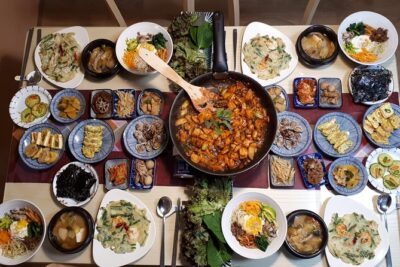
Local Home Korean Cooking Class & Market Adventure in Seoul
Read our review →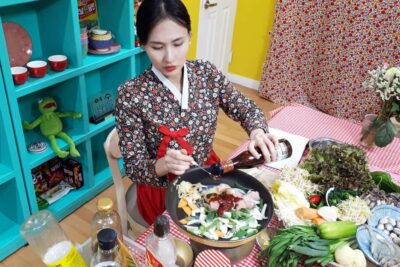
Korean Cooking Class at a Local Home and Market Tour
Read our review →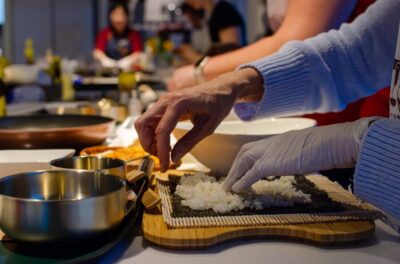
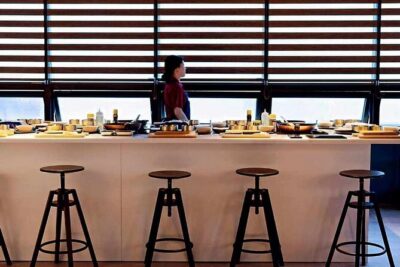
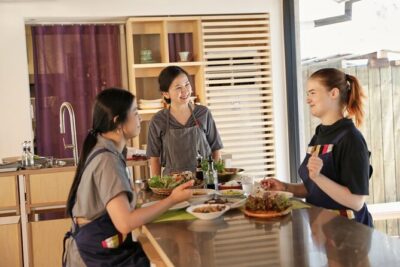
Experience Korean Cooking in Modern Hanok Kitchen
Read our review →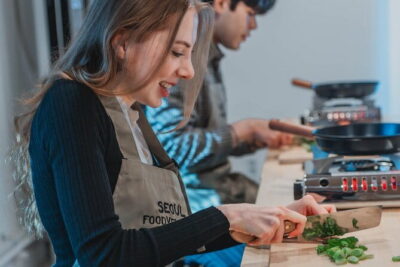
Korean Cooking Class with Grocery Shopping at Seoul Local Market
Read our review →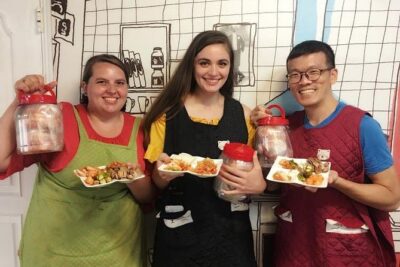
Korean Kimchi Making Day Experience with a Local Market Tour
Read our review →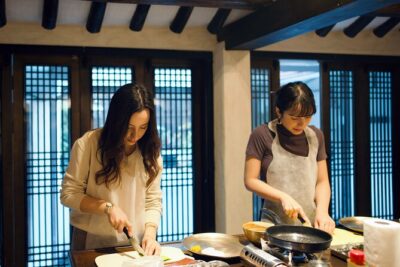
Royal Seoul Cooking Class in a 100-Year-Old Hanok
Read our review →Browse the lists this tour appears in